REVIEW · LE DOMUS ROMANE DI PALAZZO VALENTINI
Rome: Palazzo Valentini Roman Domus Multimedia Experience
Book on GetYourGuide →Operated by TOURISTATION · Bookable on GetYourGuide
Roman rooms, rebuilt in VR. That’s the hook. This experience lets you see the Imperial-age Domus spaces through a headset while a multimedia primer sets the scene. I like how the show emphasizes real Roman “everyday grandeur” with mosaics, decorated walls, and polychrome floors, and I also like the built-in audio support (headset plus smartphone app) so you can move at your own pace. One thing to consider: it’s not suitable for wheelchair users and it won’t feel comfortable if you’re prone to claustrophobia, since you’ll wear a VR headset.
You’ll start at TOURISTATION ARACOELI in Piazza D’Ara Coeli, watch a short video inside, then the Domus exploration begins an hour later. The format is very self-guided once you’re inside, so it’s best if you’re the type who enjoys reading, listening, and looking carefully rather than needing a live guide in your ear.
If you want Rome in “layers” (ancient, medieval, modern) with a strong focus on archaeology, you’re in the right place. And if you’re curious about the story-borne art of Trajan’s Column bas-reliefs, the VR portion includes a close-up reconstruction.
In This Review
- Key things to know before you go
- Getting Oriented at Touristation Aracoeli
- The 25-Minute Roman Past Video: A Fast Primer Before the VR
- Your One-Hour Wait: Don’t Waste It
- Inside Palazzo Valentini: VR Reconstruction of the Roman Domus
- Mosaics, Polychrome Floors, and Everyday Luxury
- Trajan’s Column: A Close-Up of the Bas-Reliefs Story
- Audioguide Headset and the Smartphone City App
- Adding FOROF: Archaeology Meets Contemporary Art (Optional)
- Price and Value: Is $35 Worth It?
- Who This Fits Best (and Who Should Skip It)
- Should You Book the Palazzo Valentini Roman Domus Experience?
- FAQ
- Where is the meeting point for the Roman Domus experience?
- How long does the experience take?
- What’s included in the ticket price?
- What languages are available for the Domus audio?
- Is the experience wheelchair accessible?
- Are pets or large bags allowed?
Key things to know before you go
- Tour starts with a multimedia Rome primer shown at the Touristation office
- VR headset time travel reconstructs rooms, mosaics, peristyles, kitchens, baths, and furnishings
- Trajan’s Column reconstruction shows the bas-reliefs tied to the Dacia campaign
- Optional FOROF add-on blends archaeology with contemporary art and even an olfactory element
- Headset audio + smartphone app let you choose how you listen and what you pause on
Getting Oriented at Touristation Aracoeli
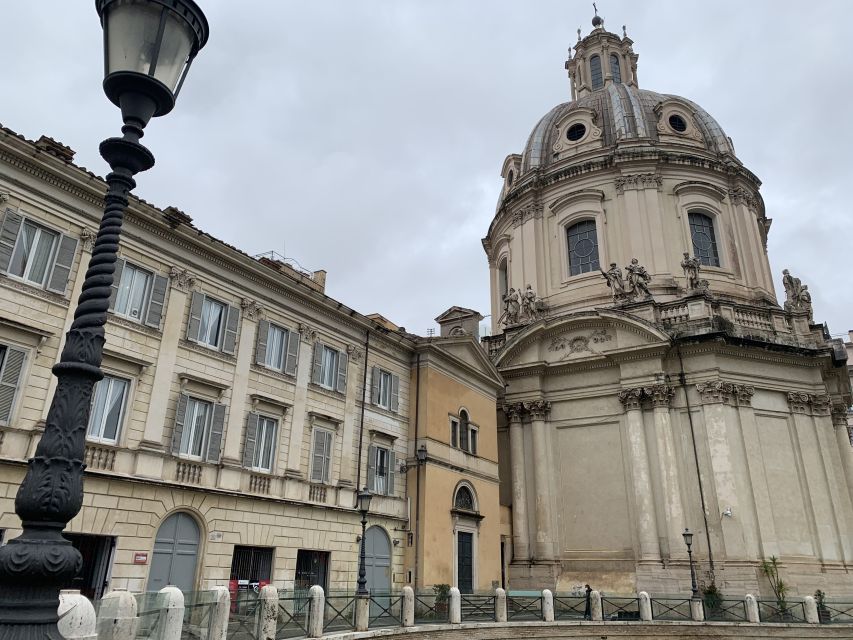
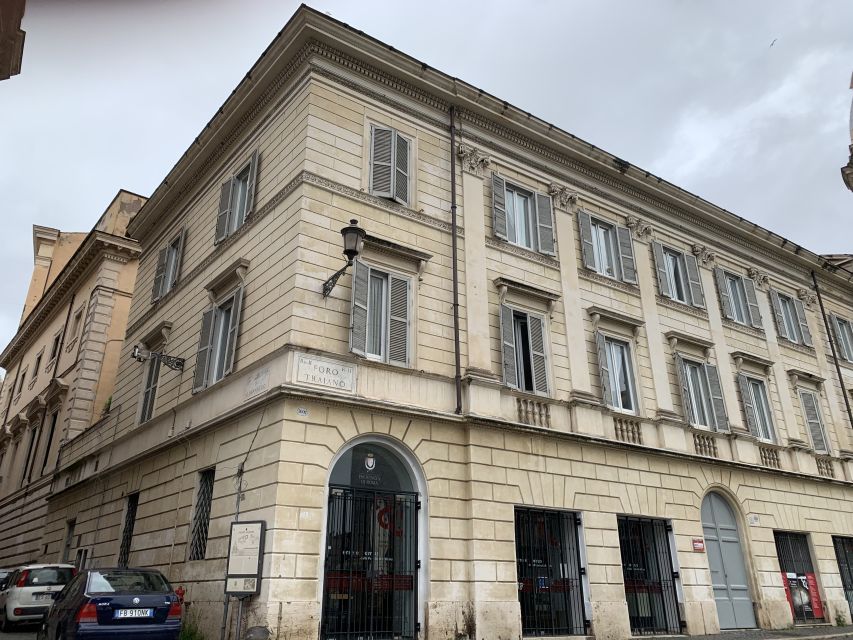
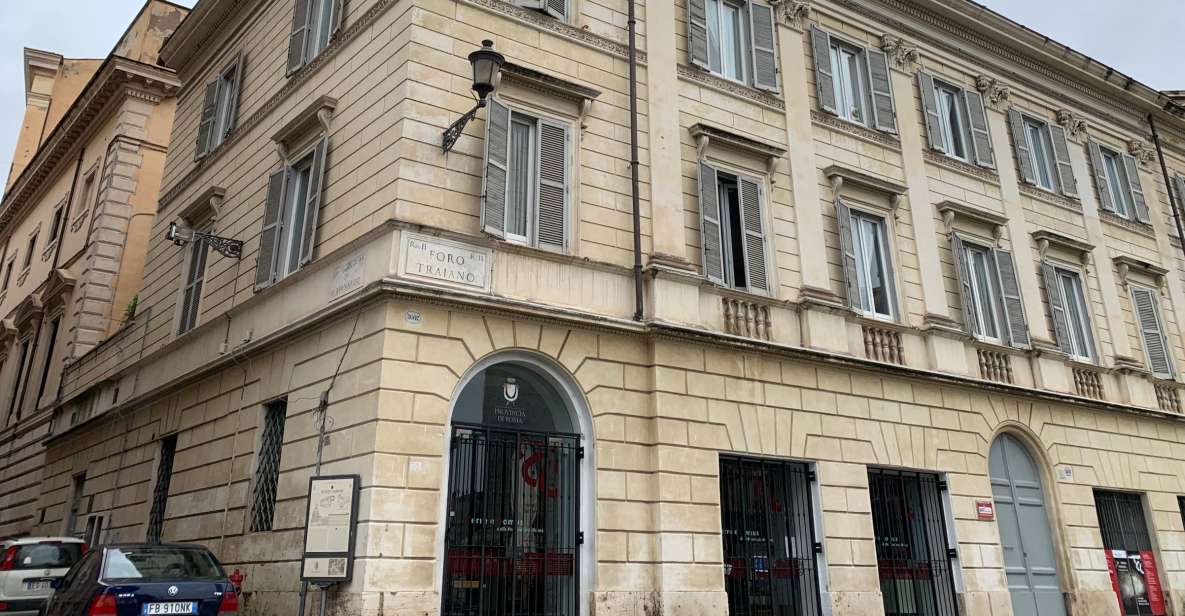
Your visit begins at TOURISTATION ARACOELI, Piazza D’Ara Coeli, 16. Look for the fountain and orange flags right in front of the entrance. It’s a useful meeting point because it’s easy to find and it’s where the pre-visit multimedia video happens.
Plan to arrive a little early. The experience has a built-in rhythm: you watch the video first, and then the Domus visit starts later. If you show up right on time, you’ll spend that small window rushing, and the whole point here is to take your time with what you’re about to see.
Also remember the practical rules: wear comfortable shoes, and skip pets and any large bags or luggage.
The 25-Minute Roman Past Video: A Fast Primer Before the VR
Before the Domus portion even begins, you’ll watch a 25-minute Ancient Rome multimedia video inside the Touristation office. It’s designed as a quick context builder. The film shows past-and-present views of major Roman landmarks, including the Colosseum, Roman Forum, St. Peter’s Basilica, Castel St. Angel, Circus Maximus, and Ara Pacis.
Here’s why that matters: even when you’re staring at reconstructed rooms, it helps to remember what’s going on in the larger city. Rome wasn’t a single theme park. It changed constantly, and the video gives you a mental map before you start “walking” the Domus virtually.
When I’m evaluating value, I like that the video isn’t a random extra. It’s part of the experience flow: set the stage, then switch to close-up detail.
Your One-Hour Wait: Don’t Waste It
After the video, the Domus visit starts one hour later. That means you’ll have time before the headset and reconstruction begin. The activity is still listed as a 2-hour total duration, so it’s not that you’re losing the day—this is more like a timed entry structure.
Use that hour to reset your brain for detail work. Think: comfortable pacing, water if you want it, a restroom break, and a chance to simply get your bearings in the area around Piazza d’Ara Coeli. If you’re the type who gets impatient in queues, this is the part where you’ll want to be ready—because you’re about to switch from video to VR, and both work better when you’re calm and focused.
Inside Palazzo Valentini: VR Reconstruction of the Roman Domus
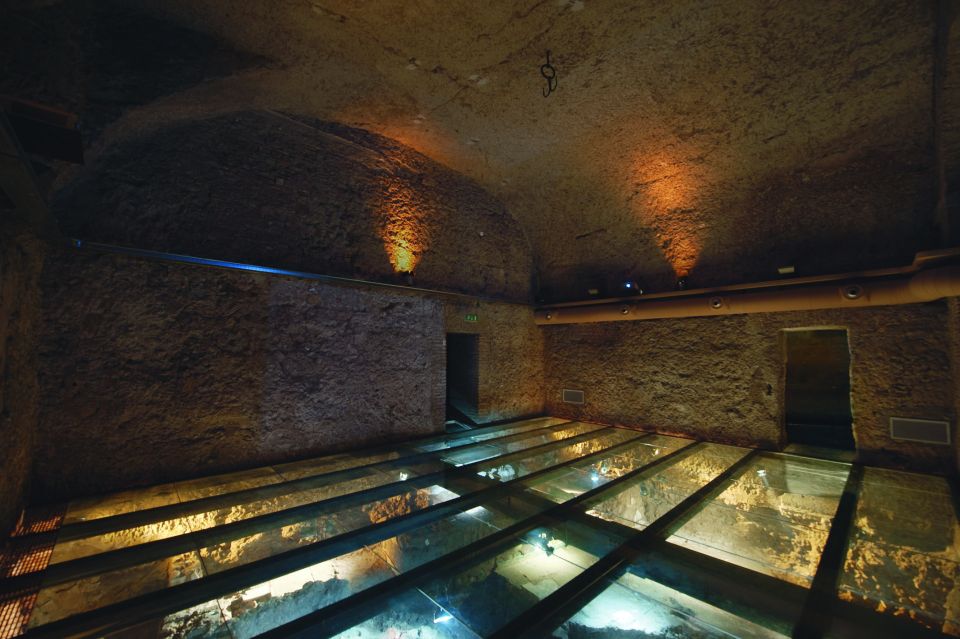
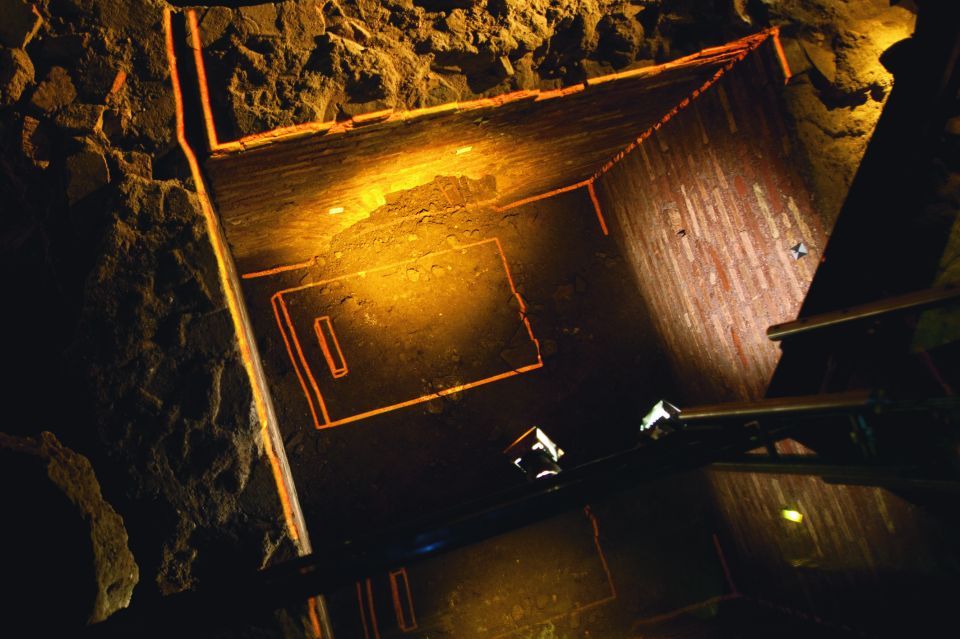
Now for the main event: you’ll use a VR headset to explore a virtual reconstruction of the Domus spaces. The experience brings rooms and architectural elements back to life, including walls, mosaics, peristyles, kitchens, baths, furnishings, and decorations.
What I appreciate here is the way VR turns archaeology from “things you look at from a distance” into “spaces you can understand as a layout.” Instead of guessing how people moved through a home, you get visual structure—how an area might have functioned, how decorations might have looked in context, and where you’re standing relative to major elements.
You should also expect the experience to connect eras. The virtual tour helps piece together how this area relates to ancient, medieval, and modern Rome, not just the Roman layer by itself. That layered approach fits how Rome actually works: old stuff didn’t vanish. It got reused, rebuilt over, and reinterpreted.
One more practical point: because this is VR, it’s not a great match if you’re sensitive to enclosed-feeling environments. It’s listed as not suitable for claustrophobia.
Mosaics, Polychrome Floors, and Everyday Luxury
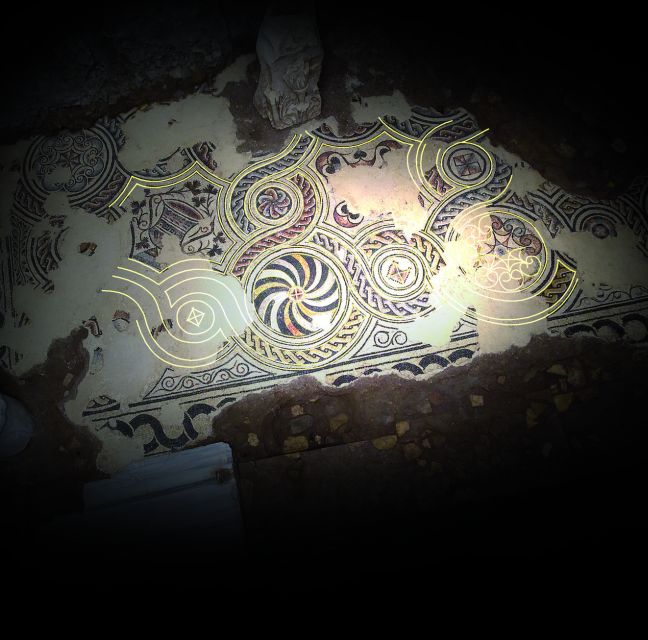
The Domus experience leans hard into visual art you’d miss if you only looked for grand monuments. You’ll admire unique mosaics, decorated walls, and polychrome floors. These are the details that tell you how Roman wealth and taste expressed itself in daily life.
Here’s the value for you: mosaics aren’t just decoration. They’re visual storytelling, status signaling, and a kind of “infrastructure” for how light and movement feel inside rooms. When VR shows you these elements in reconstructed spaces, it can make the logic of placement click: where your eye goes, how floors guide movement, and how wall decoration supports the mood of a room.
If you like close visual analysis—textures, patterns, color choices—this part is likely to be your favorite. And if you’re the opposite (you prefer fast overview sightseeing), you might want to deliberately slow down here. This is where the experience earns its ticket price.
Trajan’s Column: A Close-Up of the Bas-Reliefs Story
One highlighted feature is how the experience lets you observe how Trajan’s Column looked in earlier times. Through a virtual reconstruction, you get a close-up view of the bas-reliefs and the story they tell: the military campaign tied to the conquest of Dacia, in present-day Romania.
This is a smart inclusion. It doesn’t treat Trajan’s Column like a distant landmark. It turns it into a narrative object—something you can see at relief-level detail. If you’ve ever wondered how people actually read history from sculpture, this gives you a way to experience that relationship between image and story.
It also fits the Domus theme. The Roman Empire didn’t just build homes—it staged power everywhere, and sculpture and reliefs were part of that messaging machine.
Audioguide Headset and the Smartphone City App
You get an audioguide headset for the Domus portion, plus a city app audioguide you can download on your smartphone. The audio is available in multiple languages: English, French, German, Italian, Spanish, Russian, and Japanese for the Palazzo Valentini Experience.
Why this matters in practice: VR can be visually intense. Audio gives you handles to grab onto—what you’re looking at, what the spaces were used for, and what key details mean. Without audio, you can still enjoy the visuals, but you’ll probably miss some of the context that makes the reconstruction feel grounded.
One more note based on how people describe the experience: the VR experience is strong enough that you don’t necessarily need every extra layer. Some visitors feel the multimedia video and app add-ons aren’t essential if your main interest is the Domus reconstruction itself. My practical take: use what helps you. If you prefer to focus, start with the headset audio and treat the app as optional support.
Adding FOROF: Archaeology Meets Contemporary Art (Optional)
There’s an optional add-on called FOROF Experience: archaeology and contemporary art. If you select it, it’s included in your ticket.
FOROF is described as a permanent and continuous project in Rome that links contemporary art and archaeology through regeneration in a cultural-café atmosphere. It’s located in the heart of Rome at Palazzo Roccagiovine, opposite Trajan’s Column at the Imperial Fora.
The setting is also part of the draw. FOROF preserves hypogeum environments that retain elements like colored marble of the pavement of the Basilica Ulpia and remains of the eastern apse dating to the 2nd century A.C. That’s not just “art next to ruins.” It’s the ruins being part of how the space is experienced.
You can also encounter an olfactory element: FOROF ESSENZA uses an olfactory interpretation developed by professional “nose” Laura Bosetti Tonatto. It’s meant to return the spirit of a place and frames the experience around the universal value of freedom.
And there’s site-specific contemporary art tied to an exhibition project named Nimbus Limbus Omnibus by Bartolomeo Pietromarchi, with a collective that is realizing it in Rome for the first time.
In short: if you like archaeology but also enjoy modern interpretation, this add-on can make the whole day feel less like “only history” and more like “history in conversation with the present.”
Price and Value: Is $35 Worth It?
At $35 per person for about 2 hours, you’re paying for more than an entry ticket to ruins. You’re getting:
- admission to the Ancient Roman Domus museum
- a 25-minute multimedia Rome video
- a VR headset-based reconstruction experience
- an audio guide headset
- a smartphone city app audioguide download
- and optionally, FOROF if you choose that add-on
This is the key value question: you’re not just looking at archaeology behind barriers. You’re being guided through reconstructed spaces, plus a narrative about Roman monuments and imperial storytelling. If your goal in Rome is to understand how art, architecture, and power worked together, the package makes sense.
If your preference is strictly for outdoor ruins and hands-off museum looking, VR might feel like a detour. But if you enjoy visual explanation and want the experience to help you “see” the Domus as a functioning environment, it’s a good spend.
Who This Fits Best (and Who Should Skip It)
This is a strong pick if you:
- enjoy mosaics, decorative detail, and interior spaces
- like self-guided experiences supported by headset audio
- want an explanation-heavy approach to Roman archaeology
- are curious about how Trajan’s Column reliefs communicate story
It’s not a good pick if you:
- have claustrophobia (VR use and enclosed feeling can be an issue)
- use a wheelchair (listed as not suitable)
Also note the “bring and leave” list: comfortable shoes, and for children, bring a passport or ID card. No pets. No large bags.
Should You Book the Palazzo Valentini Roman Domus Experience?
If you want a Rome stop that turns Imperial-era architecture into something you can actually picture, book it. The combination of the multimedia primer, VR reconstruction, and audio support makes it easier to connect mosaics, room function, and imperial symbolism without needing a live guide the whole time.
If you’re on the fence, decide based on two things:
- Do you like visual reconstruction? If yes, this is right up your alley.
- Are you comfortable with VR and enclosed environments? If not, skip and choose a different Roman archaeology experience.
And if FOROF interests you—especially the idea of archaeology paired with contemporary art and even an olfactory component—add it for a more “Rome today meets Rome then” finish.
FAQ
Where is the meeting point for the Roman Domus experience?
You meet at TOURISTATION ARACOELI, Piazza D’Ara Coeli, 16, where a fountain and orange flags are in front of the entrance.
How long does the experience take?
The total duration is 2 hours. Starting times depend on availability.
What’s included in the ticket price?
Included are admission to the Ancient Roman Domus museum, a 25-minute Ancient Rome multimedia video, an audioguide headset, and a city app audioguide download. The FOROF experience is included only if you select that option.
What languages are available for the Domus audio?
The audioguide is available in English, French, German, Italian, Spanish, Russian, and Japanese.
Is the experience wheelchair accessible?
No. It is listed as not suitable for wheelchair users.
Are pets or large bags allowed?
Pets are not allowed, and luggage or large bags are not allowed either.