REVIEW · CASTEL GANDOLFO
Castel Gandolfo: Vatican Observatory experience
Book on GetYourGuide →Operated by TOURISTATION · Bookable on GetYourGuide
Castel Gandolfo has a way of making science feel personal. You’ll get rare access to the Vatican Observatory’s working domes inside the Papal Palace, plus a big, quiet reward: views over Lake Albano. What I like most is that you see the major and minor observatories themselves, not just a lecture, and you climb up high enough to feel the place.
The possible drawback? The whole experience is about an hour, and that spiral-stair climb isn’t ideal if you have vertigo or get uncomfortable with heights.
You also don’t need to be an astronomy expert. Even if you don’t speak telescope, the visit is built around what the instruments do and why the site matters—especially after the observatory’s move in the 1930s.
In This Review
- Quick hits before you go
- Entering the Papal Palace: a summer retreat with real scientific purpose
- The third-floor terrace and spiral staircase: the view is the payoff
- The Vatican Observatory’s two domes: what they do (and what you’ll notice)
- Major dome (8.5 meters): the Visual Telescope
- Minor dome (8 meters): the Double Astrograph
- Why both domes matter
- How the observatory got its palace address in 1935
- Price and timing: does $17 feel fair?
- Practical logistics: meeting point, what to bring, and who this suits
- What to bring
- Language support
- Who should go
- Who should skip
- Should you book the Castel Gandolfo Vatican Observatory experience?
- FAQ
- How long is the Castel Gandolfo Vatican Observatory experience?
- Where do I meet for the tour?
- What’s included in the ticket?
- Is there a guided tour or audioguide included?
- Is this experience suitable for children?
- Is it wheelchair accessible?
- What languages are available?
- What about payment and cancellation?
Quick hits before you go
- Working domes you can actually access, including the major 8.5-meter Visual Telescope and the minor 8-meter Double Astrograph
- Papal Palace terrace views over Lake Albano / Castel Gandolfo
- Spiral staircase to the third floor, on the highest point of the panoramic terrace
- Jesuit-run Vatican Observatory context, from Pius XI’s 1935 inauguration to variable-star research
- Short, focused timing for $17, with no audioguide or included guided tour
Entering the Papal Palace: a summer retreat with real scientific purpose
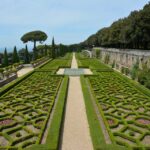
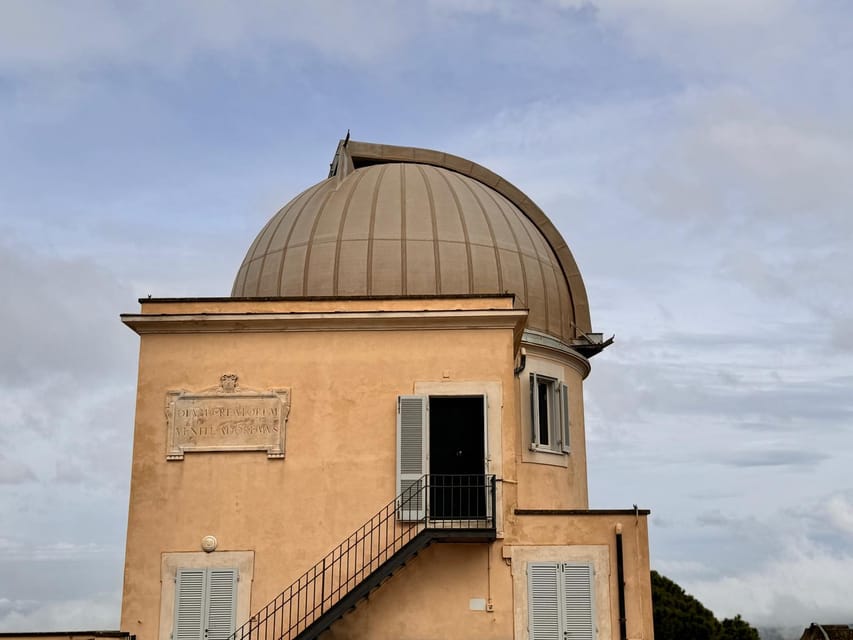
Castel Gandolfo sits just outside Rome, and the setting already does half the work. This is the Papal summer residence, so you’re not walking through a random museum room. You’re in a palace designed for privacy and view—then, unexpectedly, you step into a space built for measuring the sky.
What makes this stop more than a photo moment is the pairing: the palace gives you the panoramic world on the ground, while the observatory domes aim upward. The domes opening to visitors is especially meaningful because, for almost ninety years, those astronomical observatories were not open in the way tourists can see them now. That means what you’re doing isn’t routine “sightseeing,” it’s access to a function that normally stays behind institutional doors.
From the practical side, the experience is structured so you can fit it into a day around Rome without it swallowing your schedule. That’s part of the value here: you get a major highlight (Papal Palace access) plus a very specific science site, all in a tight window.
And yes, you’ll notice the atmosphere is different from the Vatican Museums—less crowd density, more pacing. It feels like a place you’d want to move slowly through, even if the tour timing stays brisk.
You can also read our reviews of more tours and experiences in Castel Gandolfo.
The third-floor terrace and spiral staircase: the view is the payoff
One of the smartest parts of this visit is that it doesn’t treat the palace as just a backdrop. You go upward, literally.
You access the third floor via a spiral staircase, reaching the highest point of the panoramic terrace. This matters because it gives you a vantage you just can’t get from ground-level courtyards. From there, the Lake Castel Gandolfo / Lake Albano view is the big “moment” of the whole hour—wide, calm, and photogenic in almost any light.
Practical tip: bring comfortable shoes and plan for steps. The palace staircase is the kind of climb that feels fine for many people and stressful for others—especially if you have any concern about heights. For this reason, the experience is not permitted for people with vertigo.
Also pack for temperature contrast. Even in Lazio, you may feel cooler near stone and open-air terrace edges, so warm clothing is a good idea. You’re outdoors just long enough to want a jacket, not long enough to justify “warm layers later.”
If you like good framing for photos, this is where you’ll want to slow down. The terrace view is the part that makes everything else feel worthwhile. Without it, the domes would still be cool—but the terrace turns the visit into something more memorable.
The Vatican Observatory’s two domes: what they do (and what you’ll notice)
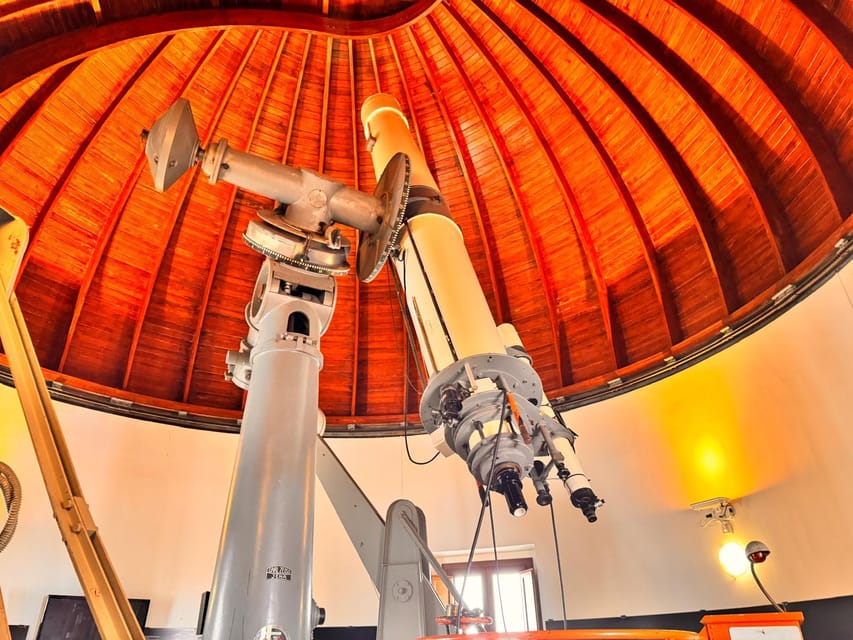
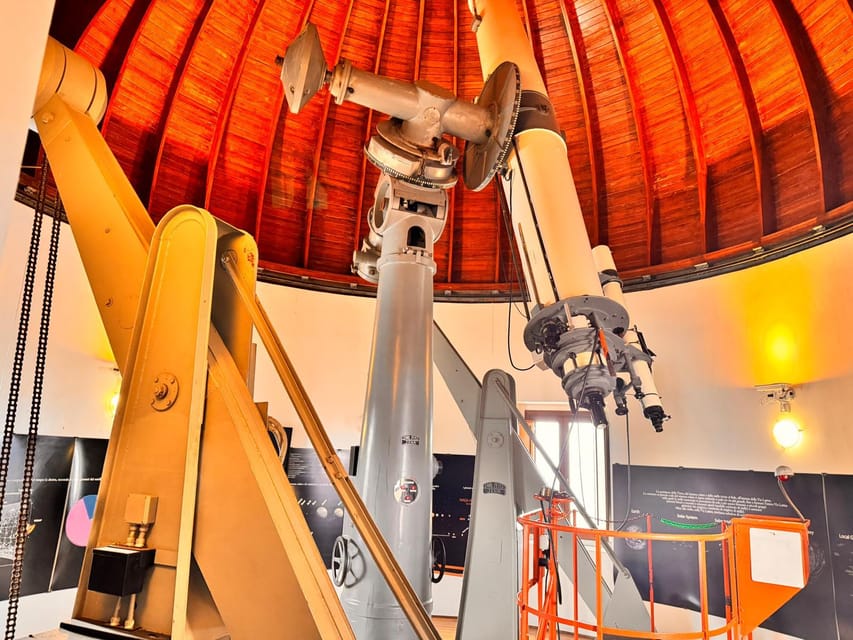
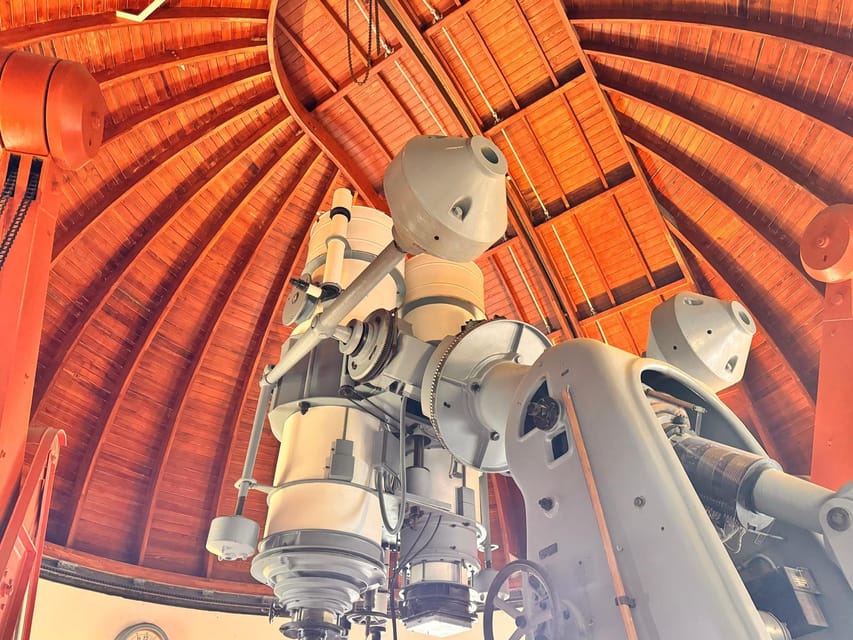
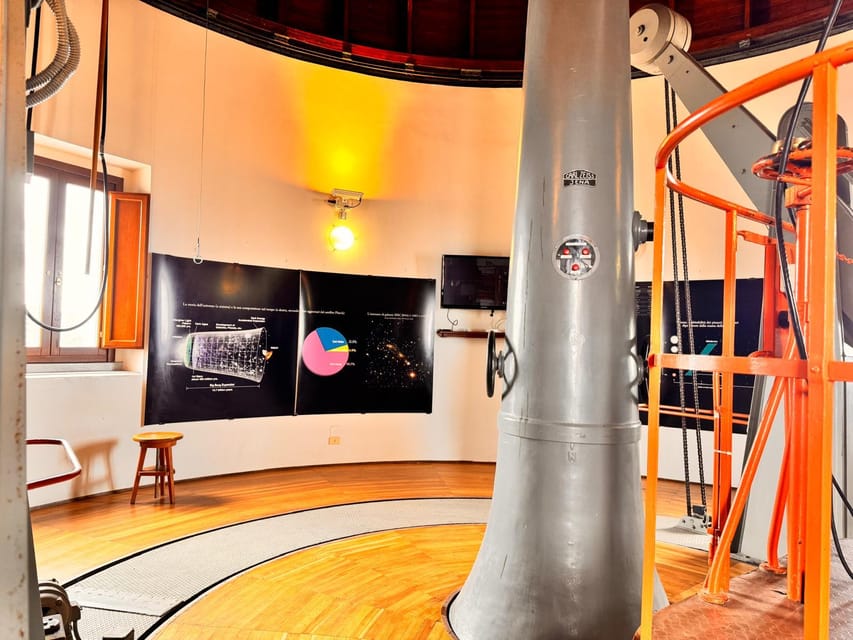
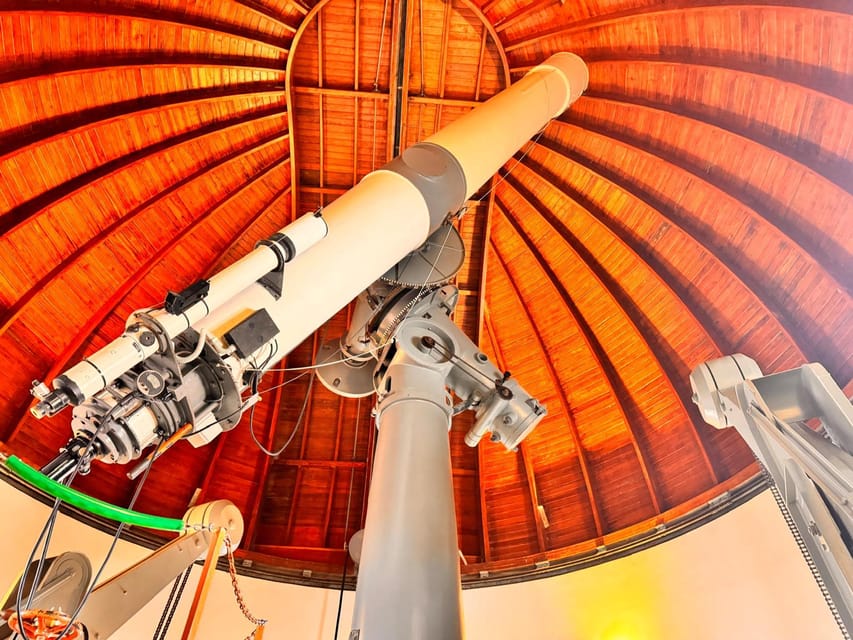
This is the heart of the day: the major and minor astronomical domes of the Vatican Observatory of the Papal Palace of Castel Gandolfo. Both are described as perfectly functioning observatories, and that’s a key detail. You’re not looking at antiques behind glass; you’re seeing the working logic of the instruments.
Major dome (8.5 meters): the Visual Telescope
The major dome has an 8.5-meter diameter and is equipped with a Visual Telescope. In plain terms, this is built for observing stars and planets directly in visible light.
What you’ll likely notice is how “astronomy for humans” this setup is. Visual astronomy is about targeting objects and appreciating how the sky looks through instrumentation. Even if you’re not sure what you’re looking at, the dome’s purpose is straightforward: stars and planets are the targets.
Minor dome (8 meters): the Double Astrograph
The minor dome has an 8-meter diameter and uses the Double Astrograph. Its job is photographic survey work—specifically, recording the sky and the position of stars.
This dome is the reason the visit feels modern, not just historical. A photographic survey approach means the instruments are built for data: mapping positions, studying patterns, and supporting research that depends on measurements you can later compare.
Why both domes matter
Seeing two domes is more valuable than it sounds. It shows how astronomy works in different modes:
- one tuned for visual viewing
- one tuned for recording the sky for measurement
That balance helps you understand that astronomy isn’t a single tool—it’s a system of methods.
And because the visit is about instrument access, your best chance to get value is to stay alert and ask your questions during the dome portion (even simple ones like what each telescope is typically used for). There’s no audioguide included, so the live explanation is how you’ll connect the dots.
How the observatory got its palace address in 1935
Here’s where the story gets quietly fascinating—because this observatory didn’t move just for convenience. It moved because the city’s light changed the rules.
On September 29, 1935, Pius XI inaugurated the new headquarters of the Vatican Observatory at Castel Gandolfo. The transfer became necessary because the observatory needed darker conditions; light pollution from the city made the earlier location less suitable for astronomy.
Before this move, the Vatican Observatory had transferred from a villa connected to Leo XIII in the Vatican Gardens. The later facility at Castel Gandolfo was refounded and handed to the Jesuits, with new equipment and an astrophysical laboratory for spectrochemical analysis.
What I like about knowing this background while you stand in the domes: it turns “architecture” into “reason.” Those domes are not random domed rooms. They’re part of an effort to shield instruments from environmental limits and keep observing conditions workable.
The site also supported research programs, including work on variable stars. That’s a good concept to keep in mind during your visit because variable stars are exactly the kind of research that benefits from careful observation and measurement—especially the kind of photographic survey work associated with the Double Astrograph.
If you want a simple takeaway: the palace becomes a science instrument. The views over the lake show where the site could escape intense city lights, and the domes show the rest of the thinking—equipment protected, methods defined.
Price and timing: does $17 feel fair?
At $17 per person for about 1 hour, this isn’t priced like a long, multi-stop tour. It’s priced like a focused access experience: you pay for entry to the major and minor domes, plus access to the third floor and the terrace view.
That’s why the value question is less about cost in isolation and more about whether you want the specific combination:
- Papal Palace access
- working observatory domes
- a high terrace viewpoint
If you want a science-heavy “day,” this won’t replace a full astronomy outing elsewhere. But if you want a strong highlight near Rome that doesn’t require a half-day commitment, the tight timing is a win.
One balancing point: the experience doesn’t include a guided tour or an audioguide. That can matter. If you’re the type who likes your information delivered through a structured script, you may feel like you needed more interpretation than what’s provided. On the other hand, if you enjoy asking questions and listening in real time, you can get a lot from the host or greeter explanation.
There’s also a practical reality: you’re paying for access, not for comfort. You’ll want to wear shoes you trust on stairs, and you’ll want a camera ready. If you go expecting “a lecture plus a long walk,” you might find it short. If you go expecting “access plus views,” it’s easier to feel satisfied.
Practical logistics: meeting point, what to bring, and who this suits
This one is straightforward if you plan ahead.
You meet in Castel Gandolfo, at the main entrance of the Papal Palace. On the day of your visit, you’ll show your reservation voucher to reception staff 20 minutes before your scheduled time. That early arrival window helps you avoid delays when access lines tighten.
What to bring
- Comfortable shoes (spiral stairs)
- Warm clothing (terrace and stone spaces)
- Camera (terrace views and dome access)
Language support
The host or greeter is available in English, French, Spanish, Italian, and German. That’s helpful if you want explanations without needing to translate in your head.
Who should go
This experience is a great fit if you enjoy:
- palace architecture with a viewpoint payoff
- astronomy as a real-world instrument story
- a short visit that still feels “special”
Who should skip
You should not plan this if you:
- are under 7 years old (not permitted for safety)
- use a wheelchair (not suitable)
- have vertigo (not suitable)
Should you book the Castel Gandolfo Vatican Observatory experience?
Book it if you want a high-value hour that combines Papal Palace atmosphere with rare access to the Vatican Observatory domes—especially if the terrace view and the chance to see two different astronomical instruments matter to you.
Consider skipping or rethinking if you want a long, fully guided, information-heavy walking tour. Since there’s no audioguide and a guided tour isn’t included, you’ll get the most out of this by being engaged during the dome and terrace portion.
If you’re already planning a Rome day and you like the idea of science in a place you can actually stand inside, this is one of those “short but memorable” experiences where the access itself is the main reason it’s worth your time.
FAQ
How long is the Castel Gandolfo Vatican Observatory experience?
The experience lasts 1 hour.
Where do I meet for the tour?
You meet in Castel Gandolfo, at the main entrance of the Papal Palace.
What’s included in the ticket?
Included access covers the major and minor astronomical domes, access to the third floor of the Papal Palace, and the spectacular view of the lake from the terrace.
Is there a guided tour or audioguide included?
No. A guided tour and an audioguide are not included.
Is this experience suitable for children?
No. It is not permitted for children under 7 years old for safety reasons.
Is it wheelchair accessible?
No. It is not suitable for wheelchair users.
What languages are available?
The host or greeter supports English, French, Spanish, Italian, and German.
What about payment and cancellation?
You can reserve now & pay later. There is free cancellation up to 24 hours in advance for a full refund.