REVIEW · CASTEL SANT ANGELO
Castel Sant’Angelo Skip-the-Line Entry & Optional Audioguide
Book on GetYourGuide →Operated by Loving Rome · Bookable on GetYourGuide
Castel Sant’Angelo feels like Rome on fast-forward. You get skip-the-line entry into a building that morphs from imperial mausoleum to fortress to papal rooms, plus incredible terrace views over the Tiber and the Vatican area. The main catch: this is a stair-heavy site, so plan for a lot of walking and climbing.
I like that this is not a rigid guided tour. It’s a self-paced museum visit with optional digital audio guidance, so you can linger over art and rooms at your own speed, then finish with the roof-top panorama.
If you want a step-by-step experience without dealing with crowded ticket counters, this works well. Just don’t assume it’s wheelchair-friendly, because the route is not set up for that.
In This Review
- Key things that make this ticket worth it
- Skip-the-line entry at Castel Sant’Angelo: what you actually gain
- Castel Sant’Angelo’s story: from tomb to fortress to papal rooms
- The museum route: five floors, a spiral ramp, and practical flow
- Art, frescoes, and rooms: what you’ll notice if you go slow
- The terrace payoff: Vatican City, the Tiber, and Bridge of Angels
- Optional digital audio guide: how to get it working smoothly
- Price and value: is $15 a smart buy?
- Practicalities you should plan for before you go
- What to bring
- What’s not allowed
- Meeting point and entry rhythm
- A heads-up about interruptions
- Should you book Castel Sant’Angelo skip-the-line entry?
- FAQ
- What’s included with the Castel Sant’Angelo skip-the-line ticket?
- Is this a guided tour with a person?
- What languages are available for the audio guide?
- Do I need to bring headphones?
- How do I get my tickets?
- Do tickets work for any time that day?
- Do I need a smartphone and internet?
- Is Castel Sant’Angelo suitable for wheelchair users?
- Are bags or luggage allowed?
Key things that make this ticket worth it
- Skip-the-line entry saves time at one of Rome’s busiest monuments.
- Five floors plus a spiral ramp give you an organized route instead of aimless wandering.
- Renaissance and Baroque art show up alongside older structures and papal-era spaces.
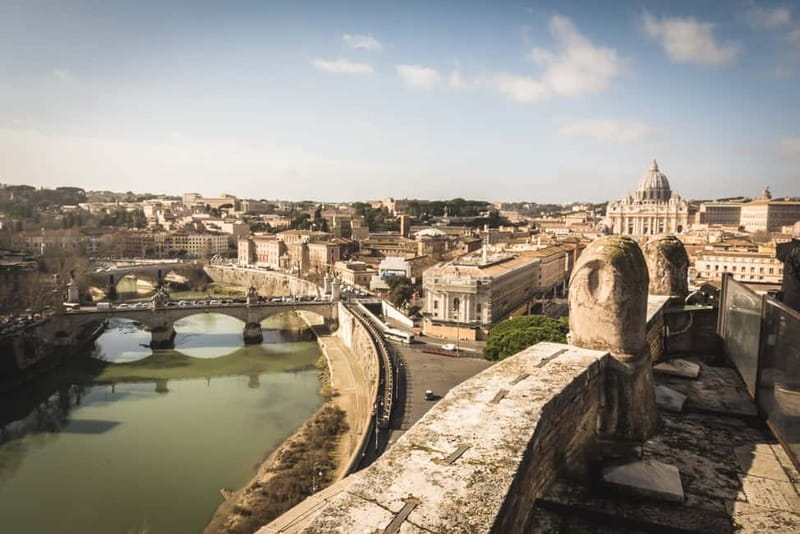
- The roof terrace view is the payoff: Vatican City, the Tiber River, and the Bridge of Angels.
- Optional audio guide on your phone lets you control pace and revisit details.
- Staff help for setup can make the audio guide smooth to start (one staff member named Adrian is specifically mentioned for helping with app setup).
Skip-the-line entry at Castel Sant’Angelo: what you actually gain
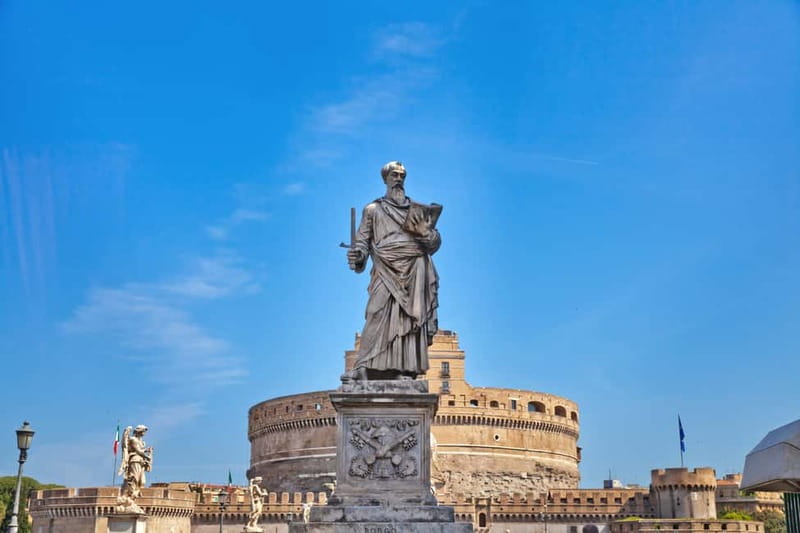
Castel Sant’Angelo is famous for two things: history that changes its purpose again and again, and views that make you feel like you’re flying over Rome. The skip-the-line part matters because the standard ticket situation can be slow. With this ticket, you head straight to the main entrance area and show your emailed ticket and valid ID.
The practical win is time. When you’re in Rome, time buys you more sights, not just more queueing. This ticket format gives you a head start on your visit so you can spend your energy where it counts: inside the mausoleum rooms and then up top.
Another smart detail: this is not sold as a full guided tour. You’re doing the walk-through with an audio option, plus the ticket access. That usually means less pressure, fewer group herding moments, and more control over pacing.
Castel Sant’Angelo’s story: from tomb to fortress to papal rooms
You’re not just buying entry to a museum. You’re stepping through layers of Rome.
The building starts as a monumental tomb—an ancient Roman statement by the Tiber River’s right bank. Over time, it gets reworked into a fortress. Later, it’s used in defensive roles connected to invasions and conflict. Then the focus shifts again with papal-era occupation, including rooms that served as a papal residence.
That “purpose changing over centuries” idea is what makes the site satisfying even if you’re not a hardcore architecture person. You can see why different parts of the building look the way they do: the spaces weren’t created for one single job. They were adapted, reused, fortified, and reinterpreted.
As you move through the floors, you’ll be able to connect the dots between Rome’s ancient foundations, the medieval defensive mindset, and the papal period. Even without a live guide, the structure supports that timeline.
The museum route: five floors, a spiral ramp, and practical flow
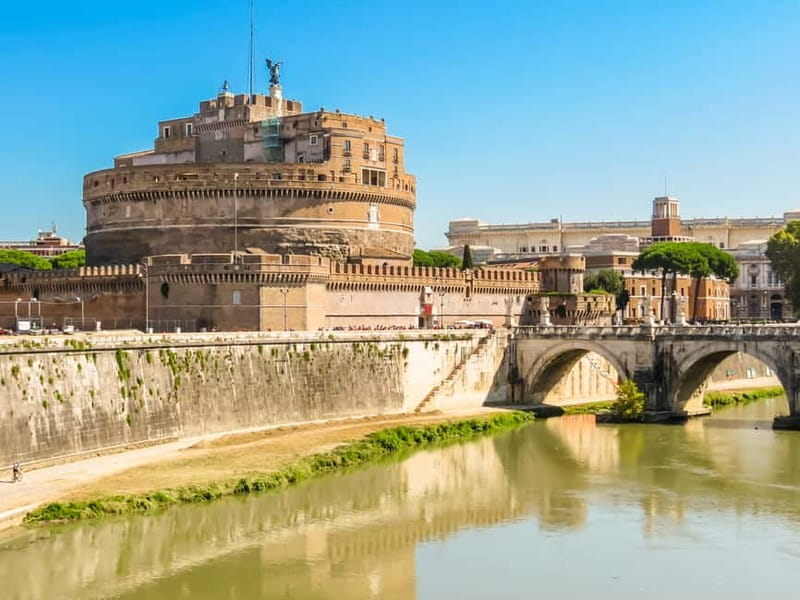
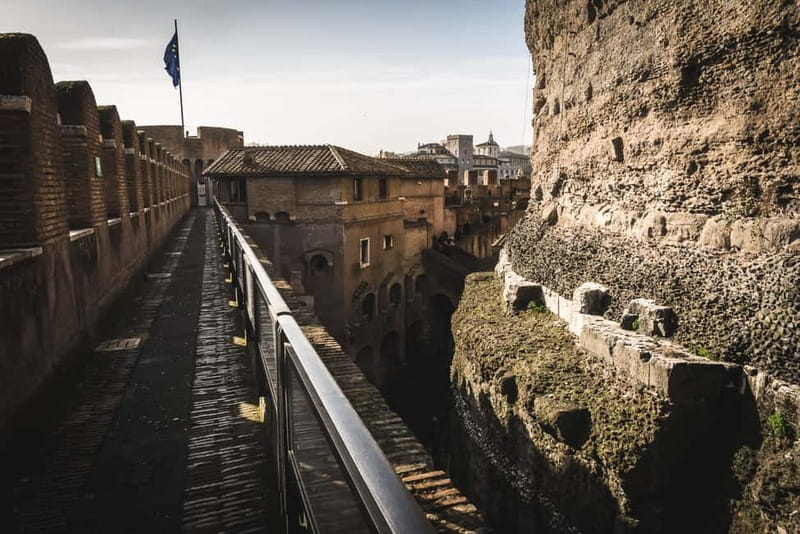
Inside, your visit is laid out so you can work through the complex without getting lost in big-room confusion.
Expect a route that takes you through five floors, heading toward a spiral ramp as part of the circulation. That spiral section is more than a design choice. It helps you keep moving logically through sections that would be awkward to navigate if you tried to improvise a path.
As you continue, you reach areas associated with papal life—cells and rooms connected to the papal residence function. It’s not just “pretty rooms.” It’s the kind of space where the building’s changing identity becomes obvious. A place that began as a tomb now reads like a stronghold that could house important people when the city needed protection.
You’ll also encounter a chamber of ashes, where the remains associated with iconic Roman figures are referenced, along with frescoes that have been preserved. That mix—symbols, rooms, and preserved art—keeps the visit from feeling like one long corridor of facts.
The overall feel: you can do this as an hour-and-some-change visit if you move at a steady pace. If you slow down for photos and reading, it expands easily because there’s a lot to take in on multiple levels.
Art, frescoes, and rooms: what you’ll notice if you go slow
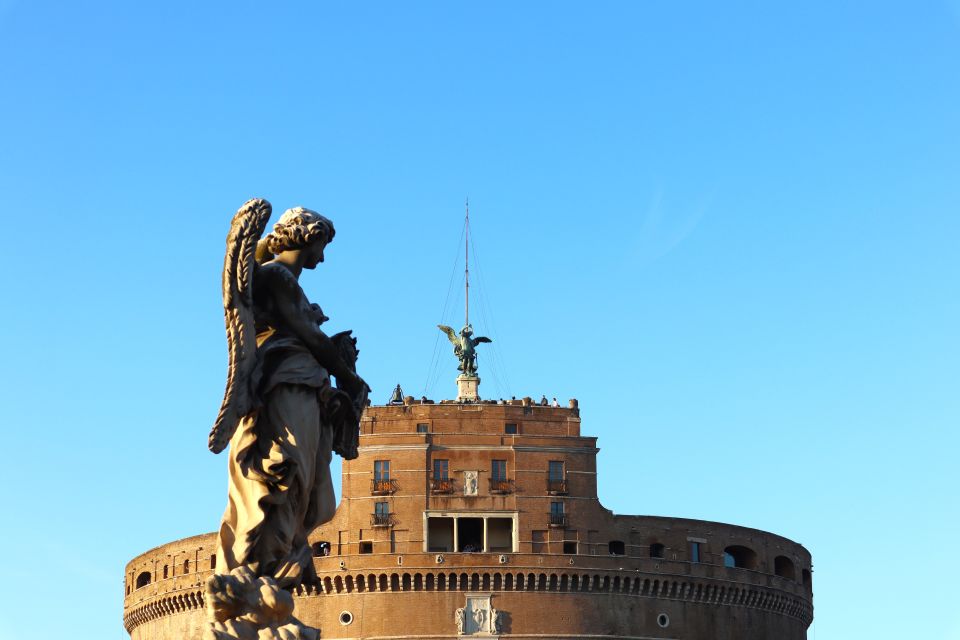
Castel Sant’Angelo is often described as smaller than some of Rome’s mega-sites, but it packs a punch because it concentrates different periods in one climb. Inside, you’ll see a wide variety of Renaissance and Baroque works and frescoes, plus more historical context built into the room-to-room progression.
Here’s how to make it land:
- Spend a little extra time in the first art-heavy areas so your brain adjusts from ancient stone to painted narratives.
- Then, when you reach the papal residence-style spaces, look at how the decoration and function change together.
- When you get to the preserved fresco portions, notice the contrast between what’s defensive architecture and what’s meant for viewing and commemoration.
This is also a good monument for people who love detail. If you like comparing styles—how something is built, then decorated, then repurposed—this fits.
One practical note: this isn’t the kind of museum where you’ll breeze through everything in five minutes. It’s built for time. Even a short visit feels richer when you pause in key rooms instead of scanning every label at speed.
The terrace payoff: Vatican City, the Tiber, and Bridge of Angels
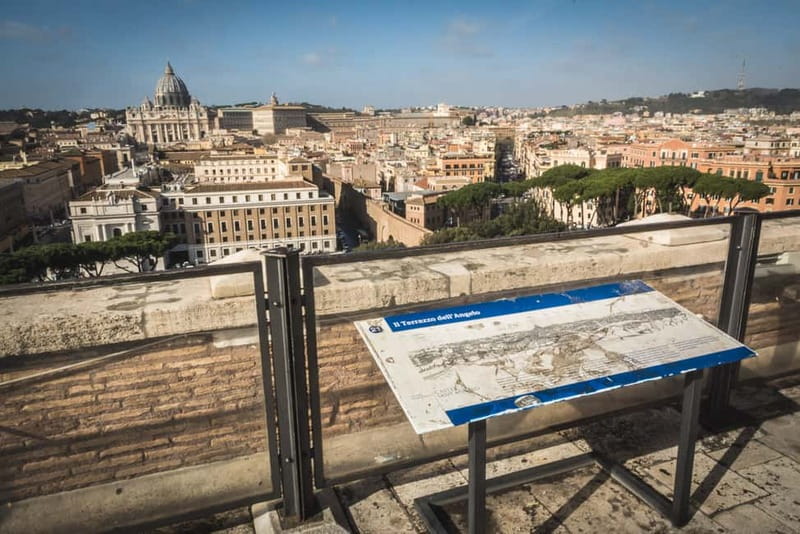
The roof terrace is the moment you’ll remember after you’ve left the building.
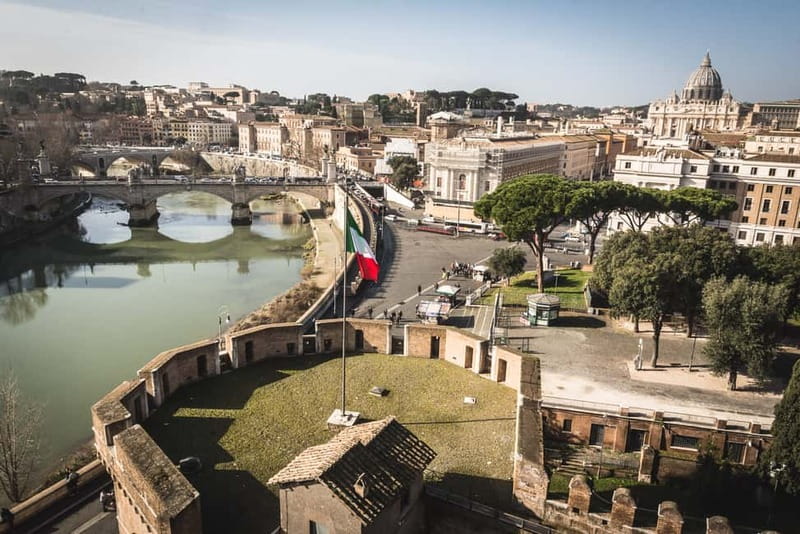
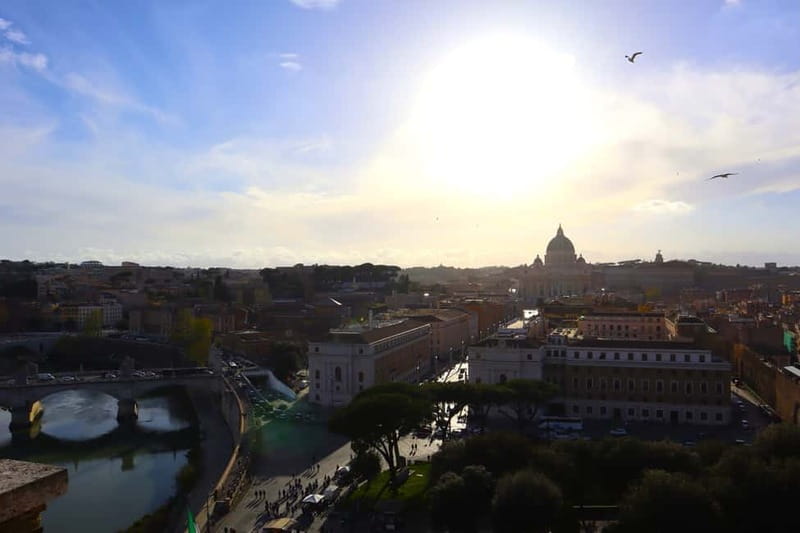
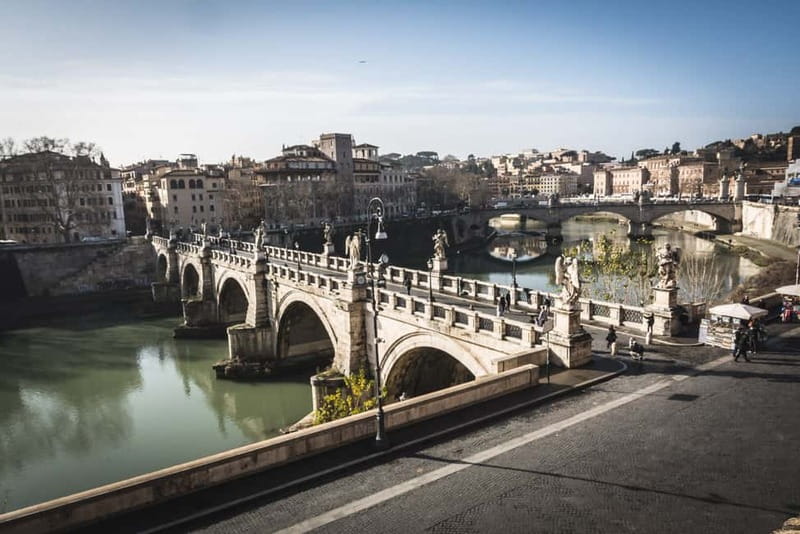
After the museum floors, you finish with panoramic views over Rome. You can spot Vatican City, the Tiber River, and the Bridge of Angels, which is the famous connection that brings you closer to St. Peter’s area.
This view is also where the visit becomes more than history. It’s where you get spatial sense. Seeing the river and bridges helps you understand how the city’s geography made this site useful across time.
And yes, plan a short break up top if you want one. There’s a cafe/bar area on the terrace level that people specifically call out as a good pause point, especially if you want a drink while the light is nice. One review even mentions taking about a 30-minute break there, which is a solid strategy. Treat it like a reset before you tackle the final stair section back through the route.
Optional digital audio guide: how to get it working smoothly
If you choose the audio option, you’ll use a smartphone-based guide. The site isn’t set up like a traditional “grab a headset and follow a guide” setup. Headsets are not included, so you need your own headphones.
Plan ahead. You’ll need to download the application before your visit begins, and you’ll receive details by email to help with that. Make sure your phone is charged, and bring headphones that actually work with your device.
The payoff is good because the audio guide approach matches the building. You can go room to room and hear what matters without being stuck in a group conversation. It also helps when you want to match what you’re seeing to its period—ancient, medieval fortress use, papal residence areas, and the museum spaces in between.
If you hit technical trouble, there may be staff support at the start to help you set things up. One staff member named Adrian is specifically mentioned as helping people get the audio guide app working.
My advice: don’t wait until the last second. Download the app earlier in the day, test your headphones, and keep a charger power bank if you’re the type who takes a lot of photos.
Price and value: is $15 a smart buy?
At around $15 per person, this is one of those Rome tickets that can feel like good value if your main goal is efficient access and a high-impact monument.
You’re paying for three things:
- Skip-the-line entry, which protects your time.
- A self-paced museum that still has a clear path through multiple floors.
- Optional audio guidance that adds context without the cost and pace of a full guided tour.
If you were paying full price for a conventional guided tour, you might feel like you’re paying extra for a group leader. Here, the structure does a lot of the work: you follow the museum flow, and you add audio context when you want it.
Is it worth it if you hate stairs? That’s the real value question. The ticket doesn’t change the fact that you’ll climb stairs to reach the terrace. If you’re confident with stairs, the price-to-experience ratio is strong. If you’re not, you may end up spending more energy managing your route than enjoying it.
Practicalities you should plan for before you go
This visit is straightforward, but it has a few real-world rules that matter.
What to bring
- Comfortable shoes (you’ll walk and climb)
- Headphones (if using the audio guide, headsets are not provided)
- A charged smartphone
- Internet access for the audio app setup
What’s not allowed
- Weapons or sharp objects
- Luggage or large bags
If you’re traveling with a bigger bag, keep your planning tight. Rome attractions can be strict about what gets through.
Meeting point and entry rhythm
You start at the meeting point address provided. Plan to go directly to the main entrance. You’ll show your emailed ticket and valid ID to begin.
Also, be on time for your booked time slot. Late arrivals and no-shows are not accommodated, so build in a buffer. Rome streets are charming, but they’re not known for punctual logistics.
A heads-up about interruptions
Rome can throw curveballs: security surges and unusual events can affect access. One account mentions tickets being quickly reprocessed when the site had an unexpected closure due to a major papal-related event. That’s not something you can control, but it’s a reminder to keep your expectations flexible if the city is under heavy security.
Should you book Castel Sant’Angelo skip-the-line entry?
Book it if you want:
- A time-saver that avoids long lines
- A self-paced monument with a logical route through five floors
- Strong payoff at the roof terrace, with city views including Vatican City
Skip or reconsider if:
- Stairs are a problem for you. This experience is not suitable for wheelchair users or people with mobility impairments.
- You want a “sit-down” museum. This is more walking and climbing than resting.
One last tip: if you’re choosing a time slot, consider going later in the day when crowds can thin out. You’ll still get the history, and the view experience often feels better with fewer people.
FAQ
What’s included with the Castel Sant’Angelo skip-the-line ticket?
You get the Castel Sant’Angelo skip-the-line entry ticket. If you select the optional add-on, you also get a digital audio guide.
Is this a guided tour with a person?
No. This is ticket-based entry with optional audio guidance. Staff may help at the start with ticket access and audio setup, but it’s not described as a guided tour.
What languages are available for the audio guide?
The audio guide option is available in English, French, Italian, Chinese, German, and Spanish.
Do I need to bring headphones?
Yes. Headsets are not included, so you should bring headphones to use with the audio guide.
How do I get my tickets?
Your tickets are delivered by email to the address used during booking, within 24 hours prior to the activity. You show the emailed ticket and your ID at the entrance.
Do tickets work for any time that day?
Tickets are valid only for the selected date and time slot.
Do I need a smartphone and internet?
Yes. You’ll need a charged smartphone and internet access, and you must download the application before your visit.
Is Castel Sant’Angelo suitable for wheelchair users?
No. It is not suitable for wheelchair users and not suitable for people with mobility impairments.
Are bags or luggage allowed?
Luggage or large bags are not allowed. Follow the site’s restrictions for what you can bring.