REVIEW · ROME
Rome: Appian Way & Roman Aqueducts Guided E-Bike Tour
Book on GetYourGuide →Operated by TopBike Rental & Tours · Bookable on GetYourGuide
Rome, minus the crowd, by e-bike. I really like how this tour gets you onto the 2,300-year-old Appian Way cobblestones and then keeps rolling past the Roman aqueducts without the usual “bus-to-museum-to-souvenir” rhythm. My main caution is that parts of the route are uneven and rocky, and you’ll also spend some time riding in traffic before the parks fully take over.
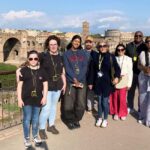
You start near the Colosseum area, meet a small group (up to 10), and follow your guide at a pace that feels like sightseeing with guardrails. If you’re even a little nervous about bikes or Rome streets, you’ll probably appreciate that guides such as Nima, Cas, Fabio, and Bita are repeatedly praised for keeping the group together and handling busier road sections with care.
Small-group rhythm: Limited to 10 people, with time for stops and short historical briefings.
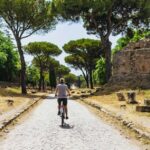
Appian Way on real cobblestones: That long stretch of ancient stone is the core experience here.
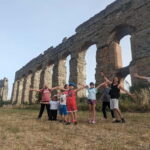
Aqueducts in Parkland Rome: You transition from city edges into places with no traffic for long stretches.
Guides who prioritize safety: Names like Pablo, Zac, and Ali show up in people’s safety notes.
E-bikes make “intermediate” doable: More energy on hills and smoother control on longer off-road sections.
In This Review
- Appian Way and Aqueducts: Why This Ride Beats Just Wandering
- Getting From Via Labicana to the Route’s Ancient Core
- Aurelian Walls and Catacombs: Ancient Rome’s Edges Up Close
- Circus of Maxentius and Cecilia Metella: Ruins That Still Feel Big
- The Appian Way Moment: When the Ancient Road Becomes the Point
- Parco degli Acquedotti: Aqueducts You Can Actually Trace With Your Eyes
- Caffarella Valley Park: The Quiet Side of Rome
- E-Bike Setup, Helmet Rules, and Realistic Riding Expectations
- Price and Value: Is $85 for 4 Hours a Good Deal?
- Who Should Book This Tour (and Who Might Want a Different Plan)
- Should You Book This Rome Appian Way E-Bike Tour?
- FAQ
- Where does the tour start?
- How long is the tour and how far do you ride?
- Is the route mostly off-road or on paved roads?
- Will there be traffic?
- What biking gear is included, and is a helmet required?
- Is the tour suitable for children?
Appian Way and Aqueducts: Why This Ride Beats Just Wandering
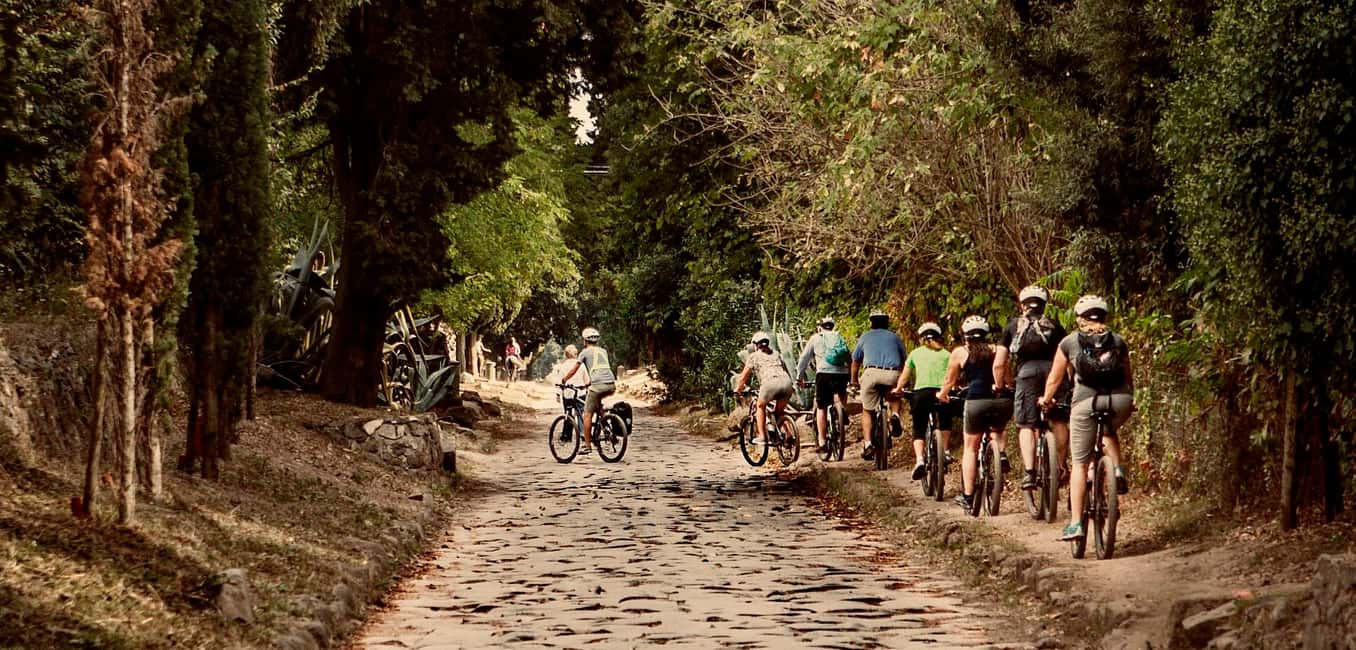
The magic here is the sequence. You begin with Rome’s built-up fabric, then you ride out into older, calmer terrain where ancient infrastructure still shapes the view lines. On foot, Appian Way and the aqueduct parks can feel like a big day. By e-bike, you get to cover real ground in a half-day and still have moments to actually look.
Two parts of the experience land hardest for me. First, the Appian Way cobblestones are not a photo-only thing. Once you’re rolling over them, you feel how purpose-built they were, like a road engineered for movement and empire. Second, the aqueducts look different when you’re close enough to track the lines and scale in person, not just from a distance. You start seeing how the Romans transported water across valleys and ridges.
The trade-off is the terrain. The tour is intermediate and includes off-road riding (about 60% of the route), so your comfort level matters more than speed.
Getting From Via Labicana to the Route’s Ancient Core
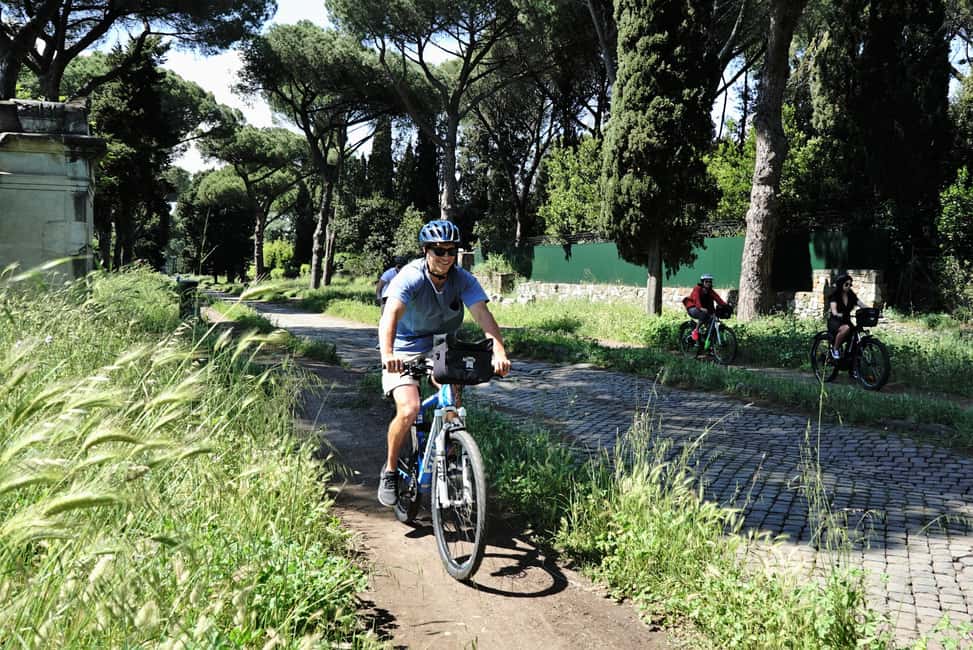
Your meeting point is Via Labicana 49, about a five-minute walk from the Colosseum. No hotel pickup or drop-off here, so you’ll want to arrive a bit early, get your helmet sorted, and get a quick bike familiarization before rolling out.
From there, you’ll ride from the urban area toward the start of the experience’s most historical stretch. Along the way, you’ll likely pass through a mix of settings: city streets first, then the route transitions into park and countryside feel. That shift is part of the value. Rome can be loud and crowded, but you don’t just “escape” with distance; you escape with context. The guide helps connect what you’re seeing as you move.
This is also where the e-bike earns its keep. Multiple guides mentioned in people’s feedback (for example, Christian and Ana) helped first-time e-bike riders get comfortable fast. When you’re dealing with Rome’s roads plus uneven ground later, that confidence-building matters.
You can also read our reviews of more cycling tours in Rome
Aurelian Walls and Catacombs: Ancient Rome’s Edges Up Close
One of the smarter moves in the morning routing is that you don’t jump straight to the postcard zones. You start with a sense of Rome’s boundaries and infrastructure.
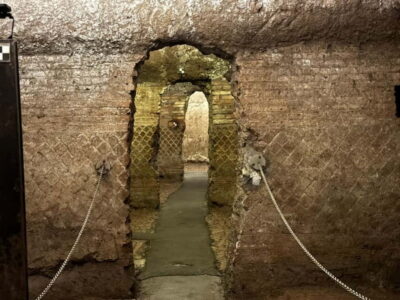
You’ll have an Aurelian Walls stop before you move toward the Catacombs of Rome area. Even without going deep into a museum-style format, these stops set the mood: Rome isn’t only temples and emperors. It’s also walls, burial systems, and the practical “how a city works” layers that made the capital durable.
A practical note: the Catacombs portion is listed as sightseeing, so expect walking and standing time around the area, not just riding. It’s one reason to wear comfortable shoes. Your bike may do the heavy lifting, but you’ll still want stable footing when the route pauses.
Circus of Maxentius and Cecilia Metella: Ruins That Still Feel Big
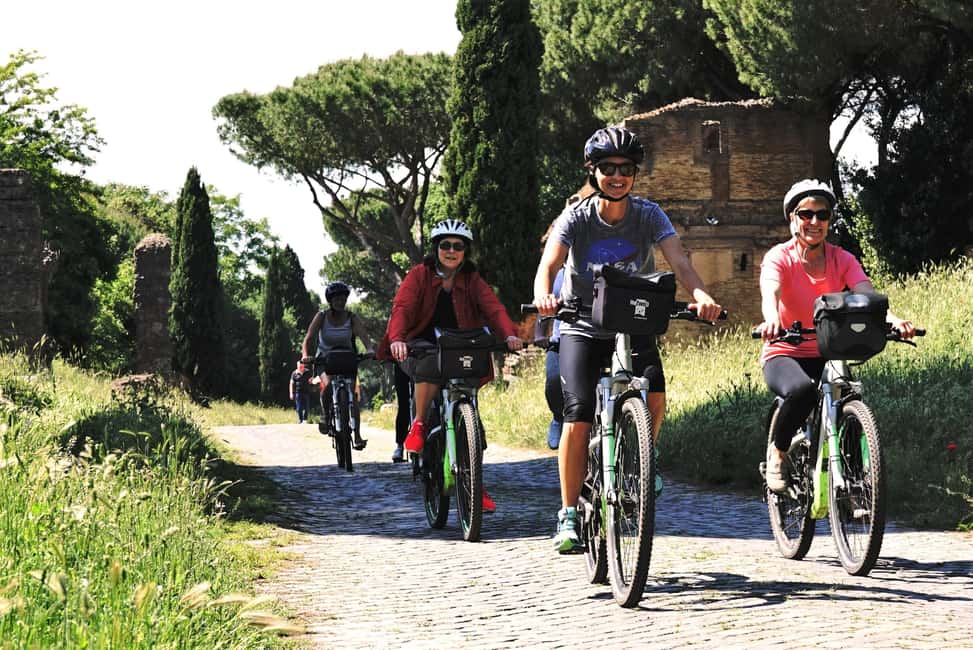
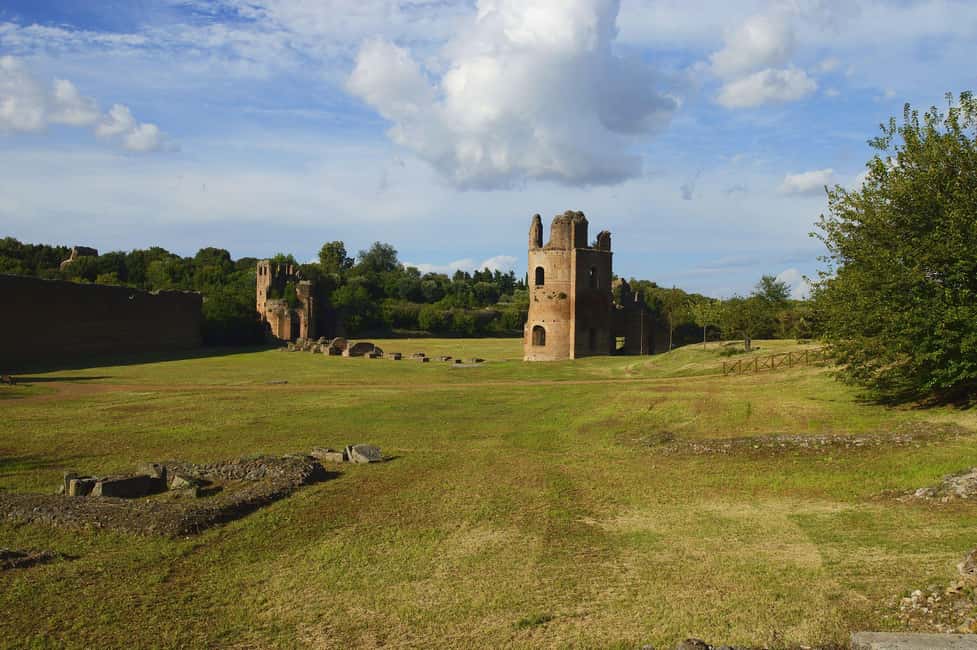
As you continue, you’ll reach the Circus of Maxentius, and later the Tomb of Cecilia Metella area. These stops give you two different flavors of Roman monumental design.
The Circus is tied to public spectacle—spaces where people gathered, games happened, and the city expressed itself loudly. Cecilia Metella’s tomb is different: it reads like a landmark in the landscape, built to last and to be seen. When you’re on a bike, these monuments don’t feel like “one stop.” They feel like signposts you’re using to orient yourself.
Also, the pacing here matters. The guides are repeatedly praised for safety and for staying organized in traffic transitions. That matters at these stops because you’ll want the group moving efficiently, especially when you’re near busy intersections linking city streets to quieter tracks.
The Appian Way Moment: When the Ancient Road Becomes the Point
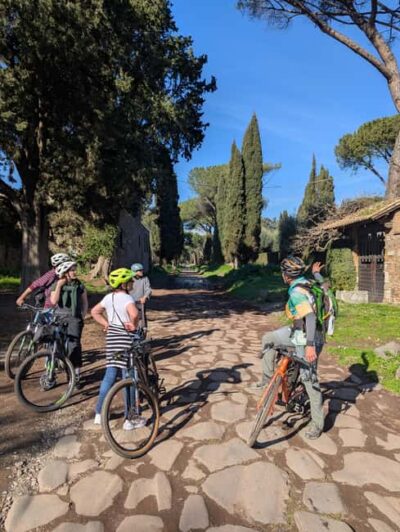
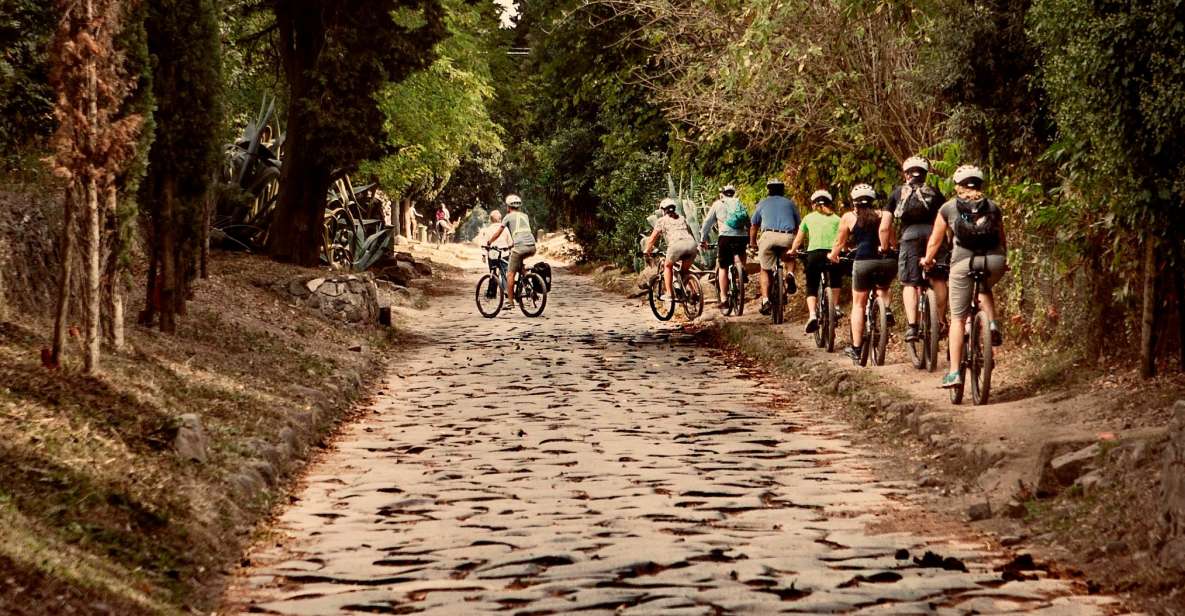
This is the centerpiece. You cycle along the Ancient Appian Way, a stretch famous for its 2300-year-old cobblestones. When you’re actually rolling across the stones, you stop thinking about distance and start thinking about design: how the road resists time, how it guides wheels, and why it became a symbol of Rome’s reach.
What I like about this part is that it’s not just “look, stones.” Your guide builds context while you ride. That means you’re not only admiring remnants; you’re understanding what they represent: movement, military and administrative logistics, and the reach of an empire that thought long-term.
One practical consideration from real riders: these are rocky roads, gravel, and ancient stones. Even with e-bikes, you’re still on uneven surfaces. I’d plan on slowing your body down, keeping a light grip, and letting the bike do the work rather than bracing too hard with your shoulders.
Parco degli Acquedotti: Aqueducts You Can Actually Trace With Your Eyes
After leaving the Appian Way, the route follows the aqueduct lines through the Roman countryside. This is where the scenery payoff starts to feel personal, not generic.
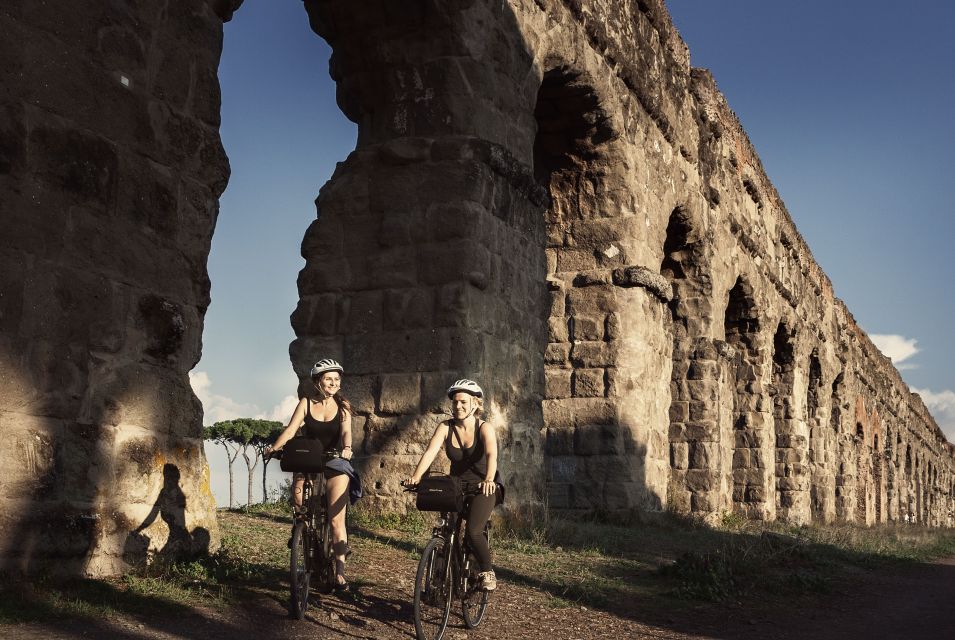
You’ll spend time in Parco degli Acquedotti, a key reason this tour is worth the effort. Riding beside long aqueduct structures lets you “track” them the way you track a road on a map. The scale becomes obvious fast. It’s also the part where many people say the vibe changes from city sightseeing to something closer to open-air wandering.
A fun, very specific detail from the experience: on hot days, some guides encourage the chance to dunk your head in authentic Aqua Felix water (when the spot is accessible). Even if you don’t do it, knowing that this route includes water-adjacent moments helps you understand the aqueducts weren’t just engineering—they were daily-life infrastructure.
You can also read our reviews of more guided tours in Rome





Caffarella Valley Park: The Quiet Side of Rome
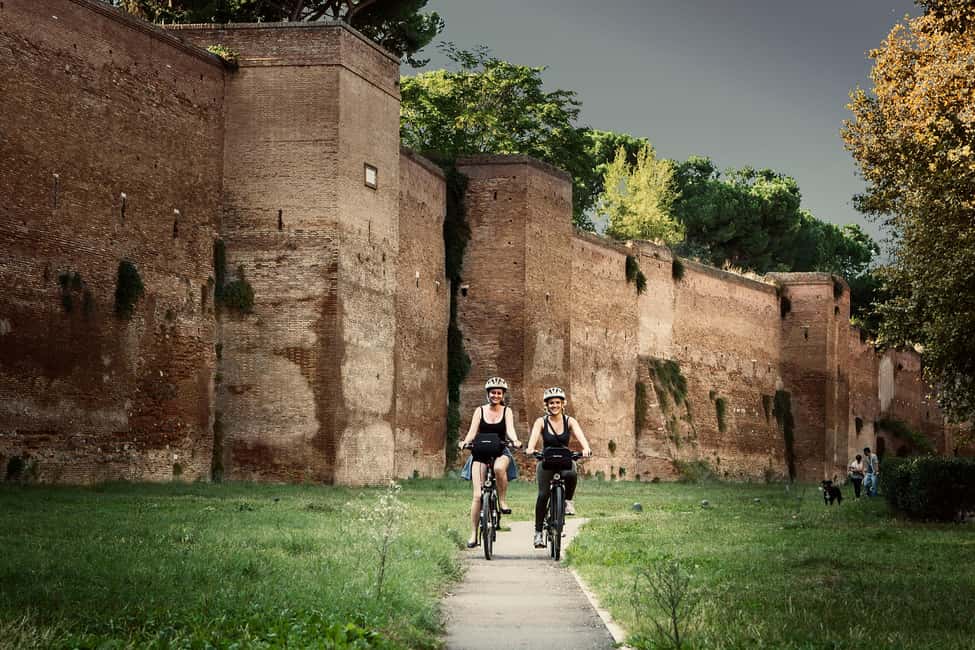
Next comes Caffarella Park, often described as the intact, beautiful countryside side of Rome. This is another value driver for the tour: you’re not only hitting major ancient names. You’re also getting time in an area that feels less like a checklist and more like a walk in a historic setting.
In the parks, the traffic situation improves. The tour guidance notes that about 60% of the route is in park areas with no traffic, which is a huge quality-of-life upgrade for a bike day in Rome.
If you’re the kind of traveler who wants one afternoon that feels like you’re living the city beyond the Colosseum-view circuit, this park stop tends to deliver.
E-Bike Setup, Helmet Rules, and Realistic Riding Expectations
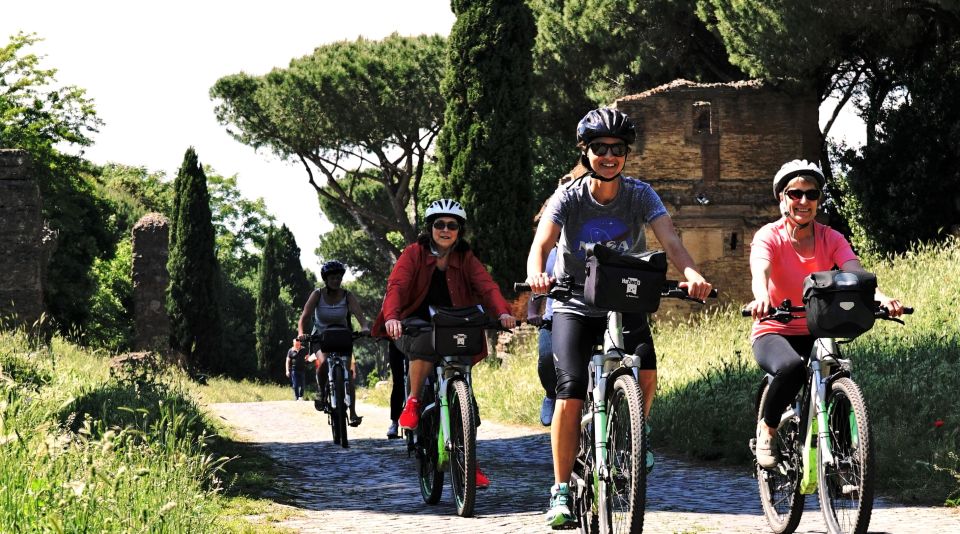
This tour includes a Cannondale e-bike with anti-puncture tires and a comfortable saddle, plus a helmet (mandatory), a handlebar bag, and a biodegradable bottle of water. Those details matter because they reduce friction. You don’t just rent a bike; you get a setup designed for this kind of mixed terrain.
The route is 27 kilometers total, with about 40% in the city and 60% off-road. The city portion uses carefully selected streets, but some traffic is unavoidable to connect the Appian Way to the park areas. That’s why the guide’s role is so important here. Several named guides (including Fabio, Nima, Zac, and Ali) are praised for keeping riders safe during city segments and at crossings.
What does intermediate really mean? It’s described as challenging, especially if you’re riding with a child seat/extension. Even without that, you should assume uneven surfaces and plan to ride with calm attention, not “casual cruise mode” expectations. Multiple riders mention the route can feel harrowing on rocky sections if you’re less used to uneven ground, so set your comfort level honestly.
Also check the limits:
- Bike equipment has a weight limit of 300 lbs (136 kg).
- Helmet is required.
- Infants under 1 year can’t participate.
Price and Value: Is $85 for 4 Hours a Good Deal?
At $85 per person for about 4 hours, the price lands in the “worth it if you want time-saving plus access” category. You’re paying for an e-bike, a professional guide, and a route that strings together multiple major ancient sites in a way you can’t easily reproduce on your own without planning.
You also get a real structure:
- short sightseeing stops at places like the Aurelian Walls area, Catacombs, Circus of Maxentius, and Tomb of Cecilia Metella
- a long, core ride on the Appian Way
- then aqueducts and park countryside riding
That mix is the value. If you only wanted aqueduct photos or only wanted Appian Way, you could piece together a simpler plan. But this tour strings it into one guided flow, and the guides’ safety and pacing keep the day from turning into stress.
Small group size helps too. With a maximum of 10 participants, you’re not fighting crowds at the stops, and the guide can manage spacing on uneven sections more effectively.
Who Should Book This Tour (and Who Might Want a Different Plan)
This tour is best for you if you want:
- a break from central Rome crowds while still seeing major ancient sights
- an e-bike day that feels adventurous, with off-road time in parks
- a guided explanation as you ride, not only a list of landmarks
It also works well for riders who aren’t daily cyclists. E-bikes make the hills and longer distances more manageable, and guides are praised for patience with people who are new to e-bikes (Christian and Ana are examples mentioned in feedback).
You might reconsider if:
- you’re not comfortable on uneven, rocky, gravelly surfaces
- you get stressed by city traffic transitions (even though city segments are limited and carefully selected)
For families: kids have options based on age. Infants under 1 can’t go. Kids 1–4 travel in a child seat (max 49 lbs / 22 kg) and come free. Ages 5–8 get a child extension. Ages 9+ can ride an appropriately-sized e-bike. If you’re traveling with kids, this is one of the rare Rome experiences where you can keep everyone in motion.
Should You Book This Rome Appian Way E-Bike Tour?
I’d book it if your goal is a half-day that mixes big-name Ancient Rome with real countryside riding, and you want someone else handling the route and the safety rhythm. The strongest reasons are simple: the Appian Way cobblestones, the Roman aqueducts by bike, and the fact that the day includes park riding with no traffic for long stretches.
If you’re unsure, lean toward confidence-building. This tour is built for mixed riders: small groups, helmet rules, and guides who focus on keeping you together. Just be honest about the terrain. Wear comfortable shoes, expect rocky/off-road sections, and you’ll likely end up with photos that feel like you earned them.
FAQ
Where does the tour start?
The meeting point is Via Labicana 49, about a 5-minute walk from the Colosseum. There is no hotel pickup included.
How long is the tour and how far do you ride?
The tour lasts 4 hours and covers 27 kilometers total.
Is the route mostly off-road or on paved roads?
It’s a mix. About 60% of the route is off-road (in parks) and about 40% is in the city on carefully selected streets.
Will there be traffic?
Yes. Roughly 40% of the route is in the city, and the guidance notes that some traffic is unavoidable to connect the Appian Way to the park areas. In the remaining 60%, riding is in parks with no traffic.
What biking gear is included, and is a helmet required?
You get a Cannondale e-bike, helmet (mandatory), a handlebar bag, and a biodegradable bottle of water.
Is the tour suitable for children?
Infants under 1 year can’t participate. Infants 1–4 travel on a child seat (max 49 lbs / 22 kg) and come free. Ages 5–8 have a child extension provided. Ages 9+ can ride on an appropriately-sized e-bike.