REVIEW · ROME
Jubilee tour: art and popes in Rome in the golden age of Christendom
Book on GetYourGuide →Operated by Roman Art and History · Bookable on GetYourGuide
Rome’s Jubilee story feels personal on foot. This art-and-popes walk turns big Church history into something you can see and follow through real streets and landmark stops. I love the way it connects Jubilee moments to specific artists and churches, instead of treating the subject like a textbook. And I really like the practical, people-on-the-ground feel: you get context for why these places mattered, not just what they look like.
One thing to consider: this is a 3-hour walking tour on city sidewalks. It’s not suitable for wheelchair users or people with mobility impairments, and it’s also not a good fit for motion sickness.
In This Review
- Key points worth knowing before you go
- Jubilee Rome and why this walk works
- Piazza dell’Accademia di San Luca and the art engine behind the Pope
- Trevi Fountain: Jubilee of 1650 and the artist rivalry angle
- Pontifical Gregorian University and the Baroque education atmosphere
- Piazza di Pietra and the Rome-to-Christianity transition
- Galleria Sciarra and the squares that keep the story moving
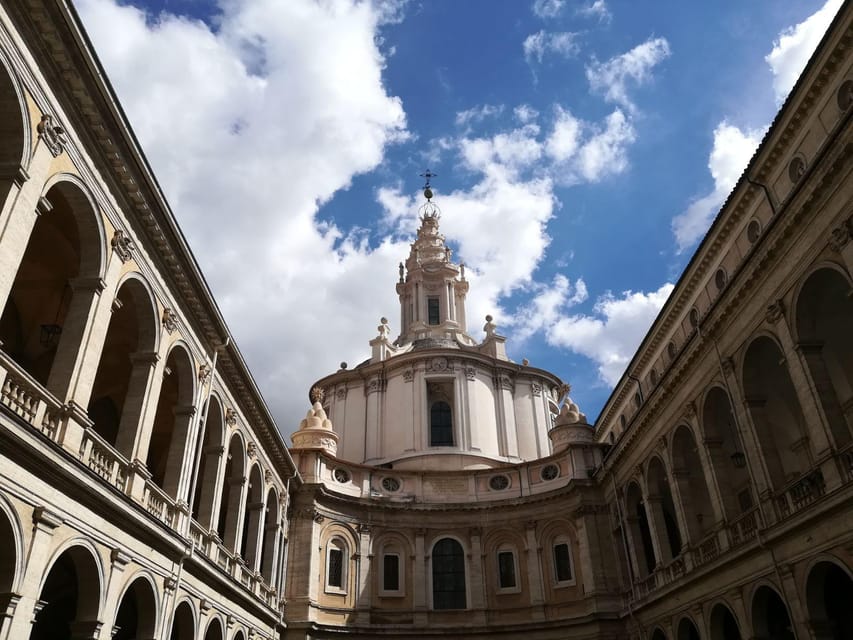
- Sant’Ivo alla Sapienza: where Jubilee planning energy shows up
- Santa Maria Sopra Minerva and why 1300 is the story’s fuse
- St. Ignatius: Popes, Jesuits, knights, and artists
- The Pantheon: historic heart, Jubilee heart, and a key planning task
- Between S. Agostino and S. Luigi: Caravaggio’s turbulent thread
- What makes the guide factor matter
- Who this tour suits best (and who should skip it)
- Price and value: is $71 worth it?
- Should you book the Jubilee tour: art and popes in Rome?
- FAQ
- FAQ
- How long is the Jubilee tour?
- Where does the tour start?
- Is the Pantheon entrance included?
- What languages are the tours offered in?
- Is there free cancellation?
- Is the tour suitable for wheelchair users or limited mobility?
- Is there a pay later option?
Key points worth knowing before you go
- Accademia di San Luca as a starting “hub” that frames Rome’s art world in service of the Pope
- Trevi Fountain’s Jubilee of 1650 set up as an artistic rivalry story, not just a photo stop
- Baroque education stops around the Pontifical Gregorian University and nearby squares
- Santa Maria Sopra Minerva and the first Jubilee in 1300 tied directly to why this pilgrimage idea caught fire
- Sant’Ivo alla Sapienza’s Jubilee planning vibe, with a focused guide-led look
- Caravaggio in the late-in-the-walk spotlight, placed between S. Agostino and S. Luigi
Jubilee Rome and why this walk works
A lot of Rome tours hit you with facts, then move on. This one is built around the Jubilee idea—how the Church’s great call to pilgrimage changed the city’s art, architecture, and public life over time. The result is that you don’t just see monuments. You get the logic of why Rome kept reshaping itself for a Jubilee year.
You’ll also feel the “behind the scenes” side of history. The tour description leans into scandals, secrets, intrigues, and passions tied to major Jubilees. Even if you’re more of a “show me what to look at” traveler, that angle helps you read the city. It turns statues and ceilings into clues about power, patronage, and belief.
Value-wise, the price is $71 for 3 hours, which is pretty fair for a semi-private format with an art-and-history guide and a route that hits more than ten major Rome landmarks. The catch is that you’ll want to care about stories—art plus papal history—because that’s where the tour earns its cost.
You can also read our reviews of more tours and experiences in Rome.
Piazza dell’Accademia di San Luca and the art engine behind the Pope
The walk begins in front of the Hotel all’Accademia, at Piazza dell’Accademia di San Luca. It’s a smart opening choice. Instead of starting at a church door, you start near the nerve center of the artistic world that served papal Rome. That matters because the Jubilee wasn’t only spiritual. It was also a major arts and design project, with commissions, propaganda, and competition.
From there, your guided time is short—about five minutes—but it sets your mental map. You’ll be primed to spot how art institutions, religious leadership, and public spectacle line up across the next stops. If you like getting your bearings fast, this start helps.
The best part of this kind of opening is that it changes what you notice later. When you reach Renaissance and Baroque masterpieces on the route, you’re not asking, Who built this? You’re asking, Why did they build it here, and why did they care in that Jubilee year?
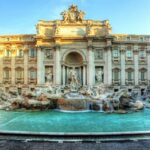
Trevi Fountain: Jubilee of 1650 and the artist rivalry angle
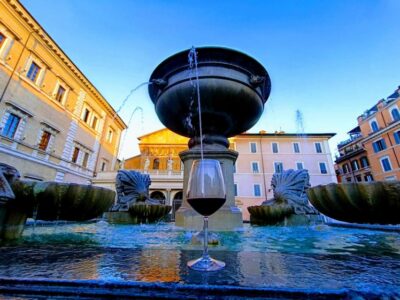
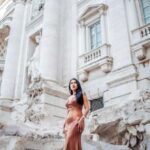
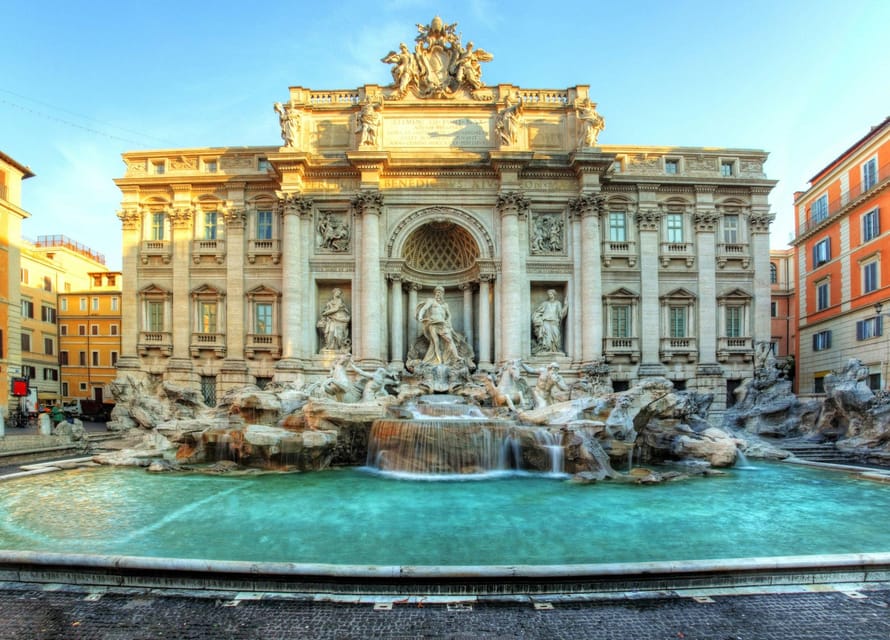
Next up is Trevi Fountain. On a normal day, it’s a “big wow” stop. On this tour, you’ll spend about 15 minutes with a guide framing it through the Jubilee of 1650. The fountain becomes more than scenery—it becomes a story about rivalry between famous artists and what the Jubilee spotlight did to artistic careers.
This is a good moment to practice your Jubilee “lens.” When you look at a landmark like Trevi, ask what it broadcasts. In Jubilee years, Rome had to feel spiritually welcoming and culturally irresistible. Big public art and monumental fountains did that work.
Practical note: Trevi is busy, and the tour only gives you a limited window. So go in ready to watch rather than linger. If you want a slower, longer photo session, plan to do that after the tour.
Pontifical Gregorian University and the Baroque education atmosphere
Your route continues to Piazza della Pilotta, in front of the Pontifical Gregorian University. You’ll get about 10 minutes of guided context here, focused on the role of culture and learning in Baroque Rome and beyond.
This stop may look like “just another building” at first glance, but it plays a useful role in the tour’s bigger story. Jubilees weren’t only about crowds praying. They were also about institutions shaping beliefs, training leaders, and promoting intellectual life. Places like this help explain how Rome’s spiritual mission and cultural power reinforced each other.
If you’re the type who enjoys architecture and city structure, you’ll probably appreciate how the guide uses the setting to connect art, education, and Church authority.
Piazza di Pietra and the Rome-to-Christianity transition
The tour then moves you toward Piazza di Pietra, guided for around 10 minutes. The big idea here is the meeting point of ancient Rome and the origins of Christianity. You’re basically walking along the city’s layered identity: old imperial space becomes religious pilgrimage space over time.
This segment is where the Jubilee theme really earns its keep. In Rome, centuries don’t politely separate. They overlap. The tour helps you notice those overlaps instead of letting them blur together.
If you’re short on time and want to understand Rome’s “before and after” story without spending hours in a museum, this is one of the more efficient parts of the walk.

Galleria Sciarra and the squares that keep the story moving
You’ll pass through the Galleria Sciarra (with guided time around 10 minutes) and then reach Piazza Colonna and Piazza di Pietra (covered as part of the general walk sequence). The listing specifically mentions wonderful frescoes in the galleria, which is exactly the sort of stop that makes you feel you’re seeing Rome’s character rather than only Rome’s headline monuments.
This is also a nice rhythm change. Rome’s main churches and famous fountains can feel like a circuit of crowds. The galleria and surrounding passages give you a more human pace and help you absorb the guide’s “what this means” explanations.
Sant’Ivo alla Sapienza: where Jubilee planning energy shows up
Sant’Ivo alla Sapienza is one of the tour’s anchor stops. You’ll get guided time totaling about 35 minutes split across the schedule (20 minutes and then 15 minutes). That’s a hint that your guide will want you to notice more than one angle of the place.
The key detail is the “patio of S. Ivo alla Sapienza” where the great Jubilees of the past were decided and organized. Whether you’re a history buff or not, that’s a powerful way to connect the Jubilee idea with the people who ran the show.
This is also where art history becomes practical. Sant’Ivo’s design and atmosphere help explain how architecture and visual symbolism support institutional goals. You’re not just looking at a church or landmark. You’re looking at a space that helped manage large-scale religious moments.
If you like structured tours, you’ll appreciate that the guide gives enough time here to slow your brain down.
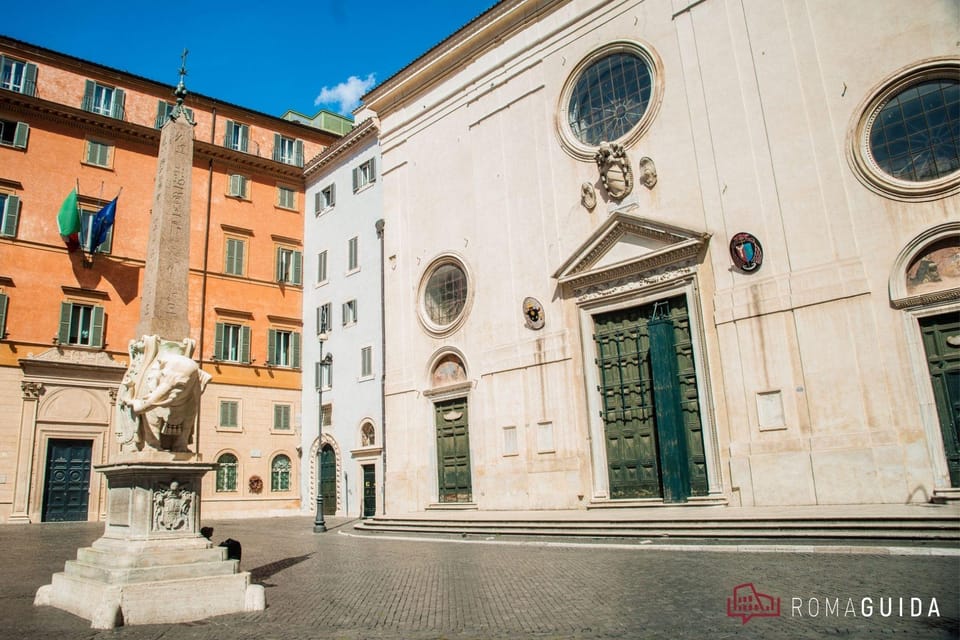
Santa Maria Sopra Minerva and why 1300 is the story’s fuse
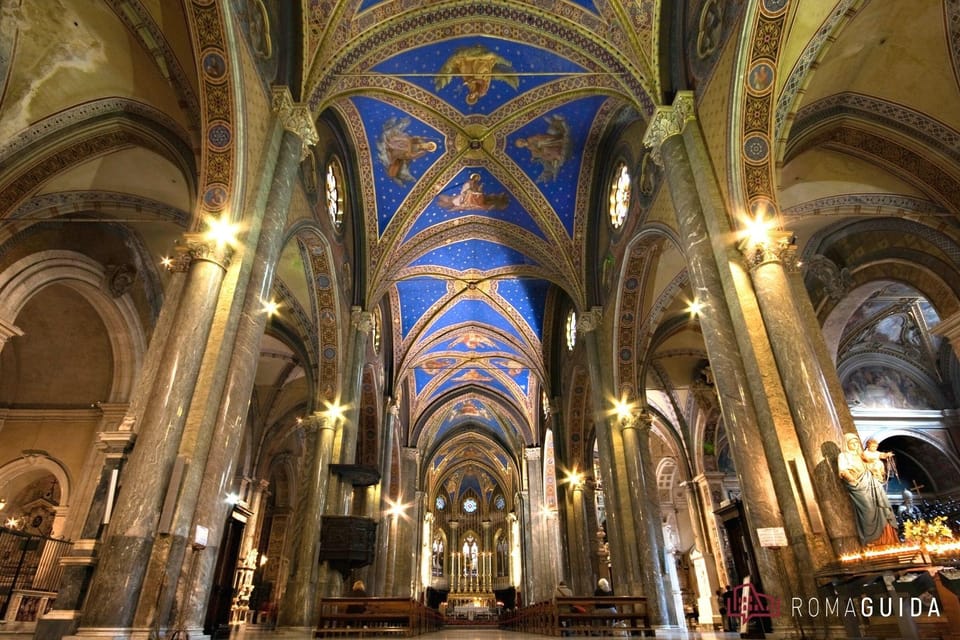
Next comes Santa Maria Sopra Minerva, guided for about 10 minutes. The tour frames it as a key Jubilee site because it saw the celebrations of the first Jubilee in history in the year 1300. It’s also the resting place of St. Catherine of Siena, patroness of Italy.
That’s a lot of meaning packed into a short visit, and the guide’s job is to keep it from becoming a list. If the guide does a good job (and several past guides have), you’ll leave feeling like you understand how pilgrimage became a recurring Church event and why Italy’s spiritual identity is tied to these names.
This stop also gives you a chance to slow down your walking pace briefly and focus on devotional art and memory—exactly what a Jubilee theme needs after the more urban, city-explainer segments.
St. Ignatius: Popes, Jesuits, knights, and artists
The tour includes entry to St. Ignatius (listed as St. Ignatius) for guided time tied into the overall church portion. The description highlights popes, Jesuits, knights, and artists of the 15th century discovering the New World.
Even if you only remember one thing from this church stop, remember the tour’s angle: Jubilees didn’t happen in a vacuum. They were part of a global Church picture. Institutions like the Jesuits shaped missions, education, and cultural production. Art followed the money and the message.
This is also a good place to check whether church interiors calm you down or overwhelm you. The tour is only part of the cathedral story, but for many people, the church stops are the emotional core of the walk.
The Pantheon: historic heart, Jubilee heart, and a key planning task
The Pantheon is the big famous finish-line monument on the route, with about 15 minutes of guided time. The tour explains that its millennial history begins in the Roman Empire and later becomes a heart of the Jubilee since the Renaissance.
That framing is helpful because it prevents the Pantheon from becoming just a “cool dome.” It’s about continuity and transformation—imperial space becoming pilgrimage space. Rome does this constantly, and the Jubilee is one of the clearest ways to see the pattern.
Important practical note: Pantheon entrance is not included. You’ll need to make nominal reservations through the Pantheon’s official website. If you skip that step, you could end up standing outside longer than you want. Do yourself a favor and handle the reservation early.
Between S. Agostino and S. Luigi: Caravaggio’s turbulent thread
Near the end, the tour shifts into Caravaggio territory. You’ll discover his talent and passion as a “rebel artist” of the 1600s, placed between the churches of S. Agostino and S. Luigi. This is a satisfying last artistic note because it connects Jubilee-era Rome to a more dramatic, human style of art.
Caravaggio is the kind of artist who makes you look harder. When you’re moving through churches and public monuments on the Jubilee theme, his story gives the tour a pulse. It also matches the tour’s promise of scandals, passions, and intrigue behind big religious moments.
After that, the walk ends on Via degli Acquasparta.
What makes the guide factor matter
The quality of this tour rides on the guide. The format is short, so the explanations have to be sharp. Past experiences highlight that guides can bring the Jubilee story to life—one English guide named Diana stood out for being excellent, with a mix of deep information and a fun way of talking about it.
So, if you’re booking with any flexibility, aim for a time slot that fits your energy and makes it easiest to meet the guide promptly. Because the tour is only three hours, you’ll get the best payoff when you show up ready to walk and listen.
Who this tour suits best (and who should skip it)
You’ll likely love this tour if you:
- enjoy art history with a story, not just architecture descriptions
- want a Jubilee timeline that connects popes, churches, and artists
- like semi-private group pacing and guided context in central Rome
- prefer short, efficient walks over long museum days
You might not love it if you:
- need lots of resting time on a chair (there isn’t much)
- get motion sick in moving crowds or on walking tours
- want a strictly “quiet, contemplative” experience only inside churches
Also note: it’s not suitable for wheelchair users and people with mobility impairments, and there’s an age limit listed for people over 95.
Price and value: is $71 worth it?
For $71, you’re paying for a concentrated 3-hour package: guided storytelling, a route that hits multiple major Rome sites, and church entries (including Santa Maria Sopra Minerva and St. Ignatius). The one notable separate cost risk is the Pantheon, since entrance is not included and reservations are required.
Here’s the simple way to judge value: if you want Jubilee context tied to art and popes, and you’re comfortable walking, the price is fair. If you mostly just want to take photos and you don’t care about the artists and papal storyline, you’d probably get less out of it.
Should you book the Jubilee tour: art and popes in Rome?
I’d book it if you’re going to Rome with a curiosity about how faith, politics, and art shaped the city across centuries. This tour gives you a clear narrative thread from early Jubilee ideas into Renaissance Jubilee presence, with major stops where you can see that transformation in stone.
If the Pantheon entrance is a must for your trip, book it early with the official reservation requirement in mind. Once that’s handled, you’re set for an efficient, story-driven walk that turns famous landmarks into part of the Jubilee engine.
FAQ
FAQ
How long is the Jubilee tour?
It lasts 3 hours.
Where does the tour start?
The meeting point is in front of the Hotel all’Accademia, at Piazza dell’Accademia di San Luca.
Is the Pantheon entrance included?
No. Pantheon entrance is not included, and you need nominal reservations via the Pantheon’s official website.
What languages are the tours offered in?
The live guide offers English and Italian.
Is there free cancellation?
Yes. You can cancel up to 24 hours in advance for a full refund.
Is the tour suitable for wheelchair users or limited mobility?
No. It’s not suitable for people with mobility impairments or wheelchair users.
Is there a pay later option?
Yes. You can reserve now and pay later.
If you want, tell me your travel dates and what you care about most (popes, Renaissance art, or Caravaggio), and I’ll suggest the best way to schedule the Pantheon and build a simple half-day plan around this walk.