REVIEW · ROME
Rome: Capitoline Museums Private Guided Tour
Book on GetYourGuide →Operated by Tour in the City - Travel Agency Rome - · Bookable on GetYourGuide
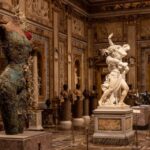
Bronze wolves and famous paintings start here. This private guided tour of the Capitoline Museums is a smart way to cut through museum chaos and focus on the big moments, like the Marcus Aurelius equestrian statue and the court-worthy bronzes (yes, including the Capitoline Wolf). I also love how the visit mixes ancient sculpture with the Pinacoteca Capitolina’s painting collection, so you’re not just looking at stones—you’re learning how taste and power were displayed in different centuries.
One possible drawback: you’ll do a solid stretch of walking and stair steps over 2.5 hours, so plan for comfort first. The meeting is at the Capitoline Museums entrance with a sign and your name, so arrive a few minutes early, especially if it’s raining or busy, and dress in smart casual with comfortable shoes.
In This Review
- Key highlights at a glance
- Why this private setup works at the Capitoline Museums
- First stop: the Marcus Aurelius area and what you notice right away
- Palace of the Conservatives courtyard: Constantine, Brutus, and the famous bronzes
- Pinacoteca Capitolina: upstairs paintings that change the whole mood
- Ground floor and the exedra: Marcus Aurelius with temple ruins around it
- The Tabularium tunnel to the New Palace: artifacts plus standout views
- Making sense of Rome after the tour: why the Forum view matters
- Price and logistics: when $201.65 per person makes sense
- Should you book this Capitoline Museums private tour?
- FAQ
- How long is the Capitoline Museums private guided tour?
- Where do we meet the guide?
- Is skip-the-line access included?
- Is this a private tour?
- Which languages are available for the guide?
- Do I need hotel pickup or is it offered?
- What should I bring to the tour?
- What is the dress code?
- Is oversize luggage allowed?
- What’s the cancellation policy?
Key highlights at a glance
- Skip-the-line entry so you start seeing art faster
- Private, professional art historian guide (English or Italian)
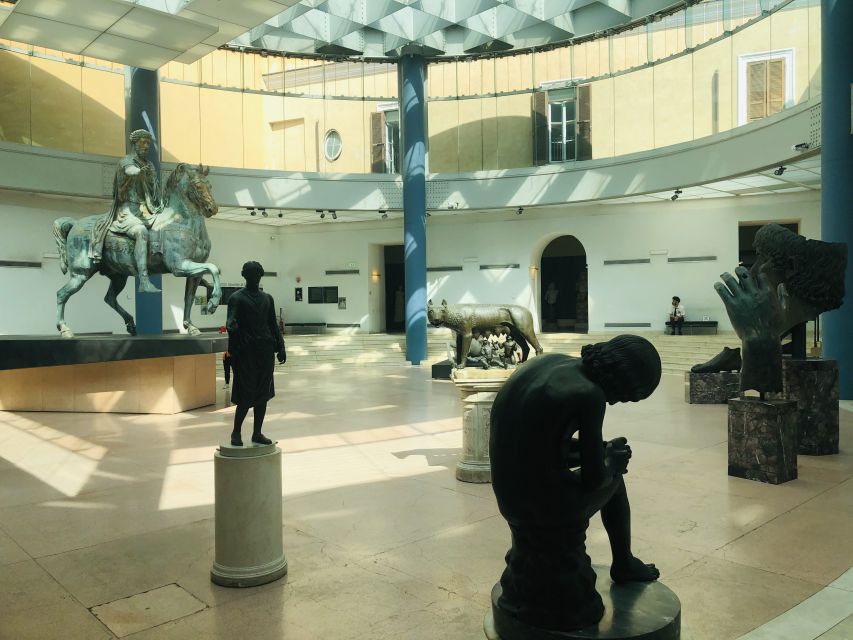
- Ancient star turns like the Spinario and Capitoline Wolf bronzes
- Pinacoteca Capitolina paintings from artists like Caravaggio, Titian, and Rubens
- Marcus Aurelius in the exedra, plus temple ruins still visible around it
- Underground Tabularium tunnel for standout views toward the Roman Forum
Why this private setup works at the Capitoline Museums
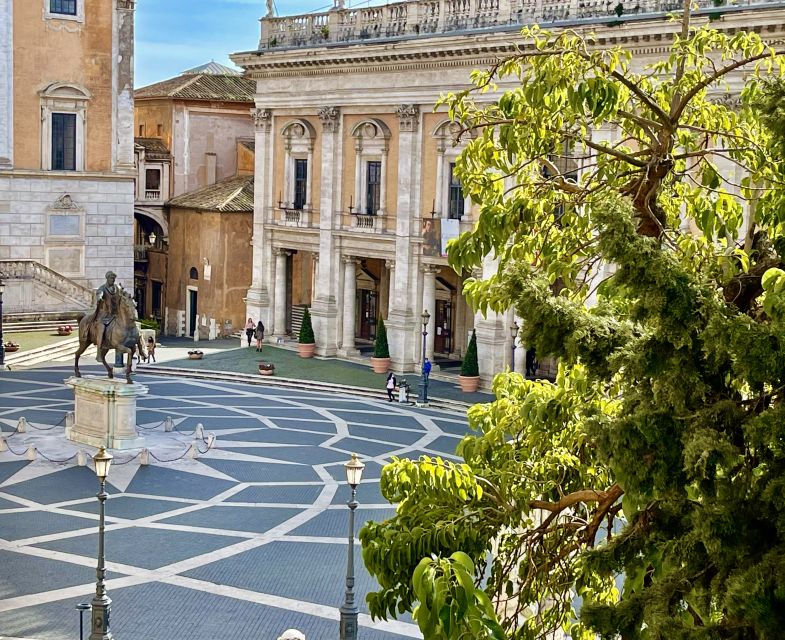
The Capitoline Museums sit in a place that Rome loves to multitask: you’re inside museum palaces, but you’re also close enough to the ruins that the city feels like it’s part of the exhibits. The private format matters here. With a guide keeping the flow, you spend less time guessing what’s important and more time understanding why it mattered.
A professional art historian guide helps you connect objects across floors and centuries. You’ll see Roman bronzes, inscriptions, and artifacts, then jump to Renaissance and Baroque art, and finally land back in the ancient world when you move through the second museum seat. It’s the kind of tour where the guide quietly does the “what should I notice?” work for you.
Value-wise, the price ($201.65 per person) is easiest to justify if you care about interpretation, not just photos. You’re paying for skip-the-line access plus guide time for a group capped at a maximum of 20. If you’re visiting with a smaller party, that private feel tends to feel worth it because your questions don’t get swallowed by a big crowd.
You can also read our reviews of more guided tours in Rome

First stop: the Marcus Aurelius area and what you notice right away
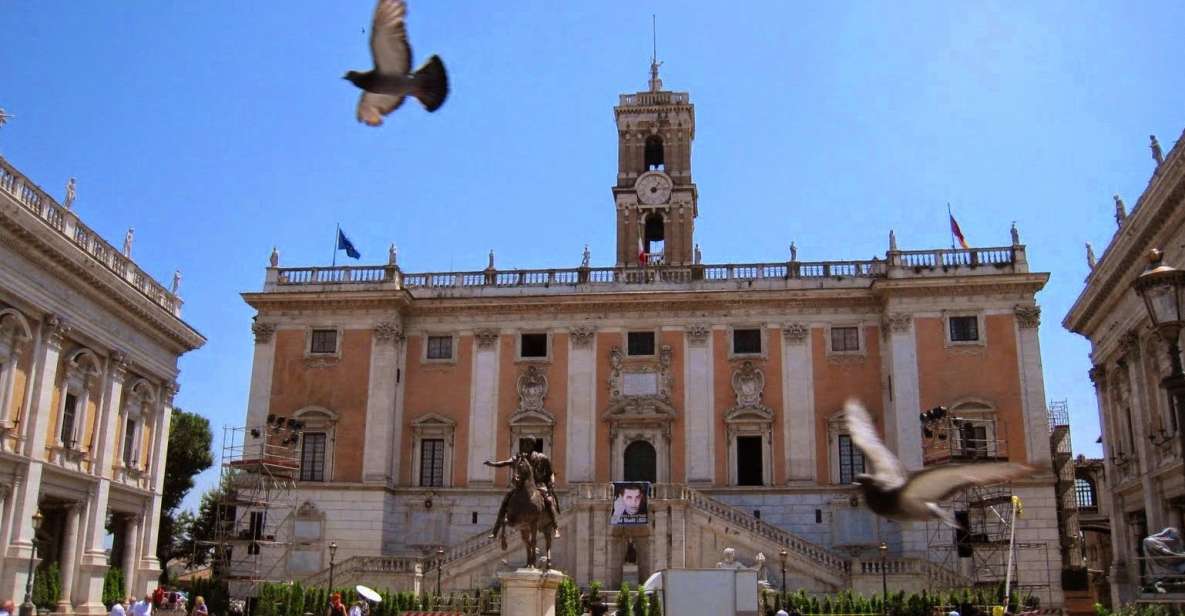
Your visit kicks off at the Equestrian Statue of Marcus Aurelius area, and that’s a good move. Marcus Aurelius isn’t just a famous figure; the setting helps you understand how Romans wanted rulers to look—composed, commanding, and almost untouchable.
From the start, you’re guided through the museum’s two historic seats, and this opening gives you an anchor point. You’re not wandering blind through rooms full of sculptures. Instead, you’re building a mental map: this is where the city’s power is shown, this is where art meets ideology, and this is where scale and craftsmanship do the talking.
After you settle in, the tour transitions to the Palace of the Conservatives courtyard—where the atmosphere shifts from “look at this statue” to “why does this building hold these objects?” You’ll also start picking up the museum’s themes: Roman memory, public display, and how later centuries kept reusing the past as a reference.
Palace of the Conservatives courtyard: Constantine, Brutus, and the famous bronzes
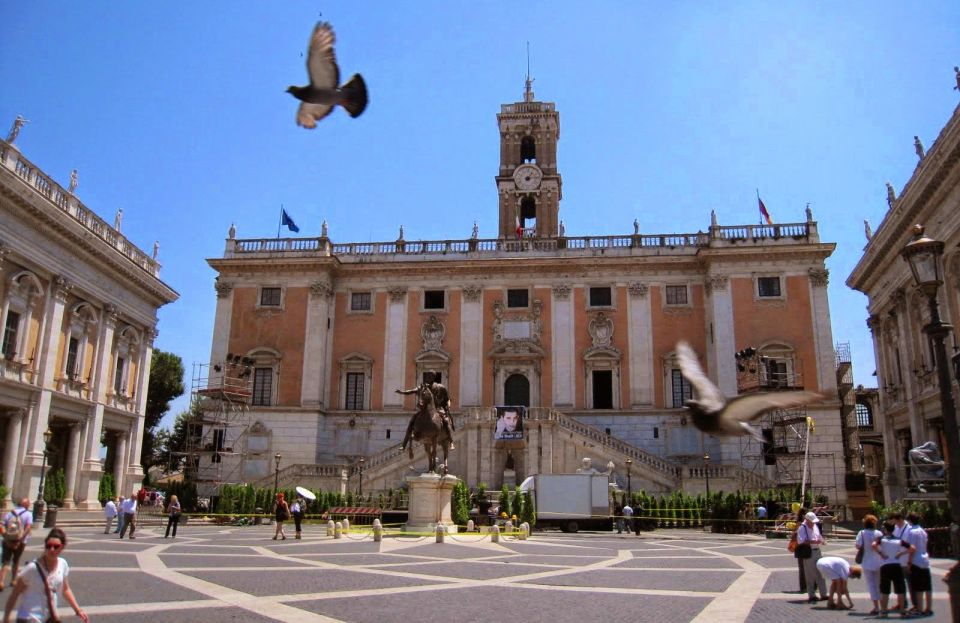
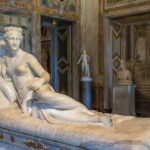
The Palace of the Conservatives feels like Rome in layers. Even before you reach the bigger rooms, the courtyard sets the tone with dramatic remnants and symbols.
You’ll see remains of a colossal acrolith representing Constantine. That matters because it’s not a full statue you can admire like a neatly finished sculpture. Instead, it shows how Rome preserves fragments—evidence of power, even when the original body is missing. A guide’s commentary makes moments like this click: you’re not viewing “damage,” you’re viewing history in its real condition.
On the first floor, several objects are big-name for a reason:
- Capitoline Brutus bust: a compact but loaded political image. This is the kind of Roman portrait that’s meant to communicate character.
- Spinario: the Greco-Roman Hellenistic bronze of a boy withdrawing a thorn. It’s easy to underestimate something so small and human until you see the craftsmanship and feel how narrative turns sculpture into storytelling.
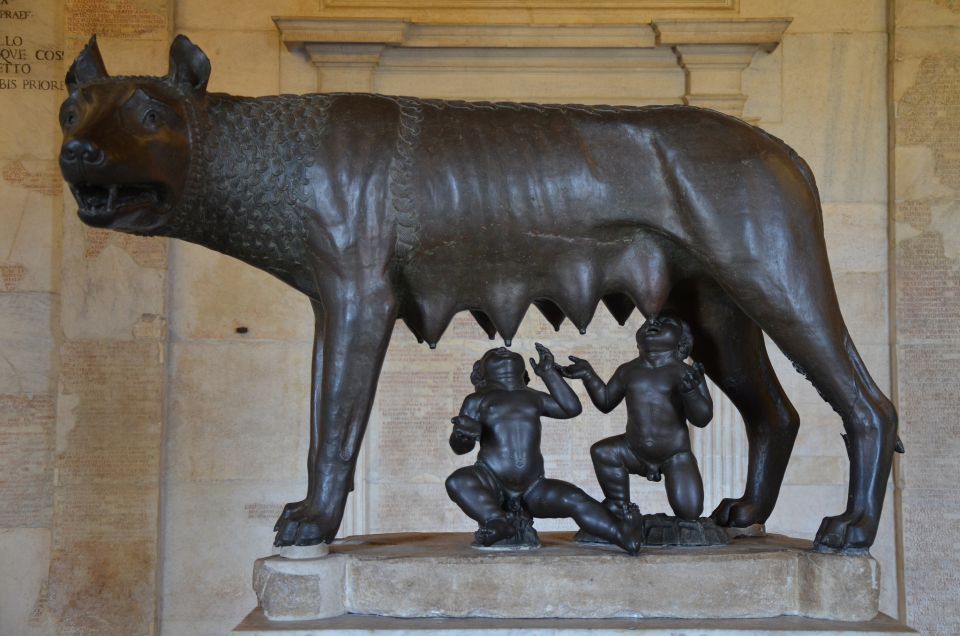
- Capitoline Wolf: a bronze emblem connected to Romulus and Remus. It’s famous for a reason, but the museum context gives it extra punch.
- The Castellani collection with roughly 700 Greek and Etruscan vases: this is where you start to understand daily life and elite taste, not just monumental “wow.”
This part of the tour is where you learn how to look. Instead of treating each item as isolated, you start noticing patterns: how Rome collected, displayed, and reused earlier cultures, especially Greek and Etruscan influences.
Pinacoteca Capitolina: upstairs paintings that change the whole mood
Once you move to the second floor, the Pinacoteca Capitolina shifts the tempo from sculpture to painting. This collection is described as the oldest public collection of paintings in the world, and that label matters—because it explains why the museum feels like it was built to show art as public identity, not private decoration.
You’ll see works by major artists such as Caravaggio, Guido Reni, the Carracci, Guercino, Domenichino, Veronese, Titian, Tintoretto, Rubens, and Pietro da Cortona. That lineup isn’t just impressive on paper. It changes how you see Rome: the city doesn’t only worship ancient statues; it kept turning those centuries into inspiration.
The tour also walks you through frescoes and sculptures from Renaissance and Baroque Rome. This is a smart inclusion because it prevents a common mistake: people often assume museum = one era. Here, you’re experiencing how later Romans interpreted and reacted to the past through art that felt very much of its own time.
If you’re the type who likes to understand what you’re looking at, this is a highlight. It’s not just names and dates. The guide’s job is connecting style choices to the bigger story of power, faith, patronage, and public image.
Ground floor and the exedra: Marcus Aurelius with temple ruins around it
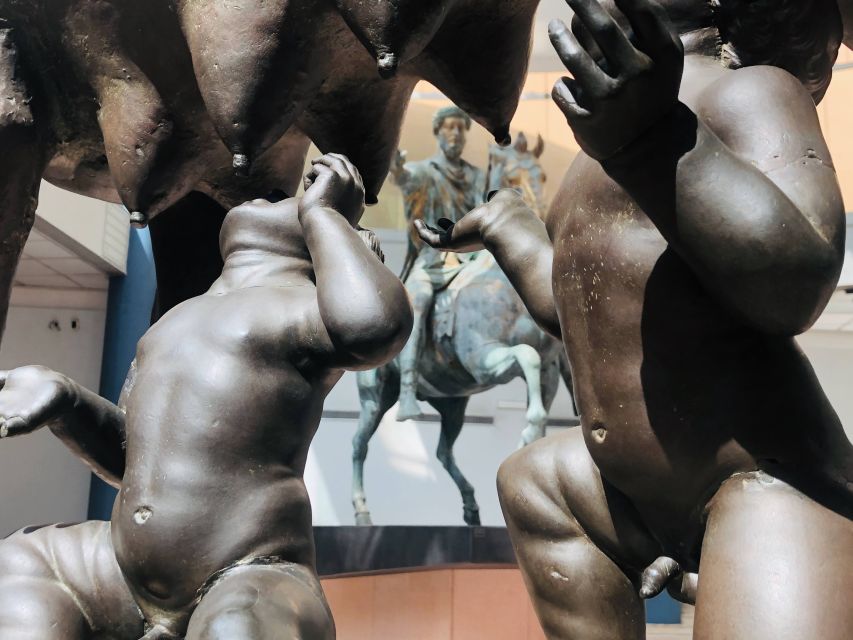
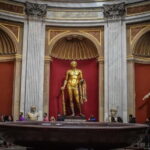
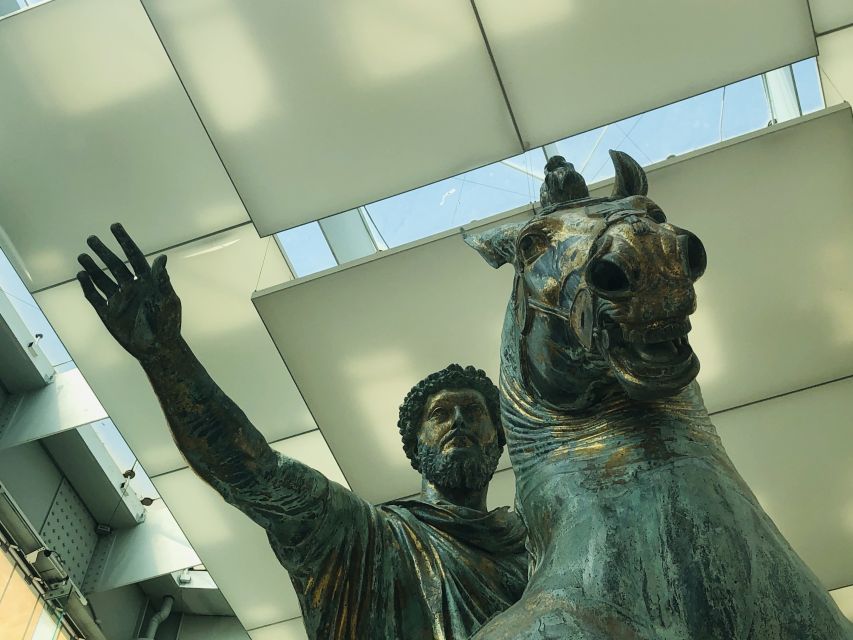
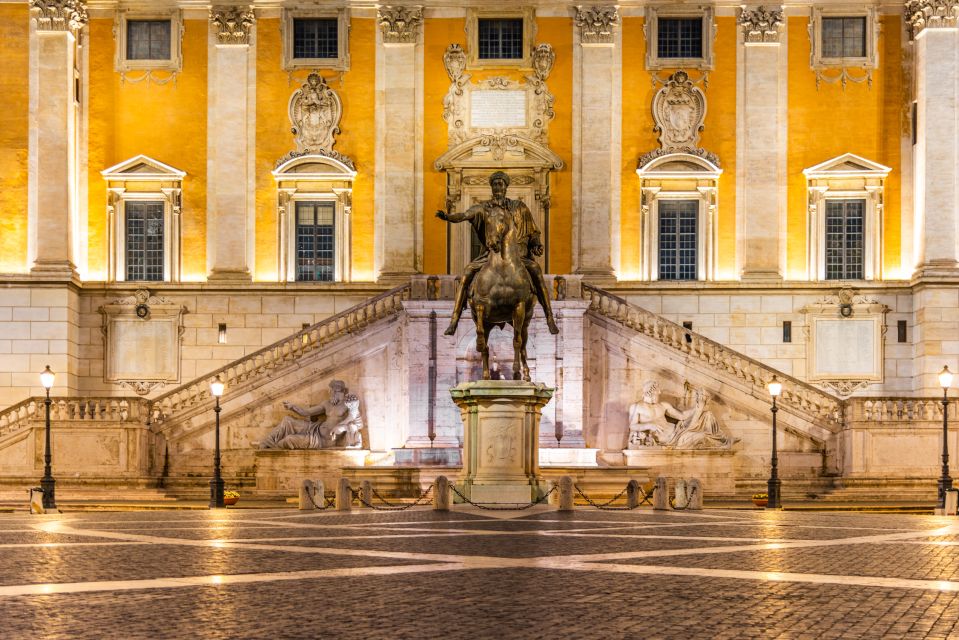
Going down to the ground floor is one of those “wait, this is better than I expected” moments. The equestrian Marcus Aurelius statue is placed in an exedra setting, and that positioning matters. You’re not looking at it like an isolated artifact; you’re seeing how architecture frames authority.
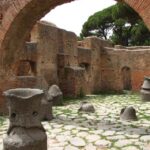
You also get to appreciate ruins of ancient temples still visible in the structure of the building. This is one of the most practical reasons to take a guided tour here. Without context, ruins can feel like background clutter. With context, they become part of the exhibit’s point: Rome didn’t “build over” history by accident. It built in conversation with it.
This portion also keeps the flow moving through the museum’s Renaissance and Baroque elements, so you’re not bouncing between eras without a thread. Your guide helps you connect what’s happening in art choices to what’s happening in the city’s identity.
If you’re worried about time, don’t be. The tour is 2.5 hours total, so you won’t be stuck staring at one ceiling painting for 45 minutes. You’ll get time where it counts and skips where you can’t benefit as much.
You can also read our reviews of more private tours in Rome



The Tabularium tunnel to the New Palace: artifacts plus standout views
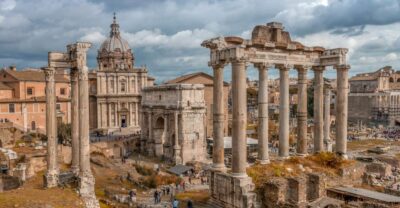
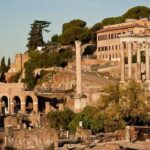
Here’s where the Capitoline Museums stop being purely indoor. Your guide leads you through an underground tunnel that crosses the Tabularium, and during the passage you get magnificent views toward the Roman Forum.
This is a rare win: many museum tours treat outside views as a quick glance. This one builds in a specific moment for it, which helps you connect what you see inside with the city’s original stage. It’s also a nice pacing reset—one moment you’re absorbing objects, the next you’re taking in the urban geometry that made these objects worth collecting in the first place.
Then you reach the New Palace, the second historic seat of the museum. The collection focus shifts slightly into more ancient Roman material and highlights like:
- statues and inscriptions (a big part of how Romans documented themselves)
- sarcophagi and busts
- mosaics and other artifacts
- and the famous Marforio statue
You’ll also see works such as the Dying Gaul and Cupid and Psyche. Those pieces are widely recognized, but the value here is how they sit among the rest of the collection. You start noticing common themes—identity, mythology, power, and how emotion is turned into stone and bronze.
Making sense of Rome after the tour: why the Forum view matters
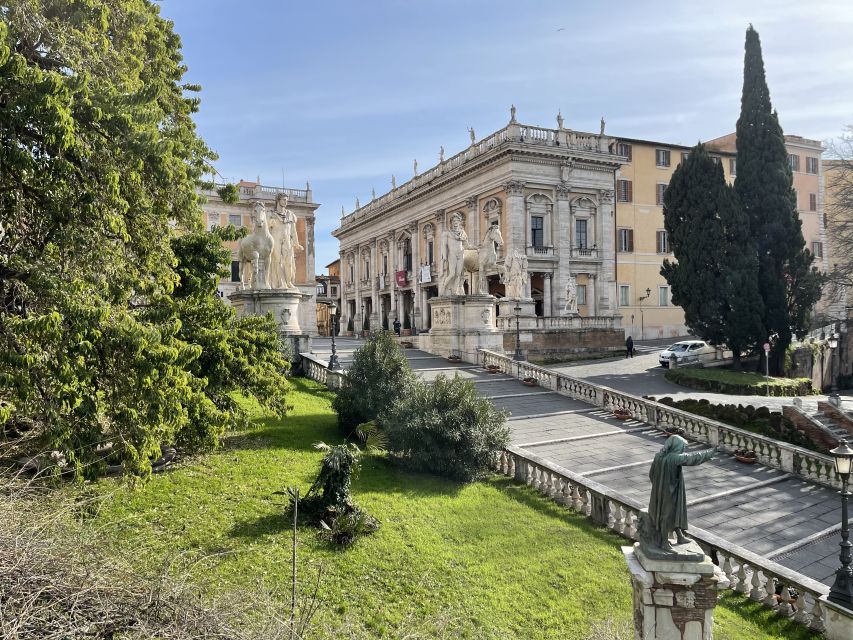
Even if you don’t plan a separate Forum visit, the view included here pays off. You get a guided moment where the Forum starts to feel like a living backdrop instead of a pile of stones.
Think of it this way: museums can make ancient Rome feel distant and finished. The Forum view does the opposite. It reminds you that the sculptures and inscriptions weren’t designed to be trapped behind glass. They were part of a real environment where people walked, argued, worshiped, and showed status.
Also, because the tour is private, your guide can explain what you’re seeing in the moment. You might find the view more useful if you’re curious about how urban planning and power worked together. If you’re more interested in art technique, this view still helps you locate the story physically.
Price and logistics: when $201.65 per person makes sense
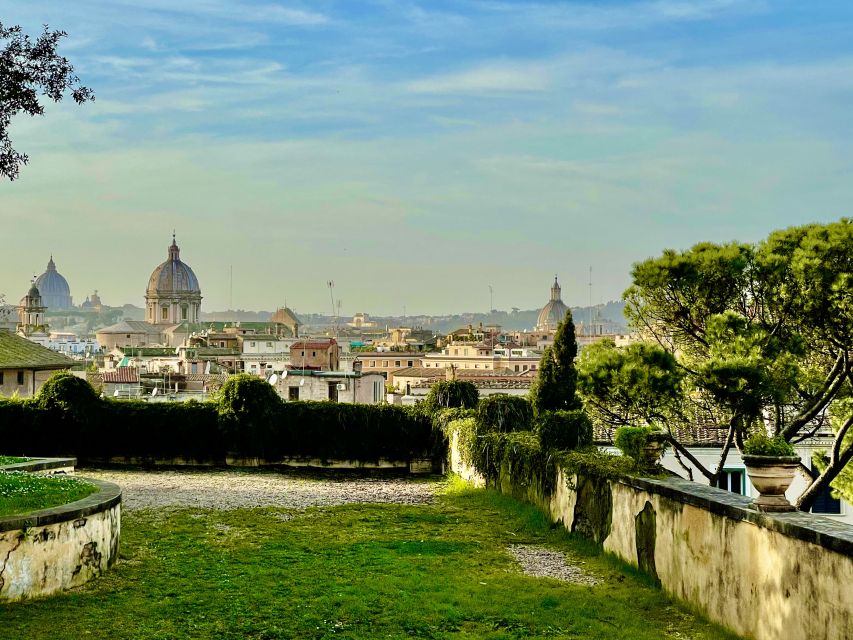
At $201.65 per person, this isn’t a budget add-on. But it can be a strong value if you fit the target audience: you want expert interpretation, you want to avoid lines, and you’re okay spending about 2.5 hours in a museum-focused block.
Here’s what you’re getting for that cost:
- Skip-the-line access (entry ticket is included)
- a professional art historian guide
- a private group experience (maximum of 20 people per booking)
- no hotel pickup, so you’re responsible for getting yourself to the meeting point
If you hate time-wasting, skip-the-line matters. If you’re visiting during a busy season or on a popular day, the saved time can turn the tour from frustrating to satisfying.
Practical stuff that affects your comfort: wear comfortable shoes. The tour includes time moving between rooms and levels, plus the underground tunnel. Dress code is smart casual, so skip the slick shoes that turn museums into ice rinks.
Meeting is at the Capitoline Museums entrance. Your guide waits for you with a sign with your name, so arriving a few minutes early helps. In rainy Rome, that tiny buffer can save you stress.
Finally, keep in mind this is offered in English and Italian. If you’re booking for a specific language, check that it matches what you need.
Should you book this Capitoline Museums private tour?
Book it if you want to understand the Capitoline Museums instead of just scanning it. This works especially well if you care about how art communicates power—through Roman bronzes, a major painting collection, and a carefully framed view of the Forum.
I’d skip it if you only want a quick, do-it-yourself walk through the museum. If you’re the type who loves reading labels alone and taking your own path, a self-guided visit might be enough. But if you’d rather spend your time noticing the right details and getting context fast, this private format is exactly the kind of help Rome rewards.
One more reason to feel confident: guides here can be flexible with the pace. The experience includes examples of a guide staying attentive and adjusting if someone needs water during the tour—so comfort and timing are taken seriously.
FAQ
How long is the Capitoline Museums private guided tour?
The tour lasts about 2.5 hours.
Where do we meet the guide?
Meet at the Capitoline Museums entrance. Your guide will wait with a sign showing your name.
Is skip-the-line access included?
Yes. You get skip-the-line access, and the Capitoline Museums entry ticket is included.
Is this a private tour?
Yes, it’s a private group experience with a maximum of 20 persons per booking.
Which languages are available for the guide?
The tour is available in English and Italian.
Do I need hotel pickup or is it offered?
Hotel pickup and drop-off are not included. You’ll meet at the Capitoline Museums entrance.
What should I bring to the tour?
Bring a passport or ID card and wear comfortable shoes.
What is the dress code?
The dress code is smart casual.
Is oversize luggage allowed?
No oversize luggage is allowed.
What’s the cancellation policy?
Free cancellation is available up to 24 hours in advance for a full refund.