REVIEW · ROME
Rome: Private Guided City Highlights Tour by Golf Cart
Book on GetYourGuide →Operated by Rolling Rome Segway & Golf-Cart · Bookable on GetYourGuide
Rome rewards slow walking. Your legs can take a break here. This street-legal golf cart tour is a smooth way to cover a lot more ground than you’d manage on foot, while still getting real context at the stops. I like how the route can be tailored to what you want to see, including lesser-visited hills like Aventine and Celio. One thing to plan for: in cold weather, the cart setup may not fully protect you, and you could feel it.
The big win is the combination of an easy pace and a live guide who keeps the ride moving and the story clear. Starting from Piazza del Popolo makes it feel organized from minute one, and hotel pick-up is available from hotels in Rome’s historic center. I also like that the cart is set up for safety (license plate, lights, safety belts, and a cover), with insurance included—so you can focus on the sights. If you end up with a downpour, at least a few guides have handled it by adjusting and keeping photo time going.
You’ll roll past central landmarks fast, then get to quieter layers of Rome where the city’s myths and empires overlap. The route includes Trevi Fountain, Piazza Barberini, Piazza Colonna (with the marble Column of Marcus Aurelius), and Piazza Venezia dominated by the Victor Emmanuel II monument. And if your group likes history with a twist, Aventine Hill’s Knights of Malta story after the fall of Rhodes under Napoleon’s pressure is a standout.
In This Review
- Key things to know before you go
- Why a street-legal golf cart beats a pure walking tour
- Starting at Piazza del Popolo: twin churches and a fast orientation
- Trevi Fountain, Barberini, Colonna, and Piazza Venezia in one tight circuit
- Celio Hill and Villa Celimontana: the quieter side of Roman layers
- Aventine Hill: Knights of Malta, rose garden, and orange grove
- How tailoring works on a private cart tour
- Your guide matters: English narration plus smart stop choices
- Price and value for $198.25 per person
- Weather, comfort, and photo time tips
- Who should book this Rome highlights golf-cart tour
- Should you book Rolling Rome Segway & Golf-Cart?
- FAQ
- How long is the Rome private golf-cart highlights tour?
- Where does the tour start?
- What’s included in the tour price?
- Is this tour private?
- Is the tour wheelchair accessible?
- What sites are part of the highlights?
Key things to know before you go
- More sights than walking: you cover central piazzas and multiple hills in 3 hours
- Tailored route: the itinerary is flexible, not fixed stonework
- Two Rome hills, plus shortcuts: Aventine and Celio show up on the plan
- Signature piazzas: Venezia, Barberini, and Colonna are built into the drive-by routes
- Guides who adapt: stops for questions, photos, and sometimes even food breaks
Why a street-legal golf cart beats a pure walking tour
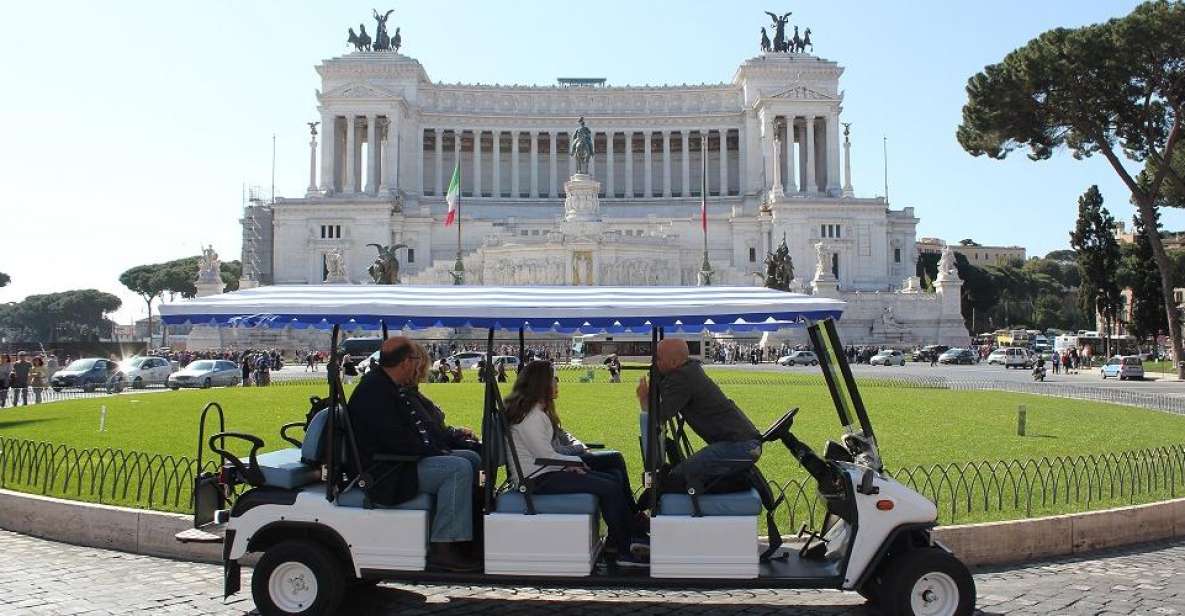
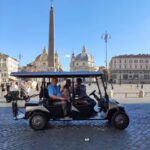
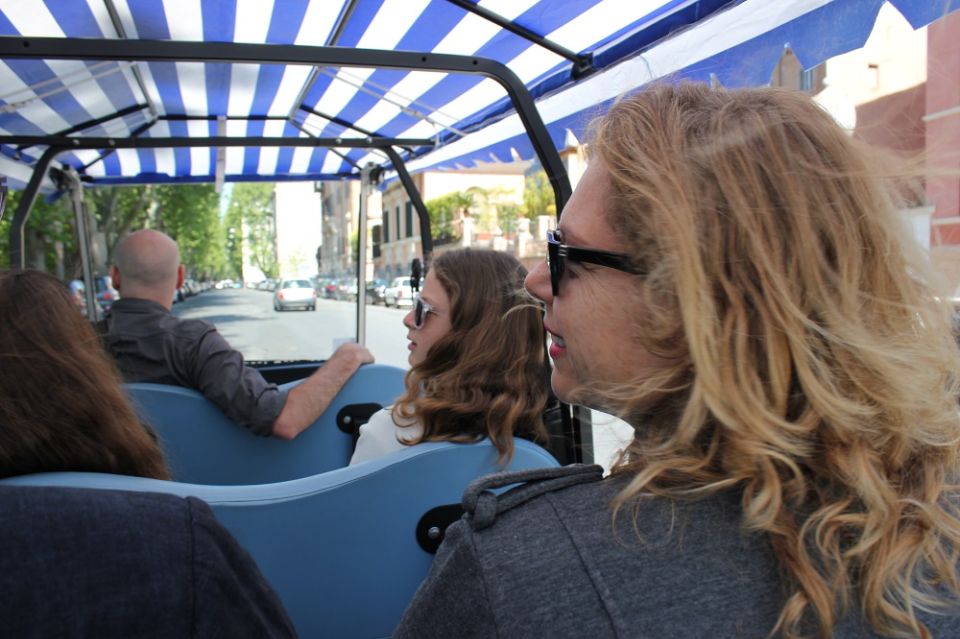
Rome is gorgeous, but it’s also made of steps, detours, and long stretches between must-sees. A street-legal golf cart changes the rhythm. You still see the iconic shapes—arches, columns, fountains—but you’re not spending your whole afternoon clocking up sore calves. The cart has practical safety features (lights, safety belts, horn, and a cover), and it’s clearly meant for city driving, not just a quick photo loop.
This setup is especially useful if you’re in a short time window, traveling in summer heat, or with mixed ages in your group. One of the consistent themes from guides is pacing: they keep the story moving while also slowing down when it matters for pictures or questions. That means you get more “I get it now” moments than “I’m just trying to survive the sidewalks.”
The private nature matters too. You’re not trying to match a group’s pace while someone is hunting for a gelato place you don’t want. With a private group, the guide can steer your route toward what your day needs most.
You can also read our reviews of more guided tours in Rome
Starting at Piazza del Popolo: twin churches and a fast orientation
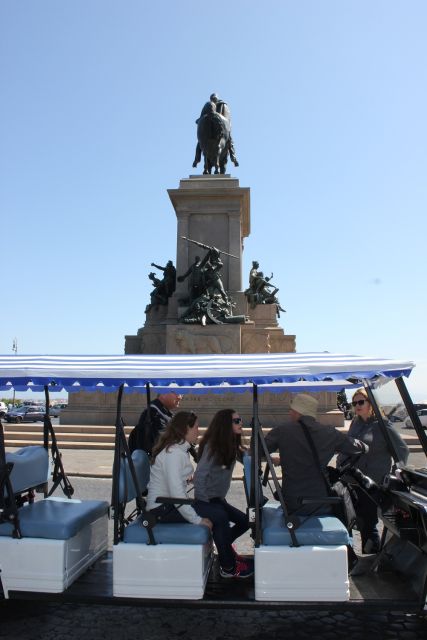
The tour starts at Piazza del Popolo, in front of the twin churches of Santa Maria in Montesanto and Santa Maria dei Miracoli. It’s a smart opening because the square gives you a clean visual reset: wide space, recognizable baroque silhouettes, and an easy sense of direction before you head into tighter lanes and central landmarks.
From there, you’re not stuck figuring out where to go next. The ride acts like an orientation map you can actually enjoy. You’ll cruise toward Rome’s historic center and hit major stops without the stop-and-start grind that comes with catching landmarks one by one.
This is also the moment where tailoring usually starts to show. If you already visited some highlights on your own, a good guide will adjust so your cart time isn’t wasted repeating what you’ve already seen. Guides like Leonard and Benni (names you may be paired with) are known for being professional and for matching the tour to the group’s pace and curiosity.
Trevi Fountain, Barberini, Colonna, and Piazza Venezia in one tight circuit
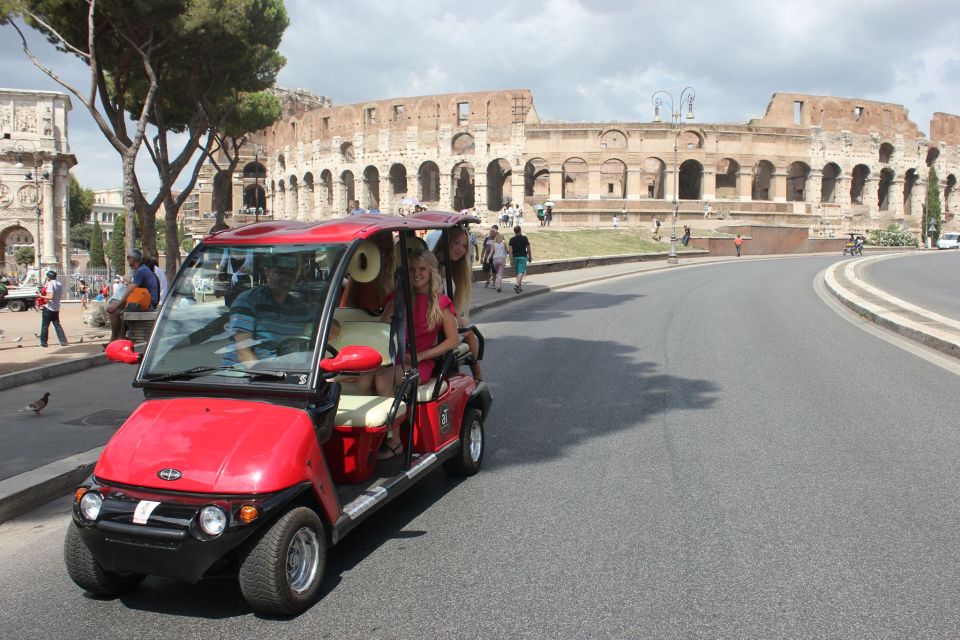
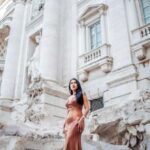
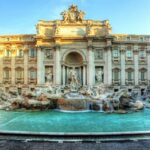
Within the first stretch, you’ll pass several “you’ve seen this in photos” places that are worth seeing in real scale. Trevi Fountain is a classic stop on your route, with the legend that throwing a coin in the fountain means you’ll return to Rome. Even if you’ve heard the myth before, it lands differently when you’re seeing it from the road at a comfortable, non-rushing speed.
Next up is Piazza Barberini, another important central node where Rome’s baroque era shows itself in curves, façades, and open space. Then comes Piazza Colonna, named for the marble Column of Marcus Aurelius. That column is one of those details you could walk past for lack of time—here, you get the chance to actually register what you’re looking at.
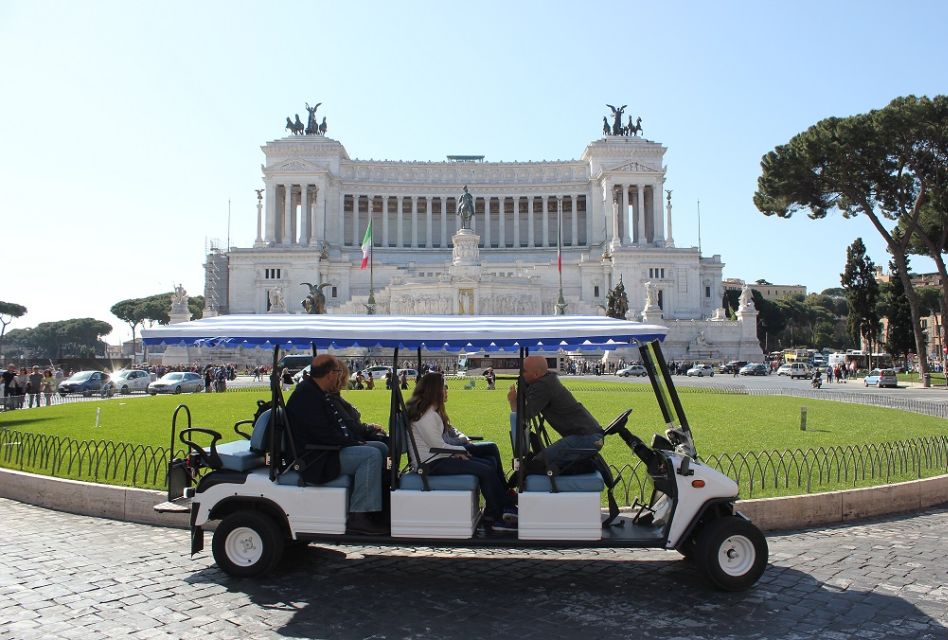
Finally, you reach Piazza Venezia, the center of the frame in this part of Rome, dominated by the Victor Emmanuel II monument to a unified Italy. It’s the kind of landmark that can feel overwhelming on foot because you don’t get enough time to appreciate it from the right angles. From the cart, you can absorb the monument’s mass and still move on before the day gets heavy.
The takeaway: this part of the tour is about fast context. You’re building a mental map of Rome’s center so that when you leave the cart, you know where you are and why it matters.
Celio Hill and Villa Celimontana: the quieter side of Roman layers
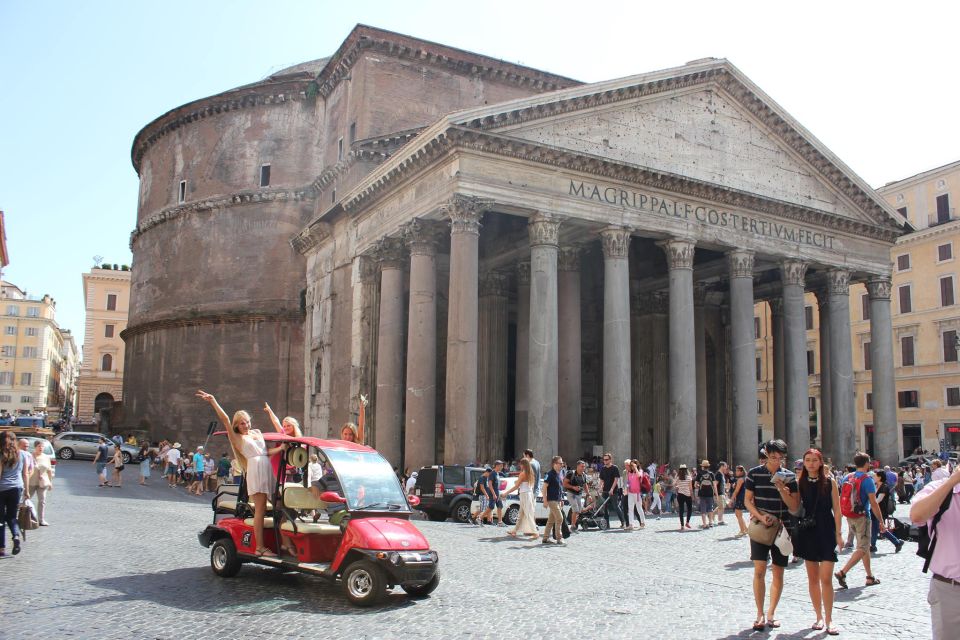
After the central piazzas, you shift to areas that feel like Rome is exhaling. Celio Hill is part of the plan, and it’s a nice reminder that the city isn’t only monuments crowded with tour groups.
You’ll pass Villa Celimontana and its gardens. Even without lingering for hours, the change in atmosphere is noticeable. It’s the sort of stop that helps your brain separate “Rome as a postcard” from “Rome as a lived-in city with layers.”
Then you’ll visit ancient basilicas: Santo Stefano Rotondo and Santi Giovanni e Paolo. These stops add depth because they’re not just about one famous view. You’re seeing Rome’s long timeline through architecture that still feels old even after centuries of use.
This is where the golf cart actually earns its keep. You get to reach these places without spending half your tour just getting there on foot. In practice, it makes the day feel longer, even though it stays 3 hours.
Aventine Hill: Knights of Malta, rose garden, and orange grove
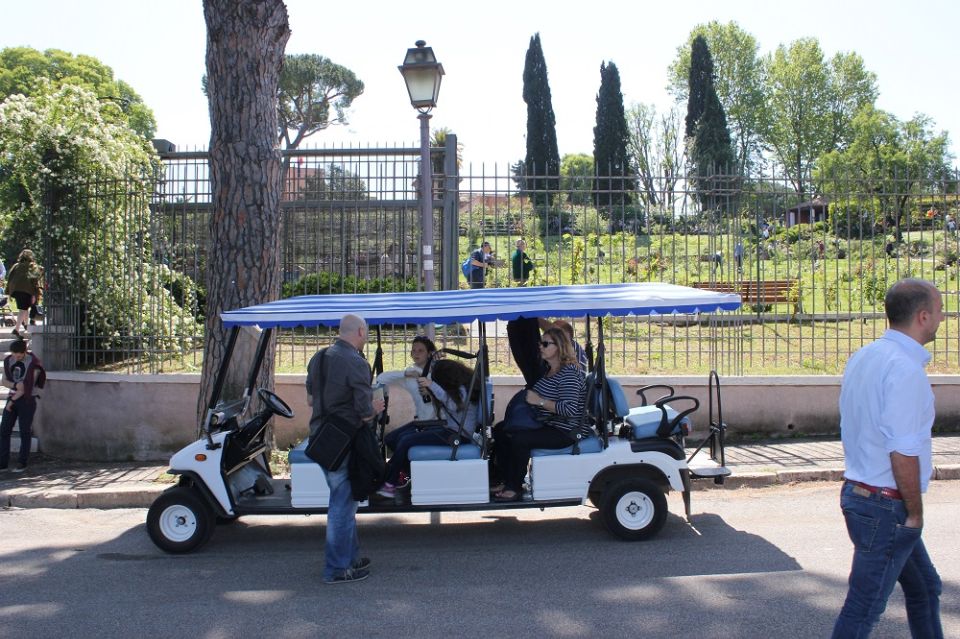
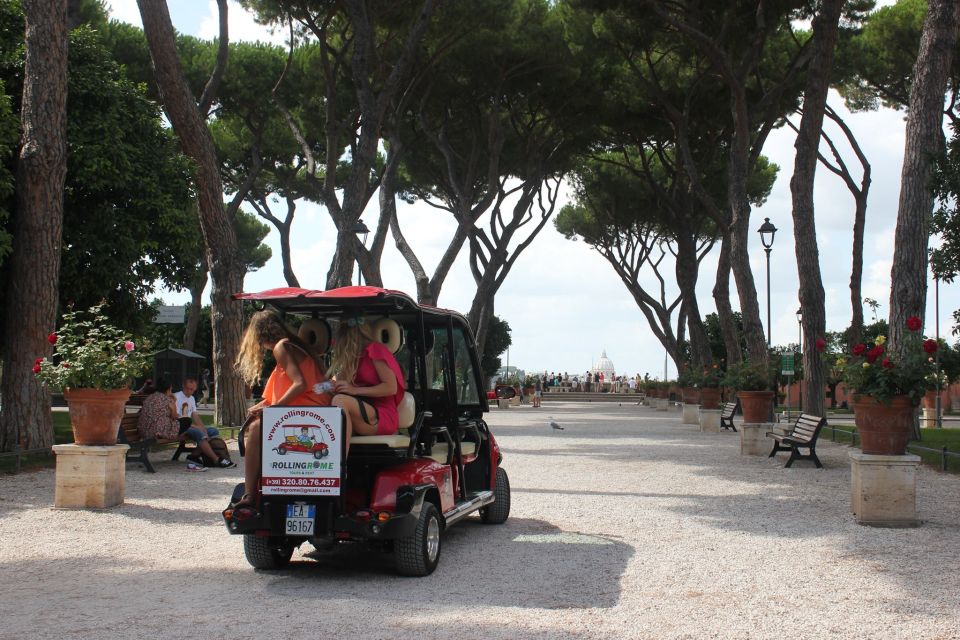
If Celio Hill is about calmer layers, Aventine Hill is where the tour gets more personal. You’ll explore a southern suburb of Aventine where an orange grove grows. The detail matters because it gives Rome a sensory hook beyond stone and statues. Fresh citrus scent beats another photo for most people.
The plan also includes the City rose garden. That’s a great contrast stop if your day has been mostly about big monuments and wide squares. It’s a pause that helps you reset.
Then there’s the history thread that makes Aventine especially interesting: you’ll hear about where the Knights of Malta set up home in Rome after they fled Napoleon’s army in Rhodes. That story adds a human scale to the geography. You’re not just looking at a hill; you’re seeing where power, exile, and survival left their mark.
This is also a good hill for travelers who want more than the usual “center-only” itinerary. Aventine is one of the Roman hills you might not naturally prioritize if you’re relying on walking directions alone.
You can also read our reviews of more city tours in Rome


How tailoring works on a private cart tour
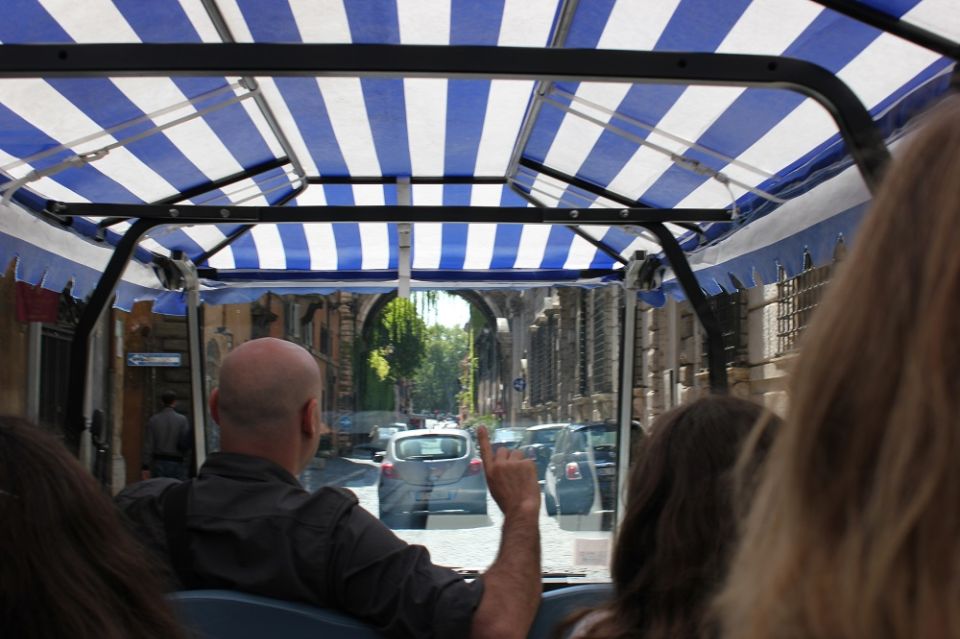
The tour is private, and the route is tailored to your desires. That doesn’t mean the guide will ignore the core highlights. It means you can nudge the day. Want more time for photos? Want to cut one stop short to spend longer at another? The guide can adjust since the plan is built as suggestions.
You’ll especially feel the tailoring if your group has mixed interests. Names like Gabriel and Robyn show up in experiences where guides adjusted to different ages and preferences. That’s not a small thing. In Rome, half the battle is getting everyone to enjoy the same pace.
Here’s how you can make the tailoring work best:
- Tell the guide your top 3 must-sees in the first few minutes.
- Mention any constraints early (time limits, energy level, and whether you’d rather prioritize photos or stories).
- Ask for a practical recommendation at the end, not a generic one.
More than one guide is described as offering food suggestions, like Angelo recommending lunch after a mid-tour break. That kind of advice is genuinely useful because it saves your energy once you’re off the cart.
Your guide matters: English narration plus smart stop choices
An excellent guide can turn a “ride past landmarks” outing into a story you remember. This tour comes with a live English guide, and the guiding style shows up in the details: clear explanations, smooth pacing, and quick adjustments when weather changes.
I’d highlight a few examples from guides you might meet. Angelo is known for keeping things fun even during heavy rain and for building in a gelato stop halfway through. Elena and Alex are mentioned for answering questions and making sure you get to places you wouldn’t have found alone. Beatrice is praised for taking friendly control of tricky moments, including helping the group with bathroom needs, which can be harder in Rome than it sounds.
Luca and Giulio come up with a similar theme: they add extra context and make time for questions, which is where a short tour becomes more than a checklist. And if you’re worried about keeping up, the names that reappear across different group types suggest the guides know how to handle different energy levels.
Bottom line: with so much packed into 3 hours, your guide’s rhythm is everything.
Price and value for $198.25 per person
At $198.25 per person, this isn’t a “budget-only” activity. But it can be good value for what you’re buying: a private experience, a licensed street-legal golf cart, an English-speaking guide, insurance, and transportation (including hotel pick-up from historic center hotels).
So where does the money go? You’re paying for:
- time efficiency (multiple major stops plus hill areas)
- guide interpretation (so you understand what you’re seeing)
- reduced physical strain (fewer long walks)
- logistics that are hard to do on your own (figuring routes between central piazzas and hill sites)
Is it worth it for everyone? If you have the time to explore slowly on foot and you love wandering without a plan, you could skip this. But if your Rome time is limited, you want to see a lot without running on empty, or you’re traveling with someone who tires easily, the cart format often justifies the price.
Also, private group tours tend to feel more “your day” than shared walking tours. That flexibility has real value in Rome, where small changes in timing can make or break your afternoon.
Weather, comfort, and photo time tips
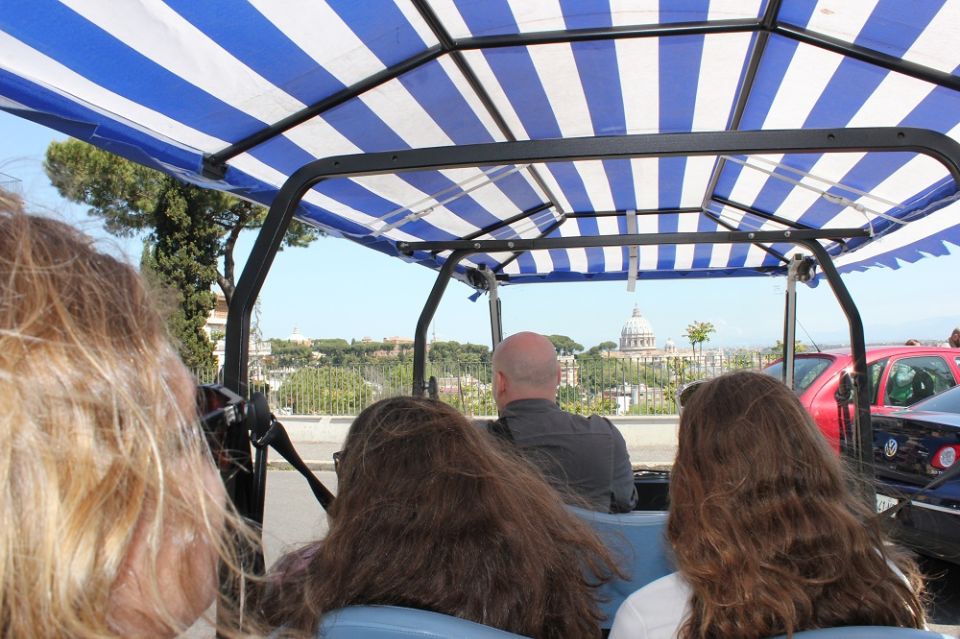
The carts have a cover, but some riders have noted that the colder-weather setup may feel freezing since fully enclosed sides aren’t always possible. If you’re going in shoulder season or winter, bring warm layers and something wind-resistant. Gloves help more than you’d think.
Rain is another factor. At least one guide handled a downpour by adapting on the fly and making sure photo stops still happened. Still, bring a small umbrella or a poncho, and be ready to accept that you may spend a few minutes sheltered rather than sightseeing at maximum pace.
For photos, plan to pause at meaningful angles rather than snapping while moving. One guide experience notes stopping for photos when riders wanted it, and that’s exactly the kind of control you want from a private tour.
Who should book this Rome highlights golf-cart tour
This is a strong choice if:
- it’s your first or second day in Rome and you want fast orientation
- you have limited mobility or don’t want to spend hours walking
- you’re traveling with seniors, teens, or mixed ages who can’t all match the same walking pace
- you want both iconic center sights and Roman hill areas like Aventine and Celio
It may not be the best fit if:
- you enjoy long, slow walks and want to get off at your own pace
- you’re focusing on only one neighborhood and plan a deep, hours-long exploration there
- you hate rides or feel uneasy with sitting while moving through traffic
Think of this tour as your Rome “big picture” day. After it, you’ll usually have an easier time choosing what to revisit on foot.
Should you book Rolling Rome Segway & Golf-Cart?
If you want a high-impact Rome day with less leg work, I’d book this. The route hits major central landmarks and then adds hill stops that many first-time visitors skip. The private format and the flexibility are key, because it lets the guide steer the experience toward your priorities.
If you’re going in cold weather, plan to dress like you mean it. And if your top priority is wandering slowly without any structure, you might prefer independent exploration. But for most people—especially those on a timeline—this golf-cart highlights tour is one of the most efficient ways to see Rome while still getting real stories at the stops.
FAQ
How long is the Rome private golf-cart highlights tour?
It lasts 3 hours.
Where does the tour start?
The tour departs from Piazza del Popolo, in front of the twin churches of Santa Maria in Montesanto and Santa Maria dei Miracoli.
What’s included in the tour price?
You get a live English guide, transportation by street legal golf cart (with safety belts and lights), insurance, and hotel pick-up from hotels in Rome’s historic center.
Is this tour private?
Yes. It’s a private group experience.
Is the tour wheelchair accessible?
Yes, it’s listed as wheelchair accessible.
What sites are part of the highlights?
The tour includes sights such as Trevi Fountain, Piazza Barberini, Piazza Colonna (Marcus Aurelius column), Piazza Venezia (Victor Emmanuel II monument), and hill stops including Celio Hill (Villa Celimontana and basilicas Santo Stefano Rotondo and Santi Giovanni e Paolo) and Aventine Hill (Knights of Malta history, rose garden, and an orange grove).