REVIEW · ROME
Rome: Ancient Jubilee in the 4 Major Basilicas
Book on GetYourGuide →Operated by Roman Vacations · Bookable on GetYourGuide
Rome’s Holy Doors are not a museum stop.
In a Jubilee year, this is your chance to follow pilgrims since 1300 and tour the four Papal Major Basilicas as a real Catholic pilgrimage, with professional guidance through each church and entry via the Holy Doors. I like how the route focuses on the big spiritual stakes instead of rushing art photo spots, and I like the built-in transport between neighborhoods so you spend your energy on the churches. One thing to keep in mind: inside the basilicas, you may need to position yourself well because hearing can be tricky when the guide has to speak quietly.
If you’re coming to Rome for the sacred side of the city, this tour is a focused way to do it. It also helps if you want the official structure of the pilgrimage explained to you, including what to watch for at key altars and shrines. The biggest practical tradeoff is that it’s not built around free time, so you’ll want to plan ahead for rest breaks and dress expectations.
In This Review
- Key Things I’d Plan For on This Jubilee Pilgrimage
- Why the 4 Major Basilicas Are the Jubilee Heart of Rome
- Meeting at Piazza Giovanni XXIII: Find the Lion Sign Early
- Stop 1: St. Peter’s Basilica and the Holy Door Moment
- Stop 2: St. Paul Outside the Walls and the Chains Story
- Stop 3: St. John Lateran (San Giovanni) and Rome’s Mother Church
- Stop 4: Santa Maria Maggiore and the Golden Interior Details
- Transport and Timing: Why the 5-Hour Format Works
- Price and Value: Is $283.21 Worth It?
- Who This Tour Fits Best (and Who Might Feel Crowded)
- A Note on Guides: When Communication Becomes the Difference
- Should You Book This Jubilee Tour?
- FAQ
- How many basilicas does this Jubilee tour visit?
- Does the tour include entry to each basilica?
- Are the Holy Door entrances part of the experience?
- How long is the tour?
- What’s the meeting point?
- What time should I arrive?
- Is food included?
- What should I wear for entry?
- Is the tour guided in English?
- Does the tour run in bad weather?
- Who is the tour provider?
Key Things I’d Plan For on This Jubilee Pilgrimage
You’ll enter through four Holy Doors as part of a structured Jubilee-style itinerary.
Each basilica gets about one guided hour, so it’s enough time to understand the main points without feeling stuck.
The route uses private air-conditioned transport between sites, which saves you from Rome traffic stress.
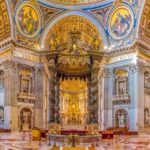
St. Peter’s is the anchor stop with Michelangelo’s Pietà and the high altar area tied to St. Peter’s tomb.
You’ll see St. Paul’s chains and an excavated sarcophagus connected to his imprisonment story.
Dress and ID rules matter: shoulders and knees covered, and bring valid photo ID in case it’s requested.
Why the 4 Major Basilicas Are the Jubilee Heart of Rome
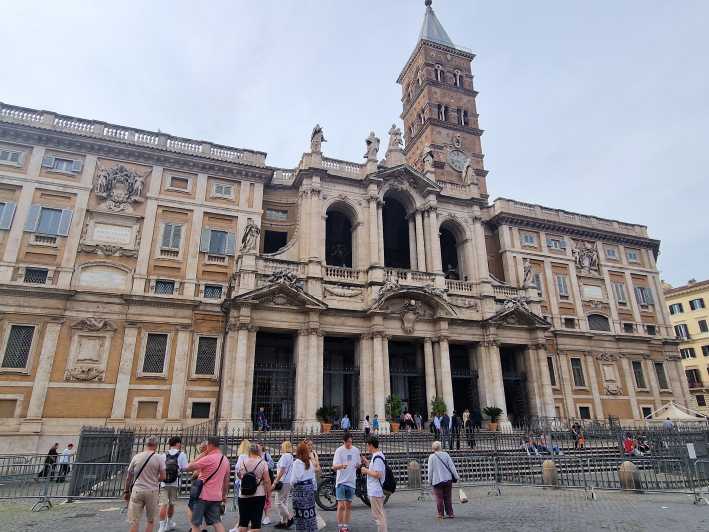
Jubilee years in Rome don’t feel like casual sightseeing. This experience is built around a very specific invitation: the Church has encouraged pilgrims since 1300 to visit the most important basilicas in Christendom and enter through their Holy Doors. The tour frames these as the four Major Basilicas with the highest-ranking status, all located in Rome.
What that means for you, practically, is that the day has a purpose. You’re not just walking into impressive churches. You’re following a pilgrimage pattern—one that has been repeated for centuries—where the experience is tied to spiritual rites, symbolism, and carefully guided arrival into each sacred space.
And yes, these are also gorgeous buildings. But the value here is the way the guide connects what you’re seeing to the reason it matters in Jubilee practice—how you move, what you’re meant to notice, and how each stop links back to the tradition of pilgrims before you.
You can also read our reviews of more tours and experiences in Rome.
Meeting at Piazza Giovanni XXIII: Find the Lion Sign Early
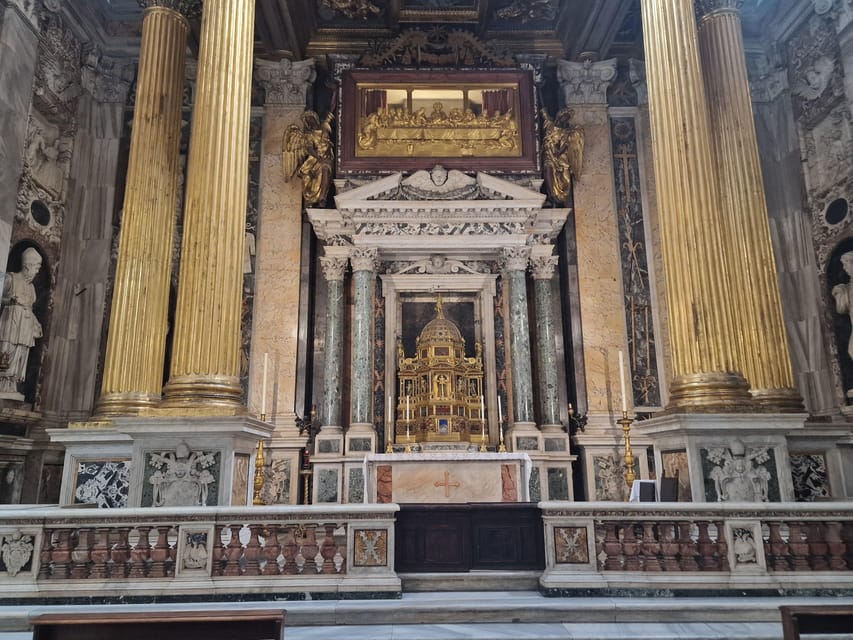
Your day starts at a fountain on the wall of Piazza Giovanni XXIII, near Lungotevere Vaticano. You’re looking for a guide holding an orange sign with a lion head.
This may sound simple, but start with your timing. The instructions ask you to check in 15 minutes before your scheduled start, because the tour leaves promptly. That matters because later on you’ll be in places with long lines, restricted entries, and tight schedules inside the basilicas.
Dress and comfort are part of the meeting too. Since you must have shoulders and knees covered for basilica entry, wear something you can stand and walk in for five hours without fuss. Rome weather is unpredictable, so bring water and plan for sun or rain.
Stop 1: St. Peter’s Basilica and the Holy Door Moment
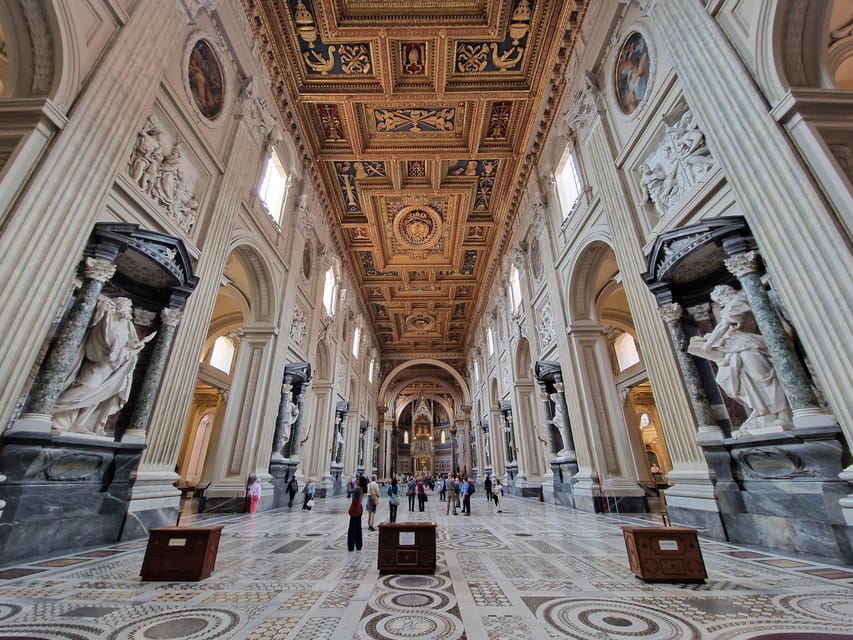
St. Peter’s Basilica is where the pilgrimage energy kicks in. The tour begins at the Vatican with St. Peter’s, built over the place connected to St. Peter’s burial.
Expect a guided interior visit of about one hour, focused on the most important markers inside. The tour highlights include Michelangelo’s Pietà, relics and major altars connected to the Church’s saints, and the story tied to St. Peter’s body beneath the high altar area.
This is also the stop where you’ll feel why a Holy Door entry matters. Even if you’ve toured churches in Rome before, the Jubilee framing changes your mindset. The guide’s job is to help you keep the focus on what you’re stepping into and why that doorway is part of the tradition, not just another entrance.
Practical tip: because the basilica is huge and sound can vary, try to stay close to the guide during explanations. If you’re hard of hearing or just don’t want to miss phrases, this is the moment to position yourself deliberately.
Stop 2: St. Paul Outside the Walls and the Chains Story
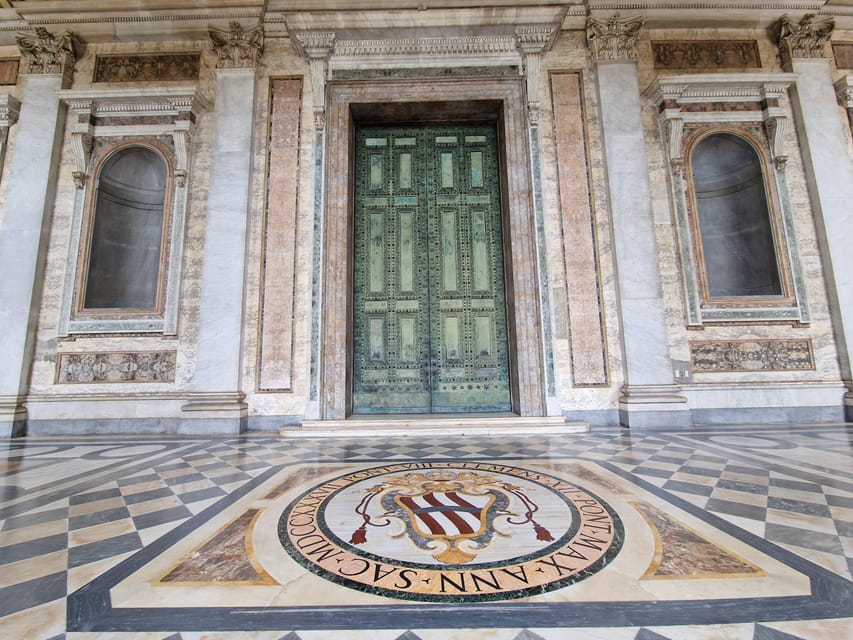
After St. Peter’s, you move by private air-conditioned chauffeur car to St. Paul Outside the Walls. This transfer is a real benefit on a day like this. It reduces the amount of time you spend navigating between sites, and it keeps the group together for the next guided entry.
The tour visit here also runs about one hour, with major highlights centered on St. Paul himself. You’ll see the chains connected to the apostle’s incarceration and house arrest in Rome. The tour also points out his newly excavated sarcophagus. You’ll then get a guided look at the rest of the ancient Theodosian Basilica.
This stop has a different emotional rhythm than St. Peter’s. The focus shifts from the martyr-adjacent power of the Vatican to the lived story of Paul—captivity, endurance, and the physical objects that anchor the narrative. If you enjoy religious storytelling that connects objects to events, this is often the most memorable part of the day.
Again, if you want to hear explanations clearly, stay oriented toward the guide. Inside large basilicas, acoustics can make volume unreliable, and you’ll get more out of the hour if you’re not straining.
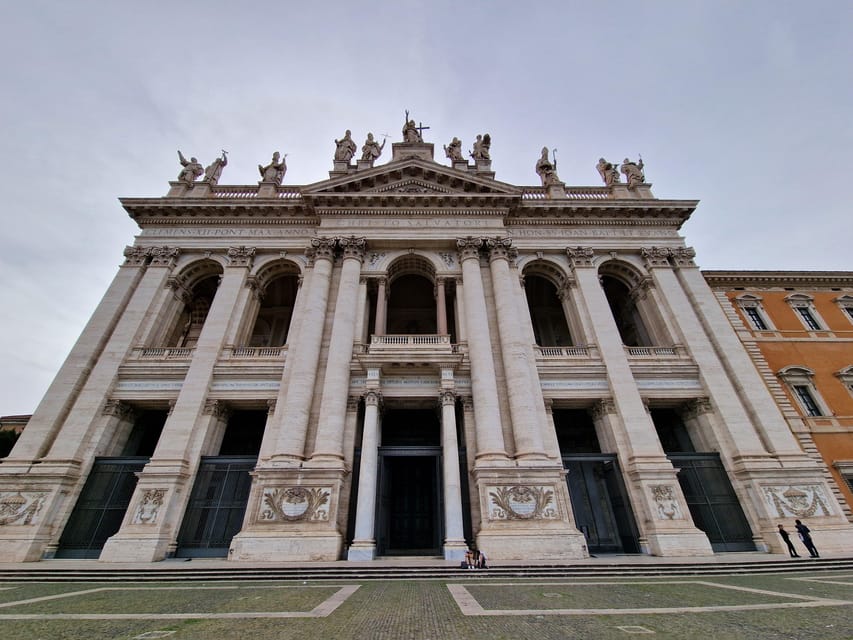
Stop 3: St. John Lateran (San Giovanni) and Rome’s Mother Church
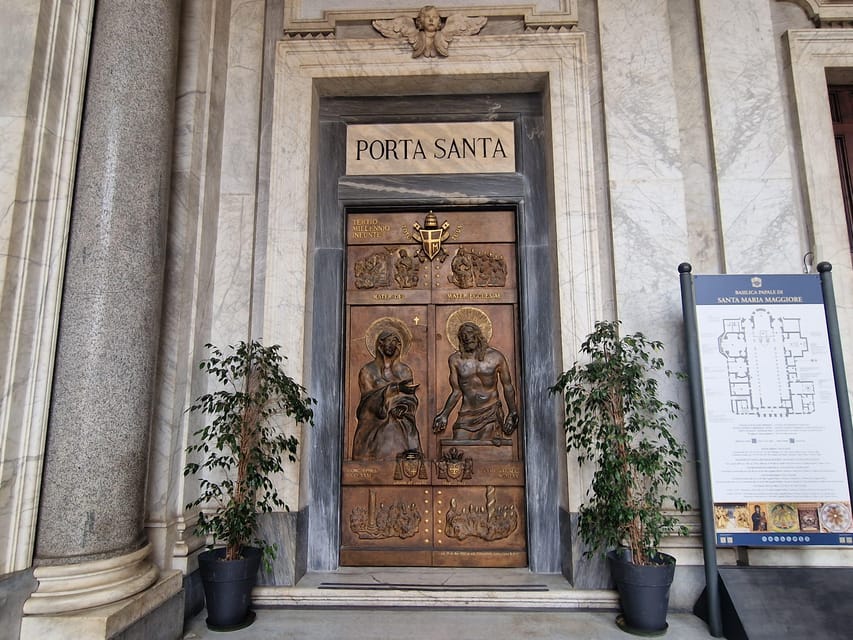
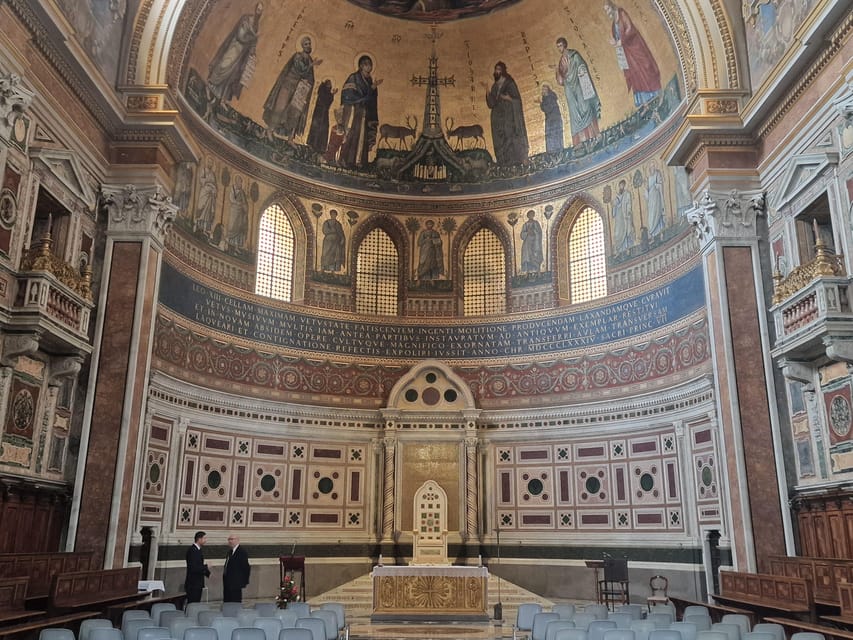
Next comes Basilica di San Giovanni in Laterano, also known as St. John Lateran and described here as the Cathedral of Rome. The tour notes its high ranking as the arch-basilica and the mother church of the world.
This is your guided stop number three, also about one hour. The tour focuses on the interior and its history, including the story of the ancient mosaics. You’ll also stand before the heads of Saints Peter & Paul, brought into the basilica and placed above the altar in the year 1300.
If you’ve ever wondered why Romans take the term mother church seriously, this stop helps you understand the logic behind it. The architecture is important, but the guide’s explanation ties the site to the broader idea of Rome as the center of Catholic life. It’s less about spectacle and more about meaning.
Practical consideration: expect to dress with care here too. The same shoulders-and-knees rule applies, and it’s easy to forget once you’ve been walking outdoors. Wear clothing that stays comfortable under church heat and long interior pauses.

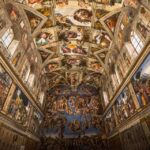
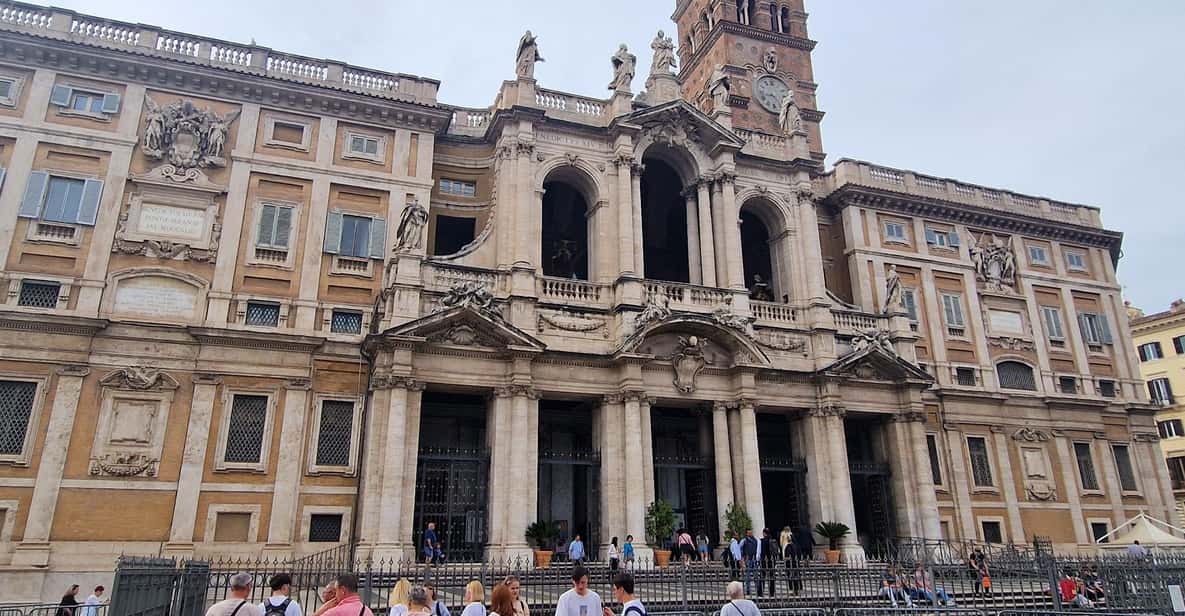
Stop 4: Santa Maria Maggiore and the Golden Interior Details
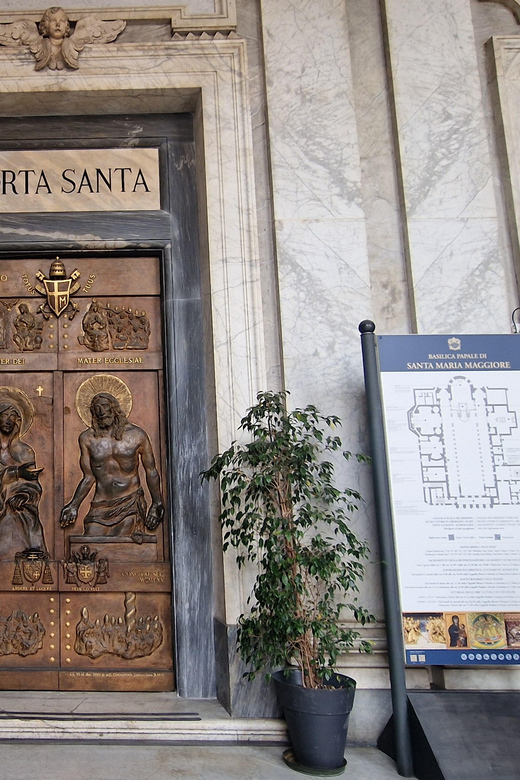
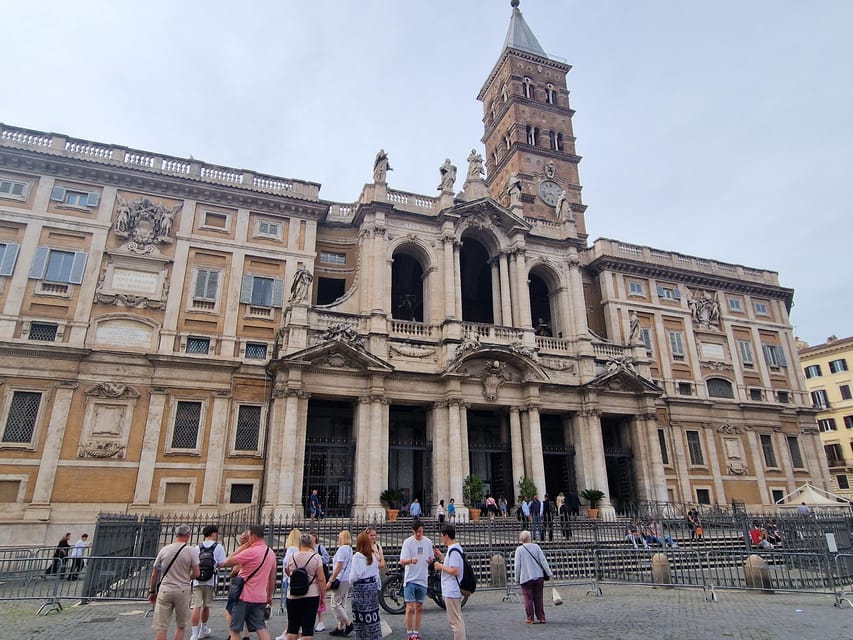
Once the four basilicas are complete, you can feel the sense of finishing a structured pilgrimage. But the final stop is a strong one: Papal Basilica of Saint Mary Major (Santa Maria Maggiore).
You’ll have your guided visit here for about one hour. The tour frames this as perhaps the oldest church dedicated to Mary in Rome and certainly among the most important. It’s also described as having a golden interior, plus major features connected to Mary devotion.
Key highlights include popes buried here, relics of the crib of the Nativity of Christ, and the miraculous icon Salus Populi Romani.
This stop often lands differently than the apostle-focused basilicas. You’ll spend more time in a mood of Marian reverence, symbol-rich art, and relic traditions tied to Christian origins. If you’re traveling with someone who loves icons, relic stories, and meaning-heavy church art, this is the kind of ending that feels satisfying rather than rushed.
Transport and Timing: Why the 5-Hour Format Works
This is a five-hour experience with one-hour guided tours at each basilica and private transport between them. For many travelers, that’s the sweet spot: you get real access and explanations, but you’re not trapped all day.
The itinerary order can also shift due to traffic or accessibility, and you’ll be informed if anything changes. That’s normal in Rome. What you should do is keep your schedule flexible and avoid stacking other plans right before or right after.
Weather-wise, the tour goes ahead in all conditions unless a site is closed for safety reasons. In other words: pack for walking. A hat, sunscreen, and bottled water are specifically recommended, along with an umbrella.
Restrooms are not listed in the details provided, so I suggest handling this proactively. If you need a break, ask the guide at the first easy moment, not when you’re already uncomfortable. One practical review note I’d take seriously: guides may not always flag restroom timing clearly, and inside churches you may not want to wander far on your own.
Price and Value: Is $283.21 Worth It?
At $283.21 per person, this isn’t a budget add-on. But the value question here is about what you’re buying: structured Holy Door entry for the four Papal Major Basilicas, a live English guide, and private air-conditioned transport between distant stops.
If you try to DIY this, you’ll likely spend your time problem-solving: lining up, figuring out which entrances qualify for Jubilee entry, managing schedule gaps between four major sites, and losing the context that keeps the pilgrimage meaningful rather than scattered. Even if you can manage the logistics, you’ll probably miss the guided explanations tied to key altars, relics, and Jubilee points of focus.
Also, the Holy Door component isn’t something you can reliably improvise. The tour says you’ll receive communication after booking with instructions for the pilgrim’s card and Holy Door entry during the day. That kind of setup costs money—and it’s what makes the tour feel “official” rather than just a route.
My take: if Jubilee spirituality is your priority, the price looks more reasonable. If you mostly want general church sightseeing at your own pace, you might feel boxed in by the structure.
Who This Tour Fits Best (and Who Might Feel Crowded)
This experience is best for travelers who want a pilgrimage day with guidance and minimal friction. If you’re Catholic, deeply curious about the Jubilee tradition, or simply tired of Rome tours that blur into generic museum talk, you’ll likely appreciate how the guide keeps the focus on the Holy Door practice and the major spiritual landmarks.
It also fits well if you prefer organization. You don’t have to coordinate transport, and you get a clear sequence: St. Peter’s, St. Paul Outside the Walls, St. John Lateran, and Santa Maria Maggiore.
That said, if you want lots of free time, this probably won’t be your favorite format. It’s guided and timed. It also has clear dress rules, and you should plan for a day with limited flexibility once you’re inside the basilicas.
A Note on Guides: When Communication Becomes the Difference
The overall rating is strong, and the guide quality matters here because you’ll be listening in large, echoing spaces. One standout mentioned is Stefano, described as extremely knowledgeable and recommended for a wonderful experience. That’s exactly what you want for a day built around meaning, relics, and Jubilee context.
At the same time, one practical concern came up with guide Daniel: the group’s ability to hear explanations inside the basilicas. The issue wasn’t the guide’s effort—it was sound and volume in big church spaces, plus the fact that no communication device was mentioned in the experience.
So my advice is simple: stay close when explanations happen, and don’t assume every minute will be equally easy to hear from the back. If you’re traveling with hearing needs, plan for it.
Should You Book This Jubilee Tour?
Book it if you want a focused Jubilee pilgrimage through all four Papal Major Basilicas with Holy Door entry, guided points of focus, and transport that keeps you from wrestling Rome logistics.
Skip it if your main goal is casual sightseeing and you don’t care about Jubilee-style structure. You may also want to reconsider if you hate timed tours, or if your flexibility for breaks and hearing issues is limited.
FAQ
How many basilicas does this Jubilee tour visit?
You visit four: St. Peter’s Basilica, St. Paul Outside the Walls, Basilica di San Giovanni in Laterano, and Papal Basilica of Santa Maria Maggiore.
Does the tour include entry to each basilica?
Yes. Entry to the sites included in the tour is part of the package.
Are the Holy Door entrances part of the experience?
Yes. The tour includes entering each basilica through its Holy Door as part of the Jubilee practice.
How long is the tour?
The duration is 5 hours.
What’s the meeting point?
Meet at the fountain on the wall of Piazza Giovanni XXIII, near Lungotevere Vaticano. Look for the guide holding an orange sign with a lion head.
What time should I arrive?
Check in 15 minutes before your scheduled tour time. Tours depart promptly, and late arrivals may not be accommodated.
Is food included?
No. Food and drink are not included.
What should I wear for entry?
Shoulders and knees must be covered. Avoid short skirts and sleeveless shirts.
Is the tour guided in English?
Yes. The tour includes a live English-speaking guide.
Does the tour run in bad weather?
Tours proceed in all weather conditions unless a site is closed by authorities for safety reasons.
Who is the tour provider?
The experience provider is Roman Vacations.