REVIEW · ROME
Rome: Appian Way and Roman Countryside Electric Bike Tour
Book on GetYourGuide →Operated by Rome for You - RM - 1436156 · Bookable on GetYourGuide
Ancient roads move fast on an e-bike. This 4-hour ride along the Appian Way, Regina Viarum, gives you the feeling of real contact with antiquity, not just quick photos. I also love how the electric assistance makes Rome’s hills and rough cobblestones manageable without turning the tour into a workout. One thing to keep in mind: the e-bike gear is convenient, but like any machine, there can be occasional hiccups.
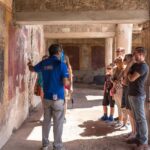
What makes it especially worthwhile is the guided storytelling. On my favorite moments, the guide ties together politics, military logistics, and religion as you pass major tomb zones and catacomb areas. In particular, I’ve seen guides like Emiliano and Libero bring the route to life with clear explanations, humor, and constant attention to pacing and safety.
Still, if you’re the type who really wants every stop to include an interior catacomb visit, treat that as a flexible expectation. Also, plan to stay patient if an e-bike loses power mid-ride; that’s the one downside that can change how smooth the afternoon feels.
In This Review
- Key highlights you’ll feel on the ride
- Leaving Rome’s center: why this ride starts with a good mood
- Appian Way (Regina Viarum): Rome’s original highway in your wheels
- Tomb worlds: catacombs and mausoleums along the same corridor
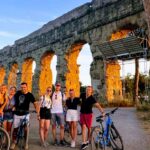
- Aqueducts Park: the two aqueducts you can actually see functioning
- Caffarella Park return: archaeology plus a working farm feel
- Guides like Emiliano and Libero: what strong guiding looks like here
- Pace and distance: 4 hours that feel doable on electric assist
- Price and value: is $88 worth it?
- What to wear and bring for an easier ride
- Who should book this e-bike Appian Way tour?
- Final thoughts: should you book the Appian Way by e-bike?
- FAQ
- How long is the Rome Appian Way and Roman Countryside electric bike tour?
- Where do I meet for the tour?
- What is included in the price?
- What languages are the guides available in?
- Which sights or areas does the tour cover?
- Is food or drinks included?
- Do I need a passport or ID?
Key highlights you’ll feel on the ride
- Appian Way’s original paving on Rome’s first long-distance road
- Christian catacombs connected to Saint Callixtus and Saint Sebastian areas
- Pagan tomb culture alongside imperial-era sites, so the road reads like a timeline
- Aqueducts Park with two aqueducts still in excellent condition
- Caffarella Park countryside return with archaeological spots and a working farm
Leaving Rome’s center: why this ride starts with a good mood
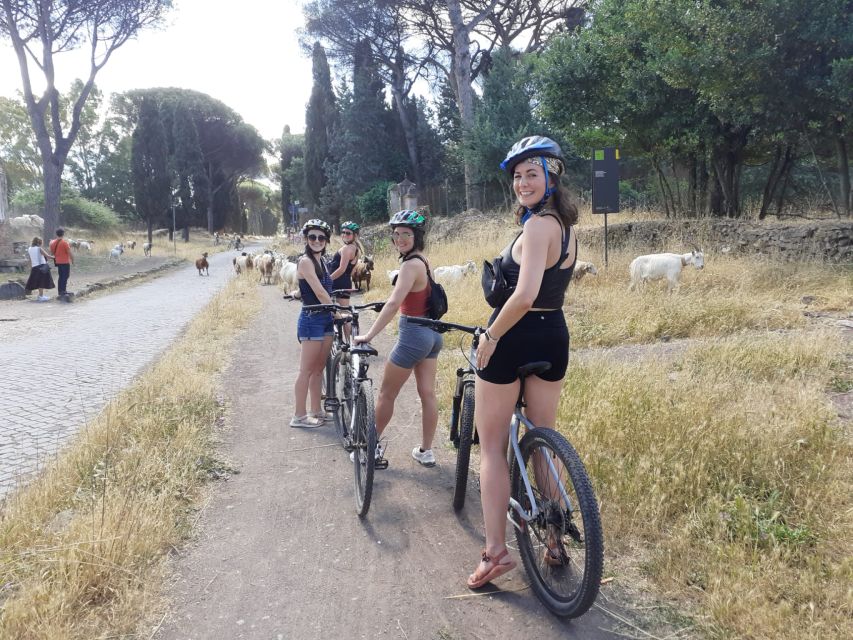
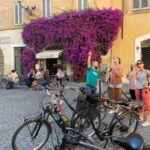
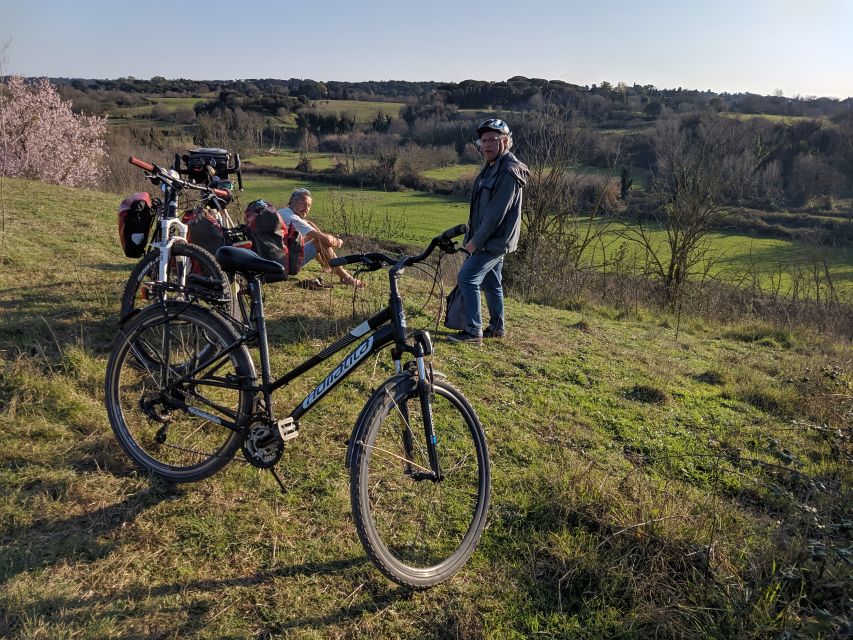
You meet at Via di S. Calisto, 9 and you’ll want to arrive about 15 minutes early. From there, you’ll shift out of the dense center and into the countryside feel that made 19th-century writers fall in love with this area. The ride is built for comfort: you get e-bikes and helmets, and the electric assist is meant to keep the tour from feeling like a grind.
The biggest advantage of this format is that you can cover real ground in real time. A 4-hour walking tour can only scratch the surface, and a bus tour can’t match the freedom of slowly rolling past walls, ruins, and tomb markers at your own pace. On this route, you’re not rushing to the next stop every minute—your guide builds a rhythm: ride, pause, listen, then ride again.
If your trip plan includes the classic big sites, this tour is a smart counterbalance. It’s still Roman, still dramatic, but it feels calmer. It also gives your eyes a different kind of history: less marble-in-a-hall, more stone-in-the-wild.
You can also read our reviews of more cycling tours in Rome
Appian Way (Regina Viarum): Rome’s original highway in your wheels
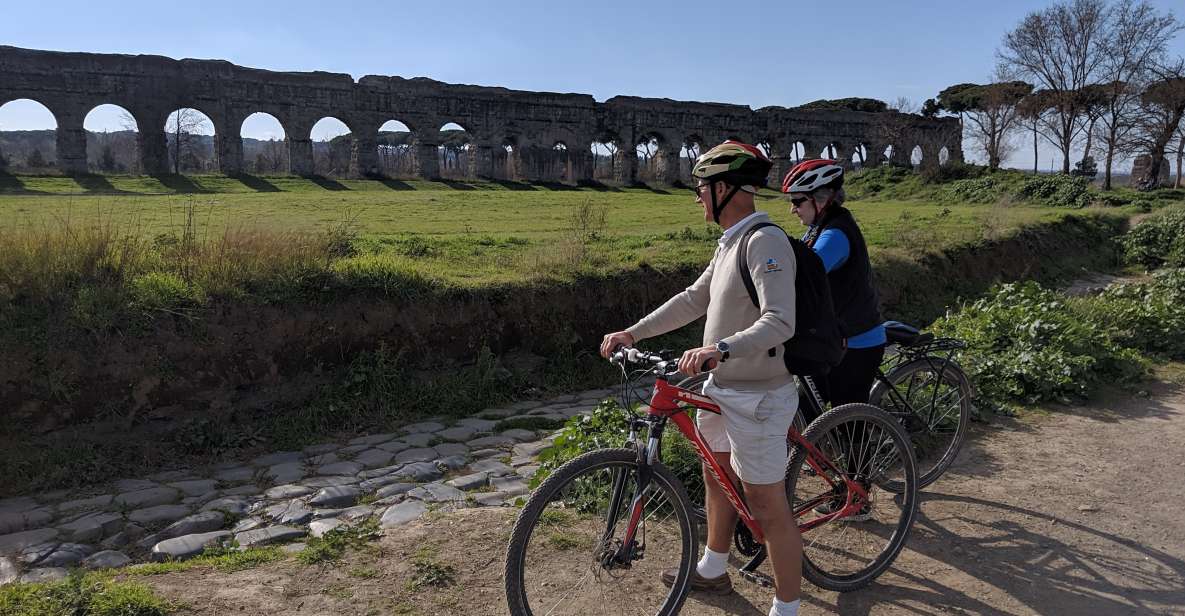
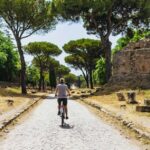
The Appian Way is often called Rome’s oldest road, and the nickname Regina Viarum fits: it functioned like a queen among roads, shaping how people traveled, fought, and buried their dead. Built in the 4th century BC, it served two jobs that mattered to the empire: moving military supplies and giving prominent families a prestigious corridor for tombs and mausoleums.
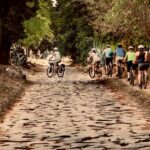
Here’s what makes riding it so effective: you can actually see why it mattered. The route still keeps most of its original paving, which changes the whole sensory experience. You feel the age in the ground under your tires—uneven, stone-streaked, real. That matters, because it turns the Appian Way from a concept into a physical place.
Your guide uses the road as an organizing story. As you pass ancient Roman ruins, statues, and major tomb areas, you’re not just learning names—you’re learning how the empire’s power traveled. You’ll also see the kind of imperial presence that reminds you this wasn’t only a road for funerals or pilgrimages. It also connected big-state planning with personal status.
If you only do one “history tour,” I’d say do the big monuments first. But if you want a Roman afternoon that feels like you’re reading the empire with your body moving through it, this is it.
Tomb worlds: catacombs and mausoleums along the same corridor
One of the most interesting parts of the Appian Way is how different belief systems share the same long stretch of land. This tour focuses on Christian catacombs, including the areas associated with Saint Callixtus and Saint Sebastian. It also includes stops tied to pagan mausoleums, so you get the sense of a society changing over time while using the same physical space.
You’ll learn how the road acted as a meeting point between political, military, and religious power. That sounds broad, but on the ground it becomes clearer: the same corridor that strengthened the empire also became a stage for how people expressed identity after death. The imperial-era pieces you see help you understand the “state” version of power. The tomb zones show the “family” version. The catacomb areas show the “faith under pressure” version.
Practically, you’ll be on and off the bike throughout the afternoon as the guide explains what you’re looking at. This matters because many visitors hit these zones with only a museum-style viewpoint. On a bike, you’re seeing the spatial relationship—how sites line up, how the area opens and tightens, and how the road’s purpose evolved.
One caution: one rider experience described not stopping inside catacombs even though catacomb areas were included in the tour theme. That doesn’t mean it’s always the case, but it’s a good reminder to keep expectations flexible if interior access is a priority for you.
Aqueducts Park: the two aqueducts you can actually see functioning
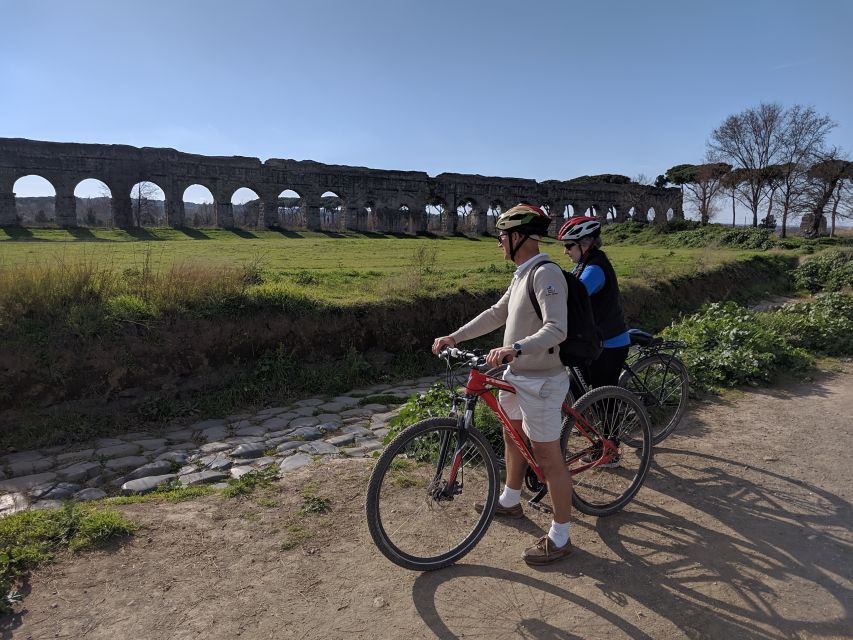
After the Appian Way segment, you’ll spend time around Aqueducts Park, described as the only park in the world that preserves two Roman aqueducts still in excellent condition. This is the part where the tour earns its “countryside” label in a very real way.
Aqueducts are one of those Roman achievements that are easy to admire from afar, but here you get a more grounded view. You can see the scale of the stonework and how it shapes the area around it. It also puts the earlier road story into context: the empire didn’t just build roads for movement; it built water systems so cities, farms, and estates could keep going.
Your guide ties this back into daily life and power. Even if you know the basics of Roman engineering, the park setting helps you understand that aqueducts weren’t background features. They were essential infrastructure.
This stop is also great for photos, not just because the aqueducts are dramatic, but because the viewpoint usually gives you a sense of distance—how the structures stretch out along the terrain instead of being boxed into a single frame.
Caffarella Park return: archaeology plus a working farm feel
In the second half of the tour, you pedal back through Caffarella Park, which combines archaeological sites with a working farm. It also gets credit for ecological value, which is a fancy way of saying the area isn’t just paved-over history—it has living activity and a natural rhythm alongside ruins.
This is where the ride changes tone. Earlier in the day, you’re mostly focused on the monumental Roman corridor: road, tombs, catacomb areas, and imperial presence. Here, you get a softer scene: open space, farm textures, and a sense that the countryside still plays a role beyond tourism.
From a value standpoint, this is important because it keeps the tour from feeling like a checklist. The route still delivers history, but the park portion makes the afternoon feel like a full experience of this part of Lazio, not just an extended sightseeing stop.
If you like tours where you can breathe a little and take in the setting, Caffarella is one of the better reasons to pick this over a purely urban option. You come back to Rome with different eyes.
You can also read our reviews of more tours and experiences in Rome

Guides like Emiliano and Libero: what strong guiding looks like here
This tour rises or falls on the guide. The best guides do three things well: they explain clearly, they keep the pace comfortable, and they help you feel safe on uneven surfaces.
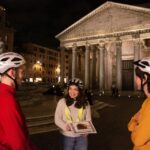
I’ve seen guides such as Emiliano deliver exactly that: warm and excited energy at the start, strong historical storytelling, and a steady focus on comfort and safety. Another name that comes up is Libero, described as friendly and interesting, with a charm that makes the countryside feel personal. In a few cases, riders mentioned guides answered questions and built in photo stops without turning them into delays.
Also pay attention to what the guide does with the e-bikes. Cobblestones and small hills can throw off your balance if you don’t get basic orientation. When the guide checks your comfort and gives you practical tips, you’ll enjoy the ride more than you expect—especially if you’re not a confident cyclist.
Language support is also a real benefit here. The tour offers English, French, Italian, and Spanish, which means you’re not stuck with a half-understood explanation.
Pace and distance: 4 hours that feel doable on electric assist
This isn’t a speed-tour. It’s designed so you can enjoy the sites without arriving wrecked. One useful detail from an actual experience: expect to ride around 20 miles (give or take). On an e-bike, that can feel manageable, even with hills and old paving.
Still, I’d be honest with you: you are on a bike for much of the afternoon. The tour is not suitable if you can’t ride a bike, and comfort depends on your willingness to stay balanced over uneven stone. The electric assist helps you get through the tough spots, but it won’t replace good basic riding posture.
The 4-hour timing works well if your day is otherwise full. You’re not committing a whole day, and you avoid the “only one big stop” feeling. By the end, you’ve had time for real explanations, not just a quick pass-through.
If you prefer a low-stress day, show up rested. If you’ve walked a lot around the Colosseum and Vatican already, this can still work, but you’ll want to keep your body comfortable on the seat.
Price and value: is $88 worth it?
At $88 per person for 4 hours, you’re paying for a focused guided experience plus the equipment that makes it possible: e-bikes and helmets. What you’re not paying for is food and drinks, and there’s no hotel pickup or drop-off.
So the value equation looks like this:
- You get a real guide for multiple historical zones, not just a self-guided loop.
- You get the e-bike, which turns a long-distance countryside ride into something many people can handle.
- You pay for the time you’d otherwise spend figuring out routing, logistics, and what’s worth seeing.
That said, you’ll want to budget for your own small needs. Since food and drinks aren’t included, plan to handle your own water and snacks if you think you’ll need them during a 20-mile afternoon. Also plan how you’ll get to the meeting point near Via di S. Calisto, 9.
In my view, the price feels fair if you want history with movement and you care about understanding what you’re seeing. If your goal is only photos from the roadside, you might consider other options. But if you want the Appian Way to make sense as a story, the guided ride is where the money goes.
What to wear and bring for an easier ride
You’ll be outside for a few hours and you’ll be cycling over surfaces that aren’t flat. You don’t need formal attire, but do think practical.
From actual experience, riders recommend comfortable shorts and athletic-style clothing and shoes for grip. One helpful note: the tour doesn’t require you to dress for major religious-site constraints, so you can usually wear something simple like a tank top plus shorts.
Bring:
- Passport or ID card (a copy is accepted)
- Helmet is provided, but wear or bring comfortable riding clothes
- Anything you might need for hydration since drinks aren’t included
One more practical point: e-bikes are easy, but take the first few minutes seriously. Get your bearings early so you feel stable before you hit the road’s rougher bits.
Who should book this e-bike Appian Way tour?
This tour is a great match if you:
- Want more than the big museum sites and you like Roman history connected across time
- Prefer to move at a steady pace rather than walking every stretch
- Enjoy guided context—how one area connects to another, including religion and empire
- Feel comfortable riding a bike and want an easier experience thanks to electric assist
It might be less ideal if you:
- Can’t ride a bike
- Need fully guaranteed, inside-access catacomb stops at every departure (the tour emphasizes catacomb areas, but real-world timing can vary)
- Are sensitive to mechanical issues—rare, but an e-bike support problem can affect the smoothness of the afternoon
Final thoughts: should you book the Appian Way by e-bike?
If you want Rome to feel physical again—stone under your wheels, ruins you can sense as you pass them—this is a strong choice. I think it’s especially worth it when you’re craving a Roman day that’s guided, countryside-framed, and built for real movement.
Book it if you can ride a bike and you’re happy to treat the day as a guided route rather than a strict checklist of interior rooms. Skip it if you’re unwilling to ride uneven paving or you only want very controlled, indoor, stop-by-stop museum style.
Either way, this is the kind of afternoon that gives the Appian Way its proper personality: not as a distant legend, but as a living corridor of Roman ambition, faith, and family memory.
FAQ
How long is the Rome Appian Way and Roman Countryside electric bike tour?
The tour lasts 4 hours.
Where do I meet for the tour?
You meet at Via di S. Calisto, 9. Arrive 15 minutes before the activity starts.
What is included in the price?
The tour includes e-bikes and helmets.
What languages are the guides available in?
The live guide is available in English, French, Italian, and Spanish.
Which sights or areas does the tour cover?
The tour focuses on the Appian Way (Regina Viarum), including Roman ruins and tombs, Christian catacombs associated with Saint Callixtus and Saint Sebastian, pagan mausoleums, an imperial palace, Aqueducts Park, and Caffarella Park with archaeological sites and a working farm.
Is food or drinks included?
No. Food and drinks are not included.
Do I need a passport or ID?
You should bring a passport or ID card. A copy is accepted.