REVIEW · ROME
Rome: Appian Way, Catacombs, & Roman Aqueducts E-bike Tour
Book on GetYourGuide →Operated by TopBike Rental & Tours · Bookable on GetYourGuide
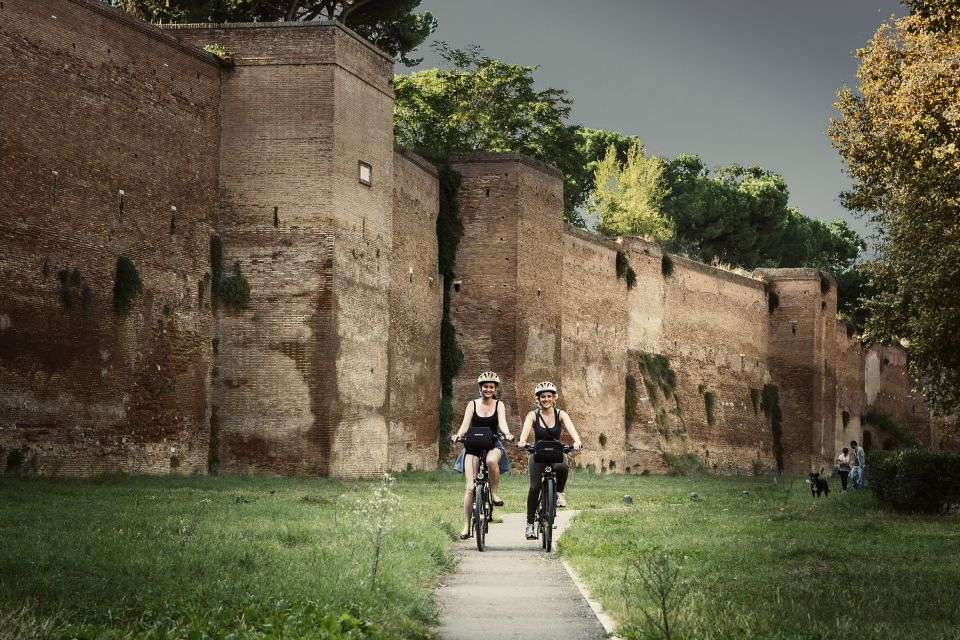
E-bikes make ancient Rome feel close. This Appian Way, Aqueducts & Catacombs tour strings together big-name ruins with real countryside time, starting right at Via Labicana and rolling through St. Sebastian’s Gate in the Aurelian Walls. I like that it’s run with a safety-conscious rhythm, especially when you have to transition between city streets and park paths.
What I love most is the combination: the Appian Way itself plus the colossal aqueduct arches backdropped by open air.
The second reason I think this tour delivers is the bike setup. You ride a Cannondale e-mountain bike with anti-puncture tires, which matters when you’re covering 27 km and a good chunk of it isn’t smooth pavement. The itinerary also gives you pauses to look, take photos, and breathe instead of just sprinting from one photo stop to another.
One consideration: this ride is intermediate. Expect uneven ground and gravel bits, plus traffic is unavoidable for part of the route to connect the Appian Way to the Aqueducts Park (about 40% of the time). If you’re totally new to biking, plan to be a bit cautious at the start.
In This Review
- Key points before you book
- Entering the Ancient Appian Way from St. Sebastian’s Gate
- The Catacombs Choice: 6 Hours with Guided Crypts vs 4 Hours Briefing
- Appian Way Stops: Maxentius, Cecilia Metella, and the Aristocrats’ Villas
- Riding the Roman Countryside: What 27 km and 60% Off-Road Really Means
- Park of the Aqueducts: Following the Colossal Arches Back Toward Civilization
- Baths of Caracalla and the End-of-Day Return to Via Labicana
- The Bikes, the Guide, and the Real Safety Stuff
- Timing: 4 Hours vs 6 Hours and How the Day Feels
- Price and Value at $85 per Person
- What to Bring So the Ride Stays Fun
- Who This Tour Suits Best (and Who Should Skip It)
- Should You Book This Rome Appian Way E-bike Tour?
- FAQ
- How long is the Rome Appian Way, Aqueducts, and Catacombs e-bike tour?
- What is the difference between the 4-hour and 6-hour tours?
- What’s included in the tour price?
- What is not included?
- Where does the tour start and end?
- How difficult is the route?
- Is there traffic on the route?
- What should I bring?
- Is the tour suitable for children and infants?
- What bike and safety gear are provided?
Key points before you book
- Two tour lengths: 6 hours with a guided Catacombs visit, or 4 hours with only a brief Catacombs entrance stop.
- Small group size up to 10, which keeps the pace calm and the road transitions manageable.
- Cannondale e-bikes with anti-puncture tires and mandatory helmets, built for real riding conditions.
- Appian Way + Aqueducts Park aren’t treated like checkboxes; you follow the aqueducts back toward the city.
- Route mix: about 60% off-road (mostly in parks), plus a smaller but real city-traffic segment.
Entering the Ancient Appian Way from St. Sebastian’s Gate
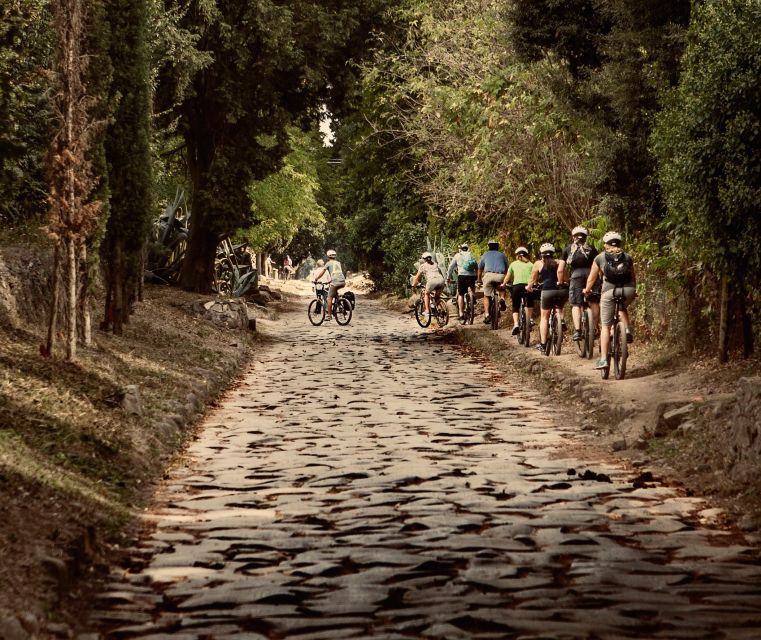
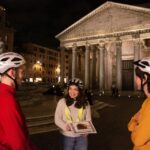
Your day starts at Via Labicana 49. From there, you move through Rome’s outer defenses—specifically St. Sebastian’s Gate in the Aurelian Walls—and that shift from modern city noise to ancient infrastructure happens fast. It’s a smart start because you’re immediately in the historical context: this route wasn’t built for sightseeing, it was built to move people and power across distances.
This is one of those tours where the guide’s job is more than storytelling. The group has to form up, learn how to ride together, and get ready for short stretches of road where your spacing and attention matter. That’s why this one’s a good pick if you want to see outer Rome without feeling like you’re negotiating it alone.
You can also read our reviews of more cycling tours in Rome

The Catacombs Choice: 6 Hours with Guided Crypts vs 4 Hours Briefing

The biggest fork in the road is the Catacombs. The 6-hour tour includes a guided visit underground at the Catacombs of St. Callixtus (or St. Sebastian). The 4-hour tour does not go inside; you stop at the entrance for a shorter history and significance explanation.
If Catacombs are high on your list, the 6-hour version is the better value. Going inside changes the whole experience. You’re not just looking at a doorway to an early Christian world—you’re walking through crypts and corridors while someone helps connect what you’re seeing to how it fits into Rome’s early Christian story.
If you’re short on time, the 4-hour option still gives you the context so the stop isn’t random. You’ll still ride the ancient road and the aqueduct parks afterward, which is the main outdoor payoff. Just know you’re trading the full underground visit for a faster day.
Appian Way Stops: Maxentius, Cecilia Metella, and the Aristocrats’ Villas
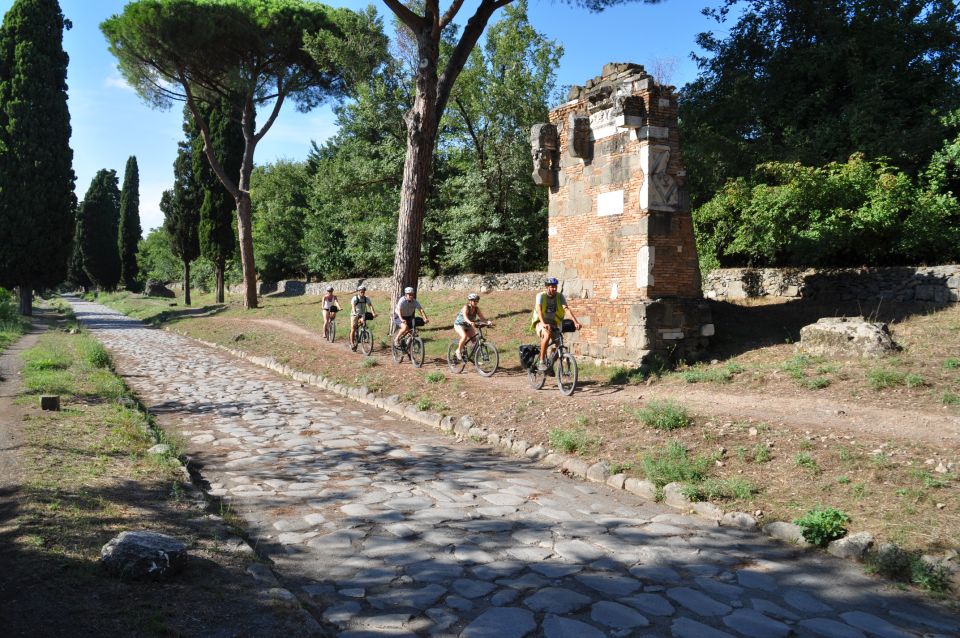
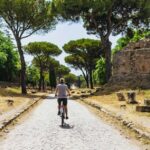
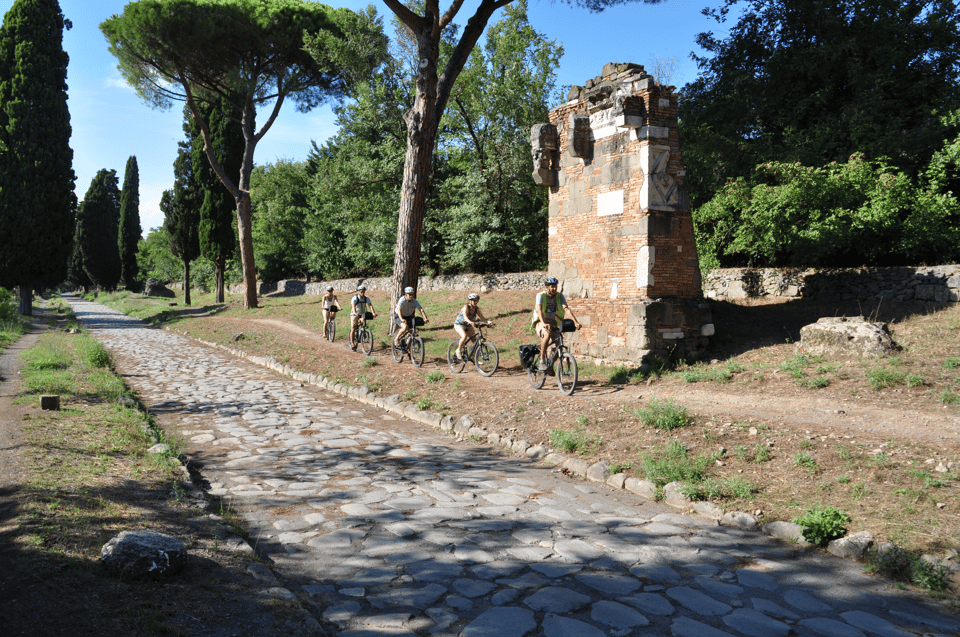
Once you’re out on the Appian Way, the tour turns into a moving timeline. You ride past tombs, mausoleums, and ancient villas of Roman aristocracy, and the pace makes it easier to actually register what you’re seeing. Even if you’ve done Rome before, this part feels different because you’re traveling along a road that shaped how Rome expanded.
The included sightseeing stops help break the ride into digestible chapters:
- Circus of Maxentius: you’ll see this ancient entertainment site from the bike route, which is a nice way to spot it without crowds clustering around you.
- Tomb of Cecilia Metella: it’s one of those monuments that reads instantly as powerful and expensive. On a bike, you can keep moving while still getting your bearings.
- Villa dei Quintili: this is where the scenery shifts from road life to the scale of elite estates.
A helpful detail is that the route is planned for a blend of stillness and context. You get those quieter segments where the countryside vibe takes over, then you return to major landmarks before the day pushes further toward the aqueducts.
Riding the Roman Countryside: What 27 km and 60% Off-Road Really Means

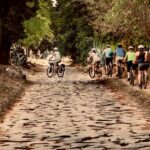
This tour is listed at 27 km (17 mi) total, and about 60% is off-road. That sounds intense on paper, but the e-bike changes the equation. You’re not pushing a heavy bike uphill by hand; the electric assistance means you can focus on steady pedaling and safe bike handling.
Still, don’t treat it like a casual stroll. You should be prepared for:
- gravel and uneven patches
- bumpy sections where your wrists and posture do a bit of work
- short city stretches where you need sharp attention when crossing and merging
The good news: the tour description is very clear about where the risk is. Around 40% of the route takes place in the city. The remaining 60% is in parks with no traffic. That matters, because it keeps most of your ride relaxed and predictable.
You’ll also likely feel the logic in the pacing. The guide groups the riders, stops for key photo moments, and uses brief breaks so you don’t feel like you’re grinding through the entire day in one go. People often say the e-bike makes the route feel doable, even when the distance would otherwise be a workout.
Park of the Aqueducts: Following the Colossal Arches Back Toward Civilization
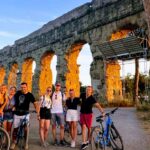
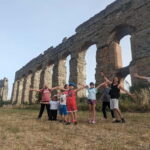
Now for the showpiece: the Parco degli Acquedotti. This is where you stop treating Roman engineering like a concept and start seeing it as a landscape-shaping force. The aqueduct arches rise big and dramatic, especially in warm afternoon light, and the route is set up so you’re not just viewing them once—you’re tracking them as part of how water moved through ancient Rome.
This section has a different mood than the Appian Way. The Appian Way feels like a long memory. The aqueduct park feels like infrastructure poetry: repetitive arches, scale you can feel, and a sense of how far-reaching Roman planning really was.
After following the aqueducts back toward more modern surroundings, the itinerary crosses the Caffarella Valley. This adds a green breather between monuments, and it’s a nice reminder that you’re riding through a living patch of Rome, not just around it.
You can also read our reviews of more tours and experiences in Rome

Baths of Caracalla and the End-of-Day Return to Via Labicana
Toward the end, you pass Baths of Caracalla, one more major anchor that pulls the day back into the city’s Roman identity. It’s a good closing stop because it connects the outdoor engineering (aqueducts and water) to the urban world where that water mattered.
Then you ride back to Via Labicana 49. The final stretch often feels like a victory lap: you’ve spent the day out beyond the center, and now you’re rolling back in with your head full of scenes that don’t fit neatly into a typical hop-on, hop-off loop.
The Bikes, the Guide, and the Real Safety Stuff
This tour runs on Cannondale quality e-mountain bikes with anti-puncture tires. Helmets are mandatory, and you get a 5-liter handlebar bag plus a biodegradable bottle of water. Those details might sound small, but they matter. Anti-puncture tires reduce drama. The bottle and bag mean you’re not fiddling with logistics mid-ride.
What I appreciate most is the role of the guide in bike handling and traffic transitions. City riding in Rome isn’t about speed—it’s about coordination. Many guides on this route are careful about spacing, timing crossings, and keeping the group together, especially when you have to connect from the Appian Way to the Aqueducts Park.
If you’re the kind of traveler who worries about first rides, you’ll be glad this tour is structured like a lesson, not a free-for-all. And yes, sometimes the day can throw curveballs like a flat tire; the guide’s job includes dealing with that quickly so the whole group doesn’t get stuck.
One more practical note: some riders have pointed out the terrain can feel a bit bumpy in places. That’s not a dealbreaker, but it’s another reason comfortable clothes and solid bike posture matter.
Timing: 4 Hours vs 6 Hours and How the Day Feels
You’ll choose between 4-hour and 6-hour versions. The difference is the Catacombs time. The 6-hour option gives you the guided underground visit; the 4-hour option gives you a shorter entrance stop and gets you more time for outdoor riding.
On the schedule side, there’s also a quirk: on Wednesdays, the tour can run about 30 minutes longer. If you’ve got tight plans later that day, plan buffer time.
Also remember that about 40% of the tour is in the city. Even with an e-bike, city segments need more mental energy than park riding. The guide’s pacing helps, but you’ll still want to stay alert through those connections.
Price and Value at $85 per Person
At $85 per person, this tour sits in a sweet spot for what you get. You’re paying for:
- a full guided route (including bike-specific safety and group control)
- high-quality e-bikes (Cannondale) with anti-puncture tires
- mandatory helmet use
- included water plus a handlebar bag
- optional guided Catacombs underground visit on the 6-hour version
Food and drinks are not included, so factor that in. You can often buy something along the way, but bring the mindset of a light, outdoor day: think snack + hydration rather than a multi-course lunch.
Value-wise, the big win is that this isn’t just one attraction. You get a whole sequence: Appian Way monuments, the aqueduct park experience, and (if you choose it) the Catacombs. For many visitors, that combination is the kind of day that makes Rome feel bigger than the center.
What to Bring So the Ride Stays Fun
Keep it simple:
- Comfortable shoes you can walk in and ride in (you’ll likely dismount at some stops)
- water readiness: the tour provides a bottle, but hot weather can still surprise you
- casual, breathable layers, since you’re mixing sun and shade across parks
Also, don’t overpack. You have a 5-liter handlebar bag, which is meant for essentials, not a picnic for a small army.
Who This Tour Suits Best (and Who Should Skip It)
This is a great fit if you want:
- real time outside the crowded center
- a route that mixes Roman monuments with parks
- an active day that still feels manageable thanks to e-bike assistance
It’s not ideal if:
- you hate biking or feel very unsure about handling a bike in traffic
- you’re expecting a totally flat, smooth ride
- you’re bringing very young children who can’t ride with the child seat/extension setup (babies under 1 aren’t suitable)
It can work well with older kids. Children 1–4 ride on a child seat (max 49 lbs / 22 kg) and travel free. Kids 5–8 use a child extension, and kids 9+ can ride independently on an e-bike. The tour itself notes the riding level is intermediate, and that it can be difficult with a child seat or extension.
Should You Book This Rome Appian Way E-bike Tour?
I’d book it if you want one day that ties together Rome’s roads, water system, and early Christian sites without spending hours in lines. The Appian Way + Aqueducts Park combo is the core payoff, and the e-bikes make the distance and off-road segments feel far more approachable than a traditional bike rental.
I’d pause and rethink if you’re nervous about bike handling or you’re expecting a gentle, fully paved ride. The city-traffic portion and uneven surfaces are real. If you’re in that “I’m not sure I can do this” zone, consider getting comfortable on a bike in calmer conditions first.
If you want the simplest decision rule: choose the 6-hour tour when Catacombs are a must, and choose the 4-hour tour when you want the outdoor highlights with less time underground. Either way, this is one of the more satisfying ways to see Roman history as a route, not a checklist.
FAQ
How long is the Rome Appian Way, Aqueducts, and Catacombs e-bike tour?
It runs either 4 hours or 6 hours, depending on which version you choose.
What is the difference between the 4-hour and 6-hour tours?
The 6-hour tour includes a guided Catacombs visit. The 4-hour tour does not go inside and only includes a short stop at the Catacombs entrance for a brief explanation.
What’s included in the tour price?
You get a Cannondale quality e-mountain bike (with anti-puncture tires), a professional guide, helmet (mandatory), a 5-liter handlebar bag, a biodegradable bottle of water, and a guided Catacombs visit on the 6-hour option.
What is not included?
Food and drinks are not included. You may be able to purchase some along the way.
Where does the tour start and end?
It starts and ends at Via Labicana 49.
How difficult is the route?
The tour is intermediate and covers 27 km (17 mi) with about 60% off-road. It can be difficult with a child seat or child extension.
Is there traffic on the route?
Around 40% of the tour is in the city where some traffic is unavoidable to connect the Appian Way to the Aqueducts Park. The remaining 60% is in parks with no traffic.
What should I bring?
Wear comfortable shoes. The tour also provides helmet and water, but you should still be ready for an outdoor ride.
Is the tour suitable for children and infants?
Babies under 1 year are not suitable. Infants 1–4 travel on a child seat (max 49 lbs / 22 kg) and come free. Children 5–8 use a child extension, and children 9+ can ride independently.
What bike and safety gear are provided?
You’ll ride a Cannondale e-mountain bike with anti-puncture tires, and you must wear the helmet provided.