REVIEW · ROME
Rome Driving Tour By Vintage Fiat 500
Book on GetYourGuide →Operated by ROME 500 EXP · Bookable on GetYourGuide
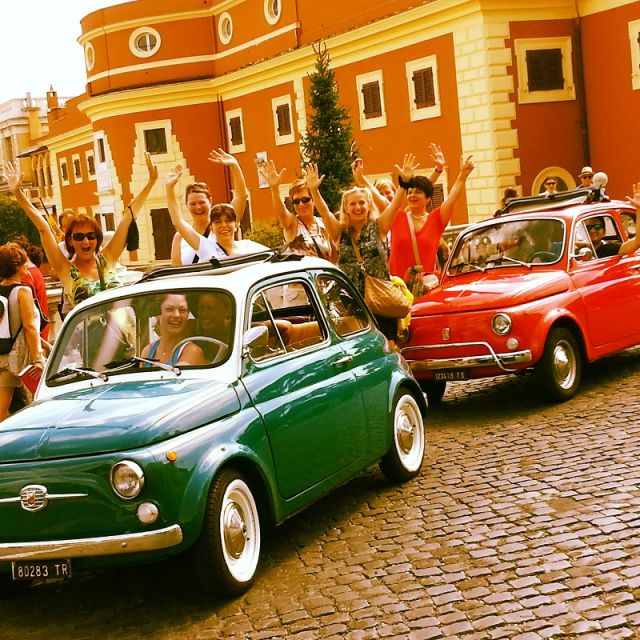
Want Rome at steering-wheel speed? This vintage Fiat 500 tour turns the usual sightseeing route into a street-level experience, with you behind the wheel of a candy-colored classic. I love that you get into lanes big buses can’t manage, and I love the guided, on-the-go storytelling (often delivered over walkie-talkie) with guides like Alex, Alexis, Francesco, Fernando, and Marco. One drawback: if you’re not comfortable driving a manual in busy traffic, the whole thing can feel more stressful than fun.
From the start, it’s built for motion and photos. You depart just meters from the Colosseum, cruise at a relaxed pace, and stop along the way to hop out for quick shots at major landmarks like the Arch of Constantine and Circus Maximus.
The setup is also very real-world: tight streets, small car size, and no room for luggage. If you’re dealing with back issues or limited mobility, or you can’t drive manual confidently, this may not be your best match.
In This Review
- Key things I’d zero in on before you book
- Meeting the Fiat 500 by the Colosseum: Palazzo Manfredi and a quick start
- Driving a vintage manual Fiat 500 in Rome: pace, convoy, and how not to get flustered
- What you’ll actually see: Colosseum area, Arch of Constantine, Circus Maximus
- Cruising the Lungotevere: Rome’s river photos from behind the wheel
- Trastevere and the tiny-street advantage: why the Fiat makes sense
- Aventine Hill’s secret keyhole and Piazza dei Cavalieri di Malta
- Photo stops, cappuccino breaks, and the celebrity-car effect
- Duration choices: 1.5 hours vs 3 hours and what you’ll feel
- Price and value: is $169.93 worth it?
- Who should book this Fiat 500 driving tour (and who should skip)
- Gotchas checklist before you commit
- Should you book this Rome Driving Tour by Vintage Fiat 500?
- FAQ
- How long is the Rome Driving Tour by Vintage Fiat 500?
- Where do we meet for the tour?
- Is food included in the tour price?
- Do I need an international driver’s license?
- Can I avoid driving and have a driver instead?
- Are the Fiat 500 cars open-top?
- What is the maximum speed during the tour?
- What sights will we see?
- Is luggage allowed?
- Is this tour suitable for people with mobility or back problems?
- What if traffic changes the route?
Key things I’d zero in on before you book
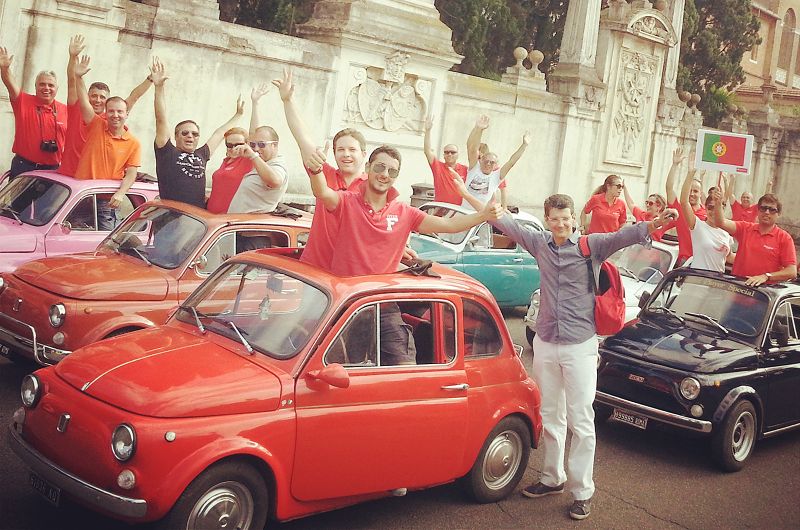
- Start near the Colosseum (Palazzo Manfredi): meet at 125 Via Labicana, then get out fast while the area is active but manageable.
- Small-car access: you reach streets and corners that larger buses simply can’t fit.
- Guided convoy driving: you follow your lead guide while a scooter chaperone helps manage traffic flow.
- Photo stops at iconic spots: Colosseum area views, Arch of Constantine, Circus Maximus, plus viewpoints with quick breaks.
- A slower pace by design: never faster than 18.5 mph (30 kmph), so you can enjoy the sights.
- Manual driving is the deal: you must be used to a manual transmission, or you risk getting refused for safety.
Meeting the Fiat 500 by the Colosseum: Palazzo Manfredi and a quick start
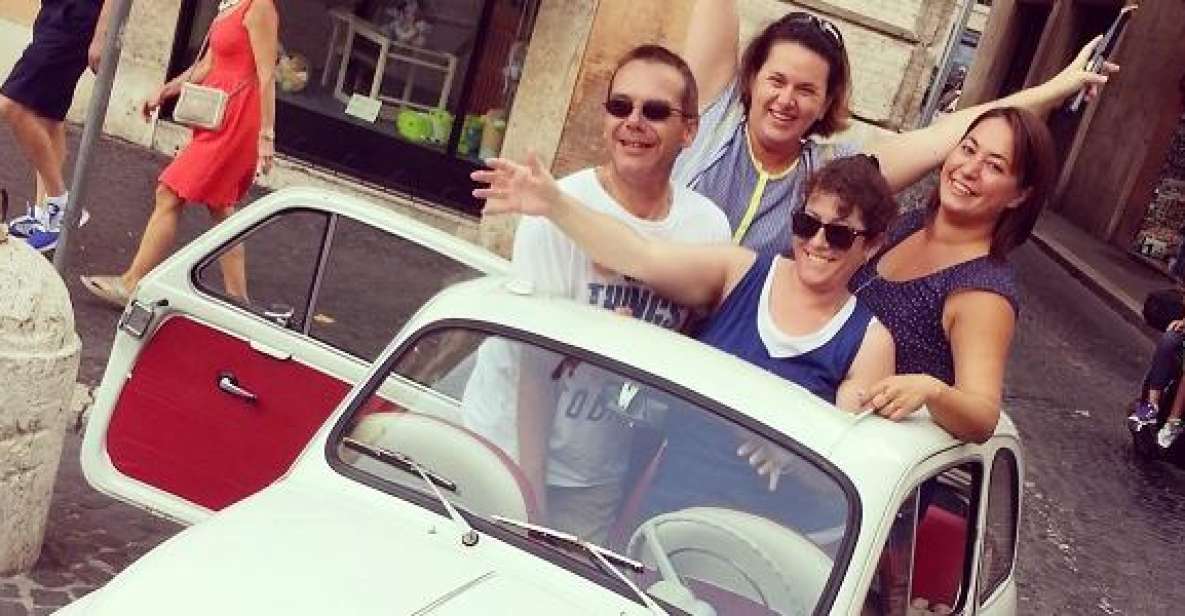
Your tour begins at Hotel Palazzo Manfredi, at 125 Via Labicana—about 100 meters from the Colosseum. Plan to arrive 15 minutes early, because you’ll need time to find the vehicle, check in, and get the driving basics sorted before you head into the chaos.
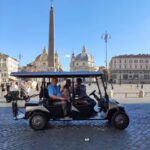
This is also where you’ll notice the most important practical truth: you’re driving a tiny car in one of Europe’s most traffic-heavy cities. The Fiat 500s have open-top (soft-top) roofs, so there’s less “insulation” between you and the city noise, sun, and street life.
One more rule matters here: no luggage or large bags. If you’re carrying a daypack, you’ll be fine in spirit, but don’t count on space for bulky items.
You can also read our reviews of more tours and experiences in Rome.
Driving a vintage manual Fiat 500 in Rome: pace, convoy, and how not to get flustered
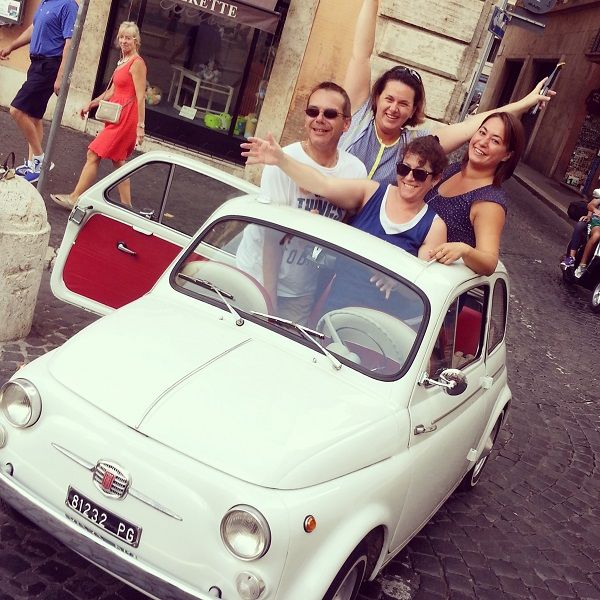
Rome traffic can feel chaotic on foot, but inside a manual vintage car it’s a different kind of workout. The good news is the tour is engineered to make this doable. You drive behind your guide, at a slow speed target—never faster than 18.5 mph (30 kmph)—so you’re constantly in control instead of racing between lights.
The convoy structure is a huge part of the safety net. A lead guide drives one car while you follow, and a scooter chaperone helps direct and protect the group from other vehicles. Reviews repeatedly call out how much this reduces stress compared to trying to do it solo, and it’s not just comfort—it’s a real traffic-management system.
If you’ve never driven a manual in a dense city, you’ll want to know the likely rhythm. Many drivers report that the experience keeps you mostly in 2nd gear, which makes the learning curve more manageable. Still, manual isn’t automatic, and the operator can refuse the car if the driver isn’t sufficiently expert—no refund if that happens—so be honest with yourself.
Also, you’ll need the right paperwork. The driver must bring a valid driver’s license and an international driver’s license (for non-Italian licenses). And if you’re hiring a driver instead of driving yourself, that’s possible for a small surcharge, but it’s not the default setup.
What you’ll actually see: Colosseum area, Arch of Constantine, Circus Maximus
This tour is designed to hit famous sights while avoiding the “stand here, listen, shuffle along” vibe. You’ll start near the Colosseum and spend real driving time around the monumental core, then stop for photos at key landmarks.
Expect stops tied to:
- The Colosseum area, where your meeting point puts you close enough to get that instant Rome feeling.
- The Arch of Constantine, with a photo stop that lets you frame the monument without fighting the crowd motion.
- Circus Maximus, where being in a small car gives you a different perspective than the typical bus viewpoint.
The value isn’t only the landmark names. It’s the ability to approach and leave them through streets that feel local and tight. You’re not viewing Rome as a brochure—you’re driving through the same geometry Romans use every day.
Do keep in mind that your exact timing can shift. Traffic or unforeseeable public events can reroute the precise itinerary, but the tour is built around hitting these kinds of focal points.
Cruising the Lungotevere: Rome’s river photos from behind the wheel
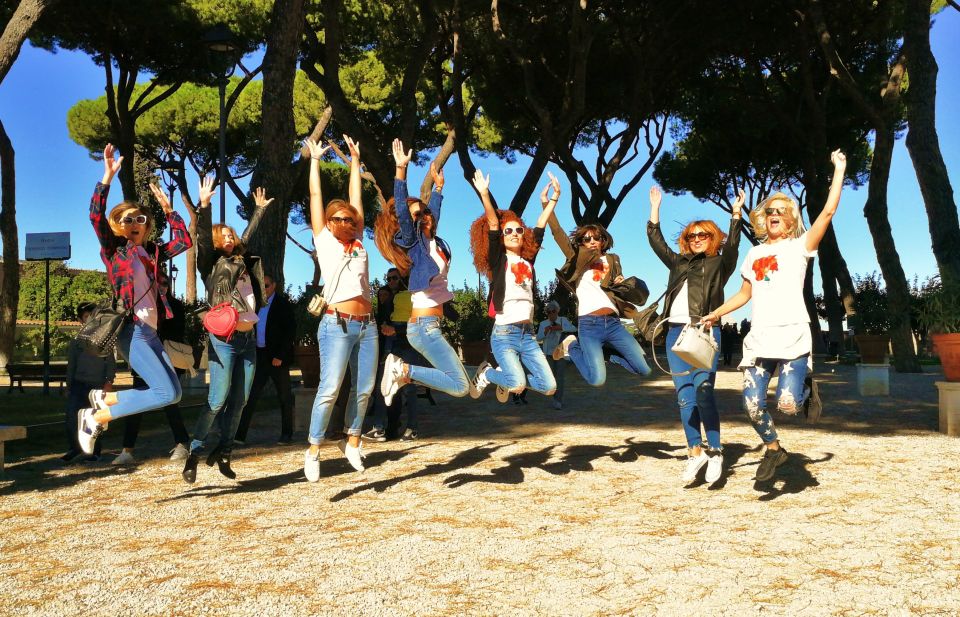
One of the most satisfying segments is the drive along the banks of the River Tiber, often experienced via the Lungotevere roads. You get long stretches where you can look right across the river, then immediately turn back toward Rome’s monuments and street rhythm.
The open-top roof changes the feel here. You’re not sealed in like you’d be on a bus tour, so you get sun and breeze—plus you’ll hear the city. That’s a big part of why this tour works for people who like being in the action rather than just watching it.
Practical tip: bring a hat. The roof is open, and Rome sun doesn’t play games.
During the drive, your guide provides brief insights (often via walkie-talkie). Even when the stops are short, the commentary helps you connect the sights to why they matter—without turning the day into a lecture.
Trastevere and the tiny-street advantage: why the Fiat makes sense
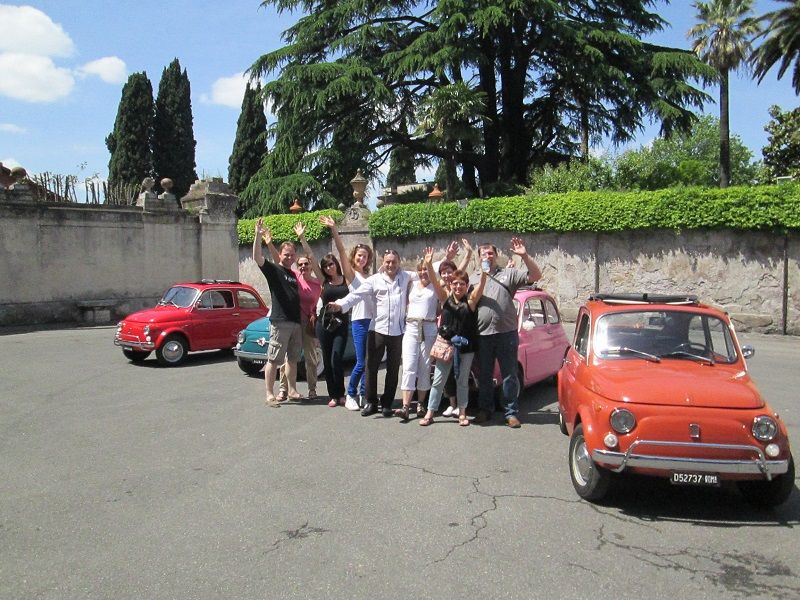
The tour crosses into Trastevere, and this is where the small-car advantage turns from gimmick into the whole point. Trastevere’s streets can be narrow and awkward for big vehicles. In a Fiat 500, the challenge is manageable, and the payoff is real: you’ll feel like you’re moving through Rome’s everyday spaces, not just its main stages.
This segment also changes the photos. Instead of only capturing big stones and big arches, you’re capturing scale—doorways, curves, and the way people actually live beside ancient walls.
If you’re worried about driving in tight conditions, remember how the tour is structured: you’re not improvising. You’re following the guide through turns you can see, at a slow pace, with the scooter chaperone watching the broader traffic picture.

Aventine Hill’s secret keyhole and Piazza dei Cavalieri di Malta
Two of the most memorable named stops on this route are Aventine Hill’s secret keyhole and Piazza dei Cavalieri di Malta (Piazza of the Knights of Malta).
The keyhole stop works because it’s quick and visual. You can see what makes the location special, then move on without wasting the whole tour waiting around. And the Piazza dei Cavalieri di Malta adds variety: it’s a charming, smaller-feeling moment compared with the heavy-hitter monuments.
This blend is one of the best reasons to choose a driving tour over a purely walking one. You get both the famous photo moments and the smaller, slightly oddball Rome moments—without having to plan it yourself.
Also note that these are stops for brief sightseeing and photos, not a full guided museum experience. Entrance tickets are not included, so you’re not paying for gallery time inside this price.
Photo stops, cappuccino breaks, and the celebrity-car effect
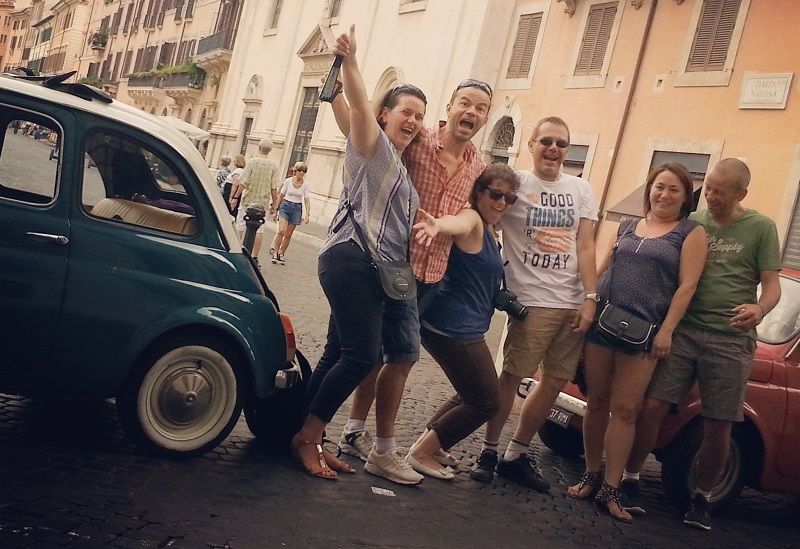
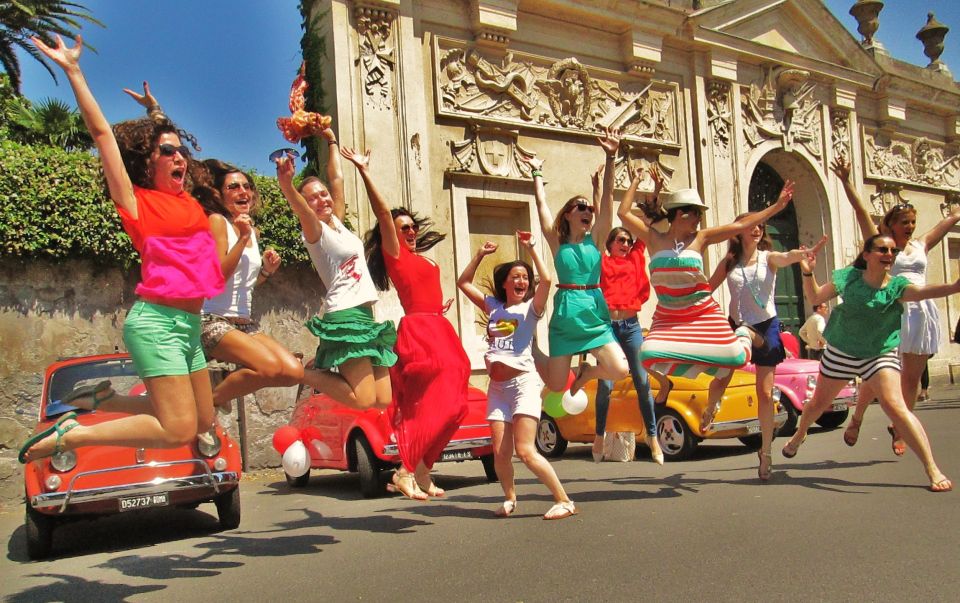
The tour is built for pictures. The Fiat 500 draws attention in motion, and you’ll likely feel like the car is the star of the show. People take photos, and your group often gets opportunities to pose and frame themselves with the landmarks behind.
The best part is you’re not limited to phone pics from a sidewalk. Because you’re in a tiny, photogenic car, your angles change. That’s hard to replicate with buses.
You also get time-to-time breaks at sights, and you’ll have options for a cappuccino or espresso, plus time for an ice cream if you want it. Just remember: food and beverages aren’t included, and entrance tickets for archaeological sites, galleries, or villas also aren’t included.
If you’re the kind of traveler who likes small breaks more than long ones, this works well. You get motion, then a short pause, then motion again.
Duration choices: 1.5 hours vs 3 hours and what you’ll feel
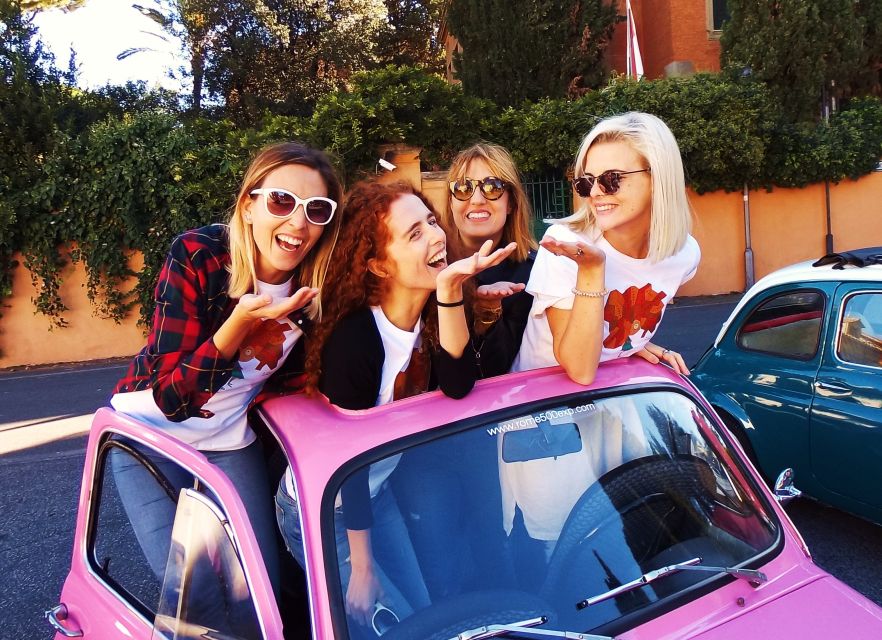
You can choose between a 1.5-hour tour and a 3-hour tour. The difference isn’t just time on the clock—it’s how much Rome you get to experience at a non-rushed pace.
A shorter tour can be perfect if you:
- want the Fiat experience without committing to a longer block,
- are combining it with other major sights,
- or you’re already comfortable driving and just want the highlights.
The longer tour is usually the better bet if you want more stop time and a fuller sense of the route’s variety—river driving, tighter neighborhoods like Trastevere, and the Aventine area moments.
One practical thing: the itinerary may shift due to traffic or events. With the longer option, you have more buffer to still end up with a satisfying mix of roads and stops.
Price and value: is $169.93 worth it?
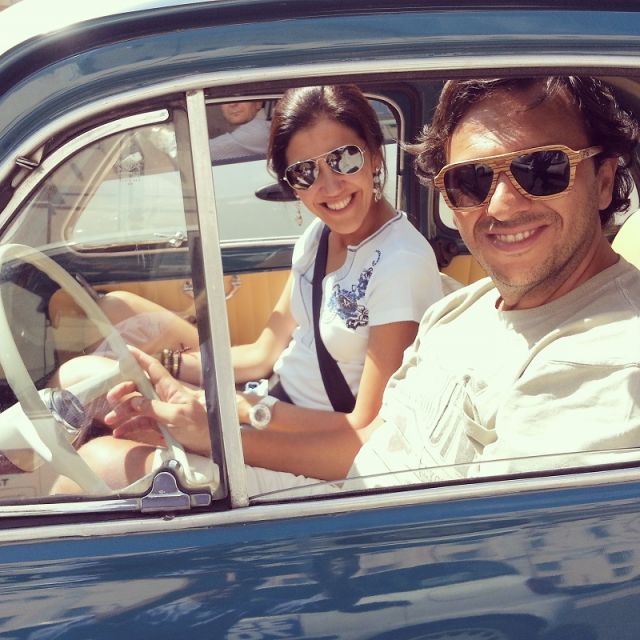
At $169.93 per person, this isn’t a budget activity. But the price includes a lot of the heavy lifting: car rental, tour leader fees, insurance, and fuel.
Where value shows up:
- You’re paying for access: areas buses can’t reach and the ability to drive through narrow streets.
- You’re paying for traffic management: convoy driving plus a scooter chaperone reduces stress.
- You’re paying for convenience: the meeting point is near the Colosseum, and the route plan handles the logistics.
Where you should adjust expectations:
- Food, drinks, and entrance tickets are not included.
- If you want to spend hours at one major site, this isn’t designed to turn into a museum day.
- If you don’t drive manual, there may be a surcharge to provide a driver, so budget for that.
So I see it as a “pay for the experience” type of tour. If you love the idea of driving a classic Fiat and want Rome at street speed, it tends to feel worth it. If you prefer guided walking tours or you dislike driving in traffic, it can feel overpriced fast.
Who should book this Fiat 500 driving tour (and who should skip)
This is a strong fit for:
- people who can drive manual and want a fun challenge,
- couples or small groups who like being part of the action (not just spectators),
- travelers who want a different perspective on the Colosseum area, the Tiber, and Trastevere.
It’s a weaker fit if:
- you have back problems or mobility impairments,
- you can’t drive a manual transmission,
- you need lots of luggage space,
- you’re expecting a calm, walking-style pace.
There’s also a group-per-car factor worth noting: bookings are accepted for only 3 adults, or 2 adults and 2 children per car. If your party is larger, plan accordingly.
Gotchas checklist before you commit
This tour has a few non-negotiables that matter more than almost anything else:
- Manual driving requirement: occasional experience isn’t enough; the operator can refuse the car and there’s no refund.
- International driver’s license: bring it along, plus your regular driver’s license.
- Small car size: it’s not a modern SUV. Your comfort and driving confidence matter.
- No large luggage: leave bulky bags behind.
- Open-top roof: bring a hat and expect sun exposure.
- Not suitable for back or mobility issues.
- Car capacity limits: max 3 adults, or 2 adults + 2 children per car.
- Itinerary can shift because of traffic or public events.
If you can handle these realities, you’ll likely enjoy what makes the tour special: it’s Rome you drive through, not Rome you just look at.
Should you book this Rome Driving Tour by Vintage Fiat 500?
I’d book it if your dream version of Rome includes narrow streets, landmark photo stops, and the chance to steer a tiny Italian icon near the Colosseum. It’s a great pick when you want variety—river roads, monument viewpoints, and neighborhoods like Trastevere—without needing to map everything yourself.
I’d skip it if you’re not confident with manual driving or if physical comfort is a concern. In that case, the driving pressure can drown out the fun.
If you’re on the fence, go with what you know about yourself: can you drive a manual smoothly when traffic creeps forward and stops? If the answer is yes, this is one of the more memorable ways to see Rome because you’re part of the city’s flow, not just observing it.
FAQ
How long is the Rome Driving Tour by Vintage Fiat 500?
The tour lasts 1.5 to 3 hours, depending on the option you choose. Exact starting times vary, so check availability for the schedule.
Where do we meet for the tour?
You meet at Hotel Palazzo Manfredi, 125 Via Labicana, about 100 meters from the Colosseum. Arrive 15 minutes early.
Is food included in the tour price?
No. Food and beverages aren’t included. You may have time for stops like cappuccino/espresso or ice cream, but you’ll pay for those separately.
Do I need an international driver’s license?
Yes. You must bring a driver’s license and an international driver’s license. The driver must also carry a valid EU driving license or international driving license.
Can I avoid driving and have a driver instead?
Yes, a driver can be provided for a small surcharge if you don’t feel like driving yourself.
Are the Fiat 500 cars open-top?
Yes. The Fiat 500s have soft-top open roofs, so you’ll want a hat for sun protection.
What is the maximum speed during the tour?
The vehicles are driven at a leisurely pace and never go faster than 18.5 mph (30 kmph).
What sights will we see?
You’ll see sights such as the Colosseum, Arch of Constantine, Circus Maximus, the River Tiber (Lungotevere), plus areas like Trastevere, Aventine Hill keyhole, and Piazza dei Cavalieri di Malta.
Is luggage allowed?
No. Luggage or large bags aren’t allowed.
Is this tour suitable for people with mobility or back problems?
No. It’s listed as not suitable for people with back problems or people with mobility impairments.
What if traffic changes the route?
The tour notes that the precise itinerary might change due to traffic or unforeseen public events, but the experience is still built around the planned sights and route style.