REVIEW · ROME
Rome:Hop-On Hop-Off Panoramic Open Bus Ticket 3 Circuits x 1
Book on GetYourGuide →Operated by Green Line Tours · Bookable on GetYourGuide
Rome looks best from above—and this bus helps. You get unlimited hop-on hop-off access across 3 circuits, so you can set your own pace through Rome’s big-name sights without crisscrossing the city on foot. My favorite part is the multilingual audio commentary, with 16 languages, which makes the highlights snap into focus fast (especially if it’s your first day).
I also like how practical this ticket is: you can ride for a window that’s valid from 9 hours up to 3 days (timing depends on when you validate), and buses run about every 20 minutes. One thing to keep in mind: the audio experience can be inconsistent—some people find headphone sound or audio ports less than perfect—so it helps to keep expectations realistic and be ready to share earphones if needed.
In This Review
- Key things I’d plan around
- Getting on at Piazza dei Cinquecento: the simplest way to start Rome
- Hop-on hop-off timing: when 20 minutes feels like a gift
- Open-top comfort and onboard extras you’ll actually use
- Green route-style highlights: Colosseum, Circus Maximus, and Piazza Venezia
- The Colosseum area: see it, then decide how deep to go
- Circus Maximus: more than just ruins in the distance
- Piazza Venezia: the quick viewpoint stop
- Trevi Fountain and the Spanish Steps: using the bus for quick classics
- Vatican City: St. Peter’s Square and Basilica from the bus route
- Villa Borghese and the Barberini area: the Rome you slow down for
- Borghese Gallery stop: an optional add-on, not a guaranteed visit
- Testaccio and Eataly Rome: a food-and-neighborhood stop
- Bioparco and Villa Giulia: families and history-adjacent breaks
- Modern Rome stops: Auditorium Parco della Musica and MAXXI
- Getting the audio right: 16 languages, but manage the quirks
- Using stops smart: plan a rhythm, not a checklist
- Price and value: about $20 for a flexible Rome day
- Best for who? First-timers, families, and time-starved days
- Should you book this Rome hop-on hop-off bus?
- FAQ
- How much is the ticket?
- How long is the ticket valid?
- How often do the buses run?
- How many routes or circuits are included?
- Is the audio guide included?
- What is included on the bus besides the audio?
- Are entrance tickets to attractions included?
- Where is the meeting point?
- Is it wheelchair accessible or pet-friendly?
- What should I bring and wear?
Key things I’d plan around

- 3 circuits, one ticket: pick Green, Orange, and Blue themes to match what you want to see.
- About every 20 minutes: frequent enough for hop-off plans, even if you’re slow.
- 16-language audio: you’ll get context for Colosseum, Vatican stops, and more.
- Free Wi‑Fi + live tracking: useful when you’re deciding when to hop back on.
- Earphones included: single-use for the audio system on board.
Getting on at Piazza dei Cinquecento: the simplest way to start Rome
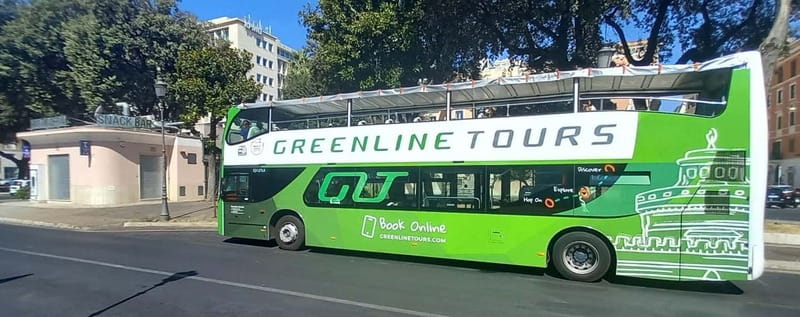
Your day starts at Piazza dei Cinquecento (corner Via Cavour), Terminal 1/A. It’s a solid hub because you can begin with a quick loop that gives you a mental map. Rome is hilly, busy, and full of detours, so having a ride that drops you near major sights (and brings you back near your starting area) is a big relief.
I like that you can validate and then use the ticket for your own rhythm. That means no pressure to rush like you would with a fixed guided tour. You also get an onboard assistant and live bus tracking, which helps you avoid the classic Rome problem of standing at the curb wondering which bus actually shows up.
You can also read our reviews of more tours and experiences in Rome

Hop-on hop-off timing: when 20 minutes feels like a gift
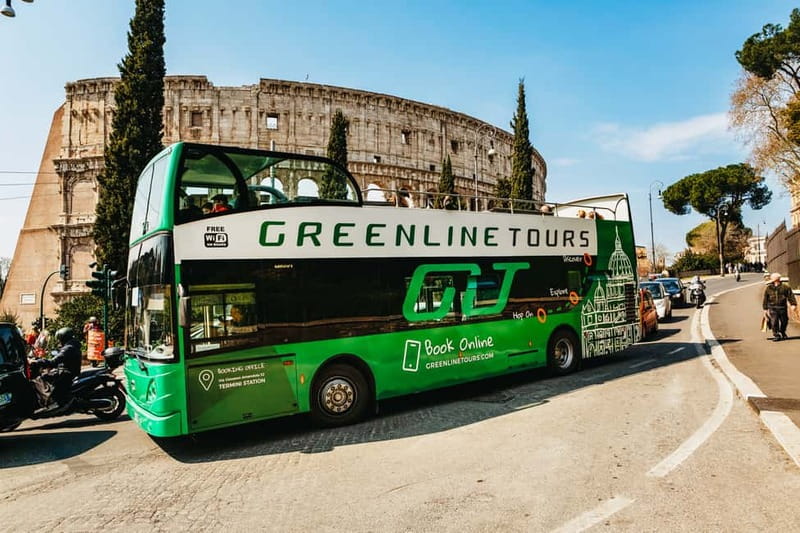
Buses run approximately every 20 minutes, and that matters more than people think. When you’re jumping between sights—walking up to a viewpoint, then coming back—you want enough frequency that you’re not burning time waiting.
A practical approach: do one or two major stops early, then use the middle of your ticket window for extras (museums, neighborhoods, food spots). If you’re catching a long lunch, just hop off, eat, and rejoin when the next bus comes through. The live tracking makes that less stressful.
Open-top comfort and onboard extras you’ll actually use
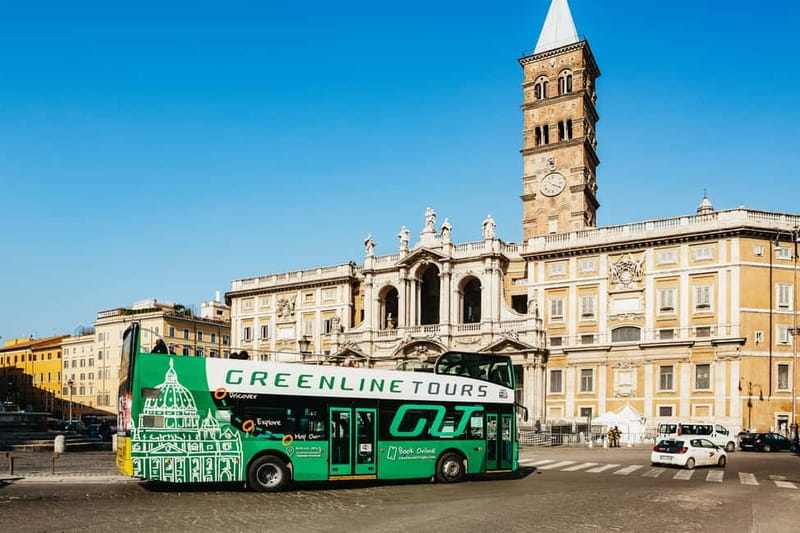
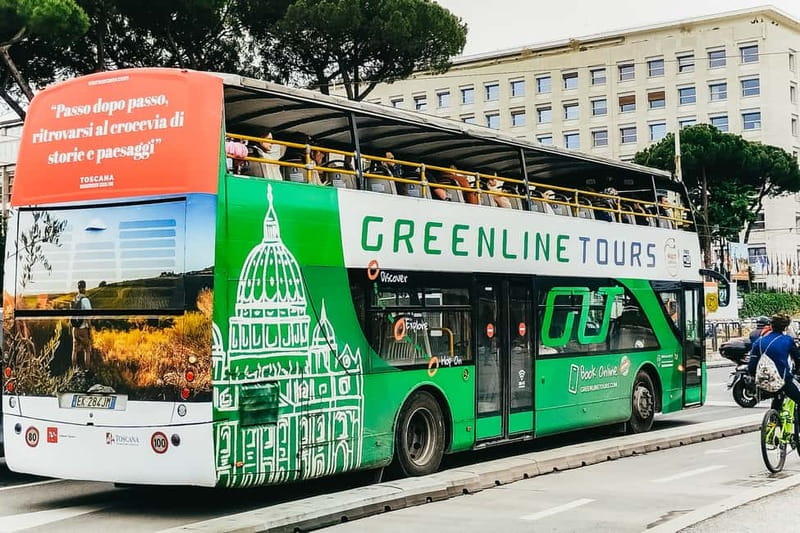
This is an open-top sightseeing bus, so the views are part of the point. Bring comfortable shoes (you will walk), plus sunglasses and a hat for bright days. Because the bus is open, the weather can matter more than on a regular city bus—plan layers if it’s cool.
Onboard you get free Wi‑Fi, and you also get the audio system plus single-use earphones. There’s also an assistant on board, which is helpful if you need help validating or figuring out which stop is coming next.
Green route-style highlights: Colosseum, Circus Maximus, and Piazza Venezia
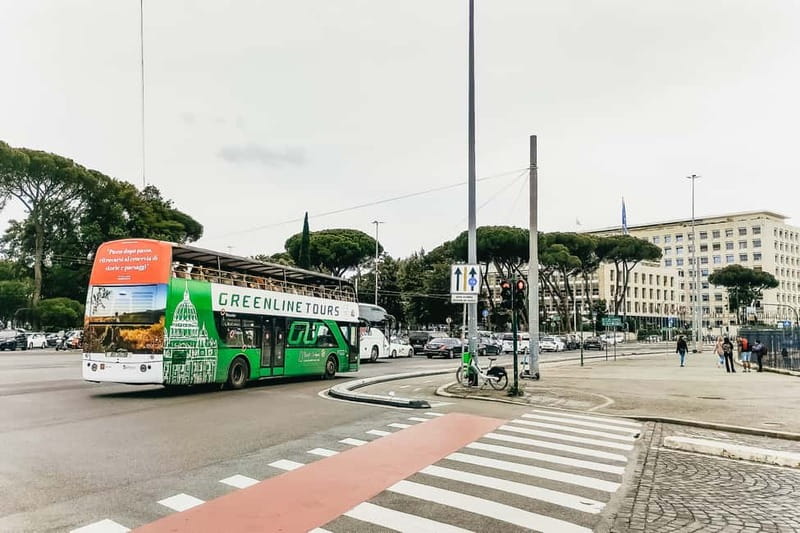
Even if you choose a circuit based on vibe, you’ll still pass Rome’s most recognizable monuments. A big chunk of the route is built around the “greatest hits,” and it’s a smart way to orient yourself.
The Colosseum area: see it, then decide how deep to go
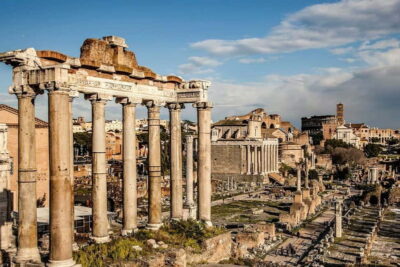
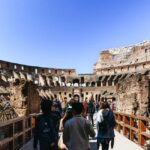
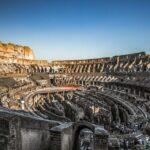
One of the key stops is near the Colosseum (Via di San Gregorio, close to the entrance of the Palatine area). The bus gives you a fast, clear look, and the stop location is close enough that you can walk toward the sights if you want a closer look.
Worth knowing: this kind of hop-on hop-off ride is mostly about getting you to the right neighborhoods. Entrance tickets are not included, so if you want to step inside places like the Colosseum or similar major sites, you’ll need to plan that separately.

Circus Maximus: more than just ruins in the distance
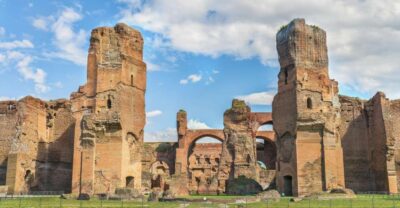
Another notable stop is Circus Maximus (Via del Circo Massimo, Belvedere Romolo e Remo). If you’ve only ever seen photos, this is a good place to understand how wide ancient Rome could feel. You can hop off for photos and a slow walk along the area, then return to the bus when your legs need a break.
Piazza Venezia: the quick viewpoint stop
You also pass through Piazza Venezia (near Via del Teatro Marcello). Even if you don’t do a long stop here, it’s one of those points where the city looks instantly more organized—like Rome finally lines up into a map you can read.
Trevi Fountain and the Spanish Steps: using the bus for quick classics
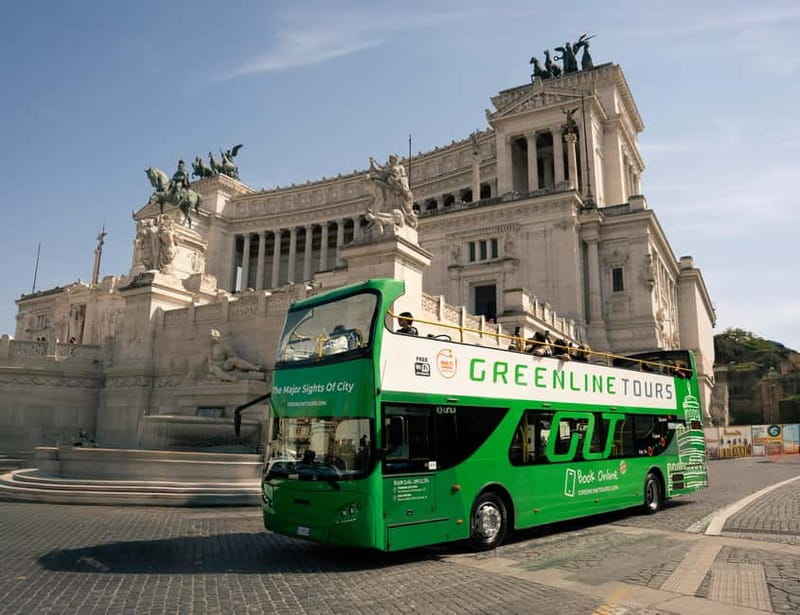
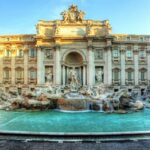
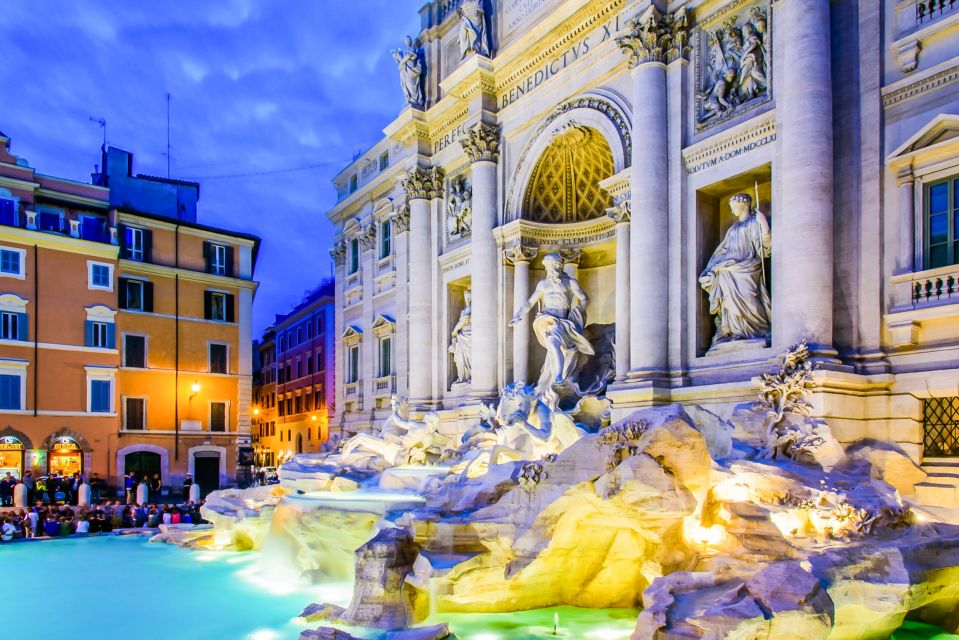
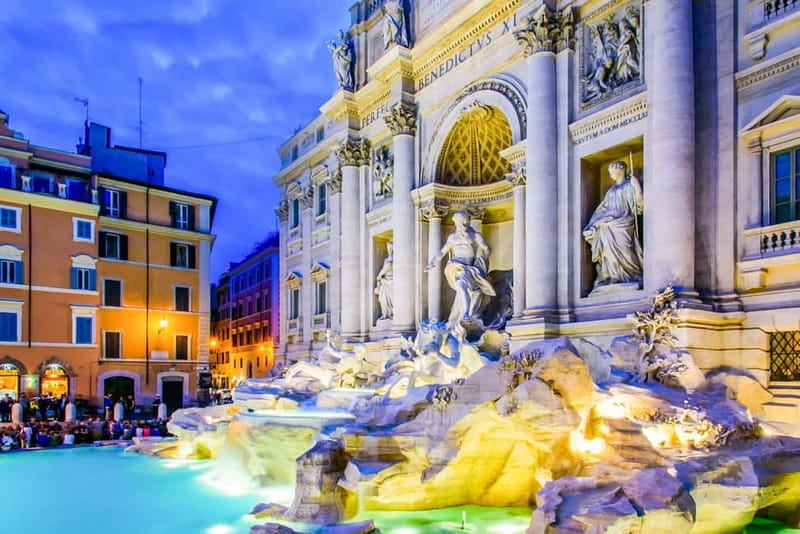
The tour is designed so you can jump off for classic strolls like the Spanish Steps and the Trevi Fountain. The important trick is to use the bus as your transport, then treat those places like walking destinations.
My advice: hop off early in your day if possible. Those areas can take time because you’re mixing sightseeing with crowds and street energy. Also, plan to re-board at a nearby stop rather than trying to sprint back across the city.
Vatican City: St. Peter’s Square and Basilica from the bus route
You’ll reach the Vatican area from a stop at Lungotevere Tor di Nona 7. From there, you’re positioned for St. Peter’s Square and St. Peter’s Basilica.
Two things I think this stop does well:
1) It brings the Vatican into your day without locking you into a strict walking plan.
2) It helps you judge how long you want to spend there before you commit to tickets or a longer walk.
As with other major monuments, the bus isn’t the entrance plan. You’ll still need your own tickets if you want to go inside, and you’ll need time for security-style queues that often come with iconic sites.
Villa Borghese and the Barberini area: the Rome you slow down for
If you want a softer-feeling Rome moment, the route supports that. A stop at Villa Borghese (Via Ludovisi, 48) is a good base for a park-and-views break. You can hop off, take a breath, and decide whether you want to continue with museums nearby.
You’ll also find Piazza Barberini (Via Barberini, 14) on the route. This area is useful if you want easy walking and shopping streets without turning your day into an endurance event.
Borghese Gallery stop: an optional add-on, not a guaranteed visit
The route includes Borghese Gallery (Via Pinciana 33). But since entrance tickets are not included, this works best when you already plan your museum visit separately. If you’re not going in, you can still use the stop as a way to get near one of the city’s famous cultural zones.
Testaccio and Eataly Rome: a food-and-neighborhood stop
For a different side of Rome, you’ll pass the Pyramid/Testaccio quarter area (near the Pyramid of Cestius and the Non-Catholic Cemetery area, plus points like St. Paul City gate and St. Paul out of Wall). This helps you see that Rome isn’t only about ancient icons and church domes—it also has modern life and neighborhood texture.
Then there’s Eataly Rome (connected to the Garbatella Quarter and street art area). This is one of the easiest ways to handle lunch or a snack without planning a specific restaurant. If you want a food-focused pause, it’s built into the route.
Bioparco and Villa Giulia: families and history-adjacent breaks
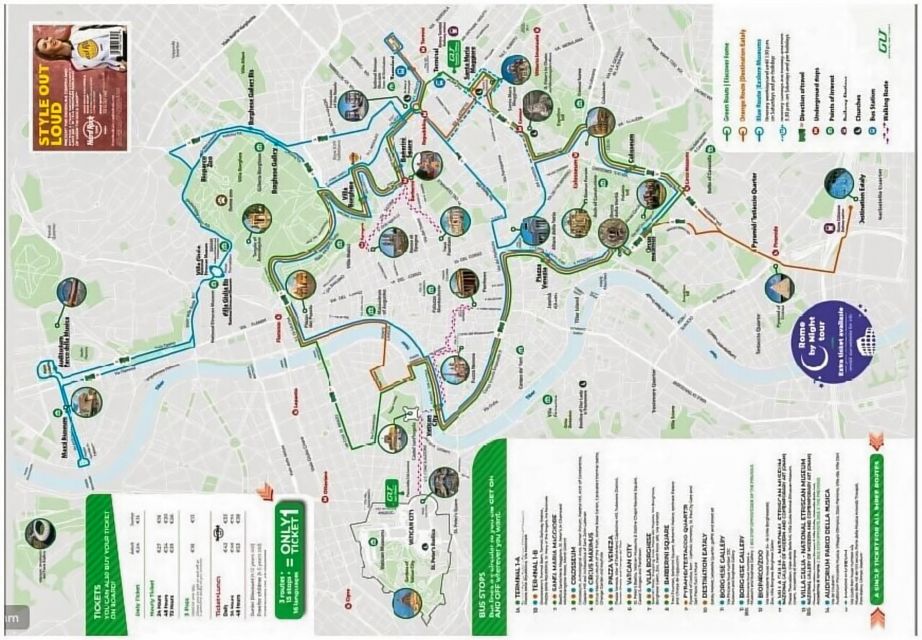
The bus includes Bioparco di Roma (zoo) (Via Mercadante 34, 36) and Villa Giulia / National Etruscan Museums (Piazza Thorvaldsen).
If you’re traveling with kids, the zoo stop can be a lifesaver because it’s a straightforward plan: hop off, spend time, hop back on. If you prefer museums, Villa Giulia is the kind of stop that turns a bus day into something more than photo stops—again, though, expect that entry tickets are on you.
Modern Rome stops: Auditorium Parco della Musica and MAXXI
The route doesn’t only stay in ancient and classical zones. It also hits Auditorium Parco della Musica (Via de Coubertin) and MAXXI (via Guido Reni 4/a).
These stops are for you if you like a modern contrast. Rome is constantly rebuilding itself, and seeing the city through a 20th/21st-century lens helps the whole place feel less like a museum and more like a living city.
Getting the audio right: 16 languages, but manage the quirks
The onboard commentary is a major reason this bus works. You’ll have audio guide support in Italian, English, Dutch, French, German, Spanish, Arabic, Chinese, Japanese, Portuguese, Russian, Hindi, Korean, Greek, Hebrew, Polish. That’s a huge range, and it’s especially handy if you’re traveling as a mixed-language group.
That said, keep one practical expectation: audio can be uneven. Some people find the sound quality could be better, and you might notice not every audio port works perfectly. My tip: test your audio early after you board. If something sounds off, ask the assistant, and be ready to share earphones with a friend if needed.
Also, if you’re listening via the system, try to keep background volume down on the bus as other riders get chatty. Even then, it’s worth staying focused on the route so you know which stop is coming and what you should look for when you hop off.
Using stops smart: plan a rhythm, not a checklist
Because this ticket lets you hop on and off repeatedly, you can easily turn it into a chaotic day if you treat it like a race. I suggest a simple rhythm:
- Start with a big orientation stop (Colosseum or Piazza Venezia zone).
- Add one “walk moment” (like a Spanish Steps or Trevi stop).
- Save your deeper museum time for the later part of the day.
This keeps you from feeling like you’re constantly dragging yourself back to the bus. And when you do hop back on, you get that reset: rest your legs, catch the next views, and follow the audio commentary while the city scrolls by.
Price and value: about $20 for a flexible Rome day
At $20 per person, this ticket can be strong value—mostly because it combines transport + narration + route access. You’re not paying for entry tickets, and you still might spend money on museum or monument admission separately, but you’re buying something useful: a way to cover Rome’s major highlights without burning a full day on navigation.
What makes the price feel fair is the structure:
- Multiple circuits (so it feels less repetitive)
- Unlimited hops within your valid window (9 hours up to 3 days, based on validation)
- Regular bus frequency (around every 20 minutes)
- Onboard extras like live tracking and audio in many languages
If you only want one sight and you’re staying close to it, then a hop-on hop-off might feel like overkill. But for first-time orientation, a mixed-interest day, or a family-friendly plan with breaks, it’s a practical bargain.
Best for who? First-timers, families, and time-starved days
This experience is especially well-suited if you:
- Are visiting Rome for the first time and want fast bearings
- Want to mix major monuments with neighborhoods and food stops
- Travel with kids who do better with planned breaks
- Prefer learning about what you see while you’re moving, not only after you stop
It’s also a good fit if you have limited time and want to cover a lot of the map in one outing. The frequency helps, and the multiple stop options mean you can adjust when your feet (or your patience) run out.
One note: the ride is not suitable for wheelchair users, and pets aren’t allowed. If accessibility is a priority, you’ll need a different plan.
Should you book this Rome hop-on hop-off bus?
Book it if you want a low-stress way to see Rome’s major zones, with audio guidance and enough stops to shape your day. It’s a smart first-day tool: ride it, hop off for the sights you care about, and use the remaining time to go deeper where you want it.
Skip it if you already have a very tight schedule focused on one or two ticketed monuments and you won’t use the extra hop-off flexibility. In that case, you may be better off choosing timed tickets and local transit.
FAQ
How much is the ticket?
The price listed is $20 per person.
How long is the ticket valid?
It’s valid for a window of 9 hours to 3 days, depending on the starting/validation time shown at booking.
How often do the buses run?
Buses run approximately every 20 minutes.
How many routes or circuits are included?
You get access to 3 circuits with a single ticket.
Is the audio guide included?
Yes. You get a multilingual audio commentary (listed in many languages).
What is included on the bus besides the audio?
You get single-use earphones, free Wi‑Fi onboard, assistant support on board, and live bus tracking.
Are entrance tickets to attractions included?
No. Other entrance tickets are not included.
Where is the meeting point?
The start is Piazza dei Cinquecento, corner Via Cavour, Terminal 1/A, and the route ends back at the meeting point.
Is it wheelchair accessible or pet-friendly?
It’s listed as not suitable for wheelchair users, and pets are not allowed (assistance dogs are allowed).
What should I bring and wear?
Bring comfortable shoes, sunglasses, and a sun hat.