REVIEW · ROME
Rome: Leonardo da Vinci Exhibition Entrance Ticket
Book on GetYourGuide →Operated by Mostra di Leonardo da Vinci · Bookable on GetYourGuide
Leonardo’s machines feel surprisingly real. This multimedia exhibition at Palazzo della Cancelleria turns sketches into full-scale inventions, complete with holograms and hands-on stations focused on Leonardo’s engineering ideas. You also get that extra Rome bonus: the setting itself is worth a look, including an underground 43 BC tomb in the Palazzo.
I especially loved how interactive it feels for the price, and how the layout guides you through Leonardo’s thinking using machines you can play with and build from his drawings. One thing to keep in mind: it’s not a huge museum, so plan for a shorter visit than the big-ticket Roman sights, and it may feel a bit chaotic underfoot in places if you’re moving with kids or watching your step.
In This Review
- Key highlights worth planning for
- Where the Leonardo show fits into a Rome day
- Skip the ticket line and walk straight in
- The exhibit flow: four sections and a lot of hands-on momentum
- Tip for your first pass
- Full-scale machines built from Leonardo’s designs
- “Can I actually touch things?”
- Holograms: 3D Leonardo that makes the museum feel current
- Interactive installations tied to Leonardo’s drawings
- The 43 BC tomb and the Palazzo’s underground pond
- What to expect in timing and pacing
- Audio option: why it’s worth considering
- Gift shop and practical souvenir value
- Is it worth $10? A value reality check
- Who this Leonardo exhibit suits best
- Should you book the Mostra di Leonardo da Vinci ticket?
- FAQ
- Where is the Leonardo da Vinci exhibition in Rome?
- How long should I plan for my visit?
- What is included with the ticket?
- Is a guide included?
- Is there an audio or headphone option?
- Can I touch and play with the exhibits?
- Is it wheelchair accessible?
- Is it good for kids and families?
- What’s the latest time I can enter?
Key highlights worth planning for
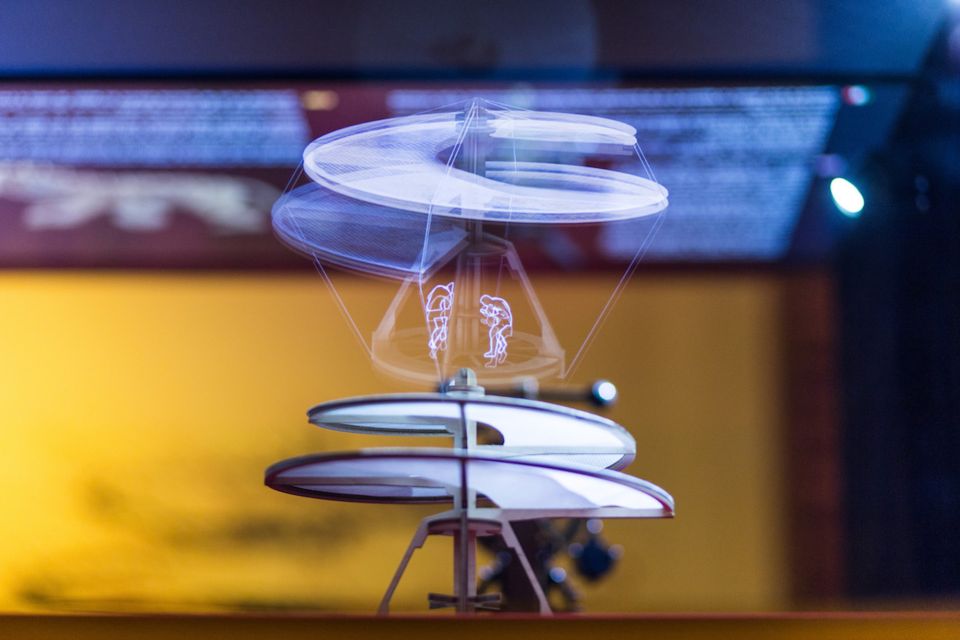
- Full-scale machines built from Leonardo’s designs, including working-style models you can test
- 9 holograms that show Leonardo-era paintings and inventions in 3D
- Hands-on stations, from touching many models to trying your own bridge build
- Four science-themed sections tied to Water, Air, Fire, and Earth
- A tomb from 43 BC in the Palazzo’s underground pond setting
- Audio/headphone support that many people consider a smart add-on
Where the Leonardo show fits into a Rome day
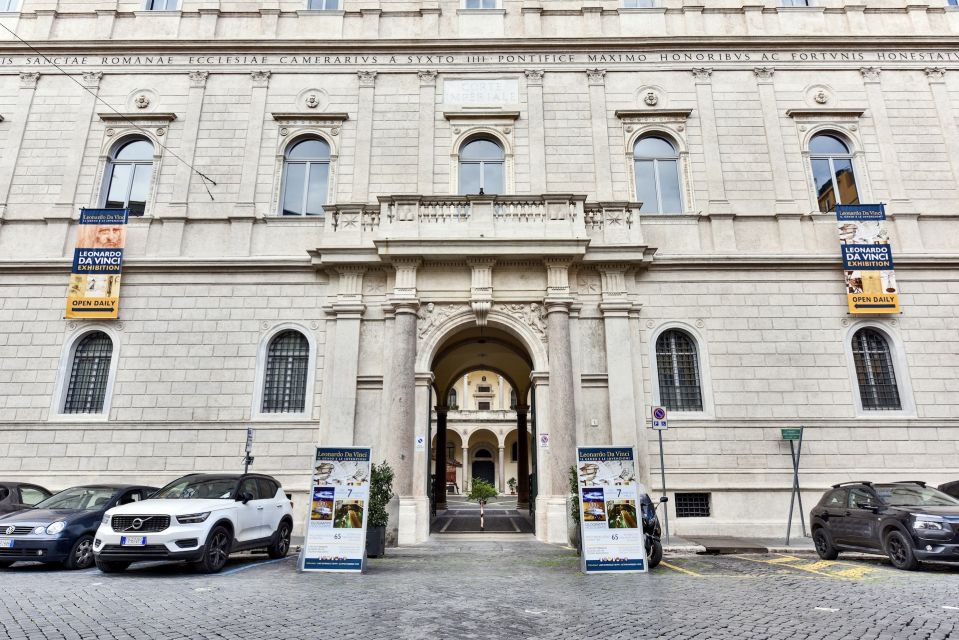
This ticket is for the Mostra di Leonardo da Vinci exhibition in Palazzo della Cancelleria, at Piazza della Cancelleria 1, near Campo de’ Fiori and Piazza Navona. That location matters because it’s easy to pair with other Central Rome walks. You’re not taking a long metro ride or hauling across town just for one small museum.
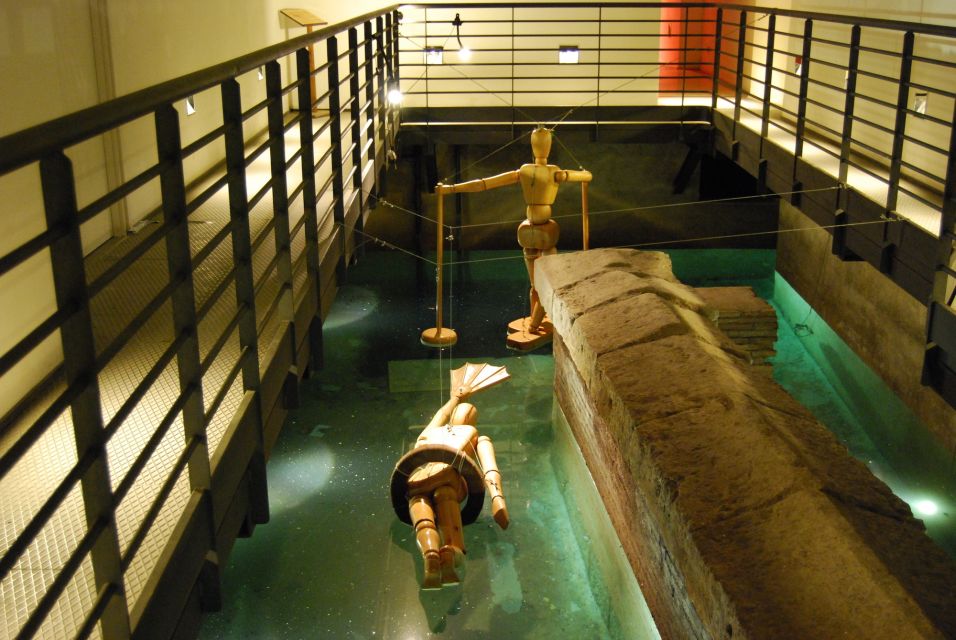
The Palazzo itself is also part of the story. It’s owned by the Vatican, and the building is a sightseeing stop for its architecture. On the upper floor, you’ll find the Sacra Rota, the church’s court involved in dissolving marriage. And tucked into the building’s underground features is a tomb dating to 43 BC, tied to the architect Auro Irzio and set in a natural pond area below ground.
So yes, the main event is Leonardo. But the surroundings help you feel like you’re stepping into Renaissance Rome rather than just checking off a ticket.
You can also read our reviews of more tours and experiences in Rome



Skip the ticket line and walk straight in
Your ticket includes skip-the-ticket-line entry, which is a big deal in Rome. You’re paying for convenience as much as content. There’s also a note that you can enter until one hour before closing, so don’t show up at the end of the day and hope for flexibility.
Another practical perk: you receive a gadget with your ticket. The specific gadget isn’t described in detail here, but it’s part of what makes this exhibit feel built for an active visit rather than a sit-and-read experience.
And if you’re trying to keep your plan loose, there’s free cancellation up to 24 hours in advance, which is handy when the weather or your Rome pacing changes at the last minute.
The exhibit flow: four sections and a lot of hands-on momentum
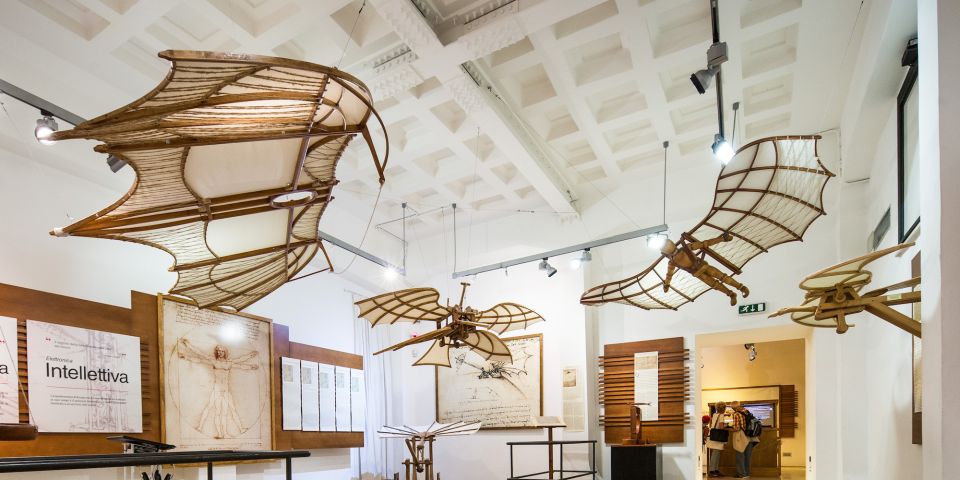
The experience is set up in four sections, each designed to connect Leonardo’s engineering mindset to what you see in front of you. The big promise is that the exhibit shows not just ideas, but the principles behind them—so you can look at the mechanism and understand why it matters.
What you’ll notice as you move through the rooms is that the display doesn’t only rely on placards. It uses machines, models, and interactive setups to help you connect the dots between drawing and real-world mechanics.
You’re told you’ll explore Leonardo through themes including Water, Air, Fire, and Earth. That’s more than a fun way to label rooms. It’s a mental framework: Leonardo didn’t treat science as separate topics. He treated observation and mechanism as one continuous process.
Tip for your first pass
Go with a quick look first, then slow down. Even though this is not a huge museum, it’s easy to get drawn into trying everything at once and then wish you had time to read the explanations more carefully.
Full-scale machines built from Leonardo’s designs
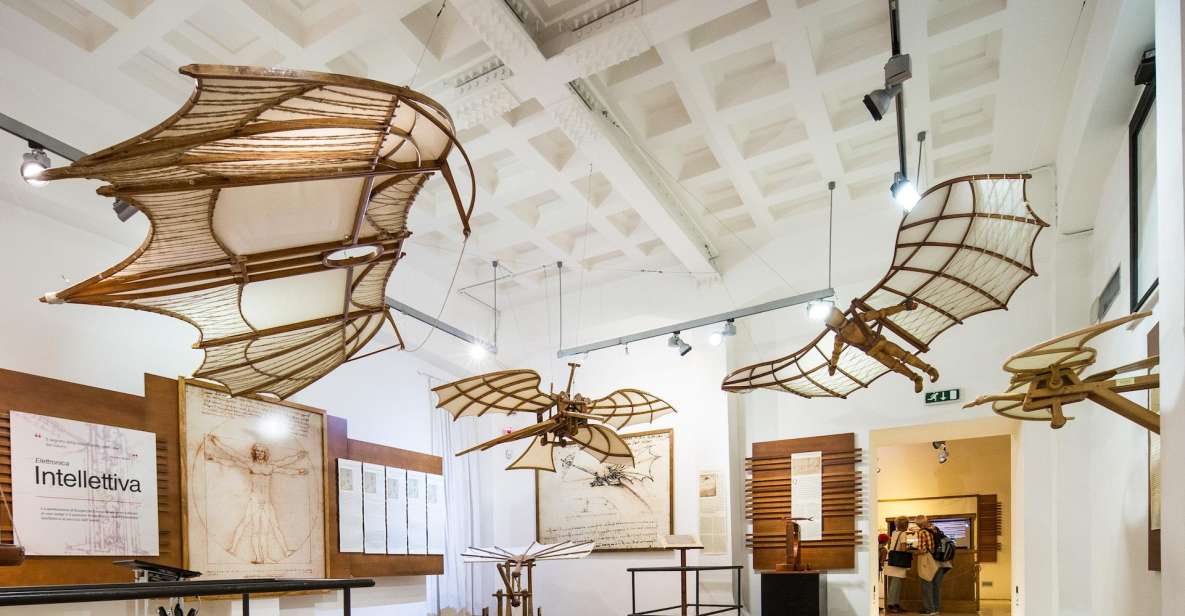
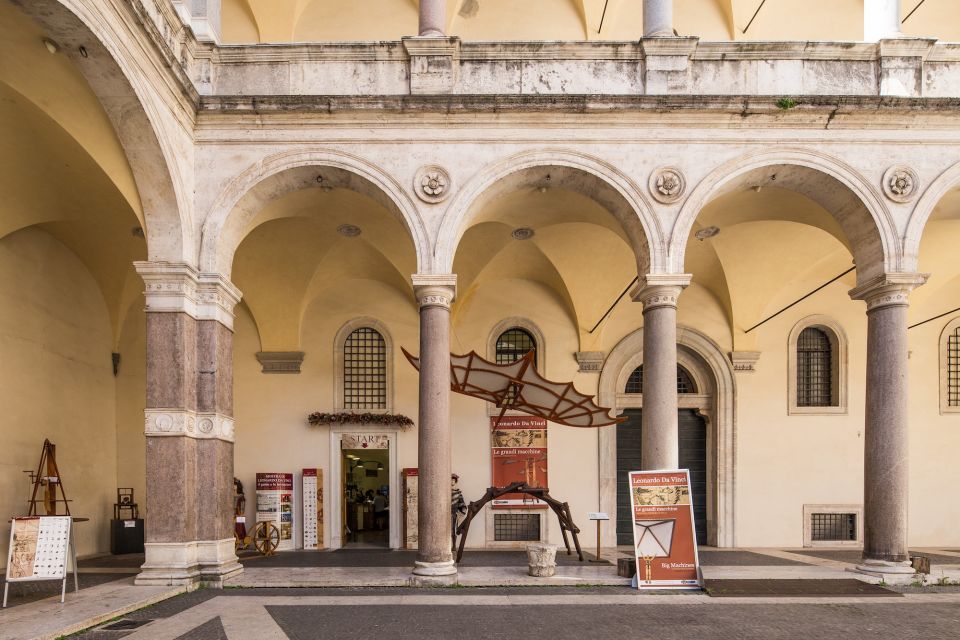
One of the strongest reasons to book is simple: you get over 65 full-scale machines created according to Leonardo’s designs. Not miniature desk models—these are built big enough that you can sense how the mechanism works.
A lot of this is about translation: turning sketch lines into real geometry and real movement. When you see the structure at full size, you can spot the thinking behind it—like how Leonardo broke systems into parts, how he focused on force, and how he used principles that still show up in modern transportation and architecture.
The “worth it” factor here comes from scale. A drawing can look brilliant. A machine lets you test whether the logic holds together.
You can also read our reviews of more museum experiences in Rome






“Can I actually touch things?”
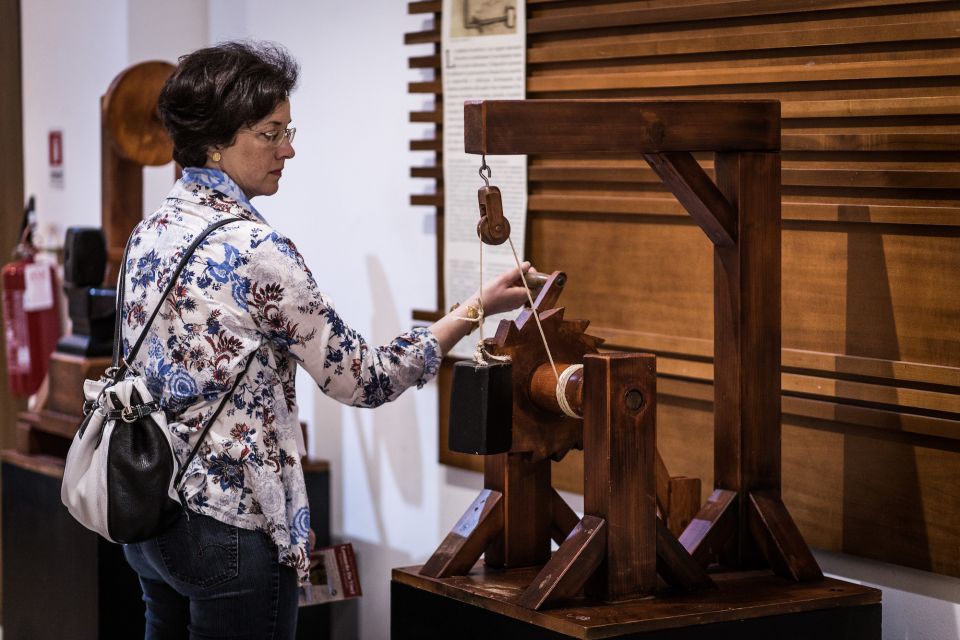
Yes—this is part of the exhibit’s identity. You’re encouraged to touch and play with almost all the machines on display. There are also stations where you can build a version of a bridge that Leonardo invented.
That hands-on emphasis is the difference between this exhibit and a typical museum visit. It’s also why it lands well with different ages: if you like to learn by doing, you’ll get more from the ticket.
Holograms: 3D Leonardo that makes the museum feel current
There are 9 holograms showing Leonardo da Vinci’s paintings and inventions in 3D. Even if you’re not normally a fan of tech museums, this is one place where it helps you visualize how complex ideas can become real objects.
Holograms also solve a common museum problem: you can’t put the original art or the original mechanical experiments on a table. But you can show how the invention would function, and that’s what these 3D moments seem designed to do.
If you’re the type who usually reads labels but wishes you could “see the mechanism,” prioritize the hologram stations early in your visit so you don’t rush past them when you’re tired.
Interactive installations tied to Leonardo’s drawings
Beyond the machines, the exhibit includes 7 interactive installations based on Leonardo’s drawings. These installations are meant to help you understand more aspects of Leonardo, not just his engineering output.
That matters because Leonardo is easy to oversimplify as only an artist or only an inventor. The exhibit is pushing a different idea: a Renaissance person who used sketching as a tool for thinking, and who treated art and engineering as closely linked skills.
As you move through, you’ll also find that the design of the exhibit tries to keep you active: press here, compare there, test the idea, then connect it back to what Leonardo drew.
The 43 BC tomb and the Palazzo’s underground pond
One of the most unusual details tied to this site is the tomb dating to 43 BC, belonging to the architect Auro Irzio and located in the Palazzo in a natural underground pond area.
Even though that part is connected to the Palazzo rather than the Leonardo machines themselves, it changes the emotional tone of your visit. You go from Renaissance imagination and engineering models to something much older and more grounded—stone, water, and the quiet weight of history.
It’s also a practical advantage in summer. Underground spaces often feel cooler, and the exhibit being in a Palazzo helps you escape Rome’s heat without giving up your sightseeing rhythm.
What to expect in timing and pacing
This is a ticket for one day, but the exhibit itself is short enough to fit into a busy itinerary. Based on visit patterns described, many people plan around 45–60 minutes, while others spend longer (closer to about 2 hours) if they read more and try more hands-on stations.
So how should you plan your day?
- If you want a quick, satisfying stop: schedule it as a mid-day or early-evening break.
- If you’re traveling with kids or you like interactive exhibits: give yourself extra time so you’re not sprinting from one station to the next.
A smart strategy is to treat it like “a museum plus a workshop.” That mindset prevents disappointment when you realize it’s not trying to be a 4-hour mega-museum.
Audio option: why it’s worth considering
The exhibition experience includes a gadget with your ticket, but there’s also an audio/headphone option that many people recommend. The reason is straightforward: the exhibit is interactive, but the audio helps connect what you see to the context behind the ideas.
If you’re someone who gets excited by mechanisms and wants the story behind them, add the audio. It can also help you move through the rooms without constantly rereading signage.
One small heads-on consideration: the exhibit layout can feel like it has a flow issue, so pairing your route with the audio can help you follow the intended progression without guessing.
Gift shop and practical souvenir value
There’s a gift shop, and it’s described as having choices that feel more specific than generic Rome trinkets. If you’re into Leonardo themes, this is often where you’ll find items you’d actually use—especially if you’re traveling with kids who want something “from the machines” rather than another magnet.
Also, a shop stop is useful for recharging after the interactive stations. If you’ve spent time testing mechanisms, you’ll probably want a breather before you continue your walk around the nearby squares.
Is it worth $10? A value reality check
At around $10 per person, the value is strong for three reasons:
- You’re paying for hands-on access, not just viewing.
- You get a lot of objects (over 65 machines plus holograms).
- The visit can be timed to your day, meaning you’re not buying an all-day commitment.
Could it ever feel overpriced? If you dislike interactive exhibits, you might not get full value from the hands-on element. And if you expect a massive museum collection or centuries of original artifacts, this one is more focused on reproductions and interpretation.
But if you want an affordable, active Leonardo experience in central Rome, $10 is a pretty friendly entry point.
Who this Leonardo exhibit suits best
This is a great match if you:
- love engineering ideas as much as art history
- enjoy interactive museums where you can touch and test
- want a break from heat in central Rome
- travel with kids who get excited by working models
It also works for adults who want something different from the typical Roman monument circuit. The subject matter—aviation, science, and military-related concepts tied to Leonardo’s studies—is presented as a way to understand how his mind worked.
If you’re traveling with very small kids, you may want to pay extra attention to footing. Some areas can involve trip hazards or zones where you’ll be moving around lots of display elements.
Should you book the Mostra di Leonardo da Vinci ticket?
Yes, I’d book it if your Rome day has room for a short, interactive museum stop and you’re even mildly curious about how drawings become machines. The price is modest, the machines are full-scale, and the holograms plus hands-on stations make it feel like more than a static exhibit.
I’d skip or think twice if you:
- want only classic masterpieces and original artifacts
- dislike interactive exhibits or need a strictly quiet, label-based museum
- are looking for a long, half-day cultural program
If you want a smart break that’s close to Campo de’ Fiori and Piazza Navona, this Leonardo ticket is one of the easier yeses you can make in Rome.
FAQ
Where is the Leonardo da Vinci exhibition in Rome?
The exhibition is at Piazza della Cancelleria 1, near Campo dei Fiori / Piazza Navona.
How long should I plan for my visit?
It’s typically around 45 to 60 minutes, though some people spend closer to 2 hours if they read and try more hands-on stations.
What is included with the ticket?
Your ticket includes exhibition entrance fees and you’ll receive a gadget.
Is a guide included?
No. A guide is not included.
Is there an audio or headphone option?
Yes. There’s an audio/headphone option available, and it’s recommended because it adds extra detail and context.
Can I touch and play with the exhibits?
Yes. You can touch and play with almost all the machines on display, and there’s also a chance to build a version of a bridge from Leonardo’s inventions.
Is it wheelchair accessible?
Yes. The exhibition is wheelchair accessible.
Is it good for kids and families?
It tends to be popular with families because the exhibits are interactive and hands-on, including working models that kids can engage with.
What’s the latest time I can enter?
Entrance is available until one hour before closing time.