REVIEW · ROME
Rome: Borghese Gallery Guided Small Group Tour
Book on GetYourGuide →Operated by LivTours - We craft tours, you live them · Bookable on GetYourGuide
One room, one sculpture, one story at a time. This 2-hour Borghese Gallery tour is built for the calm moment after daytime crowds, when the villa and its marble statues feel extra alive. You’ll focus on major works by Caravaggio, Bernini, and Raphael, all explained by a guide who keeps the pacing tight and the details clear.
What I like most is the small-group setup, limited to no more than 6 people, which makes it easier to actually hear the guide and see what you should notice. I also love the timing: entry at 17:00 helps you catch the evening light on the sculptures, not just quick, daytime sightseeing.
One drawback to plan around: tickets are very limited and reservations are mandatory, so you’ll want to lock in a slot early rather than hoping to “figure it out later.”
In This Review
- Key things I’d bet on before you book
- Why the Borghese Gallery at sunset feels different at 17:00
- Small-group format: what up to 6 people really buys you
- Meeting at the main entrance: the first 5 minutes matter
- The Villa Borghese backstory you’ll actually use while viewing art
- The guided highlight route: what happens in each main viewing stretch
- Bernini’s Apollo and Daphne: why it feels so alive
- Caravaggio’s David with Goliath’s Head: drama with a human edge
- Raphael’s The Deposition: a different kind of power
- Beyond the headline names: Rubens, Titian, and the range of the collection
- Villa Borghese Gardens after the tour: easy calm time nearby
- Rome’s Jewish Quarter: how this tour sets you up
- Price and value: is $168.79 for 2 hours fair?
- The guide quality: humor plus real art context
- Who should book this Borghese sunset tour?
- Should you book it?
- FAQ
- How long is the Rome Borghese Gallery guided tour?
- What time does the tour enter the Borghese Gallery?
- What’s the group size?
- Is the tour in English?
- Does the price include the ticket?
- Does it skip the ticket line?
- Where do we meet the guide?
- Is a meal included?
- FAQ
- Can I cancel and get a refund?
Key things I’d bet on before you book
- Sunset timing (17:00 entry) for calmer rooms and softer light on the marble
- Small group of up to 6 so the guide can tailor explanations without racing
- Skip the ticket line plus an included entry ticket and licensed-style live guidance
- Must-see works like Bernini’s Apollo and Daphne and Caravaggio’s David with Goliath’s Head
- Villa Borghese context: the museum’s origins under Cardinal Scipione Borghese
- Easy add-on moments nearby in the Villa Borghese gardens before or after the tour
Why the Borghese Gallery at sunset feels different at 17:00
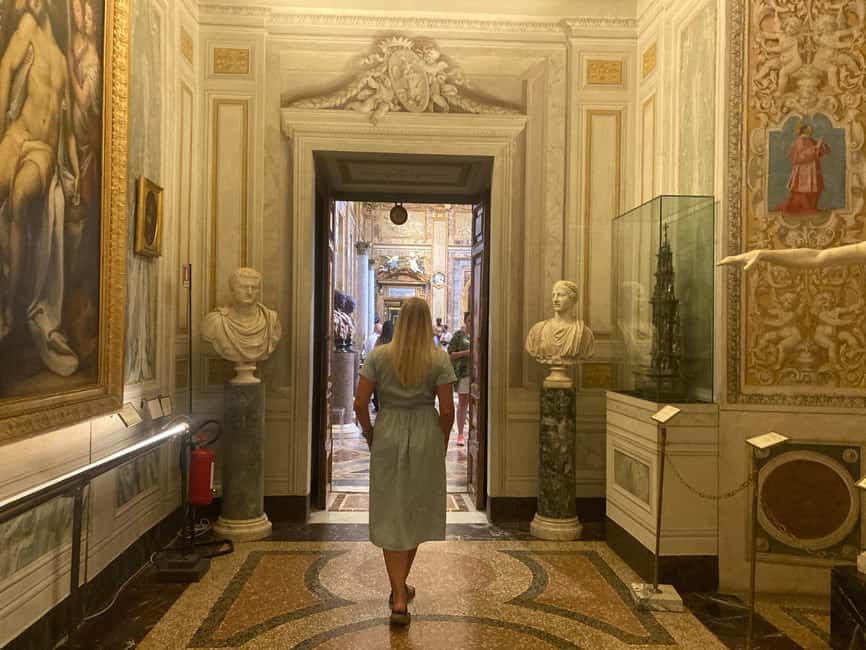
The Borghese Gallery works best when the light and the noise cooperate. This tour starts with entry at 17:00, which lines up with the day-trippers fading out. The result is a visit that feels more like viewing art than rushing through it.
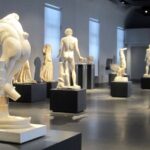
Even if you’ve seen photos of the gallery, the evening timing changes the vibe. Evening light can make the marble sculptures look warmer and more dimensional, which matters because so much of this collection is about sculpted drama—faces, hands, and movement frozen in time. The quiet also helps you notice the guide’s “look here” moments without the room competing with itself.
You can also read our reviews of more guided tours in Rome

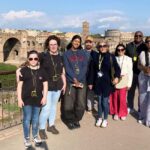
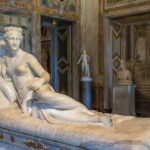
Small-group format: what up to 6 people really buys you
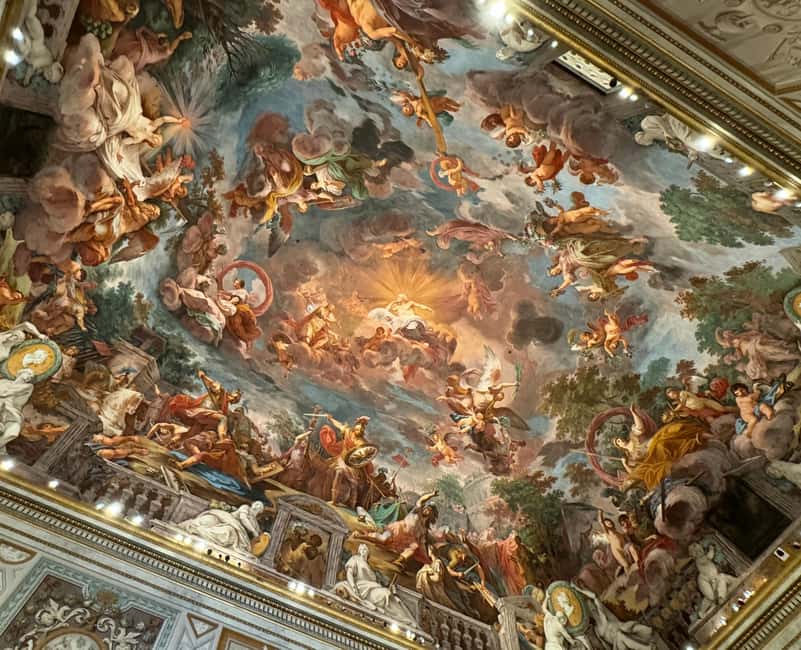
A guided museum tour can go two ways: you either get a fast-moving lecture, or you get help seeing. Here, the group is capped at 6, which gives the guide room to pause, answer quick questions, and point out the small visual details you might otherwise miss.
You also get practical benefits. The tour includes entry ticket access and the option to skip the ticket line, which saves time you can spend inside the galleries. And with English-language guidance, the experience stays grounded in clear explanations instead of leaving you to puzzle through museum plaques alone.
Meeting at the main entrance: the first 5 minutes matter
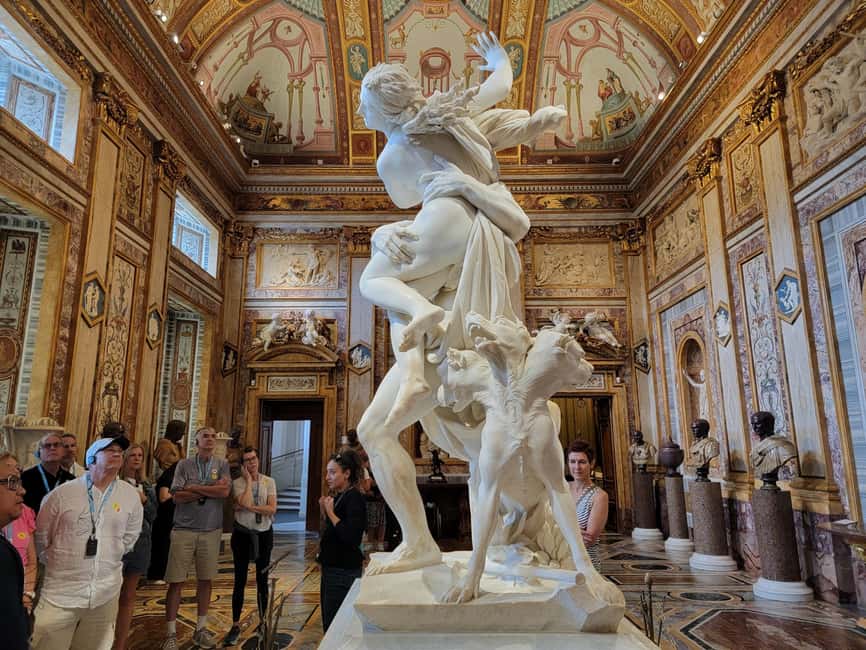
You’ll meet your guide outside the main entrance to the Borghese Gallery. The guide holds a LivItaly Tours sign, so you shouldn’t have to wander around guessing.
Arriving a few minutes early is worth it. The tour is only 2 hours, so that first stretch is where you get your bearings: where to stand, how the rooms flow, and what the guide wants you to focus on first. This tour doesn’t aim for “see everything.” It aims for seeing the right highlights in the right order.
The Villa Borghese backstory you’ll actually use while viewing art
The gallery lives inside the former Villa Borghese Pinciana, commissioned in the early 1600s. It was commissioned by Cardinal Scipione Borghese, the nephew of Pope Paul V, and he used the villa to house his extensive collection. Later, it became a public museum in 1903, so today’s visit is shaped by that earlier private collecting mindset.
Knowing that context changes how you interpret the art. Baroque works in this kind of collection aren’t just “pretty” objects. They’re part of a carefully built experience—designed to impress, persuade, and show status. As you move room to room, the guide’s explanations help you connect the art to the man who gathered it and the audience it was meant to impress.
The guided highlight route: what happens in each main viewing stretch
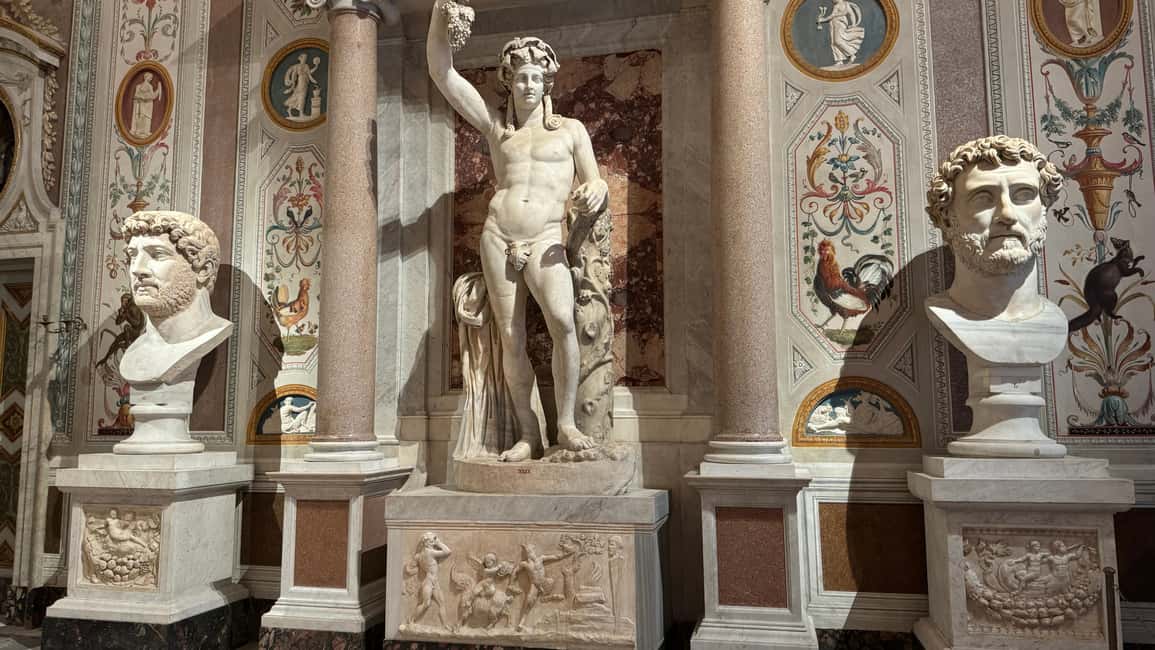
This tour is structured around a guided walk through the Borghese Gallery with a focus on standout paintings and sculptures. You’ll start with guided time inside the gallery, and the pace stays compact enough to keep you from feeling lost in the building.
Stop-by-stop, here’s what the experience centers on:
You can also read our reviews of more museum experiences in Rome


Bernini’s Apollo and Daphne: why it feels so alive
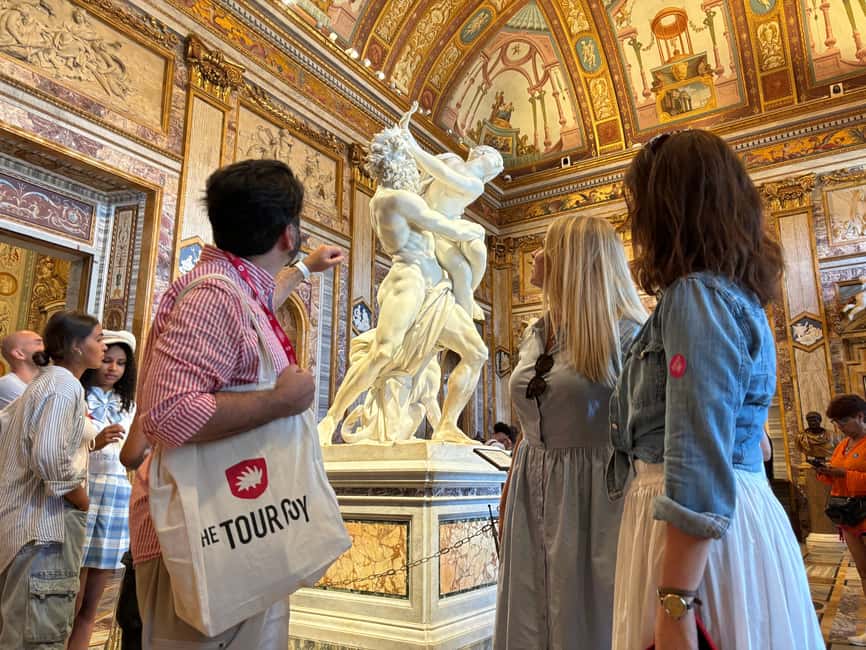
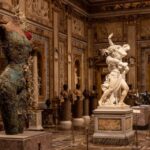
One of the most talked-about works you’ll see is Bernini’s Apollo and Daphne. The guide focuses on why this sculpture is so compelling: the sense of motion, the tension in bodies, and the emotional expression packed into stone. You’ll learn how Bernini’s sculptural choices create a feeling of action mid-fate, not just a frozen scene.
When you look at it on a busy day, it’s easy to just admire. With the tour’s calmer timing, you can actually slow down and compare details—faces, gestures, and the way the composition pulls your eye forward.
Caravaggio’s David with Goliath’s Head: drama with a human edge
The guide also talks through Caravaggio’s David with Goliath’s Head. This piece hits hard, and the explanation helps you understand why Caravaggio’s style works so well: strong light-and-shadow effects and a direct, human emotional tone.
The story behind the work matters because it changes what you see. Instead of looking only at what’s depicted, you’ll notice how the moment is staged—what the scene emphasizes and what it leaves tense. It’s one of those works where the guide’s context turns an image into a scene you can read.
Raphael’s The Deposition: a different kind of power
You’ll also see Raphael’s The Deposition. Raphael isn’t doing the same kind of drama as Caravaggio or the theatrical motion of Bernini, so it’s a useful contrast point. The guide helps you spot what changes between these artists: composition, emotional tone, and how the painting guides your eye through the scene.
Even if you’re not a “big art fan,” this kind of comparison makes the gallery feel less random. You start to see patterns in how Renaissance and Baroque artists aimed for impact.
Beyond the headline names: Rubens, Titian, and the range of the collection
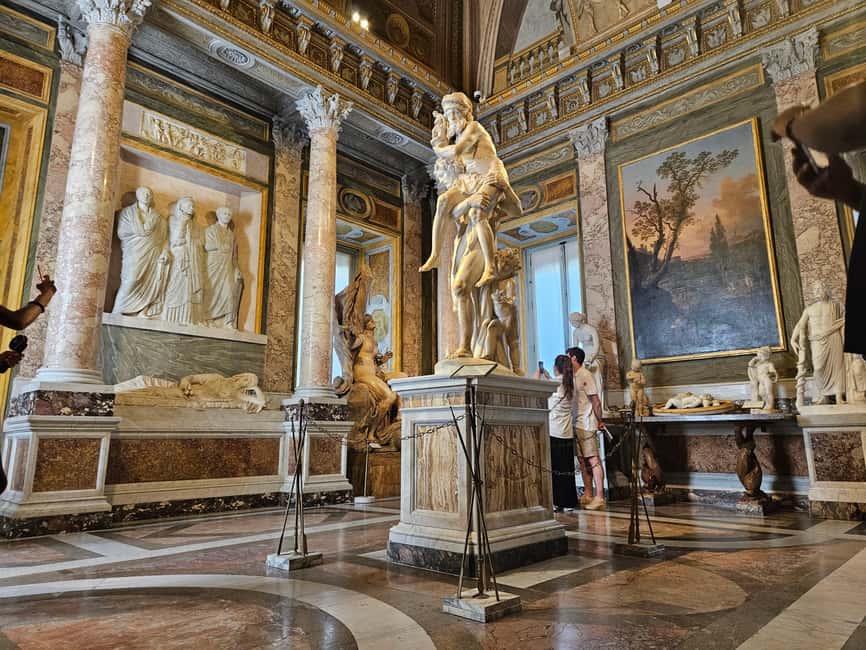
This tour isn’t only about three artists. You’ll hear about other major names connected to the Borghese collection, including Rubens and Titian, plus additional works across sculpture and painting.
That variety is one of the value points here. The Borghese Gallery can feel like a highlight reel when you’re alone, because you don’t know where to spend your attention. With a guide, you get a framework: which works are central, what each artist is doing differently, and why the collection includes these particular strengths.
Villa Borghese Gardens after the tour: easy calm time nearby
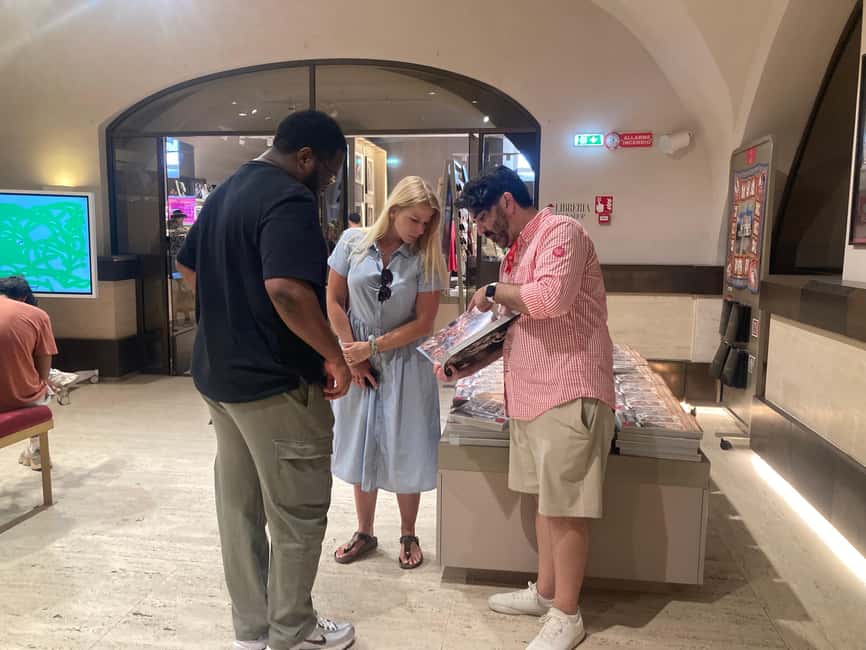
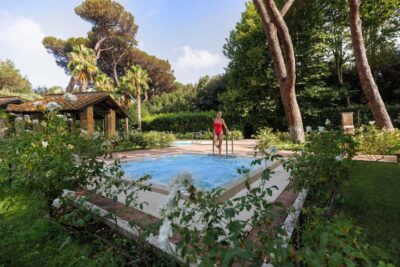
Your official guided portion stays inside the gallery, but you can extend the experience on your own before or after. The villa sits in one of Rome’s biggest parks, and the Villa Borghese Gardens can turn this from “two hours of art” into a longer, gentler afternoon or evening.
The gardens offer specific interest points if you want a quick detour. You might spot an unusual water clock, and you can also look for the Alpini monument dedicated to Italy’s elite mountain army corps. These stops won’t replace the gallery, but they’re a good way to stretch your legs and keep the atmosphere peaceful.
If you like Rome when it slows down, this is a smart follow-up. It’s also a good time to plan dinner nearby without feeling rushed.
Rome’s Jewish Quarter: how this tour sets you up
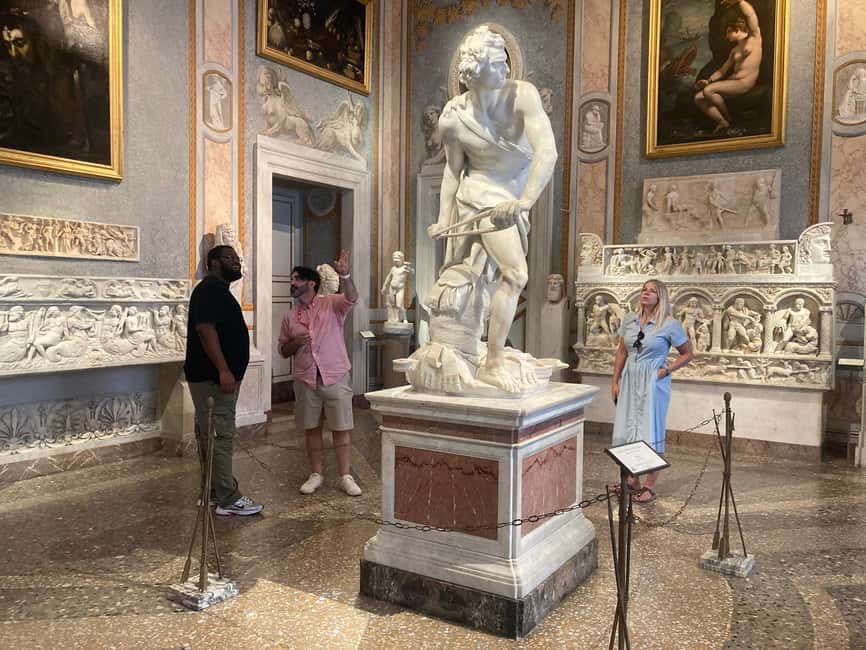
One of the listed highlights is learning about Rome’s Jewish Quarter. While the tour’s core focus is the Borghese Gallery, your guide’s storytelling may help you connect the broader city history as you move through your day.
If you’re aiming to see the Jewish Quarter after your gallery time, use the tour as your orientation. I’d treat it as a “history lens” moment, not a full walking tour of every street.
The main reason this works is simple: the Borghese Gallery gives you art and context; the Jewish Quarter gives you lived history and neighborhood atmosphere. Pairing the two helps the city feel layered, not like separate checklists.
Price and value: is $168.79 for 2 hours fair?
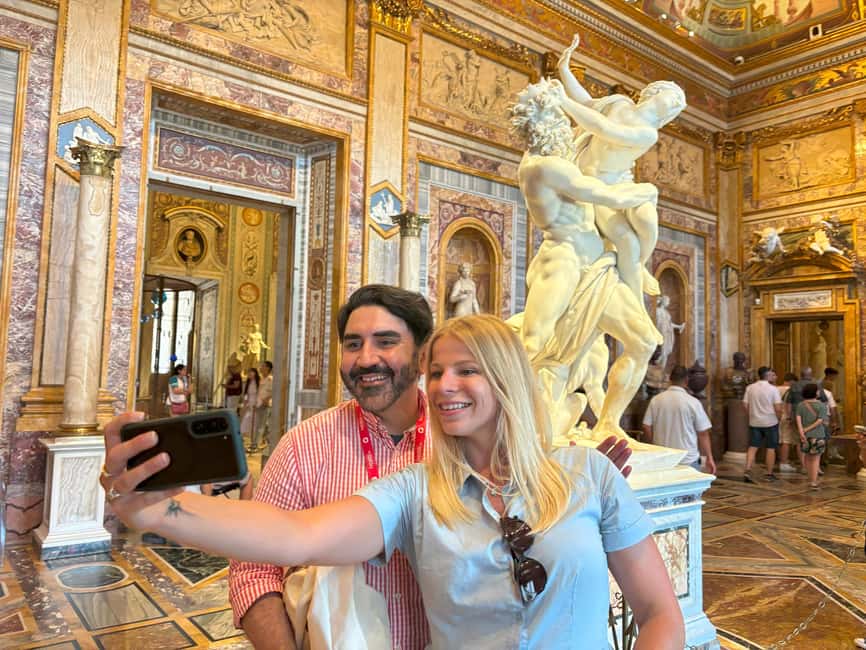
At $168.79 per person for about 2 hours, this isn’t a bargain-basement museum add-on. It is priced like a premium timed-entry experience—small group, live guide, and included entry with line-skipping.
Here’s what you’re really paying for:
- Limited tickets and mandatory reservations, which reduces flexibility
- A small group (up to 6), which tends to improve the quality of explanations
- A live guide who connects works like Bernini, Caravaggio, and Raphael into a story you can follow
- Skip-the-ticket-line time savings, which matters in Rome
For many people, that combination is worth it because the Borghese Gallery can be overwhelming if you don’t know what you’re looking at. A good guide turns “I saw a famous sculpture” into “I understood why it works.”
If you already love reading museum captions and you’re comfortable building your own viewing plan, you might decide to go solo. But if your goal is to leave with more than quick impressions, this price starts to make sense.
The guide quality: humor plus real art context
The reviews highlight one theme: the guide’s ability to explain art clearly without turning it into a lecture. One guide name that pops up in feedback is Garson, praised for history knowledge mixed with humor and a strong sense of you being shown the era rather than just told facts.
That kind of guiding matters in a museum like this. The Borghese Gallery is compact, but the art spans different artists, styles, and emotional languages. A guide who can steer you through that mix helps you feel like you got the most important points in the time you paid for.
Who should book this Borghese sunset tour?
This is a strong match if you want:
- Major works by Caravaggio, Bernini, and Raphael with explanations
- A calmer gallery visit at 17:00
- A small group experience in English
- Time-efficient art viewing with skip-the-line benefits
It might not be ideal if you want a long museum wander with no structure. This tour is 2 hours and highlight-focused. You’ll see the big targets and learn the key stories, but it’s not built as an unlimited self-guided marathon.
Also note the obvious: meals aren’t included. Plan to eat on your own before or after, especially since the tour runs around evening time.
Should you book it?
If your schedule allows, I’d book this. The combo of 17:00 timing, up to 6 people, and an art-focused guide makes it a “quality visit” rather than a rushed stop. The limited ticket situation is the only thing that can hurt you, so check availability early and grab a slot when you find one that fits your day.
If you’re the type who enjoys art with a narrative—why a work was made, what it’s doing, and how artists differ—this tour is built for you. And if you’re choosing between going solo and going guided, this is one of those rare times where guided beats solo for value of understanding.
FAQ
How long is the Rome Borghese Gallery guided tour?
The tour lasts 2 hours.
What time does the tour enter the Borghese Gallery?
The tour enters at 17:00.
What’s the group size?
It’s a small group limited to no more than 6 participants.
Is the tour in English?
Yes, the live tour guide provides the experience in English.
Does the price include the ticket?
Yes. The tour includes the guide and an entry ticket.
Does it skip the ticket line?
Yes. It includes skip-the-ticket-line access.
Where do we meet the guide?
Meet your guide outside the main entrance to the Borghese Gallery. The guide holds a LivItaly Tours sign.
Is a meal included?
No. Meals are not included.
FAQ
Can I cancel and get a refund?
Yes. You can cancel up to 24 hours in advance for a full refund.
If you want, tell me your travel month and whether you prefer a later or earlier dinner plan—I can help you map the rest of your evening around the 17:00 start.