REVIEW · ROME
Rome: Castel Sant’Angelo Skip-the-Line Guided Tour
Book on GetYourGuide →Operated by Loving Rome · Bookable on GetYourGuide
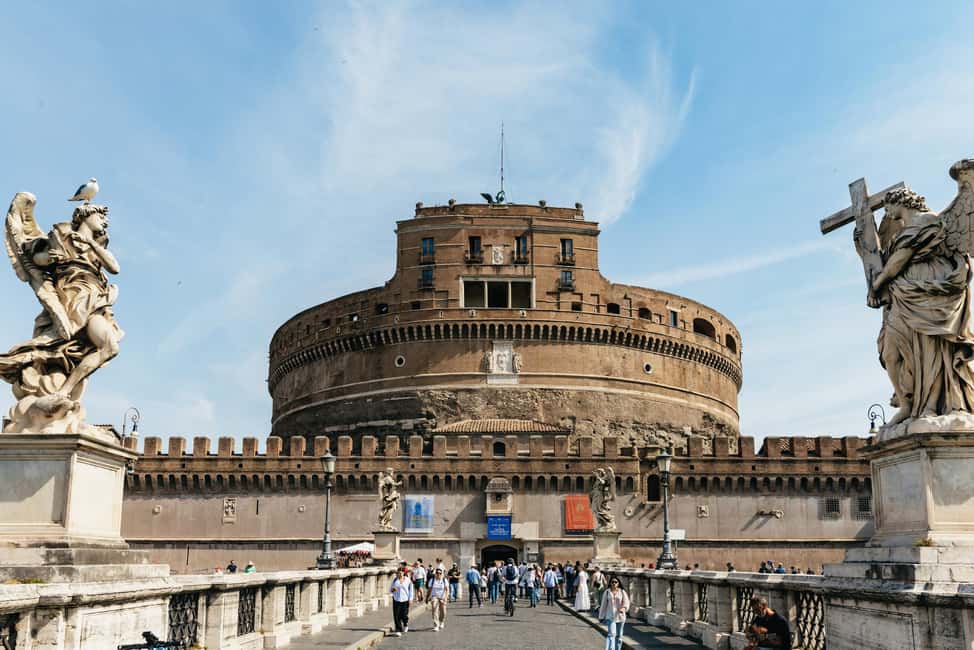
Castel Sant’Angelo has a way of feeling like a secret story. This guided tour gets you into rarely seen areas with a skip-the-line ticket, then rewards you with big Rome views from the terrace. You’ll move through spaces that changed roles again and again, from emperor’s tomb to pope’s rooms to places of punishment.
What I like most is the mix of access and meaning. You don’t just look at walls; you learn how the fortress grew into a political machine, and you get to see spots like the Olearie, the historical prisons, and the theater linked to Clemente VII. I also love the pacing and how clear the guide explanations can be—headsets are included if needed, and you’ll hear the story without craning your neck.
One thing to consider: the tour involves a series of stairs and it isn’t suitable for wheelchair users. If you have knee issues or fatigue fast, plan to take it slow and wear supportive shoes.
In This Review
- Key highlights you’ll actually care about
- Meeting at Lungotevere Castello and getting through the front door fast
- Skip-the-line entrance: why it’s worth paying for
- From Hadrian’s tomb to papal power: the story the walls start telling
- Olearie and the historical prisons: the “hard to reach” parts of the fortress
- Clemente VII’s theater: where politics meets spectacle
- Pope’s apartment and the treasury rooms: art you can place
- Terrace views over Rome: photos, orientation, and a fast geography win
- How the guides make it work (and why headsets help)
- Price and value: what $66.05 actually buys you
- What to wear, what to bring, and who this suits best
- After the tour: an easy aperitivo nearby
- Should you book Castel Sant’Angelo skip-the-line with a guide?
- FAQ
- How long is the Castel Sant’Angelo skip-the-line guided tour?
- Where do we meet for the tour?
- What does skip-the-line include?
- Is the tour wheelchair accessible?
- Do I need to bring a passport or ID?
- Are there stairs during the tour?
- Can I bring food, drinks, or large bags?
- Is there an option for aperitivo after the tour?
Key highlights you’ll actually care about
- Skip-the-line entry via a separate entrance so you start faster
- Exclusive access to areas generally closed to the public
- Fortress “life story” from Hadrian’s tomb to papal residence, treasury, and prison uses
- Art stops you can place in context, not just random statues and paintings
- Terrace viewpoints for photos and a quick sense of how Rome is laid out
- Guide-led navigation with headsets (if needed) so you don’t miss details
Meeting at Lungotevere Castello and getting through the front door fast
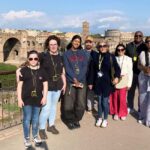
Your tour begins outside the main entrance to the Lungotevere Castello. Look for a representative holding a Loving Rome flag, and aim to arrive a few minutes early so you don’t feel rushed.
This matters more than it sounds. Castel Sant’Angelo can be a busy, high-traffic stop, and your time is limited—so starting smoothly helps you get the full value of a 1 to 2 hour tour.
Also, keep your logistics simple. Food and drinks aren’t allowed, large bags and luggage aren’t allowed, and late arrivals or no-shows aren’t accommodated or refunded. If you travel with a backpack, plan for something small enough to move comfortably through crowds and security checks.
You can also read our reviews of more guided tours in Rome


Skip-the-line entrance: why it’s worth paying for

This tour includes skip-the-line entrance to Castel Sant’Angelo using a separate entrance. For a ticketed monument, that’s not a luxury—it’s time you can spend inside, where the guide brings the place to life.
At $66.05 per person, the price only feels fair if you use what you’re paying for: guided access plus the saved waiting time. The tour is also short enough that losing even 20 to 30 minutes to lines would feel like a waste. Here, you’re paying to protect your visit from time-drain.
And once you’re inside, you’ll see why the guide component matters. Castel Sant’Angelo has layers—architectural changes, political uses, and art placed in specific rooms—and reading those details on your own would be slower.
From Hadrian’s tomb to papal power: the story the walls start telling
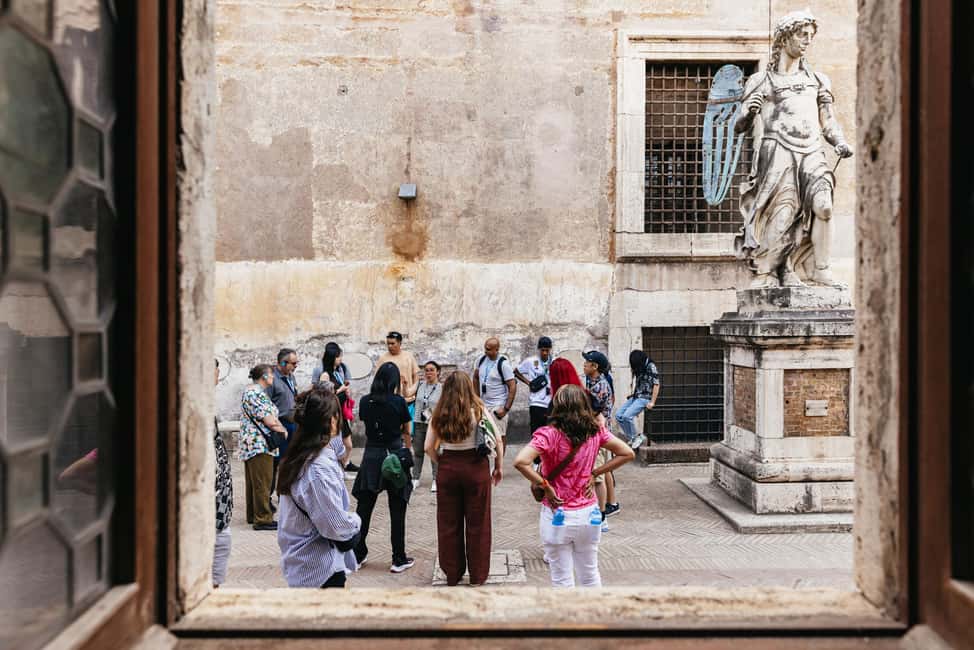
Once the tour starts, you’ll frame Castel Sant’Angelo as more than a landmark. The fortress began when Roman emperor Hadrian built it as his tomb, and that origin shapes everything you see afterward.
Then the function keeps shifting:
- It became a private residence for popes
- It served as a treasury
- It was used as a prison
- It was also tied to public executions
That sequence is the heart of the tour. You walk through spaces while the guide connects the dots—how architecture supported control, how rooms became instruments of authority, and how the site’s purpose changed with whoever held power in Rome at the time.
Olearie and the historical prisons: the “hard to reach” parts of the fortress
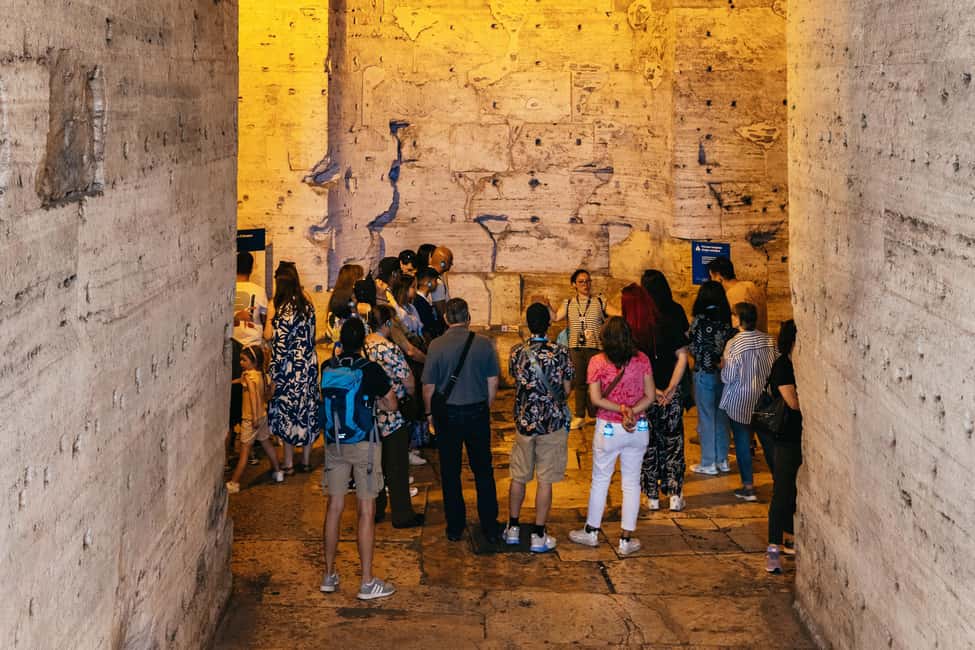
One of the best parts of this experience is that you aren’t limited to the most obvious routes. Your guided path includes areas that are generally closed to the public, including the Olearie and the historical prisons.
Even without deep technical details, you’ll feel the difference as you move through these zones. The Olearie concept alone—storage tied to essential supply—helps explain how the fortress worked as a functioning stronghold, not just a dramatic monument.
The prisons, meanwhile, are where the story turns serious. If you want your visit to go beyond scenic rooms and photo stops, this section adds weight. It also helps you understand why the fortress mattered during tense times: people were confined here, and the building’s layout supported that reality.
Practical tip: these parts often come with uneven walking and tight transitions. Comfortable shoes matter, and staying aware of your pace keeps the tour fun instead of exhausting.
Clemente VII’s theater: where politics meets spectacle
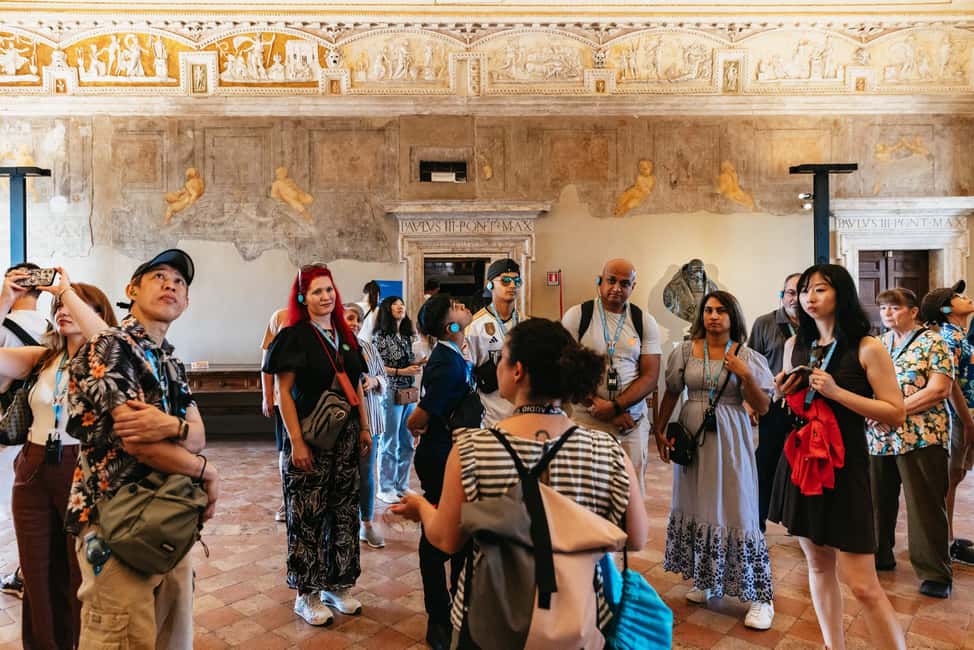
Another stop that lifts the tour above the standard “museum walk” is the theater of Clemente VII. The idea of a theater inside a fortress sounds odd at first, but that’s exactly why it works.
This is where you learn that castle spaces could be made to serve public theater, royal presence, and political messaging—sometimes all in the same building. You’re not just looking at a room. You’re learning how people used architecture to shape perception and authority.
If you like history that feels human—power, performance, and control—this is a strong highlight. It also gives you a break from the darker prison story so the visit doesn’t become heavy nonstop.
You can also read our reviews of more tours and experiences in Rome




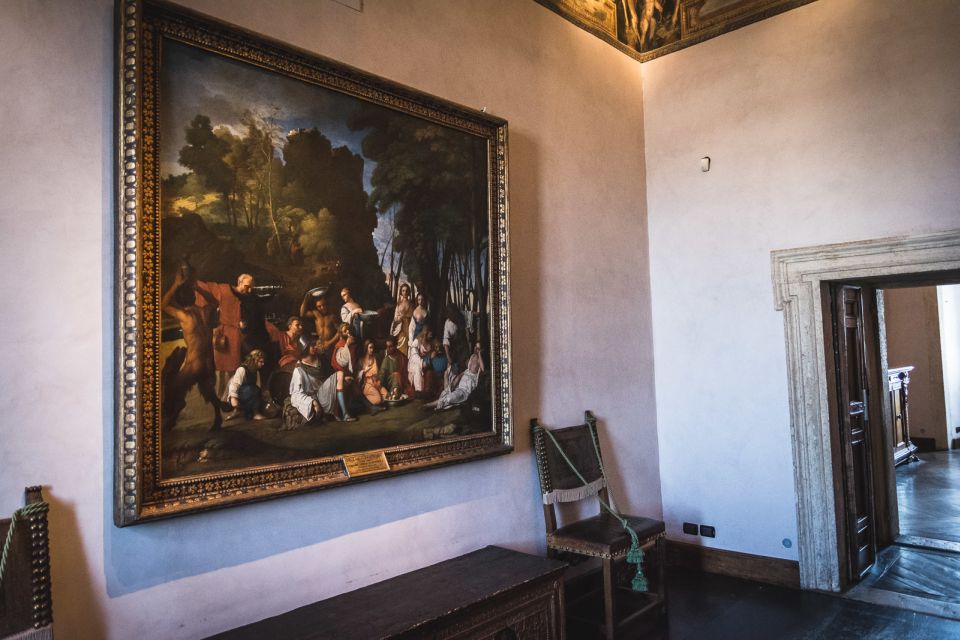
Pope’s apartment and the treasury rooms: art you can place
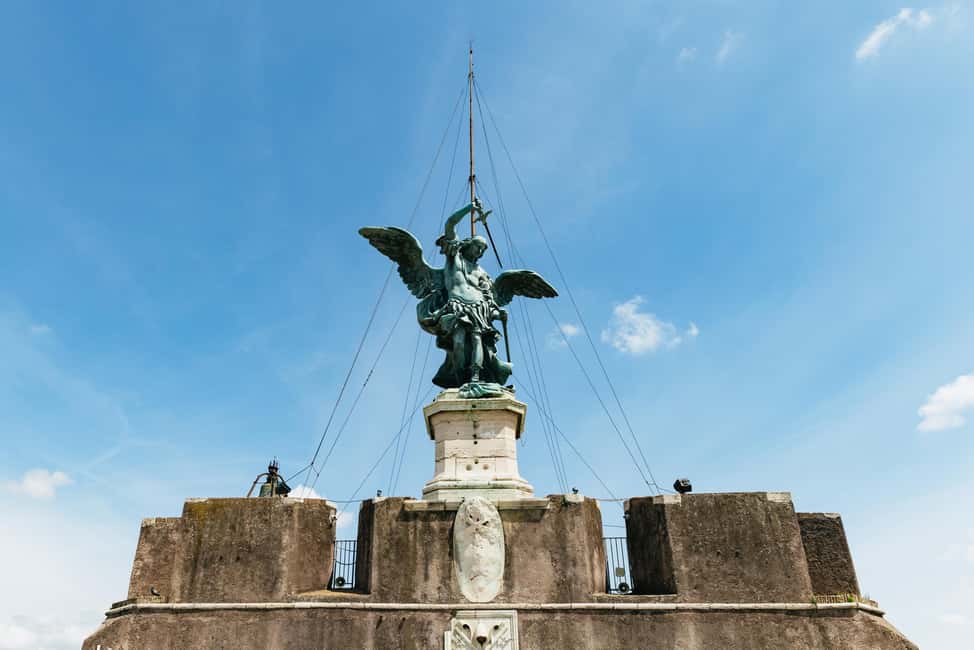
As you continue, the tour shifts from “fortress function” to “fortress status.” You’ll see spaces connected to papal life, including the pope’s apartment, plus the treasury room.
This is where many visitors get lost on their own. Without context, sculptures and paintings can blur into decoration. With a guide, you’re more likely to see why certain works sit where they do and what they communicate.
You’ll also hear about the burial place of the late emperor and how that links to the later reuse of the site. That connection makes the art feel purposeful rather than random.
Art tip: take a moment before you move on. The rooms change quickly, and if you rush, you’ll miss the “why” behind what you’re seeing.
Terrace views over Rome: photos, orientation, and a fast geography win
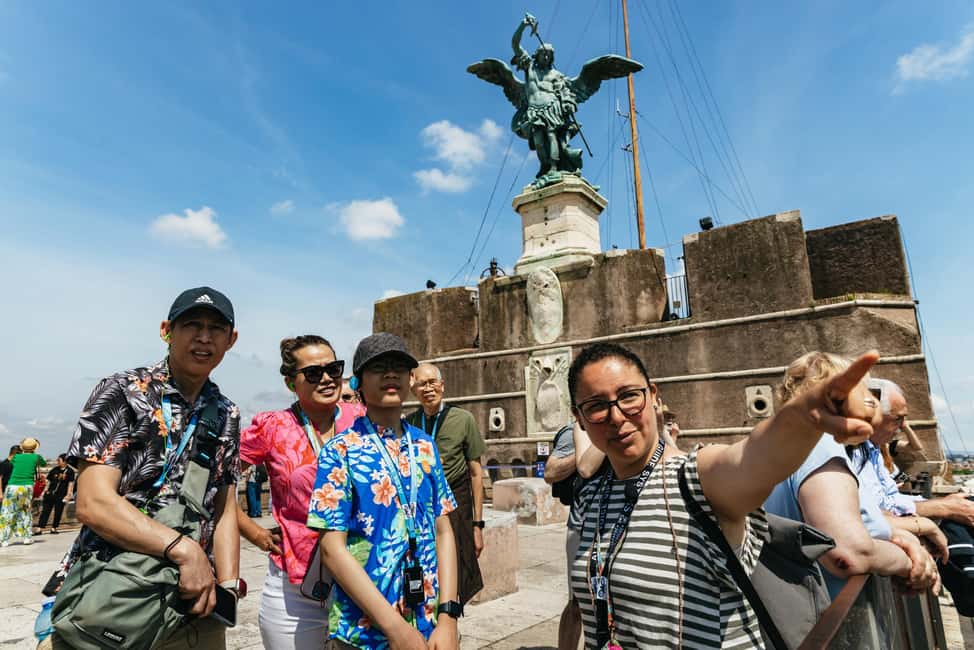
The tour ends with one of the best payoffs: panoramic views from the castle’s terrace. This is where Castel Sant’Angelo transforms from history lesson to orientation tool.
The guide’s role doesn’t stop indoors. From the terrace, you can start matching what you learned—river, districts, major monuments—so Rome starts to make sense in your head. Even if you’ve seen the city from other spots, the terrace view from here gives a different angle and a sense of how tightly this area is packed.
Timing note: the tour length is 1 to 2 hours depending on start time. If you can choose a slot late enough for nicer light, your photos will benefit.
How the guides make it work (and why headsets help)
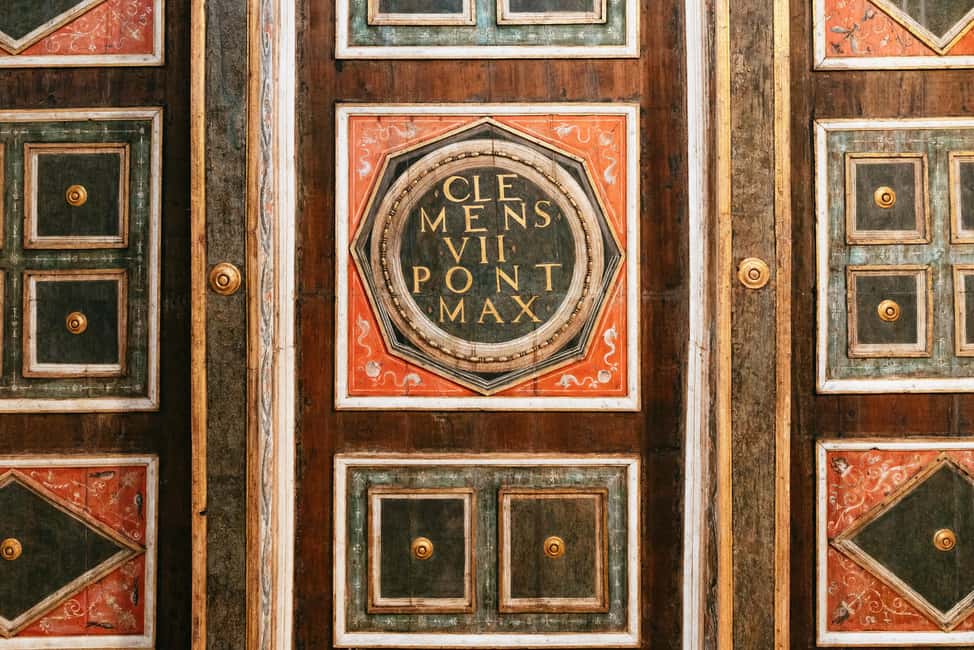
The biggest praise in the experience is how strongly the guide drives the story. Guides like Alex, Alec, Donatella, Alicia, Oleg, and Angnese have been praised for entertainment value, strong explanation, humor, and patience with the group.
You’ll feel that in the flow:
- The stops don’t feel random
- The pace stays readable
- Questions get answered in a way that adds detail instead of creating confusion
Also, headsets are included if needed, and that can make a noticeable difference. Clear audio is underrated on guided tours, especially in thick-walled rooms where echoes bounce sound around.
One practical takeaway: the better the guide, the more you’ll connect the fortress functions across time. With the right guide, Hadrian’s tomb origin, pope residence, treasury use, and prison reality stop feeling like separate facts.
Price and value: what $66.05 actually buys you
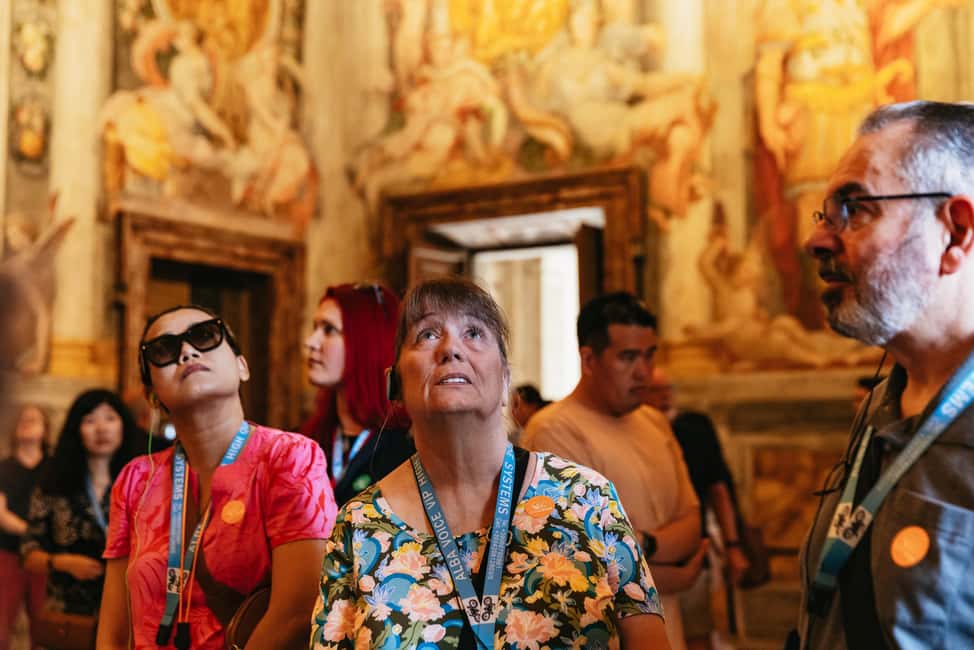
Let’s talk money plainly. $66.05 per person is not “cheap,” especially for a tour that runs around 1 to 2 hours. So the value comes from two things:
1) Skip-the-line access
If you hate waiting, this alone protects your schedule. You’re paying to avoid the most common time sink at popular attractions.
2) Exclusive areas + real interpretation
This isn’t just a standard pass-through. You get to see spaces like the Olearie, the historical prisons, and the pope’s apartment area connections. The terrace view is great, but the true value is learning what you’re looking at.
If your Rome plan is already packed, this tour helps you get a dense, high-impact visit without turning it into a half-day.
What to wear, what to bring, and who this suits best
Plan for a comfortable walking and stair climb. You’ll need to climb a series of stairs to reach the panoramic terrace, and the tour isn’t suitable for wheelchair users.
So, good fit if you:
- Like history that explains how a place changed roles over time
- Want a guided route to reach areas you probably wouldn’t find on your own
- Care about getting the story and not just the view
Less ideal if you:
- Need step-free access
- Get tired quickly on stairs
- Want a slow, casual wander without a set guide path
What to bring:
- Comfortable shoes
What not to bring:
- Food and drinks
- Luggage or large bags
- Unaccompanied minors
After the tour: an easy aperitivo nearby
If you want to keep the day moving in a relaxing way, there’s an optional suggestion to add a traditional aperitivo in a bar nearby after the tour. It’s a nice way to end the experience with a Roman rhythm—sit, snack lightly, and let the fortress story settle while you take in the city atmosphere.
Keep it simple: you’re already walking and climbing during the visit, so choose a nearby spot and don’t over-plan your evening.
Should you book Castel Sant’Angelo skip-the-line with a guide?
Yes, if you want the fortress to feel understandable fast. Castel Sant’Angelo works best with interpretation because its rooms and functions overlap across time: tomb, residence, treasury, prison, and execution site context all matter. With skip-the-line entry and a guide-led route into generally closed areas, you get a compact visit that punches above its time.
Don’t book if stairs are a deal-breaker or if you need step-free access. Also, if you’re the type who prefers wandering without structure, you may find the guided stops feel a bit fixed.
FAQ
How long is the Castel Sant’Angelo skip-the-line guided tour?
The tour runs for 1 to 2 hours. Starting times vary, so check availability for the slot you want.
Where do we meet for the tour?
Meet in front of the main entrance to the Lungotevere Castello. Look for a representative holding a Loving Rome flag.
What does skip-the-line include?
You get skip-the-line entrance to Castel Sant’Angelo through a separate entrance, plus a live English guide.
Is the tour wheelchair accessible?
No. This activity is not suitable for wheelchair users.
Do I need to bring a passport or ID?
Yes. You’ll need to provide the full name(s) of each participant during booking exactly as they appear on a passport or valid ID, and you should bring your passport or valid ID for verification.
Are there stairs during the tour?
Yes. You’ll need to climb a series of stairs to reach the panoramic terrace.
Can I bring food, drinks, or large bags?
Food and drinks are not allowed, and luggage or large bags are not allowed.
Is there an option for aperitivo after the tour?
Yes, you can optionally add a traditional aperitivo in a bar nearby after the tour.