REVIEW · ROME
Night Tour of Rome with Top E-bike & optional Italian Dinner
Book on GetYourGuide →Operated by TopTours · Bookable on GetYourGuide
Rome at night, powered by an e-bike. I love how this ride hits the city during that sweet spot between sunset and evening and still keeps things easy with a top e-bike setup. I also like the small-group feel and the way guides steer you onto calmer back streets instead of fighting traffic. One heads-up: the optional dinner is a set menu, so if you’re picky, you may not love every part.
You’ll cover the center on a well-planned circuit, with famous stops like the Colosseum and Trevi Fountain, plus less-famous sights along the way. The whole thing runs on a safety-first approach: helmet required, anti-puncture tires, and a guide who watches the route and the group.
The ride is listed as leisure, but you are still cycling 12 km/7.5 mi at night. If you hate sitting on saddles for a couple hours, plan for it. Still, with pedal assist and a comfortable bike, it’s a smart way to see a lot without turning your Rome trip into a punishment.
In This Review
- Key takeaways before you book
- Why Rome feels different on an e-bike at night
- Via Labicana meeting point: getting on the bike without stress
- The first stretch: Colosseum, Roman Forum, and Theatre of Marcellus
- Cutting through Rome’s neighborhoods: Jewish Ghetto and Farnese Palace
- Pantheon at dusk and Sant’Ignazio’s evening glow
- Piazza di Pietra to the Spanish Steps, then Trevi Fountain
- Imperial Fora: the end stretch where the ruins feel real
- The 4-hour dinner option: what you actually get and when
- How hard is it, really? The 12 km/7.5 mi question
- Bikes, route comfort, and why the safety matters
- Price and value: why $85 can make sense
- Who should book this Rome night e-bike tour
- Child policy basics (so you can plan ahead)
- Should you book this Night Tour of Rome?
- FAQ
- Where does the tour start?
- How long is the Night Tour of Rome?
- What does the 4-hour option include?
- When does dinner happen on the 4-hour tour?
- How far do you ride?
- Is the ride difficult?
- Are helmets required?
- How big is the group?
- What languages are the guides?
- Is the tour suitable for babies and young children?
Key takeaways before you book
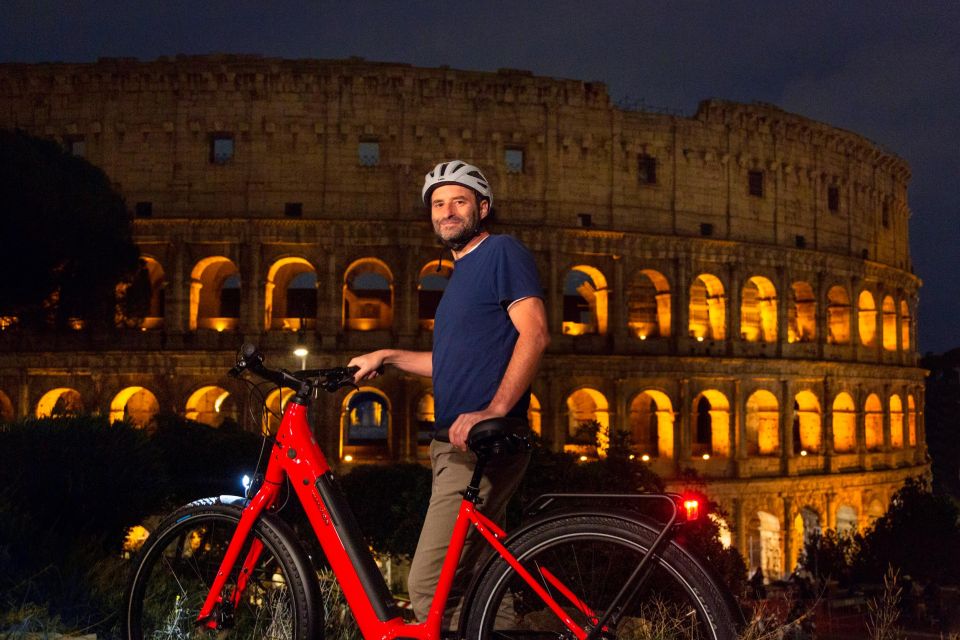
- E-bike comfort and safety: anti-puncture tires, comfortable seat, and a helmet-on approach
- Golden-hour pacing: you’ll hit major monuments as the light changes, not just as they look at midday
- Small group size: limited to 10 participants, which makes it easier to stay together
- Back-street route: you spend time in quieter lanes and alleys, not only on the busiest roads
- Optional 4-hour dinner plan: trattoria meal happens about 1h15 after the start and includes pizza/pasta + drink + coffee
- Guides with real personality: names I’ve seen leading this include Bita, Arina, Csenge, Stefano, and Francesca
Why Rome feels different on an e-bike at night
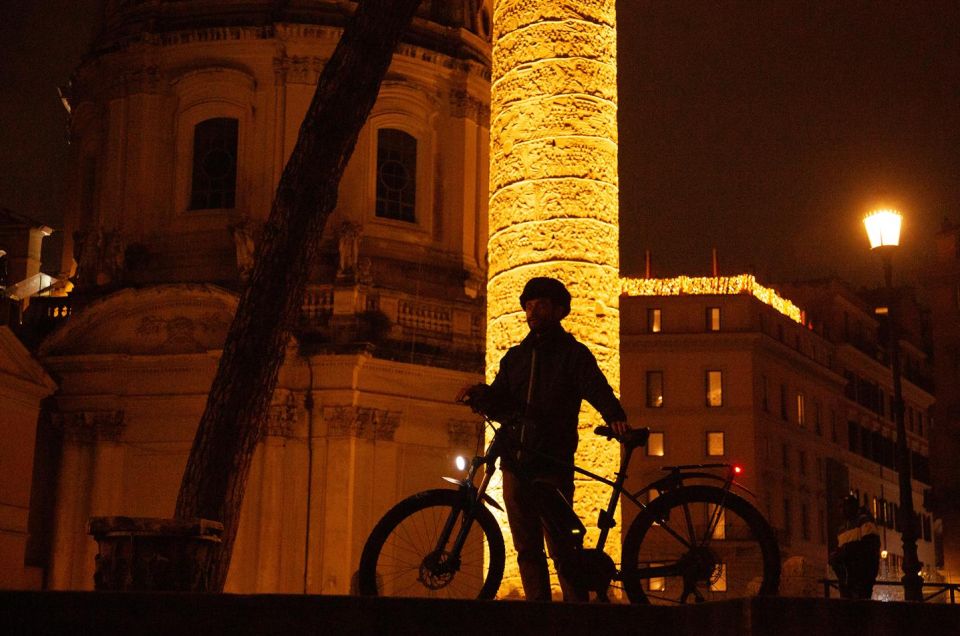
Rome at night has that mild magic: the crowds thin a bit, the streets cool down, and buildings glow without cooking you alive. This tour is built around exactly that window—when the city looks cinematic but you’re still moving at a relaxed pace.
What I like is that it’s not just “see big landmarks.” The rhythm matters. You get major sights like the Colosseum and Pantheon in the dusk, then you transition into streets that feel more like lived-in Rome—alleyways, small squares, and neighborhoods that don’t look like photo backdrops.
Because it’s an e-bike, you don’t arrive sweaty and wrecked. Pedal assist helps you keep a steady tempo even as the route snakes through the historic center. It also means you can actually listen to the guide’s commentary instead of spending all your brainpower on your next hill.
You can also read our reviews of more cycling tours in Rome
Via Labicana meeting point: getting on the bike without stress
The tour starts at Via Labicana 49. The shop is about a 5-minute walk from the Colosseum, so you’re not dealing with a complicated transit puzzle first thing.
Once you meet up, expect a straightforward setup:
- helmet is mandatory
- you’ll be given the e-bike (Top-quality Cannondale models have been mentioned)
- you get a handlebar bag and a bottle of water
Small groups help here. With a limit of 10 participants, you’re not stuck waiting while the slowest rider finishes the bike check. It’s the kind of structure that makes it feel more like a guided ride with a plan than a circus line.
Also, the guides are listed in multiple languages (German, Italian, Spanish, French, Dutch, English). If your group includes different mother tongues, this kind of multi-language setup is a big deal for understanding what you’re seeing.
The first stretch: Colosseum, Roman Forum, and Theatre of Marcellus
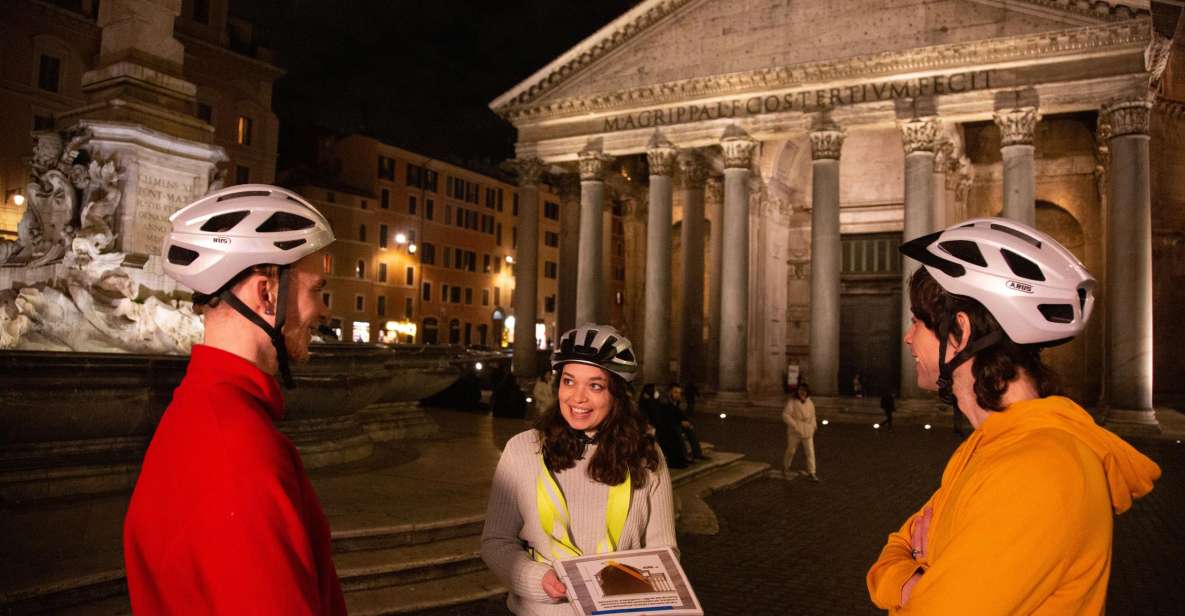
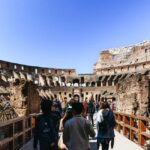
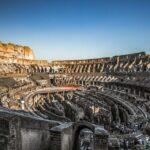
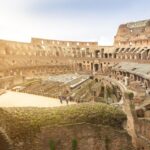
The route kicks off with the Colosseum. You only get about 5 minutes here, so it’s not a “linger for an hour” stop. But that short moment works at night. You’re there at the right time of day to see the Colosseum shift from day-light drama into evening atmosphere. Even if you’ve seen photos a thousand times, the scale hits differently when the city dims around it.
Right after, you ride into the Roman Forum area. This is one of those places where context changes everything. On a bike, you don’t have to walk every square inch to get the story. The guide’s job is to help you connect what you’re seeing—arches, ruins, and the layout—with how it functioned in its prime.
Next comes the Theatre of Marcellus. This one is often overlooked because it’s not always the headline stop, but it’s a useful pivot. It keeps the tour from feeling like a checklist of only the top five sites. You get that same ancient-Rome “wow,” but with a different kind of viewpoint—more human scale, less postcard framing.
Cutting through Rome’s neighborhoods: Jewish Ghetto and Farnese Palace
After the major classical sights, you shift into streets that feel more like you’re wandering like a local—just with better routing and a guide who knows where the group should be.
The Jewish Ghetto area is a key stop. Even with the short sightseeing windows, it’s worth paying attention to the way the neighborhood atmosphere changes from big monuments to human streets. It’s a reminder that Rome isn’t only ruins and fountains. It’s living communities layered over centuries.
Then you reach Farnese Palace. This stop adds a different flavor: not just ancient structures, but the grand architectural Rome is famous for across later eras. If you’re the type who loves spotting details—stonework, symmetry, and how buildings frame streets—this is a good moment to slow your thinking even if you’re moving on wheels.
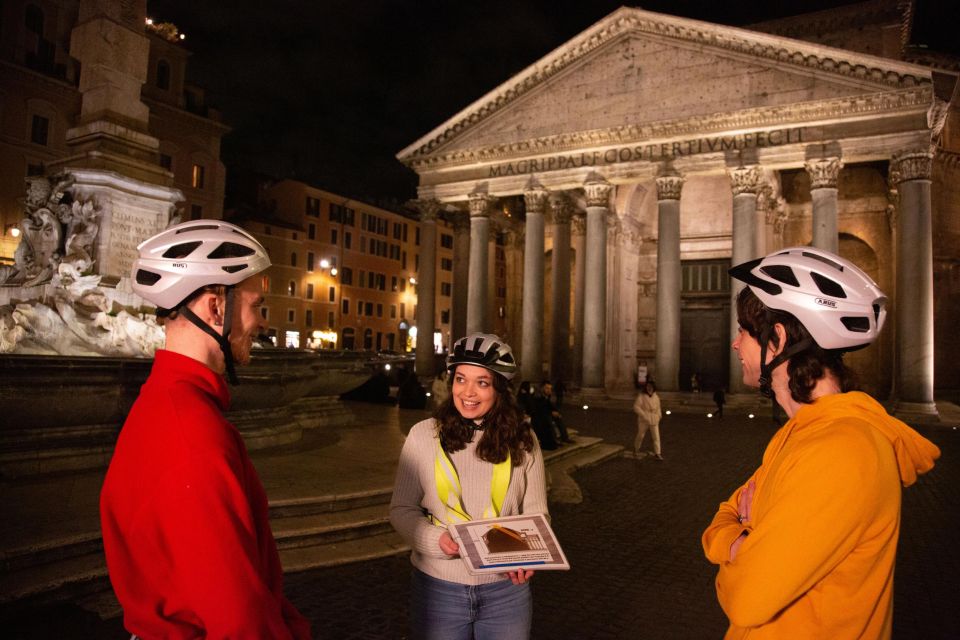
Pantheon at dusk and Sant’Ignazio’s evening glow
The Pantheon is the kind of sight that earns its reputation. This tour brings you there in dusk, which helps. Lighting matters. In the evening, you tend to see more subtle contrasts—how shadows sit in the structure, and how the space feels less exposed than it does under bright noon.
After that, you stop at the Church of Sant’Ignazio di Loyola. This is a classic Rome “you’ll be glad you didn’t skip it” type of stop. It breaks up the ruins-heavy sequence and gives you a chance to appreciate Rome’s baroque religious art and interior mood—without turning the tour into an all-day museum slog.
These stops work well in sequence because they balance scale. You get massive ancient monuments, then you get an architectural calm moment inside a church, then you roll back into the street world.
You can also read our reviews of more tours and experiences in Rome


Piazza di Pietra to the Spanish Steps, then Trevi Fountain
From Sant’Ignazio you move toward Piazza di Pietra. This is one of those squares that gives you breathing room between the big names. Think of it as a reset: your legs are still doing the work, but your brain gets a chance to catch up.
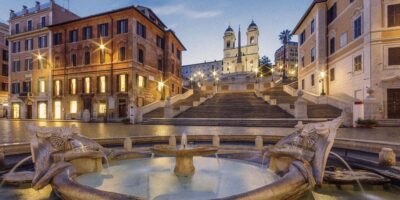
Next up: the Spanish Steps. At night, they’re still busy enough to feel lively, but they’re not as chaotic as daytime. This is a great stop for just looking around and seeing how Rome flows around its famous landmarks.
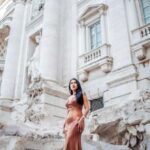
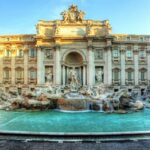
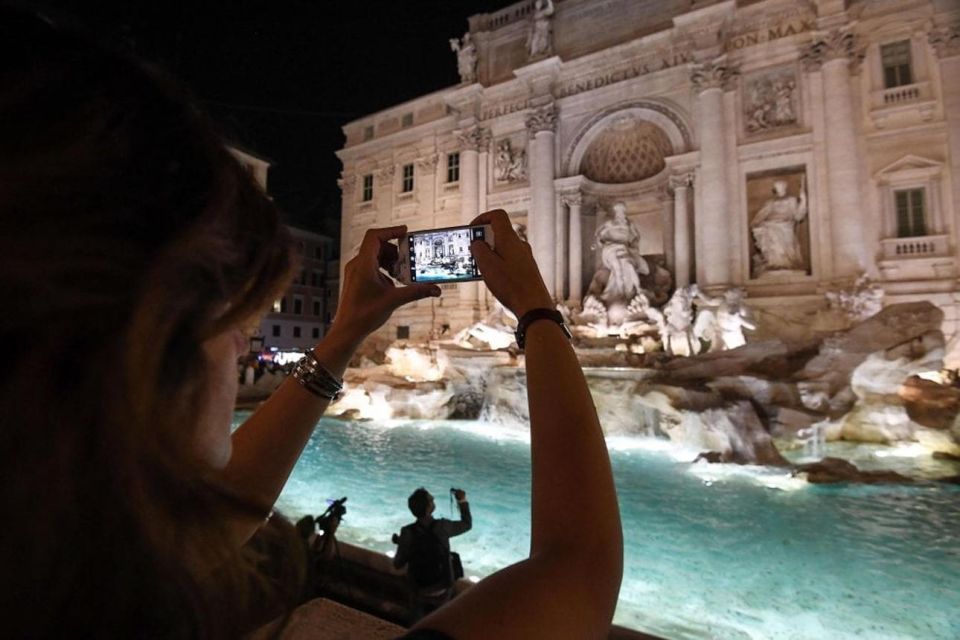
Then comes Trevi Fountain. This is the moment most people come for, and it’s handled in a practical way: you get time to see it clearly as an evening scene, not as a daytime crowd magnet. Trevi is always about atmosphere. The trick is not to stress about seeing every inch. Instead, take in the whole composition—the fountain, the surrounding facades, and how the light bounces off stone.
You’ll also move through Piazza Venezia afterward, which helps tie the center together. It’s a strong transition into the final stretch of the tour.
Imperial Fora: the end stretch where the ruins feel real
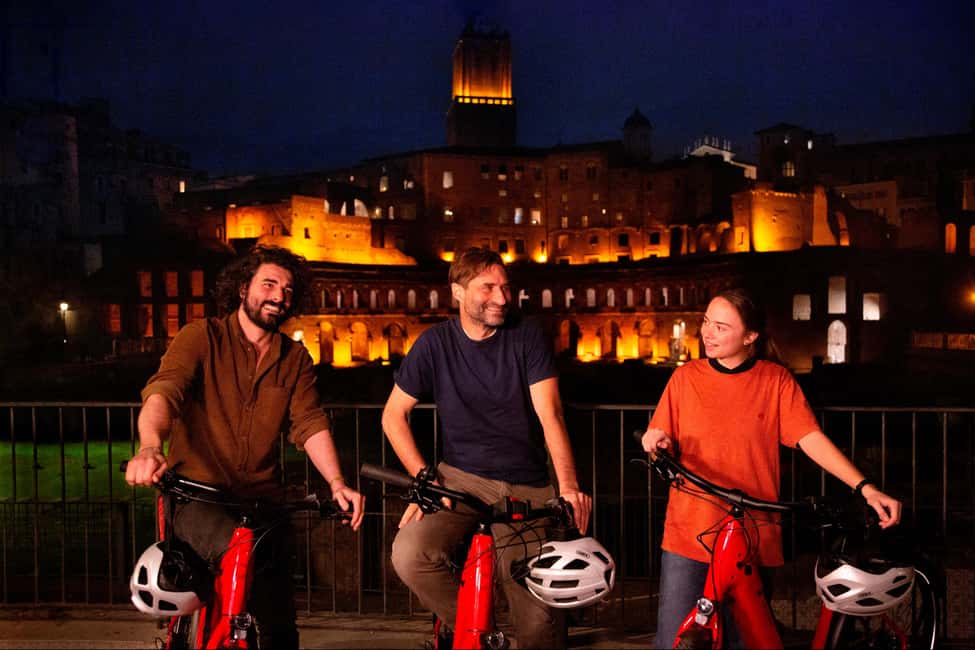
The last major sightseeing area is the Imperial Fora. This is where the tour’s “evening Rome” concept really comes to life. At night, ruins stop looking like background and start looking like a setting—like a scene you could step into.
It’s also a good finish because you’ve already built the mental map: Colosseum, Forum zone, key architectural stops, then Trevi and the central squares. By the time you reach the Imperial Fora, you’re no longer just collecting sights. You’re connecting them.
After the last viewpoint, you cycle back to Via Labicana 49. Done right, that return ride is part of the fun. You’re not rushing out of a tired checklist—you’re still in the Rome mindset.
The 4-hour dinner option: what you actually get and when
If you choose the 4-hour version, you add an Italian dinner in an Italian trattoria. The dinner happens about 1h15 after the tour starts.
The dinner is clearly structured, with items including:
- a mix of appetizers
- pizza or a pasta dish
- a soft drink or a glass of wine or beer
- water
- coffee
This can be a great value, because you’re not spending time hunting for food after the ride. It also keeps the day feeling cohesive: cycling first, then switching gears to a sit-down meal.
My only real caution is the one you should take seriously: the menu is set. One guest noted the restaurant and offered menu weren’t exactly to their liking. So if you have strong preferences or dietary needs you didn’t mention to the provider, you might be happier choosing the 2.5-hour tour and eating on your own afterward.
How hard is it, really? The 12 km/7.5 mi question
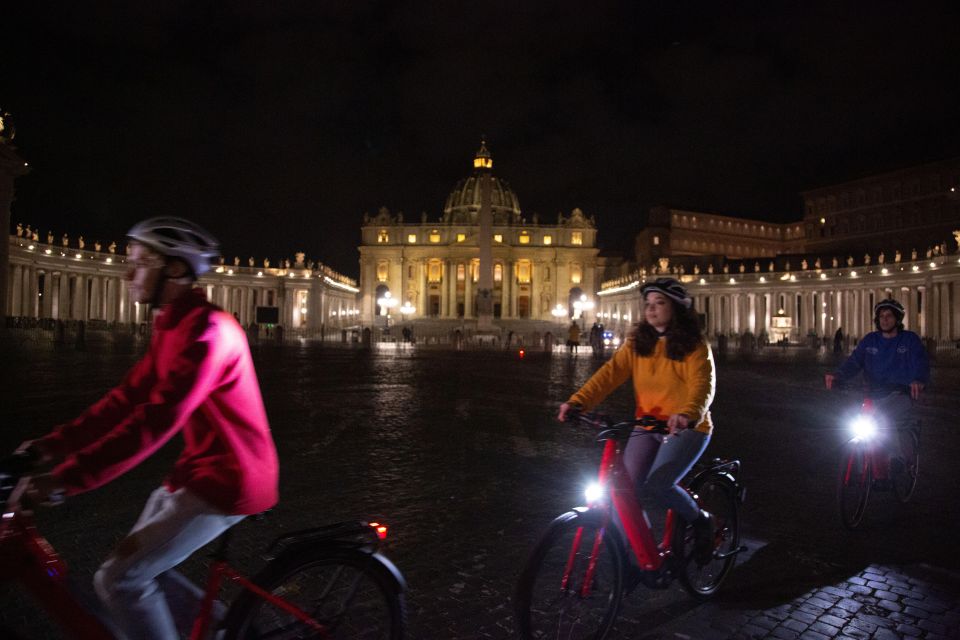
The tour covers 12 km/7.5 mi. It’s labeled leisure, which makes sense because the bikes are electric and the route is designed for an evening pace.
There is one condition that can change how it feels: if an adult is carrying a child seat or a child extension mounted on the bicycle, the difficulty is listed as intermediate.
So here’s the practical way to think about it:
- If you can comfortably ride a bike for an hour or two, you’ll likely be fine.
- If you’re new to cycling or your balance is rusty, do not worry too much about distance. Focus instead on staying relaxed at night—your eyes will be adjusting to street lighting and motion.
Also remember: the tour is helmet mandatory, and kids follow specific rules (more on that below).
Bikes, route comfort, and why the safety matters
This isn’t a “race the streets” setup. The tour is described as safety-conscious, and that lines up with what you should look for in any night ride through central Rome: fewer surprises, calmer routing, and enough guidance that you don’t feel like you’re doing it alone.
Specific details that matter:
- anti-puncture tires help reduce the “what if” stress
- bikes are checked after every use (mentioned as part of the maintenance approach)
- professional guide plus small group size helps keep the flow smooth
In the reviews, people repeatedly praised the guides for being patient and keeping things comfortable, especially on back streets that help you avoid bigger traffic pressure. Some guests even specifically called out the way the route worked around other cars and crowds, turning it into an actual adventure instead of a grind.
Price and value: why $85 can make sense
At $85 per person, you’re paying for three things at once:
1) an e-bike experience with safety gear (helmet, anti-puncture tires, handlebar bag, water)
2) a professional guide who helps you interpret what you’re seeing
3) a well-paced route that gives you multiple major sights without needing separate transport or long walking lines
If you book the 4-hour version, the value math gets even easier: the dinner is included, and it’s not just bread and a coffee. You get appetizers plus pizza or pasta, plus a drink option and coffee.
The best way to decide is simple: ask yourself whether you’d otherwise spend money on a guided sightseeing plan and dinner and deal with the logistics of moving around after dark. If yes, this likely feels fair.
If you’re a solo foodie who wants total control over meals, the 2.5-hour option may be the better match.
Who should book this Rome night e-bike tour
This tour is a strong fit if you want:
- a high-efficiency way to see classic Rome sights in one evening
- an easier pace than walking, with pedal assist doing the heavy lifting
- a guide who helps you understand what you’re looking at while you ride
- a small-group experience (max 10 participants)
It’s also a good choice if you like the idea of night photography and evening atmosphere, because the timing is built around it.
It may be less ideal if:
- you strongly dislike structured set menus (for the 4-hour dinner version)
- you want lots of long stops where you wander freely for 30–60 minutes at each monument
- you don’t want to cycle at all (even if it’s leisure)
Child policy basics (so you can plan ahead)
The tour has clear rules for families:
- Infants aged 1 to 4 (up to 22 kg/49 lb) ride on a child seat and join for free.
- Children aged 5 to 8 get a child extension (child streamliner).
- Children aged 9+ (at least 140 cm/55″) can ride independently on an appropriately sized e-bike.
- Babies under 1 year are not suitable.
Since the bikes have a weight limitation noted for equipment (300 lbs/136 kg), it’s smart to account for the total setup if you’re traveling with children.
Should you book this Night Tour of Rome?
I’d book it if you want Rome in the evening without spending the whole night in lines or on foot. The combination of top e-bikes, a safety-conscious guide, and a route that mixes big icons with real neighborhood texture is exactly what makes this kind of tour worth the money.
Choose the 2.5-hour version if you want the city atmosphere and don’t want your schedule tied to a meal. Choose the 4-hour version if you’d rather have dinner handled for you and you like Italian trattoria food enough to accept a set menu.
Either way, you get a guided night ride through Rome’s most famous landmarks, plus enough quieter streets to make it feel like more than a greatest-hits tour.
FAQ
Where does the tour start?
The meeting point is Via Labicana 49. The shop is about a 5-minute walk from the Colosseum.
How long is the Night Tour of Rome?
It runs for 2.5 hours or 4 hours, depending on the option you choose.
What does the 4-hour option include?
The 4-hour version adds dinner in an Italian trattoria, including a mix of appetizers, pizza or a pasta dish, a soft drink or a glass of wine or beer, water, and coffee.
When does dinner happen on the 4-hour tour?
Dinner takes place about 1h15 after the tour starts.
How far do you ride?
The tour covers about 12 km / 7.5 mi.
Is the ride difficult?
It’s listed as leisure. It’s listed as intermediate for adults carrying a child seat or child extension mounted on their bicycle.
Are helmets required?
Yes. Wearing a helmet is mandatory on the tour.
How big is the group?
The group is limited to 10 participants.
What languages are the guides?
Guides are available in German, Italian, Spanish, French, Dutch, and English.
Is the tour suitable for babies and young children?
Babies under 1 year are not suitable. Infants 1 to 4 ride for free on a child seat. Children 5 to 8 use a child extension. Children 9+ can ride independently if they meet the listed height requirement.