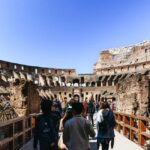
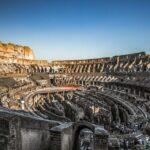
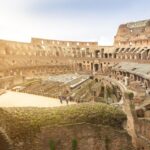
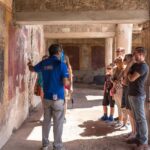
Ostia Antica packs a lot into 3.5 hours. You get a fast 25-minute train ride from Rome, then a guide like Sean or Janelle who brings the ruins to life with sharp jokes and clear stories. I especially like that the tour is in English with a mother-tongue guide, so the history lands without you having to work for it.
What I like most is the feeling that you’re touring a real working Roman town, not just an archaeological showpiece. You’ll walk past apartment-style blocks and through major stops like the baths and the amphitheater, and it helps you understand how everyday people lived.
One thing to consider: there’s a moderate amount of walking on uneven ancient ground, and it isn’t suitable for people with mobility impairments or wheelchair users. If you’re planning this as a “comfortable stroll” day, you might want to adjust expectations.
In This Review
- Key things to know before you go
- Why Ostia Antica is easier to love than Pompeii
- Getting there smoothly: the Piramide Metro transfer
- The tour flow on site: what you actually do in 2.5 hours
- A note on your pace
- Baths and amphitheater: the highlights that teach the city’s rhythm
- Temples, forum, and Mithraic sites: religion as daily life
- Daily life details: taverns, brothels, and how Rome’s city worked
- Time after the tour: picnic, on-site café, or Ostia Beach swim
- Price and value: why $68 makes sense for a guided transfer day
- What to bring (and what you’ll wish you brought)
- Who this tour is best for
- My take: should you book this Ostia Antica guided tour with transfer?
- FAQ
- FAQ
- Where does the tour meet in Rome?
- How long is the Ostia Antica tour?
- What’s included in the price?
- Is food and drinks included?
- Do I need to buy an Ostia Antica ticket in advance?
- Can I spend time at Ostia Beach after the ruins?
Key things to know before you go
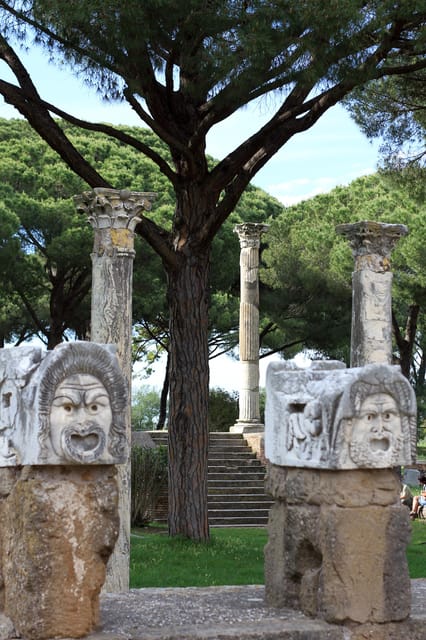
- English, mother-tongue guides who use humor, not just facts (Sean, Janelle, and Mike are all mentioned as guide examples)
- Skip-the-ticket-line plus entrance included, so you spend more time inside the ruins
- Over 2.5 hours on site focused on the biggest highlights: baths, amphitheater, forum/temples, and Mithraic spaces
- A working-class port-town story that feels more lived-in than a lot of other Roman ruins
- Small, private-feeling groups that make it easier to move at a human pace and actually see things
- Sun-and-sea options after: there’s time to grab on-site food or train out toward Ostia Beach for a swim and lunch
Why Ostia Antica is easier to love than Pompeii
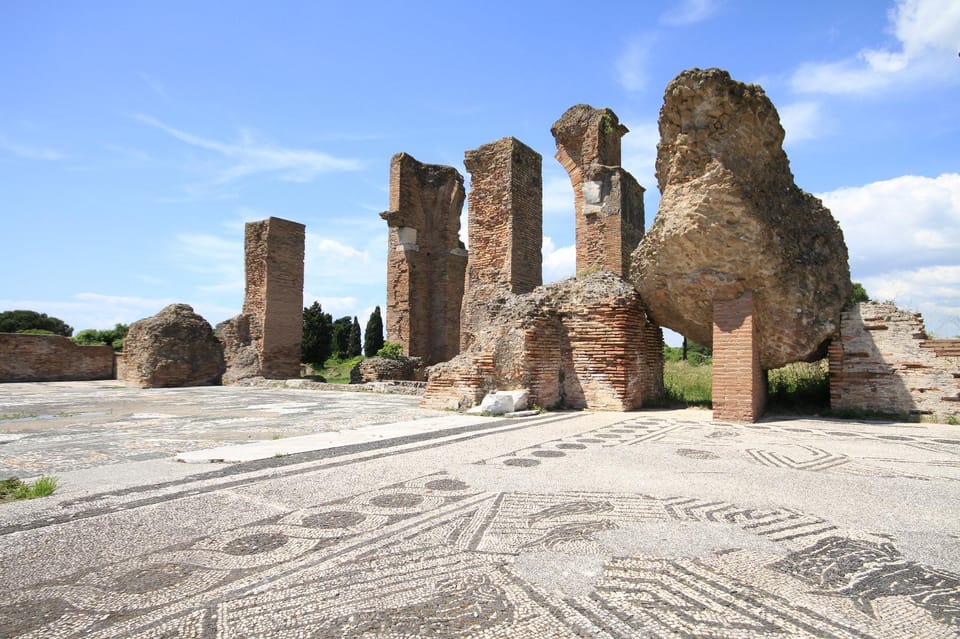
If you’re choosing between Pompeii and Ostia Antica, the logic here is simple: Ostia is close, less crowded, and it tells a different kind of Roman story.
Yes, Ostia is larger than Pompeii. But the biggest practical difference is how it works for a half-day plan. It’s only about 25 minutes from Rome’s city center by train, so you’re not burning half your day commuting to a distant site. And once you’re there, it feels more like a town people actually used—Rome’s port world, with the rhythms of daily life rather than a single dramatic disaster moment.
There’s also a comfort angle. With fewer crowds and a sea breeze, you’re less likely to feel like you’re stuck in a slow-moving line of people. One guide-style theme you’ll hear on this tour is the “not as tour-bus-heavy” feel, plus enough shade to make the walking more doable on warmer days.
You can also read our reviews of more guided tours in Rome



Getting there smoothly: the Piramide Metro transfer
The day starts in Rome at Caffé Piramide, right by the Piramide Metro Station. Your guide meets you in front of the café under the BAR T sign. This matters because it keeps the start straightforward. No hunt for a bus or confusing pickup location.
Then you take the train toward the Mediterranean. The ride is about 25 minutes, which is short enough that you’re still fresh when you reach the site. And it’s not wasted time. During the journey, you get a running explanation of the regional geography and Ostia’s role as Rome’s port—so when you step into the ruins, you’re not just looking at stones. You’re placing them in a bigger map in your head.
If you hate spending Rome days figuring out transit, this transfer format is a real time-saver. You get the train tickets as part of the package, too, so you don’t have to piece that together yourself.
The tour flow on site: what you actually do in 2.5 hours
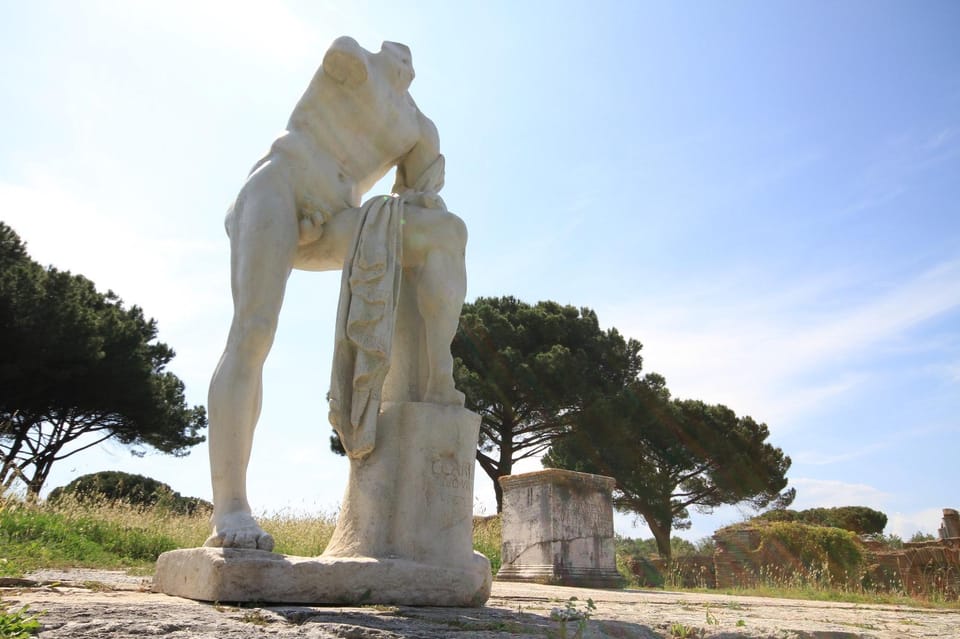
Once you arrive at Ostia Antica, the guided portion runs a little over 2.5 hours. That’s the sweet spot: long enough to see key highlights without turning it into an all-day marathon.
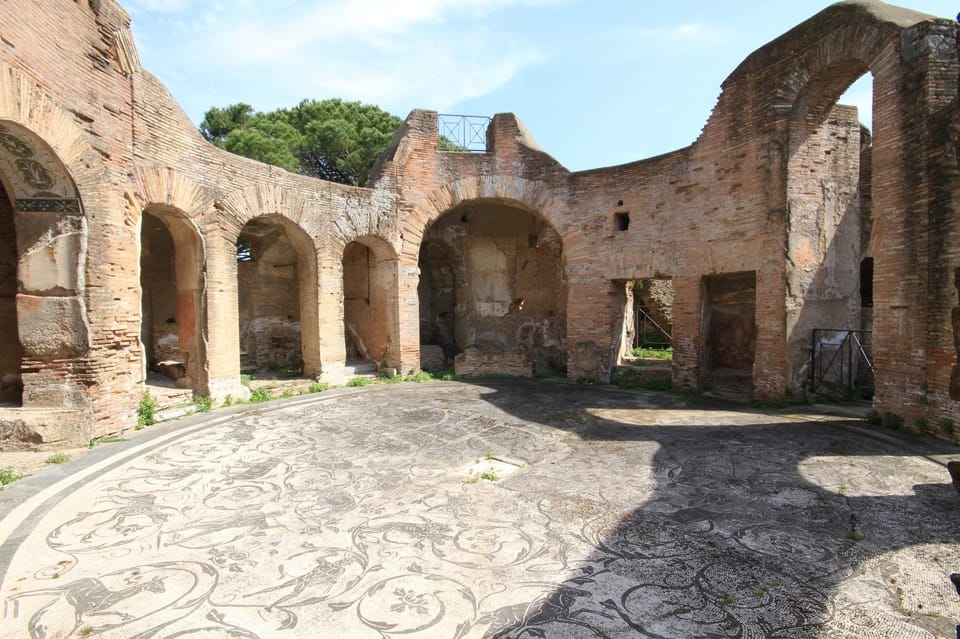
The walk is arranged like a guided tour of a working city. You’ll move through Roman-era streets and apartment complexes, then hit major public spaces that define what the city was built for. The tour is also designed to keep the stories human: how people ate and socialized, what they believed, and how a port town supported Rome.
If you want to keep going after the official tour ends, you can. The experience is structured so you’re welcome to remain and explore on your own afterward—useful if you like to slow down and take extra photos.
A note on your pace
The route involves a moderate amount of walking, so you’ll want supportive shoes. The ground in ancient sites isn’t always smooth. Plan for that, and you’ll enjoy it a lot more.
Baths and amphitheater: the highlights that teach the city’s rhythm
This is where Ostia Antica really shows its power. The baths are among the best examples you’ll find in Italy, and the guide won’t just point them out. You’ll connect what you see to what the city needed—cleanliness, leisure, and social life.
From a visitor’s point of view, baths are perfect because they’re both practical and story-friendly. You can stand in the right area and imagine the routines: the flow of space, the purpose of rooms, and how a community used the facility day to day. That’s also why baths feel like a tour anchor. They give structure to everything else.
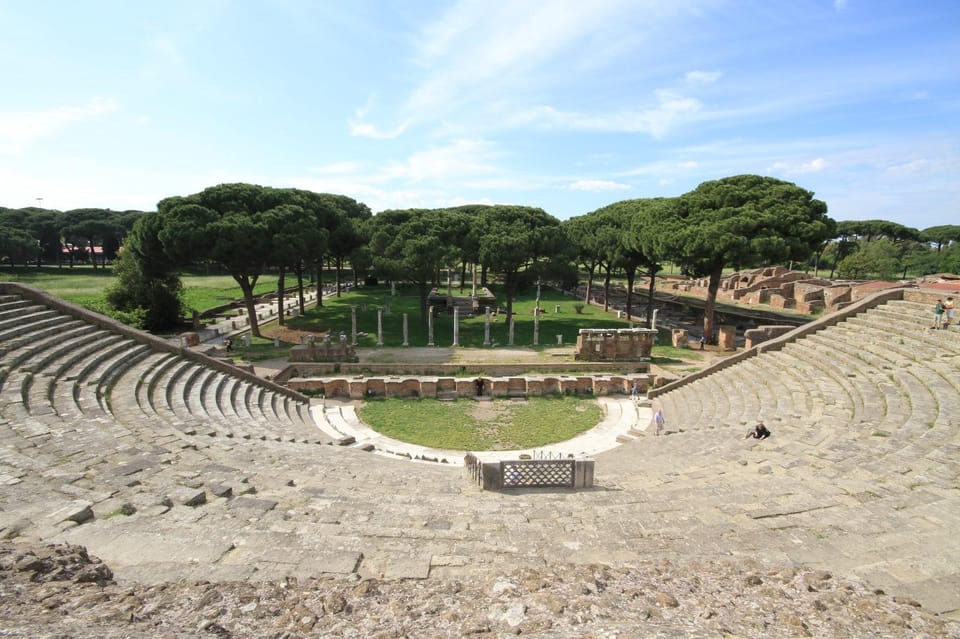
Then comes the amphitheater. It’s a major Roman entertainment space, and it helps you understand that Ostia wasn’t just logistics for Rome’s trade. People came to watch, to gather, and to spend time together. Once you see the scale and layout, the city starts to feel less like an outdoor museum and more like a place with a pulse.
In practical terms, these highlights also help you pace the day. You’ll get “big wow” moments without having to hunt for the best spots alone.
You can also read our reviews of more city tours in Rome






Temples, forum, and Mithraic sites: religion as daily life
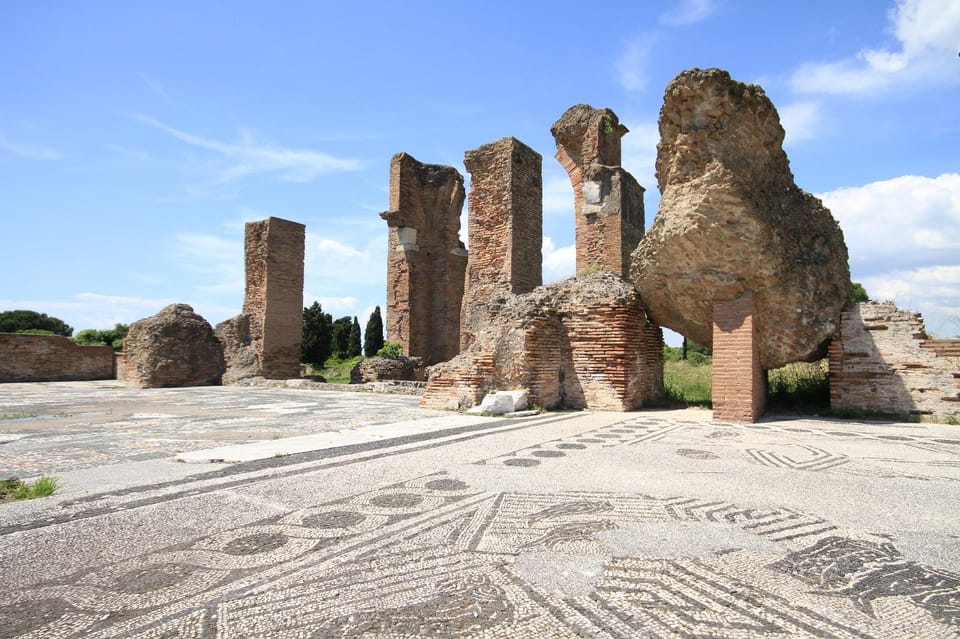
A big part of what makes this tour feel different from a standard ruins walk is the emphasis on religion and belief systems. You’ll hear about bizarre cults and you’ll visit the religious spaces that shaped daily life.
You’ll spend time around the forum with temples, then also see several Mithraic temples. Mithraism is one of those belief systems that doesn’t always make it into casual ruins tours. Here, it gets attention, which makes Ostia feel more complete. It’s not only about architecture. It’s about how people interpreted the world and how those beliefs were practiced in public spaces.
This is also where the guided format pays off. Ruins can look similar if you don’t know what you’re looking at. A guide helps you identify what matters: the layout, the intent of spaces, and how the city’s religious character fits the port-town setting.
Daily life details: taverns, brothels, and how Rome’s city worked
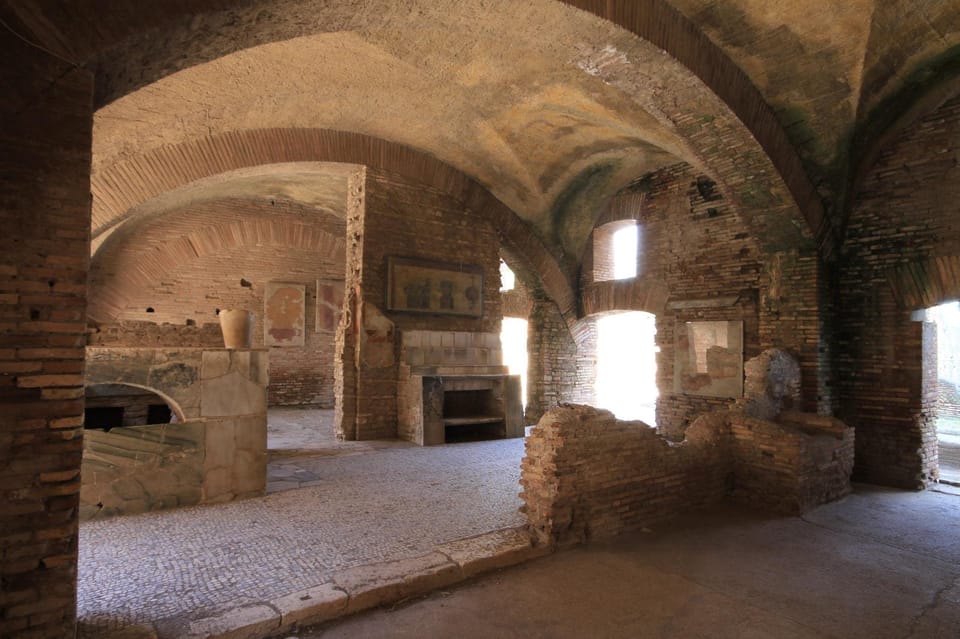
The tour doesn’t only cover grand monuments. It also points toward everyday life in a port-linked city—places to eat, drink, socialize, and yes, the more adult side of urban reality. Taverns and brothels are part of the city’s story here, and your guide ties them back into the bigger picture of how people lived.
If you like your history less polished and more human, you’ll appreciate this angle. It makes the ruins feel more like a lived environment where different types of people moved through the same streets.
Time after the tour: picnic, on-site café, or Ostia Beach swim
You’re not forced to rush back to Rome immediately at the end. At the close of the guided portion, you can keep exploring Ostia Antica on your own.
You also have a couple of options to turn the day into something more than ruins. There’s an on-site Caffe for food, and if you want a break by the sea, you can take the train a few more stops out to Ostia Beach for a swim. The sea breeze factor makes this extra tempting, especially after walking under open sky.
I like these add-ons because they let you decide your pace. Some days you want museum mode. Other days you want salt air and lunch.
Price and value: why $68 makes sense for a guided transfer day
At $68 per person for about 3.5 hours, you’re paying for more than a guide’s time. You’re also paying for logistics that are usually the annoying part: round-trip train tickets from Rome plus entrance tickets to Ostia Antica, with the tour guide handling the flow on site.
That combination matters. If you tried to do this on your own, you’d still need transit planning, ticketing, and a way to understand the site while you’re there. With this format, you get a coherent route, story structure, and highlights that match the time you have.
The “skip the ticket line” detail is also small but real. It reduces friction, especially when you’re arriving and want to spend your energy walking through the ruins, not waiting.
What to bring (and what you’ll wish you brought)
This is a site where comfort changes everything. The basics you should not skip are:
- Comfortable shoes (the walking is moderate)
- Water bottle (hydration helps a lot)
- Hat, sunscreen (sun is a factor)
- Camera (you’ll want it for the scale and details)
If you’re planning a picnic, it’s a good idea. You’ll have time to eat after, and it can be a budget-friendly way to turn this into a longer pause without buying every meal right there.
Who this tour is best for
This is a strong pick if you:
- Want an English guided experience with a sense of humor
- Prefer a working-city feel rather than only dramatic ruins
- Like shorter, easier day trips with a train transfer
- Would rather spend time understanding what you’re seeing than researching each stop first
It’s less ideal if you:
- Need wheelchair access or mobility support, because it isn’t suitable for mobility impairments or wheelchair users
- Want minimal walking
It also fits well for people who want “high value per hour.” You get major sights in a tight window, plus the option to extend the day at the beach.
My take: should you book this Ostia Antica guided tour with transfer?
If your goal is to see Ostia Antica with confidence and minimal hassle, I’d book it. The mix of included train transfer, included entrance, and an English mother-tongue guide who can turn baths, amphitheater, and Mithraic temples into something understandable makes the day feel organized and worth the money.
Choose it especially if you’ve already done the big-name Roman sites and want something with fewer crowds and a more everyday, port-town perspective. And if you like the idea of finishing with a café break or a possible swim at Ostia Beach, this tour format matches that rhythm nicely.
FAQ
FAQ
Where does the tour meet in Rome?
The guide meets you in front of Caffé Piramide under the BAR T sign next to the Piramide Metro Station.
How long is the Ostia Antica tour?
The total duration is about 3.5 hours, with roughly 2.5 hours spent exploring the ruins on site.
What’s included in the price?
Round-trip train tickets from Rome, entrance tickets to Ostia Antica, and a live English mother-tongue tour guide are included.
Is food and drinks included?
No. Food and drinks are not included.
Do I need to buy an Ostia Antica ticket in advance?
Tickets are included, and you get skip-the-ticket-line entry.
Can I spend time at Ostia Beach after the ruins?
Yes. After the guided part, you can take the train a few more stops out to Ostia Beach for a swim and lunch, if you want.