REVIEW · ROME
Castel Sant’Angelo | The Tomb of Hadrian Private Guided Tour
Book on GetYourGuide →Operated by Tour in the City - Travel Agency Rome - · Bookable on GetYourGuide
Castel Sant’Angelo is history with bite. This private tour strings together Hadrian’s tomb, papal rooms, and the fortress-prison story in a way that feels made for real people, not just ticket holders. I especially love the opening walk past the sculptures on Ponte Sant’Angelo, because it sets the stage before you even step into the castle. The panoramic terrace views also hit hard for photos and for getting your bearings. One consideration: there’s a moderate amount of walking and a dress code, so plan for comfortable shoes and covered shoulders and knees for the small chapel.
You get a professional art or history guide, plus headsets so you don’t strain to hear over the crowds. Even better, you’re guided straight through with skip-the-line access, which saves your energy for the rooms that actually matter. The private group is small (minimum 2, up to 10), so you can ask questions as you go. If you’re hoping for a fully laid-back, slow stroll with no steps or stairs, this may feel a bit active.
In This Review
- Key highlights to know before you go
- Castel Sant’Angelo’s two-life story: empire tomb to papal fortress
- Ponte Sant’Angelo sculptures: your fast track to the right mindset
- Skip-the-line entry: what private guidance changes inside
- Michelangelo’s courtyard: a real art stop, not a quick glance
- Terrace and bridge views: photos and city orientation in one hit
- Price and value: what $225.44 per person really buys
- Who this private tour fits best (and who should skip it)
- Practical planning: meeting point, timing, and comfort
- Should you book this Castel Sant’Angelo private guided tour?
- FAQ
- How long is the Castel Sant’Angelo private guided tour?
- Where do we meet the guide?
- Does the tour include skip-the-line access?
- What languages are available for the live guide?
- Is the tour wheelchair accessible?
- What should I bring and wear?
- What group size should I expect?
Key highlights to know before you go
- Skip-the-line entry so you spend time looking, not waiting
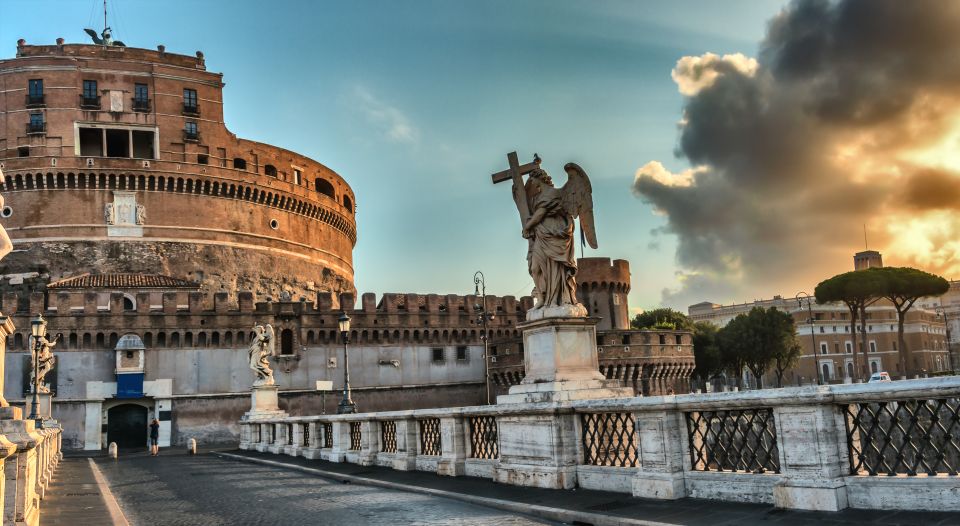
- Ponte Sant’Angelo sculptures first, then straight into the fortress complex
- Papally decorated rooms, including Pope Clement VII’s bathroom with frescoes by Raphael’s school
- The darker prison side, with stories tied to trapdoor access and hidden cells
- Terrace viewpoints over Rome, great for photos and orientation
- Michelangelo’s courtyard as an art stop you won’t skip on a quick pass
Castel Sant’Angelo’s two-life story: empire tomb to papal fortress
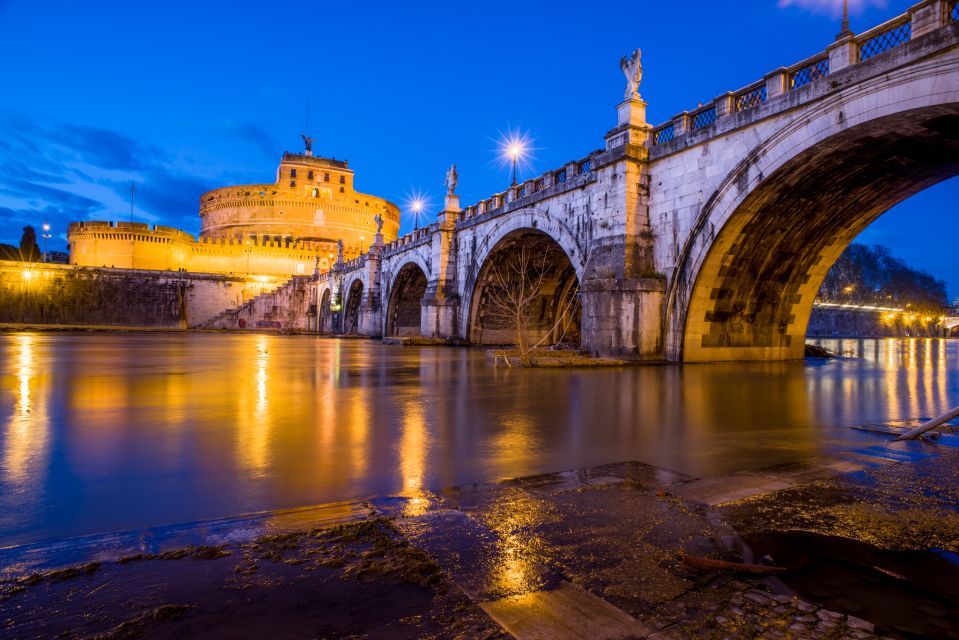
This isn’t just a big round building by the river. Castel Sant’Angelo is a master class in reuse—Rome taking one monumental idea and remaking it again and again.
You start with the emperor-side origin: the structure began as the tomb of Hadrian. Then the building’s purpose shifts under new power. It becomes a papal residence, gains fortress strength, and later takes on the role of prison and execution ground. That timeline matters, because the castle reads differently once you know what each layer was for.
I like that the tour keeps pulling the thread across centuries. You’re not just looking at walls; you’re learning why rooms, corridors, and even certain angles of the fortress were arranged the way they were. The guide also ties the site to later culture—Dan Brown’s Angels and Demons is explicitly part of the conversation—so the castle stops feeling like a distant schoolbook and starts feeling like a living reference point.
You can also read our reviews of more guided tours in Rome


Ponte Sant’Angelo sculptures: your fast track to the right mindset
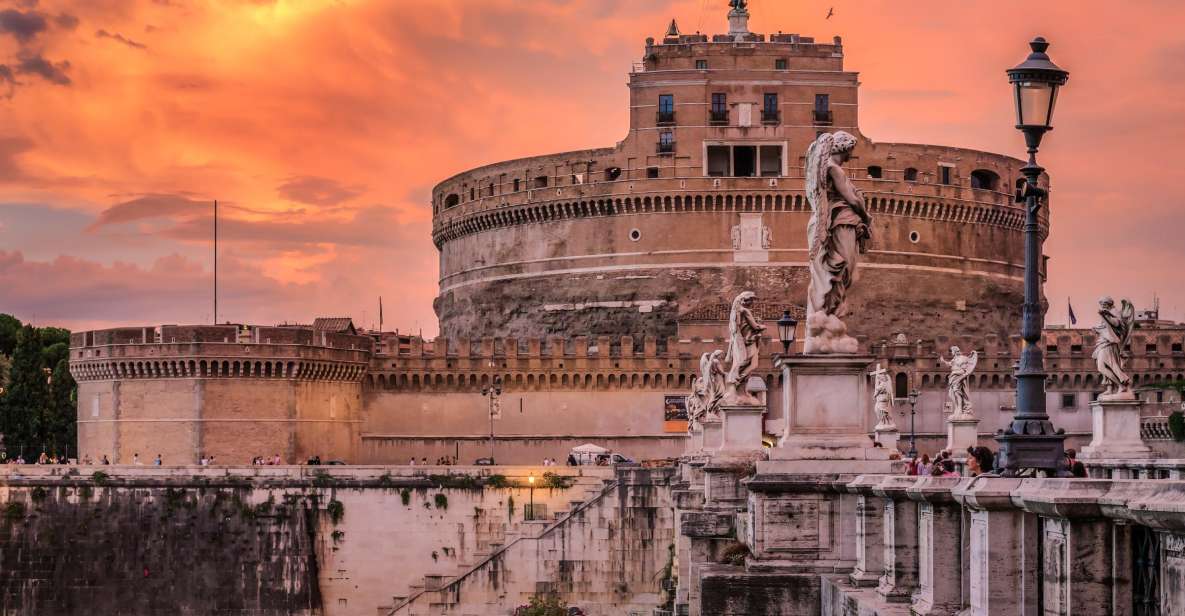
You meet at the museum entrance at Lungotevere Castello n° 50, right by the bridge. Then the tour begins with Ponte Sant’Angelo, which crosses the Tiber like a ribbon with purpose.
Even if you’ve seen photos of the bridge, it helps to hear what you’re looking at before you move on. The sculptures on Ponte Sant’Angelo are not random decoration; they set the tone for the castle’s later religious chapters. You also get a simple benefit: it’s a low-stress way to start walking, so you’re warmed up before you go deeper into the museum.
There’s also a practical payoff. By the time you head into Castel Sant’Angelo, you understand the bridge-castle relationship. The fortress isn’t isolated—it’s part of how people moved through the city and how power presented itself.
Skip-the-line entry: what private guidance changes inside
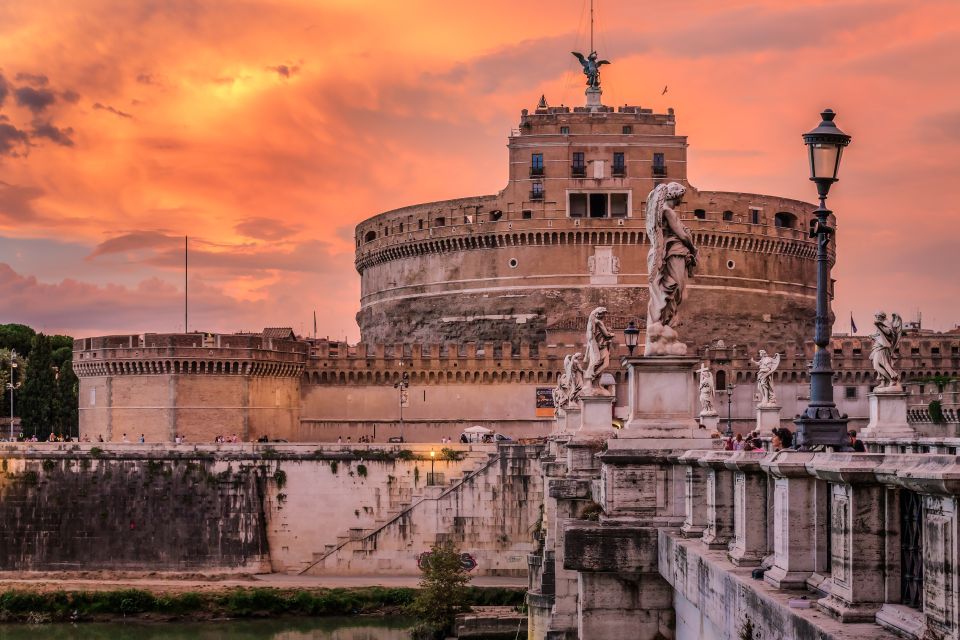
Once you’re in, the “private” part actually shows. Skip-the-line access means you avoid the slow slog that can drain attention. And with headsets, you can focus on the guide’s explanation without getting stuck doing the half-hear, half-guess thing that happens in crowded spaces.
Inside, you’ll move through the story from the opulent to the brutal. One of the standout stops is the papal area, where the decorative side is impossible to ignore. Pope Clement VII’s bathroom is highlighted for a reason: frescoes connected to Raphael’s school are a reminder that this fortress was once a residence, not just a stronghold.
Then the guide turns the lights toward the darker side. The prison narrative isn’t presented as horror-movie theatrics. It’s explained with specific features of the building—like a feared cell associated with a cramped space above Hadrian’s Mausoleum’s spiraling ramp, accessed through a trapdoor, and another hidden in the floor used for disposing of bodies. Even if you’re not usually into grim stories, these details help you understand how architecture can control human fate.
If you like art history as well as storytelling, the tour’s approach fits. You’re not only being told that decoration exists; you’re being told how decoration functioned in a place that could also detain and punish.
Michelangelo’s courtyard: a real art stop, not a quick glance
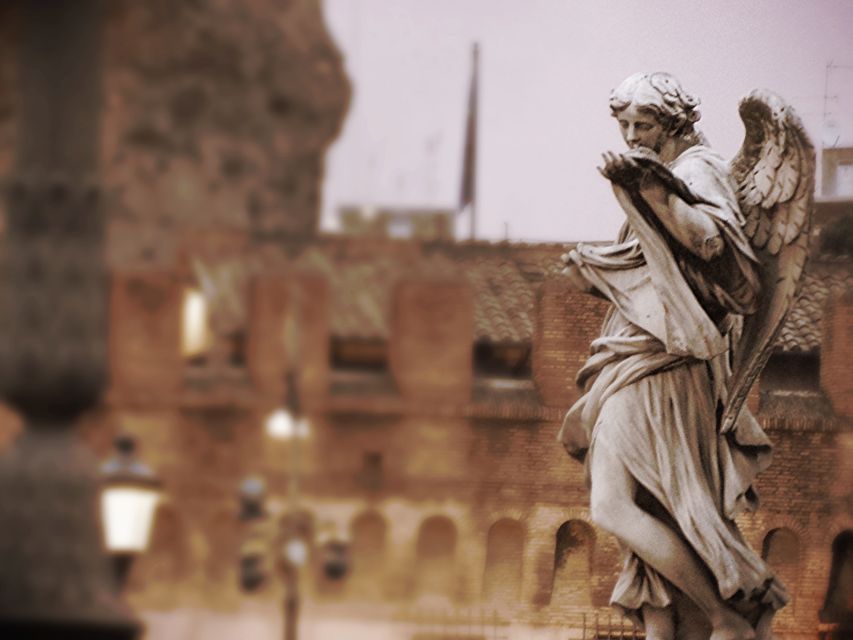
A highlight on this tour is Michelangelo’s courtyard. Even if you’re not an art specialist, courtyards are where you can feel the building’s design choices—light, sight lines, and how spaces connect.
What I like about making this an intentional stop is that it slows you down. It’s easy to rush through courtyards during casual visits because they don’t always scream museum. With a guide, you get context: why it’s there, how it was used, and how it fits the site’s shift from imperial monument to papal stronghold.
This is the kind of moment that makes a private tour worth it. A normal walk-through can leave you with photos but not understanding. Here, the courtyard is a checkpoint in the story.
Terrace and bridge views: photos and city orientation in one hit
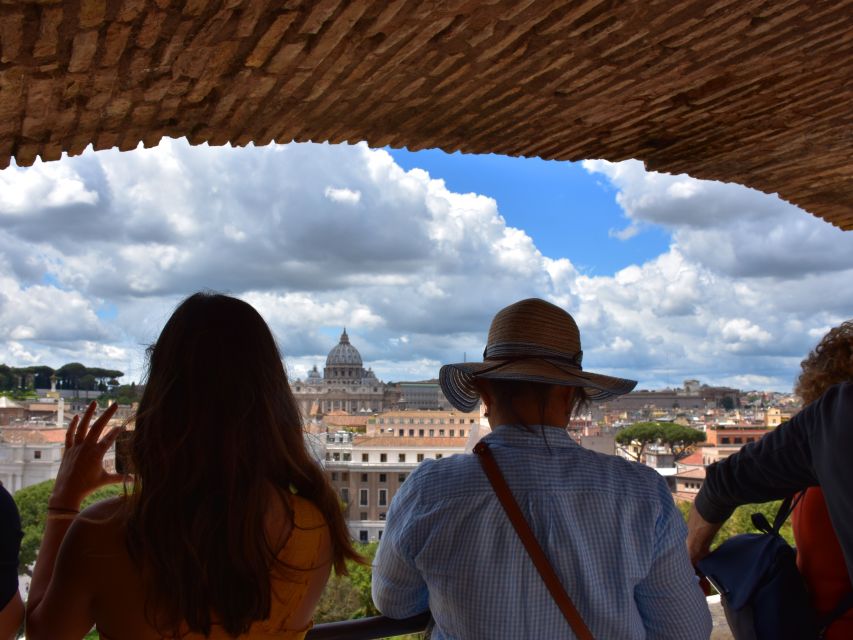
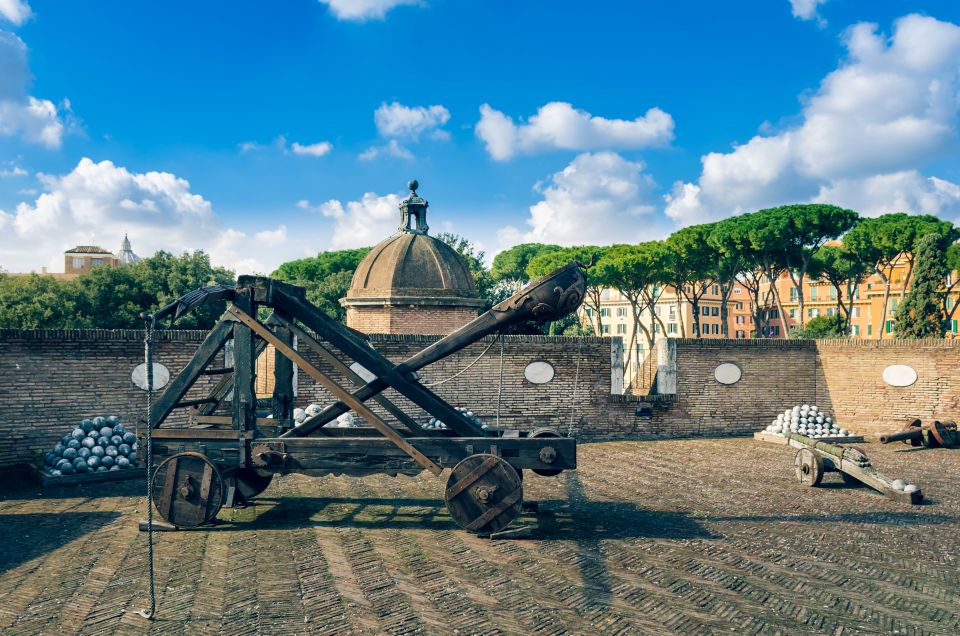
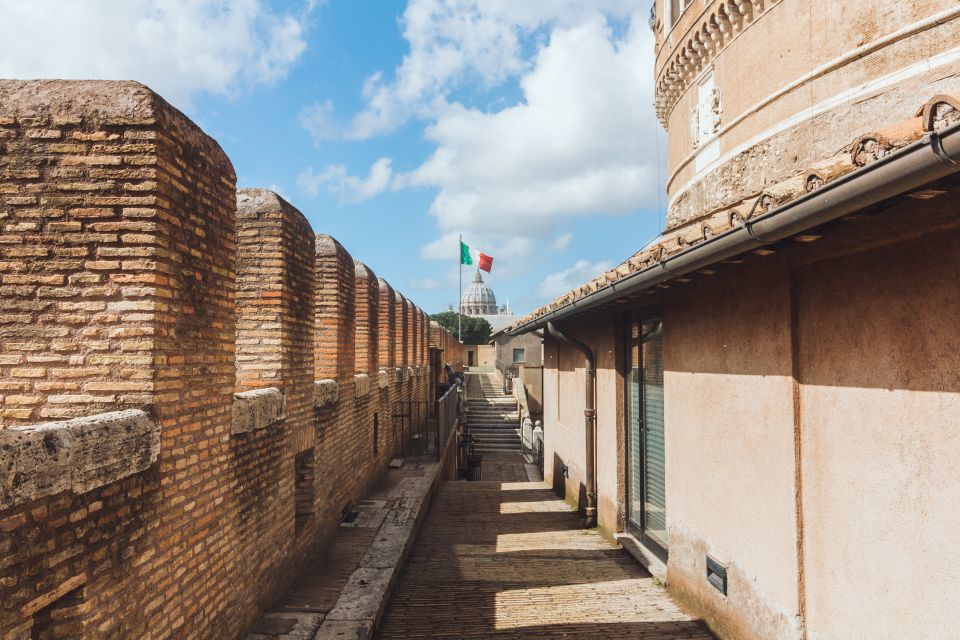
The rooftop terrace is where Castel Sant’Angelo earns its reputation as a viewpoint. After moving through tomb, palace, and prison themes, the terrace works like a reset button.
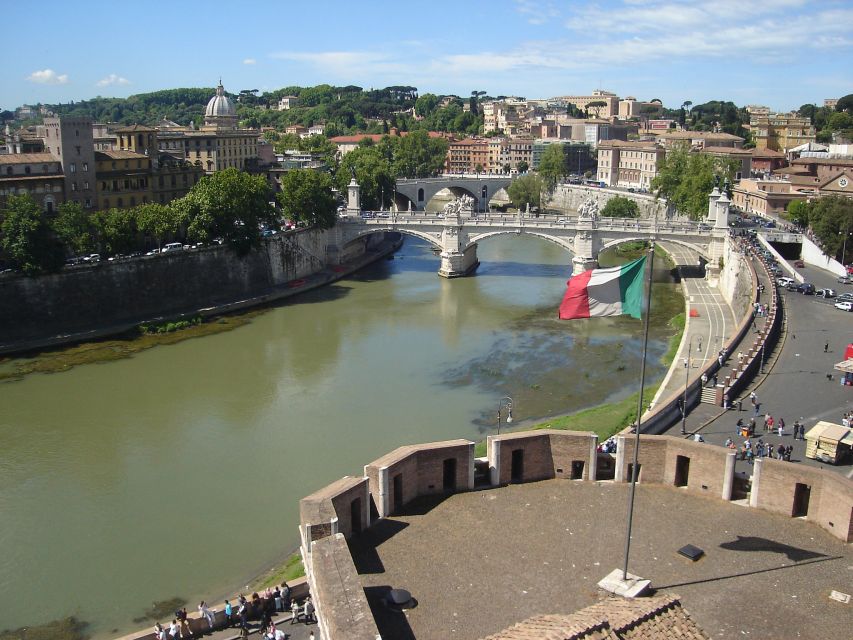
You get sweeping views over Rome, plus the chance to photograph the bridge from above. That matters because Ponte Sant’Angelo is part of how you got your mental map started. Looking back from the terrace helps you connect the earlier bridge sculptures to the bigger city layout.
This is also where the tour’s pacing becomes practical. You’ve had intense information for about two hours, and then you’re rewarded with space: air, sight lines, and time to take photos without someone herding you along too fast.
If you care about pictures, wear shoes you can trust. Terraces can involve uneven spots and stairs, and you don’t want to spend the best view of the day watching your footing.
You can also read our reviews of more private tours in Rome



Price and value: what $225.44 per person really buys
At about $225.44 per person, this is not a budget “see it fast” ticket. The value comes from three things that reduce your stress and boost your understanding:
- Private expert guidance
You’re paying for someone to explain what you’re seeing—especially the transitions between Hadrian’s original purpose, papal residence luxury, and the prison/execution role.
- Skip-the-line access
Entrance lines can chew up your best hours. Here, that time gets turned back into sightseeing and photos.
- Headsets for clarity
This sounds small, but it matters in museums and historic sites where sound bounces around. Headsets help you catch the details without moving your position every few minutes.
The main trade-off is simple: you’re paying for depth. If your style is to wander slowly with audio guides, you might not feel the difference as strongly. But if you want meaning—why the rooms look the way they do, what the prison architecture was built to do, and how art shows up in unexpected places—this price can feel fair.
Who this private tour fits best (and who should skip it)
This tour is a strong match if you:
- want expert storytelling that connects architecture, religion, and power
- care about art details like the fresco work linked to Raphael’s school
- enjoy panoramic viewpoints and want them explained in context
- want a small group where questions feel normal, not disruptive
It may be less ideal if you:
- need wheelchair access (the tour is not wheelchair accessible)
- dislike moderate walking, including steps and stairs
- travel with requirements that clash with the rules (no pets, no oversize luggage, no smoking, no walking frames)
Dress code is smart casual. And if you plan to visit the little chapel, shoulders and knees must be covered—plan clothing that meets that without turning your day into an outfit emergency.
Practical planning: meeting point, timing, and comfort
The meeting point is outside the main entrance by the bridge area, with your guide holding a Tour in the City sign. The address is Lungotevere Castello n° 50, and the tour ends back at the meeting point.
Duration is listed as 2 hours, and you’ll see different starting times depending on availability. Two hours is long enough to get the key story beats and the terrace payoff, but short enough that you’re not trapped inside all day.
Bring a passport or ID card, wear comfortable shoes, and keep your day simple. Inside, you’ll do a moderate amount of walking, and you should expect stairs at points. Also, plan on light layering if you run hot or get cold easily; stone sites can feel cooler than you expect.
Should you book this Castel Sant’Angelo private guided tour?
Yes—book it if you want a smarter visit, not just a faster one. This tour is especially worth it when you care about the contrast between emperor tomb grandeur, papal decoration, and the prison details that make the fortress feel unforgettable.
Don’t book it if you’re chasing a fully low-effort day, need wheelchair access, or you’d rather read plaques on your own and skip the explanations.
If you’re on the fence, consider this: a guided private experience helps you understand why each part exists, not only that it’s there. That’s what turns Castel Sant’Angelo from a photo stop into a story you can actually retell.
FAQ
How long is the Castel Sant’Angelo private guided tour?
The tour duration is 2 hours.
Where do we meet the guide?
You’ll meet outside Castel Sant’Angelo’s main entrance with a Tour in the City sign at Lungotevere Castello n° 50.
Does the tour include skip-the-line access?
Yes. The tour includes skip-the-line access and entrance fees.
What languages are available for the live guide?
The tour is offered in English, Spanish, French, and Italian.
Is the tour wheelchair accessible?
No. It is not wheelchair accessible.
What should I bring and wear?
Bring a passport or ID card and wear comfortable shoes. Smart casual dress is required, and if you visit the little chapel, shoulders and knees must be covered.
What group size should I expect?
The private group size is minimum 2 and maximum 10 persons.