REVIEW · ROME
Rome: Squares and Fountains Walking Guided Tour
Book on GetYourGuide →Operated by Tour in the City - Travel Agency Rome - · Bookable on GetYourGuide
Fountains here have secrets. This 2.5-hour small-group walking tour links Baroque and Renaissance Rome with an art history and archaeology expert, starting from the big viewpoint above the Spanish Steps. I like that it keeps moving at a human pace while still fitting in major highlights like Trevi, the Pantheon, and Piazza Navona.
The second thing I like: your guide doesn’t just point at monuments; you get the stories behind them—especially at Trevi Fountain and Bernini’s Fountain of the Four Rivers in Piazza Navona. If your guide is Sabrina, you’ll likely get that extra spark: strong energy, tons of detail, and picture-taking at the right moments.
One consideration: this is a lot of walking on uneven old streets, so it’s not for people with mobility issues or back problems. It also isn’t wheelchair accessible, and you’ll need comfortable shoes from start to finish.
In This Review
- Key things you’ll like on this tour
- Trinità dei Monti to Spanish Steps: your Rome “welcome” viewpoint
- Trevi Fountain: the story behind the most-copied pose in Rome
- Pantheon in limited time: what to notice before you walk past it
- Piazza Navona: where Baroque looks like it’s performing
- The quick ice-cream reset and the alleys between monuments
- Ponte Sant’Angelo and Castel Sant’Angelo: the ancient-to-papal bridge
- Price and logistics: is $85 worth it for 2.5 hours?
- Guides and the style of storytelling you can expect
- Who should book this walk—and who should skip it
- Tips to make the most of the walk
- Should you book Rome: Squares and Fountains Walking Guided Tour?
- FAQ
- How long is the Rome squares and fountains walking tour?
- Where is the meeting point?
- What are the main sights on the route?
- Is the tour wheelchair accessible?
- What should I wear or bring?
- Is there time for breaks or food?
- Do I need a headset?
- What languages are available?
- When should I arrive before the tour starts?
Key things you’ll like on this tour
- Meeting at Trinità dei Monti gives you a panoramic Rome opener before you start descending into the historic core
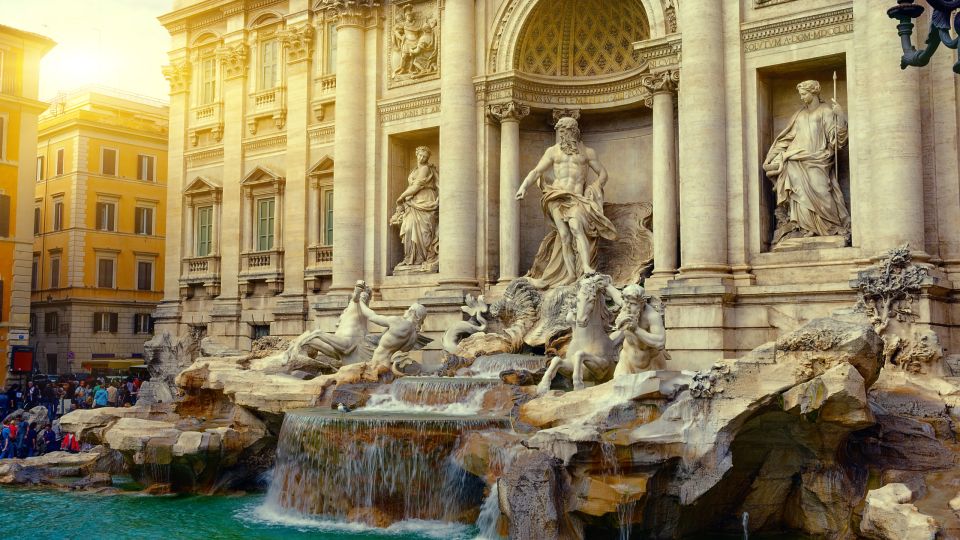
- Trevi Fountain with myths means you’ll hear why it became an obsession (and what you’re looking at, not just where to stand)
- Pantheon focus in a short stop so you know what matters before the crowd noise starts
- Piazza Navona’s Baroque fireworks—Bernini’s Four Rivers plus the nearby Borromini church viewpoint
- Time for a real Roman break with a scheduled ice-cream pause while you keep your momentum
- Sant’Angelo Bridge to Castel Sant’Angelo ties ancient Rome to papal Rome, with payoff views at the end
Trinità dei Monti to Spanish Steps: your Rome “welcome” viewpoint
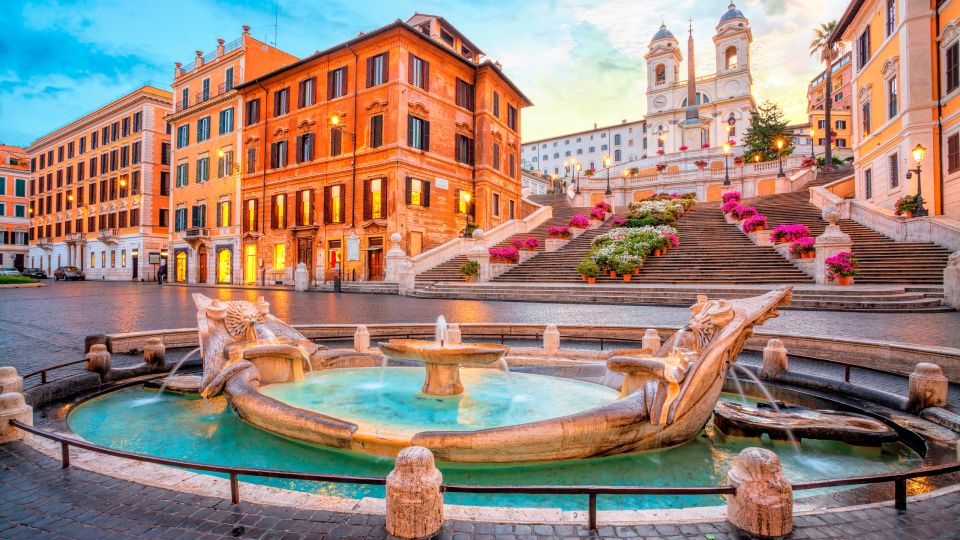
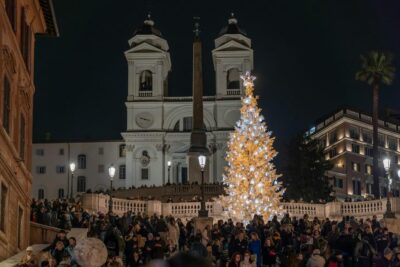
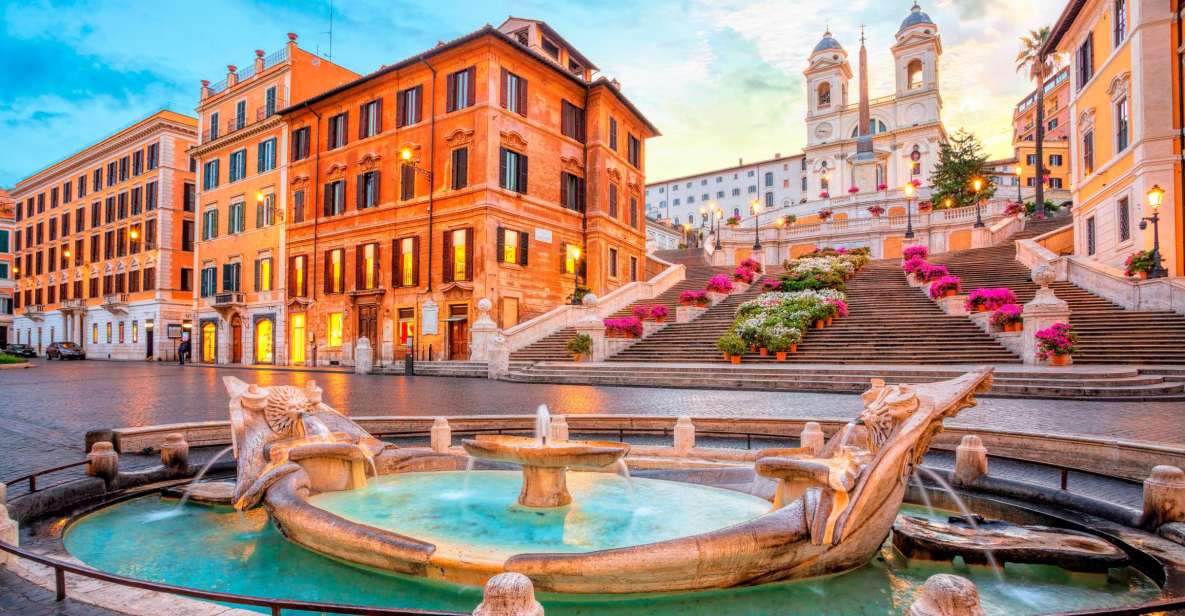
You start at Trinità dei Monti, just above the Spanish Steps area. This is a smart choice because it lets you get your bearings fast. Before you even hit the postcards, you see Rome from a higher angle—roofs, domes, and the thick weave of buildings that makes the center feel like a living museum.
From there, you’ll do a short photo stop and sightseeing walk toward the Spanish Steps. The steps themselves can feel slightly chaotic on your own (people climbing, people waiting, people blocking your photo angle). With a guide, you’re more likely to get a cleaner sense of scale: the way the staircase sits in the city fabric, not as a standalone “thing to photograph.”
One nice bonus early on: your guide sets the tone. Expect context for what you’re about to see, with enough art and archaeology framing to make the later stops feel connected instead of random.
You can also read our reviews of more walking tours in Rome
Trevi Fountain: the story behind the most-copied pose in Rome
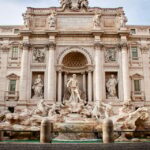
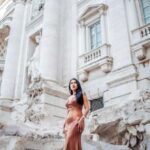
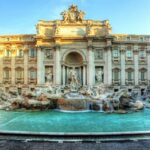
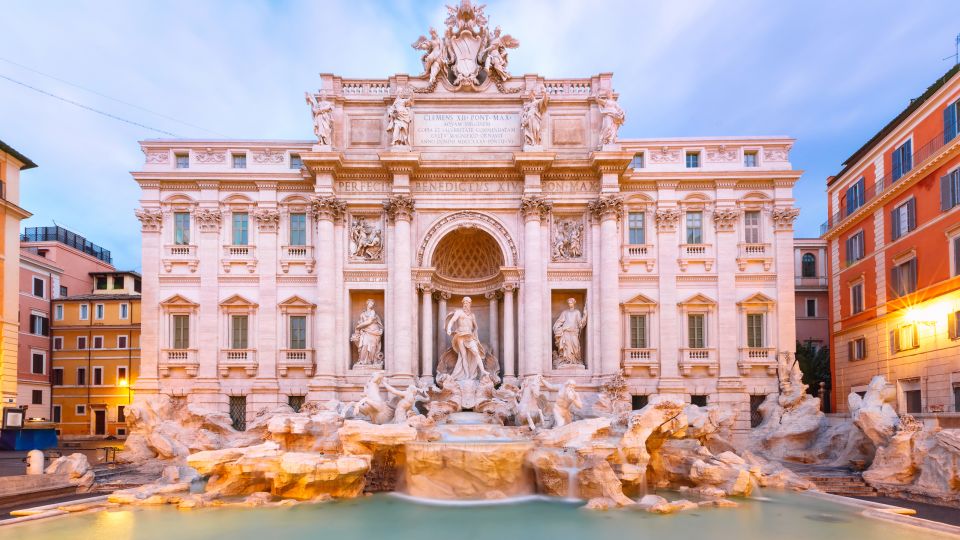
Then comes Trevi Fountain. Even if you’ve seen it on a thousand screens, it’s still impressive up close—dramatic, theatrical, and very much designed for attention.
This stop is short but purposeful, with a break time and photo opportunities. The guide’s job here is the important part: explaining the legends and myths tied to Trevi. That narrative layer changes how you experience the fountain. You start noticing details you’d normally skip—how the sculpture group and composition create movement, and why the fountain became a ritual spot in the first place.
A practical note: Trevi can be crowded, so plan for quick moments rather than lingering. I like tours that don’t pretend you’ll “take your time” at the busiest site. Instead, they help you get oriented and make the stop count in the time you have.
Pantheon in limited time: what to notice before you walk past it
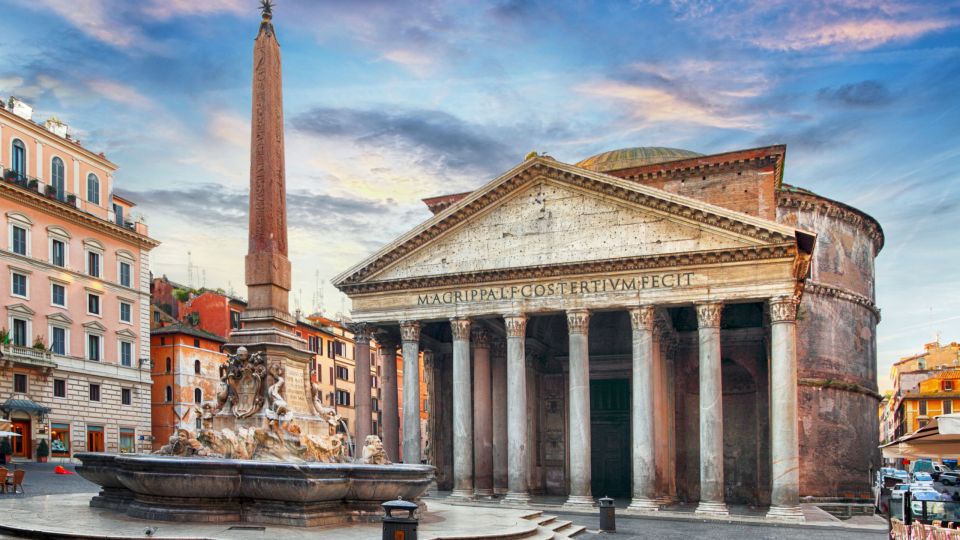
After Trevi, you head to the Pantheon for a photo stop and guided visit. This is one of those places where the scale hits you immediately. You’re looking at an ancient building that still feels like it should not exist—especially the dome.
The key context your guide will give you: it was built as a temple dedicated to the Olympian gods, and its dome was the largest in the world since ancient times. Even if you don’t go full nerd mode, that single fact helps you understand why people stare upward. It isn’t just “old church with a big roof.” It’s engineering confidence from two thousand years ago.
Because the stop is time-limited, you’ll get a quick checklist of what matters most visually—so you don’t spend your precious minutes looking for your own answers. If you tend to read plaques slowly, don’t worry; the guide will steer your attention so you leave with real impressions, not just photos.
Piazza Navona: where Baroque looks like it’s performing
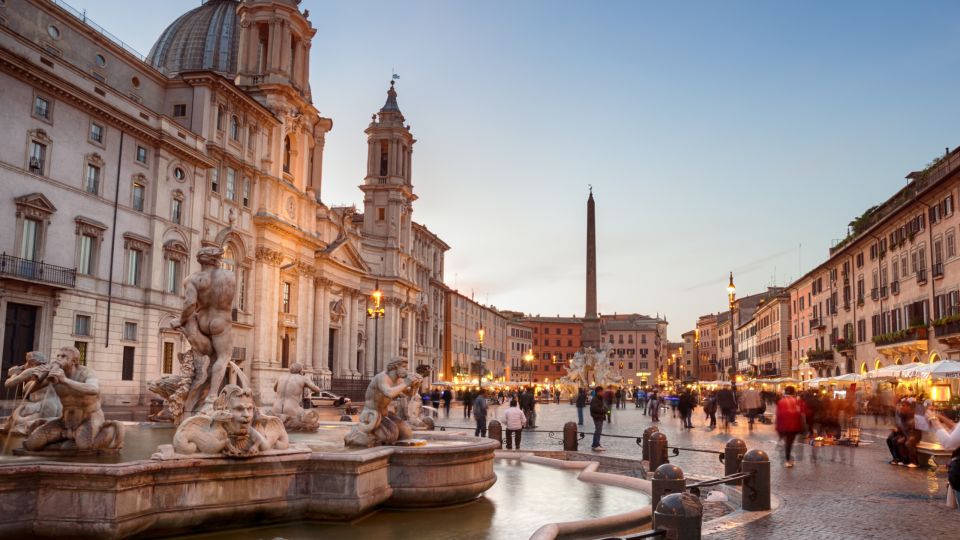
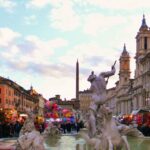
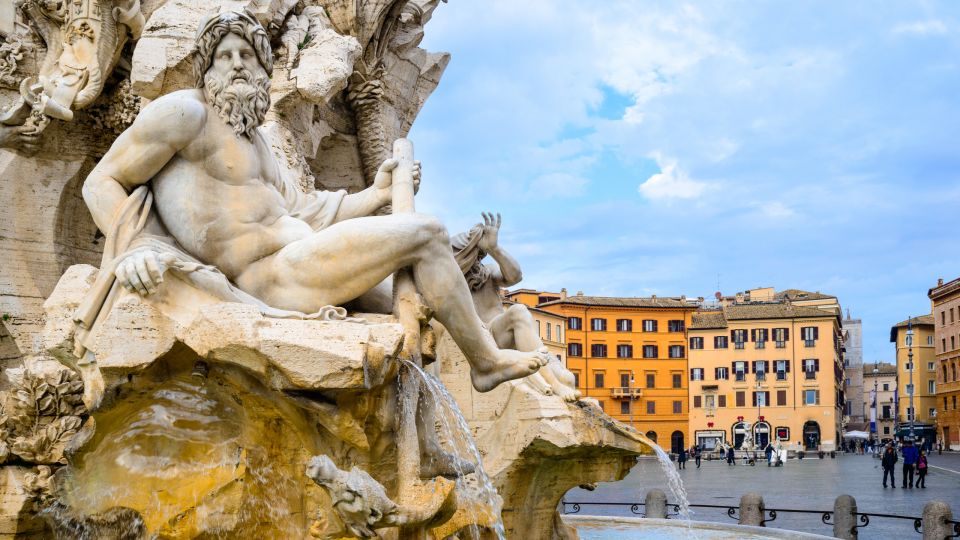
Next is Piazza Navona, and this is where Rome’s Baroque drama really shows up. The square has a long history of public events and festivals, which helps explain why it feels built for spectacle. You’re not just in a pretty plaza—you’re in a stage.
You’ll get time here for sightseeing and a guided visit, plus a break that you can use to reset. The main show is Bernini’s Fountain of the Four Rivers, and the guide will point out why it feels so alive. The figures, the composition, and the sense of story make it more than decoration.
Right nearby, you’ll also see Santa Agnese in Agone by Borromini. This part matters because it balances your eyes. One minute you’re looking at sculpture in the open air; the next you’re looking at a church façade and thinking about architecture as expression. Borromini’s style is all angles and motion, and with guidance you’re more likely to catch that intention instead of just registering it as “another pretty church.”
This is also a good time to remember a travel truth: Baroque in Rome is easier to understand when someone connects the art to the purpose. That’s exactly what your guide is doing—turning the square into an art lesson you can feel in your feet.
The quick ice-cream reset and the alleys between monuments
Between major monuments, you walk through the smaller streets that make Rome feel like it has a personality. These sections are where you stop seeing the city as a list and start experiencing it as a web: small turns, changing street widths, sudden glimpses of façades, and the rhythm of everyday life.
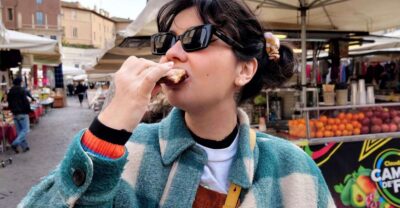
The tour also includes time to taste ice cream. Not a huge sit-down meal—more like a reset that keeps energy up for the last stretch. For me, that’s the right move on a walking tour. If you stop too long, you lose the momentum. If you eat nothing, the end can feel like work. This gives you a middle solution.
Don’t expect long wandering time. The value here is that the guide pulls you through the city with purpose, so the “in-between” becomes part of the story, not random walking.
You can also read our reviews of more guided tours in Rome




Ponte Sant’Angelo and Castel Sant’Angelo: the ancient-to-papal bridge
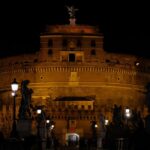
As you near the finish, you reach Ponte Sant’Angelo. You’ll get guided sightseeing and scenic views on the way, and the atmosphere at the bridge is exactly why this tour works well at the end of your day.
Then it’s onto Castel Sant’Angelo. Your guide will connect it to two different eras, which is a huge part of the payoff:
- It was built as Hadrian’s tomb
- Later it became a fortress for the popes
That transformation is more than trivia. It helps you read the building’s “why.” You start to see why Rome built monumental structures that could be adapted across centuries—because the city was always reusing, repurposing, and rebranding power.
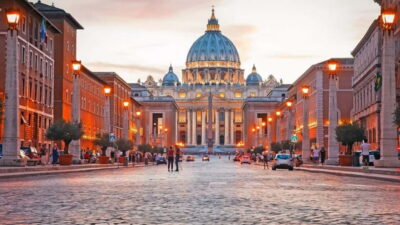
You’ll also get a view of St. Peter’s Basilica on the way. Even if you’re not going inside, it’s another reminder that this walk isn’t isolated. It’s part of Rome’s big story—ancient, medieval, then the church era taking the center stage.
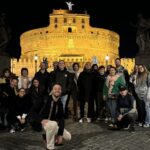
The tour ends with the magical atmosphere at Sant’Angelo Bridge in front of Castel Sant’Angelo. If you time your own plans afterward, this ending point is handy because it’s a natural hub for continuing your Roman evening.
Price and logistics: is $85 worth it for 2.5 hours?
At $85 per person, you’re paying for three things that actually matter in Rome: expert guidance, smart routing, and time saved from figuring out what to look for.
Here’s what you get that supports the price:
- A professional guide focused on art history and archaeology
- A walking route that strings major monuments together without feeling like a sprint
- Headsets when the group is larger than 8, which helps you hear the explanation instead of guessing
- A structured 2.5-hour window, so you can fit this into a busy day without losing the afternoon
Is it the cheapest way to see Trevi, the Pantheon, and Piazza Navona? No. But in Rome, the expensive part is often time—time spent asking, searching, and trying to understand what you’re looking at. This tour buys back clarity and flow, especially if you like stories and you want context you wouldn’t pull from an app.
Also, the group size angle matters. The tour is designed as an intimate experience, and the frequent positive feedback highlights how engaging the guides are.
Guides and the style of storytelling you can expect
Two guide names come up often: Sabrina and Martin. If you get Sabrina, you can expect high energy, strong organization of facts, and a knack for keeping different age groups interested—including teenagers. If you get Martin, you can expect a more structured art-and-history connection, with eloquent explanations that link monuments to wider Italian history.
Either way, the tour’s structure supports good guiding: you’re not asked to stare at one object for a long time. You move through the city in short guided segments, so the explanation lands while the sight is still fresh in front of you.
One thing I also like from this kind of tour style: your guide tends to help with photos. That sounds small, but it saves time and frustration, especially at Trevi and along the bridge area.
Who should book this walk—and who should skip it
This tour is a great fit if you:
- Want a first-timer orientation to Rome’s central masterpieces
- Like art history that’s explained in plain language, tied to what you’re seeing
- Prefer a guided pace that includes breaks (like the ice-cream pause) but doesn’t turn into a long lunch
- Are traveling with teens who need more than just standing in line
You should think twice if you:
- Have difficulty walking or issues with your back
- Need wheelchair-friendly routes (this one is not wheelchair accessible)
- Want a slow, sit-down museum day rather than a city-walk day
For most people in decent walking shape, this tour hits a sweet spot: enough time to get real impressions, short enough to stay flexible.
Tips to make the most of the walk
- Wear comfortable shoes with traction. Old sidewalks can surprise you.
- Bring sunglasses and a sun hat—Rome sun can make the mid-day stretch feel longer.
- Plan for a moderate amount of walking. This is not a drive-and-drop day.
- Arrive 15 minutes early at Trinità dei Monti. The meeting time matters, and you don’t want to lose the start.
If you like photos, keep your phone charged. The guide will help you time pictures at key moments, but you’ll still want your own battery for the fun shots on the way.
Should you book Rome: Squares and Fountains Walking Guided Tour?
I’d book it if you want a well-paced Rome sampler that connects Baroque and Renaissance highlights with actual meaning, not just sightseeing checkmarks. The biggest reason to choose it is the guide-led storytelling at Trevi and the way the tour links major sights—Pantheon to Piazza Navona to Sant’Angelo—so your brain builds a timeline instead of a pile of photos.
Skip it if walking is tough for you or if you hate crowded stops. Trevi is popular, and the best experience comes from accepting the short, focused format and letting your guide do the heavy lifting.
FAQ
How long is the Rome squares and fountains walking tour?
It lasts about 2.5 hours.
Where is the meeting point?
You meet your guide at Trinità dei Monti above the Spanish Steps.
What are the main sights on the route?
You’ll see Trinità dei Monti, the Spanish Steps, Trevi Fountain, the Pantheon, Piazza Navona, the Fountain of the Four Rivers, Sant’Agnese in Agone, Ponte Sant’Angelo, Castel Sant’Angelo, and you’ll also have scenic views toward St. Peter’s Basilica.
Is the tour wheelchair accessible?
No. It is not wheelchair accessible and it’s not suitable for people with mobility impairments.
What should I wear or bring?
Bring comfortable shoes. Sunglasses and a sun hat are also recommended.
Is there time for breaks or food?
There are break times during the tour, and the schedule includes time to taste ice cream. Food and drinks are otherwise not included unless specified.
Do I need a headset?
Headsets are included for groups of more than 8 people.
What languages are available?
The live tour guide is available in English and Italian.
When should I arrive before the tour starts?
You must be at the meeting point 15 minutes before the tour departure time.
If you tell me your travel month and whether you’re with teens or older family members, I can suggest the most comfortable start-time mindset for this walk.