REVIEW · ROME
Ancient Rome Half-Day Segway Tour
Book on GetYourGuide →Operated by Rolling Rome Segway & Golf-Cart · Bookable on GetYourGuide
Two wheels make Rome feel close. I love how Segway training gets you comfortable fast, and the route stacks major sights like Palatine Hill and the Mouth of Truth into one smooth half-day. One consideration: you are upright on a self-balancing vehicle for a while, so you’ll want decent balance and comfort moving around streets.
Nico-style guiding (and other excellent guides like Julio and Jean Paul) stands out for clear, easy-to-follow explanations, plus real attention to safety—especially for first-time riders. The experience is also built for a small group feel, with room for the guide to adjust pace and even find shade when needed.
You’ll move on a futuristic, eco-friendly Segway while the guide points out legends and architecture across Rome’s historic hills. If street closures happen (even during busy weeks), the guide can pivot so you still get the big moments.
In This Review
- Key highlights to know
- Entering Imperial Rome the “you’re moving” way
- Piazza del Gesù meeting point and the Segway training session
- Palatine Hill: Romulus and Remus with real city views
- Circus Maximus to Aventine Hill and the Orange Grove
- Santa Maria in Cosmedin: San Valentino and the Mouth of Truth
- Capitoline Hill and Michelangelo’s Renaissance redesign
- Imperial Forum glide: seeing the emperors’ footsteps
- Colosseum payoff: a big finish you can actually digest
- Eco-friendly, fast, and worth it for $100
- Who this Ancient Rome Segway tour suits best
- Practical comfort tips so the ride feels easy
- Should you book this Ancient Rome Half-Day Segway Tour?
- FAQ
- How long is the Ancient Rome Segway tour?
- What is the price per person?
- Where does the tour start?
- Is the tour guided in English?
- Is there Segway training included?
- How many people are in the group?
- What sights are included on the route?
- Does the tour cover Rome’s hills?
- What is the cancellation policy?
- Does the booking offer pay later?
Key highlights to know
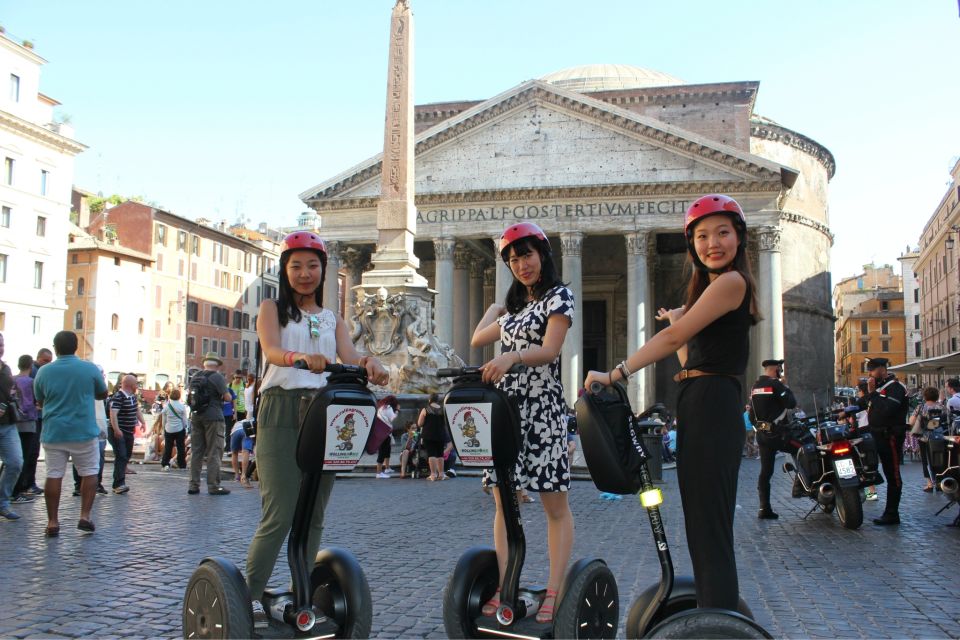
- Quick Segway training: a short practice session first, so you can focus on Rome afterward.
- Seven Hills route: viewpoints and landmarks across the hills of imperial Rome.
- Palatine Hill panoramas: wide city views paired with the Romulus and Remus legend.
- Santa Maria in Cosmedin stop: San Valentino’s remains and the marble Mouth of Truth mask.
- Capitoline Hill with Michelangelo: Renaissance redesign details tied to what you see.
- Imperial Forum to the Colosseum: a big-finish stretch of imperial sites.
Entering Imperial Rome the “you’re moving” way
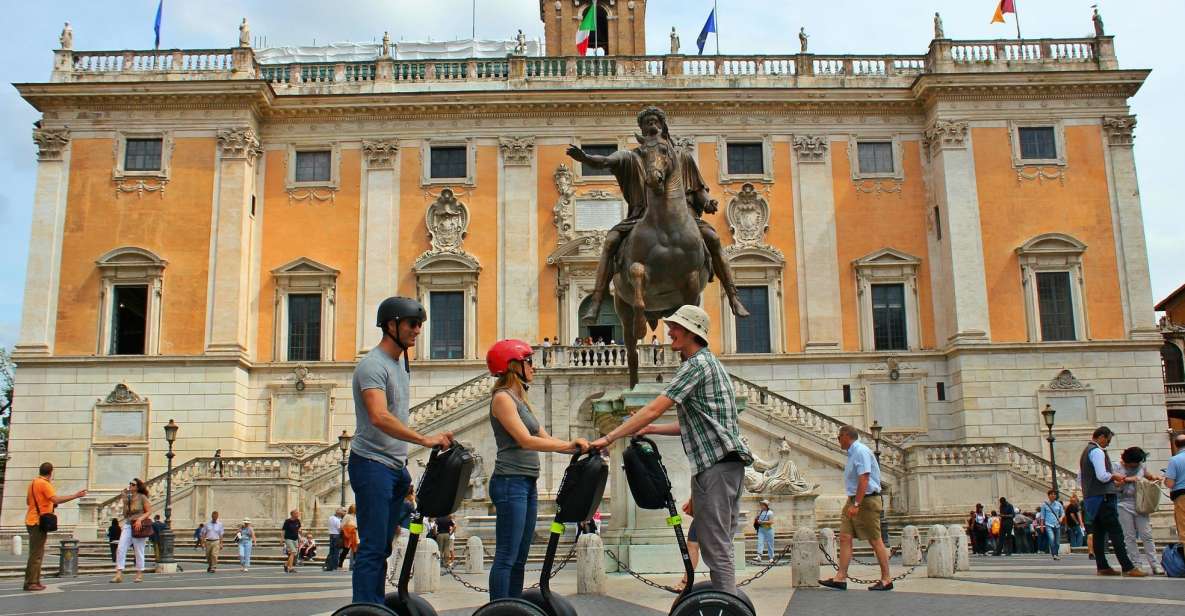
An Ancient Rome Segway tour is a clever match for Rome, mainly because it solves a common problem: you can see a lot, but you don’t have to turn every minute into a slog of walking uphill and uphill again. With a self-balancing Segway, you cover ground faster than on foot while still getting your eyes on the streets, monuments, and viewpoints as you go.
I like that this isn’t just a Colosseum sprint. You’re guided through multiple hills and districts—Rome’s story is different from each angle. One minute you’re looking out over the city; the next you’re hearing how certain places fit into the larger imperial machine.
The other big reason this works is pacing. You get a structured intro to riding, then you ride while the guide talks. That means you’re not constantly stopping to figure out where to go or reading your way through everything. You get the big hits, plus the kind of context that helps details click into place.
You can also read our reviews of more tours and experiences in Rome

Piazza del Gesù meeting point and the Segway training session
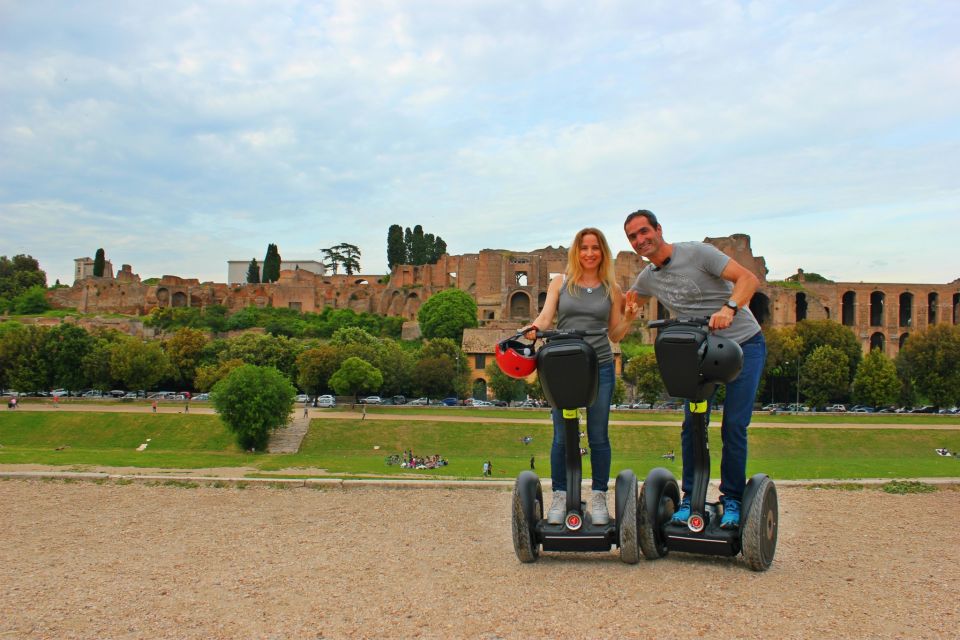
Tours start at Piazza del Gesù, 47. It’s a practical starting spot because you can get oriented around central Rome easily before the gear comes out.
Before the sightseeing, you get a Segway training session. This matters more than most people expect. Segways look futuristic, but the real goal is simple: get you comfortable with slow starts, smooth turning, and controlled stops so you can enjoy the ride instead of worrying about the vehicle.
From what I’ve seen described by riders, guides take first-timers seriously. Nico, for example, is repeatedly credited with patience, keeping people safe, and making the training feel doable rather than stressful. That’s a big quality marker for this kind of tour—because once you trust the Segway, you can actually pay attention to the city.
Palatine Hill: Romulus and Remus with real city views
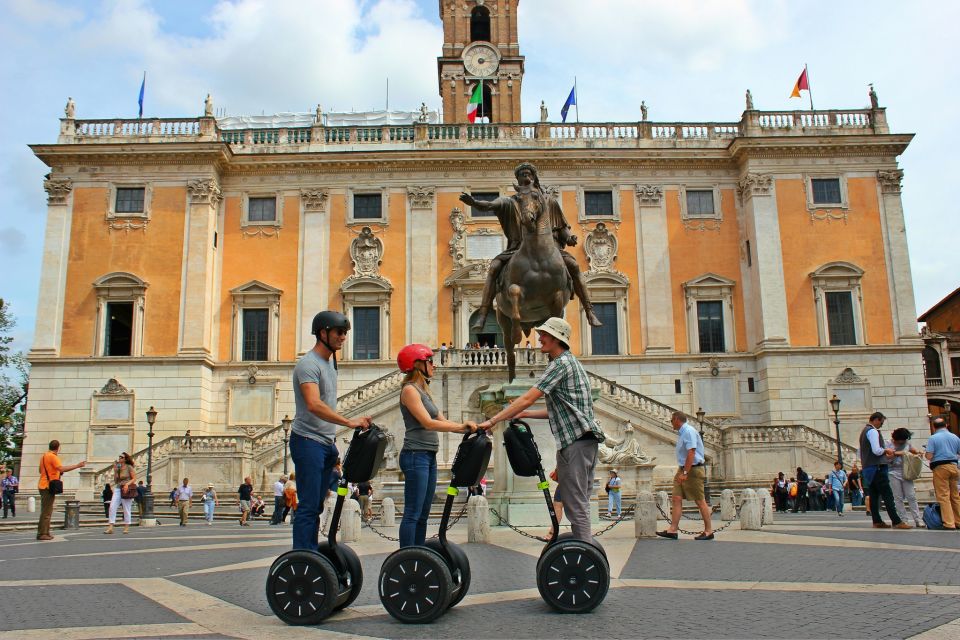
Palatine Hill is one of those places where Rome makes sense fast. It’s a viewpoint, it’s an ancient stage, and it’s tied to the origin myths that everyone references. On this tour, you ride up into that perspective and the guide explains the legend of Romulus and Remus.
What I like about this stop is the mix of story and sightline. You’re not only learning about early Rome—you’re standing where you can sense why myths and politics share the same geography. And when you look out across the city, it’s easier to understand how power clusters around views, routes, and high ground.
If you’re the type who likes photos, Palatine Hill delivers. If you’re more into atmosphere, it also delivers. It’s one of the few places where your brain naturally shifts from sightseeing mode to “I get what this place was for” mode.
Potential drawback to keep in mind: viewpoints and open areas can feel bright and hot in summer. One rider noted the guide finding shade during the tour, which is exactly the kind of practical help that can make this stop more comfortable.
Circus Maximus to Aventine Hill and the Orange Grove
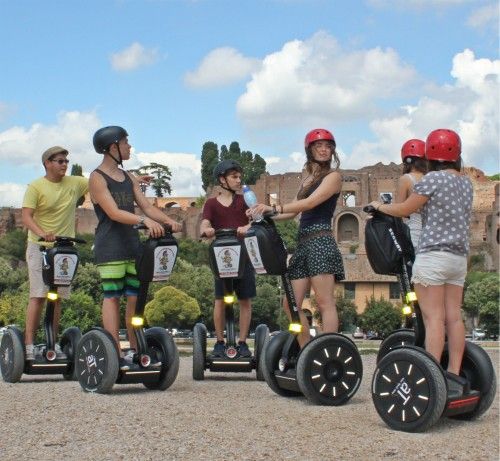
After Palatine, the tour continues through the Rome your guide connects to power and public life. You pass the Circus Maximus, one of the most famous settings for Roman spectacles, and then head toward Aventine Hill.
Aventine Hill has a different vibe than Palatine. It’s quieter-feeling in comparison, and it often makes you slow down visually. On this route, the guide also takes you toward the Orange Grove, adding a calmer pause in the middle of major monument hopping.
Why I like this portion: it breaks the rhythm. Instead of only hitting big-ticket icons, you get a sense of how Rome’s landscape moves—rolling between hills and corridors, with changes in how crowded it feels. Even if you already know the names, you start to see the city as connected, not like a checklist.
Santa Maria in Cosmedin: San Valentino and the Mouth of Truth
One of the most memorable stops is Santa Maria in Cosmedin. This is where the tour turns playful and a little mysterious.
You’ll see historic church architecture tied to the remains of San Valentino—known from Valentine’s Day fame—and you’ll also encounter the marble mask associated with the Mouth of Truth. This mask is described as an ancient lie detector, and that myth adds a fun edge to the visit.
Here’s the practical value for you: this kind of stop keeps the tour from turning into only monuments and stone. Churches like this give Rome texture—religion, legend, and everyday history folded into one place. And the Mouth of Truth moment is the rare sight where people don’t just look; they participate in the story.
Keep expectations realistic. This is still an outdoor, street-based Segway tour, so you’ll want to listen closely for what the guide points out and not treat every stop as a long museum-style visit. You’re there to connect the dots quickly, then move on.




Capitoline Hill and Michelangelo’s Renaissance redesign
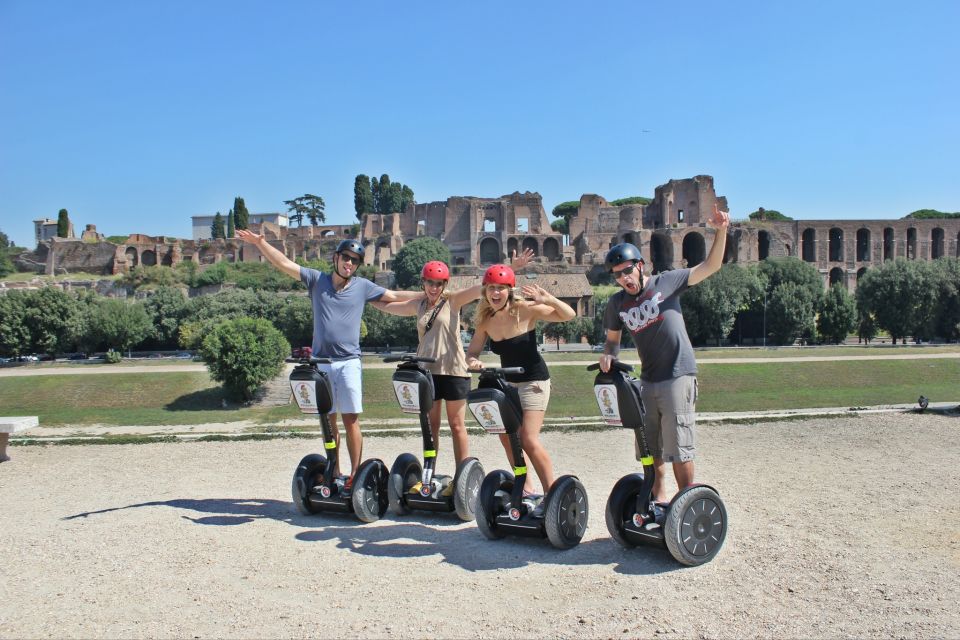
Capitoline Hill is often treated as a key imperial node, and on this tour it gets extra weight. The guide brings you here as the most important of the hills of imperial Rome, and you’ll see how it was redesigned during the Renaissance by Michelangelo.
Even if you’re not a hardcore art-history person, this helps because Michelangelo’s influence isn’t abstract. When you’re moving around the hill and seeing the monument layout, you start to understand why Renaissance Rome felt like a comeback of authority—built on top of older power.
What to pay attention to: look for architectural shaping—the way spaces are organized and how the hill’s prominence shows up in what you can see from where you stand. The guide’s explanations turn the hill from a name into a working stage for Rome’s elite.
Also, because this is a Segway tour, you get an angle on Capitoline Hill that many visitors miss. You aren’t just arriving on foot and leaving; you’re gliding through the relationship between roads, walls, and viewpoints.
Imperial Forum glide: seeing the emperors’ footsteps
After Capitoline Hill, you drive through the Imperial Forum. This is one of the world’s most impressive sight clusters, and the route is designed to connect it with the broader imperial story.
I like that the guide frames it as following in the footsteps of Roman emperors. That phrasing matters because it changes how you look: you’re not only “looking at ruins,” you’re imagining where decisions happened, where ceremonies played out, and how the forum functioned as a centerpiece of control.
Segway travel adds an extra layer here. You can keep your head up more often and see the space as a network of corridors rather than isolated blocks. You still have to stay attentive—your focus is split between vehicle control and the guide’s directions—but it’s a strong way to get orientation.
If you’re prone to photo fatigue, this portion may help you because the route keeps momentum without leaving you stuck walking between far-apart fragments.
Colosseum payoff: a big finish you can actually digest
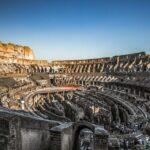
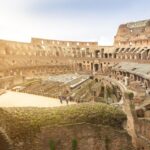
The tour’s final big landmark is the Colosseum. This is the part most people come for, but the real question is whether it feels rushed or meaningful.
On this tour, it tends to work better because you’re arriving with context. You’ve already built a mental map of hills, legends, and imperial spaces. So when you see the Colosseum, it’s not just a famous building; it feels like the last scene of a story you’ve been hearing as you ride.
One more plus: the guide doesn’t just send you past. You’re there with a living explanation from start to finish, so you can ask yourself what you’re seeing rather than only wondering when you’ll get back to your hotel.
Eco-friendly, fast, and worth it for $100
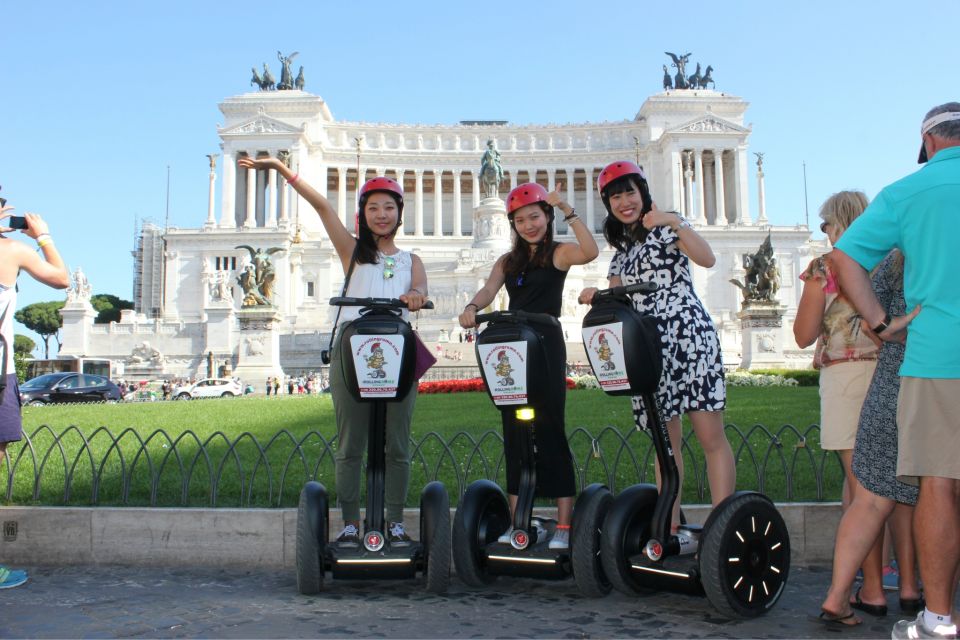
At about $100 per person for roughly 3 hours (some descriptions list about 3.5 hours depending on the exact pace and timing), you’re paying for three things:
- Guided interpretation, not just transportation
- A Segway training session included
- Multiple major sites in one half-day rather than one landmark at a time
For value, that’s the key. If you’ve got limited time in Rome, this format compresses a lot of top sights into one organized outing. Even if you’d love to walk it all someday, Rome’s distances and terrain can make half a day disappear fast.
Also, the eco-friendly pitch isn’t just marketing language here. When you’re gliding through streets instead of constantly stopping to climb and walk, you reduce the “wear down” effect. You can still feel like you explored, but you’re not turning every moment into a physical test.
Who this Ancient Rome Segway tour suits best
This is a great fit if you:
- Want a practical way to see imperial highlights without spending your whole day walking
- Like guided storytelling tied to where you are
- Are traveling with limited time and want strong coverage of the Colosseum, Palatine Hill, and Capitoline Hill
It may be less ideal if you:
- Feel uneasy with balance or motor-coordination tasks (even with training)
- Want a slow, long-stop museum experience
- Are sensitive to outdoor conditions, since you’ll be exposed while riding between stops
Practical comfort tips so the ride feels easy
A few things help you enjoy the Segway portion and the hill sights afterward:
- Wear comfortable shoes with grip. Your day has both riding and short pauses to look and photo-stop.
- Bring sunscreen and water in warm weather. Palatine Hill viewpoints can get bright.
- If there’s rain, plan for damp streets and slick surfaces. Your guide will handle safety steps, but your comfort depends on conditions.
- Expect a mix of listening and riding. Keep your eyes up when moving and let the guide do the heavy lifting on what matters at each stop.
Also keep in mind how the day can change. One rider shared that during Holy Week there were street closures, and the guides pivoted so the tour still landed well. That’s a sign of operational skill, not just a fixed script.
Should you book this Ancient Rome Half-Day Segway Tour?
I’d book this if you want a high-impact way to experience Imperial Rome with actual context, not only landmarks. The combination of Segway training, small group size (limited to 8), and a route that connects Palatine Hill, the Mouth of Truth, Capitoline Hill with Michelangelo’s work, the Imperial Forum, and the Colosseum makes it a strong use of a half day.
Skip it only if balance is a concern or if you strongly prefer slow walking tours with long museum-style dwell times. For most people, though, this is a smart compromise: you get major sites, a clear guide voice in English, and the fun factor of gliding through history instead of just standing still.
If you’re the kind of visitor who wants Rome to feel alive quickly, this is one of the more efficient ways to do it.
FAQ
How long is the Ancient Rome Segway tour?
The tour runs for about 3 hours.
What is the price per person?
It costs $100 per person.
Where does the tour start?
Tours start at Piazza del Gesù, 47.
Is the tour guided in English?
Yes. The live tour guide speaks English.
Is there Segway training included?
Yes. A Segway training session is included before you start riding.
How many people are in the group?
It’s a small group limited to 8 participants.
What sights are included on the route?
You’ll see major imperial-era sites such as the Colosseum, Palatine Hill, Capitoline Hill, and the Imperial Forum, plus stops including Santa Maria in Cosmedin and the Mouth of Truth.
Does the tour cover Rome’s hills?
Yes. It focuses on the 7 Hills of Rome, including Palatine Hill, Aventine Hill, and Capitoline Hill.
What is the cancellation policy?
Free cancellation is available up to 24 hours in advance for a full refund.
Does the booking offer pay later?
Yes. You can reserve now and pay later.