REVIEW · ROME
Pantheon and Jewish Ghetto Tour
Book on GetYourGuide →Operated by QUO VADIS TOUR · Bookable on GetYourGuide
The Pantheon and the Ghetto tell Rome’s story in two very different keys. This tour strings them together with skip-the-line Pantheon entry and a guided walk through the historic Jewish Ghetto, where art, religion, and politics show up in the streets. I especially like the practical setup: you get headsets so you can keep pace, and the guide helps you understand what you’re seeing. One drawback to keep in mind is that timing and guide reliability can be inconsistent, based on past bookings, so arriving a little early and staying flexible helps.
This is a live guide experience in English or Spanish, designed for a walk-first visit where you’ll connect monuments to the people who shaped them. You’ll start near Piazza della Rotonda, spend real time at the Pantheon, then move outward to key piazzas and along the Ghetto lanes. The walking format means it’s not a good match if you have mobility limits or use a wheelchair.
If you want the quick-hit Rome highlights without getting lost in facts, this one has a clear rhythm. Just be sure you meet the Pantheon dress rules so you’re not turned away at the door, because that part is strict.
In This Review
- Key Points Worth Knowing
- Entering the Pantheon: how the dome and oculus pull you in
- Inside the Pantheon: what the guide should help you notice
- Raphael’s tomb and the kings: art and authority in one stop
- Piazza della Minerva and Largo di Torre Argentina: Rome’s past in fragments
- Piazza Mattei to Via del Portico d’Ottavia: stepping into the Jewish Ghetto
- Portico of Octavia: a fitting ending with lasting resonance
- Value for $65: what this tour does well for the money
- Practical tips: dress code, walking comfort, and hearing your guide
- Who should book this tour (and who should skip it)
- Should you book the Pantheon and Jewish Ghetto Tour?
- FAQ
- How long is the Pantheon and Jewish Ghetto tour?
- Is skip-the-line entry included?
- What’s the tour language?
- Where does the tour start and end?
- What should I bring and wear?
- Is this tour suitable for wheelchair users or people with mobility impairments?
Key Points Worth Knowing
- Skip-the-line Pantheon tickets save time when lines are long.
- Headsets help you hear the guide clearly while you’re moving.
- Raphael’s tomb and the kings’ resting places connect art and power in the same building.
- Piazza della Minerva and Largo di Torre Argentina show Rome’s past in surviving fragments.
- Portico of Octavia is a strong finishing moment tied to the Jewish community’s enduring presence.
- Dress code matters at the Pantheon, or entry can be refused.
Entering the Pantheon: how the dome and oculus pull you in
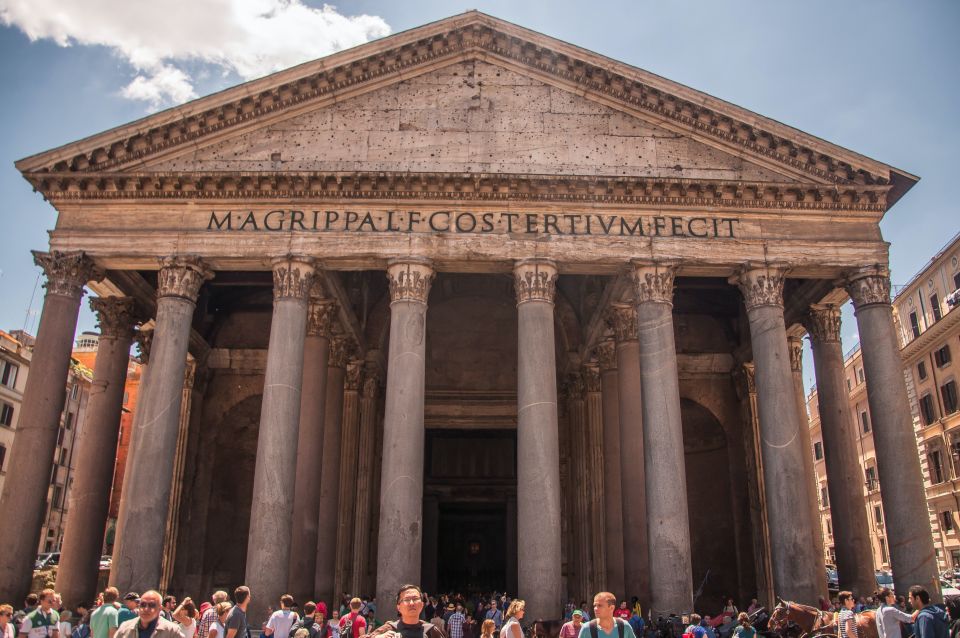
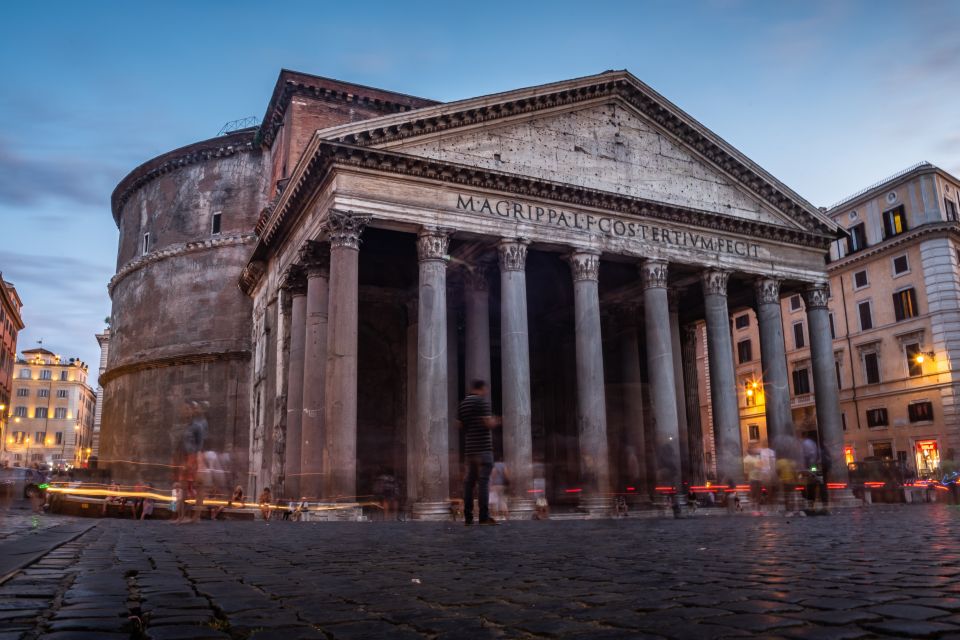
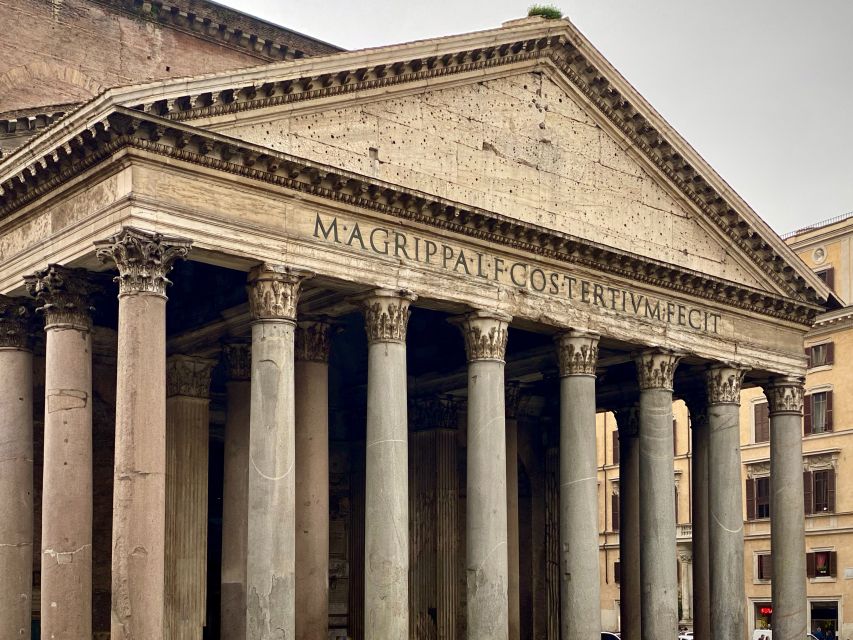
Rome can be loud and chaotic. The Pantheon is different because it’s designed to slow you down without asking permission. From the outside, it looks like a single massive form, but the moment you step in, you understand why it’s still one of the most respected engineering feats from Ancient Rome.
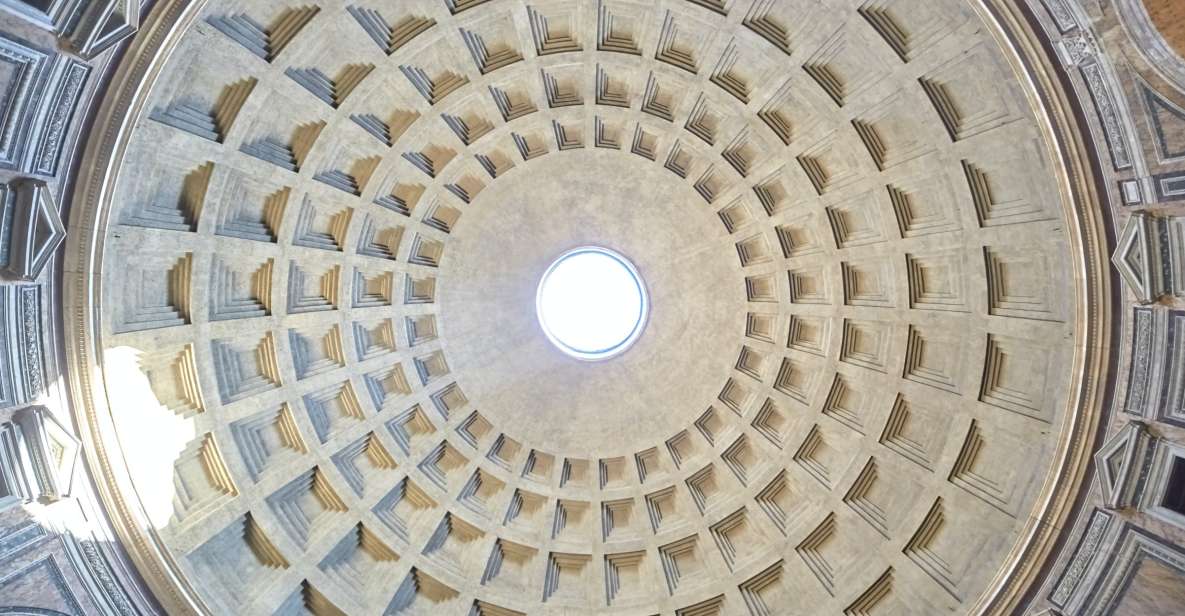
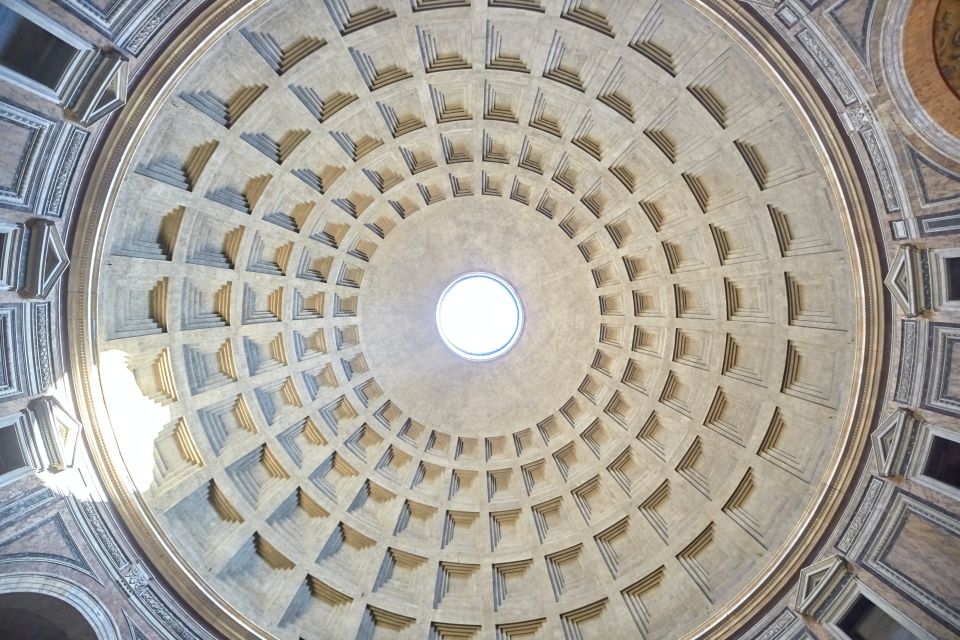
The tour starts with the Pantheon and includes skip-the-line tickets, which is the right kind of convenience here. The building is famous enough that waiting around defeats the purpose of going early in the day—or wherever your schedule lands. Once inside, you’ll see what the Pantheon is best known for: the grand dome and the central oculus, which pours in daylight and changes the room as the minutes pass.
A good guide matters at the Pantheon, because it’s easy to get stuck at the photo spot. With a guide, the focus shifts from postcard angles to meaning: this structure began as a temple honoring all gods, and today it functions as a notable burial site for well-known figures.
You can also read our reviews of more tours and experiences in Rome.

Inside the Pantheon: what the guide should help you notice
The Pantheon works on two levels at once: it’s a spiritual space, and it’s a master class in structure. The oculus isn’t just a neat feature—it’s the lens for the interior’s whole atmosphere. When light hits the floor and walls, it highlights the scale of the room and makes the dome feel even higher.
As you move through, your guide should connect the dots between architecture and politics. In Rome, religion and government weren’t separate worlds, and the Pantheon reflects that overlap. It’s still an active public site, which is part of why the tour can be affected by conditions like masses, concerts, or other events that may change service timing.
You’ll also get the practical benefit of walking with a group that knows where to look. That matters here because the Pantheon is one of those places where your brain wants to scan everything at once. A guide helps you slow down in the right spots.
Raphael’s tomb and the kings: art and authority in one stop
This tour calls out two particularly meaningful things inside the Pantheon: the tomb of Raphael and the resting place of past Italian monarchs. That pairing is more than trivia. It’s a clue to how Rome keeps repurposing the past to shape the present.
Seeing Raphael’s tomb in a Roman monument built around ancient worship changes the way you think about continuity. Raphael represents the Renaissance, yet his final resting place sits inside an ancient framework that survived centuries of political shifts. It’s a reminder that Rome doesn’t just preserve history. It reassigns it.
The monarchs’ presence adds another layer. In one building, you’re looking at layers of belief, then layers of cultural prestige, then layers of governance. If you like sites where you can feel the power story underneath the art story, this is a big reason the Pantheon stop is worth your time.
Piazza della Minerva and Largo di Torre Argentina: Rome’s past in fragments
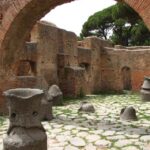
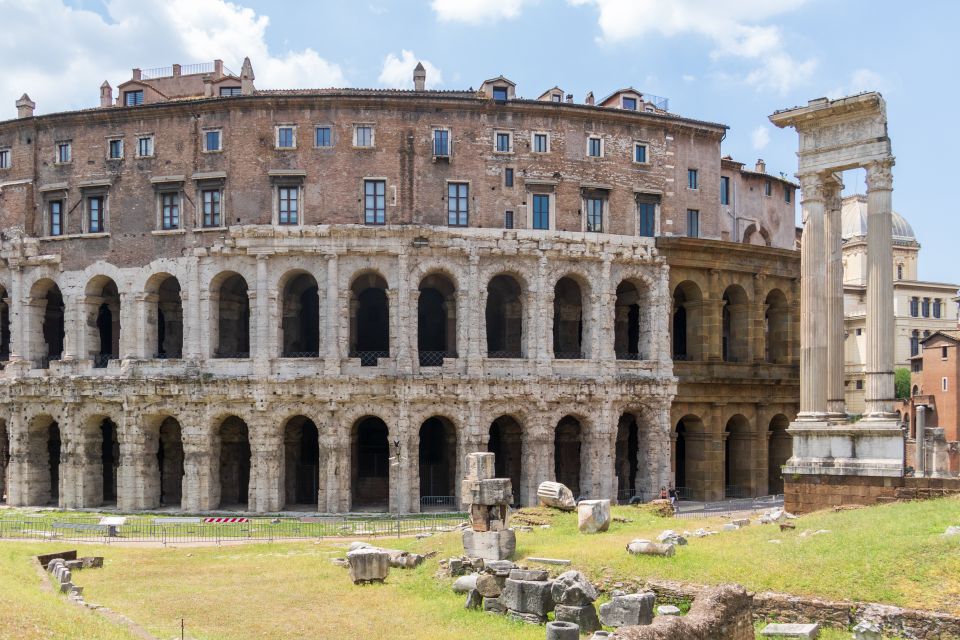
After the Pantheon, the route shifts from the monumental certainty of one building to the atmosphere of surviving pieces. You’ll walk through Piazza della Minerva and head to Largo di Torre Argentina, where remnants of Rome’s past remain visibly preserved.
This is a smart move in a short tour. Instead of trying to “cover Rome,” it gives you a taste of how the city works: ancient spaces often live under modern routines. You’re not just seeing ruins as empty stones. You’re seeing locations that still sit in the flow of daily life, which makes the history feel less like a museum label and more like a layer you can trace with your feet.
The downside is simple: these areas can feel more observational than dramatic. If you’re the kind of traveler who wants one big wow moment after another, you might need the guide’s framing here to keep it from feeling like waiting for the next highlight.
Still, in a two-hour-style experience, these “in-between” stops are valuable. They teach you how Rome keeps older worlds close to the surface.
Piazza Mattei to Via del Portico d’Ottavia: stepping into the Jewish Ghetto
Then the tour turns into a different kind of travel. The vibe shifts from ancient Roman fragments to a neighborhood story with deep historical weight. You’ll reach Piazza Mattei, and then walk along Via del Portico d’Ottavia, described as the heart of the historic Jewish Ghetto.
Here’s what I like about a guided approach: the Ghetto isn’t just a location on a map. It’s a place shaped by community life, restrictions, and resilience. A good guide helps you interpret what you’re seeing without turning it into a list of dates. You get cultural and political context, not only architectural facts.
Along the way, you’re likely to pick up how the Jewish community’s presence became part of the city’s story in both visible and complicated ways. The streets don’t announce that history in one obvious way, so your guide’s explanations become the difference between a quick walk and a meaningful one.
Also, bring the right attitude. This portion is best if you’re ready to pay attention. You won’t get value from zoning out, because the whole point is to understand connections between religion, politics, and everyday life.




Portico of Octavia: a fitting ending with lasting resonance
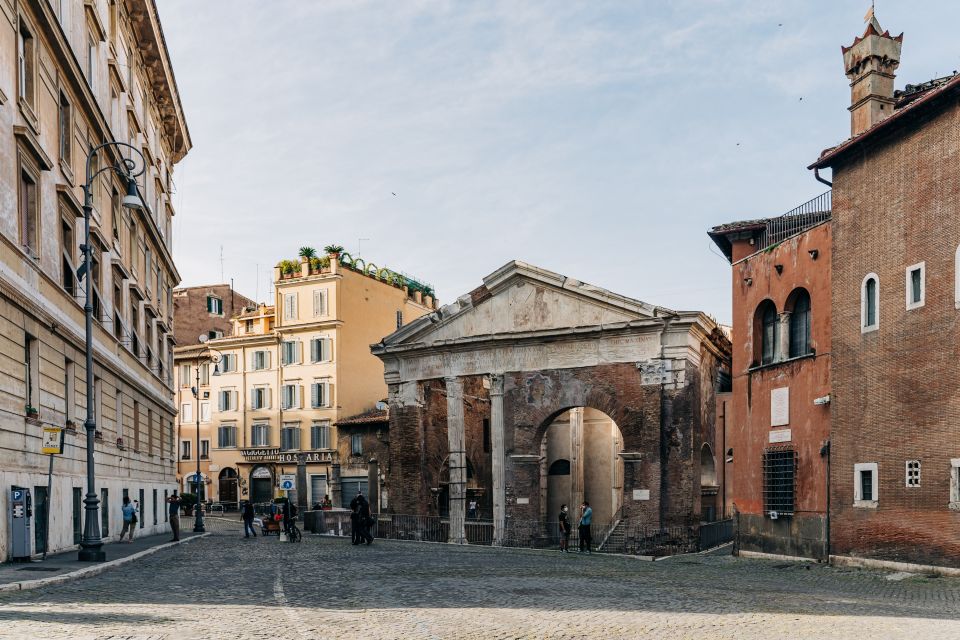
The tour wraps up in front of the Portico of Octavia, which the experience frames as a monument reflecting the enduring cultural legacy of Rome’s Jewish community. Ending here works well because it ties your last steps to a specific, physical structure—something you can remember after the walking is done.
Portico of Octavia is not the kind of stop that only looks good for a photo. It gives the sense that Rome’s old layers are still in conversation with one another. You’re leaving a route that moved from the Pantheon’s grand ancient engineering to the Ghetto’s community history. Ending at a monument makes the contrast feel intentional instead of random.
If you’re trying to get the biggest value out of a limited time in Rome, this kind of closure helps. You don’t just collect places; you get a story arc: Rome’s universal religious symbolism, then Renaissance and royal memory, then community survival and identity in the urban fabric.
Value for $65: what this tour does well for the money
At $65 per person for a roughly 2-hour guided experience, the value is mostly in how the tour reduces friction and adds interpretation. The big cost saver is skip-the-line tickets to the Pantheon. If you’ve ever waited at major Roman attractions, you know time is the hidden price.
The tour also includes headsets, which is a real quality-of-life feature. Without headsets, it’s common to miss parts of a guide’s explanation, especially when you’re dealing with crowds around famous landmarks. With headsets, you can keep up and still enjoy what’s in front of you.
The second value driver is topic focus. Art, religion, and politics are not random themes here—they’re the key connections between what you see at the Pantheon and what you see in the Jewish Ghetto. For the price, you’re not just buying access to two sites. You’re buying a guided explanation that helps you make sense of why these places matter together.
One timing note: the experience is listed as 2 hours, but schedules can appear as longer in some listings. If your day is tight, I’d still pick a time that gives you buffer before and after, because closures or schedule changes can affect Pantheon access due to events.
Practical tips: dress code, walking comfort, and hearing your guide
Before you go, plan around the Pantheon’s strict entry rules. Access is only permitted with suitable attire—no hemline above the knees, no vests, and no sleeveless tops for both men and women. If you show up in shorts or a sleeveless shirt, you risk being refused entry. The same logic applies to short skirts.
Comfort matters too, because this is a walking experience across multiple stops. Wear comfortable shoes and dress for standing and moving in central Rome streets.
To get the most out of the guide, remember the headsets are included. Put them on early and adjust them right away. It’s the easiest way to stay focused on the explanation instead of constantly asking what you missed.
Finally, keep your expectations realistic about scheduling. The Pantheon can have anticipated closures, postponed openings, masses, concerts, or other events that can change how the visit plays out. If you’re booking around a very fixed itinerary day, have a backup plan for that time window.
Who should book this tour (and who should skip it)
This tour fits best if you want a time-efficient introduction to Rome that still includes serious context. I think it’s a great match for couples, small groups, and solo travelers who don’t want to spend their limited hours figuring out what to prioritize.
You’ll likely enjoy it if you care about connections—how architecture ties to belief, and how community history ties to the political story of a city. The Pantheon stops, especially with Raphael and the monarchs mentioned in the experience, are a strong lure for art and history lovers.
Skip it if mobility is an issue. The experience is marked as not suitable for people with mobility impairments and wheelchair users. Also, if you’re traveling with young kids, make sure you can meet the ID and dress requirements, because entry rules are enforced.
Should you book the Pantheon and Jewish Ghetto Tour?
I’d book it if you want two of Rome’s most famous landmarks handled in a way that helps you understand them, not just photograph them. The skip-the-line Pantheon entry, headsets, and the combined focus on art, religion, and politics make the experience feel like a smart use of a short visit.
I’d be cautious if your schedule is unforgiving. Past experiences have included instances of late or missing guides and timing mishaps, including a religious holiday mismatch in one case. If you book, build a little buffer into your day, arrive early for the meeting point that’s listed for your specific option, and keep your expectations flexible in case the Pantheon faces event-driven schedule changes.
If you’re ready to walk, follow the guide’s lead, and respect the dress rules, this is the kind of tour that can turn iconic sights into a clearer story of Rome.
FAQ
How long is the Pantheon and Jewish Ghetto tour?
The duration is listed as 2 hours.
Is skip-the-line entry included?
Yes. Skip-the-line tickets to the Pantheon are included.
What’s the tour language?
The live guide offers Spanish and English.
Where does the tour start and end?
Meeting point may vary depending on the option booked. The tour returns to Piazza della Rotonda, 4.
What should I bring and wear?
Bring a passport or ID card. Wear comfortable shoes. At the Pantheon, attire must be suitable: no hemline above the knees, no vests, and no sleeveless tops.
Is this tour suitable for wheelchair users or people with mobility impairments?
No. It is not suitable for people with mobility impairments and wheelchair users.