REVIEW · ROME
Rome: Murder Mysteries of Rome Guided Walking Tour
Book on GetYourGuide →Operated by Carpe Diem Tours · Bookable on GetYourGuide
Rome gets a second personality after dark. This guided Murder Mysteries of Rome walk turns familiar streets into a trail of executions, crimes, and dark rumors, all threaded through real landmarks. I love the way the route keeps the city moving at night without the heat-and-crowd grind, and I especially like how the guide connects big-name places to the street-level stories that explain why certain spots feel so haunted.
There’s one catch: the tour leans into gruesome themes. If human-bone décor and execution-style stories make you squirm, you’ll want to gauge your comfort level before you book.
In This Review
- Key things I’d plan around
- Rome at night: why this murder mystery walk works
- Meeting in Campo de’ Fiori and walking toward Castel Sant’Angelo
- Stop-by-stop: what you’ll see and why each spot matters
- Magia a Campo de’ Fiori (starting point)
- Piazza Farnese
- Via del Mascherone & Vicolo dei Venti
- Ponte Sisto
- Fountain of the Mask
- Chiesa di Santa Maria dell’Orazione e morte (bone chapel energy)
- Via di Monserrato
- Santa Maria in Monserrato degli Spagnoli
- Via Giulia
- Via dell’Arco dei Banchi
- Castel Sant’Angelo (the night’s endpoint landmark)
- Group size, hearing the guide, and pacing in the dark
- Price and value: what $28 really buys (and what it doesn’t)
- Weather and comfort: the real-life packing checklist
- Who should book this murder mystery tour, and who should skip it
- Should you book Murder Mysteries of Rome with Carpe Diem Tours?
- FAQ
- How long is the Rome Murder Mysteries of Rome guided walking tour?
- Where do I meet the guide for this tour?
- Where does the tour end?
- What is the group size?
- Is the tour in English?
- Does this tour run in bad weather?
- What should I bring?
- How much does it cost?
- Is transportation included?
- Do I skip the line anywhere during the tour?
Key things I’d plan around
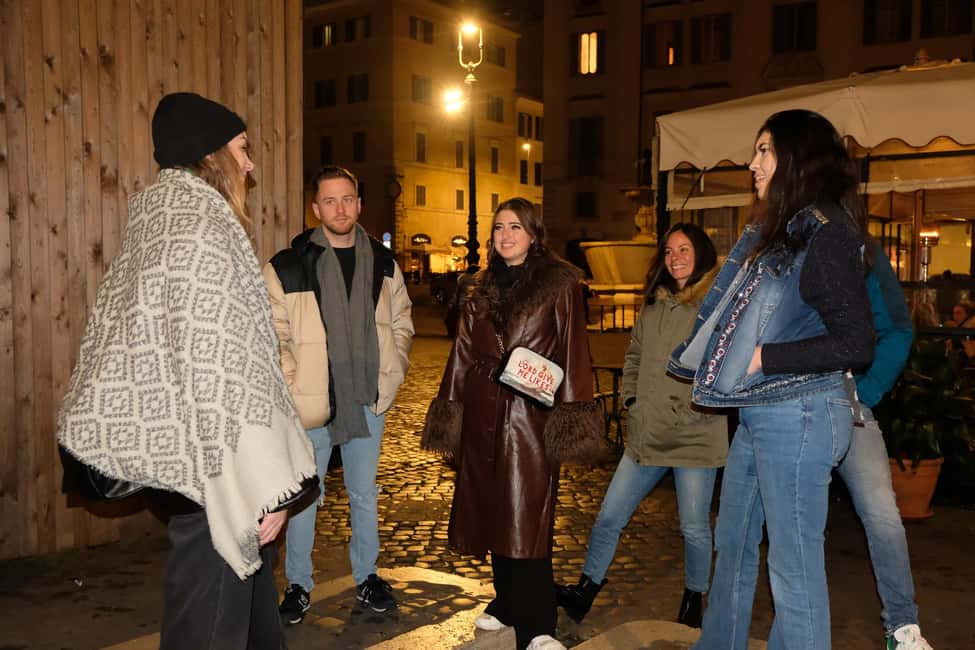
- A small group (20 max) keeps questions possible and the walk from feeling like a cattle line
- Moonlight timing helps you enjoy central Rome with fewer crowds and less daytime heat
- Real landmark stops such as Ponte Sisto and Via Giulia make the stories feel anchored, not random
- Guides with sharp storytelling skills often focus on detail and pacing that work well for a moving group
- Night + narrow streets means comfortable shoes aren’t optional
Rome at night: why this murder mystery walk works
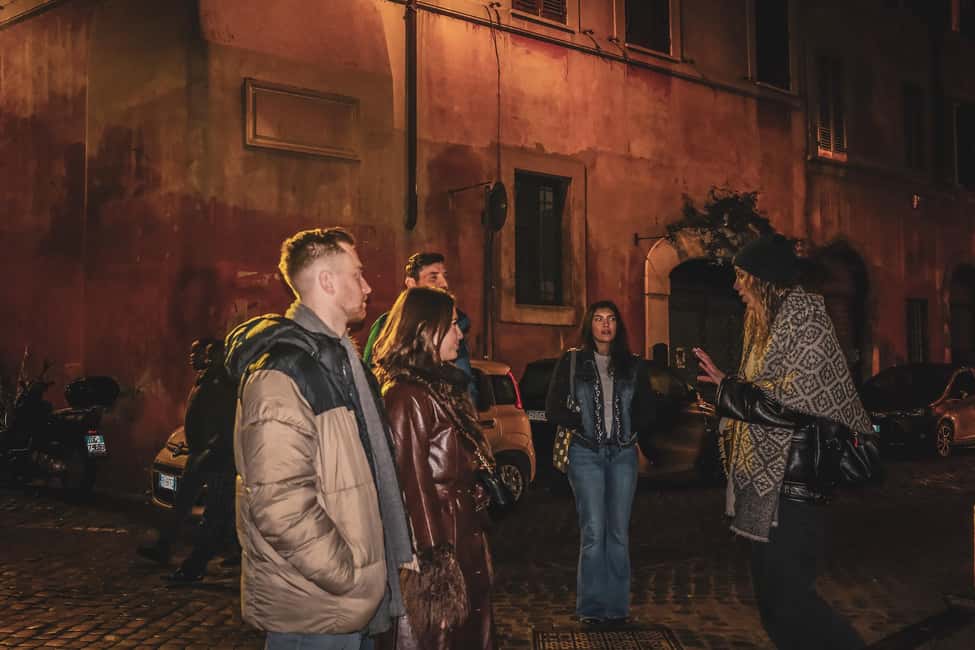
Rome in daylight can feel like a checklist. After dark, the city changes the rules. This tour leans into that shift on purpose. You’ll be walking through the center as the atmosphere turns cinematic, with a guide leading you from square to chapel to bridge and back into the kind of alleys where a story sticks.
What makes this experience practical as well as fun is the time window. It’s built for avoiding the worst heat and crowd crush, which is a real win in Rome. And because it’s only about 2 hours, it’s easy to fit into an evening plan without wrecking your next day.
Then there’s the storytelling style. Guides on this walk often steer the group with clear pacing, and you may also get audio help (people point out that a radio/transmitter system can make the guide easier to hear in louder spots). For a walking tour, hearing the guide matters as much as what they say.
You can also read our reviews of more walking tours in Rome
Meeting in Campo de’ Fiori and walking toward Castel Sant’Angelo
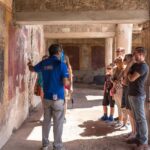
You start in Campo de’ Fiori, in the middle of the square. Look for the guide holding a yellow flag in front of the Monumento a Giordano Bruno statue. It’s a straightforward meeting point, which you’ll appreciate when it’s dark and you’re tired from daytime sightseeing.
From there, the walk drifts through central Rome with a steady rhythm: each stop is typically short—around 10 minutes guided—so the tour keeps momentum. That can be a plus if you like variety. It also means you shouldn’t expect to linger forever at any one location; you’re there to connect clues, not to study architecture like a professor.
The tour ends back at the meeting point, even though the route works its way toward Castel Sant’Angelo as a finishing landmark. So plan for a full evening walk, not a quick stroll that stays in one neighborhood.
Stop-by-stop: what you’ll see and why each spot matters
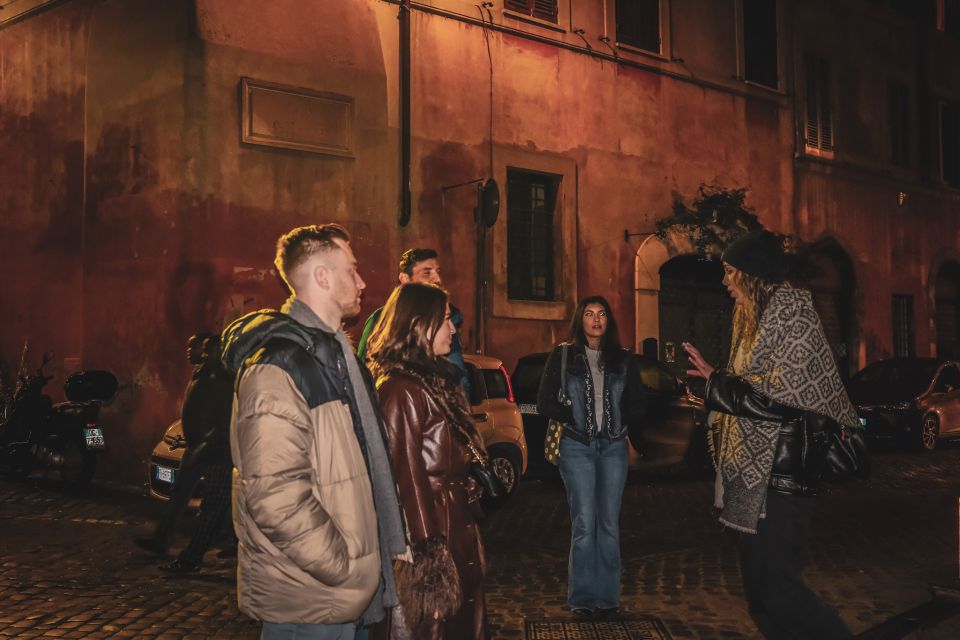
Below is what you’ll encounter in the order you’ll likely move through it. The stories behind these places are the real reason they’re included.
Magia a Campo de’ Fiori (starting point)
Campo de’ Fiori is an easy place to begin because it’s recognizable and central. Starting here also sets the tone: the guide launches the night with the kind of “this city used to do things you can’t unlearn” framing that makes the rest of the tour click.
One practical tip: arrive a few minutes early. In the square, it’s dark quickly, and the yellow-flag meet-up is your anchor.
Piazza Farnese
Piazza Farnese is a calmer, more open pocket that helps you regroup as you switch from one story to the next. Your guide will use the surrounding architecture and street lines to set up what comes next—often linking place names and street turns to the darker events associated with the area.
This is the kind of stop where you’ll benefit from paying attention to directions. The guide’s explanations tend to make small details feel intentional.
You can also read our reviews of more guided tours in Rome


Via del Mascherone & Vicolo dei Venti
Now you move into the tighter lanes. Via del Mascherone and Vicolo dei Venti are the sort of streets that make you slow down naturally. For a murder-mystery tour, narrow passages are perfect because they mirror how rumors and stories spread—through side streets, corners, and sudden turns.
Drawback to note: narrow roads at night can feel a bit cramped in a group. Good shoe traction helps, and try to keep an easy walking pace so you’re not constantly stopping.
Ponte Sisto
A bridge is more than a crossing on this walk. Your guide uses Ponte Sisto as a narrative hinge—where events feel public, visible, and impossible to ignore. Bridges also give you the benefit of a small pause, with a view that helps you orient yourself in Rome.
If you’re the type who likes learning why something became famous, this is a strong moment. You get a location plus a story logic.
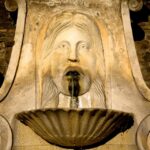
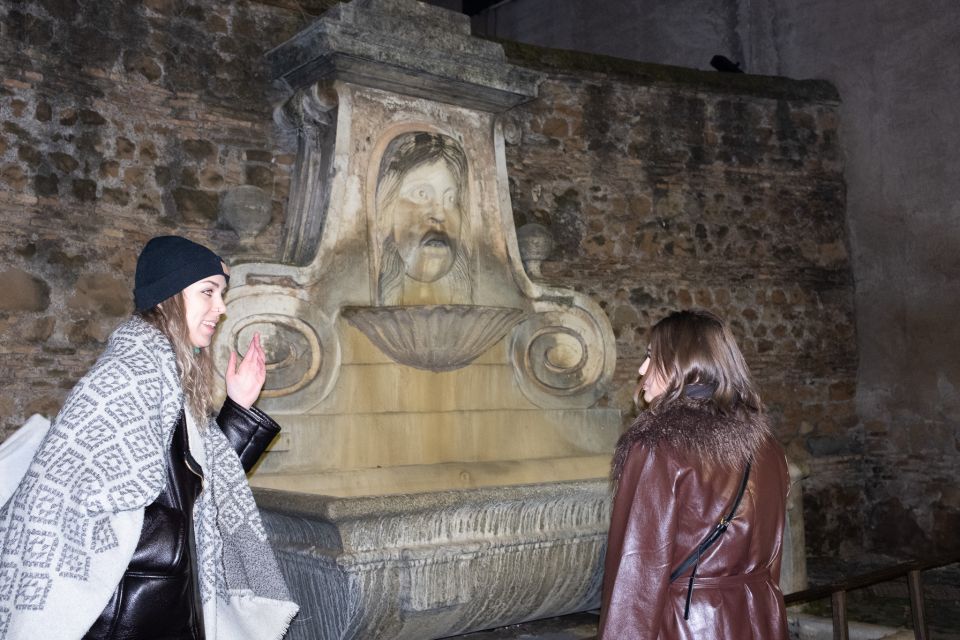
Fountain of the Mask
This stop adds a visual clue that ties the tour together. Instead of bouncing between unrelated legends, the guide uses the fountain and the symbolism around it to keep the theme consistent.
Even if you usually skip fountains, on this tour you’ll look at it like evidence.
Chiesa di Santa Maria dell’Orazione e morte (bone chapel energy)
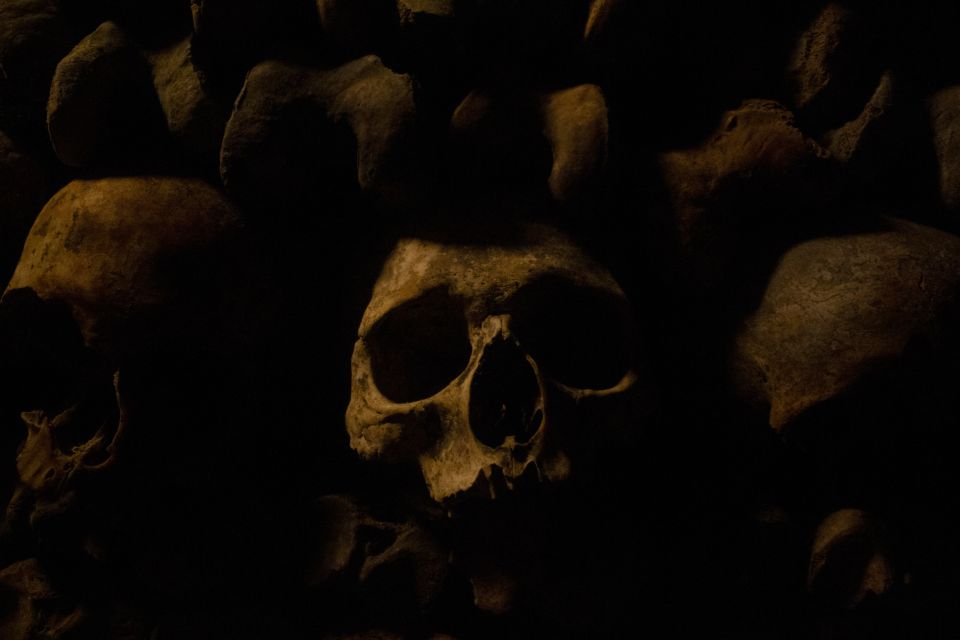
This is the stop that sets expectations clearly. The tour includes a chapel decorated with human bones. That means the vibe changes from spooky storytelling into something more visceral.
So if you want “creepy” without the physical details, you should mentally brace for this moment. If you’re comfortable with macabre history, this stop is often a highlight because it makes the stories hard to dismiss as just folklore.
Via di Monserrato
Via di Monserrato keeps the walking momentum while shifting to new themes tied to the city’s past. It’s the kind of street where the guide can connect the dots between what you’re seeing right now and the bigger pattern of how Rome handled crime, punishment, and reputation.
This is a good stop for asking questions if you feel like you missed a detail earlier.
Santa Maria in Monserrato degli Spagnoli
This church stop adds a quieter, more reflective beat to balance the darker intensity. Churches in Rome often feel like memory containers, and your guide tends to use that feeling to bring the story into focus.
If you like historical context tied to a specific building, this is where you’ll notice the “why this place, why here” framing.
Via Giulia
Via Giulia is where the tour starts to feel like a guided tour and not only a ghost story walk. The guide uses Via Giulia to tie names and streets to the darker narrative threads moving through central Rome.
You’ll likely leave this part of the route with a better sense of how the city’s layout helps certain stories travel—literally from street to street.
Via dell’Arco dei Banchi
Another street stop, another set of story connections. Via dell’Arco dei Banchi gives you a chance to look at Rome like a map of events: passageways, corners, and structures that can carry meaning long after the original incident.
This is where you’ll appreciate pacing. It’s easy to get tunnel vision on one landmark, but the guide keeps you scanning.
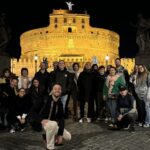
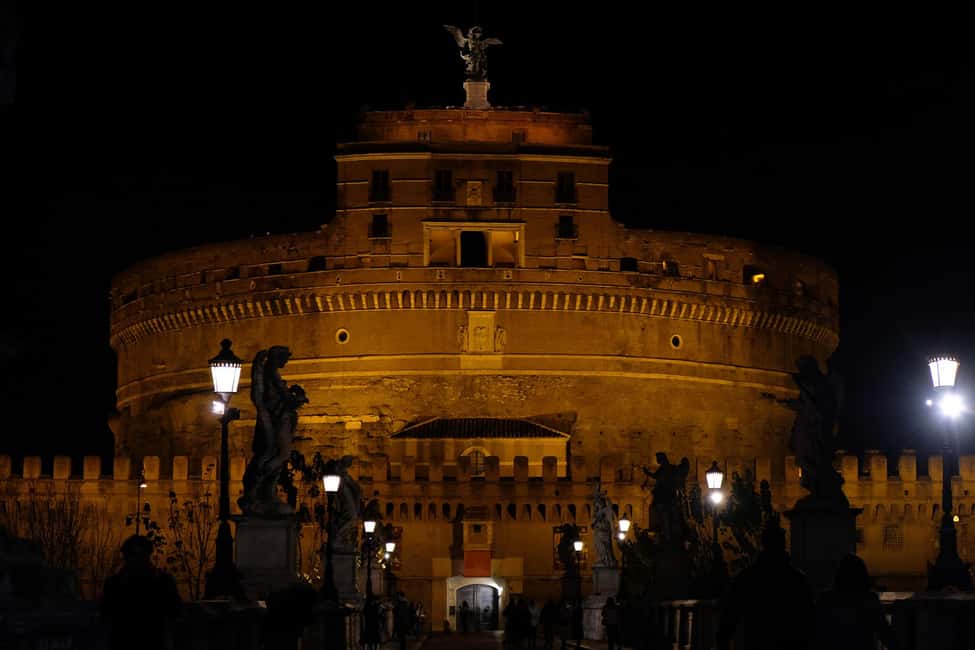
Castel Sant’Angelo (the night’s endpoint landmark)
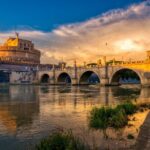
Castel Sant’Angelo works well as a closing image. Even from a distance, it’s one of those landmarks that instantly raises the stakes in a murder-and-mystery story. Your guide likely uses it to cap the evening with a sense of scale—Rome’s dark past isn’t small.
Again, the tour ends back at the meeting point, so you still have a finish walk after the final big visual.
Group size, hearing the guide, and pacing in the dark
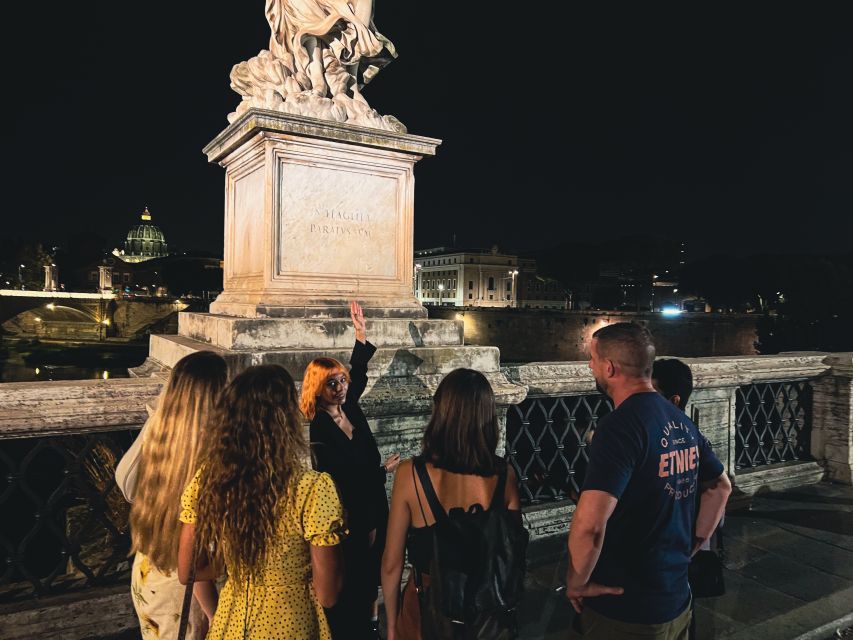
The biggest practical advantage here is the small group size (20 people max). In Rome, that matters. A larger crowd can turn a walking story into noise. Here, the guide has enough control to keep the group together and still speak clearly.
Many people also call out that audio support—often described as audio transmitters or a BTH/radio system—helps in louder or crowded pockets. Even if you think you hear fine, remember: you’re outside at night, and street sounds are real.
As for pacing, expect frequent short guided segments. That’s ideal if you want a fast, story-heavy evening. If you prefer slower museum-style time, you might wish some stops had more minutes. Still, the format suits the theme: the city moves, and the stories move with it.
Price and value: what $28 really buys (and what it doesn’t)
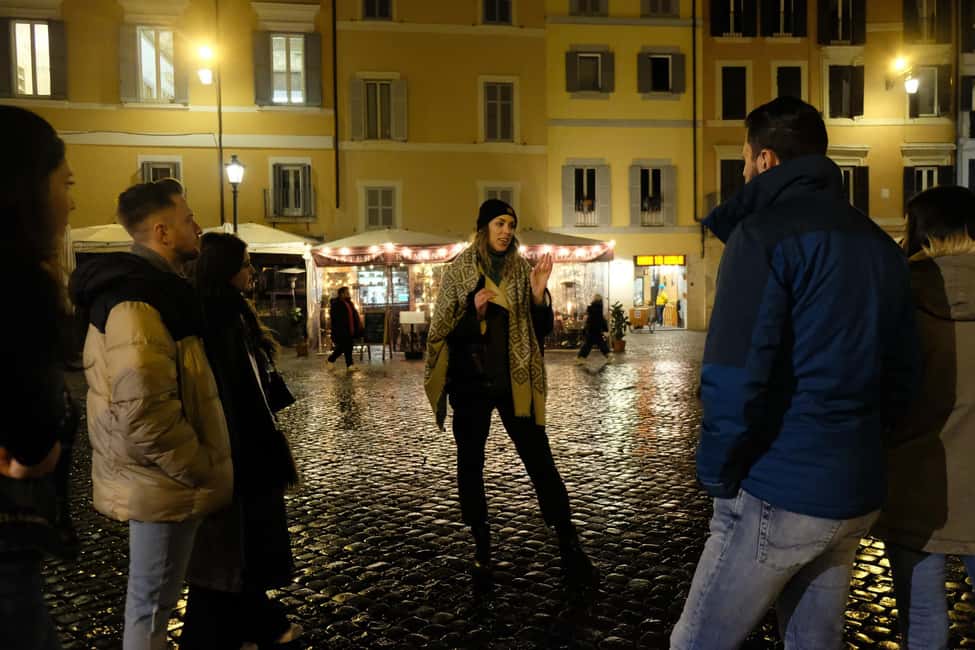
At $28 per person for roughly 2 hours, you’re paying for three things:
- a trained local guide who can tie locations to the darker narrative
- a night-focused route that avoids the worst crowd and heat problems
- a small group experience with guided stop visits (plus the potential line-skipping benefit via separate entrance)
What you don’t get is transportation. So you’ll want to plan your own way to Campo de’ Fiori and back. The upside is you can build your evening around nearby dinner or a gelato stop without juggling a bus schedule.
Also, the skip-the-line via a separate entrance detail can be meaningful at churches or other sites where waiting time can eat up an evening. On a short tour, saving even 15–20 minutes can be the difference between enjoying the walk and feeling rushed.
Weather and comfort: the real-life packing checklist

This tour runs rain or shine, so plan clothing that handles damp streets. Comfortable shoes matter a lot, not only for walking distance but for wet cobblestones and uneven stone paths at night.
I’d also layer. Rome nights can feel cool once the sun drops, and guided walking means you can’t rely on long indoor breaks. A light rain jacket beats getting cold and grumpy halfway through Ponte Sisto.
Who should book this murder mystery tour, and who should skip it
You’ll love this tour if:
- you enjoy true-crime energy and spooky historical stories
- you want a different angle on familiar central sights like Campo de’ Fiori, Ponte Sisto, and Via Giulia
- you like night walking with a small group and a guide who can keep momentum
You might want to reconsider if:
- you’re sensitive to graphic or gruesome themes, especially given the chapel decorated with human bones
- you only want art-and-views Rome sightseeing and prefer gentle stories
One more note: the guides rotate. People specifically mention names like Darina, Domenica, Kat, Maham, Csenge, Paula, Delilah, Dalila, and Ivana. If you spot your guide listed closer to booking time, it can be worth choosing the session that matches the storytelling style you’re hoping for.
Should you book Murder Mysteries of Rome with Carpe Diem Tours?
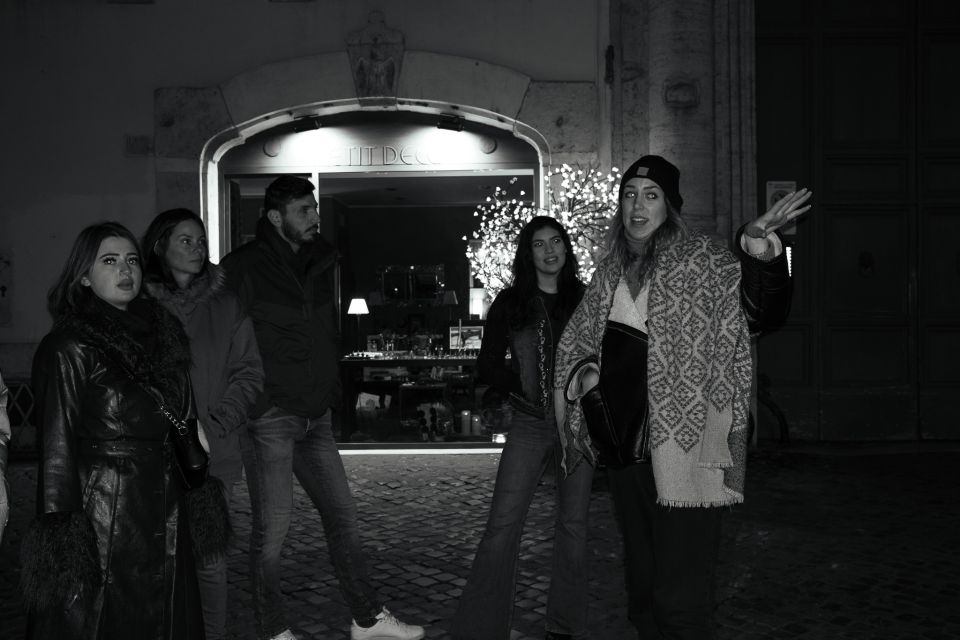
If you want a Rome evening with plot, not just sightseeing, this is an easy yes. The price is reasonable for a guided, nighttime, stop-based route, and the small-group format plus potential audio support makes it practical rather than just theatrical.
Book it especially if you’ve already done daytime classics and you’re craving something that reframes what you thought you knew about Rome. Skip it only if you strongly prefer light history or you know the human-bone chapel detail will be too much.
In short: this tour is for people who like their Rome a little darker, a little smarter, and far more story-driven than a typical walk.
FAQ
How long is the Rome Murder Mysteries of Rome guided walking tour?
It lasts about 2 hours.
Where do I meet the guide for this tour?
Meet in the middle of Campo de’ Fiori square. The guide will be holding a yellow flag in front of the Monumento a Giordano Bruno statue.
Where does the tour end?
The activity ends back at the meeting point, and the route is designed to finish with Castel Sant’Angelo as the closing landmark.
What is the group size?
The tour runs with a small group of up to 20 people.
Is the tour in English?
Yes, it includes a live guide in English.
Does this tour run in bad weather?
Yes. It takes place rain or shine.
What should I bring?
Wear comfortable shoes and dress in comfortable clothes.
How much does it cost?
The price is listed as $28 per person.
Is transportation included?
No. Transportation is not included.
Do I skip the line anywhere during the tour?
Yes, you get skip-the-line access through a separate entrance.