REVIEW · ROME
Rome: Catacombs of Domitilla Entry Ticket & Guided Tour
Book on GetYourGuide →Operated by OPERA ROMANA PELLEGRINAGGI · Bookable on GetYourGuide
Underground Rome changes how you read the city. The Catacombs of Domitilla drop you far below the streets, into cold stone corridors where burial history feels startlingly close. You’ll go with a live guide and a fixed 30-minute route that’s built to show the key rooms without wasting your time.
I really like two things about this experience. First, you’re not herded with a crowd; it’s limited to 10 participants, so you can ask questions and actually hear the answers. Second, the catacombs let you see a rare mix of pagan and Christian frescoes in the same underground world.
One possible drawback is that you can’t take photos inside, so you’ll rely on your guide’s pacing and your own memory. Also, parts of the site are not suitable for wheelchair users or people with mobility impairments.
In This Review
- Key Things You’ll Appreciate
- Where the Catacombs of Domitilla Fit Into Rome’s Story
- Meeting Up and Getting Comfortable for 30 Minutes Underground
- What You’ll See: The Two Levels (and Why They Matter)
- The Hypogeum of the Flavians: where one place keeps evolving
- How the pagan space became Christian
- The Second-Floor Crypt and the Names that Anchor the Visit
- Pagan + Christian Frescoes: What You’re Really Looking For
- Learning About Restoration Without Turning It Into a Lecture
- The Chamber Network: Seeing Depth, Not Just Distance
- Price vs. What You Actually Get
- The Tour Guides: When Clarity Makes the Underground Make Sense
- Who This Tour Is For (and Who Should Rethink It)
- My Practical Tips to Get More From Your Visit
- Should You Book the Catacombs of Domitilla Tour?
- FAQ
- How long is the Catacombs of Domitilla tour?
- Where do I meet the guide?
- How early should I arrive?
- How much does the tour cost?
- Are guided tours available in English?
- How large is the group?
- Is photography allowed inside the catacombs?
- What should I wear?
- Is the tour wheelchair accessible?
- What’s included in the ticket?
Key Things You’ll Appreciate
- 16km below Rome: a real sense of scale when you go underground
- Small-group format (up to 10): better explanations and time for questions
- Pagan-to-Christian transformation: see how one burial space changed use over centuries
- Martyrs and popes in the story: Nereus and Achilleus, plus Pope Damasus and Pope Siricius
- No photography inside: plan to take notes instead of relying on images
- Delicate restoration explained: learn why these walls are handled with care
Where the Catacombs of Domitilla Fit Into Rome’s Story
The Catacombs of Domitilla are on via delle Sette Chiese, and they’re among the largest underground cemeteries in Rome. The setting is dramatic on purpose: you descend to spaces that feel preserved rather than recreated. In other words, you’re not just looking at a museum vibe. You’re in working burial history, carved into the earth.
The story begins with a family connection tied to the imperial world. The catacombs are linked to burial grounds on land associated with Flavia Domitilla, who donated it to her freedmen. The family connection matters because it helps explain why this underground cemetery could become so extensive.
You also get a sense of time layering. The catacombs are divided into two main levels, and they reflect shifting beliefs and uses across centuries, not one single moment. That’s why the tour feels more like a guided timeline than a quick walk-through.
You can also read our reviews of more tours and experiences in Rome


Meeting Up and Getting Comfortable for 30 Minutes Underground
This tour is short on purpose—about 30 minutes—so your first job is to get to the meeting point on time. Go directly to the ticket office of the catacomb and show your reservation at least 10 minutes before your scheduled start. If you arrive late, you’ll likely miss part of the guided flow.
Dress for comfort. The tour doesn’t ask for special gear, just comfortable clothes, and you should expect the feel of stone walls and an underground atmosphere. Even without a stated temperature, you’ll likely want something practical that lets you move easily in enclosed spaces.
Photography inside isn’t allowed. So if you rely on your phone for souvenirs, adjust your plan. Bring a small notebook (or use notes on your phone before you head in) and focus on the guide’s key details: names, dates, and what each chamber is trying to communicate.
One more practical note: the tour is not suitable for wheelchair users or people with mobility impairments. If that affects you, it’s better to choose another Rome experience where access is easier.
What You’ll See: The Two Levels (and Why They Matter)
The catacombs are divided into two main levels, and that structure shapes what your guide can cover in only 30 minutes. The tour’s power is that it picks the rooms that explain the big changes over time.
The Hypogeum of the Flavians: where one place keeps evolving
On the first level, you’ll hear about the Hypogeum of the Flavians. This is tied to the idea that Giovanni Battista de Rossi identified tombs related to Christian members connected to the Flavia Domitilla family. Even if you don’t know de Rossi’s work beforehand, your guide will connect the dots so it doesn’t feel like random name-dropping.
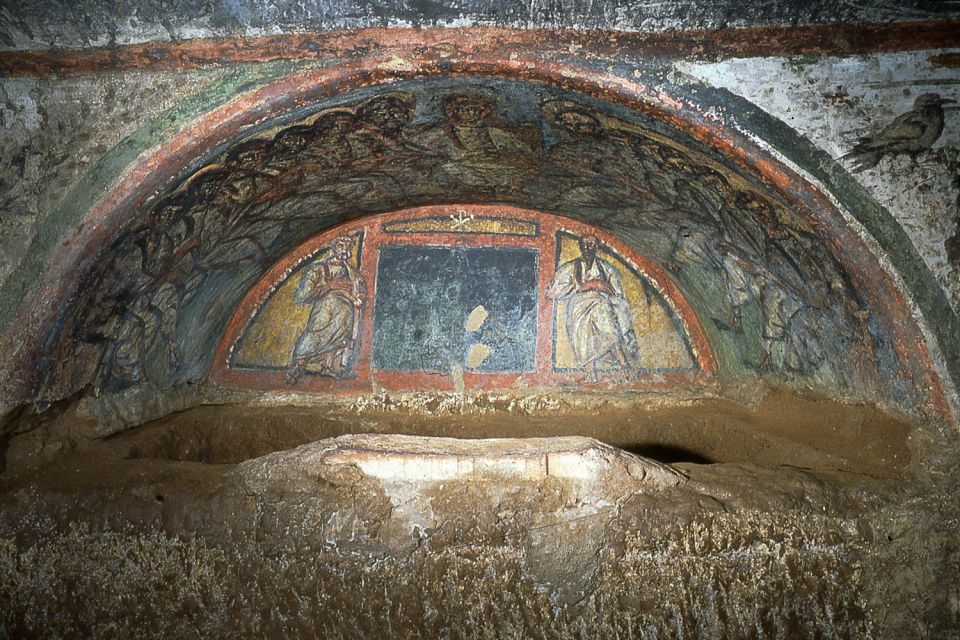
You’ll also learn about the opposite layer of the story: there’s a pagan hypogeum dated roughly between the end of the 2nd century and the beginning of the 3rd century. That matters because it shows the site wasn’t labeled once and frozen forever. Over time, it gained Christian meaning.
How the pagan space became Christian
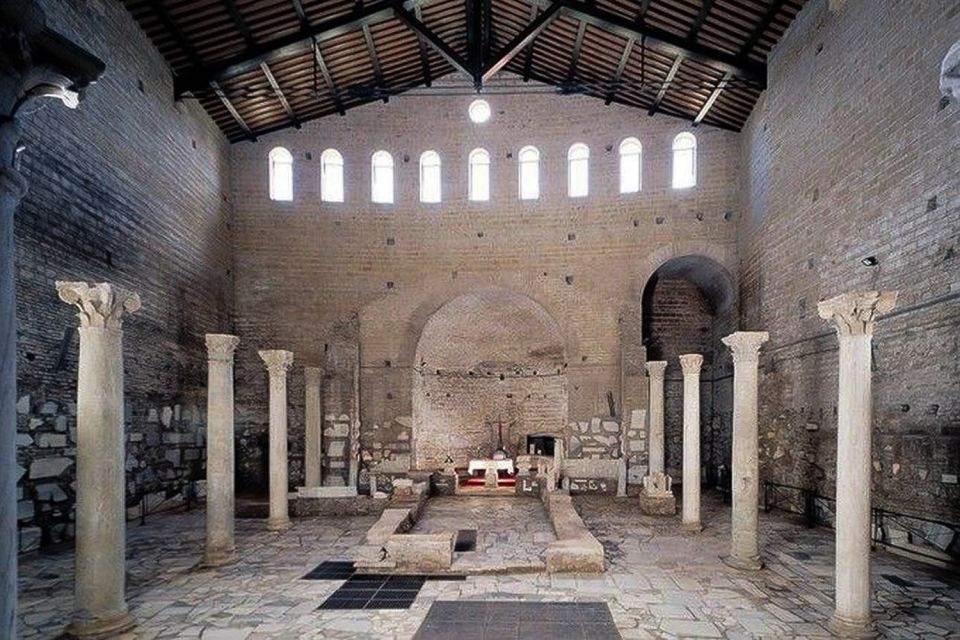
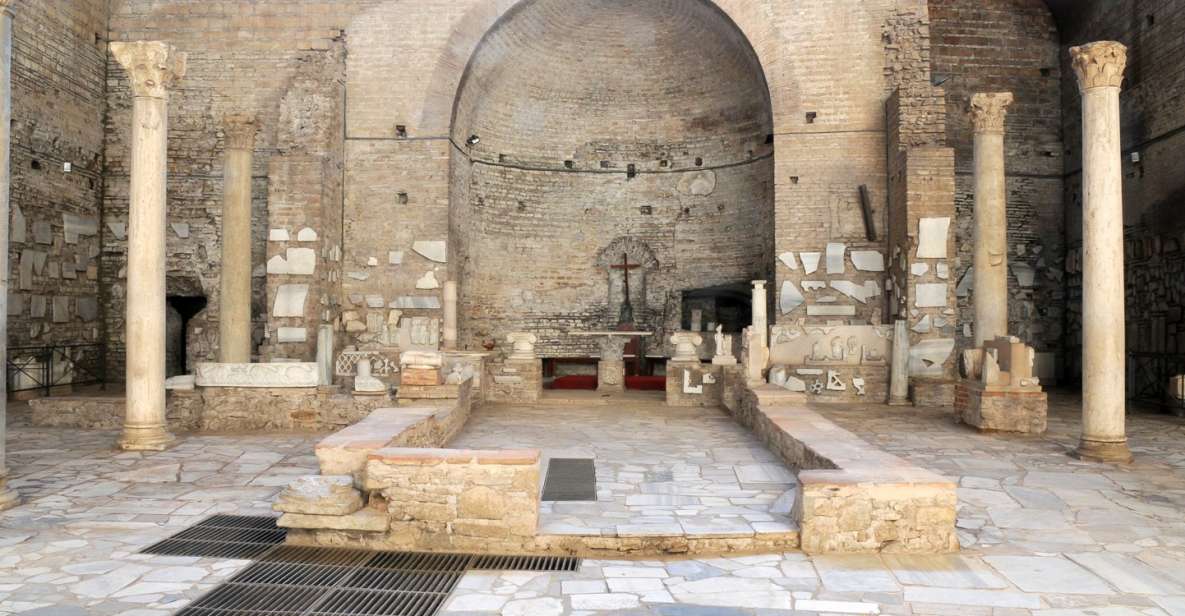
That pagan hypogeum later became Christian and was enlarged in the mid 3rd century. This is the kind of detail that makes the whole visit click. You’re not just seeing art on walls. You’re watching how a community repurposed real spaces for new religious needs.
Your guide’s job here is to help you read the changes. Look for where frescoes and burial functions fit together. The point isn’t to memorize every label. The point is to understand the shift from one use to another.
You can also read our reviews of more guided tours in Rome



The Second-Floor Crypt and the Names that Anchor the Visit
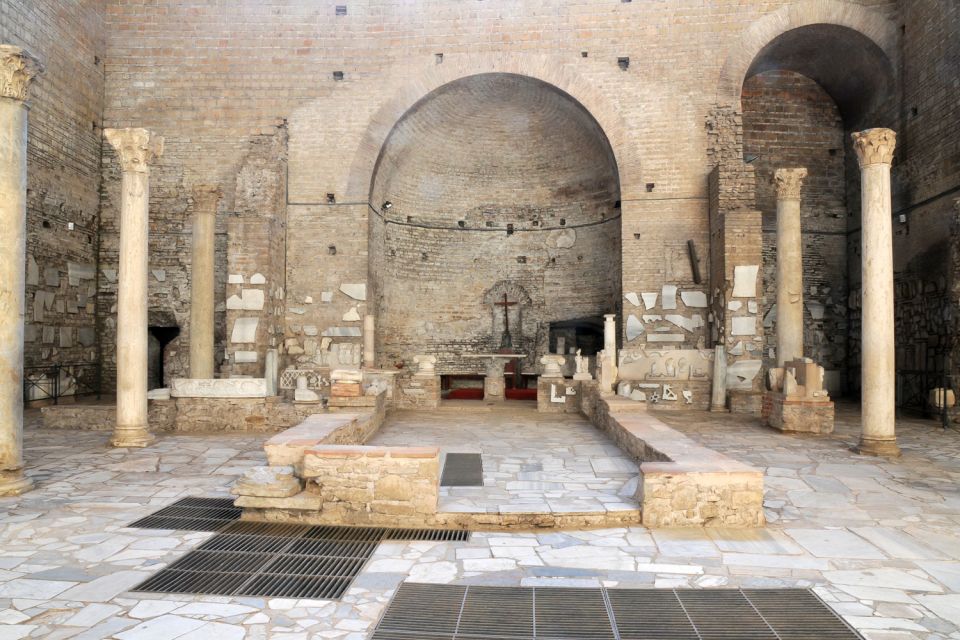
One of the tour’s most memorable beats centers on the martyrs Nereus and Achilleus. Towards the end of the third century, their bodies were placed in a crypt on the second floor. This gives the visit a sharper focus: it moves from general underground burial culture to specific people tied to Christian martyr narratives.
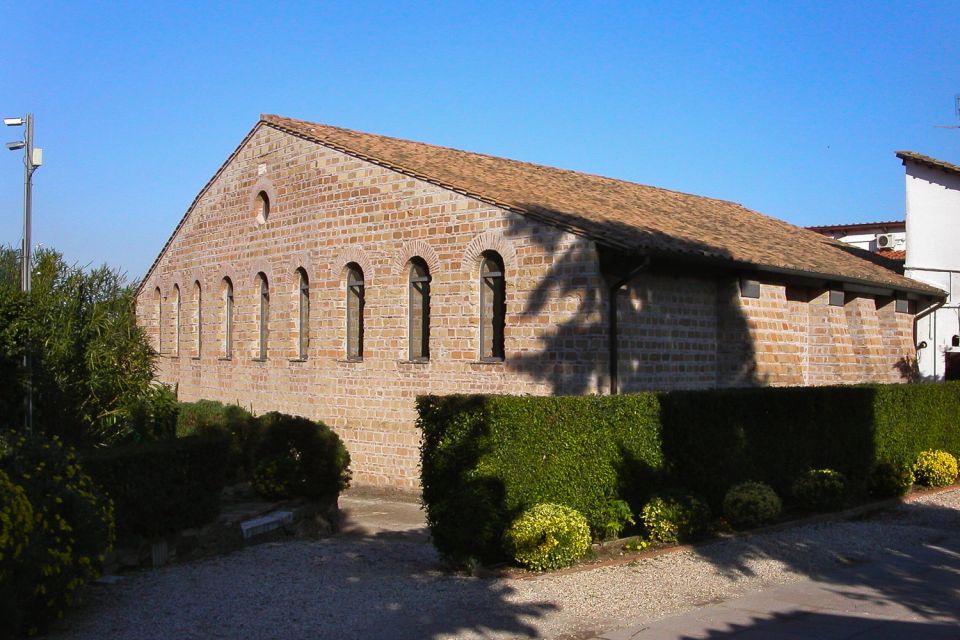
Then comes a crucial historical change in the religious landscape above. Your tour includes the transformation tied to popes. Pope Damasus (366–384) turned the crypt into a small basilica. Later, Pope Siricius (390–395) enlarged it until it reached its current size.
Why you should care: this isn’t just architecture bragging. It’s how underground burial spaces gained a more public, organized religious role as Christianity became more established. Even in a 30-minute route, that arc gives your brain something solid to hold onto.
Pagan + Christian Frescoes: What You’re Really Looking For
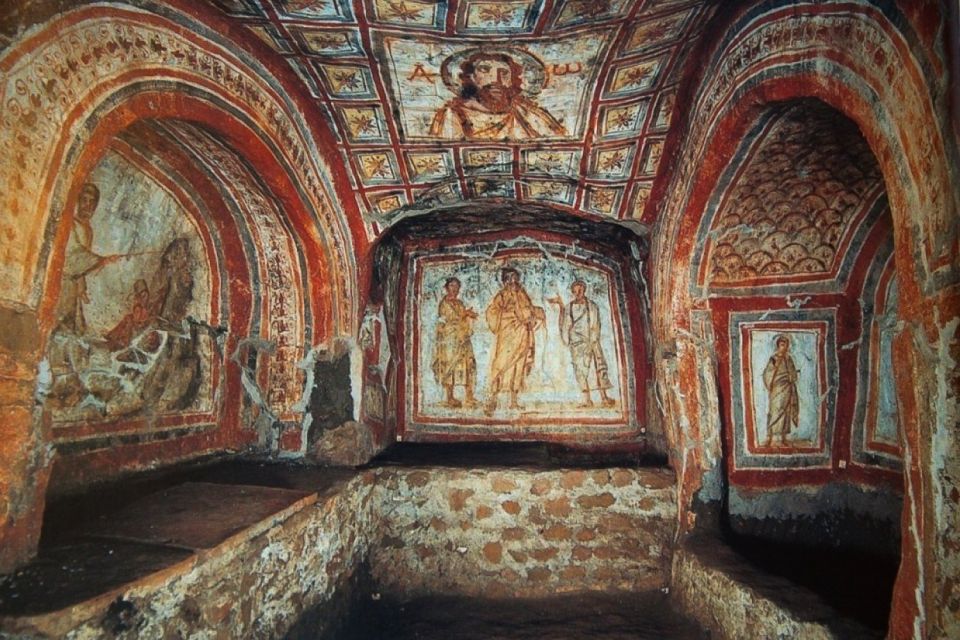
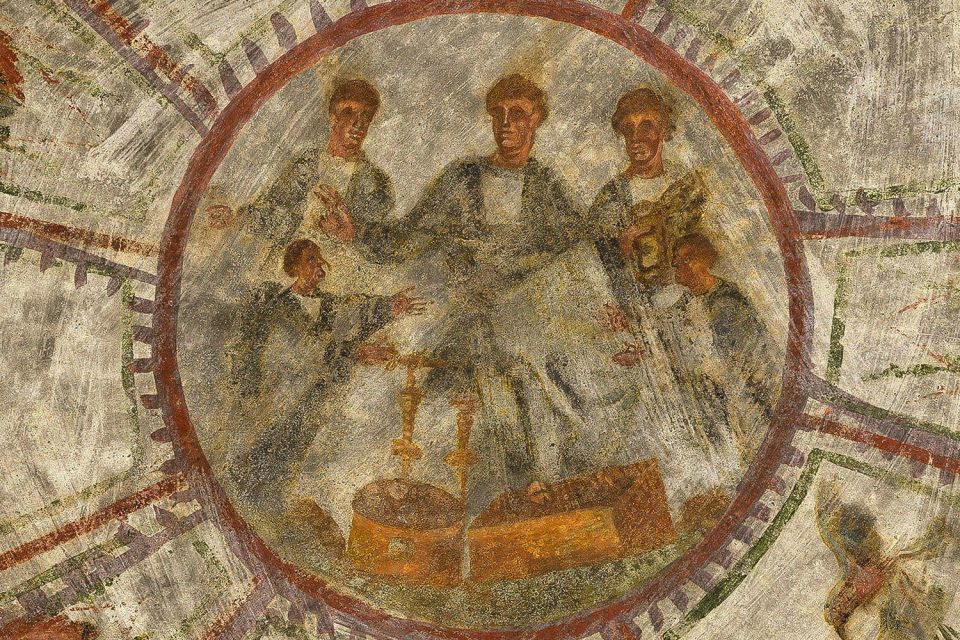
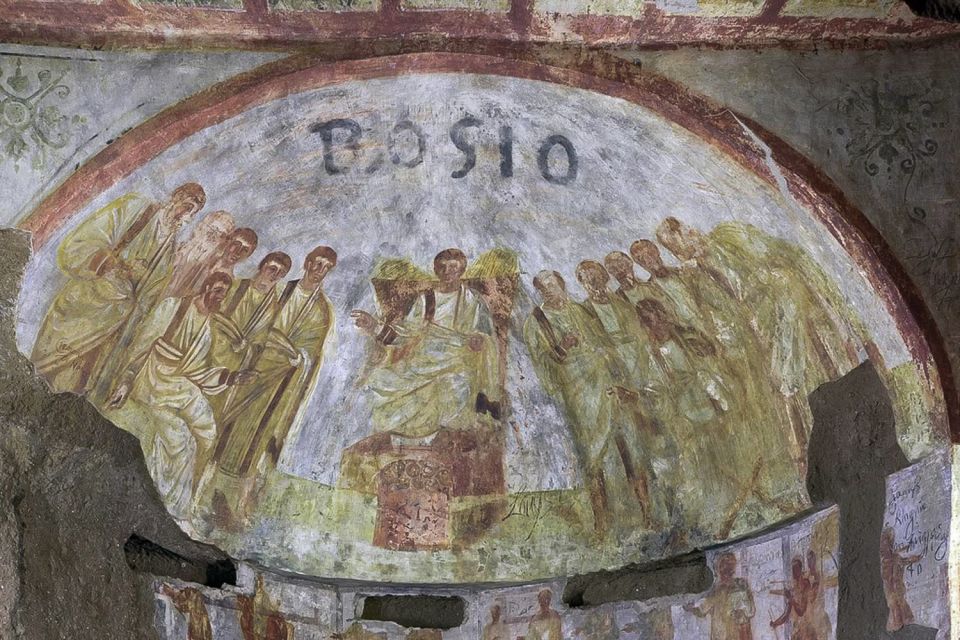
The tour highlights a unique mixture of pagan and Christian frescoes, and that blend is exactly what makes Domitilla interesting. In a lot of Rome sightseeing, you get strict separations: one era, one style, one storyline. Here, the walls show overlap.
Your guide will point out how the art connects to the burial setting and the changing beliefs tied to the site. Try to treat each fresco as a clue. Ask yourself: is this pointing to older burial traditions, later Christian identity, or both? With the guide in your ear, you’ll start seeing the logic rather than just the visuals.
Also, remember that much of the catacomb network is more than what you can visit. You’re seeing the portions that are made accessible for tours, while the rest remains part of a much larger underground system. In a short visit, the guide’s selection is the whole deal.
Learning About Restoration Without Turning It Into a Lecture
One of the included highlights is that you’ll learn about the delicate restoration process. This matters because catacombs aren’t like a normal building where you can patch things quickly and move on. Underground walls suffer differently, and old pigments and surfaces are fragile.
What I like about this part of the tour format is the emphasis on understanding. When a guide explains why certain surfaces need special handling, you stop treating the site like scenery. You start treating it like a conservation project with history attached.
In practical terms, it also explains the limits you’ll feel while moving around. Where you can stand. How people flow. Why photography isn’t allowed. None of it is random.
The Chamber Network: Seeing Depth, Not Just Distance
Domitilla is described as a vast network of masterfully built chambers, and the underground scale isn’t a marketing line. Going down into corridors and rooms gives you a real sense of geometry and planning: the site was built to work as a burial system over time.
You’ll descend far beneath the city—described as 16km beneath the busy streets—and that distance changes your perspective instantly. Rome above feels like a place where everything moves. Underground, everything feels held in place. It’s a stark contrast.
Because the tour is only 30 minutes, you’ll cover key spaces rather than trying to see everything. That’s a good thing. It keeps the experience focused. You’ll come out with a clearer story instead of a foggy walk through “cool tunnels.”
Price vs. What You Actually Get
At about $16 per person, this is positioned as good value for a guided underground site. You’re paying for two things: entrance fees and a live guide. In a place like this, the guide is the difference between seeing walls and understanding what you’re seeing.
Is $16 expensive? Not for what you’re getting. A short guided visit like this can be easier to fit into a Rome day than longer tours, and you’re seeing the catacombs’ most important layers: the Flavian-associated level, the pagan-to-Christian shift, and the crypt-basilica linked to Nereus and Achilleus, Pope Damasus, and Pope Siricius.
Here’s the tradeoff: photography is banned inside. If you want visual proof for every detail, you’ll lose that option. I’d plan to take notes and rely on the guide’s explanation as your souvenir.
The Tour Guides: When Clarity Makes the Underground Make Sense
A lot of the praise centers on guides who explain calmly and answer questions in a way that sticks. Names that have stood out include Andrea and Martin, with comments pointing to friendliness, professionalism, and a real passion for history and art. That kind of guiding matters here because catacomb history can turn confusing fast without context.
If your guide is strong, you’ll leave understanding why these spaces changed. You’ll also understand how the fresco mix and the popes’ involvement fit into the broader story of early Christianity.
Even if you don’t catch every date, you’ll get the arc. That’s what you want from a 30-minute underground tour.
Who This Tour Is For (and Who Should Rethink It)
This is a great fit if you want history and art with a strong narrative. You’ll enjoy it if you like getting specific: names of martyrs, and popes tied to real transformations of spaces.
It’s also a good choice if you’re time-limited. Rome can eat your hours. A 30-minute guided underground stop gives you a meaningful experience without swallowing your whole day.
I’d rethink it if you have mobility limitations, since it’s not suitable for wheelchair users. And if you’re the type who needs photos to remember experiences, accept the no-photography rule before you book.
My Practical Tips to Get More From Your Visit
Go in with a mindset: you’re learning how a burial site evolved. That framing helps you notice what the guide points out instead of drifting.
Bring comfortable clothes and plan for the underground feel. Even if you don’t know the exact temperature, the description makes it clear you’ll be walking in cool stone walls territory.
Since photography is off the table, make your own “photo list” in notes: the martyrs’ names, the two popes’ names, and the idea of the pagan hypogeum changing into Christian use. You’ll remember more than you think, especially when you repeat the names once after the tour ends.
And yes, start your visit on time. This is one of those experiences where missing the start can cut the story off at the legs.
Should You Book the Catacombs of Domitilla Tour?
If you want a compact, guided way to see one of Rome’s biggest underground burial sites, I think this is an easy yes. For around $16, you get paid time with a guide, entrance included, and a focused route through the catacombs’ most important layers—Flavian connections, the pagan-to-Christian transformation, and the crypt-basilica story involving Nereus and Achilleus, plus Pope Damasus and Pope Siricius.
Book it if you’re curious about how early Christian communities used existing spaces and how art shifted alongside those changes. Skip or choose a different option if you need photos inside or if mobility access is an issue for you.
If you’re the sort of traveler who loves clear explanations, you’re likely to appreciate the small-group format and the guide’s role. This is one of those tours where good guidance really changes the whole experience.
FAQ
How long is the Catacombs of Domitilla tour?
The guided experience lasts about 30 minutes.
Where do I meet the guide?
Go directly to the ticket office of the Catacomb and show your reservation.
How early should I arrive?
Show your reservation at least 10 minutes before the scheduled tour time.
How much does the tour cost?
The price is listed as $16 per person.
Are guided tours available in English?
Yes. The live tour guide is available in Italian and English.
How large is the group?
This is a small group limited to 10 participants.
Is photography allowed inside the catacombs?
No. Photography is not allowed inside.
What should I wear?
Wear comfortable clothes.
Is the tour wheelchair accessible?
No. It is not suitable for wheelchair users or people with mobility impairments.
What’s included in the ticket?
The tour includes a tour guide and entrance fees.