REVIEW · ROME
Castel Sant’Angelo Skip-the-Line ticket
Book on GetYourGuide →Operated by Explore Rome Tours · Bookable on GetYourGuide
Rome’s river fortress has secrets. Castel Sant’Angelo (the Mausoleum of Hadrian) feels like a whole plot twist in stone—tomb, papal refuge, prison cells, and museum all in one stop. With a skip-the-line ticket, I think you’ll appreciate the focus on the sights that matter most, including the terrace views over the Tiber and the bridge.
I also like how practical this visit is. You’re close to both St. Peter’s Basilica and the Vatican Museums, so you can build a smart Rome day without fighting for time. The main thing to consider: this experience is not suitable for wheelchair users (and it’s not marked for mobility impairments), so plan a different option if you need step-free access.
Once you book, the ticket shows up by email and/or WhatsApp the day before, and you can go straight to the entrance. If you choose it, you’ll get an audio guide ticket that helps you connect the stories as you move through the monument.
In This Review
- Key Highlights You’ll Actually Care About
- Castel Sant’Angelo in Plain Terms: Hadrian’s Tomb Meets a Papal Fortress
- Using a Skip-the-Line Ticket Without a Guide-Focused Day
- What You See Inside: Mausoleum, Fortress, and Museum Rooms
- Passetto di Borgo: the Escape Route Story That Changes Your Perspective
- Terrace Views and Sant’Angelo Bridge: Your Photo Stop With Meaning
- The Archangel Michael Plague Legend (and Why It Fits Here)
- Prison Cells Like Sammalò and San Marocco: Dark but Memorable
- Audio Guide Ticket vs. a Live Guide Tour: Where the Value Comes From
- Logistics That Affect Your Day: Time, ID, and What You Can Bring
- Pair It With St. Peter’s Basilica and the Vatican Museums (Without Overloading)
- Book It or Skip It? My Decision Guide
- FAQ
- FAQ
- What does the Castel Sant’Angelo skip-the-line ticket include?
- How long is the visit?
- When will I receive my tickets?
- Is an audio guide included automatically?
- What ID do I need to bring?
- What items are not allowed at Castel Sant’Angelo?
- Is it suitable for children or wheelchair users?
Key Highlights You’ll Actually Care About
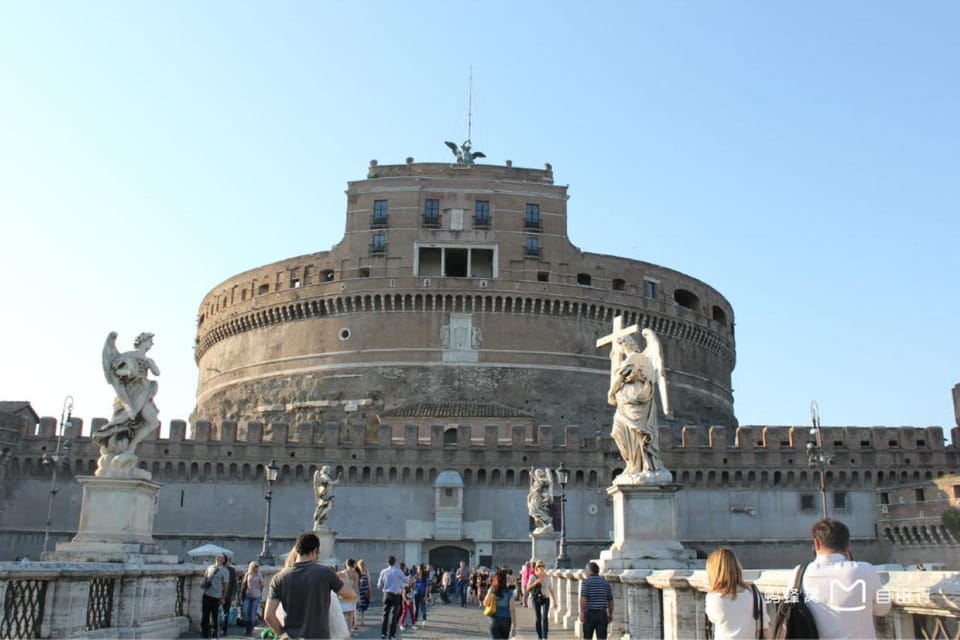
- Skip-the-line entrance so you spend your time inside, not waiting.
- Mausoleum of Hadrian + papal fortress: the building’s changing roles are the show.
- Passetto di Borgo: the escape route that adds real tension to the story.
- Terrace photo moment with views over the Tiber and Sant’Angelo Bridge.
- Supernatural Michael legend tied to a plague story at the end of the 6th century.
- Prison cells including Sammalò and San Marocco for darker, memorable stops.
Castel Sant’Angelo in Plain Terms: Hadrian’s Tomb Meets a Papal Fortress
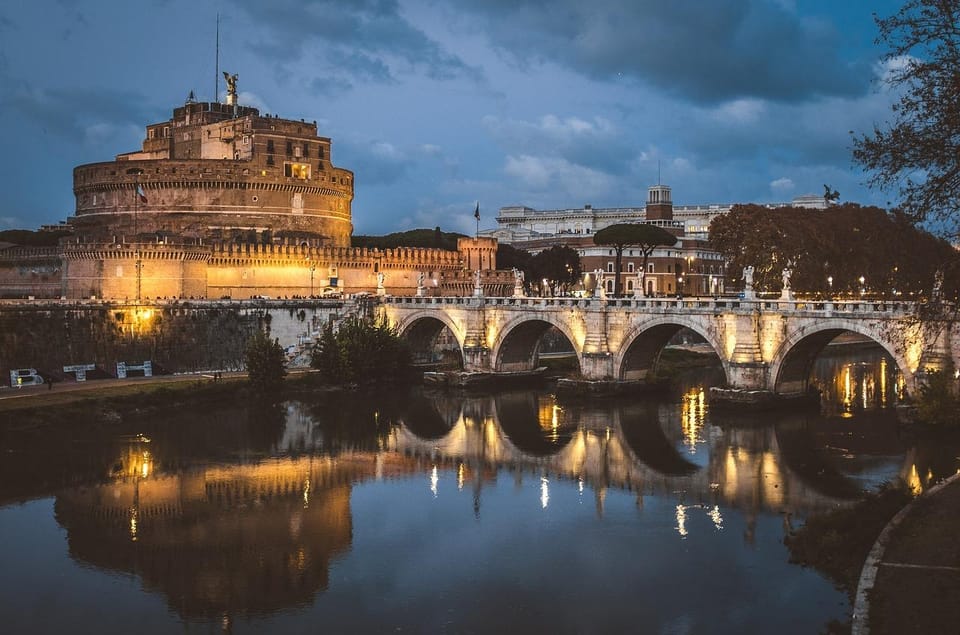
Castel Sant’Angelo sits right on the banks of the Tiber River, and the setting already does half the work. You’re looking at a structure that looks solid and imposing from the outside—and once you’re in, it’s clear why. This site is also known as the Mausoleum of Hadrian, and over time it was transformed into a papal fortress.
What I like about this place is that it doesn’t ask you to guess the theme. The monument’s identity keeps changing: tomb first, then refuge, then prison, and later a museum. That’s a rare kind of storytelling. You’re walking through layers of purpose, not just admiring old walls.
And yes, the views matter. The experience includes time on the terrace, where the river and Rome’s bigger layout come into view. The goal here isn’t just pretty pictures. It’s getting your bearings—because from that vantage point, Castel Sant’Angelo stops feeling like an isolated stop and starts feeling like part of a much bigger story map.
You can also read our reviews of more tours and experiences in Rome


Using a Skip-the-Line Ticket Without a Guide-Focused Day
A skip-the-line ticket is only useful if it actually saves you from the bottleneck. Here, the process is straightforward: your ticket is sent by email and/or WhatsApp the day before your activity. With those tickets, you can go straight to the entrance.
There’s no “find your guide first” scavenger hunt. The activity is set up so you can arrive, use your documentation, and start at the monument itself. If you run into trouble downloading the PDF, you can contact the provider by email or WhatsApp for help, which is useful when technology decides to act up.
Because it’s listed as a small group available, you’re not stuck in a huge crowd. Still, keep your expectations realistic: it’s a popular Rome site near major attractions, so expect normal sightseeing energy.
One more practical note: your ticket option can include an audio guide (if selected), but this isn’t presented as a full-on guided tour package with a live guide included. That matters for how much you’ll get out of the visit, which I’ll cover next.
What You See Inside: Mausoleum, Fortress, and Museum Rooms
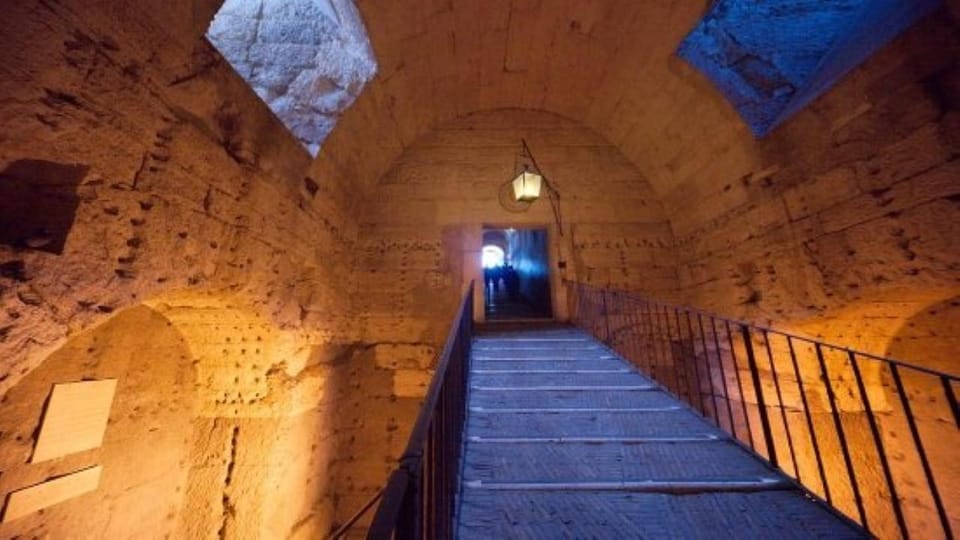
When people hear Castel Sant’Angelo, they often think of the exterior. Inside, the monument’s changing use makes the visit feel like a guided narrative—even if you’re using an audio guide rather than a person.
You’ll be exploring:
- the Mausoleum of Hadrian, including the idea of an imperial tomb
- the transformation into a papal fortress
- the later use as a prison starting in the mid-14th century
- the museum era that began in 1925
The papal fortress part is key. The popes used Castel Sant’Angelo as a refuge, and that gives the spaces a different emotional tone. Instead of only thinking about grandeur, you start thinking about protection and escape. That shift makes the “refuge” story feel urgent, not just decorative.
Then the prison history adds the contrast. If tomb = designed for permanence, prison = designed for containment. Seeing both turns the building into a kind of moral seesaw: power, fear, and survival all under one roof.
And because this is a museum since 1925, the site is set up to help you connect the physical spaces with what they were used for. You’ll likely spend most of your time moving at a pace that works for your attention level—slower if you want more story, faster if you’re mostly chasing the best views.
Passetto di Borgo: the Escape Route Story That Changes Your Perspective
The highlight that makes this monument feel different from other “big old buildings” is the Passetto di Borgo. You can enter to discover it, and the idea behind it is straight from the drama playbook: it facilitated an escape from the Vatican to the castle during an invasion of Rome.
Even if you don’t love political history, this part works because it’s built for a specific purpose—moving people when things fall apart. Once you understand the meaning of the corridor, your brain starts imagining movement, secrecy, and urgency. It’s the kind of detail that makes photos feel smarter too. You’re not just shooting stone, you’re shooting the route of a plan.
If you’re the kind of visitor who enjoys connecting sites across the city, this is also satisfying. Castel Sant’Angelo isn’t just near Vatican attractions. It’s historically linked to them through this escape pathway concept.
Practical tip: if your audio guide option is available to you, use it specifically during this portion. That’s when the story detail helps most.
Terrace Views and Sant’Angelo Bridge: Your Photo Stop With Meaning
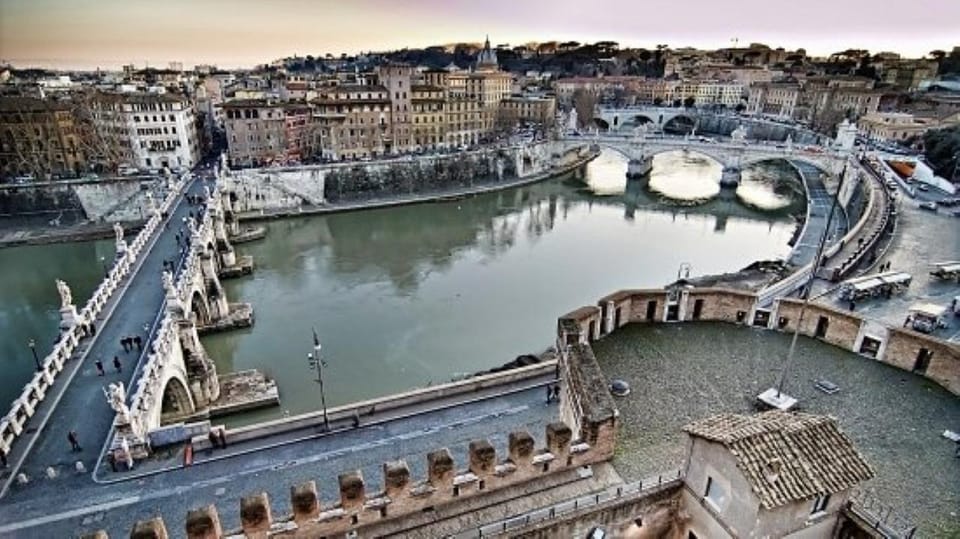
The experience includes enjoying the view from the terrace. That’s not just an add-on. It’s where the monument makes sense as a lookout over Rome.
From the terrace, you can take pictures of Sant’Angelo Bridge. This is one of those classic Rome views that looks good from a distance—but it also helps you understand why this area was valuable. A river setting gives the city movement, and the bridge gives it a crossing point. In other words, it’s not random beauty; it’s geography you can read.
For photos, aim for the simple stuff:
- keep your phone charged
- take a wide shot first, so you’ll remember what the view includes
- then do closer bridge framing
Also, don’t rush the terrace. The rest of the building gives you strong story beats (tomb, refuge, prison). The terrace is where your brain stops chasing facts and just absorbs Rome.
You can also read our reviews of more tours and experiences in Rome




The Archangel Michael Plague Legend (and Why It Fits Here)
Castel Sant’Angelo isn’t only about emperors and popes. It also ties into the legend of the archangel Michael who saved Rome from the plague at the end of the 6th century.
That supernatural layer matters because it changes the emotional color of the site. Instead of a purely political or architectural story, you get faith, fear, and deliverance themes. And because the monument later became a prison, the overall mood can swing hard—from relief to dread—depending on where you are in the visit.
If you enjoy spooky-but-not-cheesy storytelling, this part is likely to land well. It doesn’t ask you to believe in a literal way. It asks you to understand what people in different eras needed to explain the terrifying stuff.
In a city full of monuments, this is a reminder that buildings often served as meaning machines. Castel Sant’Angelo helped people make sense of survival.
Prison Cells Like Sammalò and San Marocco: Dark but Memorable
From the mid-14th century onward, Castel Sant’Angelo was used as a prison. Included in the experience are frightening cells such as the ones called Sammalò or San Marocco.
This is where you should adjust your expectations. This isn’t a soft, “breathe in the view” section. It’s the part that gives the building a sharper edge. You’ll likely feel the design choices meant to restrict. That contrast makes the earlier refuge story more believable too—because if there was a route for escape, there was also a reality where people were held.
If you prefer your tours light and breezy, you might want to spend a little extra time here and then intentionally balance it out later by focusing on the terrace views. The building is set up for contrast, so don’t try to treat it like only a photo stop.
Audio Guide Ticket vs. a Live Guide Tour: Where the Value Comes From
Here’s the bottom line: skip-the-line entry is included. An audio guide ticket is included only if you select that option. A guide tour is listed as not included.
So the value equation depends on how you tour:
- If you like self-paced sightseeing with prompts, the audio guide approach can be perfect.
- If you want real-time Q&A and extra context from a person, you may want to confirm whether a live guide option exists beyond the standard package, since guide tour isn’t included here.
One more angle: some of the strongest impressions tied to this activity tend to happen when the explanation is excellent. The operator’s quality can swing the feel of a visit like this, because the story is the main attraction. If your audio guidance is clear and well-paced, you’ll likely enjoy the monument more than if you just wander rooms without a narrative.
Still, the price point helps. At $17 per person, you’re paying for an efficient entry method plus the core experience inside. That’s a reasonable deal if you’re doing it for the monument and you’re comfortable using an audio guide.
Logistics That Affect Your Day: Time, ID, and What You Can Bring
This visit is listed as 1 to 1.5 hours. That’s a great length for Rome. It’s long enough to get the story beats, but short enough that you won’t lose the whole day to one site.
Tickets arrive via email and/or WhatsApp the day before. That’s a good setup for people who don’t want to wait on physical vouchers.
Bring:
- a passport or ID card (also for children)
Don’t bring:
- pets
- weapons or sharp objects
- baby strollers
- luggage or large bags
Also, the operator asks that all participants’ full names be collected in English. That’s worth taking seriously so your ticket data matches what you show at the entrance.
Accessibility note: it’s marked as not suitable for people with mobility impairments and not suitable for wheelchair users. If you fall into that group, plan a different Rome stop that explicitly supports your needs.
Pair It With St. Peter’s Basilica and the Vatican Museums (Without Overloading)
Castel Sant’Angelo is near both St. Peter’s Basilica and the Vatican Museums. That proximity is a real advantage because it helps you reduce travel friction. Instead of switching neighborhoods and spending time crossing Rome, you can build a tight route around the Vatican area.
A smart way to handle it is to think in story arcs:
- If you’re already doing Vatican Museums and religious sites, Castel Sant’Angelo gives you the counterpoint: tomb → refuge → prison → museum.
- If your Vatican day is more art-focused, Castel Sant’Angelo adds drama and atmosphere.
Timing is personal, but the practical tip is simple: give yourself enough room so you’re not running from one major site to another with zero buffer. The whole Vatican zone can eat time.
Book It or Skip It? My Decision Guide
I’d book this skip-the-line option if you want:
- fast entrance so you can use your time well
- a compact 1–1.5 hour visit with strong story themes
- the terrace view and Sant’Angelo Bridge photo moment
- audio support if you select the audio guide option
I’d hesitate if:
- you need wheelchair-friendly access (it’s not suitable for wheelchair users)
- you want a live guide tour included in the base price (a guide tour isn’t included here)
- you’re relying on this date as a single, non-flexible piece of your plan
One last reality check: last-minute cancellations can happen close to the start time. I’d keep an eye on your email and WhatsApp the day of, especially if you have a tightly scheduled Vatican day.
FAQ
FAQ
What does the Castel Sant’Angelo skip-the-line ticket include?
It includes skip-the-line entry to Castel Sant’Angelo. If you select the option, it also includes an audio guide ticket.
How long is the visit?
The duration is listed as 1 to 1.5 hours. Starting times depend on availability.
When will I receive my tickets?
Your tickets are sent to your email and/or WhatsApp the day before your activity.
Is an audio guide included automatically?
An audio guide is included only if you select the audio guide option.
What ID do I need to bring?
You should bring a passport or an ID card. This also applies to children.
What items are not allowed at Castel Sant’Angelo?
Pets, weapons or sharp objects, baby strollers, and luggage or large bags are not allowed.
Is it suitable for children or wheelchair users?
Under 18 tickets are free, but the price you pay is only for the service fee. The activity is not suitable for wheelchair users and is not suitable for people with mobility impairments.