REVIEW · ROME
Capuchin Crypt Visit & Rome Dark Past Walking Tour
Book on GetYourGuide →Operated by Estaalia · Bookable on GetYourGuide
This kind of walk makes Rome feel like a living novel. You’ll start underground with the Capuchin Crypt, then surface to hit the big Baroque-and-ancient sights while your guide connects them to the stories people actually repeat in the city. I also love the small-group feel and the headsets, which keep the tour moving without everyone craning their necks.
One thing to keep in mind: this experience is not for people with limited mobility, wheelchair users, or anyone with claustrophobia. The crypt part is tight and spooky, and you’ll need comfortable shoes plus a respect-the-place dress code.
In This Review
- Key points to know before you go
- Capuchin Crypt Visit: Skeletons, Silence, and a Guide Who Sets the Tone
- Meeting the Day at the Crypt Entrance: What the Timing Feels Like
- Trevi Fountain: Baroque Beauty with a Wish Tradition
- Pantheon: Where Ancient Myths Meet Real Stone
- Piazza Navona: Baroque Lines and Stories in the Palaces
- Campo dei Fiori: The History Under the Market Square
- The Ending at Chiesa Santa Maria dell’Orazione e della Morte
- Small Group Size, Headsets, and Why the Walk Works
- Price and Value: Is $65 Worth It?
- Practical Tips: What to Bring, What to Wear, and What to Avoid
- Who This Tour Suits Best (and Who Should Skip)
- Should You Book the Capuchin Crypt Visit & Rome Dark Past Walk?
- FAQ
- How long is the Capuchin Crypt Visit & Rome Dark Past Walking Tour?
- How much does it cost?
- What’s included in the tour price?
- Do I need to buy a crypt ticket separately?
- Which sights are part of the walk?
- Are photos or videos allowed in the Crypt of the Capuchins?
- What languages are the tours offered in?
- What should I wear or bring?
- Is it suitable for children or young teens?
- Is the tour okay if I have mobility issues or use a wheelchair?
- Is there a cancellation option?
Key points to know before you go
- Capuchin Crypt first: a guided entrance to the skeletal display, with no photos inside
- Your route hits Rome’s icons: Trevi Fountain, Pantheon, Piazza Navona, Campo dei Fiori
- Legends with context: stories tied to what you’re standing in front of, not random scare tactics
- Small group + headsets: easier pacing and clearer audio as you move through crowds
- A dramatic finish: the tour ends at Chiesa Santa Maria dell’Orazione e della Morte
Capuchin Crypt Visit: Skeletons, Silence, and a Guide Who Sets the Tone
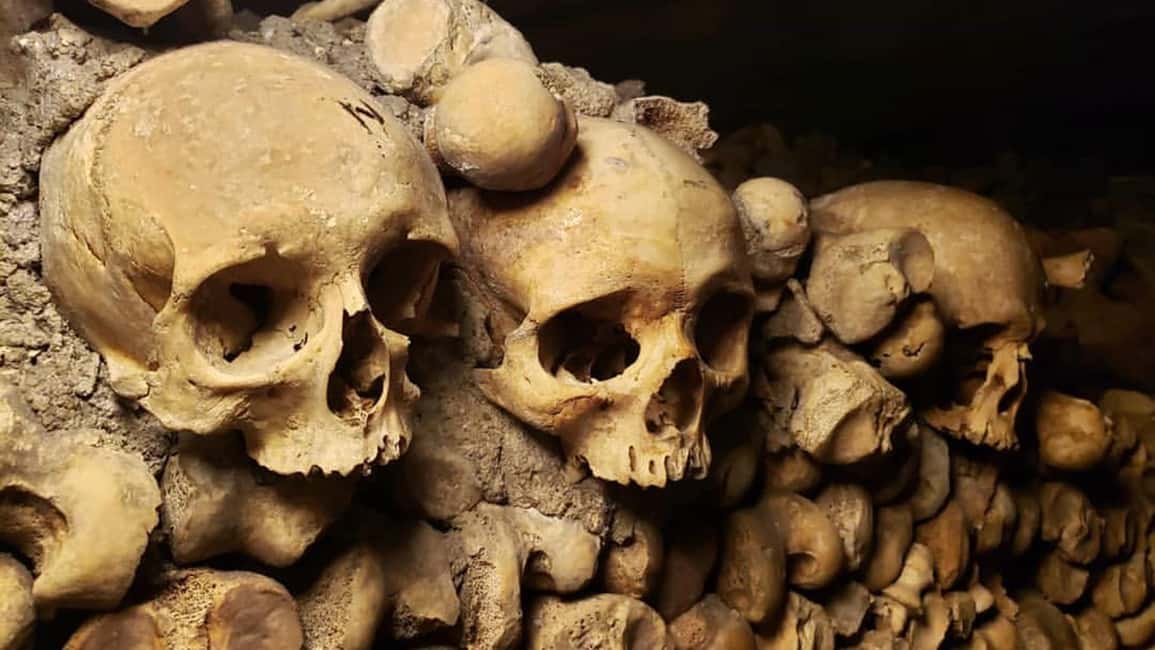
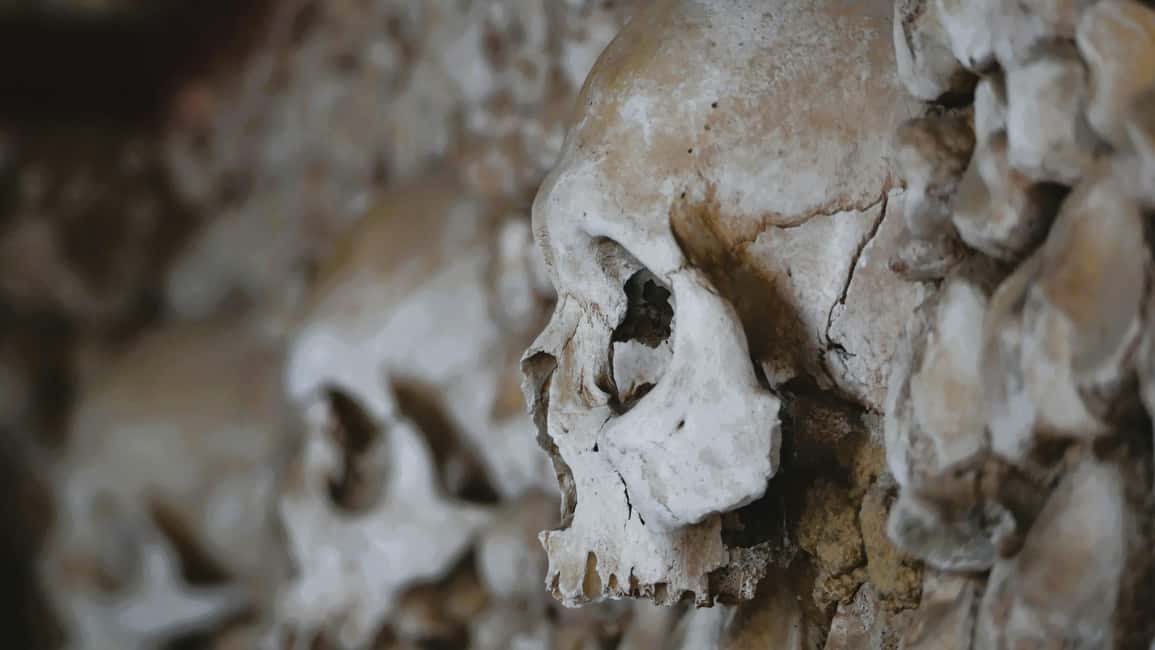
The tour starts with the Crypt of the Capuchins, one of Rome’s most intense “how is this real?” stops. You’re walking into an underground space where the walls and spaces are decorated with skeletal remains of past inhabitants. It’s not presented like a stunt. The better guides handle it with calm respect, and that matters because the whole mood depends on how your guide frames what you’re seeing.
I like that the experience is guided from the start, since the crypt isn’t just a dark room to look at. You get a narrative—why the crypt exists in the way it does, and what the Capuchin monks were doing with death and memory. In particular, guides like Anastasia have stood out for showing that kind of care and respect during the crypt portion. When a guide treats it thoughtfully, you’re more likely to actually pay attention instead of just rushing through.
Practical note: no pictures or videos are allowed inside the crypt. Go in assuming your phone stays away. Also, if you arrive late, you won’t be allowed to join, so build in a buffer around your meeting time.
You can also read our reviews of more walking tours in Rome



Meeting the Day at the Crypt Entrance: What the Timing Feels Like
This tour runs 2 to 2.5 hours, which is short enough that you stay sharp, but long enough for a real flow of stories. Starting at the crypt means you’re dealing with the underground portion early—before the day’s crowds and heat (if you’re visiting in warm months) start to slow everyone down.
It also means you’ll get a kind of emotional arc. Underground first, then up to the postcard-famous Rome you recognize: Trevi, Pantheon, Navona. That contrast is part of the fun. You’re not just collecting stops; you’re moving from macabre to monumental, with the guide connecting how people in Rome think about life, death, faith, and legend.
Dress and comfort matter. The crypt experience is weather-independent, but your walk outside isn’t. Bring comfortable shoes, and plan for an umbrella and water.
Trevi Fountain: Baroque Beauty with a Wish Tradition
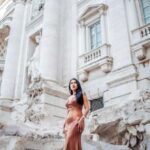
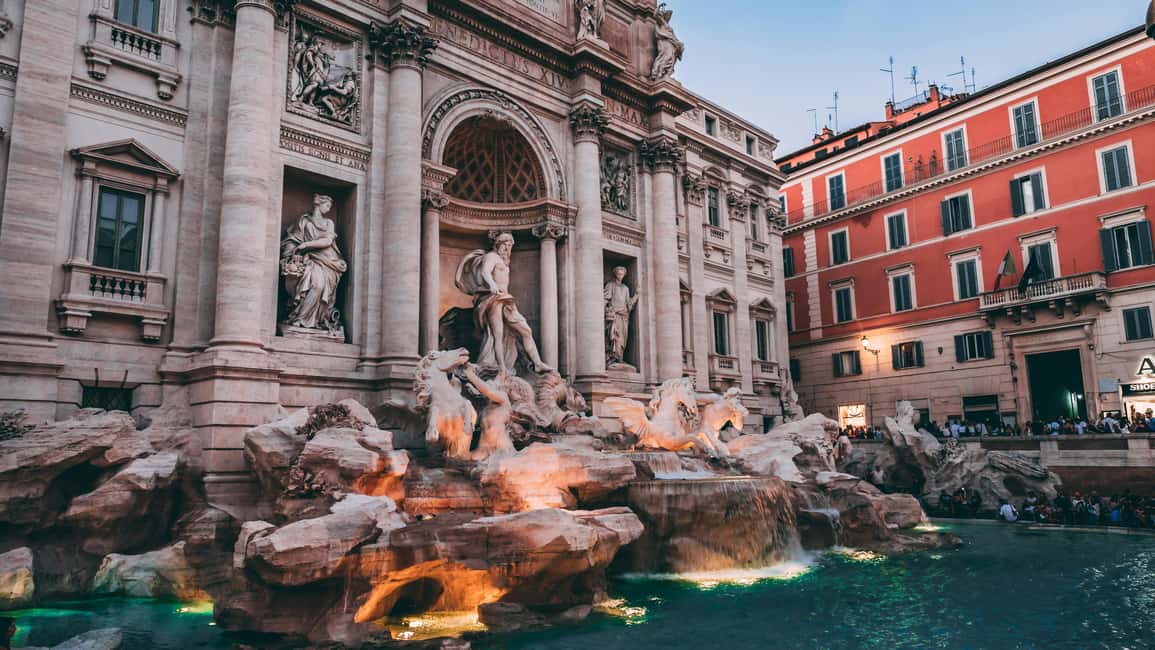
After the crypt, you’ll stand at Trevi Fountain, where Baroque grandeur does its usual magic. The guide brings in the wish tradition: toss a coin and you’re supposed to ensure your return to Rome. It’s the kind of ritual that’s easy to treat like a tourist checkbox. With a good guide, though, it becomes more fun, because the story connects the fountain to how Rome builds meaning into everyday moments.
Here’s what you’ll get more from on a guided walk like this: you won’t just be staring at the sculpture. You’ll be given a reason to look longer—details, legends, and context that make the fountain feel like a place with a past, not just a photo backdrop.
One practical thing: Trevi can be busy. Having headsets helps because you can keep your eyes on the fountain while still hearing clearly what your guide is saying.
Pantheon: Where Ancient Myths Meet Real Stone
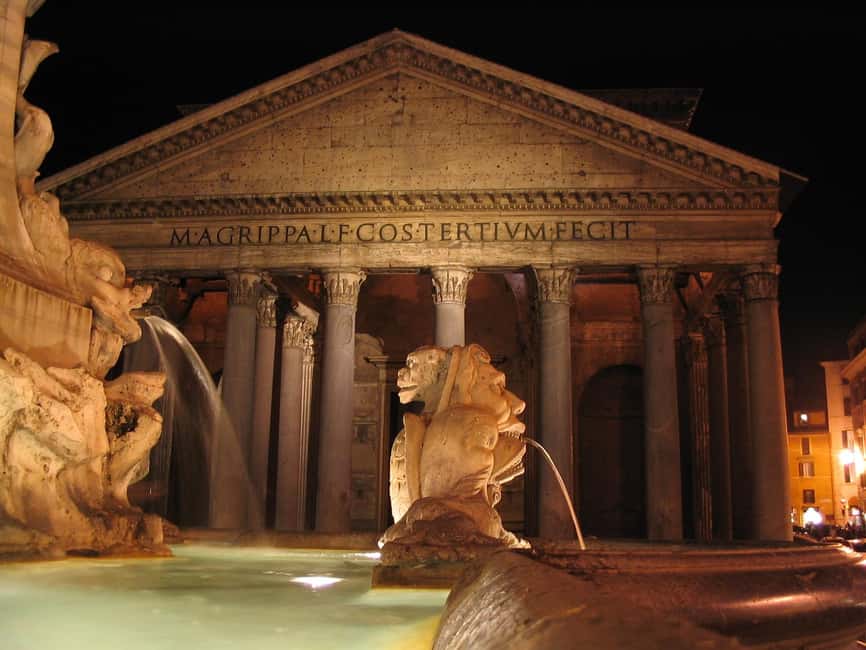
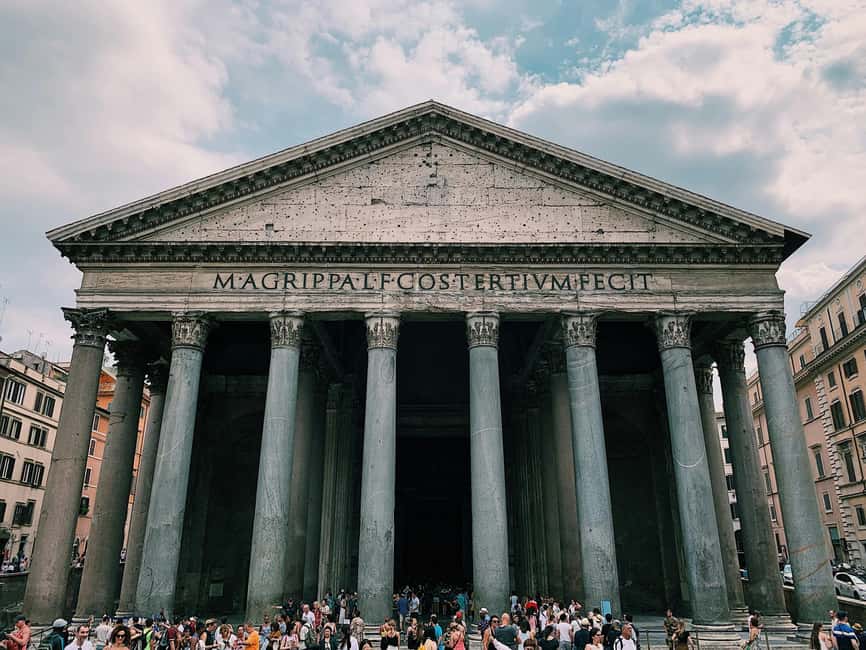
Next is the Pantheon, and this is one of the stops where a legend-based narration can actually help you. The Pantheon is visually unforgettable on its own, but the guide’s job is to connect what you’re seeing to the idea that myths and belief were part of how people explained the world around them.
The way this stop is described is key: ancient myths intertwine with reality. That’s exactly how you should think about it while you’re there. Yes, it’s a major historic monument. But the point of the tour is also to show how Rome keeps translating old ideas into the present through storytelling.
Expect the guide to keep you oriented without making it feel like a lecture. If you’re the type who gets lost in big sights without a thread, this tour gives you one: listen for the story, then look again at the building through that lens.
Piazza Navona: Baroque Lines and Stories in the Palaces
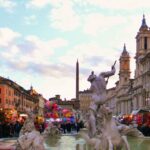
Then you reach Piazza Navona, a Baroque square where the architecture feels designed to be watched from every angle. On your walk, the guide adds an eerie layer by talking about spectral presences—stories tied to the palaces facing the square.
This is a good moment to slow down mentally. The square is easy to turn into a quick photo stop. With narration, it becomes something else: a stage where belief, fear, and the supernatural show up as part of local folklore.
If you like walking tours that feel like theatre instead of sightseeing drills, this is where the tone clicks. It helps that the tour is small and intimate, so you’re not stuck behind a crowd of strangers who are tuning out.



Campo dei Fiori: The History Under the Market Square
From the glamour of fountains and squares, the tour shifts to Campo de’ Fiori, and that change is intentional. Your guide walks you through the impressive but sad history of Giordano Bruno.
This is where the “dark past” theme becomes more than spooky atmosphere. Even if you don’t know his story already, you’ll hear enough to understand why this location carries weight. The message you take away is that Rome’s famous squares aren’t just pretty. People lived, suffered, spoke, and were punished here. The guide helps you notice how a square can hold both everyday life and heavy memory at the same time.
It’s also a good place to feel the pace of the tour. You’ll be walking, turning corners, and hearing stories that fit the street layout. If you’re hoping to learn while walking rather than standing still all the time, this segment works well.
The Ending at Chiesa Santa Maria dell’Orazione e della Morte
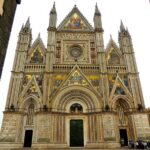
The tour concludes at Chiesa Santa Maria dell’Orazione e della Morte, a church described as steeped in mystery. This ending matters because it keeps the tone coherent. You started with death in the crypt. You finish with death and faith in a church setting.
The guide unravels the enigmatic tales surrounding the sacred place, and the goal isn’t to leave you with every fact pinned down like a textbook. It’s to leave you with a sense of wonder and the feeling that Rome’s spiritual architecture can also function like folklore infrastructure.
It’s a satisfying close if you like your Rome a little darker around the edges. It’s also practical: you end at a fixed point, not scattered across neighborhoods, so you can plan your next stop afterward with less stress.
Small Group Size, Headsets, and Why the Walk Works
This tour is built for people who hate the “lost in the crowd” feeling. A small group keeps you from being swallowed by other groups, and the headsets make a huge difference with street noise and distance.
Also, the route stays within a walkable cluster of sights. That’s part of the value: you’re paying for an expert guide and a compact sequence, not for long transit between far-off locations.
From the experience perspective, guides have been a big deal. You can see it in how names like Stefania and Gabriela come up: they’re described as attentive, precise with details, and quick to answer questions. And Stefania in particular is noted for visiting extra spots with the group when they were already on the path—exactly the kind of small flexibility that makes a short tour feel fuller without derailing the schedule.
Price and Value: Is $65 Worth It?
At $65 per person for 2 to 2.5 hours, the price isn’t “cheap,” but it’s also not inflated for what you get—if you care about guided storytelling at key sites.
Here’s what’s included:
- Expert guide
- Capuchin Crypt entrance ticket
- Headset
That combination is where the value comes from. You’re not just paying for access. You’re paying for a guide to connect Trevi, Pantheon, Navona, Campo de’ Fiori, and the church ending into one coherent narrative. And because the crypt ticket is included and you skip the ticket line, you save time that would otherwise vanish in queues.
What you should budget for separately:
- Food and drinks (not included)
- Any additional attractions beyond the route
If you’re the type who reads signs and still wants more context, this is a strong match. If you just want to “check boxes” and move on, you might not get full value from the storytelling focus.
Practical Tips: What to Bring, What to Wear, and What to Avoid
Plan this one like you’re entering a site with rules, not just sightseeing.
Bring:
- Comfortable shoes
- Umbrella
- Water
- Passport or ID card (a copy is accepted)
Wear:
- No shorts
- No short skirts
- No sleeveless shirts
- Leave luggage or large bags behind
Avoid:
- Photography or video inside the Capuchin Crypt
- Late arrival (you won’t be allowed to join)
And be honest with your comfort level. The crypt is underground and spooky, so if you have claustrophobia, skip it.
Who This Tour Suits Best (and Who Should Skip)
This is a good fit if you want Rome to feel personal through stories—especially legends tied to places you already recognize. It also suits you if you enjoy small groups and clear audio, and you like when a guide answers questions instead of just moving at lecture speed.
It’s not a great fit if:
- You have mobility impairments or need wheelchair access
- You have claustrophobia
- You’re traveling with children under 12
- You want a relaxed, low-intensity experience with lots of time for wandering on your own
If that describes you, you’ll likely spend the crypt portion stressed instead of curious.
Should You Book the Capuchin Crypt Visit & Rome Dark Past Walk?
I’d book it if you want a compact 2–2.5 hour route that blends Rome’s top sights with a genuine dark-history mood—without turning the experience into chaos. The included crypt ticket, headsets, and the small-group approach make it practical, and the best guides (people like Anastasia, Stefania, and Gabriela) have a real knack for pacing, details, and answering questions.
I’d skip it if you’re sensitive to cramped spaces, need full accessibility support, or prefer a purely daytime “pretty Rome” walk. Here, the spooky tone is part of the product, not a side effect.
If you’re on the fence, ask yourself one question: do you want Rome explained with stories tied to what you see? If yes, this tour is a strong use of your time.
FAQ
How long is the Capuchin Crypt Visit & Rome Dark Past Walking Tour?
It lasts 2 to 2.5 hours.
How much does it cost?
The price is $65 per person.
What’s included in the tour price?
You get an expert guide, the Capuchin Crypt entrance ticket, and headsets.
Do I need to buy a crypt ticket separately?
No. The crypt entrance ticket is included.
Which sights are part of the walk?
You’ll visit Trevi Fountain, the Pantheon, Piazza Navona, Campo de’ Fiori, and you end at Chiesa Santa Maria dell’Orazione e della Morte.
Are photos or videos allowed in the Crypt of the Capuchins?
No. No pictures or videos are allowed inside the crypt.
What languages are the tours offered in?
The live guide is available in English, Spanish, Italian, Portuguese, and French.
What should I wear or bring?
Wear appropriate clothing (no shorts, short skirts, or sleeveless shirts) and bring comfortable shoes, an umbrella, water, and an ID/passport (a copy is accepted).
Is it suitable for children or young teens?
It’s not suitable for children under 12.
Is the tour okay if I have mobility issues or use a wheelchair?
No. It’s not recommended for people with limited mobility and it’s not suitable for wheelchair users.
Is there a cancellation option?
Yes. There’s free cancellation up to 24 hours in advance for a full refund, and you can reserve now and pay later.