REVIEW · ROME
La Dolce Vita: Cruising Rome in a Classic Fiat 500
Book on GetYourGuide →Operated by JS Rome · Bookable on GetYourGuide
A Fiat 500 makes Rome feel cinematic. I love the way a vintage Fiat 500 slows the whole city down, with easy photo moments at the Colosseum and panoramic hills. The main trade-off is simple: it’s only about two hours, and you’re a passenger, so this is for seeing and photographing, not for long independent exploring.
Starting in front of Oppio Caffè, you ride in a classic car that’s built for street-level Rome, not distant viewpoints you reach only by bus. You’ll get a relaxed mix of stops and short pass-bys, and the tour wraps with a grand finish at Fontana dell’Acqua Paola. If you end up with a guide known for upbeat storytelling and great shots, like Jacob or Elmar, that adds real fun to the experience.
One more practical note: the Giardino degli Aranci (Orange Garden) can be closed on holidays or for construction. If that happens, your guide will tell you in advance, and the experience still pivots around the best photo and view moments.
In This Review
- The big idea: why this Fiat 500 tour works in Rome
- What you’ll do from the moment you meet at Oppio Caffè
- Settling into the vintage Fiat 500 (and why it matters)
- Colosseum photo stop: get the iconic hit fast
- Circus Maximus: ancient chariot racing, seen from the road
- Aventine Hill’s Giardino degli Aranci: the Orange Garden pause
- Gianicolo Hill: Rome from above, with the sun doing the work
- Trastevere pass-by: color, tight streets, and local life energy
- Castel Sant’Angelo: the fortress by the river, seen in motion
- Fontana dell’Acqua Paola and the end on Janiculum Hill
- Photos included: why that’s more valuable than it sounds
- How the 2-hour timing feels on the ground
- Who this Fiat 500 tour is best for
- Price check: is $73 per person good value?
- Quick tips to help you get the best out of the ride
- Should you book La Dolce Vita: Cruising Rome in a Classic Fiat 500?
- FAQ
- How long is the Fiat 500 tour in Rome?
- Where do we meet for the tour?
- Do I drive the Fiat 500?
- What are the main stops and photo moments?
- Are photos included?
- What languages is the live guide available in?
- What’s the cancellation policy?
The big idea: why this Fiat 500 tour works in Rome
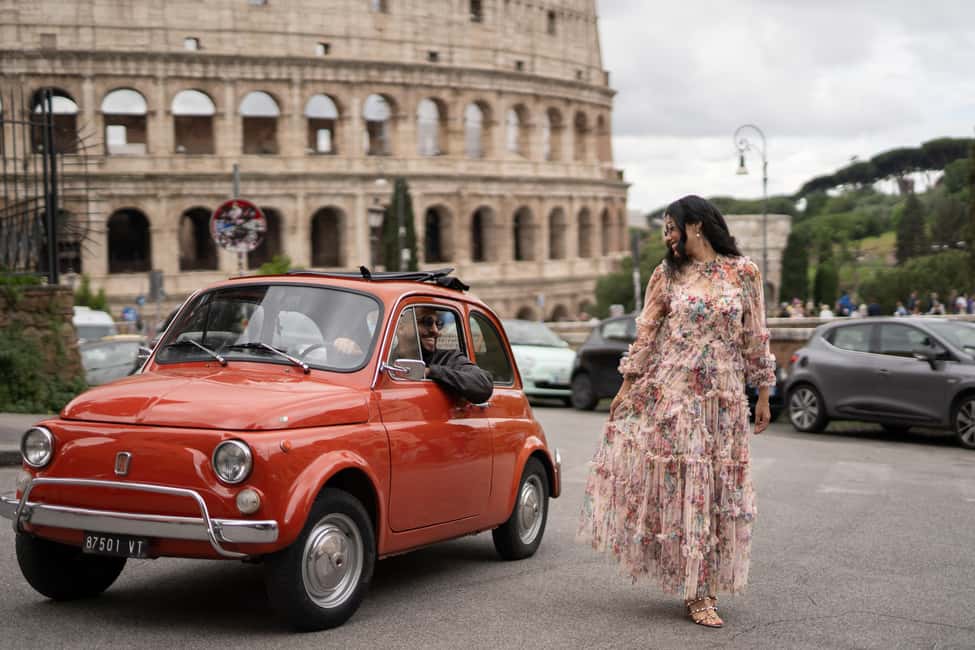
La Dolce Vita: Cruising Rome in a Classic Fiat 500 isn’t trying to be a cram-everything sightseeing bus. You’re buying a vibe—slow, sunlit, and very Roman—delivered through one of the most recognizable little cars on earth.
The classic Fiat 500 matters because it changes how you move through the city. Rome on foot can feel like a nonstop stair climb and a queue shuffle. In a small vintage car, you get to slow down, look longer, and react to what you see—whether that’s a fountain façade, a dome silhouette, or the “how is that building still standing” feeling you get around historic centers.
I also like that the experience is built around visual milestones. You’re not just driving past famous places. You have built-in moments to stop, take photos, and reset your bearings—especially on the viewpoints that make Rome look like it does in the movies.
What you’ll do from the moment you meet at Oppio Caffè
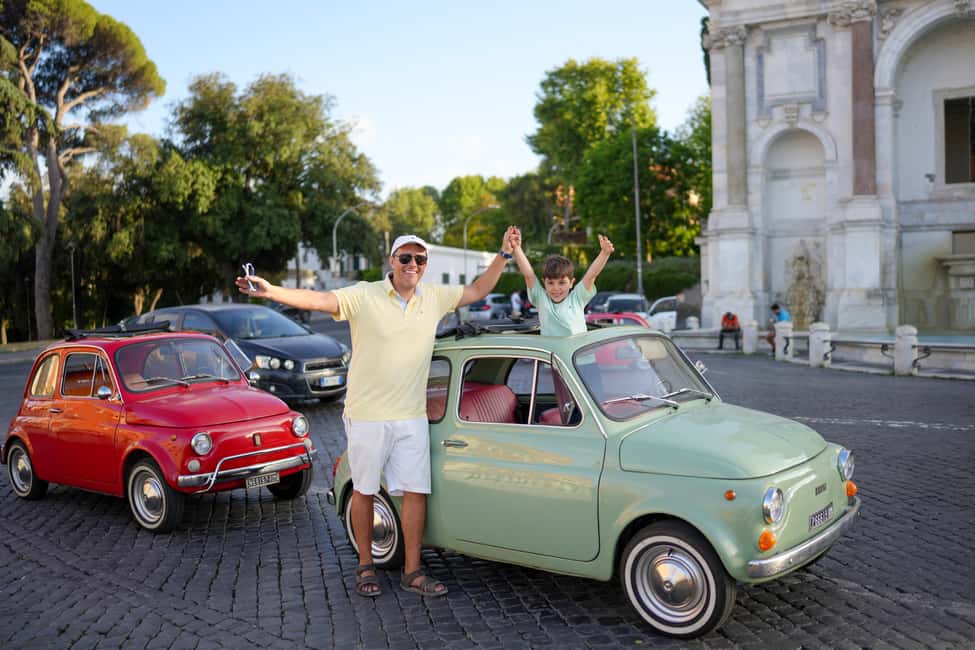
You meet in front of Oppio Caffè, and from there the tour settles into its rhythm: quick orientation, short photo stops, and then the city-view chain reaction.
Your role is passenger, not driver. That’s a big deal for comfort and enjoyment. You don’t have to think about streets, lanes, or parking logistics—you just focus on sitting back and watching Rome slide by at a pace that feels human.
You’ll also have a live guide, speaking multiple languages. Options listed include English, Spanish, Turkish, Russian, Italian, and Korean. For most visitors, that means you get the story behind what you’re seeing, not just a name list.
Finally, you should know it’s designed for private or small groups. That typically makes photo stops smoother because you’re not stuck waiting behind a giant pack.
You can also read our reviews of more tours and experiences in Rome.
Settling into the vintage Fiat 500 (and why it matters)
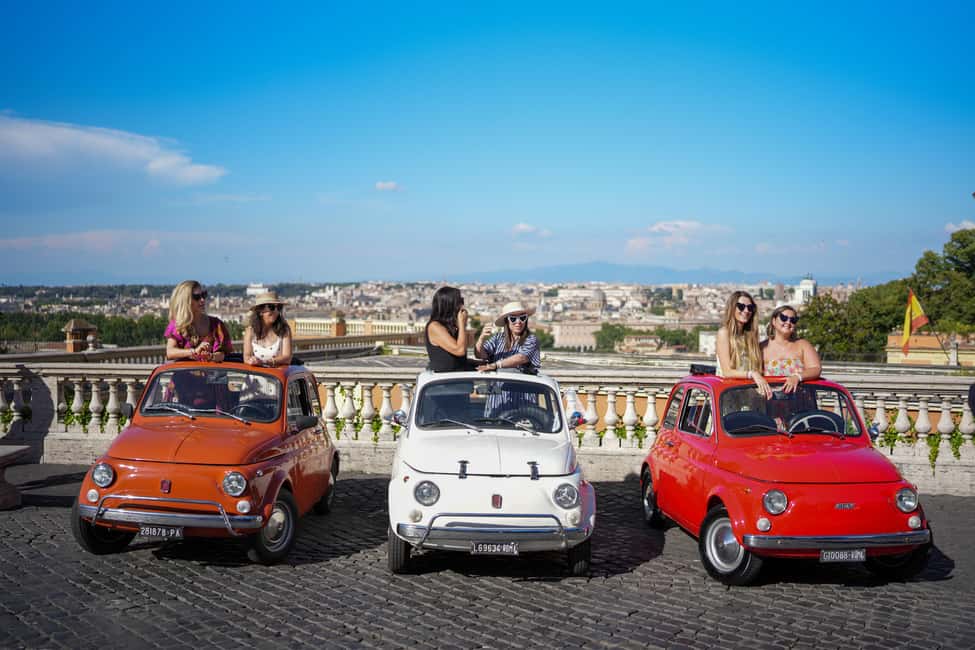
This is a ride, not a lesson in car mechanics. But the car itself is part of the attraction.
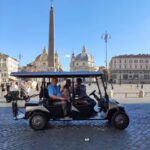
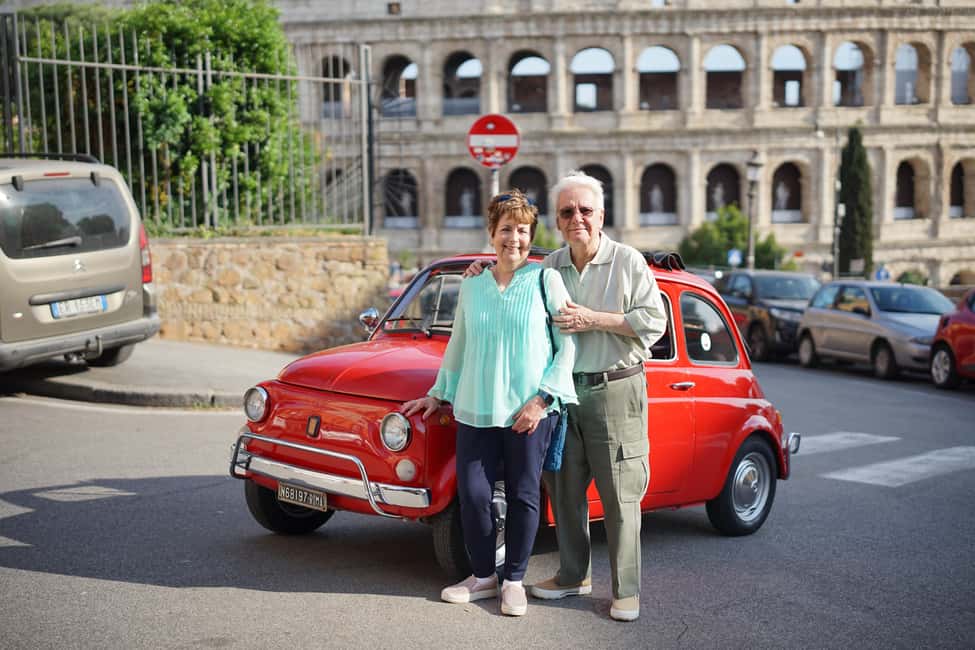
A vintage Fiat 500 is tiny by modern standards, so you’ll feel closer to the streets and closer to each stop. That closeness helps at the photo moments: you’re not photographing a landmark from far away in a parking lot—you’re photographing it with the car frame around the scene, which gives your pictures that “La Dolce Vita” look.
You also get the practical upside of a short-format tour. With a duration of two hours, you’re not committing a whole day to one activity. That’s handy if you’re also planning longer sightseeing blocks like museums or major walking routes.
Colosseum photo stop: get the iconic hit fast
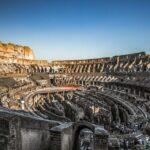
The tour starts with a stop at the Colosseum, one of those landmarks that hits you even if you’ve seen photos a hundred times.
You’ll spend about 15–20 minutes here for photos and to get comfortable in the car before the next legs. The value of this early stop is that you start with a huge anchor. If you’re the type who likes your first impressions to be strong, the Colosseum is the way to do it.
The only thing to consider: this is a photo stop, not a guided interior experience. If your dream includes walking inside the Colosseum or going deep on Roman architecture, you’ll want other plans for that. This tour is built for viewpoints, street views, and quick storytelling moments.
Circus Maximus: ancient chariot racing, seen from the road
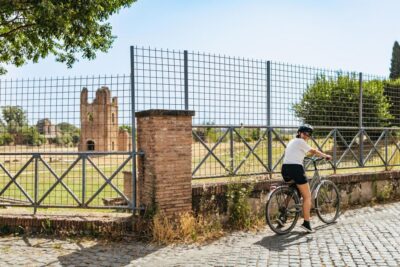
After leaving the big starting point, you’ll get a pass-by of Circus Maximus. This is the ancient chariot-racing stadium area—one of those places where the story changes how you interpret the space.
A pass-by might sound brief, but it works well in a car tour because you’re moving through the city while the guide frames what you’re seeing. You get the sense of where events happened without spending time waiting around for the perfect walking-route conditions.
Aventine Hill’s Giardino degli Aranci: the Orange Garden pause
Next comes one of the most peaceful moments in the whole schedule: Giardino degli Aranci, the Orange Garden on Aventine Hill.
You’ll have about 15 minutes here for sightseeing and a walk. The idea is simple and smart. Rome can feel intense and crowded, so this stop gives you a breathing space with a view that feels calm rather than chaotic.
You’ll want to take advantage of the walk time. Even a short stroll helps you feel the shift—from moving through Rome to pausing with Rome. And if you’re a photographer, this is where you can reset your angles and shoot the city from higher ground.
Important practical note: Orange Garden can close on holidays and for construction, and your guide will notify you. If it’s closed, don’t panic. The tour is still structured around major viewpoints and photo-friendly stops, so the experience doesn’t become a dud.

Gianicolo Hill: Rome from above, with the sun doing the work
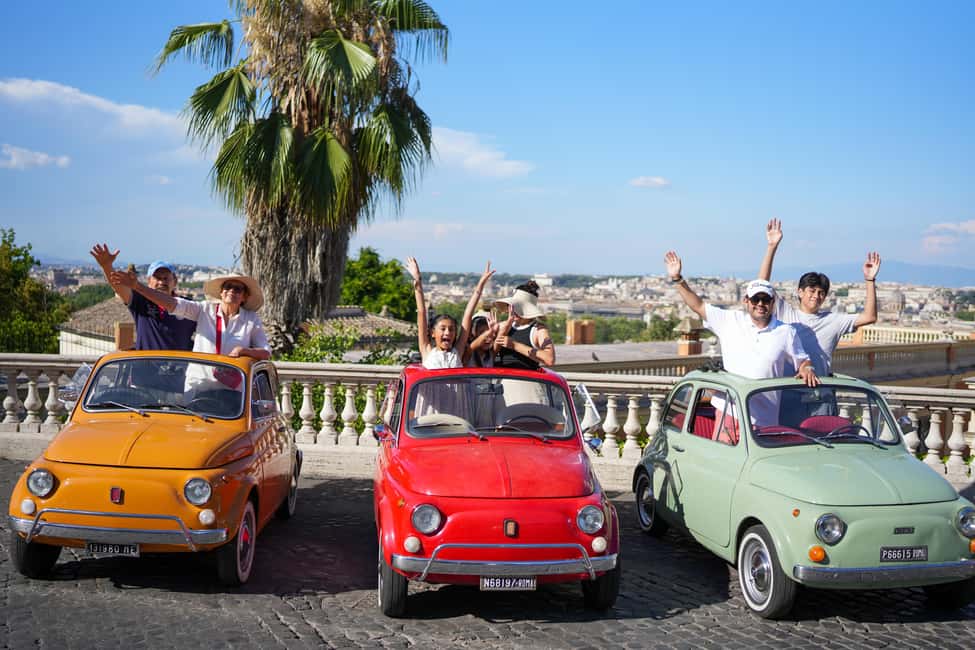
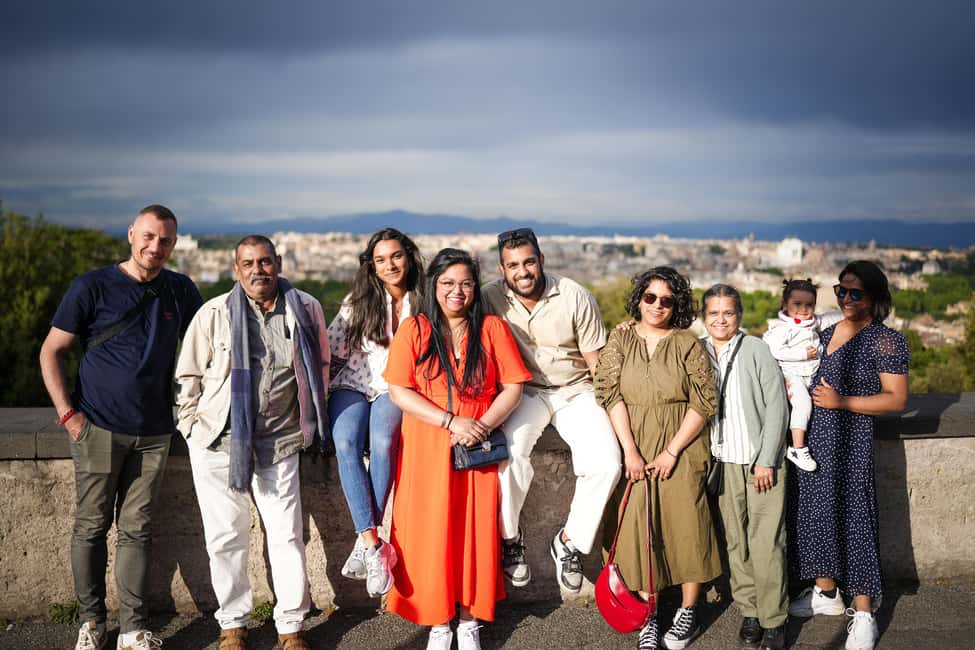
From there, you head toward Gianicolo Hill for one of Rome’s classic “from above” viewpoints.
You’ll spend about 20 minutes here, and this is the moment where Rome’s rooftops, domes, and historic building silhouettes start to feel like a single connected scene. This is also a good point in the tour for a quiet moment. If you’ve been walking all day, the break from stairs is real value.
Why this stop matters: viewpoints turn the city into a map you can understand. After seeing Rome from up high, the street-level chaos you saw earlier starts to make sense. You’ll come away with better orientation for your future sightseeing—almost like Rome gives you the big picture before you keep exploring.
Trastevere pass-by: color, tight streets, and local life energy
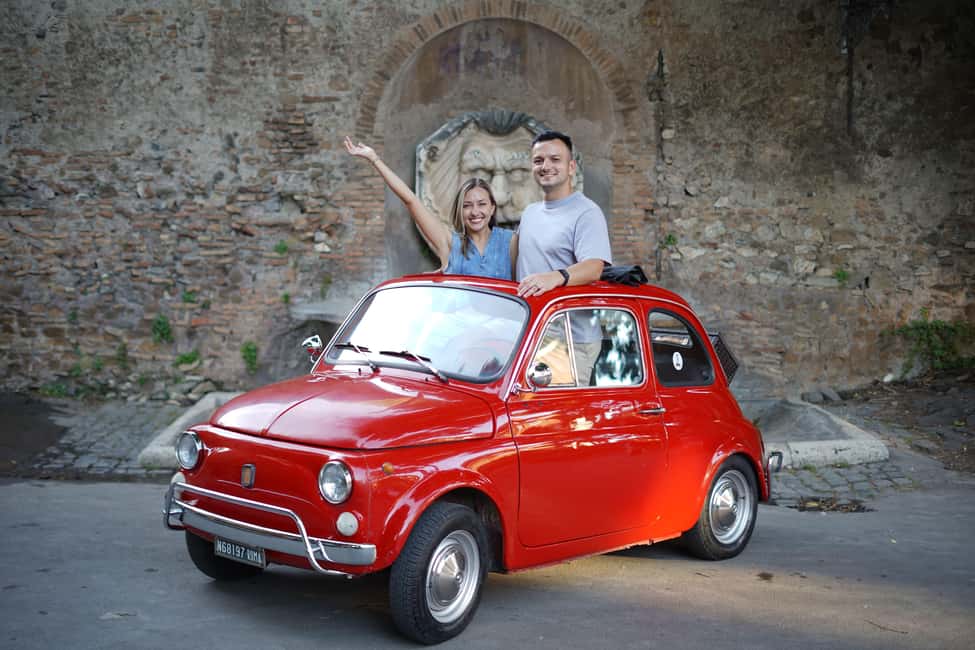
You’ll pass by Trastevere, the lively neighborhood known for narrow streets and a more lived-in feel.
This is one of those “you feel it before you name it” places. Even from a car, you’ll catch the vibe: the tight street geometry, the warm color of buildings, and the sense that people are still doing daily life here, not just posing for photos.
A pass-by is the right format if you’re trying to cover several highlights in two hours. It also keeps the schedule flexible enough to linger at the best view moments.
Castel Sant’Angelo: the fortress by the river, seen in motion
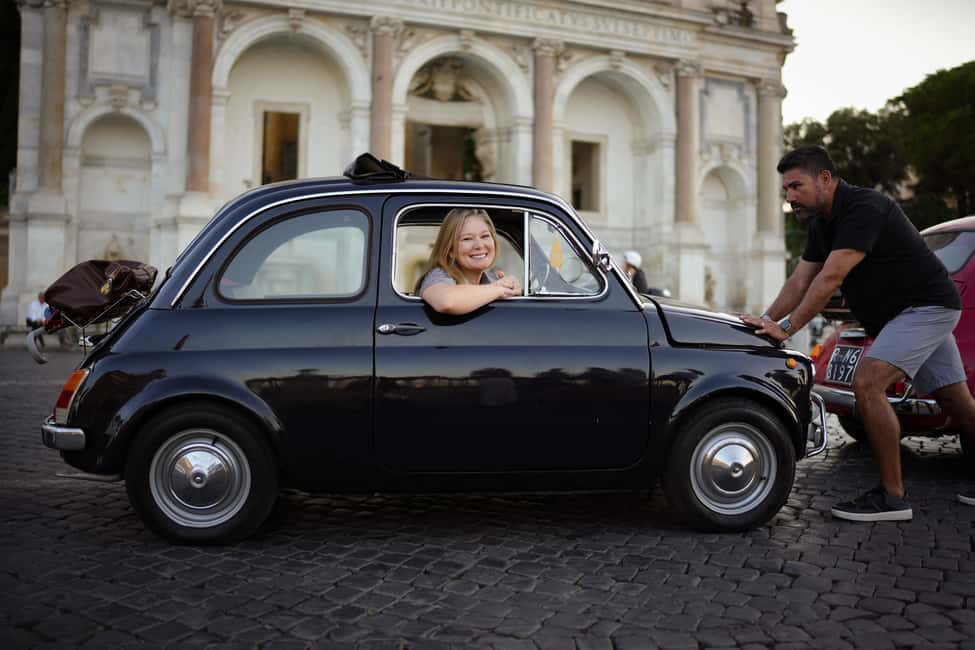
Next comes a pass-by of Castel Sant’Angelo. This riverside fortress is visually dramatic, and seeing it from the street adds depth.
A car tour can give you a more three-dimensional sense of the monument than a quick stop on foot. You’ll likely get a scenic angle that shows the fortress in relation to the river and surrounding structures—useful for understanding why the building stands out as much as it does.
Again, this isn’t an extended photo walk. It’s a drive-by moment that adds variety to the itinerary and keeps your eyes engaged while the tour moves between big stops.
Fontana dell’Acqua Paola and the end on Janiculum Hill
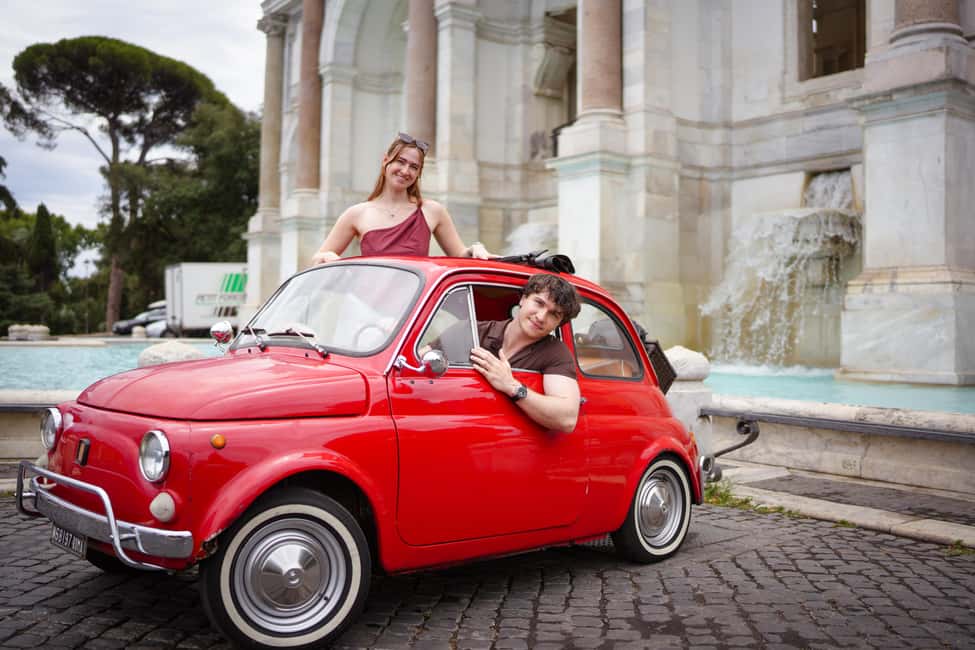
Your final major highlight is Fontana dell’Acqua Paola, a grand Baroque fountain located on Janiculum Hill.
The time here is short but meaningful. You’ll have around 20 minutes to appreciate the wide marble façade and the flowing water before heading back toward the meeting point. It’s a great “last scene” for a Rome tour because it feels elegant and complete—like the city’s story wrapped with a bow.
The fountain also provides a different type of viewing than the earlier hills. Earlier, you’re looking out across Rome. Here, you’re taking Rome in up close—details, stonework, and the classic sound-and-light effect of water in a historic setting.
Photos included: why that’s more valuable than it sounds
This tour includes photos from the session. That’s not just a nice extra—it’s a time-saver and a quality boost.
In Rome, you’ll often spend the first half of a photo stop holding your phone at awkward angles while someone else fumbles with the camera timer. Here, you’re getting guided photo moments, so your attention stays on framing and posing while someone else handles the logistics.
The reviews also point to strong photography and photo guidance from guides like Elmar, with people praising professionalism and the quality of shots. Since you’ll be moving through multiple landmark moments, having that consistent photo support helps your set of pictures feel like a cohesive story rather than a scatter of quick snaps.
How the 2-hour timing feels on the ground
A two-hour tour is perfect when you want highlights without turning your day into a checklist.
Here’s the practical flow you can expect:
- You start at a major icon (Colosseum) and get your big first-photo moment.
- You move into a calm viewpoint stop (Orange Garden).
- Then you stack the best “Rome from above” energy (Gianicolo).
- After that, you add neighborhood and fortress flavor through pass-bys.
- You close with an impressive fountain finish (Fontana dell’Acqua Paola).
The tour is not designed for long walks through each site. If that’s what you want, plan a full-day Rome plan around museums and longer pedestrian routes. But if your goal is a cinematic highlight loop with great photo moments, two hours is a strong sweet spot.
Who this Fiat 500 tour is best for
This experience fits best when:
- You want photos that look like the movies, not just proof-you-were-there shots.
- You like short, guided formats with high payoff per hour.
- You’re okay with being a passenger while the car does the hard streetwork.
- You want a mix of major sights plus a few “feel the city” neighborhood pass-bys.
It’s also a solid choice if you’re traveling with someone who doesn’t want heavy walking. The schedule is structured around view stops and photo moments rather than long stairs-and-alley wandering.
Price check: is $73 per person good value?
$73 per person for a two-hour vintage Fiat 500 experience can be very reasonable—especially because the tour bundles in two things that are usually separate when you plan your own day: a guided route with interpretation and included photo coverage.
You’re not just paying for a car. You’re paying for:
- multiple high-impact stops (Colosseum, Orange Garden, Gianicolo, Fontana dell’Acqua Paola),
- a guide who keeps the flow tight,
- and photos from the session.
If you tried to assemble the same sequence yourself, you’d likely spend time coordinating transport, managing parking or meeting logistics, and figuring out where to get consistently good photos. Even if you already know Rome well, the convenience and photo help are the value.
That said, it’s not the right pick if you only want deep site exploration. This is a highlight-and-photo experience, not a museum-style “study every detail” program.
Quick tips to help you get the best out of the ride
- Wear shoes you can walk in for the Orange Garden and viewpoint moments, since there’s a short walk time included.
- Bring something for photos that won’t slow you down. You don’t need to fumble with settings while the best light is happening.
- If Orange Garden is closed (holidays or construction), trust your guide to adapt. The remaining stops still cover the viewpoints and the big finishing fountain.
- Go into it with a relaxed mindset. This is meant to feel easy and romantic, not rushed like a bus tour.
Should you book La Dolce Vita: Cruising Rome in a Classic Fiat 500?
I’d book it if you want Rome with style and structure—short, guided, and built around photo moments that make the city feel cinematic. The vintage Fiat 500 adds real charm, the itinerary hits high-recognition landmarks plus viewpoint magic, and the included photos remove a lot of friction.
I would skip it if your priority is extended on-foot exploration inside major sites, or if you prefer long self-paced wandering over a fixed two-hour circuit.
If you’re planning your Rome days like a mix of walking and “one special experience,” this is one of the easiest ways to add charm and standout pictures without sacrificing half your day.
FAQ
How long is the Fiat 500 tour in Rome?
It lasts about 2 hours.
Where do we meet for the tour?
You meet in front of Oppio Caffè.
Do I drive the Fiat 500?
No. You attend as a passenger.
What are the main stops and photo moments?
You’ll have a photo stop at the Colosseum, time at Giardino degli Aranci (Orange Garden), time at Gianicolo Hill, and time at Fontana dell’Acqua Paola, plus pass-by highlights including Circus Maximus, Trastevere, and Castel Sant’Angelo.
Are photos included?
Yes. Photos from the session are included.
What languages is the live guide available in?
The live tour guide is available in English, Spanish, Turkish, Russian, Italian, and Korean.
What’s the cancellation policy?
Free cancellation is available up to 24 hours in advance for a full refund.