REVIEW · ROME
Rome: Borghese Gallery Guided Tour with Skip-the-Line Ticket
Book on GetYourGuide →Operated by Gray Line I Love Rome · Bookable on GetYourGuide
Hard tickets. Big payoff.
This Borghese Gallery guided tour helps you see one of Rome’s most in-demand museum collections without the long entry crush, then links it to the setting that shaped the art inside Villa Borghese. With a pre-reserved skip-the-line ticket, you walk into the gallery prepared for the right rooms, the right stories, and a calm pace.
I especially like two things. First, the guides make the art feel connected and human, not just names on a wall. In particular, the way guides such as Alessandra and Matteo explain the why behind Bernini and the founding collection style is a big part of the magic. Second, the experience stays intimate: you get headsets and a very small group size (limited to 5), which makes the explanations easier to follow, even when other languages are present.
One consideration: the follow-on garden stroll is outdoors in a big park, and you’ll be on walking paths afterward. If your mobility is limited, think carefully about the uphill angles and the fact the tour doesn’t promise any special transport once you’re outside.
In This Review
- Quick takeaways
- Why Borghese Gallery entry feels like a sport
- Small group, headsets, and a pace that actually works
- Entering the Borghese Gallery: the 20-room layout that rewards a guide
- Bernini’s showpiece energy: from early works to masterpieces
- Caravaggio, Rubens, and Titian: the painting side that balances the drama
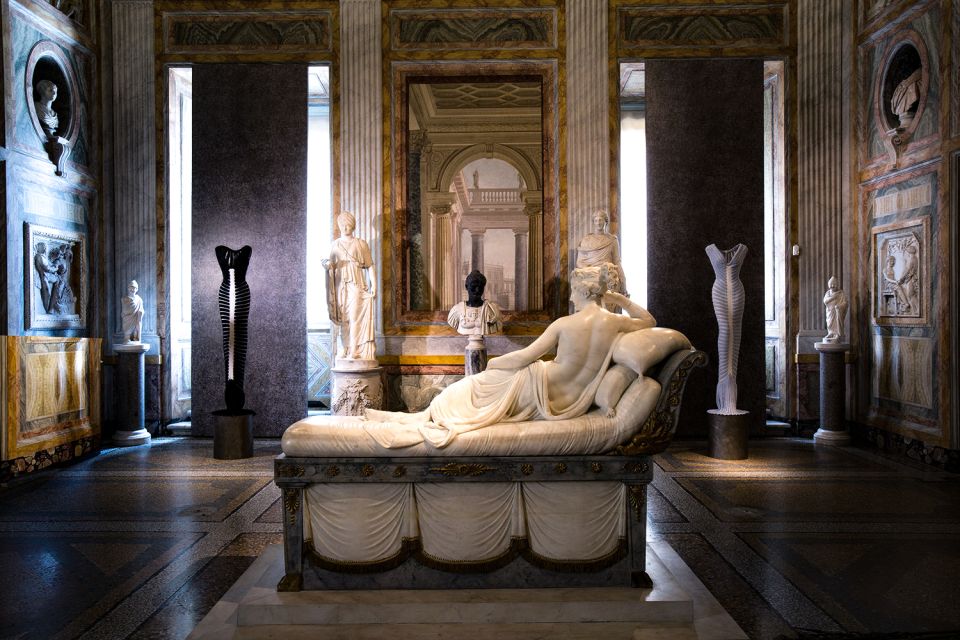
- Canova’s Paolina Borghese: the portrait that hits harder in person
- Antiquity surprises: the gladiator mosaic and the Roman imagination
- The illusion and the 3D effect: why ceilings matter here
- The Borghese family story, and the Napoleon connection
- Villa Borghese gardens after the art: walking to the viewpoint
- Price and value: what $116.68 buys you in real terms
- Who this tour is best for (and who should think twice)
- Practical tips so you don’t lose time at the entrance
- Should you book this Borghese guided tour?
- FAQ
- Where does the tour start and end?
- How long is the guided tour?
- Is the ticket truly skip-the-line?
- What’s included in the tour?
- What language is the tour offered in?
- How big is the group?
- Is the tour wheelchair accessible?
- Does the tour run in bad weather?
- How flexible is cancellation?
- Is hotel pickup included?
Quick takeaways
- Skip-the-line access into a gallery that is often fully booked and hard to enter.
- Small group of up to 5 with headsets, so the guide’s narration stays clear.
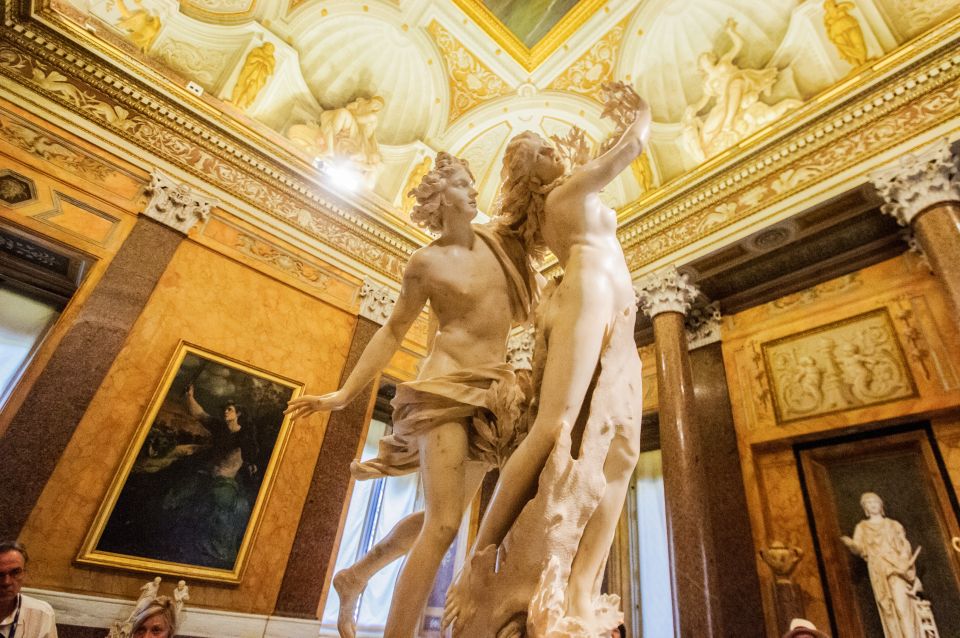
- A tour focused on signature works, including Bernini (Rape of Proserpine, Apollo and Daphne, David) and major painting highlights.
- Antiquity details you’re unlikely to notice fast on your own, including a gladiator mosaic dated 320–330 AD.
- After the gallery, you get a Villa Borghese stroll that can end at the Pincio terrace for wide views.
Why Borghese Gallery entry feels like a sport

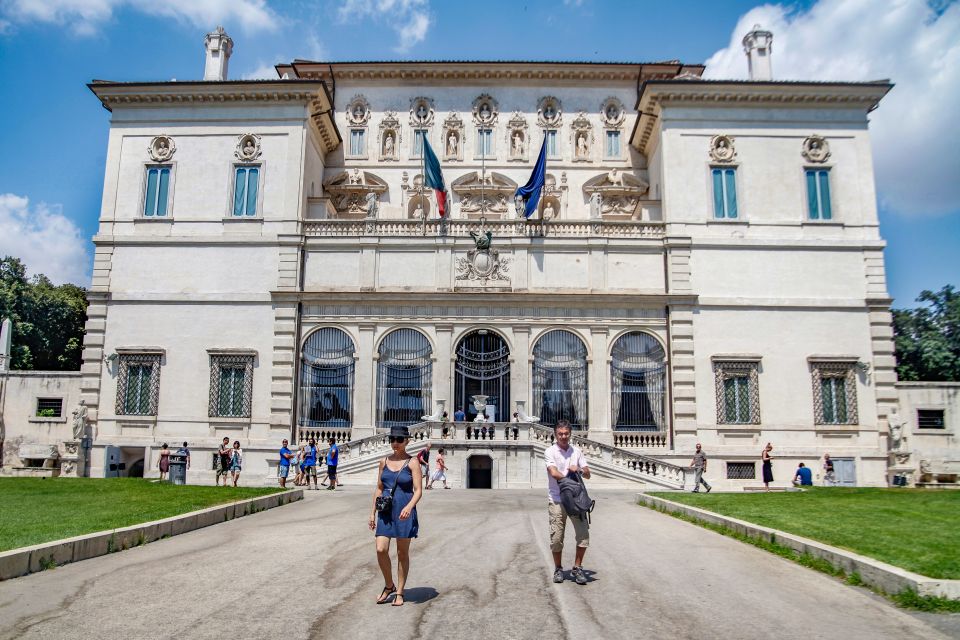
The Borghese Gallery (Galleria Borghese) is famous partly because it’s so tightly scheduled. The museum lives inside Cardinal Scipione Borghese’s villa world, and entries are limited, so last-minute planning can turn into frustration. This is exactly where a pre-reserved skip-the-line ticket earns its keep.
What you’re really buying is time and focus. Instead of spending your energy fighting the queue, you step into a curated, story-driven visit, and the guide helps you connect the collection to the collector and his era.
You can also read our reviews of more tours and experiences in Rome


Small group, headsets, and a pace that actually works
This is set up for listening. You’re in English with a live guide, and you get headsets (handy because the gallery area can include bilingual groups and multiple languages at once). With a group capped at 5 participants, the tour can slow down when questions pop up and speed up only when it makes sense.
It’s also wheelchair accessible per the activity info, but the same page flags that it’s not suitable for people with mobility impairments. If you’re thinking about bringing a wheelchair or have specific limitations, I’d treat that as a clear prompt to check details directly before you go.
Entering the Borghese Gallery: the 20-room layout that rewards a guide
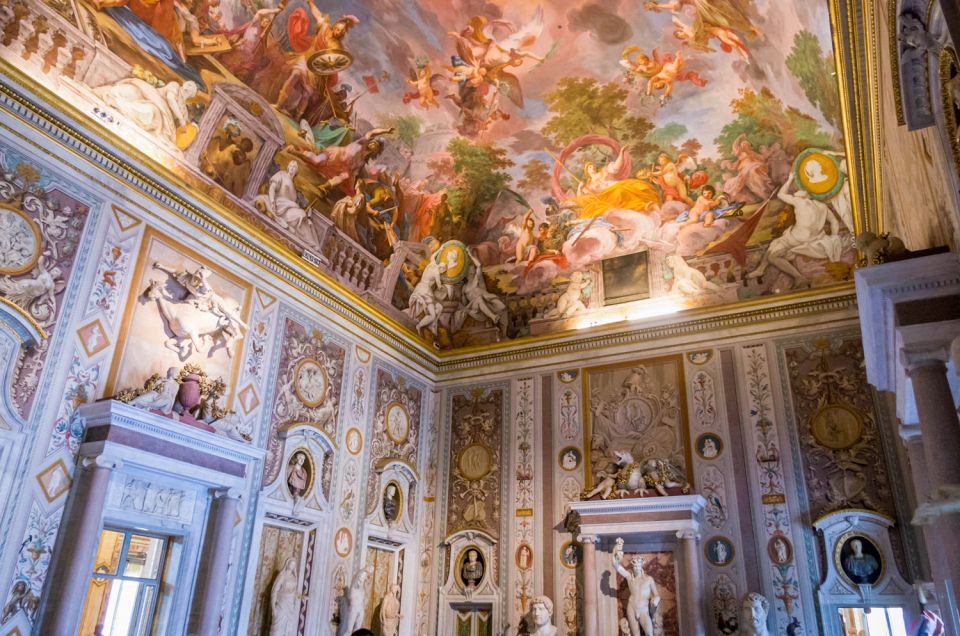
Once inside, you’re moving through the museum’s 20 rooms of paintings and sculptures. The collection is not laid out like a simple “walk-by everything” museum. It’s arranged to create meaning—pairing sculptures and painting themes, and guiding your eye the way Cardinal Borghese wanted.
During the guided portion (about 2 hours), the guide typically points out the big visual moments and then explains the context behind them. That approach is what turns a crowded museum into something you can actually absorb.
Bernini’s showpiece energy: from early works to masterpieces
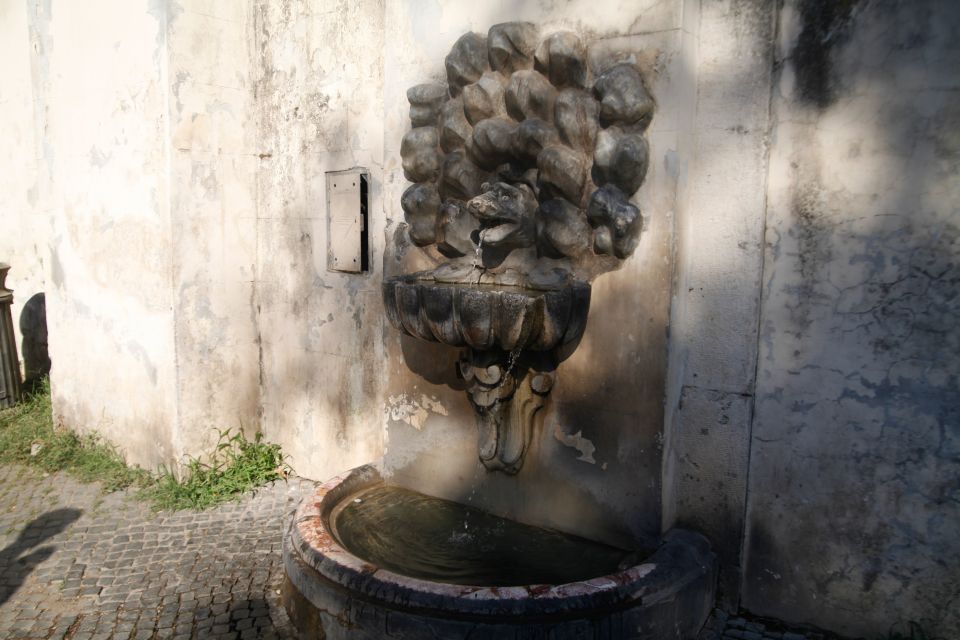
If you come to Borghese for one artist, it’s probably Bernini. This collection is packed with sculptures that look different depending on where you stand—alive, dramatic, and designed for emotion.
A few major stops you’ll want on your radar:
- Early Bernini works, like Goat Amalthea with Infant Jupiter and Faun. These pieces are a great way to see how the sculptor’s skill begins to form.
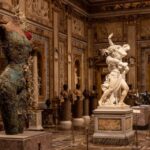
- The famous movement and drama of The Rape of Proserpine. The guide usually helps you notice how posture and facial expression do the storytelling.
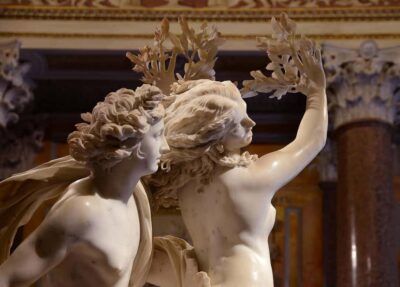
- Myth and power in Apollo and Daphne—the moment where the action feels frozen but the tension is still visible.
- David, another “you can feel it” sculpture where you get why Bernini became the star of his age.
The real value here is not only seeing the statues. It’s learning what the guide wants you to notice: gesture, layered detail, and why these works mattered to collectors and patrons who loved theater-like sculpture.
Caravaggio, Rubens, and Titian: the painting side that balances the drama
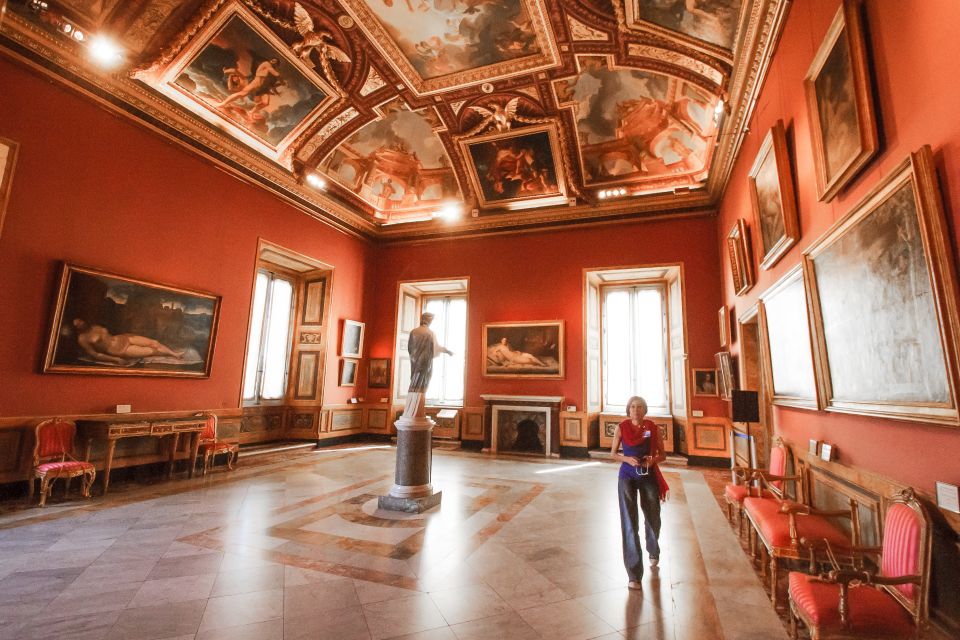
Borghese isn’t only stone. You also get a serious slice of Baroque painting, and it helps to have someone connect the themes across mediums.
Your tour includes paintings by major names such as:
- Caravaggio
- Rubens
- Titian
Even without a full art-lecture background, I like how these paintings give your eyes a rest from sculpture, while still keeping the intensity. A good guide ties them back to how the collection was built—so you’re not just watching individual masterpieces, you’re seeing a collection with a point of view.
You can also read our reviews of more guided tours in Rome


Canova’s Paolina Borghese: the portrait that hits harder in person
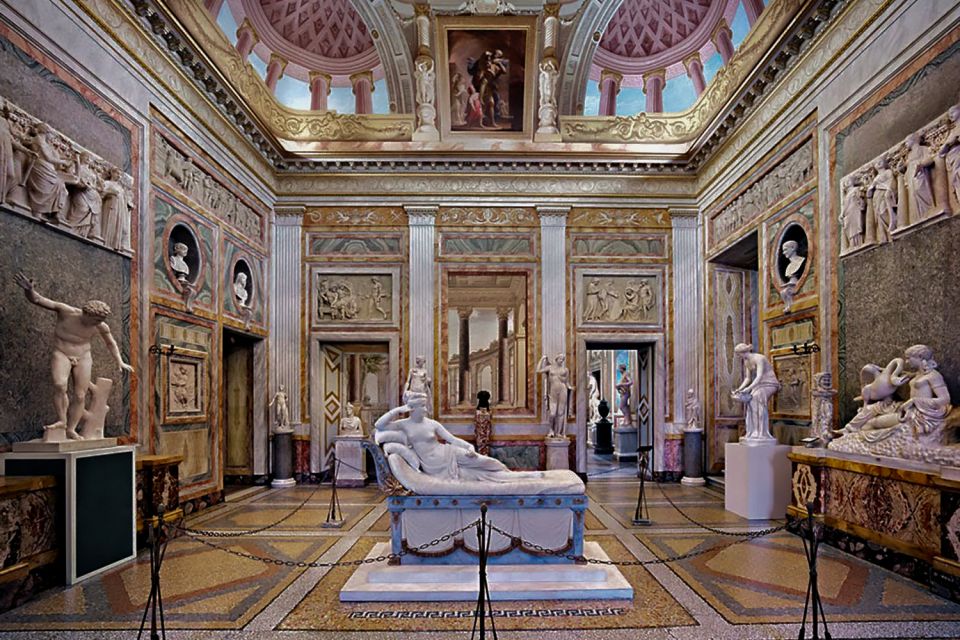
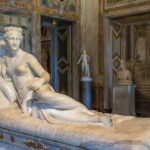
One of the standout sculptural portraits is Paolina Borghese by Canova. The guide’s commentary matters here because it helps you understand why this kind of work became so important: it’s not only beauty, it’s identity, status, and how art can “perform” personhood.
In a room full of strong myth and religious drama, this portrait can feel like a different kind of power—less mythic, more intimate. That contrast is one of the reasons the Borghese visit is so memorable.
Antiquity surprises: the gladiator mosaic and the Roman imagination
Borghese also mixes in Roman-era artifacts, and it’s worth paying attention because the gallery’s identity isn’t just Renaissance and Baroque. You’ll see antiquities from the 1st to 3rd centuries AD, and the guide helps explain why these pieces belonged in the same space as modern masterpieces.
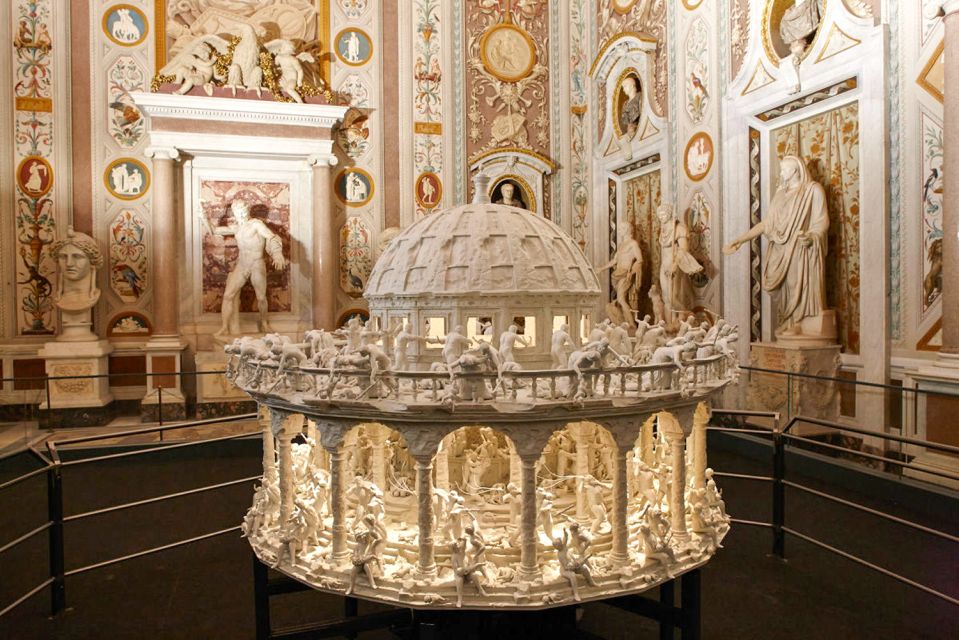
A truly distinctive highlight is the mosaic of gladiators dated 320–330 AD, found on the Borghese estate at Torrenova. If you’ve mostly seen mosaics as “floor art,” this is one you’ll want to see as narrative: combat scenes that translate Roman culture into a visual punch you can process quickly.
You’ll also hear about classical objects like the Venus Victrix sculpture and other antiquity items. This is where the collection feels like a time machine, and a guide helps prevent it from turning into random “old stuff.”
The illusion and the 3D effect: why ceilings matter here
One of the more interesting curio-style details in the gallery is a trompe l’oeil ceiling fresco with a strong 3D effect. It’s easy to miss on a quick self-guided visit because people naturally stare at statues and canvases at eye level.
During a guided tour, you tend to look upward at the right time. That’s a big deal at Borghese, because the villa design encourages you to feel like you’re inside a staged world, not just inside museum rooms.
The Borghese family story, and the Napoleon connection
Borghese is built around one family’s collecting habits, and your guide explains that power and politics shaped what you see on the walls and plinths. You’ll learn about Cardinal Scipione Borghese, who started the collection, and you’ll also hear how the Borghese family’s fortunes intersected with Napoleon in the 1800s.
This context matters more than it sounds. Without it, the museum can feel like a random greatest-hits list. With it, you start understanding how patrons used art to project authority, taste, and cultural ambition.
Villa Borghese gardens after the art: walking to the viewpoint
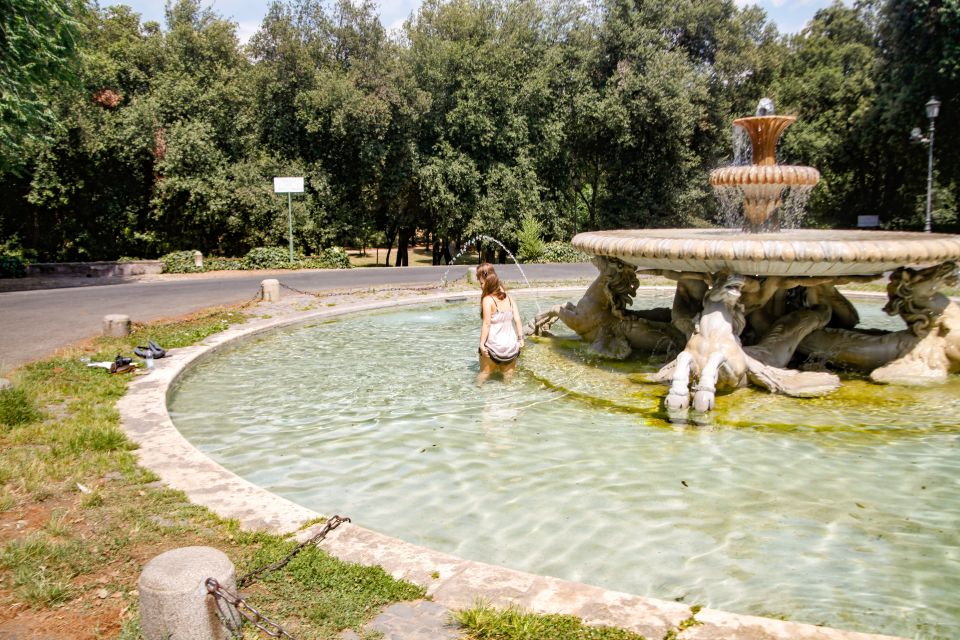
After the gallery portion, the experience keeps going outside with a stroll through Villa Borghese. You’re walking along tree-flanked promenades that lead toward the Pincio terrace, one of the best spots for wide views.
From here, you can look across areas such as Piazza del Popolo and the Prati district, and on a clear day you can see major landmarks including St Peter’s Dome, the Gianicolo, Quirinale, Piazza Venezia, and Capitol Hill.
This part is a nice “reset.” The gallery is intense and detailed; the gardens let your brain decompress so the art doesn’t blend together.
Price and value: what $116.68 buys you in real terms
At $116.68 per person, this is not a budget museum ticket. But for Borghese, the value is less about saving money and more about buying the right experience.
Here’s what you get that’s hard to replicate cheaply:
- Skip-the-line access to a museum that can sell out and stays hard to enter.
- A live guide with expertise geared to the collection.
- Headsets, which improve clarity and reduce the usual frustration of trying to hear over a crowd.
- A structured visit that covers major sculptures and paintings in a limited time window.
If your main goal is to speed through, you could do it independently. But if your goal is to understand the collection and see the “why” behind the masterpieces, the guide and ticket bundle is the thing that makes the price feel reasonable.
Who this tour is best for (and who should think twice)
This tour shines if you:
- love Bernini and want the stories behind specific works
- prefer a guided visit instead of wandering room to room guessing what matters
- want a small group experience where questions don’t feel awkward
- care about how art relates to the collector and the villa setting
It’s not the best fit if you’re dealing with mobility limitations that make longer garden walking difficult. Even though the tour is listed as wheelchair accessible, it also states it’s not suitable for people with mobility impairments, so it’s worth checking your exact needs ahead of time.
Also, this activity runs in all weather conditions, so pack for sun and rain. Villa Borghese gardens are outdoors, and that follow-on walk is part of the experience.
Practical tips so you don’t lose time at the entrance
A few small moves help you get the best day:
- Arrive a little early at the Borghese Gallery entrance so you can get oriented before the group forms.
- Bring comfortable shoes. The gallery is mostly indoor walking, but the garden segment adds outdoor movement.
- Use the headset properly and keep it secure. It sounds obvious, but it makes a real difference when you’re trying to follow the guide’s explanations.
If you’ve ever stood near a museum entrance trying to spot the right group, you know how annoying that can be. Being early gives you a buffer, and it keeps stress from stealing your attention right when the tour starts.
Should you book this Borghese guided tour?
Book it if you want a high-focus, small-group way to experience the Borghese Gallery without wasting your time in lines. The guided structure makes the collection easier to understand, and the follow-on Villa Borghese stroll adds a satisfying outdoor payoff with viewpoint time at the Pincio terrace.
Skip booking if you only want a quick look at the highlights and you don’t care about context. Borghese is a place where the details matter, and this format is built for that.
FAQ
Where does the tour start and end?
The tour meets at the Borghese Gallery entrance and ends back at the same meeting point.
How long is the guided tour?
The guided visit is about 2 hours.
Is the ticket truly skip-the-line?
Yes. The experience includes a skip-the-line ticket to the Borghese Gallery.
What’s included in the tour?
You get the skip-the-line ticket, a live tour guide, and headsets.
What language is the tour offered in?
The tour is offered in English.
How big is the group?
The group is limited to a small size, with a maximum of 5 participants.
Is the tour wheelchair accessible?
The activity is listed as wheelchair accessible, but it is also marked as not suitable for people with mobility impairments, so it’s best to check your needs ahead of time.
Does the tour run in bad weather?
Yes. It takes place in all weather conditions.
How flexible is cancellation?
You can cancel up to 24 hours in advance for a full refund.
Is hotel pickup included?
No. Hotel pickup and drop-off are not included.