REVIEW · ROME
Ancient Rome with Archaeology – Small Group Only
Book on GetYourGuide →Operated by LeonardoDC · Bookable on GetYourGuide
A walk through Ancient Rome should feel like a story, not a checklist. This one uses archaeology and art history to explain why the Roman Forum, Colosseum, and Imperial Forums look the way they do today. I especially like the way the guide starts with a quick timeline so the monuments aren’t random shapes, and I like the small-group pace that lets you ask questions and stay focused on the details. The main thing to consider: it does not include entering sites or tickets, so if you want inside-access, you’ll need another plan.
You’ll spend about 2.5 hours moving between major landmarks—Colosseum, Imperial Fora, Roman Forum, Capitoline Hill, and the Theater of Marcellus area—using vantage points and short guided moments. The format is light walking, and it’s wheelchair accessible with the city’s support, but you should still be ready for steady strolls around busy streets. If you’re hoping for lots of downtime or museum-style pacing, this one moves at a street-walk rhythm.
Key things I’d watch for before you book: this tour is built around seeing and interpreting what’s outside and in archaeological areas. That can be a plus (more context, less queue time), but it means you won’t step inside the big-ticket monuments during the experience.
In This Review
- Key highlights at a glance
- Why archaeology makes Roman monuments click instead of blur
- Meet at Piazza Mattei and get your timeline before the first photo
- Colosseum stop without tickets: what you can learn from the outside
- Imperial Fora viewpoints: seeing five forums as one political machine
- Roman Forum and Palatine Hill: the evolution of Rome in walking form
- Capitoline Hill square to Theatre of Marcellus: ending with layered legacy
- Size, price, and comfort: is $36.08 worth it?
- Who this tour suits best (and who should look elsewhere)
- Should you book Ancient Rome with Archaeology (small group only)?
- FAQ
- Is this tour inside-entry only, or can I go into the monuments?
- How long is the experience?
- What sites will I see during the walk?
- Where does the tour start and where does it end?
- How big is the group?
- What languages are offered?
- Is this a strenuous walk?
- Are tickets included in the price?
- What if I need to cancel?
Key highlights at a glance
- Archaeology-led explanations that connect monuments across time
- Small group of up to 6 for a more personal pace
- A quick Rome timeline primer before you start walking
- Exterior + archaeological-area viewing (no tickets or inside visits)
- An ending at the Theatre of Marcellus archaeological zone with nearby temples and portico remains
Why archaeology makes Roman monuments click instead of blur
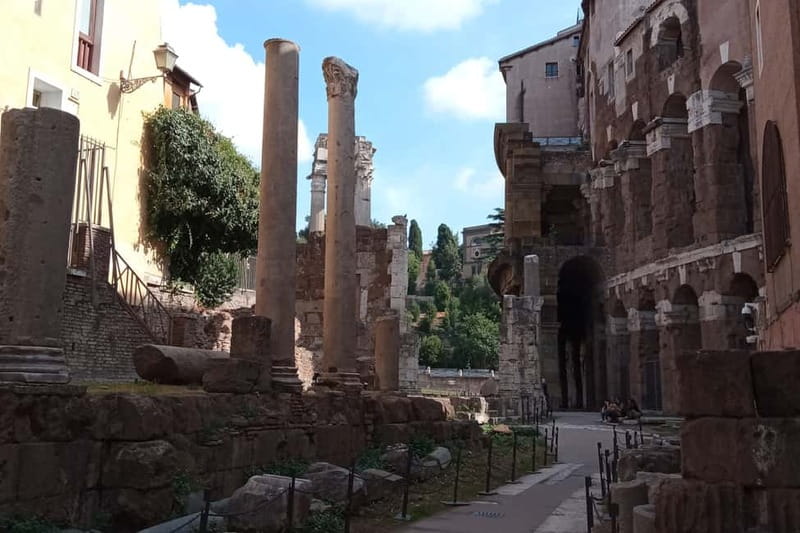
Ancient Rome is famous for being dramatic, but it can also feel confusing fast. One arch, one broken column, one big plaza later—and your brain is doing math you never agreed to do.
What I like here is the approach: you’re taught to read the monuments like evidence. The tour connects what you see in the Roman Forum, Colosseum, and the imperial zones to the way Rome developed over time. You’re not just told facts. You’re guided through the evolution of the monuments using archaeology, history, and art history, which helps the sites stop feeling like separate attractions and start feeling like one long, changing city.
It also helps that the guide tailors the experience to your interests, pace, and available time. That flexibility matters in Rome, where different people want different things—some want politics and power, some want architecture and design, and some just want to understand why everything ended up where it is.
You can also read our reviews of more tours and experiences in Rome.

Meet at Piazza Mattei and get your timeline before the first photo
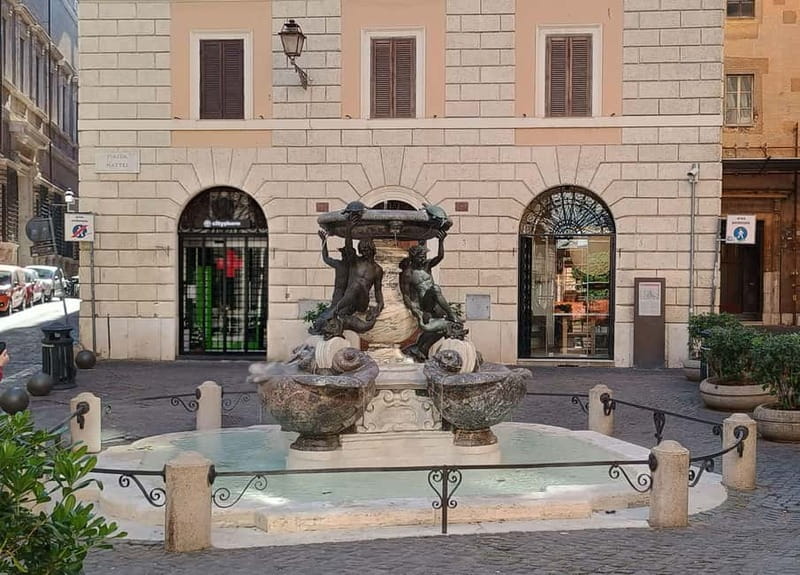
The tour begins at Piazza Mattei, 1, right in front of the Fountain of the Turtles. That’s a simple, easy-to-find start point, and I like that you’re not thrown into the middle of ruins immediately.
Before you head to the monuments, there’s a brief introduction on Rome’s timeline. The guide may do this in a café or while you’re walking. Either way, it gives you a framework so the architecture makes sense while you’re still close enough to absorb it.
This is where the tour’s “small-group” advantage shows. With a group capped at 6 participants, the guide can keep the intro focused and adjust the level depending on what you’re curious about. You’ll also get a sense of the main features of Rome’s art and architecture early on—so when you later see things like forum spaces, temple areas, and monumental buildings, you’re not starting from zero.
Colosseum stop without tickets: what you can learn from the outside
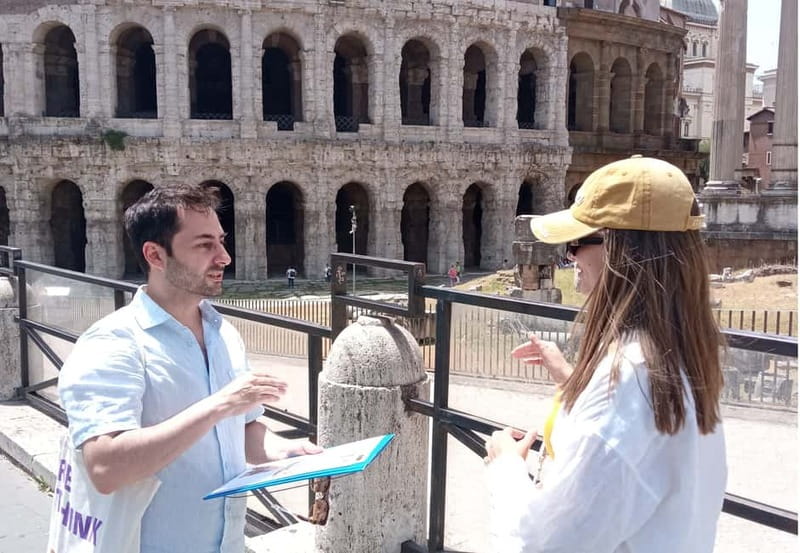
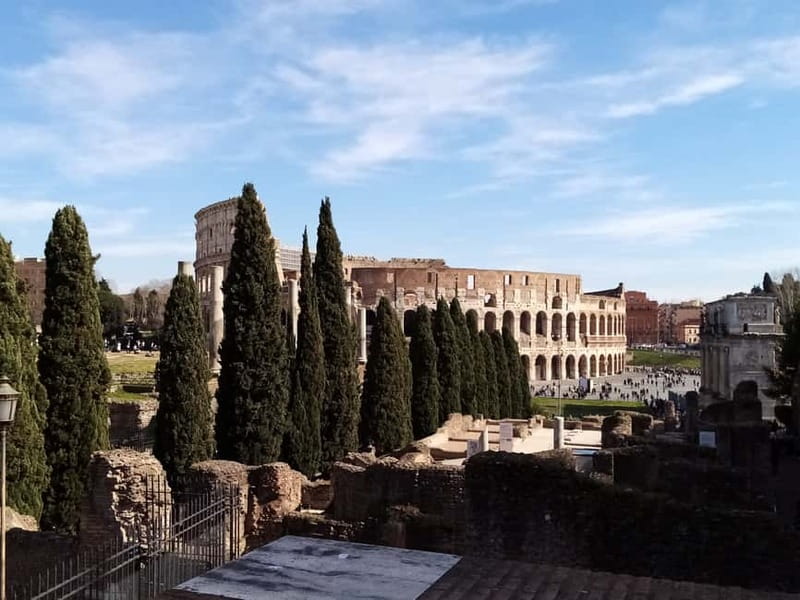
Your first major stop is the Colosseum, with a guided walk around the area for about 30 minutes. Since the experience doesn’t include entering the Colosseum, you’re not distracted by logistics inside. Instead, you can concentrate on structure, scale, and how the building fits into the story of Rome’s growth.
This is also a good moment to notice how archaeology and history work together. The Colosseum isn’t treated as a single moment in time. You’re shown it in context—part of a changing urban environment where later construction and interpretation affect what survives and what you can still read.
Practical tip: wear shoes you trust. Even a “light walk” in central Rome involves uneven pavement and frequent stops for explanation. You’ll likely pause often to look, point, and compare what you’re seeing from different angles.
Imperial Fora viewpoints: seeing five forums as one political machine
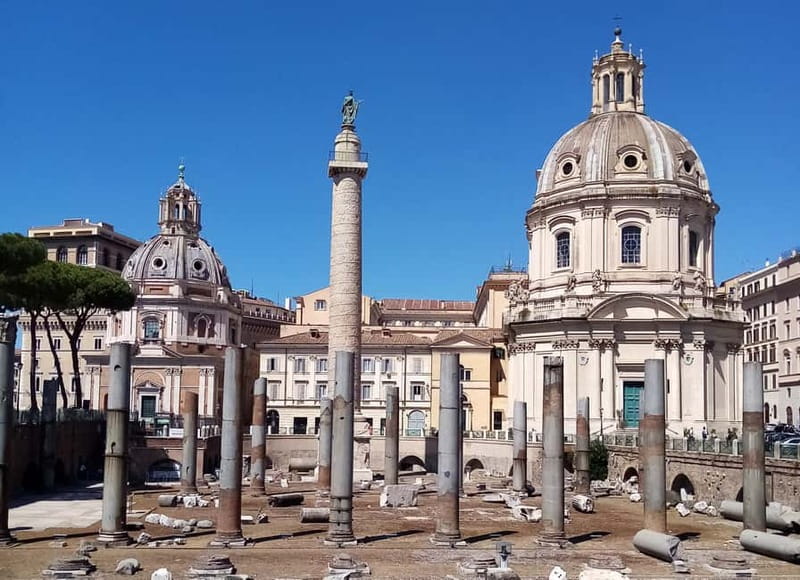
Next up: the Imperial Fora, also about 30 minutes, for sightseeing and guided touring. Here’s where the “archaeology first” method really helps.
Instead of treating the Imperial Fora as separate ruins, the tour frames them as linked spaces—part of a major shift in how power and public life were staged in Rome. You’ll move between vantage points that let you understand how the complexes relate to each other spatially, even if you’re mostly observing from outside and from accessible archaeological viewpoints.
This section is especially valuable if you’ve ever stood near forum ruins and thought, I can’t tell what belonged to what. The guide’s job is to give you a way to map the area in your head, using historical and art-historical context—not just a list of what’s there.
Roman Forum and Palatine Hill: the evolution of Rome in walking form
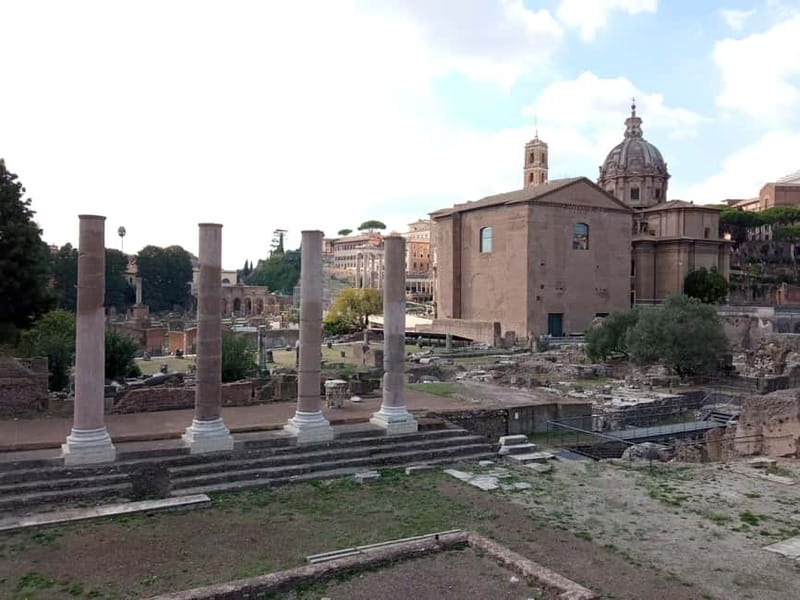
The tour’s Roman Forum stop runs for around 30 minutes and includes guided sightseeing. If you’ve ever visited the Forum and felt that it’s both iconic and oddly hard to interpret, you’ll probably appreciate this format.
You’re not simply looking at famous remains. You’re guided through the idea that Rome grew from humble beginnings into a monumental city, and you’re taught to connect that transformation to the structures around you. The Roman Forum is perfect for this because it’s where you can see layers of Rome’s public life—civic, religious, and political—mapped onto real stone.
The Palatine Hill also comes into the flow as part of how the guide contextualizes the monuments you pass and view. Think of it as getting the “why” while you walk through the “what.”
Downside to keep in mind: because you’re walking between multiple large sites, you don’t get the slow, unstructured browsing time you might want. The benefit is clarity and momentum—by the time you leave, you should feel like you understand how the pieces connect.



Capitoline Hill square to Theatre of Marcellus: ending with layered legacy
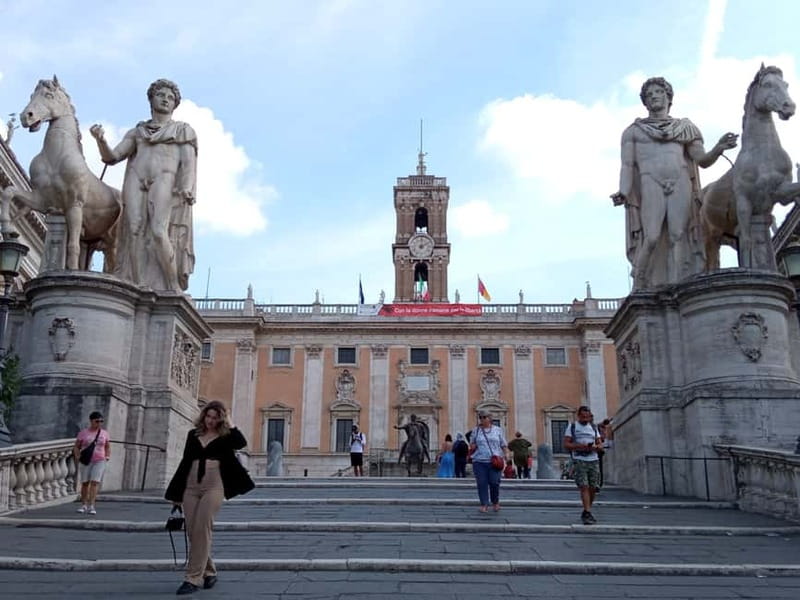
You’ll next visit Piazza del Campidoglio (Capitoline Hill square) for another guided sightseeing walk of about 30 minutes. This stop helps shift your perspective from forum-level scale to the way Rome presented itself from prominent civic positions. It’s a good place to pause and think about the city’s visual language: how it framed authority, how it organized space, and how monuments carried meaning long after the original purpose was gone.
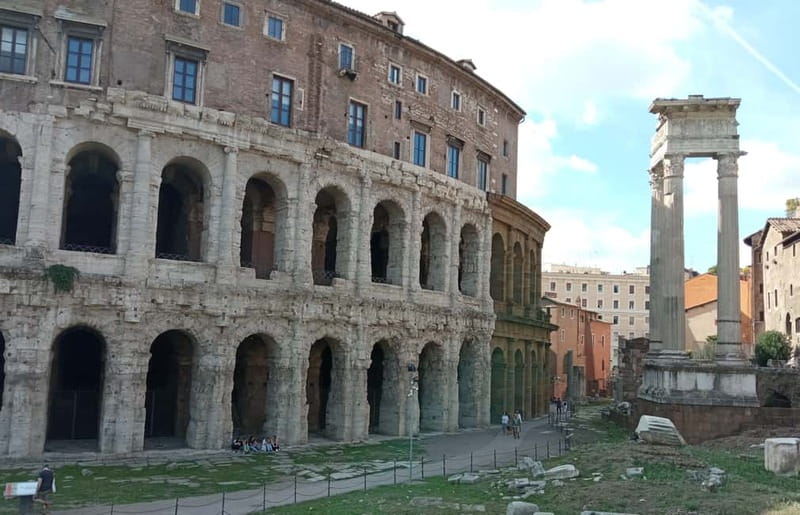
Then the tour finishes at the Theatre of Marcellus archaeological area for about 30 minutes, where you’ll also encounter nearby remains including the Temple of Apollo and the Porticus of Octavia. This ending matters because it rounds out the “Rome is more than buildings” lesson. You see how theatrical and religious structures live next to major civic and imperial spaces, and you get the archaeology-led explanation of how those environments evolved.
There’s also an included note that the archaeological area ties into the setting near the former Jewish Ghetto area. Even if you don’t linger there afterward, it’s a helpful reminder that Rome’s layers aren’t only ancient—you’re walking through a city that kept changing.
One more practical point: this is a walking-heavy finale. If you’re planning dinner right afterward, consider reserving something slightly later so you don’t feel rushed.
Size, price, and comfort: is $36.08 worth it?
For $36.08 per person and a 2.5-hour format, the value mostly comes from the combination of: major landmarks, archaeology interpretation, and a small group limited to 6.
If you’ve ever paid for a big-bus day and gotten generic talking points, the small group angle here is the key difference. In Rome, clarity is often the most expensive thing you buy. Spending a focused couple of hours with a guide who can explain context—while you’re actually looking at the monuments—usually beats trying to piece it together alone from an app or a guidebook.
Comfort-wise, the tour is described as light walking suitable for all ages, and it’s wheelchair accessible with the city’s support. That doesn’t mean zero walking, but it does mean it’s built for people who want a guided city walk rather than an active hike.
The main tradeoff is the one you should decide up front: you won’t enter monuments or use tickets. If inside access is your top priority (and you’re comfortable managing queues and ticket logistics), you may want a different tour type. If your top priority is understanding what you’re seeing from the outside—and getting the archaeology story—this one is a strong fit.
Who this tour suits best (and who should look elsewhere)
This experience is ideal if you:
- Want a guided understanding of Roman architecture and monuments through archaeology and art history
- Prefer a small group where the pace feels human
- Like walking routes that connect several major sites without feeling like a race
It’s less ideal if you:
- Expect inside access to the Colosseum, forums, or other monuments
- Want long free time at each location
- Are traveling mainly for photo stops with zero interpretive talk
Language options are Portuguese and English, so you should be able to find a version that works for you.
Also, the duration and schedule are flexible in the sense that there are different times available. If you want to match your day—morning light versus late-day crowds—that flexibility can make planning easier.
Should you book Ancient Rome with Archaeology (small group only)?
I’d book it if your goal is understanding Rome, not just collecting stamps. The strongest selling point is the guide’s method: archaeology-driven storytelling that helps you connect the Roman Forum, Colosseum, and Imperial Fora into one evolving urban picture.
The reviews back up what you’re buying: LeonardoDC is praised for making the monuments feel more beautiful and meaningful through a good historical introduction, and people say the time passed quickly because the explanations kept them engaged. With a small group of 6, you’re also less likely to get lost in the back and miss the key visual cues the guide is pointing out.
If you’re the type who needs ticketed entry and interior wandering, then this may not be your best match. But if you want the monuments to make sense while you’re standing in the right spots, this is a practical, high-value way to spend a couple of hours in Lazio’s Roman core.
FAQ
Is this tour inside-entry only, or can I go into the monuments?
The experience does not include going inside the monuments or tickets for them. You’ll focus on the sites and archaeological areas from accessible viewpoints.
How long is the experience?
It runs for about 2.5 hours.
What sites will I see during the walk?
You’ll cover the Colosseum area, Imperial Fora, Roman Forum, Capitoline Hill square, and finish at the Theatre of Marcellus archaeological area, including nearby Temple of Apollo and Porticus of Octavia remains.
Where does the tour start and where does it end?
It starts at Piazza Mattei, 1, in front of the Fountain of the Turtles. It ends back at the meeting point, and the experience also lists finish options at Via Nicola Salvi, 65 and Piazza del Colosseo.
How big is the group?
It’s a small group limited to 6 participants.
What languages are offered?
The live guide offers Portuguese and English.
Is this a strenuous walk?
It’s described as a light walking tour suitable for all ages. City-provided physical accessibility is available for wheelchair access.
Are tickets included in the price?
No. The tour price does not include tickets for the monuments.
What if I need to cancel?
There is free cancellation up to 24 hours in advance for a full refund.