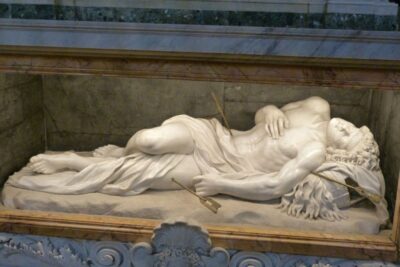
REVIEW · CATACOMBS OF ROME
Rome: Catacomb of St. Callixtus and Appian Way Guided Tour
Book on GetYourGuide →Operated by Enjoy Rome · Bookable on GetYourGuide
Rome gets quiet underground. This 3-hour catacombs plus Appian Way outing takes you out past the main sights to St. Callixtus and the earliest Christian art, with a calm walk on the Appian Way. I especially like how the day contrasts dark tunnels with open Roman countryside air.
What makes it work is the structure. You ride by bus between stops, get headsets, and hear a clear English guide. Many groups also praise guides such as Catia, and drivers like Mario for keeping the trip moving smoothly through traffic.
One big consideration: this is not for everyone. The catacombs involve stairs and tight spaces, so it is not recommended if you have severe claustrophobia, and the tour is not wheelchair accessible. Add the dress rules too: no shorts or sleeveless tops, and shoulders plus knees must be covered for places of worship.
In This Review
- Key things I’d plan around
- Via Cavour 224 and the ride out of Rome
- Catacombs of St. Callixtus: burial tunnels and the art of early Christianity
- Mausoleum of Cecilia Metella: a big name seen from outside
- Appian Way walking plus Parco degli Acquedotti aqueduct views
- Guide style and group comfort that keep you from feeling rushed
- Dress code, rules in the catacombs, and what to wear
- Value check: is $80 for 3 hours worth it?
- Should you book this Rome Catacombs and Appian Way tour?
- FAQ
- Where is the meeting point for the Rome catacombs and Appian Way tour?
- How long is the guided tour?
- What is included in the $80 per person price?
- Is hotel pickup included?
- Can I take photos in the catacombs?
- Is this tour wheelchair accessible?
- Is the catacomb part okay if I have claustrophobia?
- What should I wear or avoid on the tour?
Key things I’d plan around
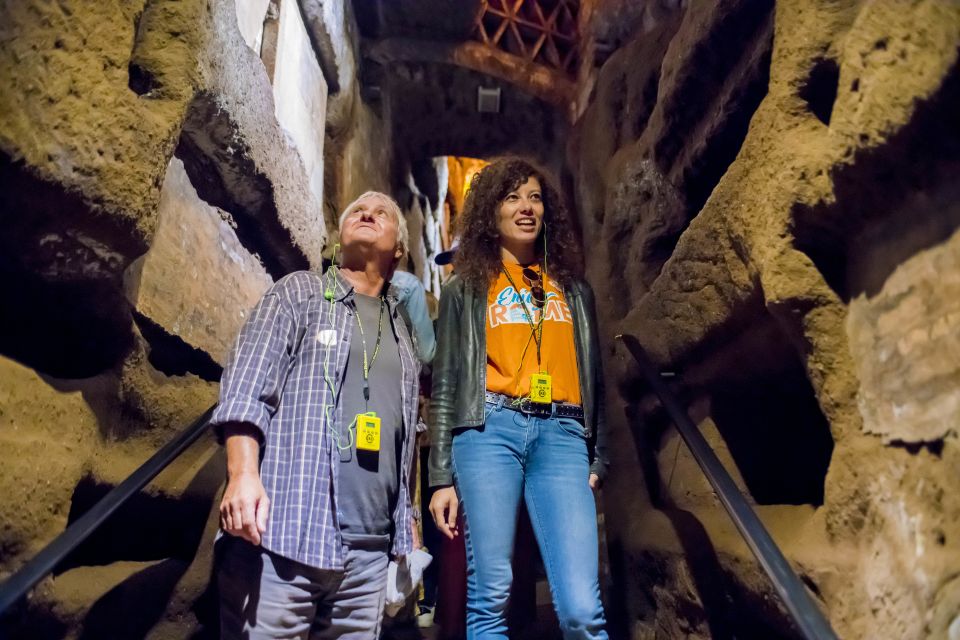
- St. Callixtus catacombs: burial niches, sarcophagi, mosaics, and very early Christian drawings/art.
- Crypt of the Popes: a focused stop inside San Callisto.
- Appian Way walking: old road stones plus a quieter rhythm than central Rome.
- Roman aqueduct views: time outdoors in the Parco degli Acquedotti after the underground portion.
- Transportation included: round-trip transfers from Via Cavour 224 with on-foot segments between sites.
Via Cavour 224 and the ride out of Rome
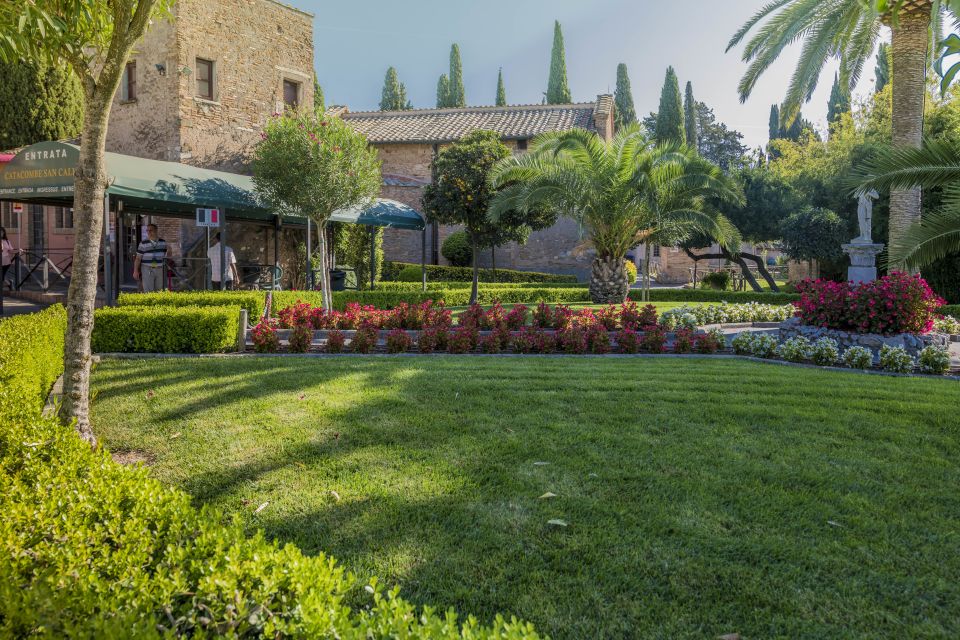
Your day starts at a simple place: the bus stop at Via Cavour 224, near the metro station Cavour (Line B). Plan to show up about 25 minutes early so you’re not rushed before departure. The tour then uses a mix of bus and walking, so you’re trading some city time for a faster route to the countryside.
This matters more than it sounds. Rome is built on layers, and public transit to the catacomb area can be time-consuming. Here, you get the transport from the meeting point and back again, plus entrance/booking fees and the catacomb entry itself. That means your energy stays on the sights, not on figuring out buses and timing.
Also note the pace: it’s only 3 hours, so you’ll move at a tour tempo. One review-style theme in the feedback is that the trip feels well organized between stops, even with a few pauses for practical needs like walking breaks. If you prefer a slow, stand-around-and-chat day, you may feel a little “on the schedule,” but you’ll still get a meaningful slice of Rome outside the crowd grid.
Catacombs of St. Callixtus: burial tunnels and the art of early Christianity
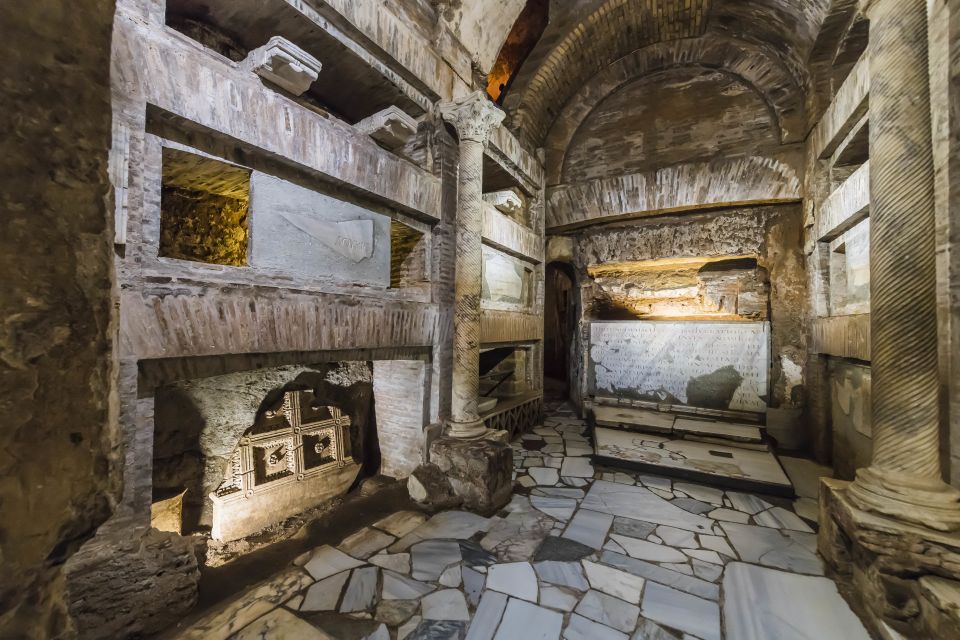
The headline moment is the guided walk through the catacombs, including the Catacombs of St. Callixtus. This is where Rome stops being a postcard city and becomes a city that used its soil like a storage system for faith and family. The tour explains how early Christians used the friable tufa rock around Rome because, as Christianity spread, many people couldn’t afford elaborate tombs and mausoleums.
Inside the catacombs, you’re looking at:
- burial niches cut into the rock
- sarcophagi (in some areas)
- mosaics and religious drawings
- some of the earliest examples of Christian art
You’ll also visit San Callisto and explore the Crypt of the Popes. That stop gives the day a more emotional anchor, because it connects the “technical” side of underground burial with the human side: how communities organized death and memory when they needed it most.
Practical reality check: the catacombs are enclosed, and the rules are strict. Photography is not permitted inside the catacombs. That’s not just for your phone; it also keeps the space calmer and more focused. If you’re the type who wants to record everything, you’ll need to switch your brain to observing and remembering instead.
Finally, if you’re even mildly unsure about confined spaces, take the warning seriously. This tour is not recommended for severe claustrophobia, and it’s not wheelchair accessible. Even for visitors who are fine with caves, you should expect stairs, uneven ground, and tight passageways.
Mausoleum of Cecilia Metella: a big name seen from outside
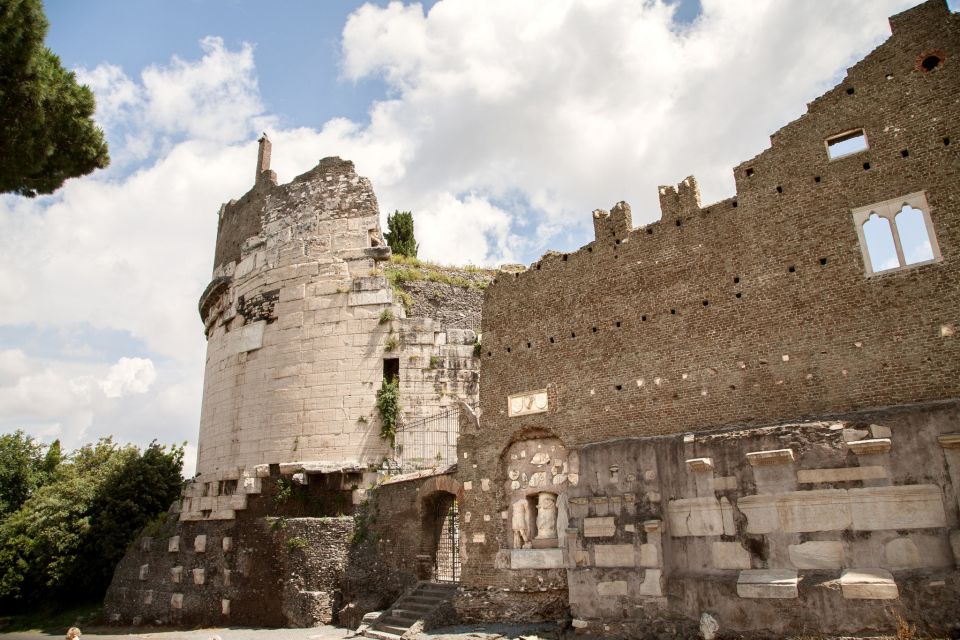
Between the underground stop and the walking outdoors, you’ll see the Mausoleum of Cecilia Metella. The tour focuses on viewing it from the exterior, which is still useful. From outside, you get the scale and the dramatic silhouette you’d otherwise miss when you’re only chasing Rome’s major monuments.
Why this stop makes sense on a short 3-hour tour: it bridges two worlds. Inside the catacombs you’re reading the story of early Christian burial. Outside, you’re reminded that Rome also built grand burial architecture for elites. Seeing a monument like Cecilia Metella helps your brain sort out the different burial options across social classes and time periods.
You also get a “travel rhythm” breather here. The day has a clear arc: underground → monument exterior → a walk along ancient road lines and aqueduct structures. That flow helps keep the experience from feeling like nonstop walking and dark corridors.
Appian Way walking plus Parco degli Acquedotti aqueduct views
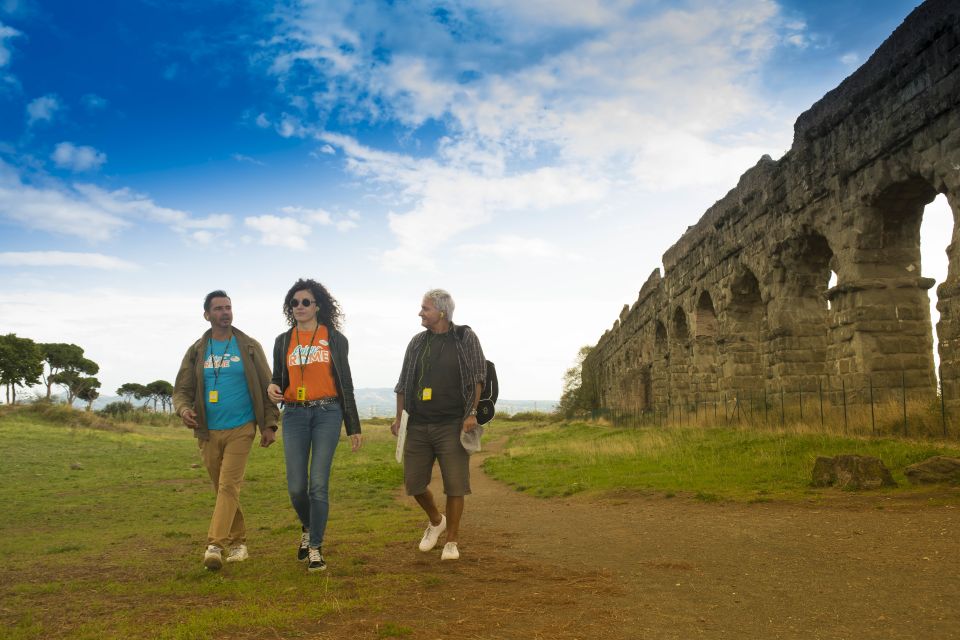
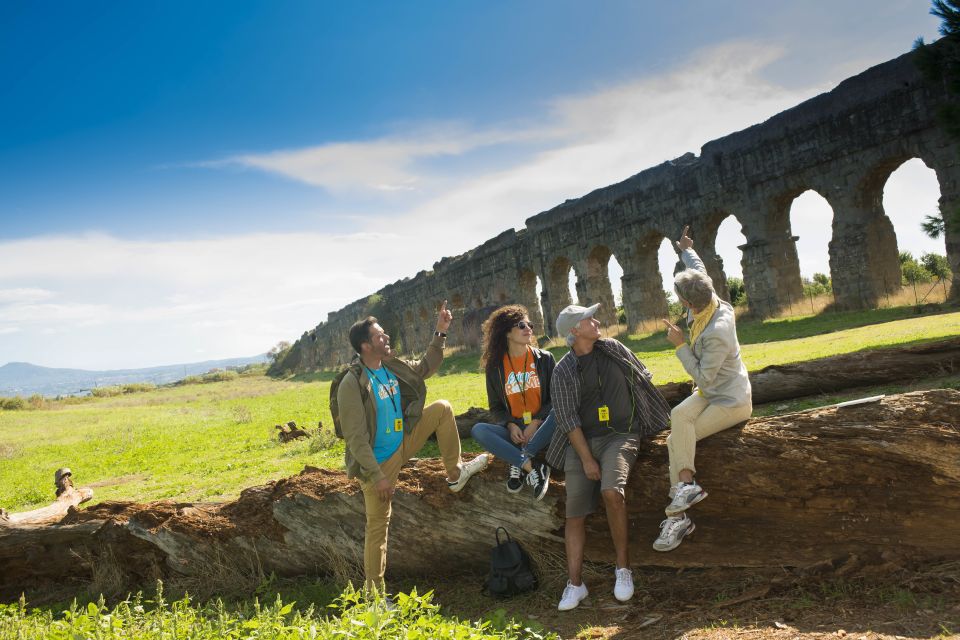
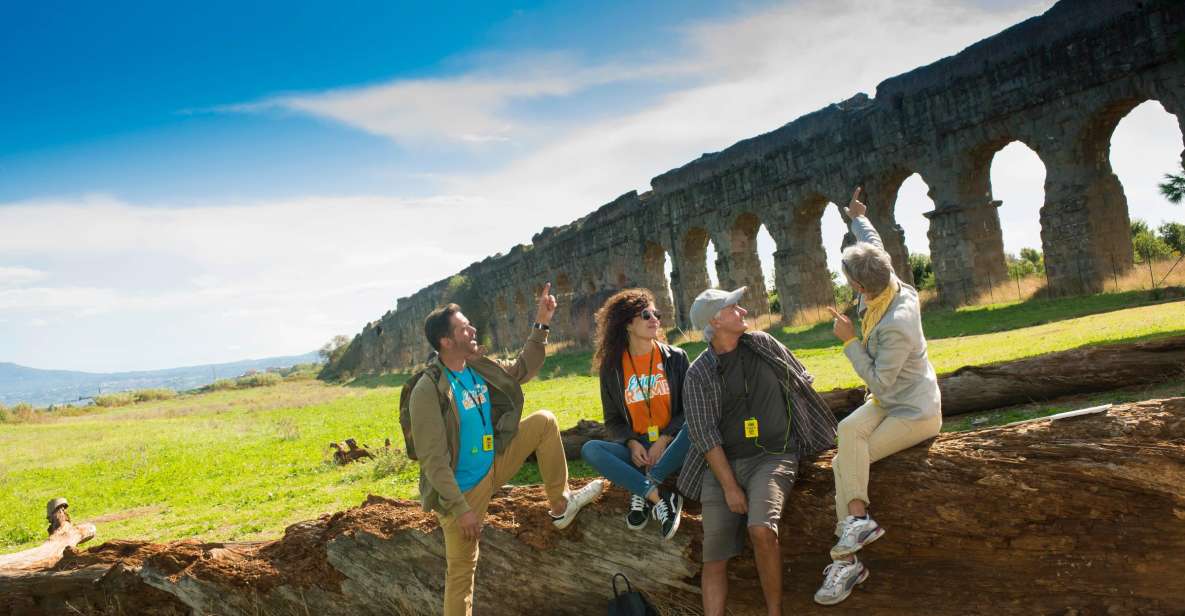
After the catacombs, the tour shifts tone on purpose. You’ll walk a portion of the old Appian Way, then spend time around the Roman aqueducts in the area of Parco degli Acquedotti.
The Appian Way is famous for a reason: it’s one of the best places near Rome to feel how engineered the ancient city really was. You’re not just looking at ruins; you’re stepping onto the kind of road that helped Rome move armies, messages, and goods.
On this tour, the Appian Way portion is short enough for most people, but it’s still real walking. A few helpful notes:
- Wear shoes you’re comfortable with on uneven stone.
- Bring a light layer if the day is cool, because morning shade can be different from later sun.
- Expect the pace to keep moving, since the overall tour stays at about 3 hours.
Then the aqueduct portion kicks in, and it’s often the “how did they do that” moment. You’ll admire aqueduct architecture under/near the arches, and you get outdoor views that feel peaceful after the tightness underground. One theme in the feedback is how this part becomes a break from crowds, giving people a calmer Roman scene for photos, looks, and quiet conversation.
There’s also practical comfort during the transfers. Reviews mention comfortable small vehicles and air-conditioned coaches, and even the way a driver handles traffic and tight passages on the route.
Guide style and group comfort that keep you from feeling rushed
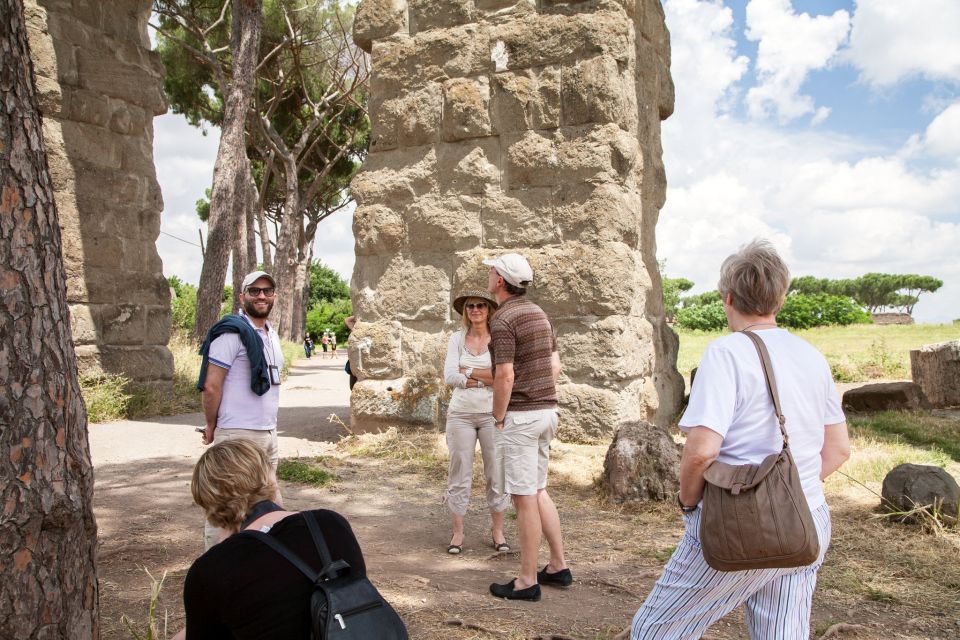
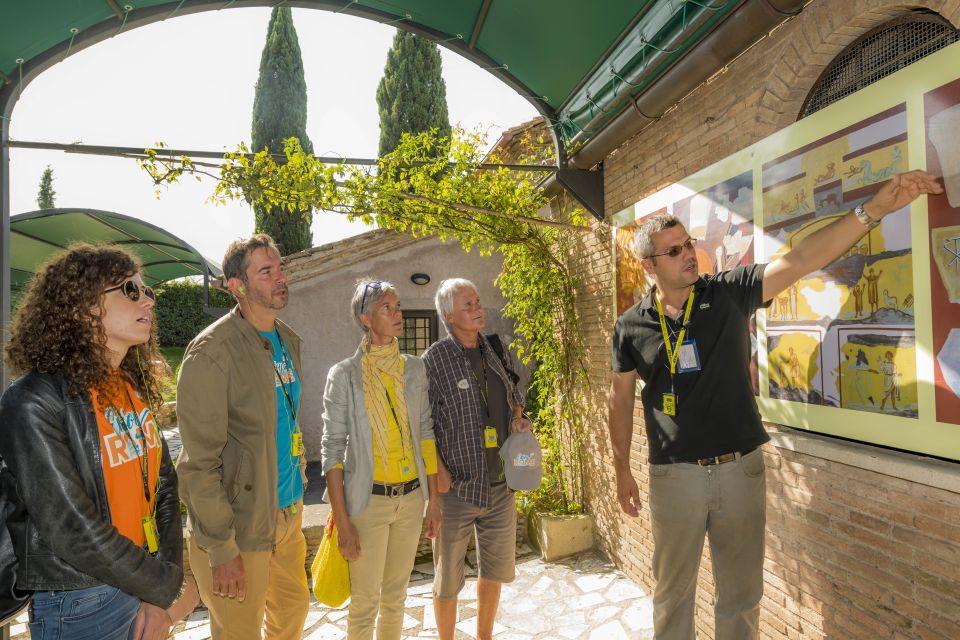
The biggest quality signal here is the guide. Many groups highlight guides such as Catia, Marije, Lara, Francesca, and Katya as engaging, with English explanations that land clearly. The tour is in English, and headsets help make sure everyone hears the story without leaning over each other in a crowded bus.
You also benefit from the guide doing more than reading facts. They explain what you’re seeing: why the catacombs took hold in certain rock types, how burial complexes layered over centuries, and what early Christian art symbols looked like. That turns the sites from “dark tunnels” into a readable timeline.
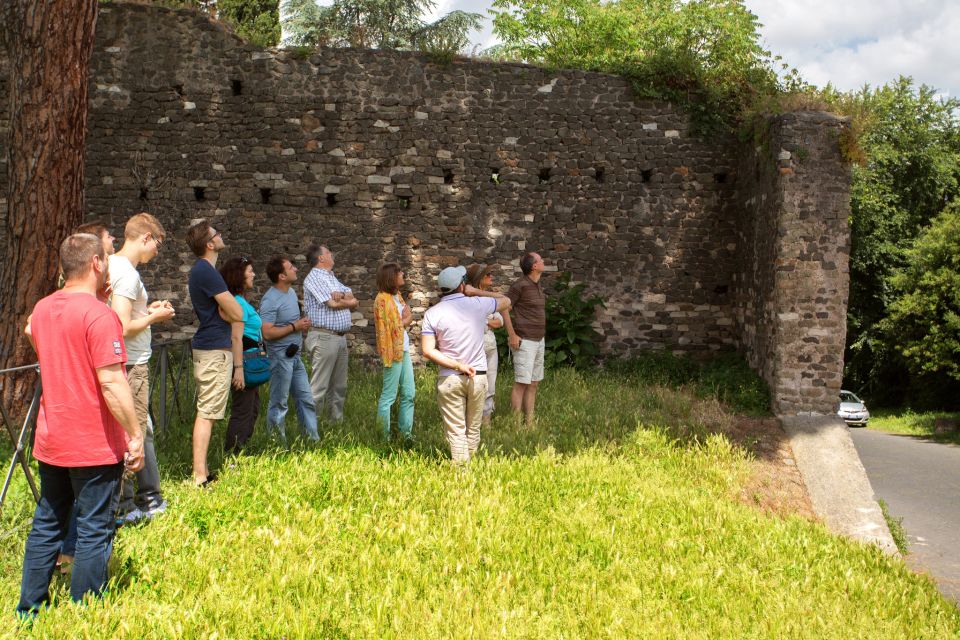
Group size can be small. Some feedback includes groups of around 6 to about 14. Smaller groups matter because you spend less time waiting and more time walking, looking, and asking questions.
One more comfort detail: since the experience mixes bus and on-foot segments, it’s not a long continuous hike. That rhythm is a big deal when you only have a half-day and you want to see multiple sites without your body falling behind.
Dress code, rules in the catacombs, and what to wear
Rome has rules, and this tour follows them. For areas of worship, you need proper dress:
- no shorts
- no sleeveless shirts
- no short skirts
- for women, shoulders must be covered and clothing must be below knee level
- for men, shoulders must be covered and clothing must be below knee level
Also remember: the catacombs are not a photo venue. Taking photographs is not permitted in the catacombs. If you like to document experiences, plan on snapshots outside instead, but leave the camera away once you go in.
Finally, double-check your comfort level with stairs and confined spaces. Even if you can do stairs fine, the catacombs themselves can feel tight. If you’re deciding between options, don’t gamble here. The tour is simply not recommended for severe claustrophobia.
Value check: is $80 for 3 hours worth it?
At about $80 per person for a 3-hour guided experience, this isn’t a budget splurge. But it can be good value if you care about access, interpretation, and reducing friction.
Here’s why the price can make sense:
- Transport is included from and back to the meeting point. That saves time and decision fatigue.
- You get a guided catacomb visit, not just entry. In a place this complex, a guide changes the whole experience.
- Entrance and booking fees are covered, plus headsets so the guide stays audible.
- You also get time outdoors to walk the Appian Way and view aqueduct architecture, which many DIY plans only partially cover.
You’re paying mainly for three things: getting out of the city efficiently, having a guide read the underground world for you, and bundling multiple “outside Rome” experiences into one short block. If you’re staying in Rome for only a day or two beyond the big sights, this is the kind of ticket that helps you spend that time wisely.
Should you book this Rome Catacombs and Appian Way tour?
Book it if you want a clear break from the main monument crush, and you like historical context that connects architecture to belief. The catacombs and earliest Christian art are the main draw, and the Appian Way plus aqueduct views are a strong follow-up that keeps the day from feeling one-note.
Skip or choose a different option if you:
- have severe claustrophobia
- need wheelchair accessibility
- can’t meet the dress code rules
- need to take photos inside the catacombs
If you’re comfortable with stairs and you want an organized, guided escape from central Rome, this tour is a very practical way to see a side of the city most people rush past.
FAQ
Where is the meeting point for the Rome catacombs and Appian Way tour?
Meet at the bus stop at Via Cavour 224. The closest metro station is Cavour (Line B). You should arrive about 25 minutes early.
How long is the guided tour?
The total duration is 3 hours, including travel by bus and time walking at the sites.
What is included in the $80 per person price?
Included are round-trip transport from and to the meeting point, a 3-hour guided tour, the guided visit to the Catacombs of St. Callixtus, entrance and booking fees, and headsets.
Is hotel pickup included?
No. The tour includes transport from and back to the meeting point, but it does not include pickup from hotels.
Can I take photos in the catacombs?
No. Photographs are not permitted inside the catacombs.
Is this tour wheelchair accessible?
No. This tour is not wheelchair accessible.
Is the catacomb part okay if I have claustrophobia?
It’s not recommended if you suffer from severe claustrophobia, since the catacomb environment involves enclosed spaces.
What should I wear or avoid on the tour?
Avoid shorts, short skirts, and sleeveless shirts. For places of worship, shoulders must be covered and skirts/trousers must be below knee level for both men and women.