REVIEW · ROME
From Rome: Umbria, Assisi and Orvieto Day Tour
Book on GetYourGuide →Operated by Welcome Italy by Spare Tour S.r.l. · Bookable on GetYourGuide
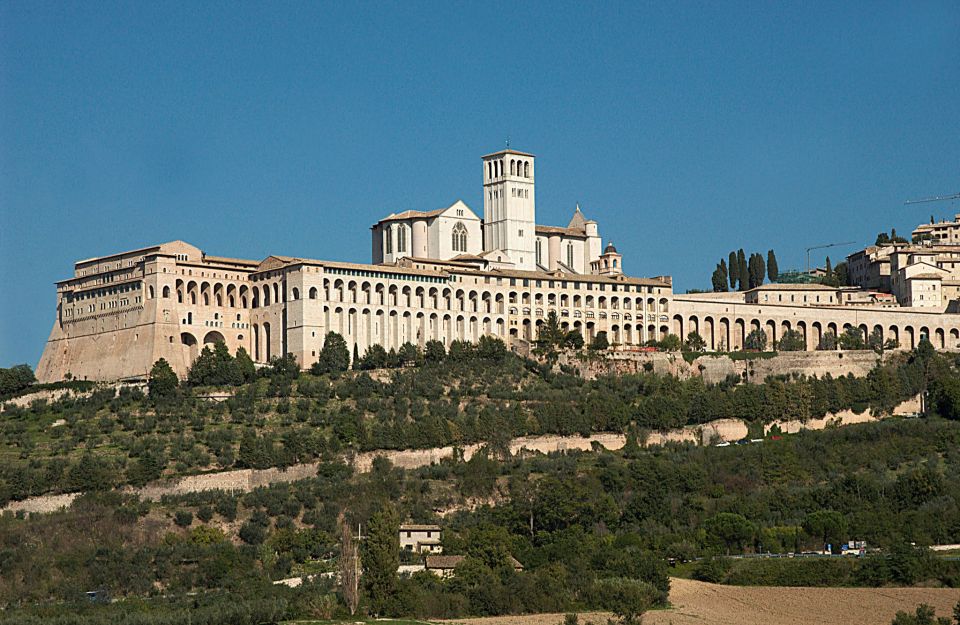
Assisi feels like a spiritual time-out from Rome. In a small air-conditioned minivan, you get a calm ride out of the city, then you have a true official guide in Assisi (about two hours) to connect the stories of St. Francis and St. Clare with the art you see inside the churches.
The only catch is pickup timing and pace: you’ll be on a schedule all day, with a hotel handoff inside the Aurelian Walls, so if you like to linger without structure, plan for a tighter flow between Assisi and Orvieto.
In This Review
- Key things that make this day trip work
- Why Assisi and Orvieto feel made for a Rome day trip
- Pickup in Rome: inside the Aurelian Walls, small group, fewer hassles
- The quick breaks en route: short photo moments that reset the day
- Assisi for real: St. Francis, St. Clare, and the art that explains the legend
- What makes the St. Francis Basilica area special
- Walking the town: steep, pretty, and full of photo angles
- Lunch in Assisi: plan for your own meal, then get back to churches
- Orvieto Cathedral: Gothic drama with stained glass and mosaic detail
- How to get the most out of a one-hour cathedral stop
- Orvieto’s extra churches: when time allows, they’re worth a peek
- The tour style: live guide + tour assistant = fewer head-scrambles
- Value for the price: why $303.60 can make sense for this day
- Who should book this tour (and who might not)
- Should you book this Rome-to-Umbria day trip?
- FAQ
- How long is the tour?
- What places are included?
- Is lunch included?
- Do I need to buy tickets in advance?
- What languages are available for the live guide?
- What group size and vehicle capacity should I expect?
- Is the tour wheelchair accessible?
Key things that make this day trip work
- Small-group comfort: air-conditioned minivan for up to 6–7 people, with a tour assistant for the whole trip
- Two hours of guided Assisi time: an official local guide helps you understand St. Francis and St. Clare through what’s on the walls
- Basilica highlights you’ll actually recognize: you’ll see works linked to Giotto and Cimabue in the St. Francis Basilica area
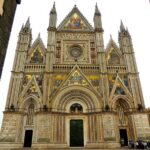
- Orvieto Cathedral focus: admire the Gothic Cathedral of Orvieto with stained glass, mosaics, and sculpture
- Skip-the-ticket-line included: less waiting, more time looking
- Live guide in multiple languages: Portuguese, Italian, English, Spanish, French
Why Assisi and Orvieto feel made for a Rome day trip
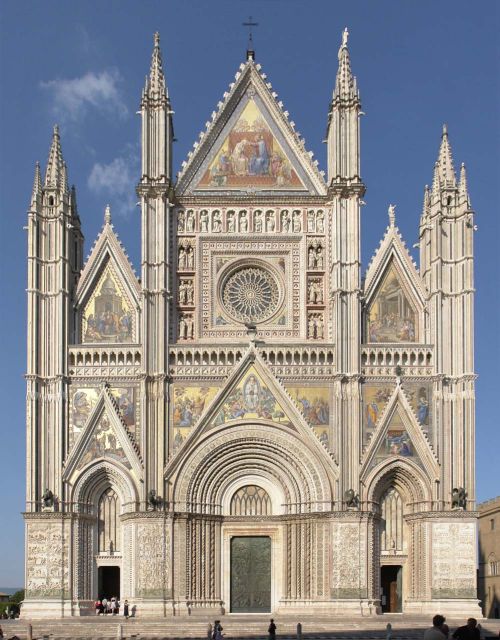
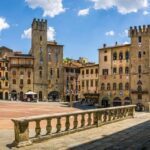
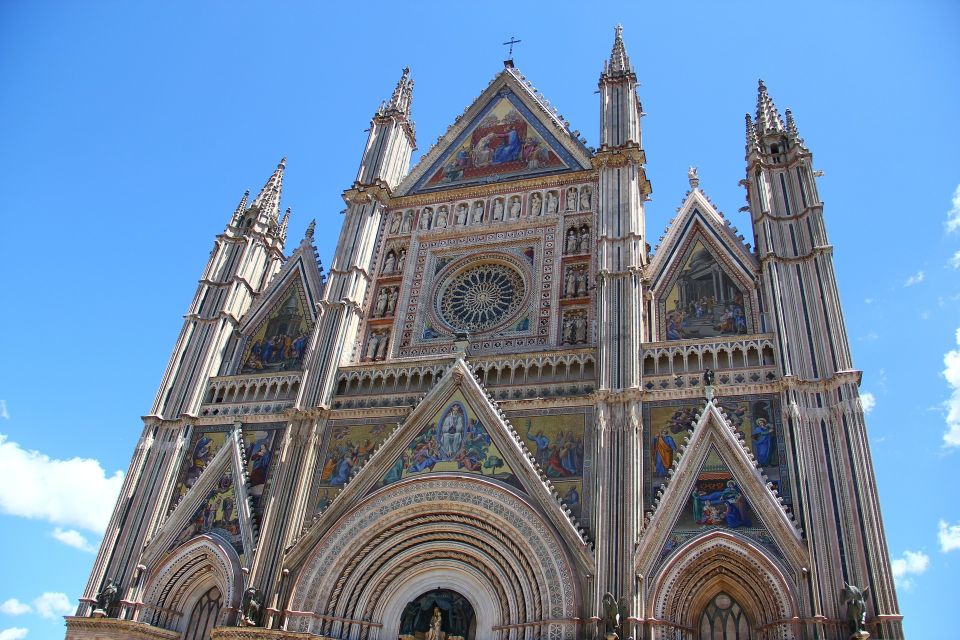
Assisi and Orvieto give you two different “wow” moods in one day. Assisi brings the sense of retreat and devotion, with stone streets climbing Mount Subasio and churches packed with art tied to the Franciscan story. Orvieto, on the other hand, feels like a Gothic stage set—especially the cathedral façade—where you can see how style and faith get built into architecture.
What I like about this format is that it respects your time. You’re not just dropping in and walking around. In Assisi, you get a real guided thread that helps you connect names, legends, and images to what you’re standing in front of.
And the second payoff is practical pacing. You still get breaks for photos and walking, but the day is structured around the big visual targets: St. Francis Basilica and Orvieto Cathedral.
You can also read our reviews of more tours and experiences in Rome.

Pickup in Rome: inside the Aurelian Walls, small group, fewer hassles
Your day starts with pickup from centrally located accommodations in Rome inside the Aurelian Walls. That matters more than it sounds. It usually means you’re not trying to coordinate with complicated meeting points on the edge of town, and you can spend less time herding the group and more time on the road.
The vehicle is an air-conditioned minivan, designed for comfort and a small headcount (up to about 6–7 people). The tour also includes a tour assistant for the whole trip, which helps keep transitions smooth—especially when you’re switching from driving to walking to guided stops.
One note from the realities of a minivan day: if you’re seated far back, you may occasionally miss parts of what’s being said. If you can, pick a seat where you can hear the guide easily, and don’t be shy about asking for clarification when you arrive at a stop.
The quick breaks en route: short photo moments that reset the day
Between Rome and Umbria, the schedule includes a few short “in-between” moments: a photo stop with a short guided component and a walk, plus another brief transfer pause. These aren’t meant to turn the day into sightseeing-by-car. They’re more like rhythm-makers.
Here’s how to use them:
- Take a couple of photos and stretch your legs, then get back ready for the main walking sections.
- If you’re prone to feeling travel-sore, these quick breaks help you arrive in Assisi with less fatigue.
Also, because the tour runs rain or shine, those short stops can be the difference between a good day and a muddy one. Bring sunglasses, and expect weather to change.
Assisi for real: St. Francis, St. Clare, and the art that explains the legend
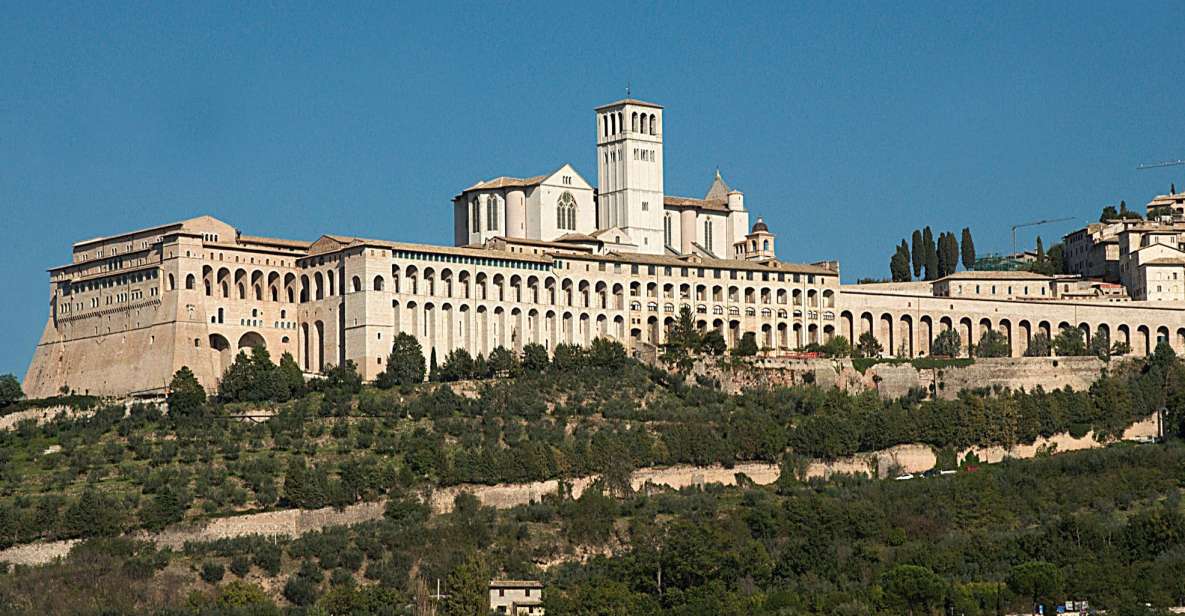
Assisi is the emotional center of the trip. You’ll spend about three hours there, including break time, sightseeing walking, and a guided portion. The big value is that you’re not left to guess what you’re seeing.
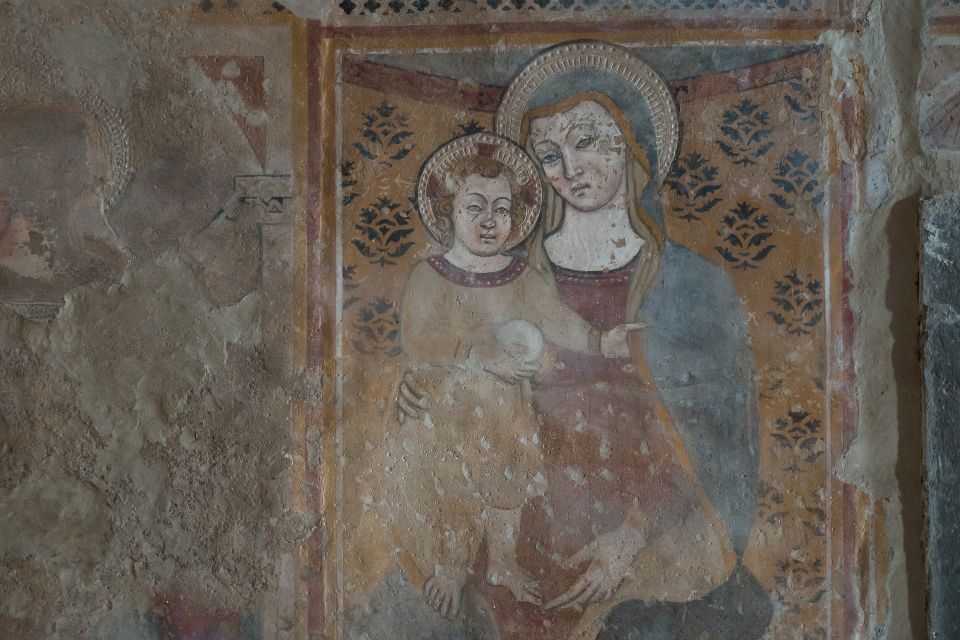
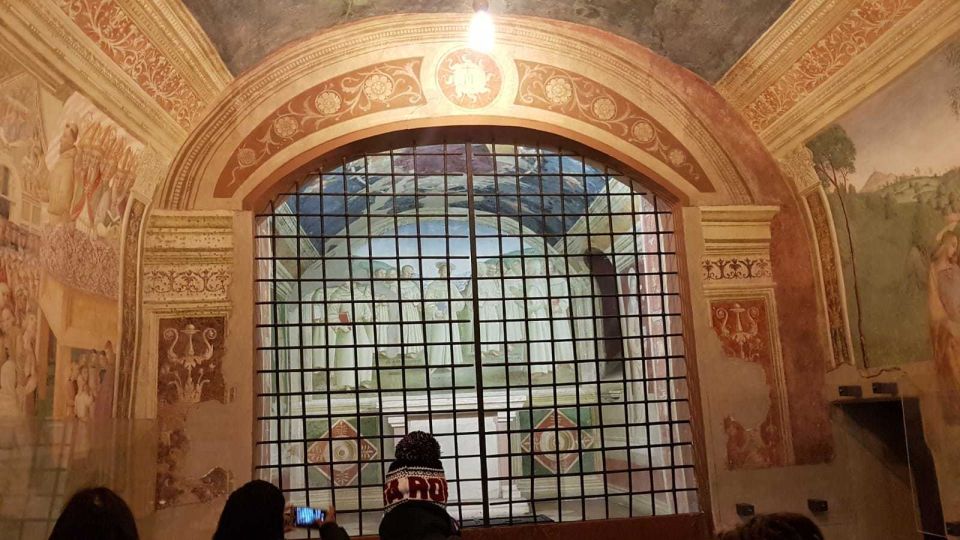
Your official guide time in Assisi is about two hours, and it’s built around the story of St. Francis of Assisi and Saint Clare (Santa Chiara). The point isn’t just name-dropping. The guide helps you connect the lives and teachings to what’s depicted in the churches—so you start recognizing patterns: symbols, scenes, and artistic choices that you’d otherwise miss.
What makes the St. Francis Basilica area special
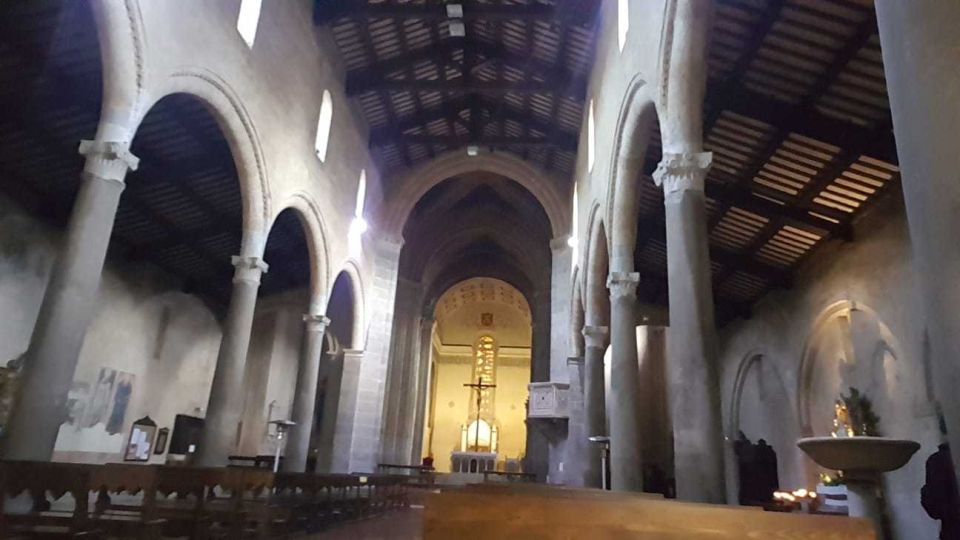
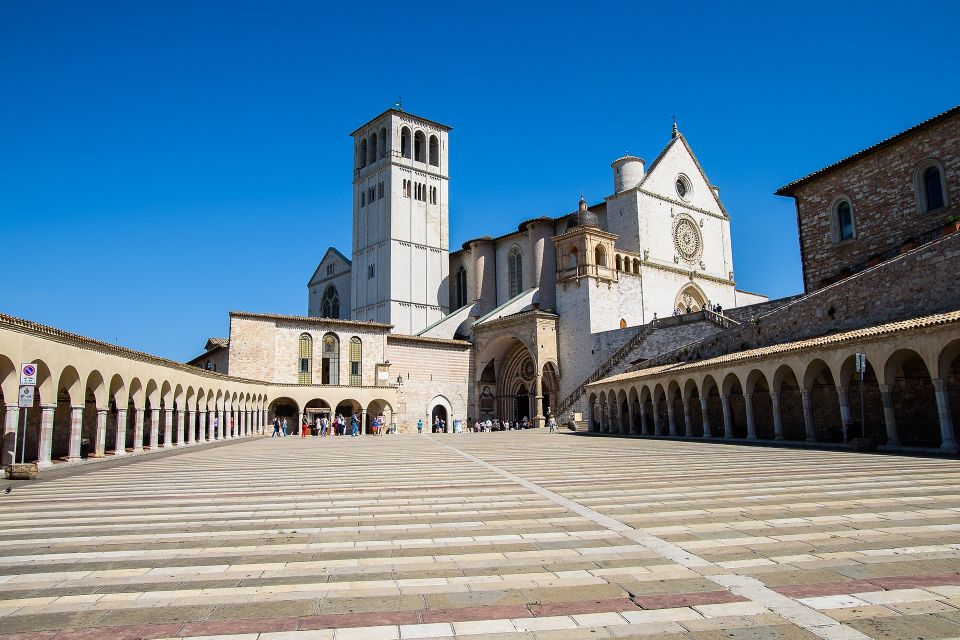
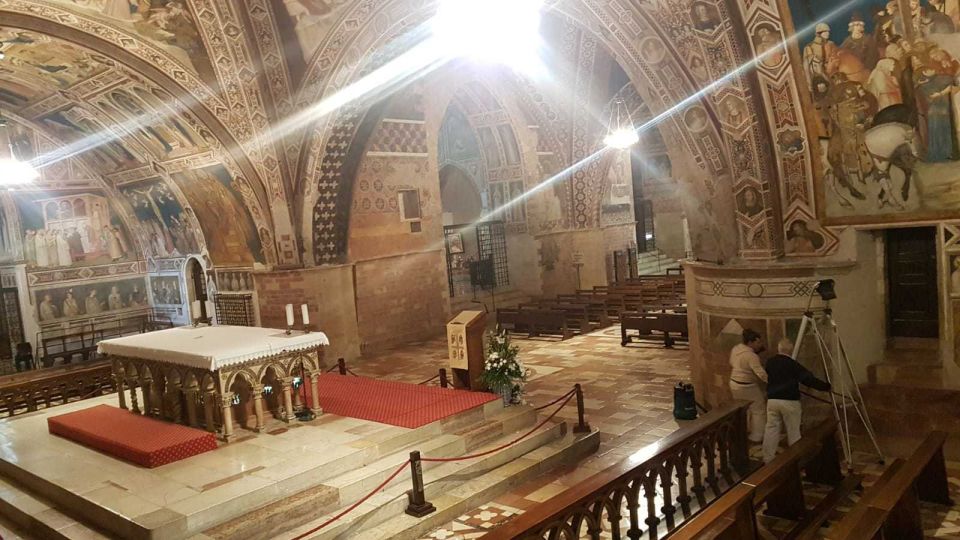
One highlight is the visit to the Basilica of St. Francis. This is where the art becomes a “how-to-read-it” experience. You’ll see major Renaissance artworks associated with Giotto and Cimabue—and having a guide makes those names click into a bigger story instead of staying as museum labels.
If you want a quick strategy: slow down once you’re inside and let the guide’s thread land. Assisi’s churches can feel like a blur if you rush. The guidance helps you pause at the right moments so you don’t just photograph doors and ceilings—you understand why that art matters to the Franciscan world.

Walking the town: steep, pretty, and full of photo angles
Assisi’s streets are narrow and it climbs on green slopes of Mount Subasio. Expect colors, flowered balconies, and “ink-stone” streets that look like they were designed for postcards. But practical reality: you’ll want comfortable shoes, because the walking adds up quickly.
If you’re traveling with anyone who gets tired on stairs, keep an eye on the group pace. The tour gives you structured time, but you still need to respect the grade.
Lunch in Assisi: plan for your own meal, then get back to churches
Lunch is not included. That means you’ll need a little flexibility. You’ll have break time in Assisi, and you can choose what fits your stomach and your schedule.
Because the tour is structured for a full day, I’d approach lunch like this:
- Decide in advance whether you want a sit-down meal or something quick.
- If you’re sensitive to long waits, aim for a place that can serve food without a long line.
- If you’re hungry right before the next guided chunk, keep your meal simple.
One smart tip for early-morning energy: on some departure patterns, you might find a short stop for quick breakfast/snacks before you hit the main sights. It’s not described as a guarantee in the core overview, so don’t count on it—but it’s worth knowing the day might start with food options out on the route.
Orvieto Cathedral: Gothic drama with stained glass and mosaic detail
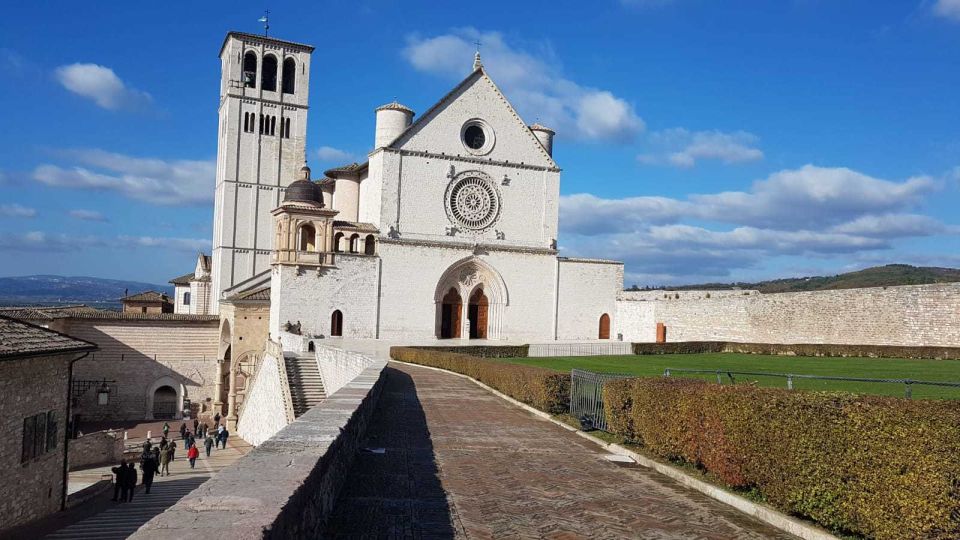
After Assisi, you’ll transfer to Orvieto. You’ll spend about one hour there for photos, a guided visit, and sightseeing walking.
One hour can sound short, but Orvieto’s main “anchor” is its cathedral. This stop is all about the Gothic masterpiece: you’ll admire a façade with stained glass, mosaics, and sculptures. It’s one of those places where architecture is basically storytelling in stone.
How to get the most out of a one-hour cathedral stop
If you want your hour to pay off, don’t treat it like a quick check-box. Do this:
- Start by looking from a distance first. Get the full façade in one view.
- Then move closer and let your eyes track details like glass, mosaic panels, and carved figures.
- Don’t forget to step back again once or twice. Perspective changes everything here.
Even if you’re not a church-art specialist, the cathedral’s design language is readable. The guide helps you “see the why,” not just the what—so you leave with a better sense of Gothic style and why this particular town invested in such an intense statement.
Orvieto’s extra churches: when time allows, they’re worth a peek
Orvieto also has churches scattered around the historic center. The tour gives you sightseeing time, so you may have room for a quick wander if the group pace allows. If the main cathedral stop runs efficiently, this is where you can add a little extra atmosphere.
The tour style: live guide + tour assistant = fewer head-scrambles
A big part of the appeal here is the teamwork structure. You get:
- A tour assistant for the entire day
- A professional guide in Assisi
- A live tour guide who works across languages: Portuguese, Italian, English, Spanish, French
In practice, that means fewer problems with handoffs. You’re not guessing where to go next. You’re also more likely to hear context in the right places, like what to focus on inside the churches.
Also, the group is small—limited to 12 participants, with the minivan built for up to 6–7. That size matters. It keeps walking sections from turning into a crush, and it makes it easier to ask questions.
If your priority is personal attention, this format is a strong match. People who want a huge bus tour with zero conversation often won’t be the target audience here.
Value for the price: why $303.60 can make sense for this day
At $303.60 per person, this is not the cheapest way to do Umbria. But it’s also not priced like a fully private driver-and-guide experience.
Here’s what you’re paying for, and why it adds up:
- Transportation in an air-conditioned minivan built for small-group comfort
- Pickup and drop-off inside the Aurelian Walls (where it can be harder to coordinate on your own)
- A tour assistant through the whole day, not just at the start
- Professional guided time in Assisi (about two hours with an official guide)
- Skip-the-ticket-line
- Orvieto Cathedral included as a guided stop
If you tried to DIY this, you’d likely spend time and effort coordinating transit, timing, and access to the right guided points. The structure helps you hit the major targets with less friction.
One practical caution: lunch isn’t included, so factor that into your personal budget. If you plan for a simple lunch and keep the rest of the day focused on the guided experiences, the price feels more reasonable.
Who should book this tour (and who might not)
This is a great fit if you:
- Want two iconic Umbria stops in one day without the stress of planning transit
- Like religious art and want help understanding St. Francis and St. Clare
- Prefer a small group and a guided cathedral visit over wandering alone
- Are comfortable with moderate walking and uneven, historic streets
It might not be ideal if you:
- Need wheelchair-friendly access (the tour is not suitable for wheelchair users)
- Have pre-existing medical conditions and need accommodations not stated in the tour details
- Hate strict timing and want hours of free roam in each town
- Travel with large luggage (you’ll need to travel light)
Should you book this Rome-to-Umbria day trip?
Yes, if you want a well-paced day that hits Assisi’s Franciscan story and Orvieto’s Gothic cathedral with real guidance. The standout value is the pairing: guided church time in Assisi, then cathedral-focused architecture in Orvieto—done in a small, comfortable minivan with an assistant running interference.
If you’re the type who gets frustrated by schedules, you’ll still enjoy the sights, but you should be mentally prepared for a full day with set start/stop moments. Pack comfortable shoes, plan your own lunch, and aim to show up ready to walk a bit.
If that sounds like your kind of day, this tour is an efficient way to turn one Rome day into a serious Umbria memory.
FAQ
How long is the tour?
It’s a full-day experience listed as 1 day. Exact starting times can vary, so you’ll need to check availability for the schedule.
What places are included?
You’ll visit Assisi and Orvieto, with transportation from Rome and a return to Rome in the early evening.
Is lunch included?
No. Lunch is not included, but there is break time in Assisi where you can eat on your own.
Do I need to buy tickets in advance?
The tour includes skip-the-ticket-line, so you shouldn’t have to wait in regular entry queues for the included stops.
What languages are available for the live guide?
The live tour guide languages include Portuguese, Italian, English, Spanish, and French.
What group size and vehicle capacity should I expect?
The group is limited to 12 participants, and the air-conditioned minivan is for up to 6/7 people.
Is the tour wheelchair accessible?
No. The tour is not suitable for wheelchair users.