REVIEW · ROME
Rome: 3-Hour Private Historical Highlights Walking Tour
Book on GetYourGuide →Operated by Raphael Tours & Events · Bookable on GetYourGuide
A great first taste of Rome starts here. This 3-hour private walk connects key landmarks like the Spanish Steps and Trevi Fountain with time inside the Pantheon, Rome’s best-preserved ancient temple. I also like that the format is built for rhythm, with a guide who keeps things moving at a comfortable pace and gives you context as you go. The one thing to factor in: you’ll be doing a moderate amount of walking over uneven streets, so comfortable shoes are non-negotiable.
The value is strongest if you want the highlights without feeling rushed through crowds. You’ll get an English and Italian-speaking guide, you’ll skip the ticket line, and the route is designed to cover the core “Rome you came for” sights while still adding details like Piazza Colonna’s Marcus Aurelius column and the palazzi around Parliament Square. The possible drawback is simple: it’s a short tour, so you won’t linger for long photo marathons at every stop.
Key highlights at a glance
- Pantheon entry into the ancient temple and its famous tombs (Raphael, Queen Margherita, King Victor Emmanuel II)
- Trevi Fountain coin moment paired with the story behind the legend and the best way to approach it
- Historic power centers nearby like Piazza Colonna, Palazzo Chigi, and Palazzo Montecitorio
- A smart 3-hour route starting at Caffè Greco near the Spanish Steps and ending back there
- Guide-led pacing with English and Italian support, including help with questions and photos
- A wheelchair-accessible tour that’s still realistic for a walk-intensive sightseeing loop
In This Review
- Start at Caffè Greco: Your 3-Hour Rome Route Begins Near the Spanish Steps
- Spanish Steps to Trevi Fountain: How the Tour Handles the Crowd Factor
- Piazza Colonna and the Palazzi: The Rome of Power, Not Just Postcards
- Enter the Pantheon: Skip the Line and Step Into Ancient Rome’s Best-Preserved Temple
- From the Temple of Hadrian to Piazza Navona: Domitian, Bernini, and Rome’s Square Culture
- Gelato, Cafés, and Shops: Using the Route to Eat and Walk like a Local
- What Makes This Tour Feel Worth It: Private Pace, Real Context, and a Strong Guide
- Practical Tips Before You Go (So You Enjoy Every Square)
- Should You Book This 3-Hour Private Highlights Tour?
- FAQ
- How long is the Rome historical highlights walking tour?
- Where does the tour start and end?
- What’s included in the tour price?
- Do I need to pay for food or drinks during the tour?
- What languages does the guide speak?
- Is ticket line entry skipped?
- Is there a cancellation window?
Start at Caffè Greco: Your 3-Hour Rome Route Begins Near the Spanish Steps
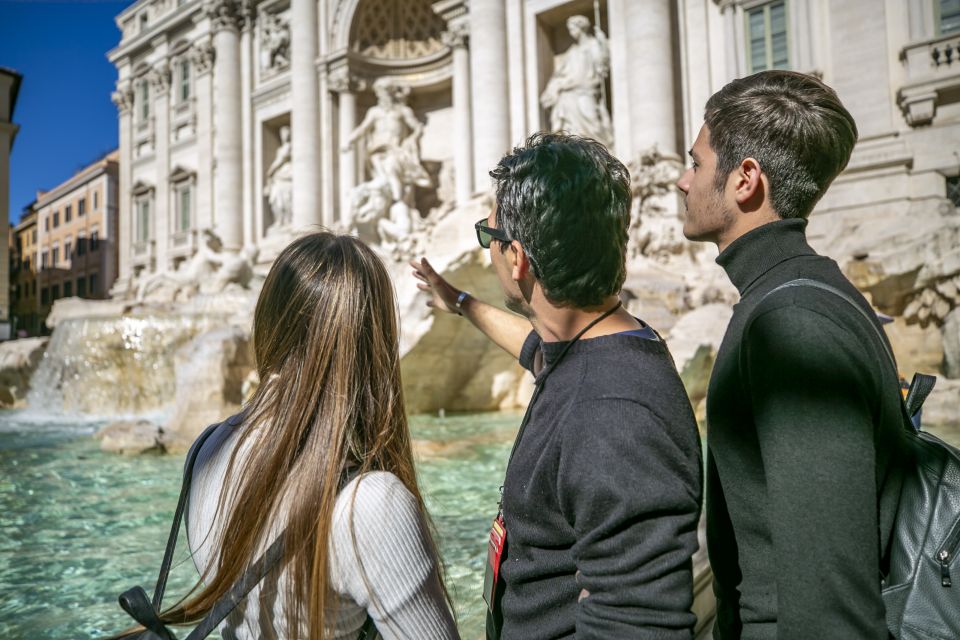
Your tour meets at Caffè Greco on Via dei Condotti, just a short walk from the Spanish Steps. That location matters. You’re starting right where many Rome itineraries feel like they begin, so you get your orientation fast—streets, sightlines, and the general flow of the center.
Caffè Greco also gives the experience a nice “old Rome meets modern tourist Rome” vibe. Even if you don’t stop for coffee, the place anchors the beginning of the walk, and it helps the route feel more like a guided stroll through neighborhoods than a checklist sprint.
From the start, you’ll move through a mix of grand squares, religious buildings, and seats of political power—because central Rome is like that. Everything is close, layered, and slightly chaotic (in a good way).
A private group here is a big deal. In a group tour, you often spend time waiting for stragglers or getting rushed at bottlenecks. With a private format, your guide can keep the timing comfortable, which matters on a 3-hour schedule.
Spanish Steps to Trevi Fountain: How the Tour Handles the Crowd Factor
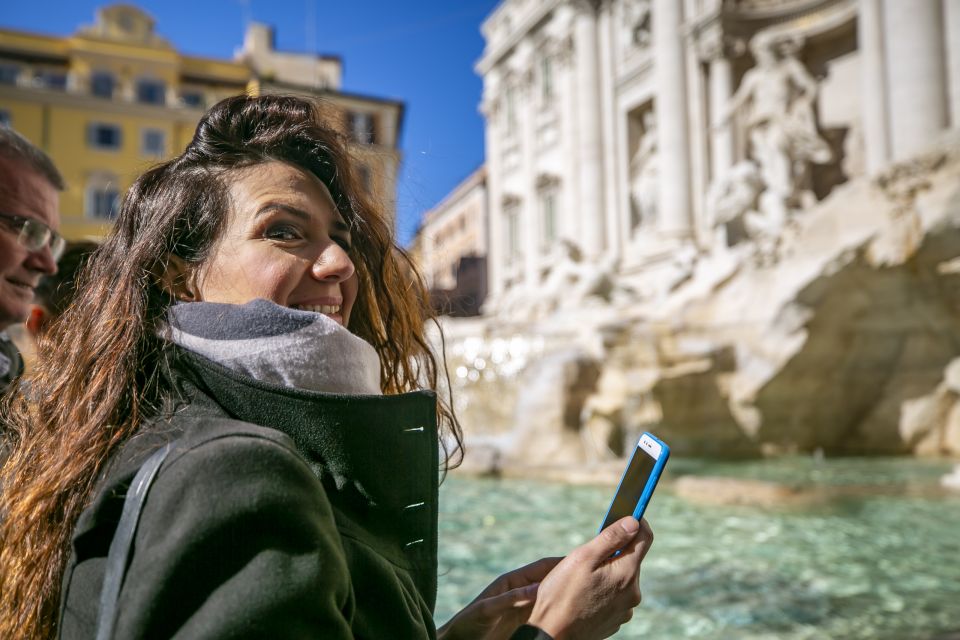
The walk is built around Rome’s most photographed moments, but it doesn’t treat them like static backdrops. As you head toward the Spanish Steps and then on to Trevi Fountain, your guide focuses on what you’re looking at and why it got so important.
At the Spanish Steps area, you’ll get the quick orientation that helps the rest of the day make sense. From there, the route leads you to Trevi Fountain, where the crowds are part of the story. The key is knowing how to approach a famous place without feeling swallowed by it.
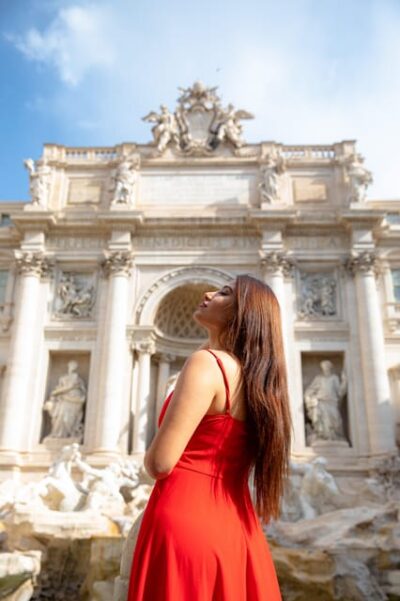
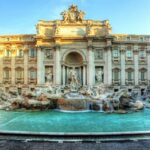
Trevi Fountain is famous for a reason: it’s theatrical. Big sculptures, dramatic stonework, and a location that keeps pulling you into that “one more look” loop. You’ll also do the classic legend moment: throw a coin into the fountain to guarantee you will return to Rome.
That legend moment is fun, but the real value is your guide’s framing. You’re not just doing the tourist ritual. You’re learning what you’re seeing while you’re there—so the fountain doesn’t blur into a single photo you’ll forget later.
One practical note: Trevi Fountain is crowded by nature. If you’re the type who gets annoyed by tight spaces, plan for some shoulder-to-shoulder moments. The tour helps, but it can’t change the reality of Trevi during sightseeing hours.
You can also read our reviews of more walking tours in Rome


Piazza Colonna and the Palazzi: The Rome of Power, Not Just Postcards
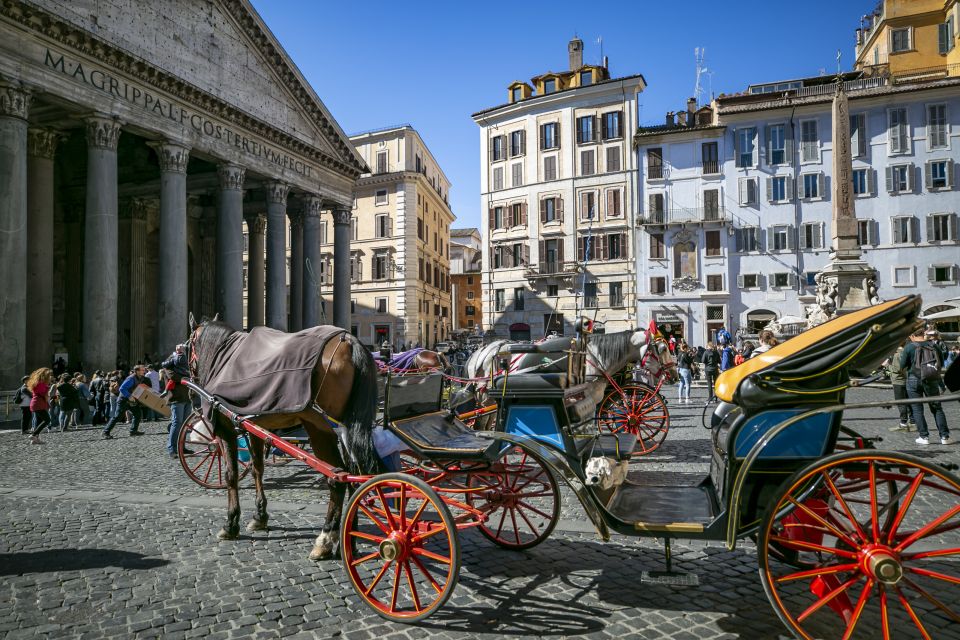
Between the major “wow” stops, the tour threads in the quieter signals of how Rome functions—historic buildings tied to government and status. You’ll see the column of Marcus Aurelius in Piazza Colonna, plus the historic Palazzo Chigi and Palazzo Montecitorio.
This is one of my favorite kinds of sightseeing: places that feel less like museum objects and more like living landmarks. A column or a façade becomes interesting once you understand its role in the city’s story. Piazza Colonna gives you that. It’s not just about taking a photo; it’s about recognizing the space as a focal point where authority has always mattered.
The marble column of Marcus Aurelius is especially worth your attention. It’s a strong example of Roman artistic and political messaging—Roman leaders didn’t just rule; they left evidence they’d been there.
Then come the palazzi. Palazzo Chigi and Palazzo Montecitorio sit in a part of Rome where you can sense modern institutions overlaying older structures. That contrast is useful if you want more than ancient sightseeing—you want the whole Rome picture.
And because this is a private 3-hour tour, your guide can slow down where you actually care to look. If columns, inscriptions, and civic spaces are your thing, this section is a good payoff.
Enter the Pantheon: Skip the Line and Step Into Ancient Rome’s Best-Preserved Temple
Now for the centerpiece: the Pantheon. You’ll walk toward it and, along the way, pass the remains of the Temple of Hadrian and the Church of St. Ignatius. Those transitions help you understand you’re not jumping between random sites. You’re moving through Rome’s layered timeline, with earlier structures and later religious architecture sitting close together.
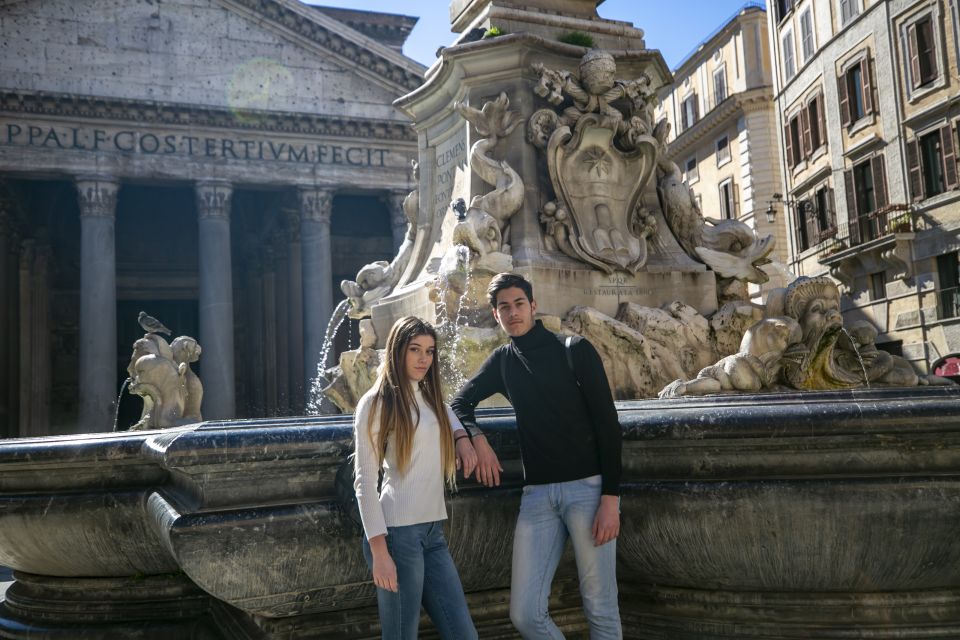
Then you enter the Pantheon itself. This stop is the biggest reason this tour is worth considering, because you’re not just viewing it from outside. You’re stepping into an ancient Roman-era temple—one of the best-preserved of its kind.
Inside, you’ll see tombs of famous figures: Raphael, Queen Margherita, and King Victor Emmanuel II. That blend is a big part of what makes the Pantheon so compelling. It’s not only ancient. It also became a place where later Italy honored major people.
Also note the practical win: the tour is designed to help you skip the ticket line. In a city where time disappears quickly in queues, that matters more than people expect. Even a modest line can eat a chunk of your short, 3-hour day.
The Pantheon can be emotionally loud and visually busy—everyone’s looking up, everyone’s trying to find the best angle. A guide helps you slow that down mentally. You see the structure, the purpose, and the details, and then the photos feel more meaningful.
From the Temple of Hadrian to Piazza Navona: Domitian, Bernini, and Rome’s Square Culture
After the Pantheon area, you continue toward Piazza Navona, and the route includes some key Roman history markers.
You’ll pass the remains of the Temple of Hadrian on the way. Even if you only catch partial elements, it helps the story click. Rome’s ancient past doesn’t always present itself as a complete building. Sometimes it shows up as traces—less dramatic than a standing temple, but more honest about what time does.
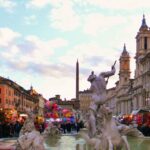
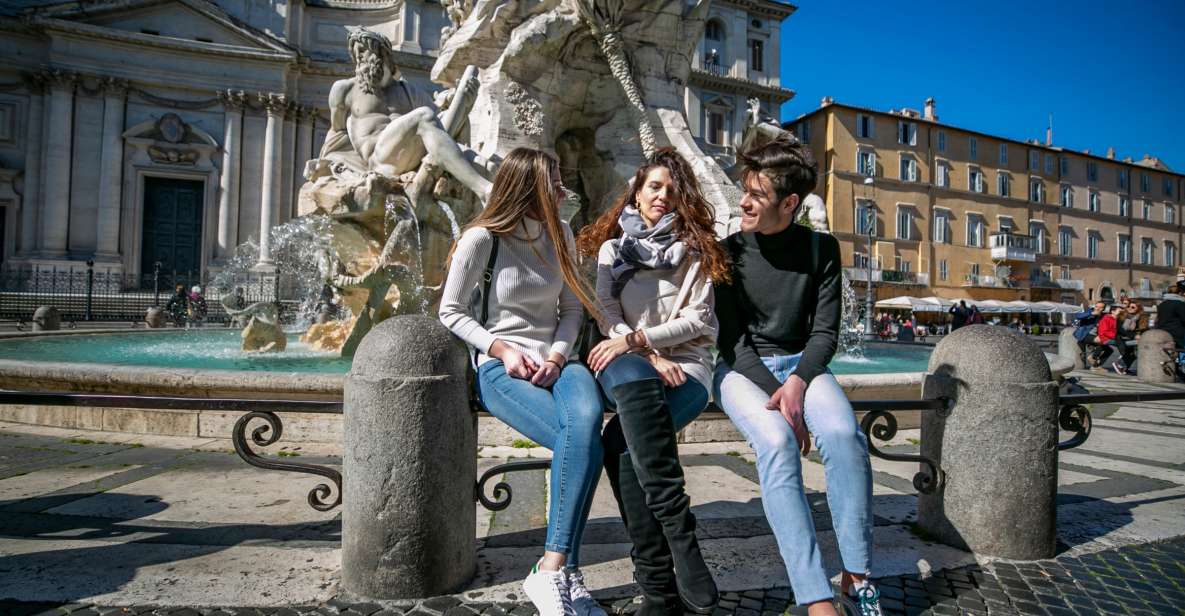
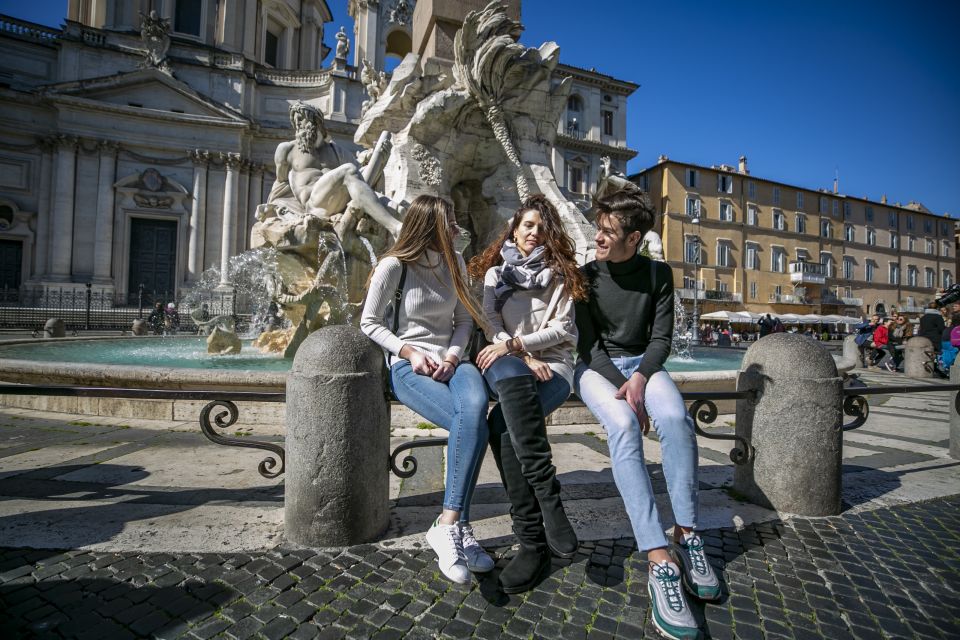
Then you’ll reach Piazza Navona, where the tour connects the square’s origins to the emperor Domitian. Piazza Navona was built by Domitian and is known for its fountains adorned by Bernini. Those details are exactly the kind you don’t get if you simply wander without context.
This square is also one of Rome’s great “watch the city happen” locations. Street life is built into it—artists, seating, conversations, people pausing just to take it in. If you’re in Rome for the first time, Piazza Navona helps you feel the rhythm of the city center.
There’s also a stop that adds an extra layer: Rome’s first university and the Senate House are on your route through this area. That turns Piazza Navona from just a pretty square into a place with educational and civic roots. Suddenly, the square feels like a stage for learning and governance, not only a backdrop.
If you love history but don’t want to spend your whole day in a museum, this is the sweet spot: the city itself does the exhibiting.
Gelato, Cafés, and Shops: Using the Route to Eat and Walk like a Local
One of the most practical surprises is that the tour doesn’t treat food as an afterthought. Along the way, you’ll discover some of Rome’s best gelaterias, cafés, restaurants, and shops.
You don’t get a meal included, but the guide’s recommendations help you turn the tour into a starting point. You finish with actual places in mind, instead of wandering later with no plan. That’s especially useful in Rome, where good choices are often close, but not always obvious.
A private walking tour also helps you tailor this. If you’re hoping for something classic—like gelato now or coffee later—the guide can point you in a direction based on what you care about.
The only caution: don’t plan to fill up right before the Pantheon if you’re prone to getting uncomfortable sitting in crowds or walking in a tight loop. But otherwise, this “food and shopping” guidance can make the tour feel like more than sightseeing. It becomes a practical map for your next hours.
You can also read our reviews of more private tours in Rome



What Makes This Tour Feel Worth It: Private Pace, Real Context, and a Strong Guide
Here’s where the value gets real. This tour costs $214.11 per person, which is not “budget Rome.” But for a private 3-hour experience, that price often lines up with what you’re buying: time saved, a guide who speaks both English and Italian, and the ability to adjust pace.
Also, this tour includes Pantheon entry and skip-the-line access. If you’ve ever queued for iconic sights, you already know the truth: waiting doesn’t add enjoyment. It steals your attention. Getting through faster leaves more energy for understanding what you’re looking at.
The guide quality matters too. Matteo (Matthew) is highlighted as a strong example of how the tour runs. His English is very good, and he takes time with questions and photos. He’s also patient with people who are still adjusting after landing, and he works to keep the pace tolerable and comfortable.
That comfort piece is not a luxury. On a 3-hour walk, a too-fast guide turns great stops into stress. A paced guide lets you enjoy the details—like the tombs inside the Pantheon or the architectural cues around the palazzi.
This tour is ideal if you want:
- the major center highlights in one compact loop
- history explained in plain language while you walk
- a plan that doesn’t depend on you figuring out the best order
It may be less ideal if you want a deep, slow study of one monument. This is a highlight walk, not a full-day Rome seminar.
Practical Tips Before You Go (So You Enjoy Every Square)
A few details make the day smoother.
Wear comfortable shoes. The walking is described as moderate, but Rome streets don’t care about your schedule. You’ll likely deal with uneven pavement and lots of turning corners.
Plan to meet at Caffè Greco and know there’s no pickup or drop-off. Start means start.
Bring your patience for crowds at Trevi and other central sights. The tour helps, but it can’t eliminate the fact that these places are magnets.
If you’re traveling with kids, remember unaccompanied minors aren’t allowed, and children must be accompanied by an adult. The tour is also wheelchair accessible, which is a helpful reassurance if mobility is a concern for your group.
And if you’re the type who likes to ask questions, this is the kind of tour where you can. The guide approach includes time for questions and for taking pictures, so you’re not stuck guessing what’s important.
Should You Book This 3-Hour Private Highlights Tour?
If your goal is a smooth, high-impact first pass through Rome’s top sights, I’d lean yes. This tour gives you the classics—Spanish Steps, Trevi Fountain, Piazza Navona—and backs them up with real stops that make the city feel bigger than the photos. The Pantheon entry plus skip-the-line access is the anchor.
Book it especially if:
- you want a private guide and a comfortable pace
- you’re short on time and want the main highlights in 3 hours
- you want Pantheon entry plus context for what you’re seeing
- you appreciate practical route help for gelato, cafés, and shops afterward
Skip it if:
- you want a slower, deeper dive at one site
- you dislike crowds and would rather choose less central landmarks
- you’re planning to move fast on your own and don’t care about guided context
For many first-time visitors, this is a smart way to get your bearings fast and leave with a clearer picture of Rome’s layers—ancient temple, Renaissance-era storytelling, and the city’s modern civic heartbeat all in one walk.
FAQ
How long is the Rome historical highlights walking tour?
It’s 3 hours long.
Where does the tour start and end?
It starts at Caffè Greco, Via dei Condotti 86, 00187 Roma RM, Italy, and ends back at the meeting point.
What’s included in the tour price?
The tour includes a private walking tour and a local English-speaking guide. Pantheon entry and skip-the-ticket-line are part of the experience.
Do I need to pay for food or drinks during the tour?
No. Food or drink is not included.
What languages does the guide speak?
The tour is led in English and Italian.
Is ticket line entry skipped?
Yes, the tour includes skipping the ticket line.
Is there a cancellation window?
Yes. You can cancel up to 24 hours in advance for a full refund.