REVIEW · ROME
Rome: Borghese Gallery Small Group Guided Tour
Book on GetYourGuide →Operated by City Walkers Tours · Bookable on GetYourGuide
Bernini in marble hits fast. This is a small-group way to see the Borghese Gallery’s big names, with skip-the-line entry and a licensed guide walking you through the Villa Borghese setting and stories. I especially like how guides such as Phoebe and Felicity (Fe) turn famous works into clear, human narratives you can actually follow.
You’ll also get value from the art itself, not just the building: you’re in front of Apollo and Daphne and Bernini’s David, plus key Caravaggio paintings like Boy with a Basket of Fruit and St. Jerome Writing. One possible drawback: the time is tight, and some tours start with a quick move through a few rooms before settling into a better pace.
In This Review
- The part I’d highlight before you go
- Why the Borghese Gallery feels different with a guide
- Meeting at the entrance and the run-up you should expect
- Bernini’s showstoppers: where the guide makes the sculptures click
- Caravaggio moments: drama, contrast, and why the pairing works
- Frescoed rooms and Cardinal Borghese: the story behind the walls
- How the 1.5 to 2 hours really feels in practice
- Guide styles: why the best ones can change everything
- Rules inside the gallery: the stuff that can trip you up
- Price and value: is $51.24 a good deal?
- Who this tour suits best (and who should think twice)
- Should you book the Borghese Gallery small-group tour?
- FAQ
- How long is the Borghese Gallery small-group guided tour?
- Is skip-the-line entry included?
- What’s included besides the guide?
- Where do we meet?
- Are bags allowed inside the gallery?
- Is the tour wheelchair-friendly?
- Does it run in bad weather?
The part I’d highlight before you go
- Skip-the-line tickets to the Borghese Gallery help because this museum can be hard to access on your own.
- Headsets mean you can stand farther from the guide and still hear clearly.
- You’ll see top Bernini sculptures (including Apollo and Daphne and David) in a guided, story-based route.
- You’ll also catch major Caravaggio works, where his drama feels even sharper with context.
- The tour is built for a quick hit: 1.5 to 2 hours focused on the collection’s best-known masterpieces.
- The experience depends a lot on your guide, and many guides are praised for energetic, patient storytelling.
Why the Borghese Gallery feels different with a guide
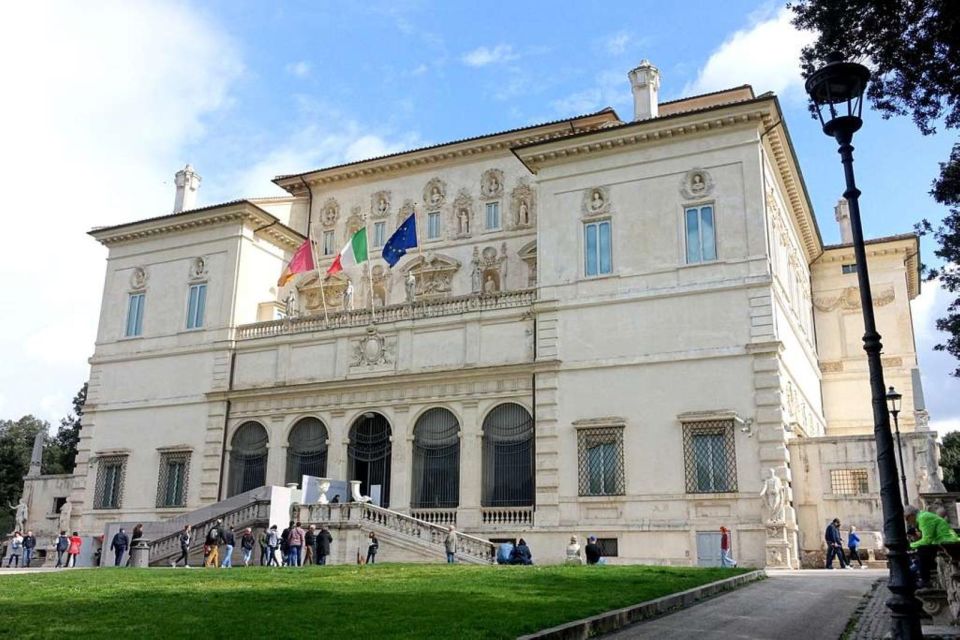
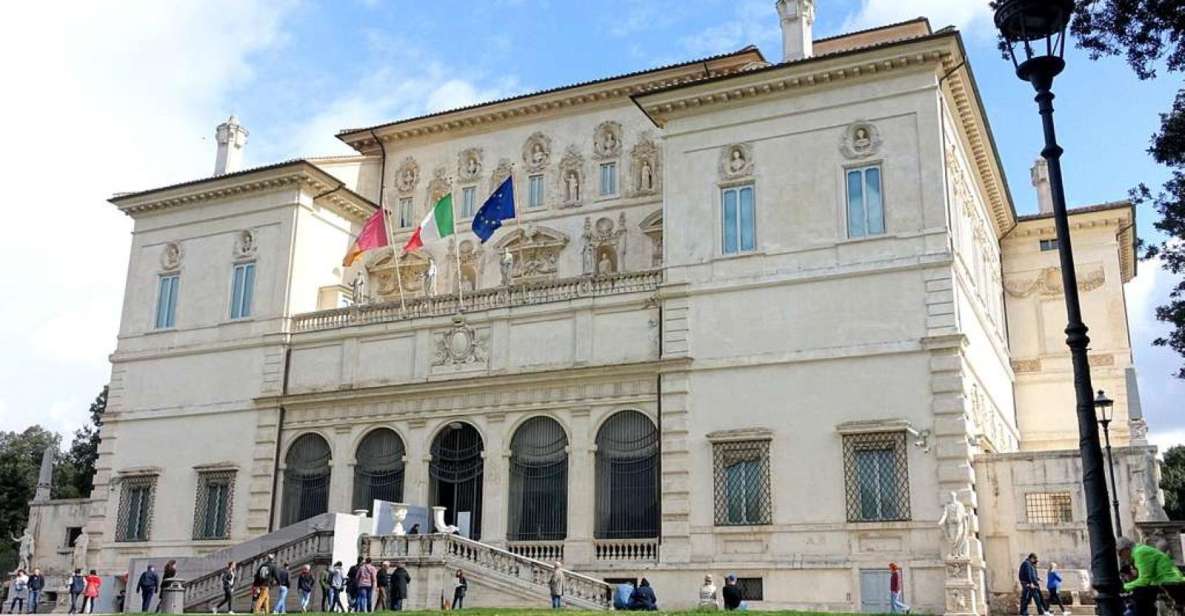
The Borghese Gallery is one of those Rome stops where the room itself does a lot of the talking. It’s not just a museum; it’s a 17th-century villa-like setting, with ornate rooms and frescoed backdrops that make the sculptures and paintings feel like they belong to a larger world. With a guide, you’re not trying to guess what you’re looking at. You get a framework fast: who Cardinal Borghese was, what he collected, and why the artists created work in a particular way for a particular audience.
I like that this tour is structured as an intimate small-group visit, not a loose crowd shuffle. That matters here, because the gallery is designed for viewing at close range, and you want enough time in front of key works to actually absorb them. In short: you get a guided path through a collection that rewards attention.
The other big reason to do it this way is access. The museum limits tickets, and skip-the-line entry is included, which is a practical win when your days are already packed with timed sights.
You can also read our reviews of more guided tours in Rome

Meeting at the entrance and the run-up you should expect

You meet your guide at the front of the Borghese Gallery and Museum, with a City Walkers sign. That sounds straightforward, but one of the more useful bits of wisdom I’ll pass along is simple: arrive a few minutes early and be strict about finding the exact sign. A few people noted it can be harder than you’d think to spot the organizer at first, especially if you’re arriving right at the start time.
Once inside, your guide leads you through the museum rooms, using headsets so you can hear clearly even when you’re standing off to the side. This is a big deal in the Borghese Gallery, where you can easily end up behind someone’s shoulder line. Headsets help you follow the story without constantly craning your neck.
Timing-wise, expect that the tour may begin with some movement before the main viewing rhythm. One recurring theme from guide pacing is that the first minutes can feel a bit rushed through a few rooms to reach the starting point, then the rest slows down and becomes more comfortable. If you’re the type who hates feeling rushed, that’s worth keeping in mind, even though the same comments also say the later pacing improves.
Bernini’s showstoppers: where the guide makes the sculptures click
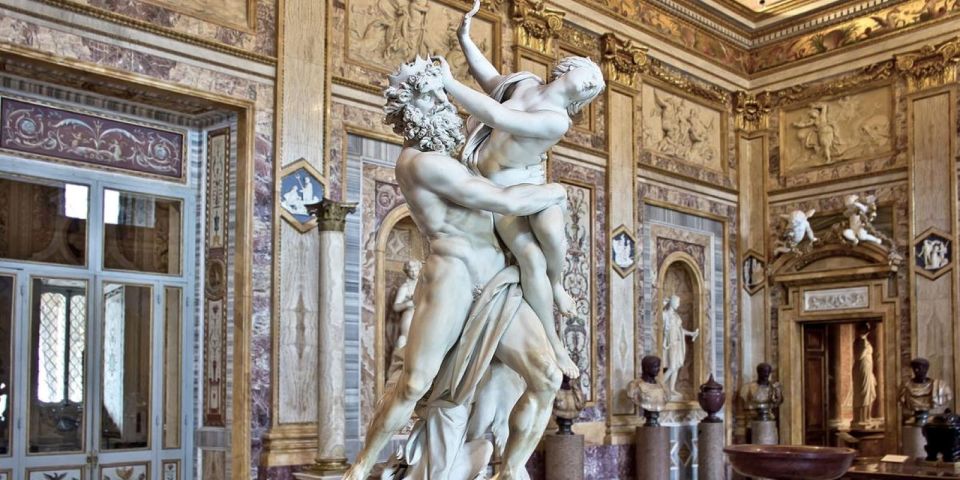
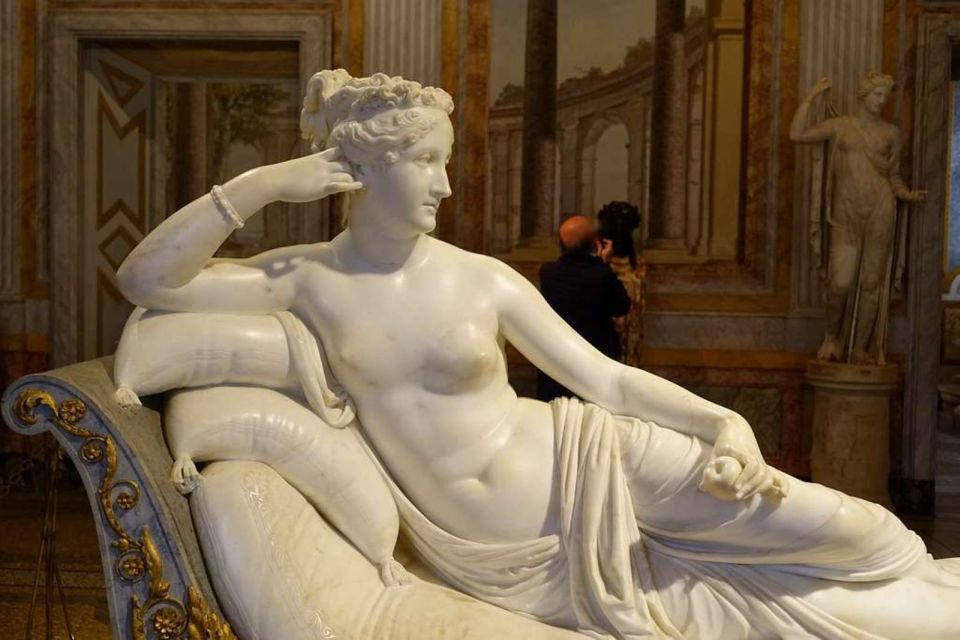
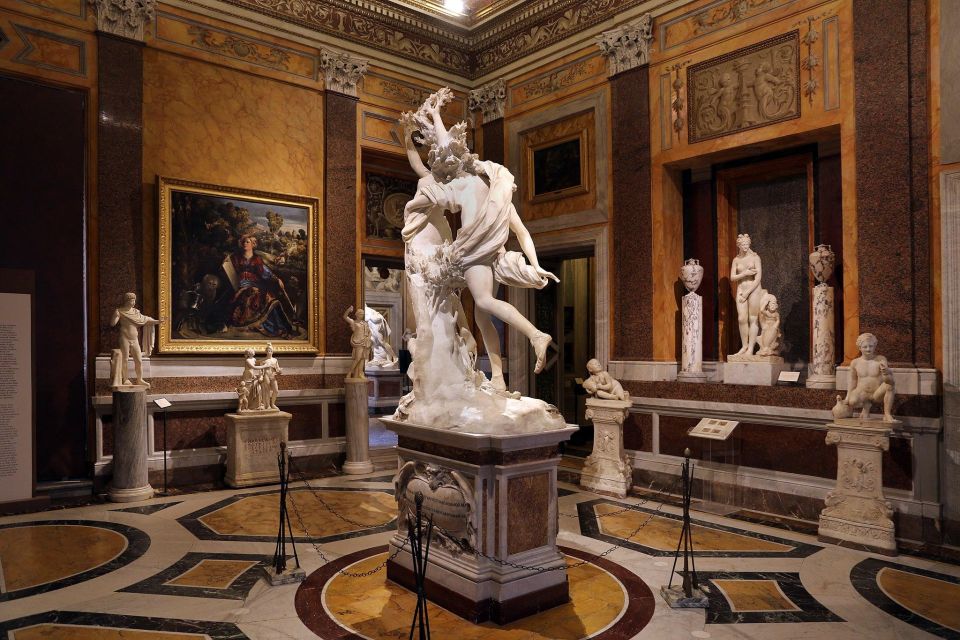
If you only came for Bernini, you’d still be in good shape, but a guide helps you see why Bernini still feels modern. The tour highlights two of the most talked-about works in the collection: Apollo and Daphne and David. These aren’t just pretty sculptures; they’re packed with movement, tension, and storytelling in the way the figures are frozen mid-action.
With a guide, you don’t just see the pose; you learn what you’re looking for. You’ll get explanations of composition and effect, and you’ll hear the historical and artistic context behind why these works were admired. That context matters because the Borghese Gallery is built around how people react to art in a dramatic, theatrical setting. When someone points out what Bernini is doing, the marble stops feeling like a static object and starts feeling like a moment.
Here’s the practical takeaway: plan to spend your best attention on the Bernini pieces, because the guided explanations make the time in front of them more rewarding. And if you’re a visual learner, you’ll probably like how guides break things down: what part of the scene your eye should go to first, and why certain details are there.
Caravaggio moments: drama, contrast, and why the pairing works
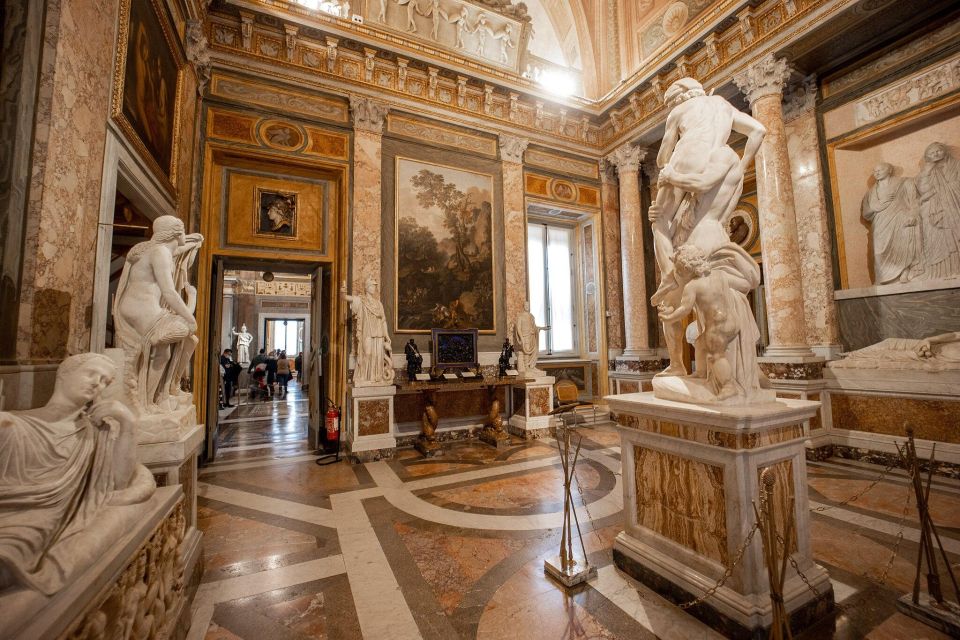
Caravaggio can be a shock in the best way. The tour includes major works such as Boy with a Basket of Fruit and St. Jerome Writing. What I like about seeing Caravaggio during this particular route is contrast. You’re moving between sculptural storytelling (Bernini’s motion and drama in stone) and painting storytelling (Caravaggio’s intense, human realism).
A good guide helps you connect what you’re seeing to technique and mood: the way Caravaggio’s figures draw you in, and how his approach to character and setting creates the sense of an immediate scene. The value here is that you’re not just staring at brushwork; you’re learning what makes it feel alive.
Also, Caravaggio’s presence in the Borghese Gallery helps explain why the collection works as a whole. The guide ties together why these artists were valued and how the collection reflects both taste and power. If you’re into how art connects to patronage and politics, you’ll likely enjoy this portion.
Frescoed rooms and Cardinal Borghese: the story behind the walls
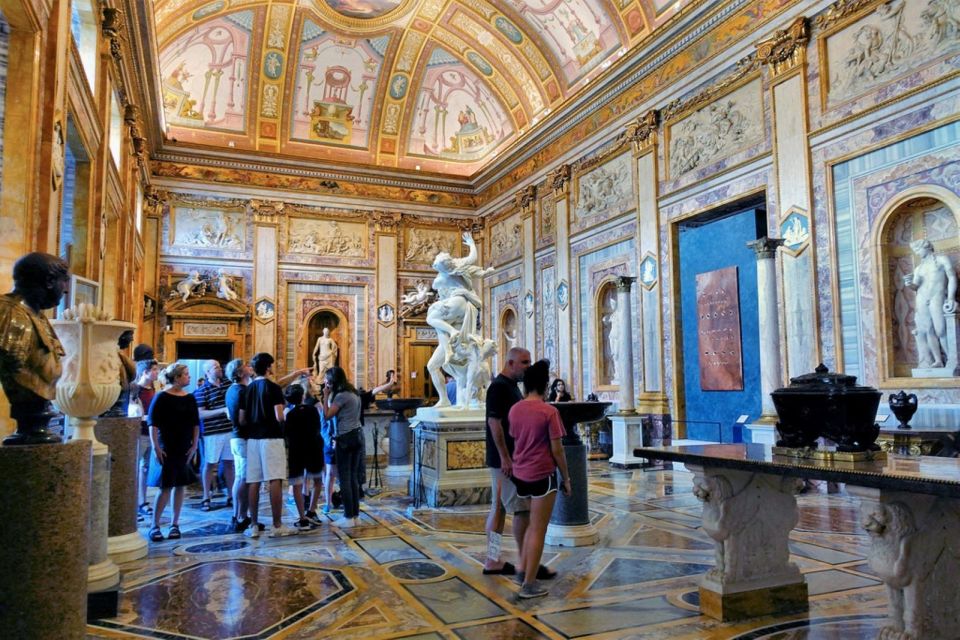
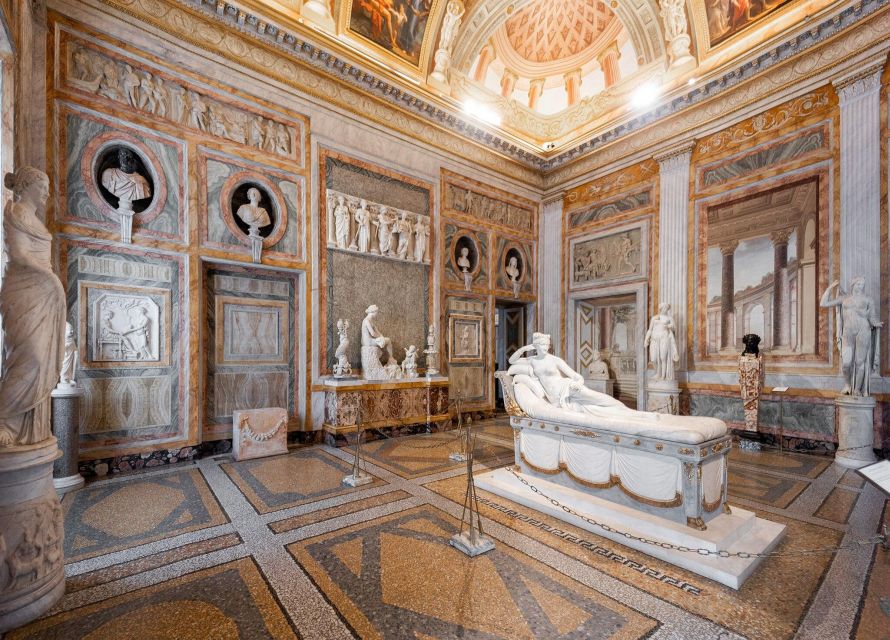
Borghese isn’t only about famous art. It’s also about how the setting stages the collection. Expect ornate rooms with frescoes and intricate decorations that frame the works like a designed backdrop. The guide typically spends time on the legacy of Cardinal Borghese, because understanding his role makes the collection make more sense.
When you hear the stories behind the works, you start noticing details that feel deliberate: why certain pieces are grouped, how the rooms shape attention, and how the gallery’s look supports the drama of Baroque art. The result is that you don’t just see masterpieces; you understand the logic of the experience.
One of the most practical benefits is pacing through the rooms. In less guided visits, it’s easy to treat the gallery like a checklist. With a guide, the rooms become signposts. You learn what to look for in each space and what story to carry with you as you move onward.
You can also read our reviews of more museum experiences in Rome


How the 1.5 to 2 hours really feels in practice
This tour is short by design: 1.5 to 2 hours is just enough time to hit the most important works without turning it into an exhausting endurance event. That can be great for many people, especially if you’re also seeing other major sights that day. The heads-up is that the Borghese Gallery is big, so you will not get unlimited roaming time.
Most guides try to balance time in each room, and many praised the organization of pacing. Still, if you’re the type who wants to stand for a long while in front of one masterpiece, you might feel the squeeze. In fact, a common sentiment is that you’ll see the highlights, but you’ll probably want more time to take everything in slowly on a return visit.
So here’s the best strategy: treat the guided tour as a fast, guided “orientation plus highlights” session. If something grabs you—maybe a specific Bernini moment or the mood in a Caravaggio piece—pay attention to where you’re standing. You’ll have a clearer idea of what to revisit later, even if you don’t have time today.
Guide styles: why the best ones can change everything
The reviews show a strong pattern: the biggest difference-maker is the guide’s storytelling style. Names that came up include Phoebe, Ellie, Fe (Felicity), Sylvia, Barbara, Andrada, and Fabio. People praised guides for being energetic, patient, and able to explain art in a way that feels approachable instead of lecture-like.
I love that this tour isn’t just fact-dumping. When a guide is engaging, the museum starts to feel like a conversation. You get to ask questions in your own way—by listening closely and mentally connecting details as you move from room to room. That matters in a collection like Borghese, where art can be intimidating if you don’t know what to focus on.
Headsets also support this. When you can hear the guide clearly from wherever you’re standing, you spend more time looking at the art and less time trying to catch words.
One small but telling detail from the comments: some guides went beyond the strict scope of the tour to help people with logistics afterward. That doesn’t happen every day, but it’s a clue that the guides involved tend to care about how your experience lands.
Rules inside the gallery: the stuff that can trip you up
Before you go, take the museum rules seriously. They’re not fussy just to be annoying; they protect space and keep things moving.
Here are the restrictions that matter most:
- Bags are not permitted inside, and the rule applies to bags of any size.
- No food or drinks in the gallery.
- No video recording.
- No pets.
- No weapons or sharp objects.
Also note a practical reality: not every part of the museum may be open at all times due to maintenance. That means your exact route could be slightly different, but the tour is still designed around the collection’s main masterpieces.
Finally, this tour is not suitable for wheelchair users or people with mobility impairments. That’s worth respecting, since the gallery experience involves moving through rooms and viewing areas.
Price and value: is $51.24 a good deal?
At $51.24 per person, you’re paying for three things: access (skip-the-line tickets), a licensed guide, and headsets. In a place like the Borghese Gallery, skip-the-line entry is not a small perk. It’s a way to avoid the frustration of timed-ticket limits and long waits.
You’re also paying for interpretation. A Borghese visit without context can feel like a room full of incredible objects you’re trying to decode. With a guide, you get explanations of techniques, artistic choices, and the historical reasons the works mattered. That turns “I saw it” into “I understood what I saw,” which is the real value.
Is it expensive compared to doing it solo? Maybe. Is it worth it compared to the time and hassle you’d spend sorting entry and then trying to figure things out room-by-room without a guide? For many people, yes—especially if you only have a limited number of hours in Rome.
Who this tour suits best (and who should think twice)
This is a strong match if you:
- Want to see the Borghese Gallery’s major masterpieces without spending hours hunting the right rooms and context.
- Like guided explanations that cover both history and technique.
- Appreciate small-group pacing and the ability to hear the guide thanks to headsets.
- Are traveling on a tight schedule and want an efficient art stop.
It may not be your best fit if you:
- Want to spend long stretches in front of art with no structure. The tour is short and focused.
- Rely on wheelchair access or need accommodations for mobility limitations.
If you fall in the middle—curious but not an art specialist—this tour is often a sweet spot. It gives you enough guidance to feel confident, without turning the day into a classroom.
Should you book the Borghese Gallery small-group tour?
Book it if you want the practical advantages: skip-the-line entry, a licensed English guide, and a clear, guided route through Bernini and Caravaggio highlights within about two hours. It’s also a good pick if you like the idea of learning why the art was made, not just noticing what it looks like.
Skip it only if you strongly prefer unguided wandering for as long as possible, or if the mobility and bag rules would be a hassle for your specific needs. Otherwise, this tour is a smart way to get maximum meaning from a museum that’s famous for being both stunning and hard to experience efficiently on your own.
FAQ
How long is the Borghese Gallery small-group guided tour?
The tour lasts about 1.5 to 2 hours. Starting times vary, so check availability when you book.
Is skip-the-line entry included?
Yes. Skip-the-line Borghese Gallery tickets are included in the tour price.
What’s included besides the guide?
You get a licensed live tour guide (English) and headsets to hear the guide clearly.
Where do we meet?
Meet the guide in front of the Borghese Gallery and Museum entrance, with a City Walkers sign. The tour ends back at the meeting point.
Are bags allowed inside the gallery?
No. Bags of any size are not permitted inside the Borghese Gallery for security reasons.
Is the tour wheelchair-friendly?
No. The tour is not suitable for wheelchair users and not suitable for people with mobility impairments.
Does it run in bad weather?
Yes. The tour takes place rain or shine.