REVIEW · OSTIA ANTICA
From Rome: Ostia Antica 4-Hour Guided Tour
Book on GetYourGuide →Operated by Roma Experience Tours · Bookable on GetYourGuide
Roman history begins in 20 minutes. One of the best parts is the fast train ride from Rome, then walking straight into Ostia Antica’s world—often described as prettier and calmer than Pompeii. I also love how the well-preserved theater still matters today, and how the guide connects what you see to how Rome actually worked as a port city.
The main consideration is cost: $648.74 per person is a serious spend, and you’ll want to arrive with a little patience around the meeting point area (the Piramide metro area can feel a bit chaotic if you arrive late).
In This Review
- Key highlights worth planning around
- Getting To Ostia Antica: The Quick Train Escape From Rome
- What the Port City Reveals: Grain, Marble, Slaves, and Wine
- Stops You Will Not Rush: Theater, Shops, and Frescoed Walls
- Rome’s Private Side: The Brothel and Daily Life Details
- At the Heart of Public Power: Capitolium, Baths of Neptune, House of Diana
- Eerie Necropolis Walk and Remarkably Preserved Temples
- How Long It Really Feels: Pacing, Breaks, and Your Comfort
- Price and Value for a 4.5-Hour Private Tour
- Who This Ostia Antica Tour Fits Best
- Should You Book This Tour?
- FAQ
- How long is the From Rome: Ostia Antica 4-Hour Guided Tour?
- Is the tour a private group?
- How do I get to Ostia Antica from Rome?
- What’s included in the price?
- Is food included?
- Which languages is the guide available in?
- What should I bring?
- Is the tour suitable for wheelchair users?
- What is the cancellation policy?
Key highlights worth planning around
- Short jump from Rome: you’re at the site fast, so most of your time is actually walking ruins
- Theater that still shows up today: a major payoff photo-stop and a living reminder of Roman civic life
- Port-city details you can picture: food supply, trade, and everyday business in one compact place
- Sin-focused storytelling: the brothel stop adds context for how Romans talked about sex and status
- Necropolis atmosphere: tombs that can feel eerie, but also oddly human
- Small private format: you get time to ask questions and move at a relaxed pace
Getting To Ostia Antica: The Quick Train Escape From Rome
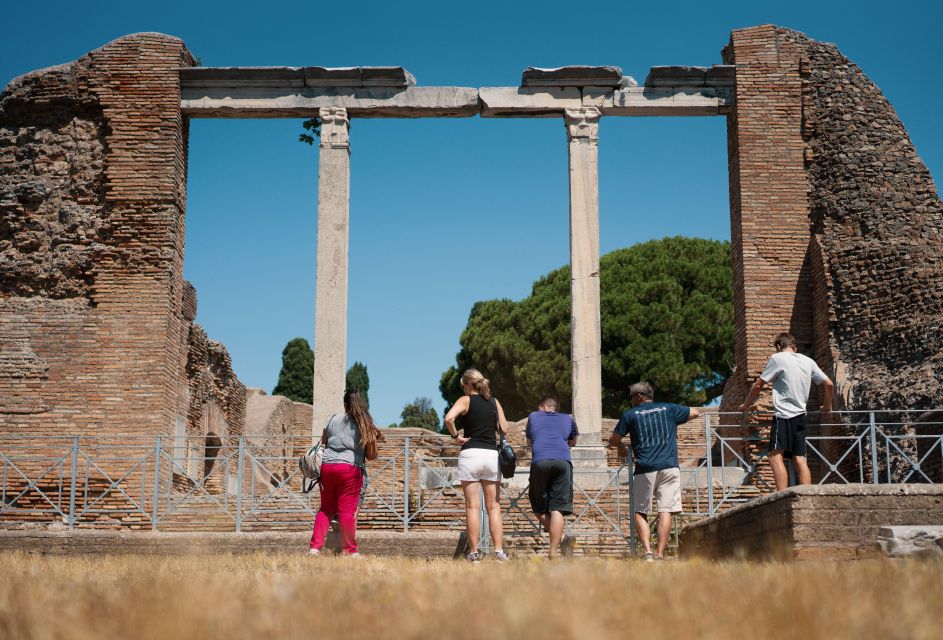
Ostia Antica is one of those Roman day trips that feels more like a time machine than a logistics chore. You’re traveling from the city by train in under 20 minutes, which matters because you start the experience while you still have energy. This also makes the tour easier to fit into a Rome schedule: half-day is real time, not a half-day you lose to travel delays.
Your guide meets you and keeps things moving, with a focus on helping you read the site instead of just walking from sign to sign. The tour includes the train ticket and admission, so you’re not stuck figuring out local transit or ticket windows mid-trip.
One practical note: the meeting point is tied to the Piramide metro area. If you’re the kind of traveler who likes things calm, go a little early, so you’re not doing last-minute navigation while the group is assembling.
You can also read our reviews of more tours and experiences in Ostia Antica.

What the Port City Reveals: Grain, Marble, Slaves, and Wine

The big theme here is that Ostia wasn’t just a scenic ruin. It was the gateway and gatekeeper of ancient Rome, sitting where the River Tiber meets the sea. Your guide frames the site as the place where supplies were processed and moved onward into the empire. Once you understand that, the ruins click into place fast.
You’ll hear how goods came from far away and were handled right here: grain from Sicily, marble from Africa, slaves from Asia, and wine from Spain. That kind of detail changes how you look at buildings. A storage or market space isn’t just a wall with columns anymore—it’s part of an actual pipeline that fed Rome and funded its power.
This is also where the tour earns its “less crowded” reputation. When you’re seeing the port city through an expert lens, the lack of crowds feels like a gift: you can actually look up. You can also slow down in areas that might otherwise feel like quick photo stops.
Stops You Will Not Rush: Theater, Shops, and Frescoed Walls
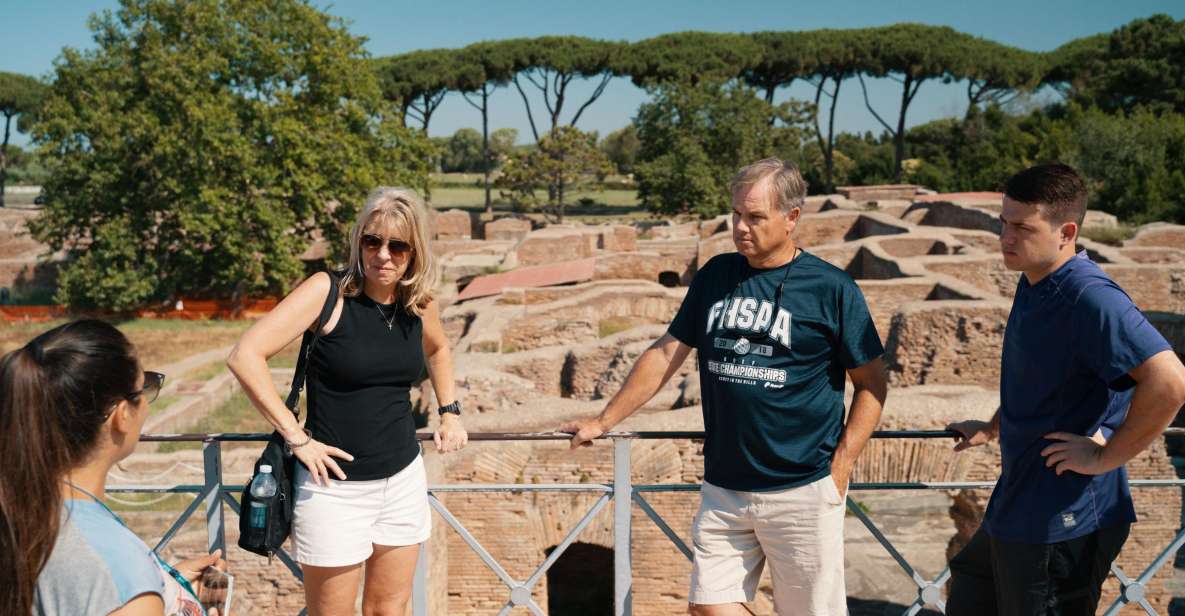
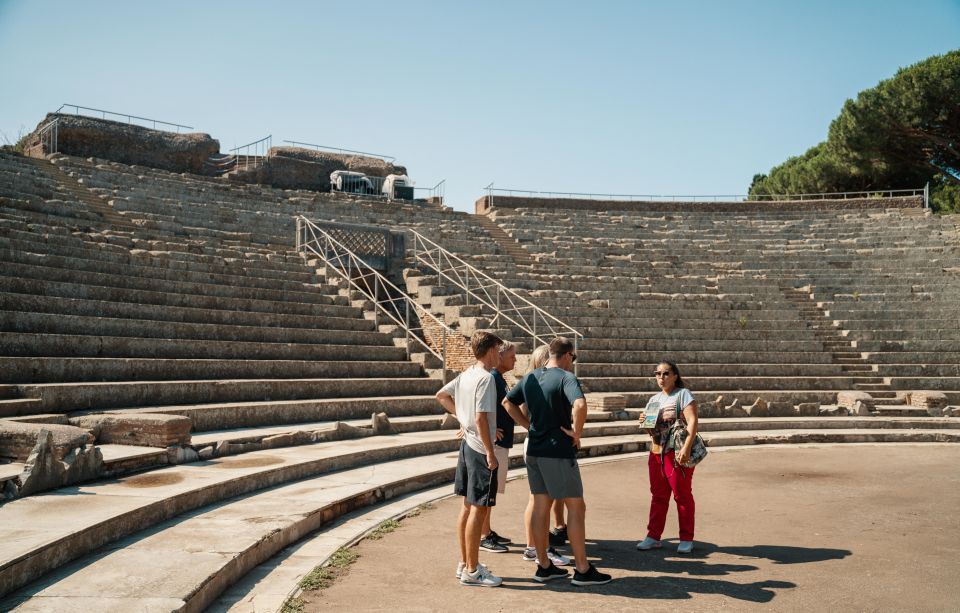
This tour gives you several high-impact stops instead of skimming everything. The star is the Roman theater, famously well preserved. The cool part isn’t just how it looks. It’s still used for occasional performances, which turns it from a dead relic into a civic space with continuity. Even if you’re not catching a show, the structure makes sense as a place where people gathered for drama, announcements, and public identity.
From there, you’ll explore smaller commercial spaces too. One of the more memorable elements is seeing ancient shops that remain intact, including a fish shop with striking mosaics. These details are worth your attention because they show the rhythm of daily life: trade, food, and services happening in stone.
Frescoes are also part of the experience, and the guide’s job is to help you notice what would have mattered to residents—color, placement, and what the imagery signaled about status or function. If you’re used to ruins that feel generic, Ostia can feel refreshingly specific.
Rome’s Private Side: The Brothel and Daily Life Details
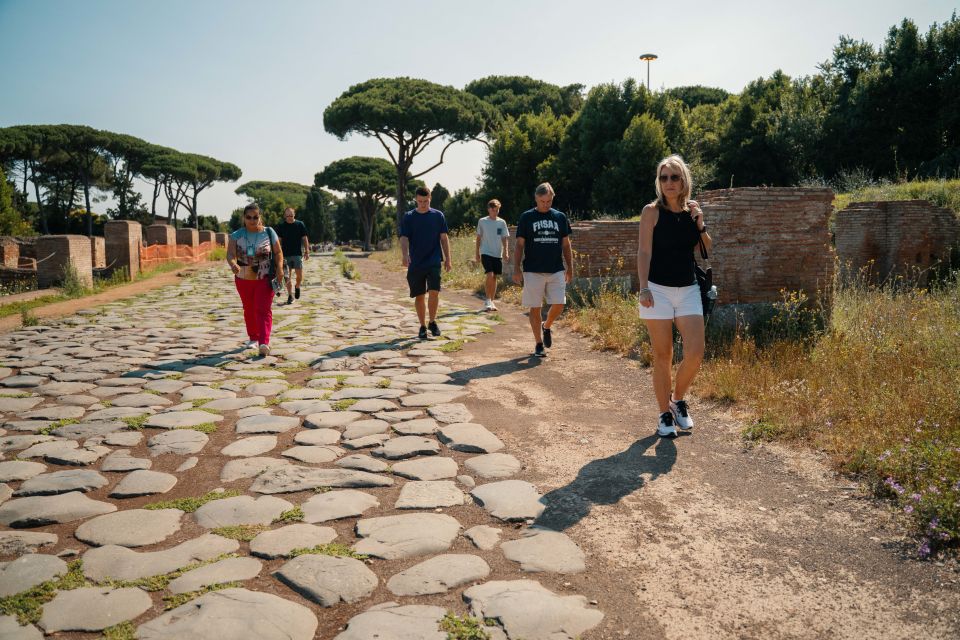
Ostia Antica doesn’t keep everything polite. One of the highlights is learning about Rome’s “sinful side,” including a local brothel. The way this stop is handled can be surprisingly informative, because it ties personal behavior to the wider story of how the empire worked—who came through the port, what kind of city Ostia became, and how moral attitudes were expressed in public life.
This isn’t just shock value. It’s context. A port city with movement, workers, sailors, merchants, and visitors naturally creates demand for services and entertainment. Talking about that openly helps you understand why some parts of Ostia have signage and layouts that feel too practical to be imagined.
If you prefer ruins that stay strictly heroic and official, this stop may be the one moment you mentally brace for. But it’s also one of the stops that makes the site feel like a real place, not a museum diorama.
At the Heart of Public Power: Capitolium, Baths of Neptune, House of Diana
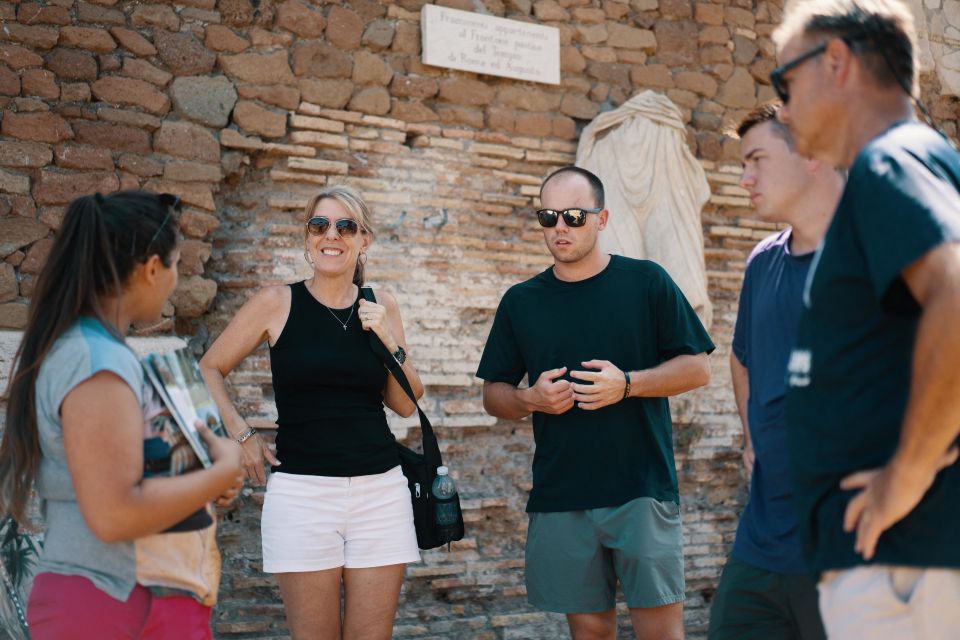
Ostia’s center gives you the official Rome vibe: religion, government, and public bathing culture. You’ll visit the Capitolium, which sits right at the core of civic life in the city. This stop matters because it explains how Rome organized authority. Even if you’ve visited other Roman sites, the setting here helps you imagine the daily movement of residents between religion and politics.
You’ll also see the Baths of Neptune, which helps balance the story. Rome wasn’t only temples and laws. Public baths were social infrastructure. The design and scale make it easier to picture the mix of routines—gossip, grooming, exercise, and conversation—in spaces that were built to last.
Another standout is the House of Diana. You’ll enter private homes of former citizens, and the surroundings feel calmer and more residential than the more public areas. This is where the tour slows down in a good way. You can see the difference between what was built for large gatherings and what was built for people who expected privacy, family space, and everyday comfort.
Eerie Necropolis Walk and Remarkably Preserved Temples
If you want an emotional shift, the Necropolis does it. Ostia’s tombs create a different mood than most of the site because you’re looking at how people faced death—and how a city handled remembrance. The guide’s framing can make the tombs feel eerie without becoming a scary story. Instead, it comes across as quietly unsettling in the way real history often is.
You’ll also discover remarkably well-preserved Roman temples. This is one of those spots where you can benefit from having a guide. Temples can blur together if you’re only looking at their shape. With context, you’ll understand what each area likely meant in Roman public religion and how it related to the rest of the city.
And because the tour happens inside a park setting with a mix of open areas and shaded ruins, you’ll get natural breaks without leaving the experience entirely.
How Long It Really Feels: Pacing, Breaks, and Your Comfort
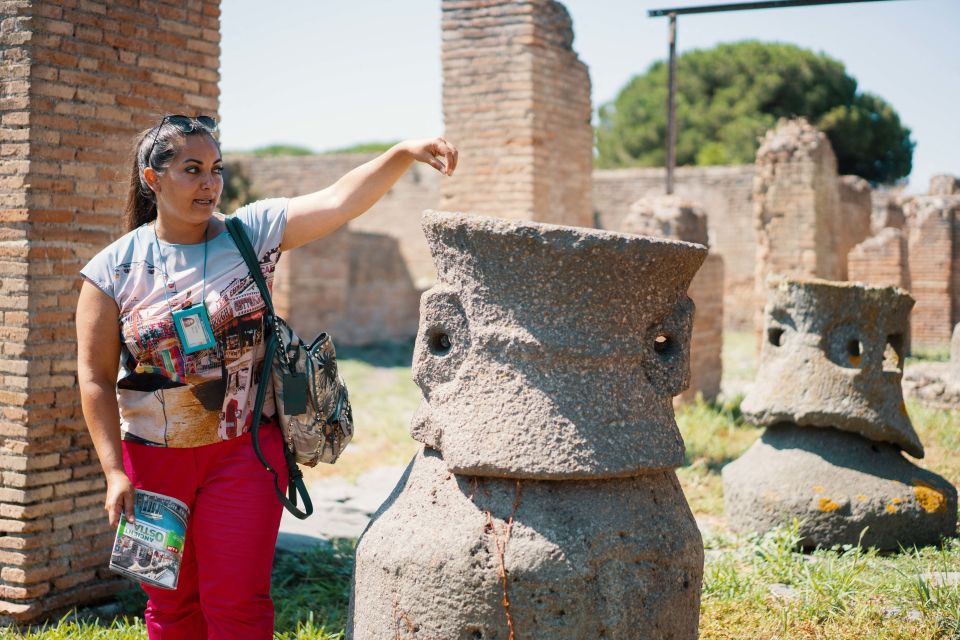
The tour runs about 4.5 hours. That’s a sweet spot for Ostia Antica: long enough to see the big monuments and the smaller life details, short enough that you’re not wiped out by the end.
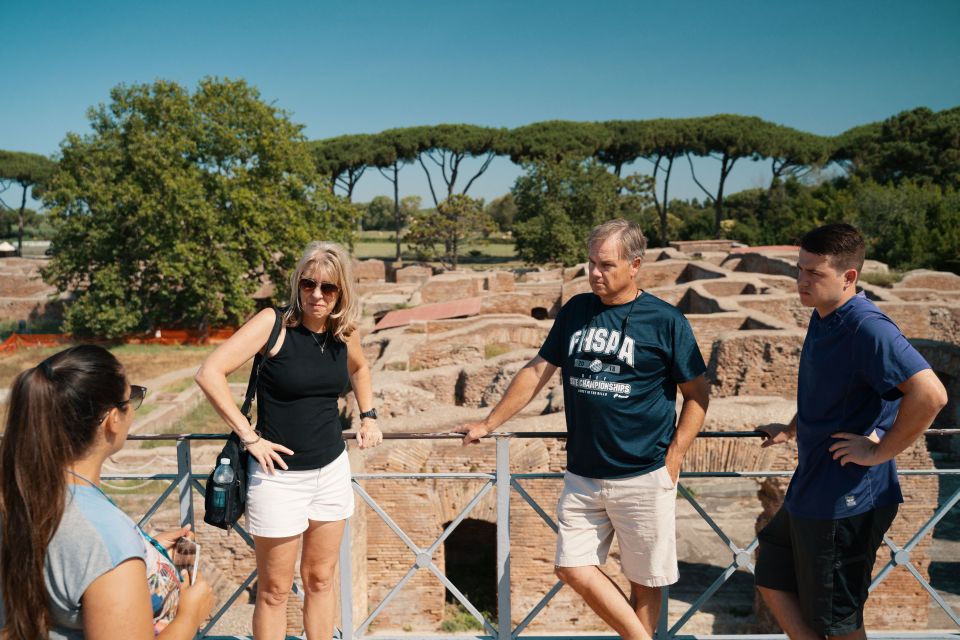
The pace tends to feel relaxed because it’s a private group format. You can ask questions when something catches your eye—especially helpful at a site where names and functions can be confusing at first glance.
There is a restaurant and cafe inside the park, which means you’re not forced to head back toward the city to get water or a snack. Food and drinks are not included, though, so plan on buying what you need on-site.
Comfort matters here. Bring comfortable shoes and consider a hat, especially on sunny days. Ostia’s ruins include walking on uneven ground and time spent looking upward, which is when good footing pays off.
Price and Value for a 4.5-Hour Private Tour
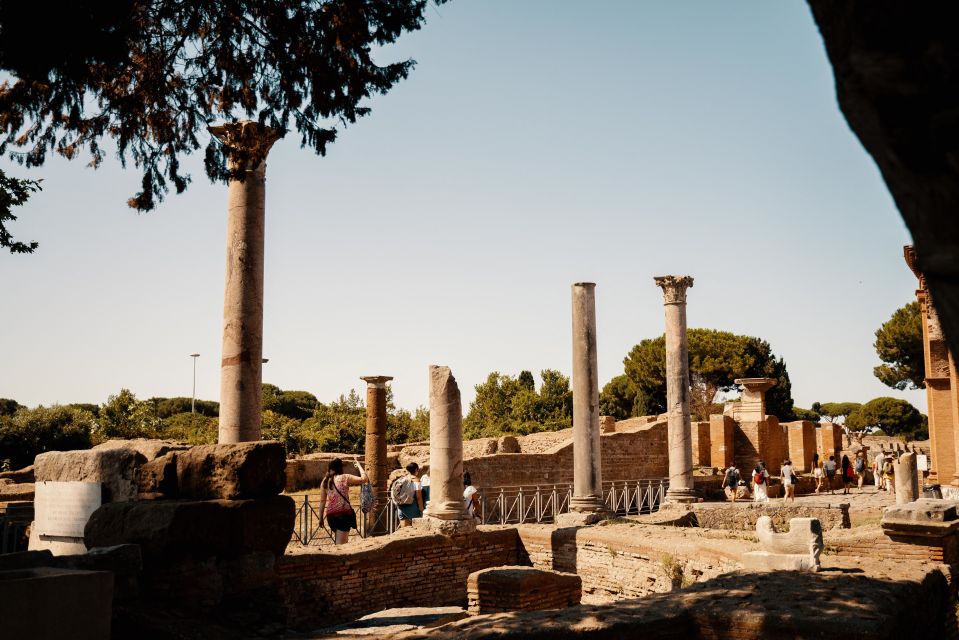
Let’s talk about money directly. At $648.74 per person, this is not a “cheap day trip.” You’re paying for:
- admission ticket
- train ticket
- a live guide
- and a private group setup
The value question isn’t just whether the ruins are worth seeing. Ostia Antica is undeniably worth seeing. The real question is whether you want the added cost of a guided, private experience that helps you understand what you’re looking at—especially with stops like the brothel, the Capitolium, and the necropolis tombs where context matters.
If you’re the type of traveler who enjoys asking questions and wants to move at your own pace (instead of getting swept along), the private format can justify the price. If you’d rather self-guide and spend less, you could possibly do Ostia independently. But based on what this tour includes, you’re buying time, clarity, and an expert lens—without extra ticket errands.
In the provided feedback, guides like Valeria stand out for how strong the explanations can feel. That matters because Ostia’s layout rewards a good narrator.
Who This Ostia Antica Tour Fits Best
This works especially well for:
- visitors who want a structured half-day without sacrificing key monuments
- people who like history that connects to how people lived, traded, and gathered
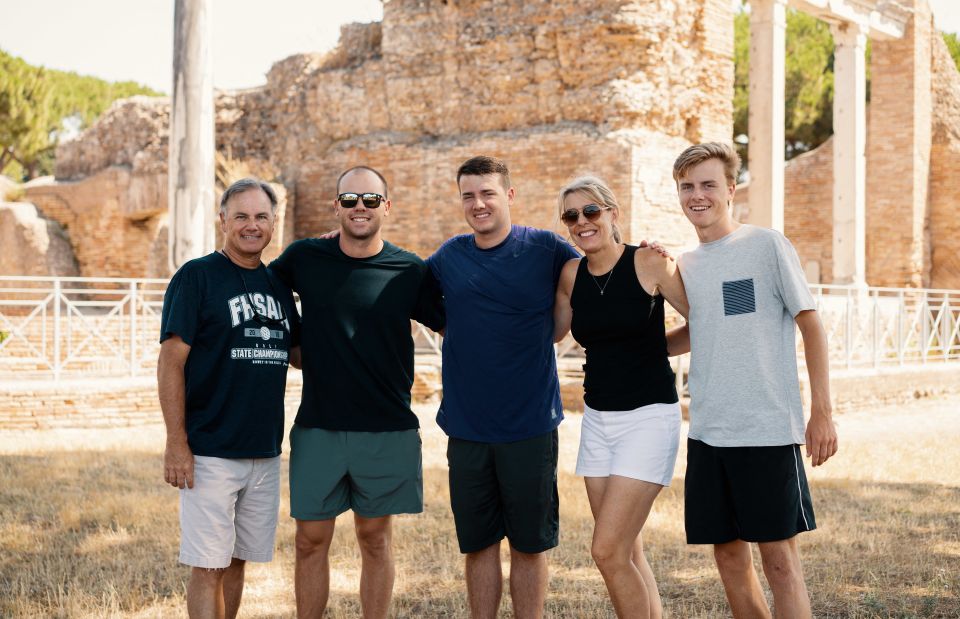
- couples or small groups who prefer a calm pace and room for questions
- anyone who’s tired of huge crowds and wants to see Rome’s outskirts in a more human scale
It’s not suitable for people with mobility impairments or wheelchair users, based on what the tour data states. So if accessibility is a concern, double-check with the provider before booking.
If you’re traveling with teens or adults who like stories, the combination of the theater, the port-city economy, and the brothel stop gives variety. It also keeps the ruins from feeling one-note.
Should You Book This Tour?
Yes, if you want Ostia Antica with real context and you’re willing to pay for a private guided format. The theater, the port-city trade details, the brothel stop, and the necropolis create a full emotional and historical sweep in just 4.5 hours. And the included train ticket and admission reduce the common stress of day trips.
Hold off if you’re budget-focused or if you prefer to wander at your own pace without a guide. Also arrive ready for the Piramide metro meeting point area—plan to get there early so the start feels smooth.
FAQ
How long is the From Rome: Ostia Antica 4-Hour Guided Tour?
The tour lasts about 4.5 hours.
Is the tour a private group?
Yes, it’s listed as a private group.
How do I get to Ostia Antica from Rome?
You travel by train, with a ride of less than 20 minutes from Rome.
What’s included in the price?
Admission ticket, train ticket, and a live guide are included.
Is food included?
No. Food and drinks are not included, though there is a restaurant and cafe inside the park.
Which languages is the guide available in?
The tour guide is available in English, Arabic, French, and Spanish.
What should I bring?
Bring a passport or ID card, wear comfortable shoes, and dress for the weather. A hat is strongly recommended.
Is the tour suitable for wheelchair users?
No. The tour is not suitable for wheelchair users and people with mobility impairments.
What is the cancellation policy?
Free cancellation is offered up to 24 hours in advance for a full refund.