REVIEW · ROME
Rome: Castel Sant’Angelo and Hadrian’s Tomb Guided VIP Tour
Book on GetYourGuide →Operated by Tour in the City - Travel Agency Rome - · Bookable on GetYourGuide
Rome’s fortress has layers you can actually follow. This Castel Sant’Angelo tour works because you get a clear, story-driven walkthrough from an art historian and you also end with Rome-spanning panoramic views from the terrace.
One thing to plan for: there’s a moderate amount of walking, and the site is not wheelchair accessible.
In This Review
- Key Points at a Glance
- Rome’s Fortress With a Built-In Story: How This VIP Tour Feels
- Hadrian’s Tomb to Papal Prison: What You’ll Learn Inside
- Emperor Hadrian’s Tomb: The Starting Point
- Papal Apartments and the Bastion: When the Popes Moved In
- Michelangelo’s Courtyard: Art Meets Fortification
- The Site’s Real Job Over Time: Treasury, Prison, Execution
- The Inside Route: Rooms You Don’t Want to Miss
- Practical note: pace and attention
- Terrace Views Over Rome: When the Photos Make Sense
- Sant’Angelo Bridge sightlines
- Swift Access and Headsets: Why This Matters in Rome
- The real value: better understanding per minute
- What’s Included (and What You’ll Need to Plan Yourself)
- Bring what helps you enjoy it
- Price for $94: Does This Tour Feel Like Value?
- Who This VIP Tour Suits Best (and Who Might Want Another Option)
- Should You Book This Castel Sant’Angelo VIP Tour?
- FAQ
- How long is the Castel Sant’Angelo guided VIP tour?
- What is the group size for this tour?
- What language is the tour guide speaking?
- Where do I meet the guide?
- Is the Passetto di Borgo included?
- What should I bring and wear?
- Is the tour wheelchair accessible?
Key Points at a Glance
- Small group (max 10) with headsets so you can hear every detail without crowd noise taking over.
- Professional art historian guide with strong English and a lot of specific place-based information.
- The building’s “many lives” in one route—Hadrian’s tomb, papal residence, treasury, prison, and execution site.
- Courtyards, papal apartments, and the bastion keep the tour moving through the most meaningful spaces.
- Terrace + Tiber-side setting gives you the best angles for views and photos of the bridge and river.
- Swift access tickets help you spend your time inside, not standing around outside.
Rome’s Fortress With a Built-In Story: How This VIP Tour Feels
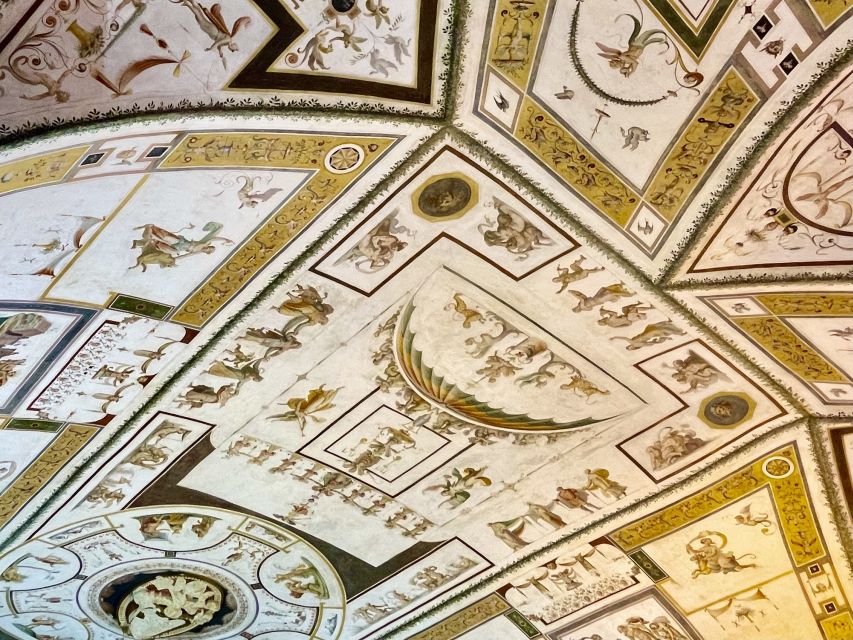
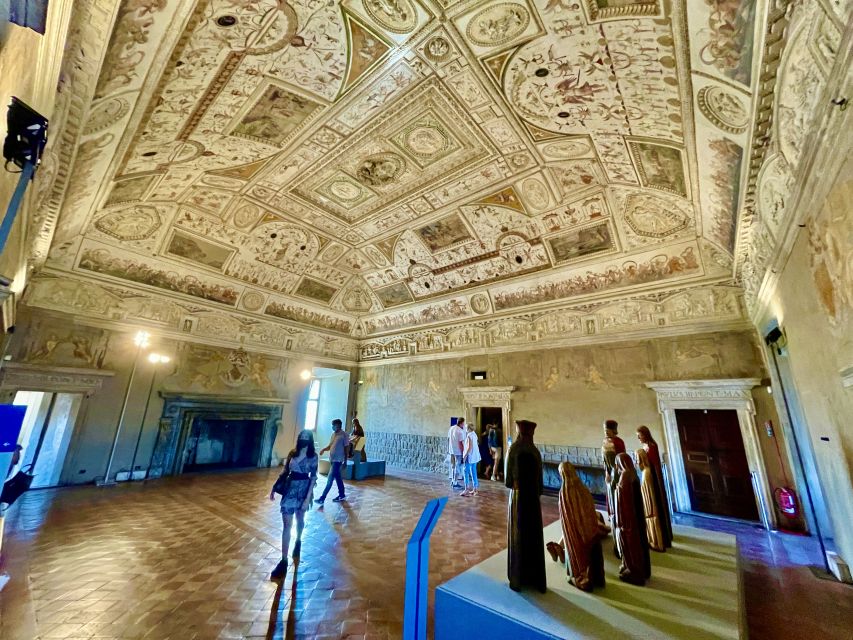
Castel Sant’Angelo is one of those Roman landmarks where the walls do the talking. Start with Hadrian’s tomb concept, then watch the site transform into a fortress that later served popes and the state—then, later still, a prison and execution site. Walking through it with a guide who can connect the dots makes the whole place click instead of feeling like a pile of stone.
I like that this tour is built for focus. You’re in a small group with headsets, so even if the room is busy, you’re not guessing what you’re looking at. And because it’s a guided experience with swift access, you’re not burning time waiting while other visitors shuffle along.
For 1.5 hours, it also has a smart pace: you hit the big interior points and finish where the views matter. If you’re the kind of visitor who wants understanding, not just photos, this format fits well.
You can also read our reviews of more guided tours in Rome


Hadrian’s Tomb to Papal Prison: What You’ll Learn Inside
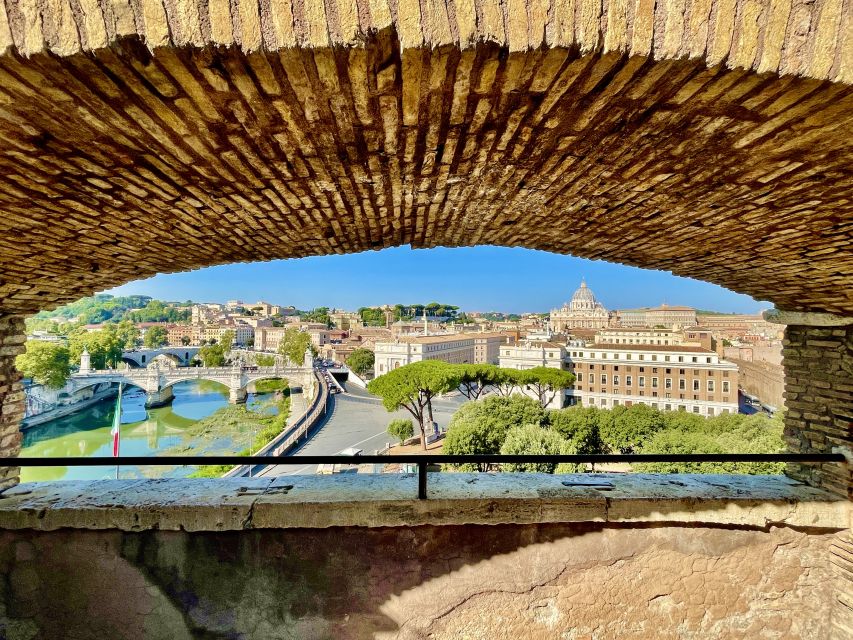
The core payoff here is the way the guide turns the building into a timeline. You start from the idea that this monument began as Emperor Hadrian’s tomb, and then you follow how the function changed as Rome and its leadership changed. That shift—from imperial meaning to papal power to state control—helps you read the rooms instead of just moving through them.
Here’s what you should expect to come across during the guided route:
Emperor Hadrian’s Tomb: The Starting Point
You’ll see the tomb area tied to Hadrian. Even if you’ve read about him before, seeing the space in person helps. The point isn’t just that it was a tomb; it’s that this structure was made to carry imperial authority in stone.
If you’re wondering why this matters, it’s because later chapters of the building borrow that same “power symbol” energy. The site wasn’t starting from scratch; it was reusing an already-impressive statement.
Papal Apartments and the Bastion: When the Popes Moved In
At some point, the story shifts from empire to the papacy. You’ll tour areas described as popish apartments and the bastion. This is where the fortress stops being only about walls and starts being about daily control—how leaders used the space, not just how they guarded it.
A good guide makes this section feel human. Instead of treating it like a museum diagram, you understand that these were functional rooms in a building designed for power, secrecy, and protection.
Michelangelo’s Courtyard: Art Meets Fortification
You’ll also see Michelangelo’s courtyard. That name alone pulls in attention, but what makes it worth your time is the contrast: courtyard space in a fortress usually isn’t about comfort—it’s about structure, angles, and movement.
When you’re walking through a defensive building, it helps to notice how artists and planners worked with the constraints. A courtyard can look calm from the outside, yet still belong to a place designed for security.
You can also read our reviews of more tours and experiences in Rome






The Site’s Real Job Over Time: Treasury, Prison, Execution
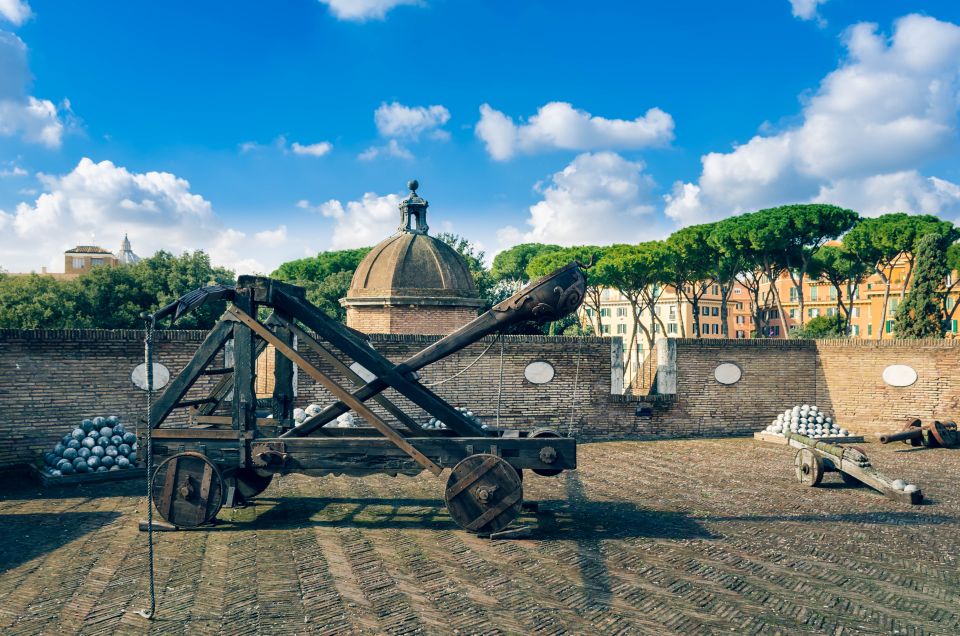
Castel Sant’Angelo isn’t only a dramatic architecture stop. The tour explains its role across centuries: state treasury, prison, and public execution site. If you pay attention, you’ll leave with a stronger sense of how power worked in Rome—who was protected, who was confined, and how the building shaped outcomes.
This is also where an English-speaking guide earns their keep. You’ll want a steady explanation to keep the tone from becoming confusing. The tour’s design, plus the headsets, makes it easier to stay with the story.
The Inside Route: Rooms You Don’t Want to Miss
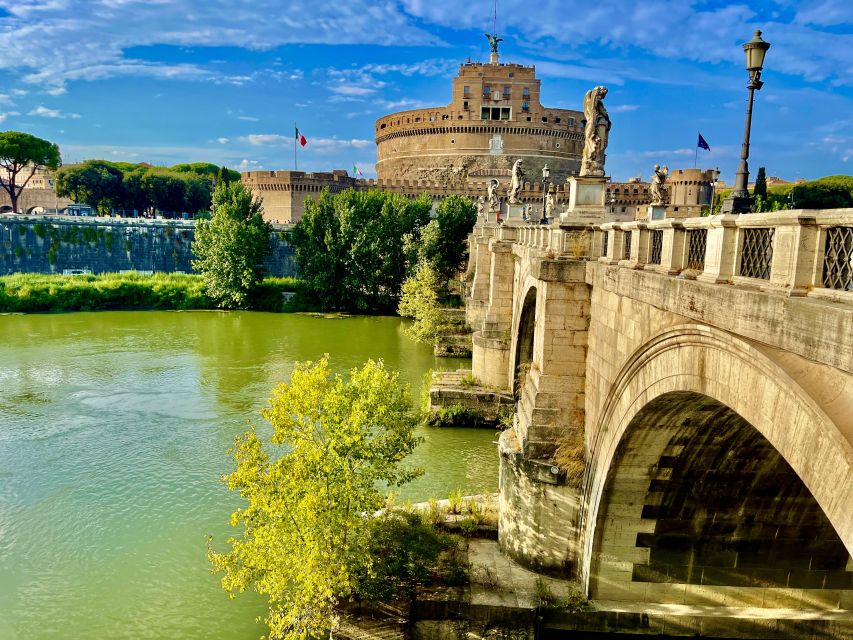
Because this is a guided VIP-style visit, you’re not left building your own itinerary from signage. You follow your guide through the spaces that matter most for understanding what you’re seeing.
You can expect to move through multiple layers of the monument, not just one standout room. That matters because Castel Sant’Angelo is all about transitions: tomb to fortress, residence to prison, ceremonial space to operational space.
Practical note: pace and attention
With only 1.5 hours, the guide can’t spend forever in every corner. That’s a good thing if you want momentum. Just come in ready to look up—arches, levels, and views—because the building’s meaning often shows through details.
And yes, you should wear comfortable shoes. Even “moderate walking” adds up when you’re moving between floors and sections.
Terrace Views Over Rome: When the Photos Make Sense
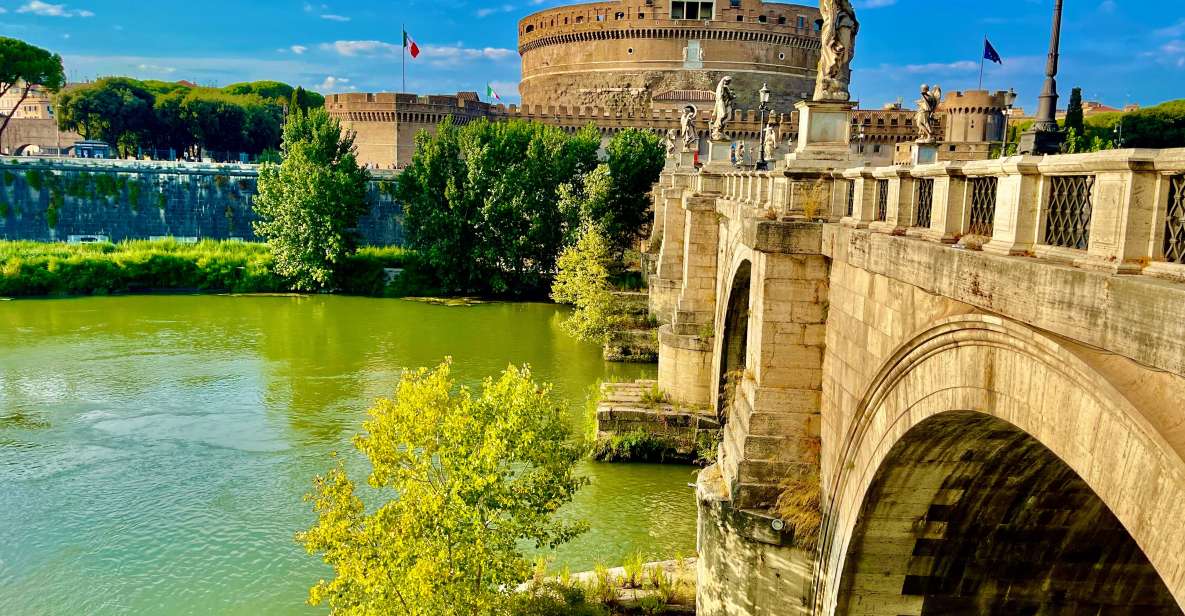
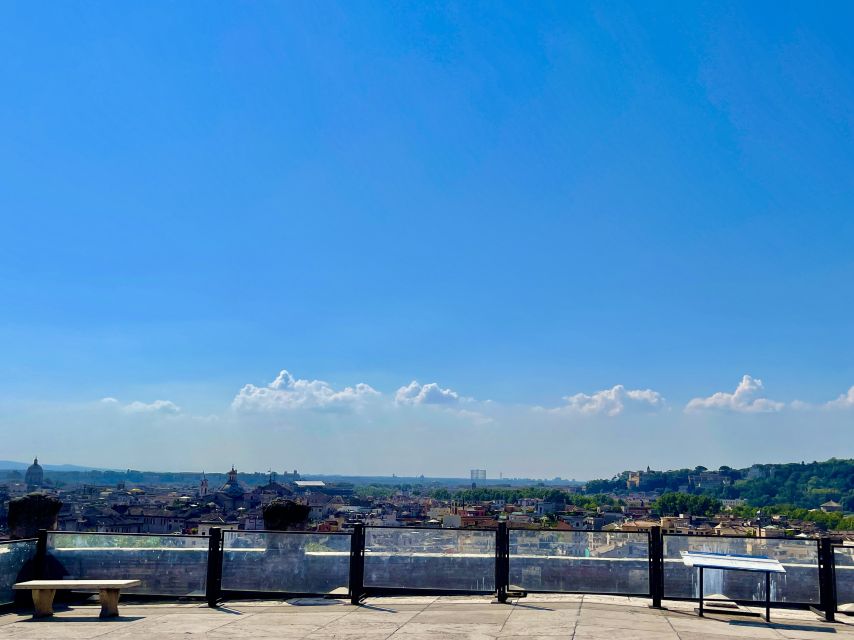
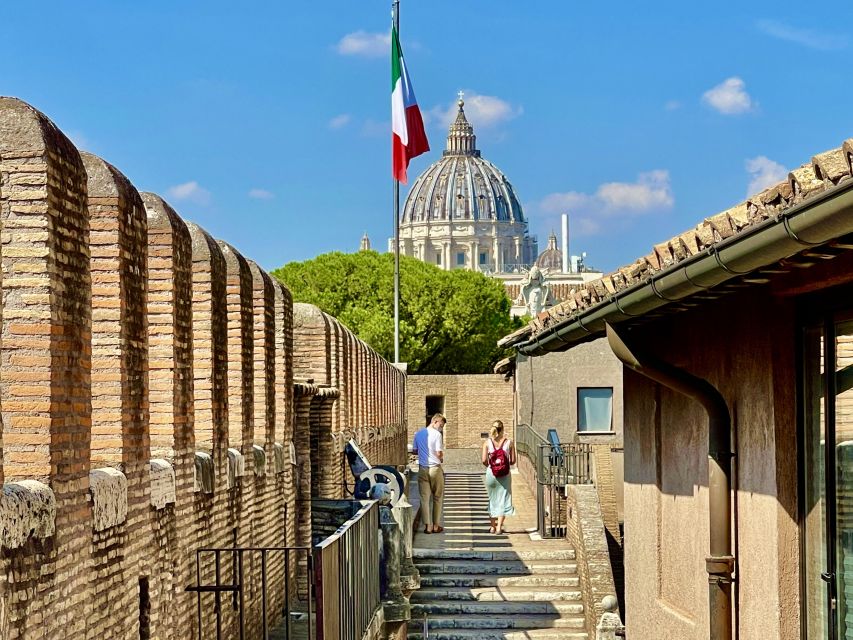
The terrace stop is the moment where you go from “history lesson” to “oh, that’s why it’s here.” Castel Sant’Angelo’s location next to the Tiber River puts it in a natural spotlight. From higher points, you get a wider sense of the city’s layout and how this fortress relates to everything around it.
You’ll enjoy a panoramic view from the terrace as part of your visit. The river setting gives context, and you’ll be able to see how the building’s strategic positioning helped it control movement and sightlines near the water.
Sant’Angelo Bridge sightlines
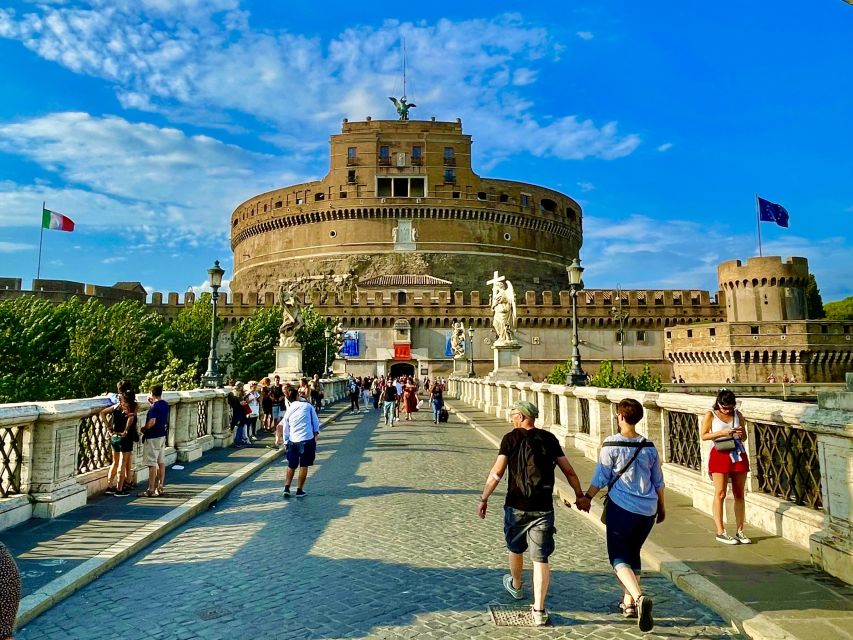
Your guide also points you toward views connected with Sant’Angelo Bridge. This bridge-and-fortress pairing is part of what makes Castel Sant’Angelo feel cinematic. When you’re standing on the right level, the bridge doesn’t just look like a crossing—it looks like a piece of a defense strategy.
If you care about photos, this is where it pays off to listen closely. Guides who know good angles tend to help you frame the river and fortress together, instead of ending up with the bridge sliced awkwardly out of the picture.
Swift Access and Headsets: Why This Matters in Rome
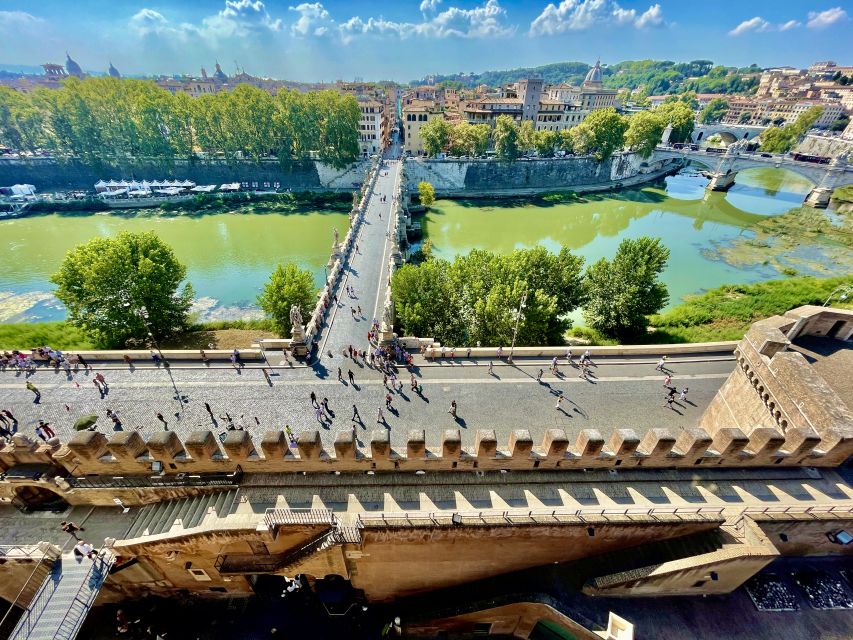
Rome doesn’t reward wasted time. Lines and slow entry can make even a great attraction feel like a chore. This tour includes swift access and guided pacing designed to keep the visit smooth.
The headsets are another smart addition. In a large group, you often end up craning your neck and missing the guide’s key points. Here, the headsets are included for groups of more than 8 people, which means you’re more likely to get the detail without turning it into a struggle.
The real value: better understanding per minute
For me, the “VIP” label only makes sense if it improves your experience. Here it does, because the time you save goes directly into what you came for: the story, the rooms, and the terrace view. You’re not paying to feel fancy—you’re paying to reduce friction so you can focus.
Also, the small group cap—maximum 10 people—means you’re less likely to feel lost in a wave of tourists. You can follow the guide’s direction and hear what’s being explained.
What’s Included (and What You’ll Need to Plan Yourself)
This tour is pretty tidy in what it covers. You get entrance fees, the professional art historian guide, headsets, and swift access. The tour is set up as a small group experience with a maximum of 10 participants, in English.
What’s not included is also clear:
- Food and drinks
- Hotel pick-up and drop off
- Transportation to or from attractions
- The Passetto di Borgo (the corridor linking Vatican City to Castel Sant’Angelo) is not part of this tour
So if you’re coming in from somewhere else, plan to arrive on your own and factor in a little buffer time. You’ll meet your guide just outside the entrance of Castel Sant’Angelo, holding a signboard that reads Tour in the City.
Bring what helps you enjoy it
Bring ID (passport or card) and wear comfortable shoes. The dress code is smart casual. And to keep the visit smooth, the tour doesn’t allow pets, smoking, luggage or large bags, walking frames, or weapons/sharp objects.
If you’re carrying a big bag, you’ll likely want to rethink what you bring so you don’t run into restrictions.
Price for $94: Does This Tour Feel Like Value?
At $94 per person for about 1.5 hours, the price isn’t “cheap,” but it’s also not trying to be premium for premium’s sake. You’re paying for three things that matter in Rome: guided interpretation, time-saving access, and a format that keeps you from getting lost.
Here’s how I’d judge the value:
- If you’re the type who likes to understand what you’re seeing (not just stand and snap photos), the art historian guide justifies a lot of the cost.
- If you hate losing time waiting, swift access helps you get your money’s worth fast.
- If you’ve ever been in a big group where you can’t hear the guide, headsets alone can make the experience feel worth it.
Where you might hesitate is if you’re perfectly happy reading signs at your own speed. In that case, you could probably lower the cost by skipping a guided format. But if you want a tight explanation of why the tomb became a fortress and why it later served roles like treasury, prison, and execution site, this is the kind of tour that turns effort into understanding.
Who This VIP Tour Suits Best (and Who Might Want Another Option)
This works best for you if you:
- Want a clear explanation with an art historian guide rather than just a self-guided walk
- Like small-group attention and hate noisy, crowded tours
- Want the terrace view without rushing or missing key interior highlights
- Care about photo-worthy angles around the terrace and Sant’Angelo Bridge
You may want to reconsider if you:
- Need wheelchair accessibility (it’s not wheelchair accessible)
- Expect a fully relaxed, minimal-walking experience (there’s a moderate amount of walking)
- Want the Passetto di Borgo corridor (it’s not included here)
Should You Book This Castel Sant’Angelo VIP Tour?
I’d book it if you want a smooth, story-focused visit to one of Rome’s most dramatic fortresses—and you want to make the terrace time count. The combination of small group size, headsets, and an art historian guide is the big reason this tour feels like better value than a standard walk-through.
Hold off only if accessibility is your main concern or if you’re strictly budget-focused and don’t care much about guided interpretation. Otherwise, this is a smart way to spend 1.5 hours in Rome: you leave with both context and views.
FAQ
How long is the Castel Sant’Angelo guided VIP tour?
The tour lasts about 1.5 hours.
What is the group size for this tour?
It’s a small group with a maximum of 10 participants.
What language is the tour guide speaking?
The live tour guide speaks English.
Where do I meet the guide?
You meet outside Castel Sant’Angelo. The guide will be waiting with a signboard that reports Tour in the City, and you should arrive 15 minutes before departure.
Is the Passetto di Borgo included?
No. The Passetto di Borgo corridor linking Vatican City to Castel Sant’Angelo is not part of this tour.
What should I bring and wear?
Bring your passport or ID card and wear comfortable shoes. The dress code is smart casual.
Is the tour wheelchair accessible?
No. It is not wheelchair accessible.