REVIEW · ROME
From Rome: Pompeii Day Trip by Fast Train and Car
Book on GetYourGuide →Operated by Through Eternity Tours · Bookable on GetYourGuide
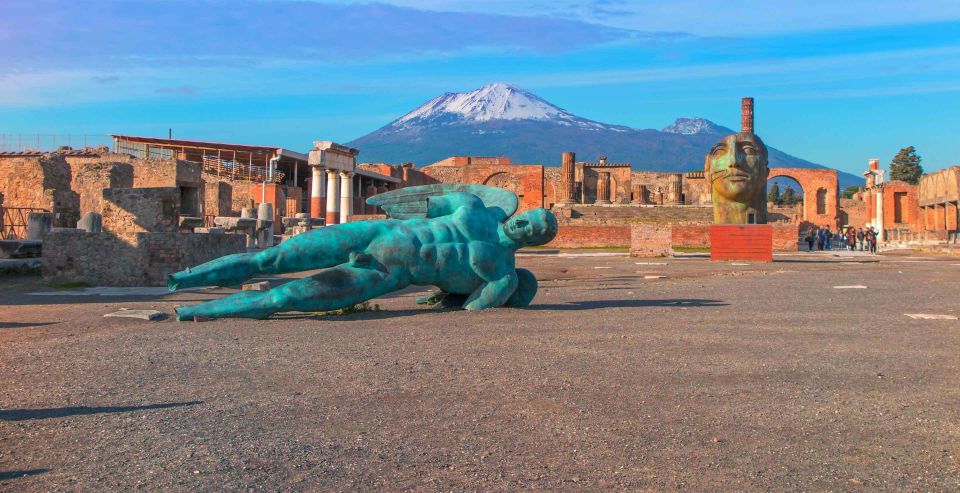
Pompeii hits different when you avoid the crowds. I like the fast train + private car setup and the fact you get a real archaeologist-style guide instead of just a headset and a rush. You’ll walk Pompeii’s streets paved with ancient stone, watch the buildings tell their stories, and see how the city was preserved after the 79 A.D. disaster.
Here’s the trade-off: you’re still in an outdoor archaeological park, so comfortable shoes really matter, and some walkways have steps and uneven ground. If you’re sensitive to long walks, plan to go slow and let your guide pace you.
In This Review
- Key takeaways
- Rome to Pompeii without the day getting messy
- Fast train to Naples, then private car to Pompeii Scavi
- Skip-the-line entry: what that saves you in real time
- Forum Baths: how everyday life comes through
- Amphitheater: crowds, craft, and sudden silence
- House of the Faun: wealth you can read in stone
- House of the Vettii: daily details and dramatic decoration
- Pompeii streets and the feeling of being frozen in time
- Timing, pace, and how to avoid Pompeii burnout
- Wheelchair access and mobility realities
- Language options: English and Italian guidance
- The value question: what you’re really paying for
- Who this Pompeii trip is perfect for
- Should you book this Pompeii day trip?
- FAQ
- FAQ
- How do I get from Rome to Pompeii on this tour?
- What’s the guided time inside Pompeii?
- Is skip-the-line access included?
- Where do the tour stops take place?
- What language is the guide?
- What should I bring, and what’s not allowed?
Key takeaways
- Train to Naples, car to Pompeii Scavi: you cut the messy parts of getting there and arrive ready to start seeing ruins.
- Skip-the-line access: separate entrance means less waiting while you could be looking at stone, mosaics, and streets.
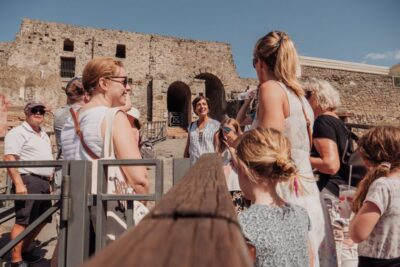
- Private group feel: the tour stays more personal, so your guide can explain what you’re seeing without loud group herding.
- 2.5-hour guided circuit: time is focused on major highlights rather than wandering in silence.
- Signature Pompeii stops: Forum Baths, the Amphitheater, House of the Faun, and House of the Vettii anchor the route.
- Small practical rules: no large bags, plus water and sturdy shoes help you enjoy the uneven ground.
Rome to Pompeii without the day getting messy
This day trip is built around the idea that transportation can’t eat your whole vacation. The plan starts with a short train ride from Rome’s Termini to Naples, then a private driver meets you right at Napoli Centrale. After that, you’re transported to Pompeii with your guide—so you spend less time figuring stuff out and more time looking at the actual ruins.
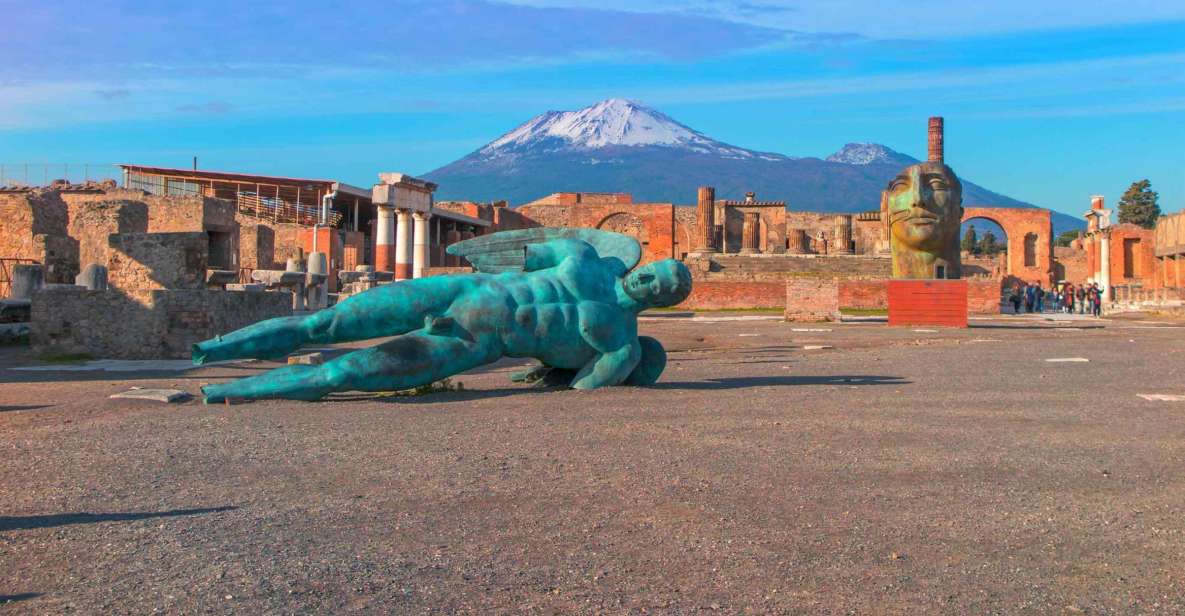
That matters in Pompeii. The site is huge, and the weather can swing. When your logistics are tidy, you can focus on the part you came for: abandoned streets, preserved buildings, and the eerie sense of a city that froze mid-life after volcanic destruction.
One more plus: your visit is scheduled to be intimate. This isn’t a giant cattle-call tour. It’s a private-group experience with an expert guide, which usually makes the explanations clearer and the pace more human.
You can also read our reviews of more tours and experiences in Rome



Fast train to Naples, then private car to Pompeii Scavi
The routing is simple and efficient. You depart from Termini Station in Rome by train. The ride is about 1 hour and 10 minutes to Naples. Then your driver picks you up at Napoli Centrale and takes you and your guide on to Pompeii.
This is the part that makes the trip feel “managed,” not stressful. Instead of using buses (which can be slow and stop-and-go), you get the speed of rail for the main haul, then use a car for the last-mile flexibility. You also avoid the common situation where everyone waits around the wrong place while tour groups drift in and out like weather fronts.
Practical tip: keep your meeting routine clean. Your driver meets you at the platform, and you then connect with the guide at Pompei Scavi. If you’re the type who gets frazzled in stations, this is exactly the day to arrive a little early and double-check where everyone is heading.
Skip-the-line entry: what that saves you in real time
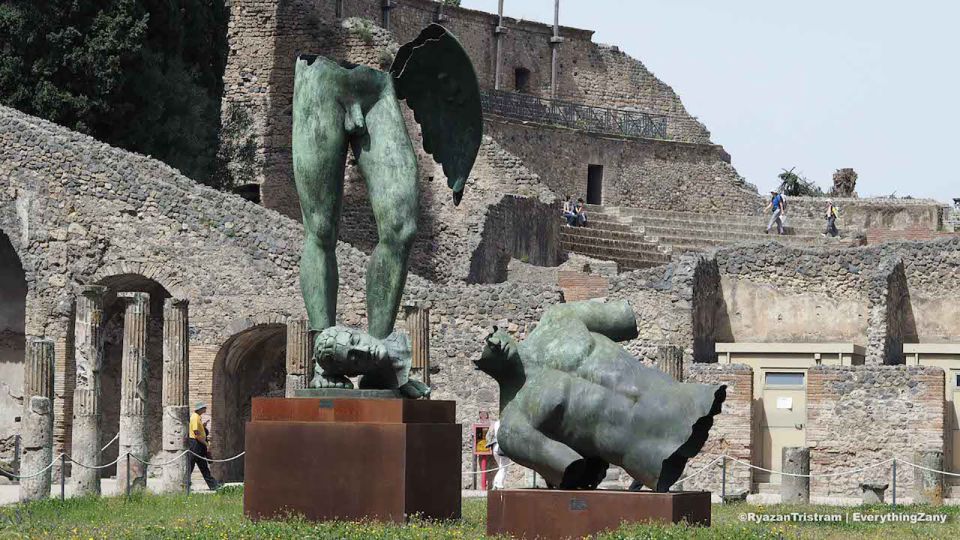
Pompeii’s popularity is no joke. With this experience, you use a skip-the-line separate entrance, then get escorted directly inside. That means the first good thing is immediate: you start seeing ruins sooner instead of burning energy in a queue.
But the time savings aren’t only about minutes. They also help you arrive with a clearer head. Pompeii’s emotional punch is stronger when you can look first, then listen, rather than arriving tired and distracted.
Once you’re inside, your guided time is about 2.5 hours in Pompeii. That’s a strong window for a highlight-focused tour, especially when you have stops that cover public spaces and elite domestic life.
Forum Baths: how everyday life comes through
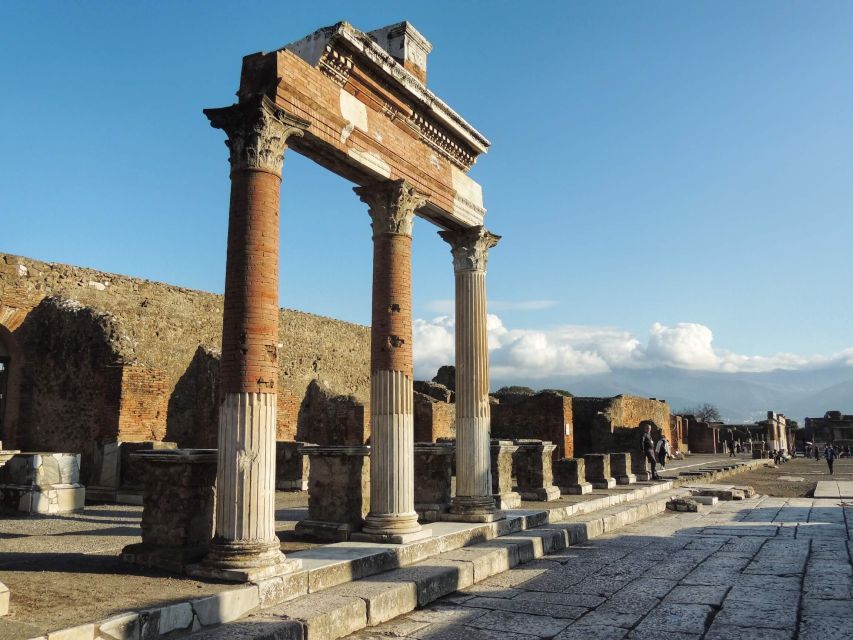
One of your first stops is the Forum Baths. This is where Pompeii stops feeling like a postcard and starts feeling like a lived-in place. Bath complexes were about hygiene, yes, but also about routine, socializing, and community rhythm.
In a place that was preserved by ash and lava, details matter. Bath areas often communicate how people moved through a day: paths, rooms, and how space was organized for use. Your guide can point out how the architecture shaped behavior—where people gathered, how rooms were used, and what public routines looked like in Roman times.
Drawback to note: bath areas and the broader Forum zone can involve more walking surfaces and slight grade changes. It’s not a museum floor. Go at a comfortable pace, and if you need breaks, take them early rather than waiting until you’re worn out.
Amphitheater: crowds, craft, and sudden silence
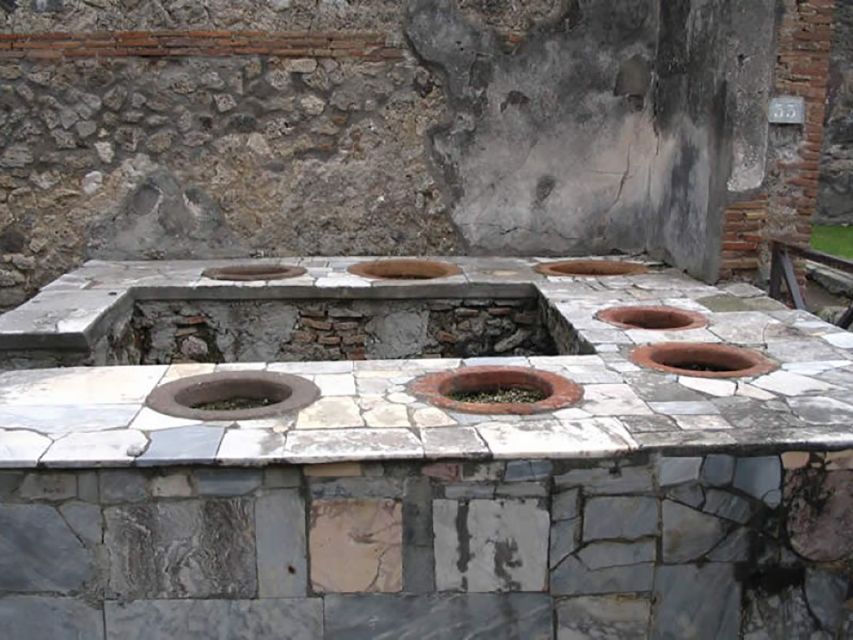
Next up is the Amphitheater of Pompeii. This is where the story turns from daily routines to spectacle. Pompeii’s theater spaces help you understand why entertainment mattered in Roman society. Even without a “crowd” present today, you can still feel the scale.
This is also a good place to think about the contrast at the heart of Pompeii. The city is preserved in the aftermath of disaster, but you’re looking at buildings that were meant for active human energy—shouts, movement, and attention focused on events.
Practical note: amphitheater areas can be exposed. If the day is hot, you’ll appreciate having water. The tour strongly recommends a bottle of water, and that’s not just advice—it’s genuinely useful in an outdoor archaeological park.



House of the Faun: wealth you can read in stone
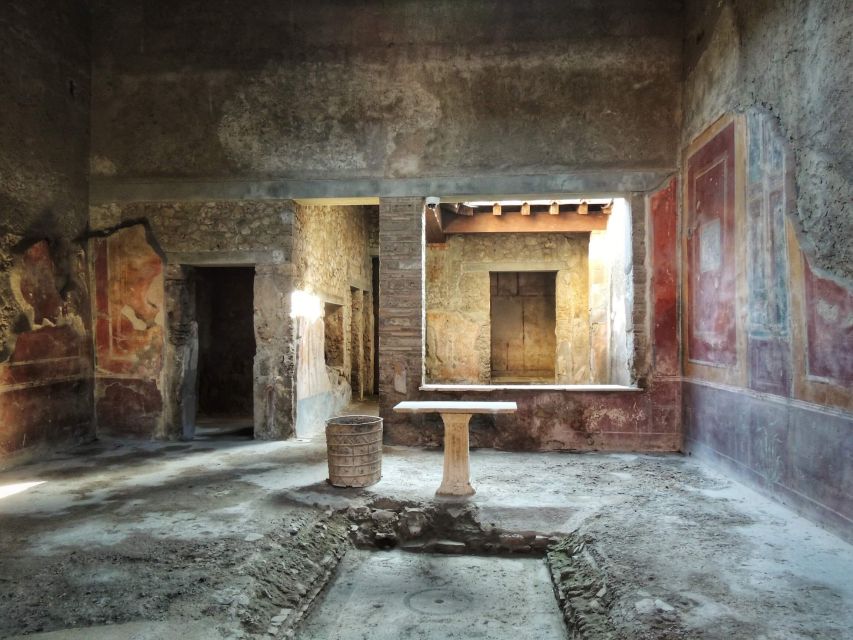
The House of the Faun is one of Pompeii’s big-name domestic stops. A home like this is a shortcut to understanding status. You get a sense of how elite households displayed taste, spent money, and organized daily life behind the scenes.
What I like about a guided stop here is that you don’t just see rooms—you connect them. In Pompeii, the walls and floors do the storytelling. Stone layouts and decorative elements help you picture how people lived, hosted, and showed off.
Also, the House of the Faun works well as a mood shift. After civic spaces like baths and theaters, the home gives you the calmer, more intimate side of the city. It’s a chance to imagine conversation and quiet routines—then remember those were interrupted in 79 A.D.
What to watch for: houses can include uneven thresholds and natural wear over time. Sturdy shoes aren’t optional here. If you’re prone to slipping on dusty, stone surfaces, take your time on the transitions.
House of the Vettii: daily details and dramatic decoration
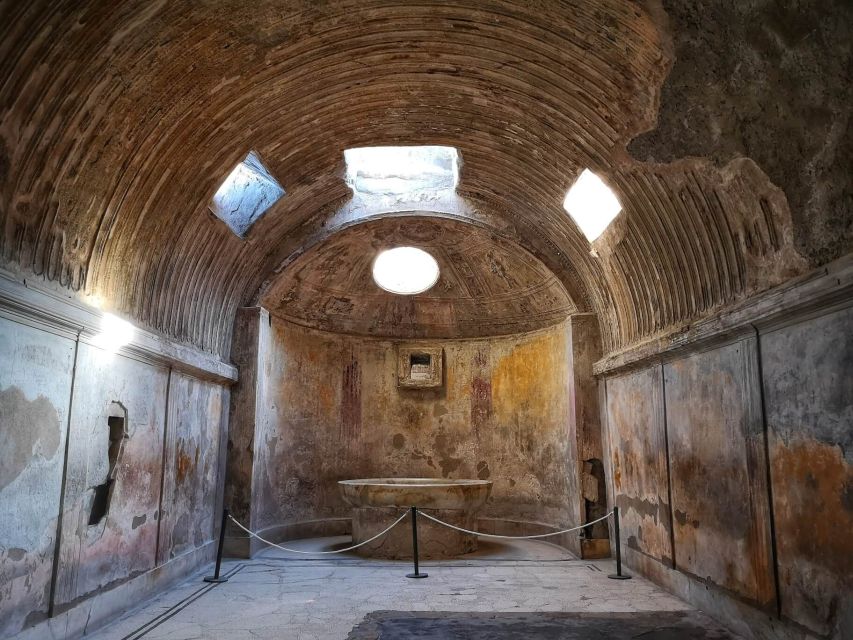
You’ll also visit the House of the Vettii. This stop tends to land well because it feels specific. Domestic spaces in Pompeii are full of cues: how rooms were grouped, what kinds of spaces existed for social life, and the ways wealth expressed itself through decoration and design.
Even if you’re not a hardcore archaeology fan, this is the part where Pompeii becomes personal. You start seeing how ordinary activities might have played out—how people entered rooms, how they moved through the home, and what it meant to live in a city full of stone streets and daily traffic.
One consideration: these houses are still archaeological sites, not polished indoor exhibits. There may be steps, narrow passages, and uneven walkways. If you’re traveling with mobility concerns, flag it ahead of time so the provider can accommodate as best as possible. Wheelchair accessibility is stated, but Pompeii’s terrain can still be challenging.
Pompeii streets and the feeling of being frozen in time
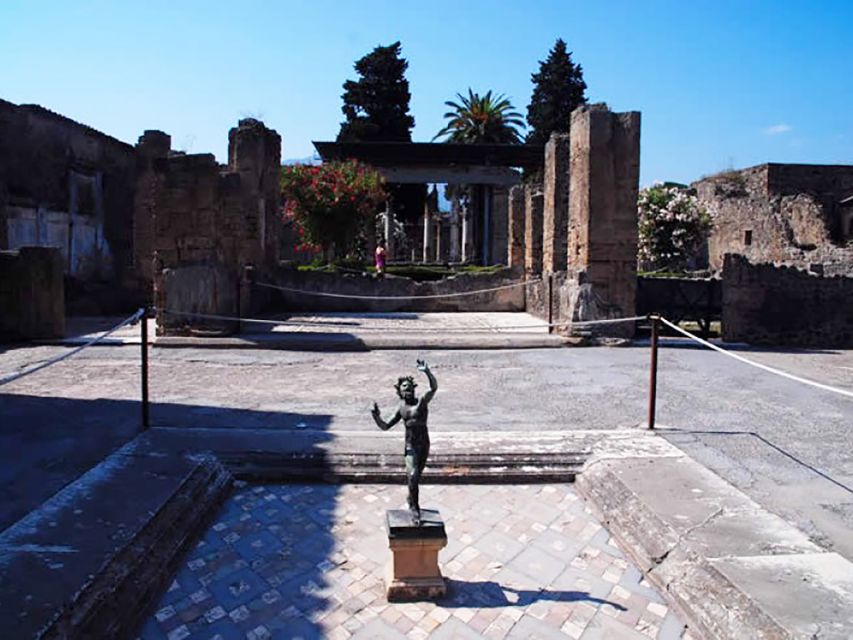
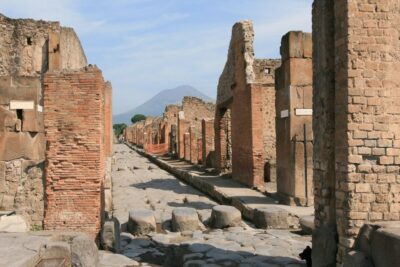
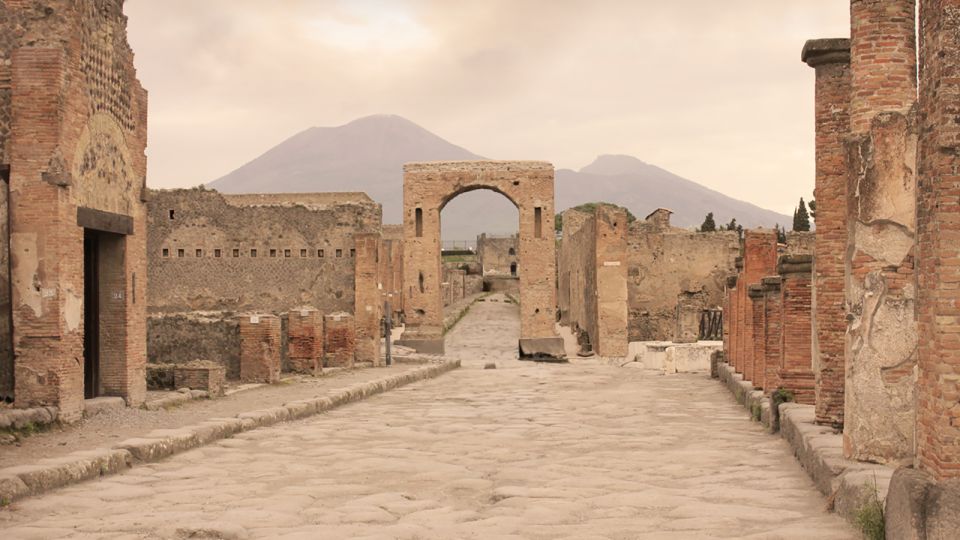
The route is more than a checklist of famous buildings. Your walk focuses on Pompeii’s beautifully preserved streets and the sense of a city buried in lava and choking ash one fateful day in 79 A.D. You’ll travel through a maze of lanes, including areas where streets are still paved with ancient flagstones and rutted by the wheels of Roman chariots.
That last detail is the one that makes Pompeii click. You’re not just viewing ruins from a distance. You’re walking on the same kind of surfaces people once used for movement—wheels carving familiar paths through stone.
This is also where the guide earns their keep. An expert can connect what you’re seeing to how the city functioned. A good guide turns “interesting rocks” into a believable snapshot of daily life.
If you want a tip that actually helps: slow down for the street sections. It’s easy to rush from stop to stop. But Pompeii’s streets are the glue. They help you understand the layout and the scale of neighborhoods.
Timing, pace, and how to avoid Pompeii burnout
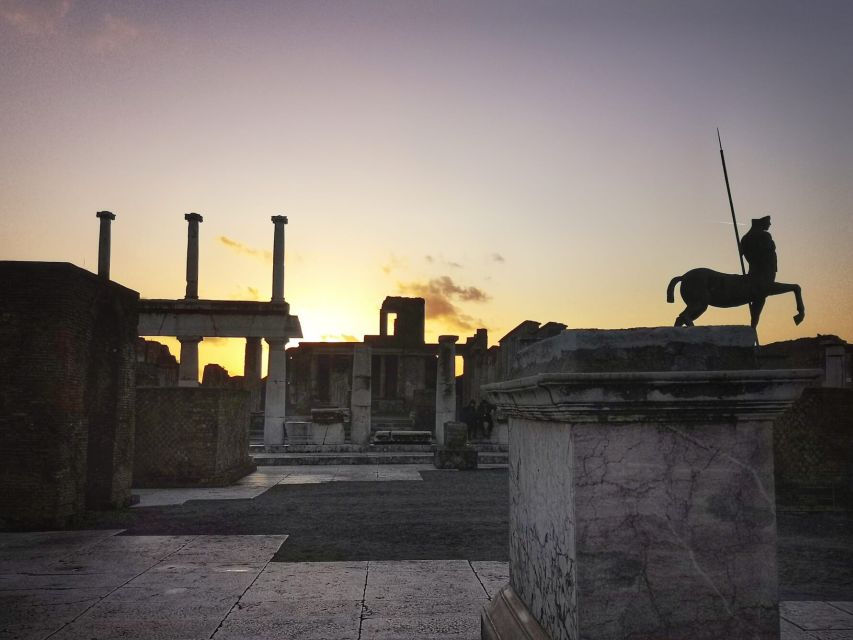
The tour is built around a private-group experience with an organized flow: train to Naples, car to Pompeii, skip-the-line entry, guided time, then return by car to Napoli Centrale to catch your train back to Rome.
That optimized routing matters because it reduces two big day-trip risks: arriving too late to see the key sites, and spending the final hours tired and rushed. You’re also not left guessing how to get back.
Still, Pompeii is Pompeii. It’s walking, it’s outdoor, and it can involve uneven ground. The tour explicitly warns about steps and uneven walkways. So here’s the practical strategy: wear shoes you’d use for a full day of city walking, not “nice vacation sandals,” and bring water.
If you’re traveling with a group member who needs extra breaks, tell your guide early. With a private setup, the pacing can often be adjusted more than on large group tours.
Wheelchair access and mobility realities
This experience is marked wheelchair accessible, and they ask you to advise the provider about mobility concerns so accommodations can be planned. That’s important in Pompeii, because “accessible” can mean different things depending on the route.
Your best move is to share your needs upfront: whether you require step-free walking, extra time at stops, or avoidance of certain uneven sections. The guide can often steer you toward more manageable paths within the planned circuit.
If you don’t have mobility concerns, you’ll still appreciate this info because it hints the tour is prepared to think beyond a one-size-fits-all walk.
Language options: English and Italian guidance
Your guide is offered in English or Italian, and the tour works as a private group. That’s helpful even if you have basic language skills. You’ll get explanations tied to what you’re looking at, not vague hand-waving.
For many people, Pompeii is a story you want told clearly—how the city lived, how it was destroyed, and why certain buildings survive. A solid guide can keep that thread going while you move from baths to theater to houses.
The value question: what you’re really paying for
You’re paying for four things that matter in a day trip like this:
- Time saved with fast train travel and a driver pickup at Napoli Centrale
- Skip-the-line entry, which reduces waiting and gets you into the ruins faster
- Expert guided interpretation, so you understand what you’re seeing
- Private-group focus, which usually means less crowd pressure and more responsive pacing
Even without exact pricing in front of me, this is the kind of tour that tends to feel good value because it spends your limited vacation hours where they count—on Pompeii itself.
You’re also not just dropped at a train station and sent off to fend for yourself. After the tour, the driver returns you to Napoli Centrale in time to catch your train back to Rome, keeping the end of the day from turning chaotic.
Who this Pompeii trip is perfect for
This experience fits best if you want:
- A highly guided Pompeii visit without the stress of figuring logistics
- A route that hits big highlights like the Forum Baths, Amphitheater, House of the Faun, and House of the Vettii
- A more relaxed feel than massive group tours
- A clear plan that gets you back to Rome by catching your train after Pompeii
It’s also a good pick if you care about interpretation. Pompeii is famous, but without guidance it can turn into “more ruins.” With a guide, those ruins become a readable city.
One extra note from real-world experience: because the day includes private car time with a driver, there’s often room for small local extras in Naples—like tracking down a great pizza and coffee stop after the Pompeii portion, if schedules line up.
Should you book this Pompeii day trip?
If your goal is to see Pompeii well, not just see it, I’d lean yes. The combination of fast train, private car, skip-the-line entry, and a focused 2.5-hour guided visit is exactly what keeps a day trip from feeling like a rushed sprint.
Book it if:
- You want a quieter, more personal Pompeii experience
- You’d rather spend your energy looking than waiting
- You want domestic and civic highlights in one organized route
Skip it (or at least ask more questions) if:
- You want a free-roam, self-paced day with no guidance
- You have significant mobility limits and need a very carefully step-free route
FAQ
FAQ
How do I get from Rome to Pompeii on this tour?
You take a train from Rome Termini to Naples (about 1 hour and 10 minutes). Your private driver meets you at Napoli Centrale and takes you and your guide to Pompeii Scavi.
What’s the guided time inside Pompeii?
The Pompeii guided tour is set for about 2.5 hours, with you walking through the ruins with a live guide.
Is skip-the-line access included?
Yes. You enter Pompeii through a separate entrance to skip the line.
Where do the tour stops take place?
Your guided route includes Pompeii’s Forum Baths, the Amphitheater, the House of the Faun, and the House of the Vettii.
What language is the guide?
The live guide is available in English and Italian.
What should I bring, and what’s not allowed?
Bring comfortable shoes and a bottle of water is strongly recommended because the park has steps and uneven walkways. Luggage or large bags are not allowed.