REVIEW · COLOSSEUM
Best of Colosseum Experience: Exclusive Tour in 40 Languages
Book on GetYourGuide →Operated by VEDITALIA · Bookable on GetYourGuide
The Colosseum is one of those places. You feel it instantly, then the tour makes it make sense. This 3-hour small-group walk focuses on skip-the-line entry and brings the sites to life with real-time AI translation.
I love the way the pacing hits the big moments without turning it into a sprint. You start with the Colosseum’s gladiator story, then roll straight into Palatine Hill’s Rome-founding myths, and finish on the Forum and Via Sacra, where you can almost track how power moved through the city.
One drawback to plan for: this is moderate walking on uneven ground, and it is not suitable for wheelchair users. Also, you must bring passport or ID to access the Colosseum.
In This Review
- Key things to know before you go
- Skip-the-line entry that gets you to the good stuff first
- Entering the Colosseum: gladiator cages and crowd theater
- Palatine Hill: the myth-and-view payoff
- Via Sacra and the Roman Forum: where Rome’s power walked
- AI real-time translation: what it does well in practice
- Tour flow and timing: where you gain time and where you feel it
- Price and value: why $45.55 can make sense here
- Who should book this Colosseum tour
- Should you book it?
- FAQ
- Do I need passport or ID to enter the Colosseum?
- How long is the tour?
- What sites are included in the visit?
- Where does the tour start and end?
- Does the tour offer multilingual translation?
- Is food included?
Key things to know before you go
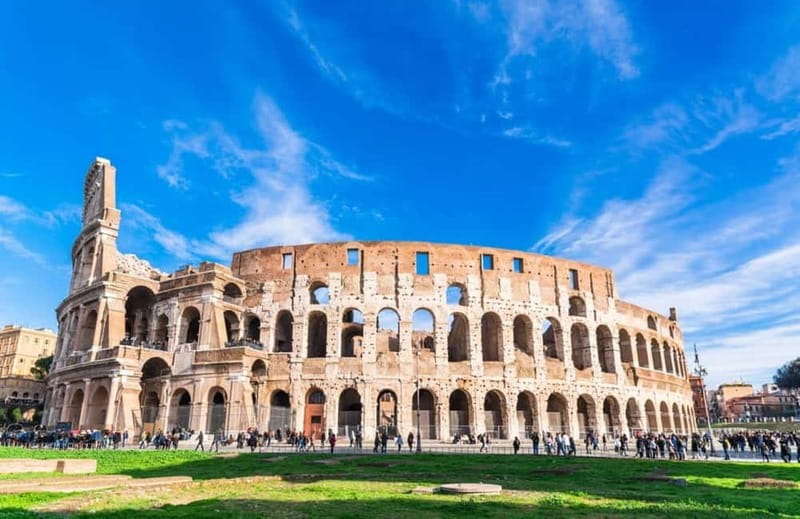
- Skip-the-line access to the Colosseum, Roman Forum, and Palatine Hill via a separate entrance
- 3 stops that matter: Colosseum (1.5 hrs), Palatine Hill (45 mins), then Via Sacra + Roman Forum (45 mins)
- AI real-time multilingual translation (if you select it) for guide narration in many languages
- Small group size (max 20/25) with audio headsets when your group is bigger than 6
- Practical, Roman details you can’t easily spot on your own, like the cremation altar of Julius Caesar
Skip-the-line entry that gets you to the good stuff first
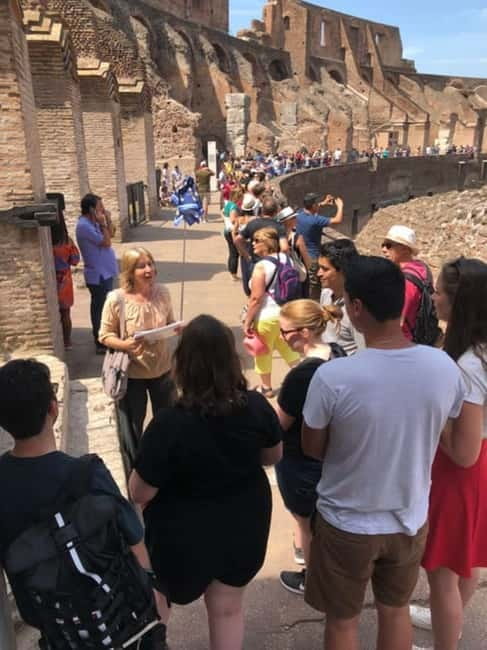
Rome’s top sights can feel like a giant line maze. This tour is built to cut through that stress. You enter through a separate entrance, then spend your time inside the Colosseum area, Roman Forum, and Palatine Hill instead of burning it in queues.
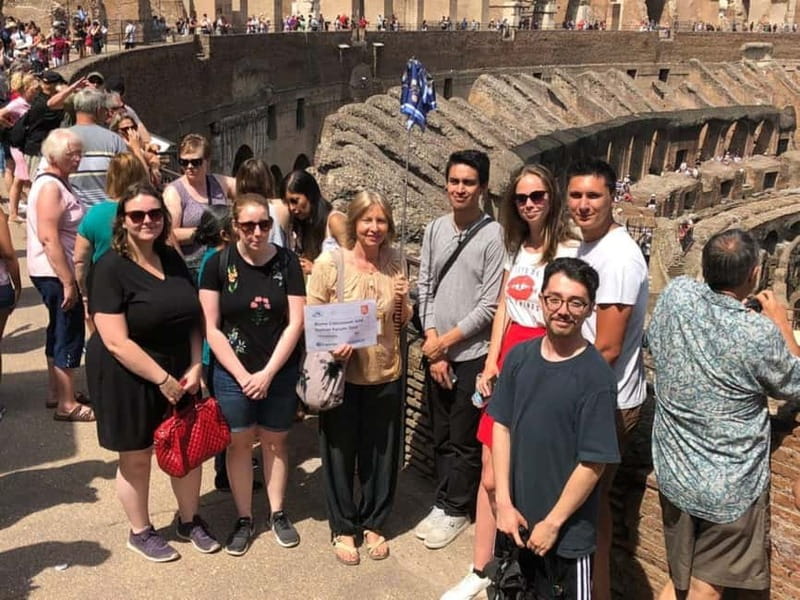
The format also matters. You’re not squeezed into a cattle-car crowd. The group stays small, up to 20/25 people, and if the group is larger than 6, you get audio headsets so you can actually hear what’s going on. It’s a simple upgrade, but it changes everything when you’re listening to stories while standing in an echoing ancient arena.
Your starting point depends on what option you booked, with common meetups at Colosseo, Piazza del Colosseo. The tour ends back at Piazza del Colosseo, which is handy when you’re figuring out dinner after.
You can also read our reviews of more tours and experiences in Colosseum.

Entering the Colosseum: gladiator cages and crowd theater
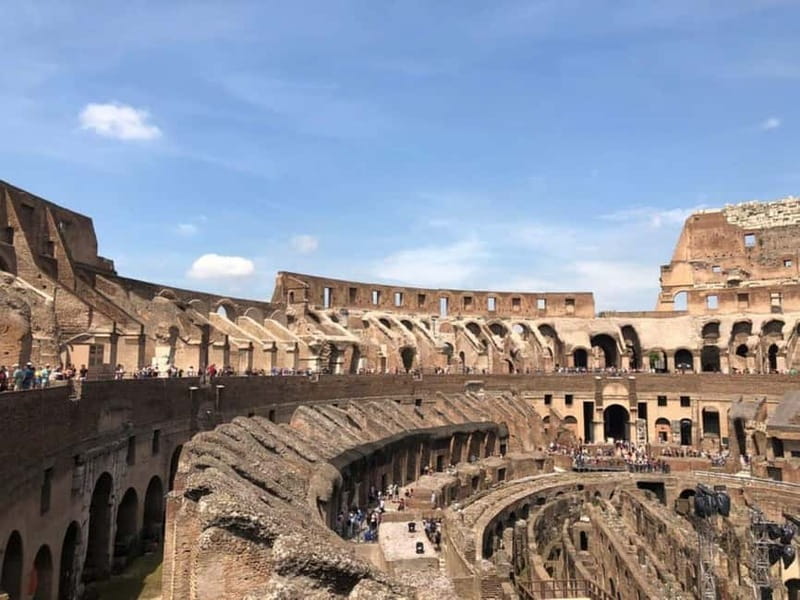
The Colosseum portion runs about 1.5 hours, and it is the heart of the experience. You’re not just wandering. You’re guided through the space with the kind of context that turns stone into scenes.
Here’s what the tour is designed to help you see:
- the holding cells area where gladiators were kept before they were brought out
- the arena’s storytelling beats, including the entertainment angle—wild animals and crowd spectacle
- the bigger meaning of Roman games in public life, not just as blood sport, but as political theater
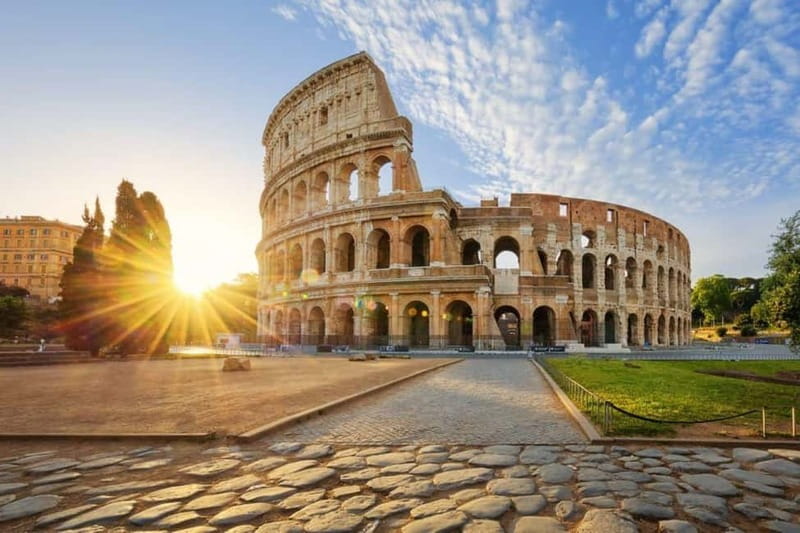
And yes, you’ll feel that “this is bigger than I expected” reaction when you’re inside. The Colosseum is all scale and drama. The best tours help you read that drama—where people stood, where attention was directed, and how the Roman Empire used spectacle to stay in control.
From guide shout-outs in the wild, I’d keep an eye out for lively names like Laura, Marco, Elena, Valentina, Helen, and Luciana. The common thread: they keep the energy up and make the details click. You’ll also notice good tours do not drown you in dates. They connect events to what you’re standing in.
Practical note that matters more than most people think: bring your passport or ID. Access requires it for entry into the Colosseum.
Palatine Hill: the myth-and-view payoff
After the Colosseum, you head to Palatine Hill for about 45 minutes. This is where the tour balances the heavy drama of the arena with the legendary origin story of Rome.
Palatine Hill is the “birthplace” feeling of the city. The tour focuses on myths you can actually attach to a location—like the story of Romulus and Remus and the she-wolf legend. Then you walk among ruins of temples and marketplaces from ancient times, which helps you understand why this hill wasn’t just pretty. It was central.
The viewpoint is the other big reason to care. Palatine Hill gives you a panoramic view of Rome, so you can connect what you saw at ground level to the city spread beyond. It’s a great reset after the Colosseum’s intensity: your eyes get room to breathe, and your brain gets better at seeing how all these sites relate.
A small consideration: some parts of Palatine Hill involve uneven steps and walking. This is not a casual stroll. If you’re sensitive to rough ground, wear shoes with grip and give yourself time.
Via Sacra and the Roman Forum: where Rome’s power walked
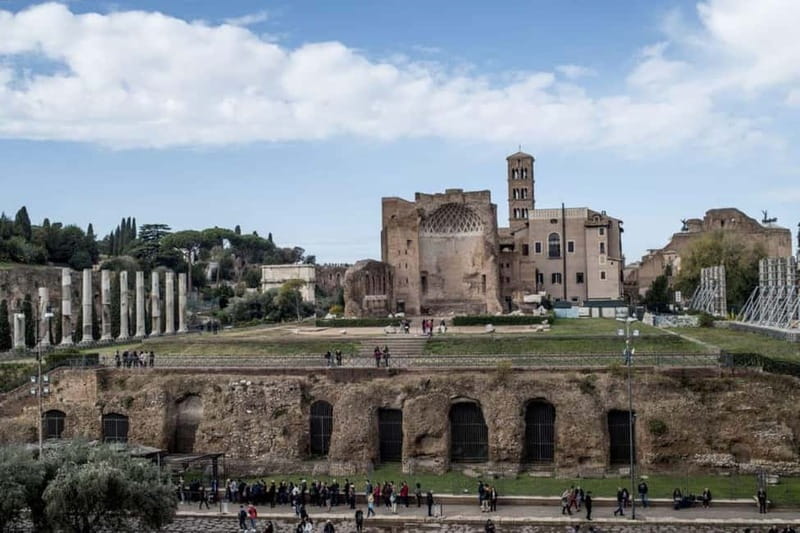
Next comes Via Sacra and the Roman Forum for about 45 minutes, and this segment is built for people who want the “so what” behind the ruins.
You’ll walk along Via Sacra, the historic route tied to Rome’s public life. The tour frames it as the path that Rome’s armies and ceremonies traced—the idea is that movement through this space meant authority.
Then the Forum part brings you into the heart of how the city worked:
- ruins of opulent palaces and gardens associated with Rome’s elite
- the sense of marketplace and temple life in one connected area
- key historical storytelling that helps you place what you’re seeing in a larger timeline
One standout detail that’s easy to miss on your own is the visit to the altar where Julius Caesar was cremated. That single stop gives the whole Forum area a sharper emotional point. It’s not only about architecture; it’s about the moment history turned.
If you love when a tour makes the city legible, this is where you feel it. The Forum is a puzzle of fragments. A guided path helps you turn those fragments into meaning.
AI real-time translation: what it does well in practice
This tour can include AI real-time multilingual translation if you select the option. The idea is simple: the guide speaks in their native language, and the translation comes directly into your earphones in real time.
What makes this useful:
- Speak naturally: you listen like you would normally, just in your language
- High translation accuracy is reported as tested around 90% to 100% across multiple languages
- Crystal-clear audio: the narration is delivered via earphones so you’re not constantly trying to catch words over crowd noise
The language list is huge, covering everything from English and Spanish to Arabic, Bengali, Chinese, Greek, Hebrew, Hindi, Japanese, Korean, Russian, Thai, Turkish, Ukrainian, Vietnamese, and many more. The “up to 40 languages” promise is basically about making mixed groups feel included, not like you’re stuck waiting for one language to lead.
A helpful way to think about it: this tour handles two problems at once—crowd logistics and language barriers. Without it, you’d likely need a private guide for your language. With it, you’re getting the structure of a guided tour plus a translation layer.
One caution: AI translation is still translation. If you’re the kind of person who wants word-for-word precision for nuanced arguments, you might want to double-check key names or dates with your own reading later. But for stories, explanations, and the flow of the tour, it’s built to work.
Tour flow and timing: where you gain time and where you feel it
The schedule is designed for momentum:
- Colosseum area start around Colosseo / Piazza del Colosseo
- Colosseum guided tour ~1.5 hours
- Palatine Hill ~45 minutes
- Via Sacra + Roman Forum ~45 minutes
- Return to Piazza del Colosseo
Total time on the ground is about 3 hours. That sounds short until you realize you’re doing three big sites plus listening to a guide and walking between them.
So the value isn’t just “skip the line.” It’s that the tour makes the time you do have count. You get a guided sequence that keeps you from bouncing around and missing the big anchors—gladiator holding cells, the Forum’s meaning, and the view from Palatine Hill.
You’ll still want to move at a comfortable pace. The tour is marked as not suitable for wheelchair users, and it includes moderate walking. Bring comfortable shoes and a bottle of water. There are opportunities to refill from free water fountains along the way, which helps you avoid the expensive water trap.
Price and value: why $45.55 can make sense here
At $45.55 per person, the price is not just about a guide’s commentary. It’s also tied to the real money part of this experience: skip-the-line entrance tickets for the Colosseum, Roman Forum, and Palatine Hill.
When the Colosseum is packed, time becomes a currency. If you’ve ever waited in a long queue under the Roman sun, you know what you’re really paying for: less wasted time, less frustration, and more actual viewing.
You also get:
- a licensed English-speaking guide
- small-group management
- audio headsets when group size calls for them
- optional AI translation in many languages
So the cost lands in the “good value” zone if you care about three things: hearing an expert narrative, reducing queue time, and keeping your day organized. If you’re trying to do the sites alone with no guided context, you may save money, but you’ll likely spend more time figuring out where to go and what you’re looking at.
Who should book this Colosseum tour
This is a strong fit for:
- first-time Rome visitors who want the Colosseum and Forum without turning the day into logistics
- families and mixed-language groups that benefit from AI real-time translation
- history lovers who want the emotional anchors (like Caesar’s cremation altar) and the “how it worked” explanations
- people who don’t want to bargain their way through a maze of ticket lines
It may be less ideal if:
- you need wheelchair accessibility (it’s not suitable)
- you dislike walking on uneven steps and grassy-rough ancient surfaces
- you want a totally slow, lingering museum-style pace (three guided sections means you’ll keep moving)
Should you book it?
Yes, I’d book it if you want a clean, time-saving way to hit the big Roman hits in one organized arc. The combination of skip-the-line entry, a guided storyline across all three sites, and optional AI translation across many languages is exactly what makes this tour feel practical, not just impressive on paper.
If you’re deciding between going solo and going guided, the deciding question is simple: do you want your time spent looking at ruins with no context, or do you want the same time spent understanding why those ruins matter? For many first visits, the guided option wins fast.
FAQ
Do I need passport or ID to enter the Colosseum?
Yes. Bringing a passport or ID is mandatory to access the Colosseum.
How long is the tour?
The tour lasts about 3 hours.
What sites are included in the visit?
You’ll visit the Colosseum, the Roman Forum, and Palatine Hill, with skip-the-line entrance tickets.
Where does the tour start and end?
The start is at a meeting point that can vary by option, with options including Colosseo / Piazza del Colosseo. The tour ends back at Piazza del Colosseo.
Does the tour offer multilingual translation?
Yes. If you select the AI option, the guide’s narration can be translated in real time into many languages delivered to your earphones.
Is food included?
No. Food and drinks are not included.