REVIEW · ROME
Rome: Basilica of St John Lateran & Holy Steps 1-Hour Tour
Book on GetYourGuide →Operated by Crucis Tours · Bookable on GetYourGuide
The Scala Sancta feels small, but the story is huge. This 1-hour guided tour takes you to Rome’s key Catholic sites: the Holy Steps at the Pontifical Sanctuary and then across the road to the Arch-Basilica of St John Lateran, Rome’s highest-ranking church.
What I like most is the way the guide connects details you’d otherwise miss to the bigger meaning: the tour doesn’t just point at art, it explains why that symbolism matters. You also get a strong stop-and-ask setup, and many guides, including Wen and Tom, are praised for clear pace and thoughtful answers.
One thing to consider: this is not the long, on-your-knees pilgrimage climb most people imagine for indulgences. If you want that full practice, you’ll need to do the knee-climbing portion on your own time after the tour.
In This Review
- Key highlights you’ll actually feel
- How the Scala Sancta visit sets the tone in 20 minutes
- The Sanctorium chapel: relic stories, St Luke, and the Last Supper wood
- St John Lateran across the road: why this basilica matters
- Saints Peter and Paul relic veneration (and the Holy Door link)
- The big value: what your guide adds (Wen, Tom, and the Q-and-A style)
- Price and time: is $65 for 1 hour a good deal?
- Logistics that matter: dress code, meeting point, and how to show up ready
- Who should book this 1-hour Holy Steps and Lateran tour
- Should you book this St John Lateran and Holy Steps tour?
- FAQ
- Where do I meet the guide for the Holy Steps and St John Lateran tour?
- How long is the tour?
- What is included in the price?
- Are there dress code rules?
- What languages is the guide available in?
- Is this tour wheelchair accessible?
- Is the kneeling Holy Steps devotion part of the 1-hour tour?
Key highlights you’ll actually feel
- Scala Sancta timing: a tight 20 minutes that still gives you orientation and context before you move on
- Sanctorium peek: you’ll see inside the chapel tied to the Christ relic tradition and an achieroipoieta story associated with St Luke
- St John Lateran scale: you get the feeling of a major papal basilica without spending hours
- Relics of Peter and Paul: a quick veneration moment focused on the pillars of the Church
- Holy Door context: the site link to the Jubilee Holy Doors, with one slated to open in 2025
- Small-group feel: limited to 5 participants, with radio headsets added if group size requires
How the Scala Sancta visit sets the tone in 20 minutes
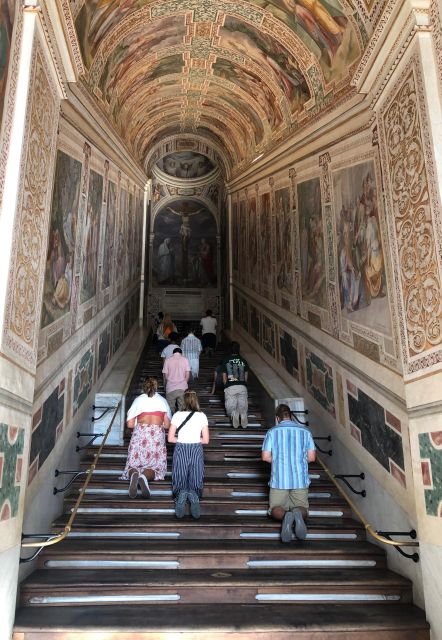
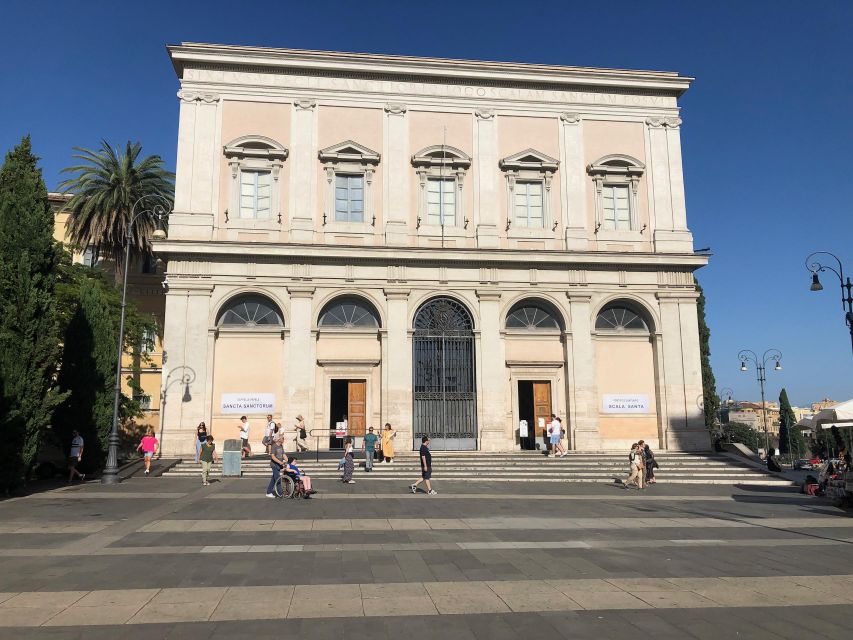
Your tour starts at the Pontifical Sanctuary of the Holy Stairs, meeting your guide at the bottom of the stairs to the left of the Scala Santa entrance. From the first minutes, the goal is simple: help you understand what you’re looking at and why it’s treated as holy ground, not just another church stop.
At the Scala Sancta, you spend about 20 minutes with a guided walk and sightseeing time. This part works best if you’re open to guided reflection, because the Holy Steps aren’t explained like a museum object. They’re presented as part of a living tradition, tied to prayer, memory, and the idea of spiritual preparation.
Even if you’re not doing the full knee-climbing devotion, you still get value. You’ll be shown where the tradition comes from and what the site represents, so your time feels focused instead of rushed.
You can also read our reviews of more tours and experiences in Rome
The Sanctorium chapel: relic stories, St Luke, and the Last Supper wood
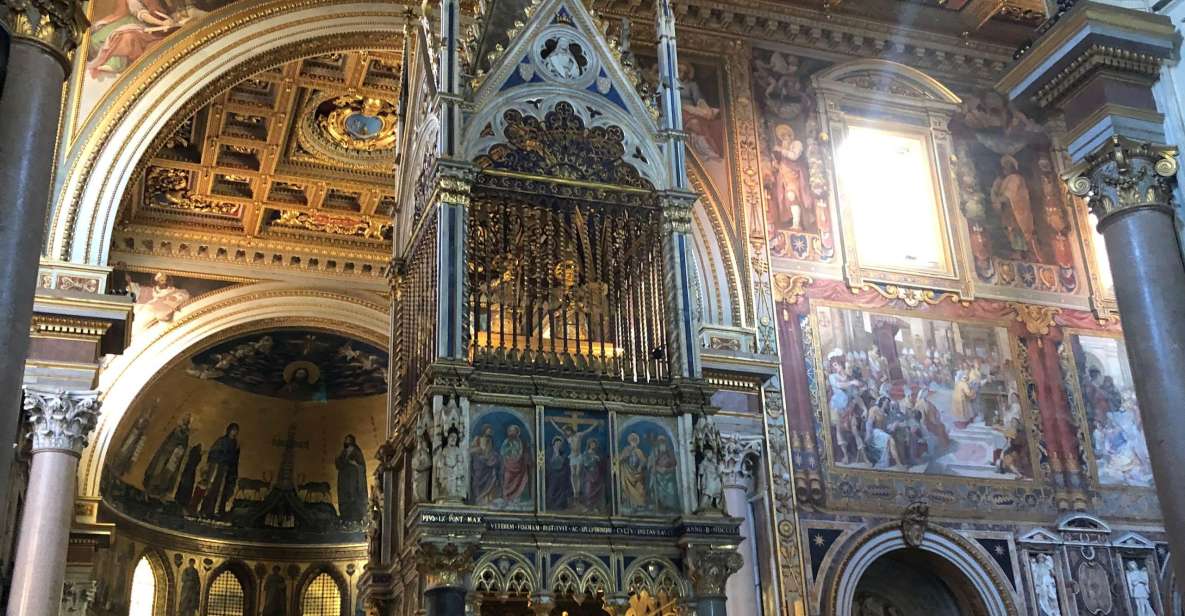
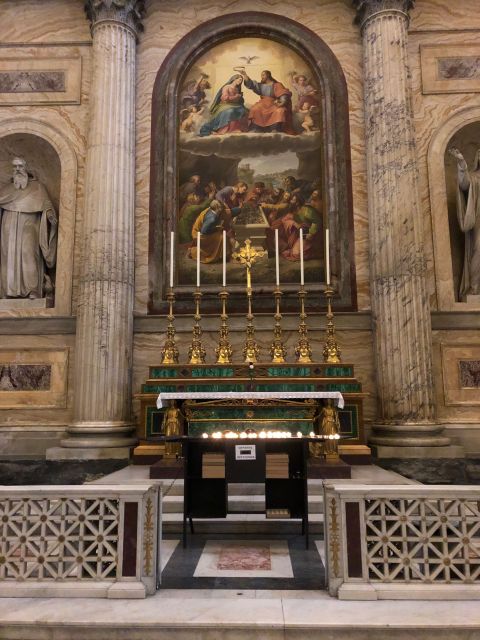
After getting your bearings, you’ll move toward the Sanctorium Sancta, often described as the Holy of Holies, a tiny chapel historically connected to permission for the Pope. The tour includes an ordinary-stairs climb and a chance to peek into the chapel area, so you get the atmosphere without needing hours on site.
Here’s what makes this stop stand out: the guide points out the achieroipoieta associated with Christ, described in the tradition as begun by St Luke and finished by angels. You also get mention of wood linked to the table of the Last Supper, another layer that ties the chapel to the most central moments of Christian memory.
A practical note for your expectations: this is a “look and understand” moment, not a long viewing session. The tour pace is designed for a 1-hour experience, so keep your questions short and clear. If you want the deepest devotional time, plan to return later on a day when you can slow down.
St John Lateran across the road: why this basilica matters
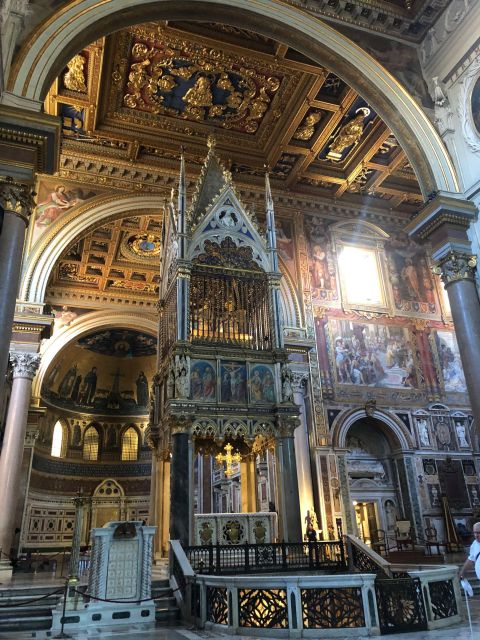
Next comes the move across the road to San Giovanni in Laterano, the Arch-Basilica of St John Lateran. This is one of those Rome churches that can feel enormous from the outside, yet the guided visit keeps things manageable by focusing on the key elements you’d want first.
You’ll have about 40 minutes here, including time with your guide and sightseeing. The tour frames the basilica as the mother church of Catholicism and highlights its importance as the highest-ranking church in the world. It also notes the UNESCO World Heritage status, which makes sense once you understand how the complex ties into Roman history and the legalisation of Christianity within the Empire.
What’s smart about this structure is that it prevents the “I saw a basilica, now what” problem. The guide helps you interpret what you’re seeing—especially the art and the way the building communicates authority and faith.
Saints Peter and Paul relic veneration (and the Holy Door link)
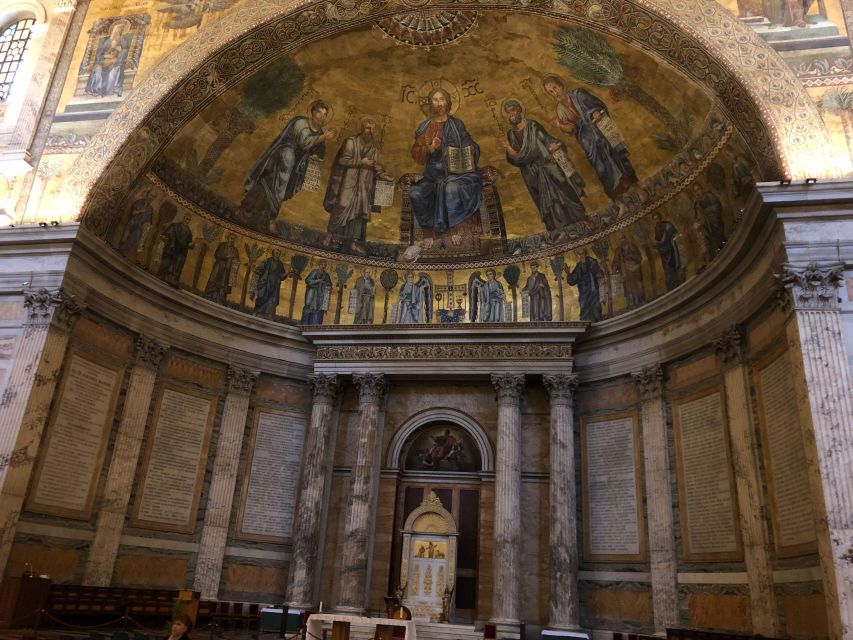
In the Lateran basilica visit, you’ll get a veneration moment tied to the relics of Saints Peter and Paul, described here as the skulls of the two and the idea of them as the Pillars of the Church. Even if you don’t follow every devotional practice, the veneration is worth it because it explains why these figures anchor the Church’s identity in Rome.
You’ll also get the Holy Door context. The tour notes that St John Lateran is one of the four holy door sites tied to Jubilee Years, and that one Holy Door is scheduled to open in 2025. The value here is not that you’re necessarily standing inside a door that’s open right now, but that you understand why pilgrims care about this place during Jubilee cycles.
If you love symbolism, this part is a payoff. It’s the kind of stop where the guide’s job becomes interpretation: connecting place, tradition, and the way the Church marks major moments in time.
The big value: what your guide adds (Wen, Tom, and the Q-and-A style)
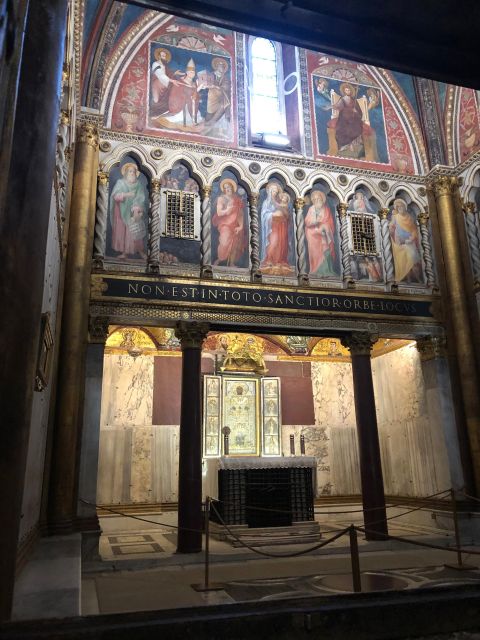
This tour’s star is the guide, and the reviews make that very clear. Many people praise guides such as Wen and Tom for explaining theology and Catholic tradition in a way that stays clear at a walking pace. The consistent praise is about more than facts—it’s about how the facts get taught.
In particular, I’d pay attention to two review-backed patterns:
- Guides often spend time on symbolism, not just “what this is.” People mention explanations of paintings, statues, and structures.
- Guides are described as answering questions with patience, so you’re not stuck with silence after a fascinating detail.
That matters because these churches can look similar if you’re only using your eyes. With a good guide, you start noticing what makes St John Lateran different from the other great Roman basilicas: how it’s framed as a cathedral of Rome’s Catholic life, and how the Holy Steps tradition is presented with historical grounding.
Also, the guide’s pace seems intentional for a small group. Since the group is limited to 5 participants, it’s easier to ask a follow-up question without feeling like you’re hijacking a tour bus.


Price and time: is $65 for 1 hour a good deal?
At $65 per person for about 1 hour, this isn’t the cheapest thing you can do near the Vatican. But it can be a solid value if you care about context, symbolism, and accurate religious history.
Here’s where the price makes sense:
- You’re visiting two high-significance sites in one session: Scala Sancta and St John Lateran.
- You’re getting guided explanation that would be harder to piece together on your own in such limited time.
- The tour includes taxes and fees, and when group size reaches 7 or more, radio headsets are provided for clarity.
Also, the group size cap helps you feel the difference. In Rome, a “quick stop” can turn into a traffic jam around the same highlight photo spot. This tour aims to keep moving while still allowing you to absorb what you’re seeing.
If you only want to take pictures and you don’t care about the religious or historical meaning, you might decide it’s not worth paying. But if you want the why behind the what, $65 can feel fair for a focused, guided hour.
Logistics that matter: dress code, meeting point, and how to show up ready
This is a sacred-site visit, so plan for rules and respect. Shorts and short skirts are not allowed. That can matter more than people expect in warm months. I’d also plan for comfortable shoes, because you’ll be walking and climbing stairs in two different areas.
Meeting point clarity is part of the experience design. You meet your Catholic guide at the bottom of the stairs left of the Scala Santa entrance. The provider also asks you to download WhatsApp so you can stay in real time if anything is unclear. That small step helps you avoid the classic Rome problem where you’re standing in the wrong spot with everyone else disappearing around a corner.
You’ll end at the Basilica of San Giovanni in Laterano, near the facade, with public transport options, taxis, and the ancient Aurelian city walls nearby. That’s useful because you can keep your day moving without being trapped in one area with no easy exit.
Also: the tour notes wheelchair accessibility. Since the Holy Steps area is stair-related, don’t ignore that detail—your best bet is to be ready for adjustments on site. If you have mobility concerns, you’ll want to confirm what that means for your route when you book or when you meet the guide.
Who should book this 1-hour Holy Steps and Lateran tour
This is a good fit if you:
- want a short, guided way to hit two major Catholic sites in one go
- care about theology, relic traditions, and symbolism rather than only architecture photos
- like having time to ask questions, since the group is small
It’s less ideal if you:
- need long devotional time for knee-climbing on the Holy Steps
- want a totally neutral, non-religious explanation
And here’s an important expectation-setter: the tradition of climbing the Holy Steps on your knees to gain a plenary indulgence is described as taking around 45 minutes, so it’s not part of this 1-hour tour. The guide still addresses the tradition and shows you the Holy Steps area, and you can arrange to do the knee-climbing devotion later on your own time, free of charge.
Should you book this St John Lateran and Holy Steps tour?
Book it if you want an efficient, faith-informed guided experience that helps you understand what you’re seeing at the Scala Sancta and then at Rome’s highest-ranking basilica. The best reason is the guide quality—people consistently praise guides like Wen and Tom for making theology, history, and art feel clear and relevant, even within a tight hour.
Don’t book it if you’re mainly after a photo stop and you’re not interested in context. Also, if the main goal for you is the full knee-climbing indulgence practice, make sure you plan extra time beyond the tour, because this format can’t fit that devotion.
If you’re deciding between “see the sites” and “understand the sites,” this tour is aimed at the second one—and that’s where the value lands.
FAQ
Where do I meet the guide for the Holy Steps and St John Lateran tour?
Meet your guide at the bottom of the stairs to the left of the entrance of the Pontifical Sanctuary of the Holy Stairs (Scala Santa). The tour also provides a Google Maps link, plus a WhatsApp contact so you can stay in touch in real time.
How long is the tour?
The tour runs for 1 hour.
What is included in the price?
The price includes all taxes and fees. If the group reaches 7 or more participants, radio headsets are included for clearer listening.
Are there dress code rules?
Yes. Shorts and short skirts are not allowed.
What languages is the guide available in?
The live guide is available in English and Chinese.
Is this tour wheelchair accessible?
Yes, the tour is listed as wheelchair accessible.
Is the kneeling Holy Steps devotion part of the 1-hour tour?
No. The kneeling practice is described as taking around 45 minutes, so it is not part of this tour. You can do the devotion on your own time later.