REVIEW · ROME
Ostia Antica: Small group tour from Rome
Book on GetYourGuide →Operated by Estaalia · Bookable on GetYourGuide
Old Rome hides under modern dust. Ostia Antica is one of those rare archaeological spots where you can walk through real streets and feel how Romans lived when the city served as Rome’s port. I like that this small-group format keeps things moving without turning the ruins into a crowded blur, and I also love that you get skip-the-line tickets so you spend more time seeing and less time waiting.
You’ll ride the local train from Rome’s Ostiense area to the archaeological park, then follow a licensed guide through major sights like the outdoor theater, the Square of the Guilds, the public baths, and the House of Diana. The one thing to consider: the tour involves a moderate amount of walking, and it’s not set up for wheelchair users or people with mobility impairments.
In This Review
- Key highlights you’ll care about
- Ostia Antica Is a Port City You Can Walk Through
- Meeting at Roma Ostiense: Train Ride to the Archaeological Park
- The Outdoor Theater: Where Entertainment Turned Serious
- Square of the Guilds: Trade, Shipping, and Making a Fortune
- Public Baths: Cleaning, Training, and Hanging Out
- House of Diana: Sleep and Private Life in the Middle of It All
- Skip-the-Line Tickets and a Licensed Guide That Adds Meaning
- Price and Value: What $113.17 Buys You
- What to Bring (and What to Leave Behind)
- Who This Tour Fits Best (and Who Should Skip It)
- Should You Book Ostia Antica From Rome by Small Group Tour?
- FAQ
- Where is the meeting point for the Ostia Antica tour?
- How do I get from Rome to Ostia Antica?
- What’s included in the tour price?
- Is food included?
- How long is the tour?
- What ticket advantage do I get?
- What languages are available for the guide?
- What should I bring to Ostia Antica?
- Is the tour wheelchair accessible?
- What’s the cancellation policy?
Key highlights you’ll care about
- Skip-the-line entry into Ostia Antica archaeological park saves you time at the start
- Rome-to-ruins train ticket (roundtrip) means you’re not stuck figuring out transit on your own
- The outdoor theater shows how entertainment (including gladiator fights) played in public life
- Square of the Guilds connects the ruins to trade: ship owners, merchants, and money-making
- Public baths with practical daily-life details, including cleaning routines with olive oil
- House of Diana gives you a clear sense of where people slept and how homes were laid out
Ostia Antica Is a Port City You Can Walk Through
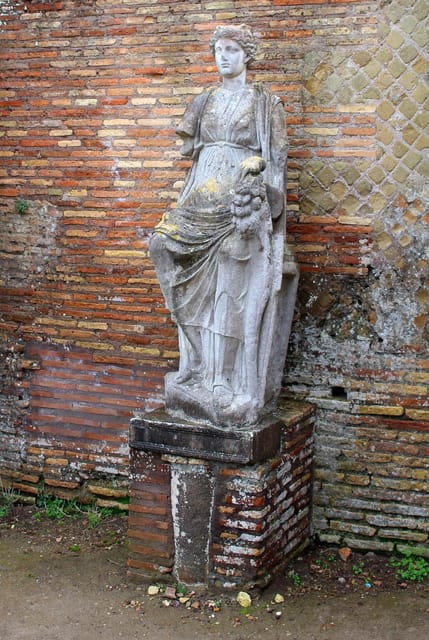
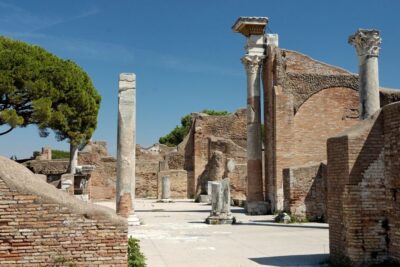
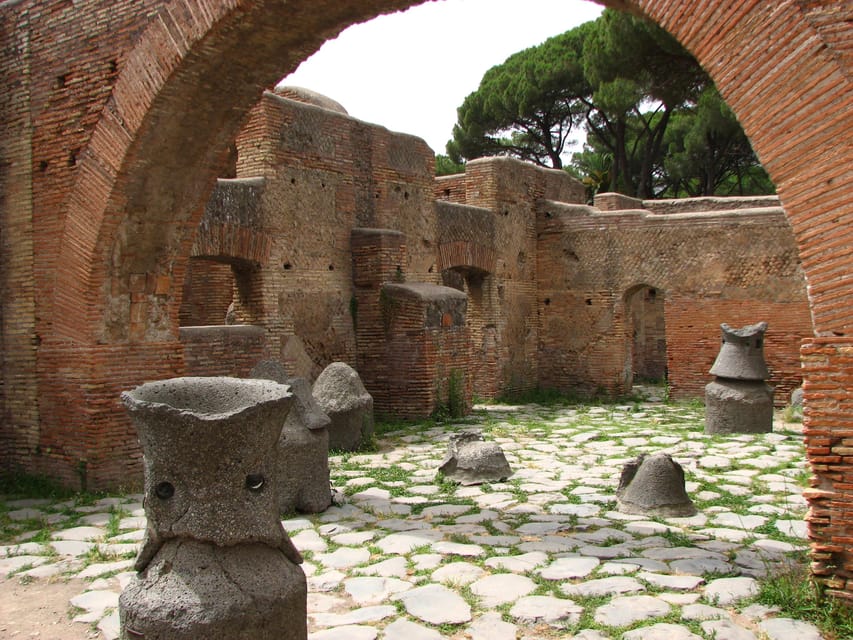
Ostia Antica feels different from many Roman ruins because it’s not just scattered columns. It’s an entire town plan you can follow—temples, houses, and public buildings—so your brain can actually map how people moved, worked, shopped, and relaxed.
What makes it so well preserved is the story of the place after Rome’s decline. As the Roman Empire fell, the city was eventually abandoned. Then the river changed course, and the area slowly collected silt and mud. That natural cover helped protect structures until later excavation brought the city back into view. When you see walls and spaces that survived because of that burial, you understand why Ostia Antica reads like a time machine instead of a pile of stones.
If you like ruins with clear everyday context, this is a strong pick: you’re not only looking at monuments—you’re seeing spaces tied to commerce, entertainment, hygiene, and home life.
You can also read our reviews of more tours and experiences in Rome.

Meeting at Roma Ostiense: Train Ride to the Archaeological Park

The meeting point is in front of the Roma Ostia Lido Train Station at Piazzale Ostiense, 9. Plan to arrive 15 minutes early. This matters more than you might think because a guided group needs to board together.
From there, you take the local train to the archaeological park. Roundtrip train tickets are included, so you’re free to focus on the day instead of price-checking machines or hunting for schedules. Expect a straightforward setup: walk in, meet the guide, get on the train, and then switch into tour mode.
Practical tip: wear comfortable shoes from the start. Ostia Antica is walkable, but it’s not a sit-and-watch kind of tour. Also pack light. Large bags and luggage aren’t allowed, so keep your day bag small and easy to carry.
The Outdoor Theater: Where Entertainment Turned Serious
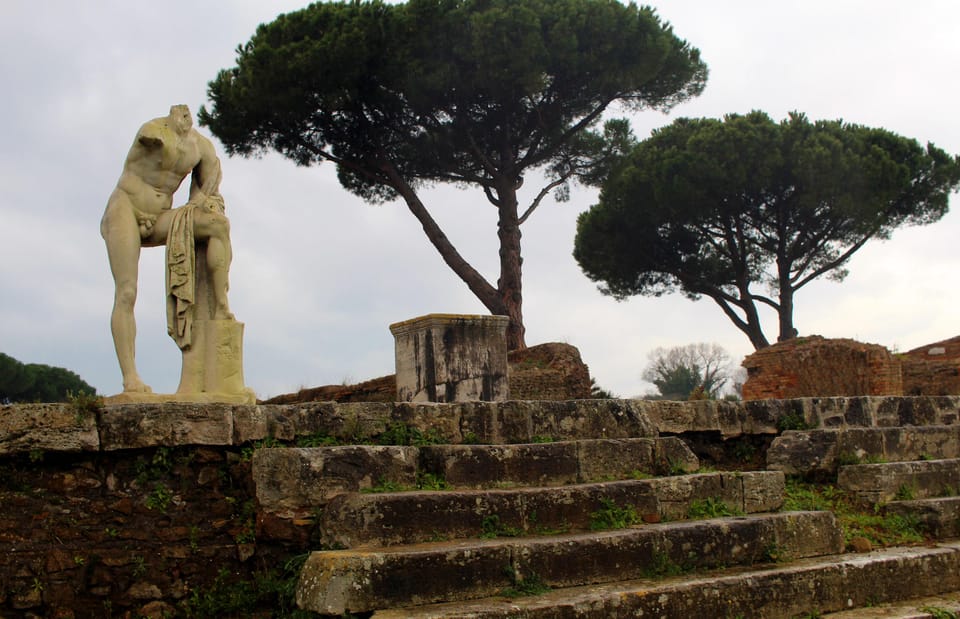
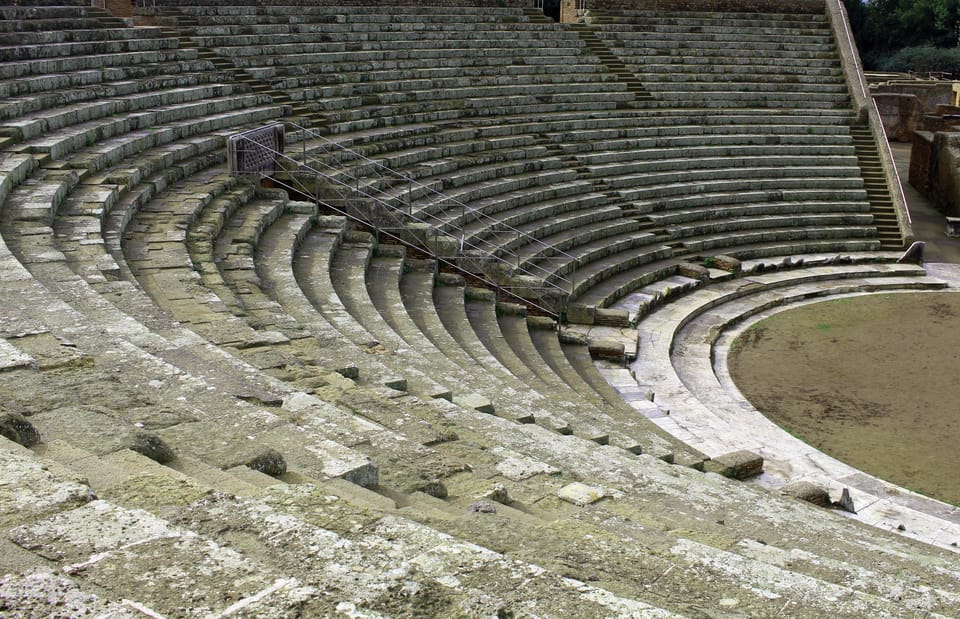
One of the first major stops is the grand outdoor theater, a centerpiece of public entertainment in ancient Ostia. This place gives you an immediate sense of how Romans gathered for shows and how public culture worked.
The theater is also a reminder that spectacle wasn’t always gentle. It hosted plays—and even gladiator fights. Seeing an outdoor venue like this helps you picture the noise, the crowd energy, and the way the city’s social life built around shared events.
What I like about this stop is that it’s visually dramatic even before your guide explains it. Once you understand the function of the space, the ruins stop being pretty and start being meaningful.
Square of the Guilds: Trade, Shipping, and Making a Fortune
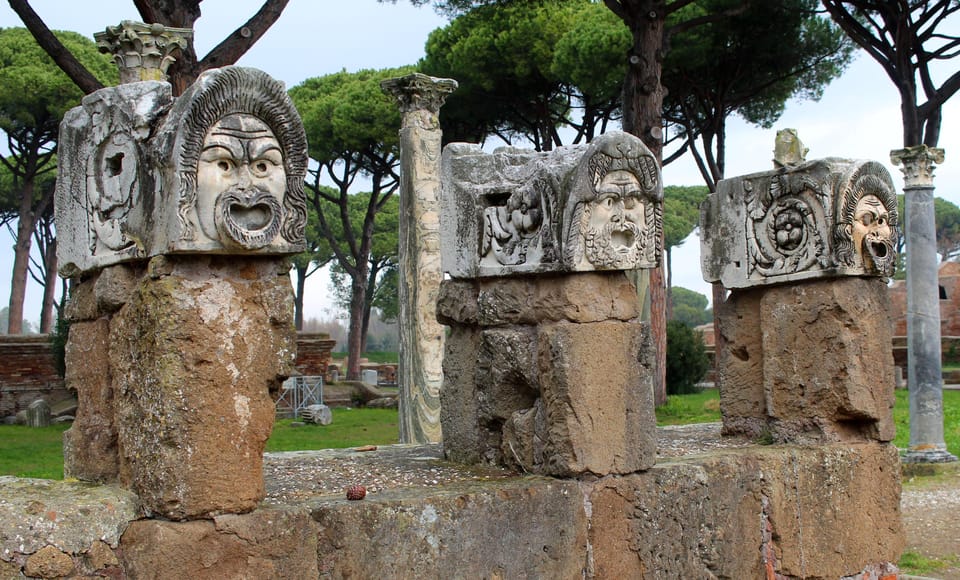
Next comes the Square of the Guilds, a key area that connects the archaeological site to Ostia Antica’s role as Rome’s working port. This is where ship owners and merchants tried to make their fortunes—exactly the kind of commercial engine you’d expect in a town built around trade.
Even if you’re not a business-history person, this is where the tour becomes more than stone viewing. You start thinking in networks: ships bringing goods, money changing hands, people needing services, and businesses advertising themselves through the layout and nearby structures.
The Square of the Guilds is valuable because it changes your perspective. You stop thinking of Ostia as a dead city and start seeing it as an economic system. That shift makes the rest of the tour click.
Public Baths: Cleaning, Training, and Hanging Out
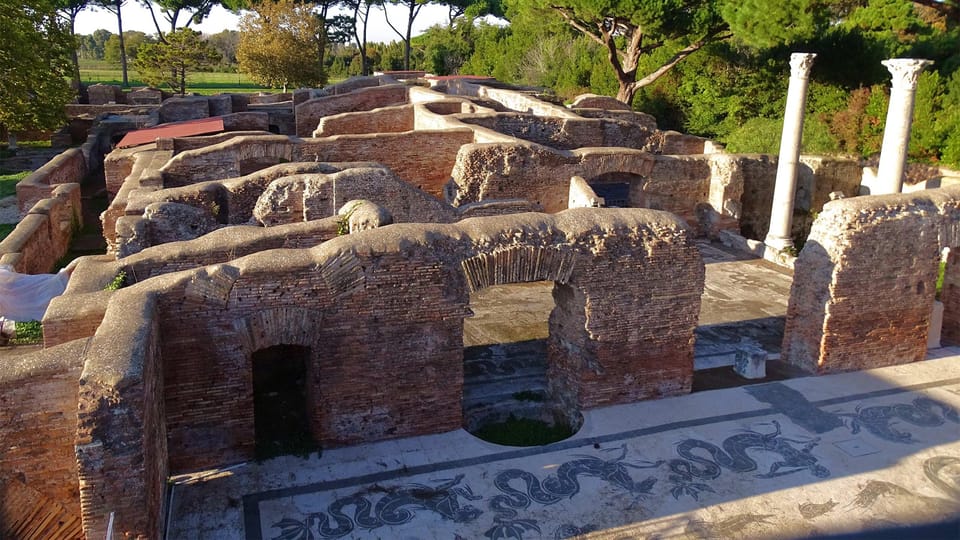
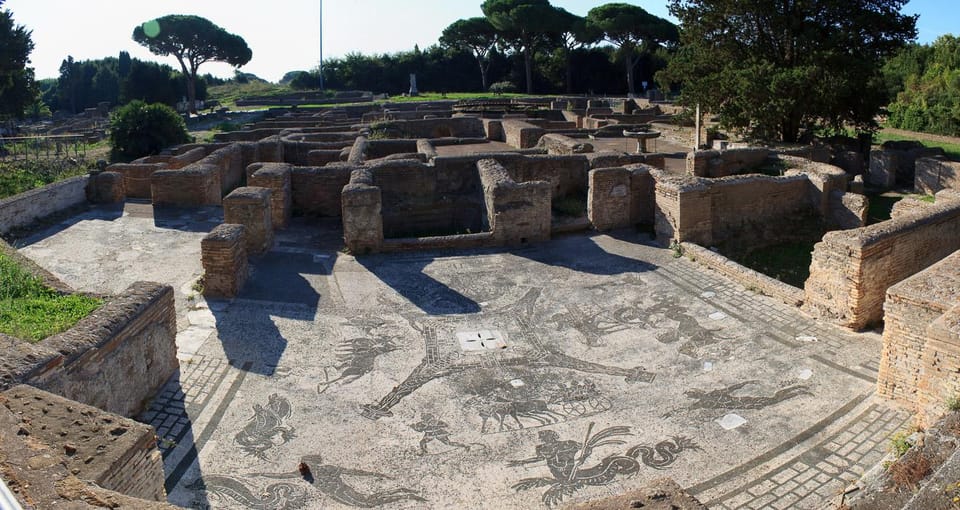
A short walk brings you to the public baths. These weren’t only about hygiene—they were a social hub where people could lounge in pools, work out, and freshen up.
What you’ll get out of this stop is an understanding of daily routines. You’ll hear how visitors cleaned themselves, including use of olive oil. That kind of specific detail matters. It turns an ancient building into a picture you can hold: someone meeting friends, doing exercise, then moving into washing spaces and relaxing.
It’s also a smart stop pacing-wise. The baths are interesting, but they also give you a chance to slow down, take photos, and catch your breath while still staying on theme. If you want ruins that feel like real life, this section is one of the most satisfying.





House of Diana: Sleep and Private Life in the Middle of It All
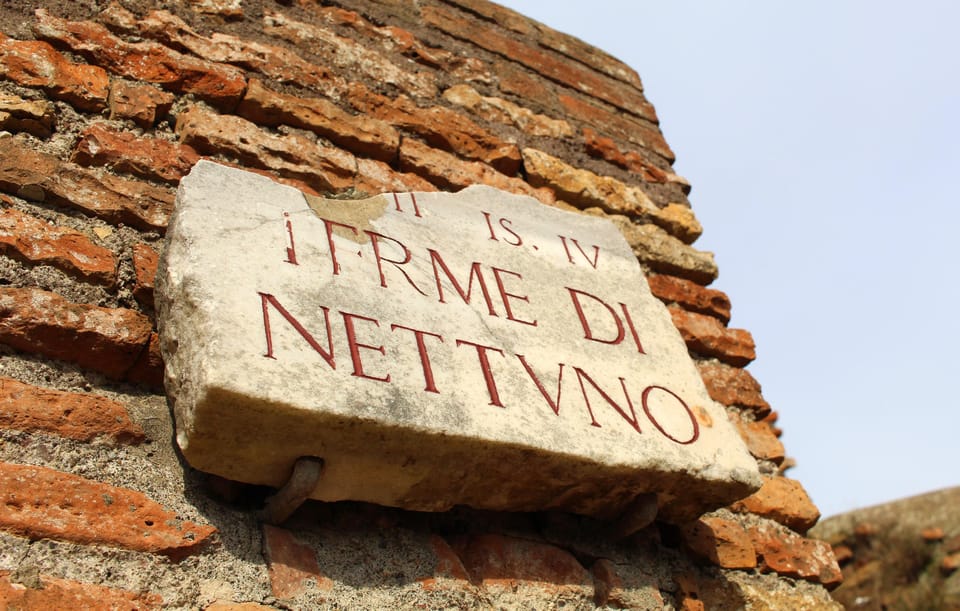
The tour then walks you to the House of Diana, one of the best-known residential stops at Ostia Antica. This is where the tone shifts. Instead of public buildings and shared spaces, you move into a home setting.
The point isn’t just to look at rooms—it’s to understand what it meant to live in this port city day after day. The House of Diana gives you a sense of where people laid their heads at night and how household life fit inside the larger town.
I like this stop because it balances the itinerary. After theater and baths, you get the quieter angle: domestic living. And since Ostia Antica is spread out enough that you’ll see multiple building types, residential spaces help you connect the dots between public activity and private routine.
Skip-the-Line Tickets and a Licensed Guide That Adds Meaning
This is a small-group tour with a licensed guide, and it shows. You’re not just reading signs. You’re hearing the story of the city as you walk through it.
One of the best parts is how the guide tends to go beyond the ruins. I found that kind of extra helpful when I’m traveling in Italy—because after a tour, you want practical ideas for what to do next. In the same spirit, this tour’s guide also shares local transport tips, like how to handle bus connections when you’re planning additional stops.
Language options include Spanish, English, and French, and the tour is run with an English-licensed guide. If you’re traveling with mixed language needs, knowing that the guide supports multiple languages is a real value—less waiting, fewer misunderstandings, smoother answers to your questions.
Price and Value: What $113.17 Buys You
At about $113.17 per person, this trip isn’t the cheapest way to see Ostia Antica. But it’s also not just a ticket to a website. Here’s what your money covers:
- Roundtrip train ticket
- Skip-the-line access to the archaeological park
- Licensed English tour guide
- Small group experience
- Total time on the ground that’s long enough to connect the major highlights
In practical terms, you’re paying to remove friction. The biggest friction is typically time: getting there, waiting at entry, and figuring out what you’re seeing once you’re inside. With the guide and skip-the-line entry, you lose less time and get more understanding per hour.
What’s not included: food and beverages. That’s normal for a 4-hour guided ruins tour, but it means you should plan ahead. Bring water (and consider a light snack strategy before or after) so you don’t end up spending extra money mid-tour.
What to Bring (and What to Leave Behind)

For a day at Ostia Antica, pack for sun and walking. You’re advised to bring:
- Comfortable walking shoes
- A hat
- Sunscreen
- Water
- Passport or ID card (a copy is accepted)
Also note the restrictions: luggage or large bags aren’t allowed. This is a genuine comfort factor. Small bags keep the day smoother on the train and during the walk between stops.
If you forget something common like water or sunscreen, you’ll feel it more than you would in a museum with climate control. Rome-area sun can be intense, even when the ruins look cool and shaded.
Who This Tour Fits Best (and Who Should Skip It)
This is a strong match if you:
- Want a guided walk through major Ostia Antica sights in about 4 hours
- Prefer small groups over big coach crowds
- Like Roman sites where you can see how everyday life worked
- Appreciate practical transport support from a guide
It’s not a good fit if you have mobility challenges. The tour is not suitable for people with mobility impairments and it isn’t designed for wheelchair users. Even if some paths look flat in photos, the walking is described as moderate, and the route includes multiple exterior areas.
If you’re traveling with teens or adults who like history but get restless with long lectures, this format often works well. You’ll be moving between varied stops: theater, trade square, baths, then a house. That mix keeps attention on the city rather than on a single topic.
Should You Book Ostia Antica From Rome by Small Group Tour?
If you want an efficient, guided, and mostly friction-free way to experience Ostia Antica, I’d book this. The combination of skip-the-line entry, roundtrip train tickets, and a licensed guide is what makes the price feel fair. You’re buying time and context, not just admission.
I’d hesitate only if you dislike walking or if your group needs full accessibility. Otherwise, this is exactly the kind of day trip that turns ruins into a story you can follow—starting with Ostia’s port-city roots and ending with the domestic reality of where people slept.
Take it if your goal is clarity. Ostia Antica rewards visitors who can connect the places to how a Roman town actually functioned.
FAQ
Where is the meeting point for the Ostia Antica tour?
You meet in front of the Roma Ostia Lido Train Station, at Piazzale Ostiense, 9.
How do I get from Rome to Ostia Antica?
The tour includes a local train ride from the Ostiense Train Station to the archaeological park, with roundtrip tickets provided.
What’s included in the tour price?
It includes roundtrip train tickets, skip-the-line tickets to the Ostia archaeological park, a licensed English tour guide, and a small group tour.
Is food included?
No. Food and beverages are not included.
How long is the tour?
The tour lasts about 4 hours.
What ticket advantage do I get?
You get skip-the-line tickets to the Ostia archaeological park.
What languages are available for the guide?
The guide is available in Spanish, English, and French.
What should I bring to Ostia Antica?
Bring comfortable shoes, a hat, sunscreen, water, and a passport or ID card (a copy is accepted).
Is the tour wheelchair accessible?
No. The tour is not suitable for wheelchair users.
What’s the cancellation policy?
You can cancel up to 24 hours in advance for a full refund.