REVIEW · ROME
From Rome: Naples and Amalfi Coast Full-Day Trip
Book on GetYourGuide →Operated by Romaetravel · Bookable on GetYourGuide
Naples in a single day can work. I really like this tour’s small-group size (up to 14) and the way your guide strings together Naples’ major sights with neighborhoods you’d miss on your own. I also love the built-in payoff: views over Naples and Mount Vesuvius, plus the drive to the Amalfi Coast for that coast-glance-at-every-turn feeling. One drawback to plan for: it’s a long 12-hour day with lots of walking in older streets.
You start with hotel pick-up in Rome (within the Aurelian walls), then head straight to Naples with a local, English/Italian guide. The day is structured around a smooth rhythm of walking stops and photo-friendly pauses, capped with an Amalfi Coast stroll and a hotel drop-off back in Rome.
If you’re hoping for a sit-down, slow-paced tour with minimal steps, this isn’t that. You’ll want comfortable shoes, and you’ll do plenty of moving—even though the group stays small enough that you can actually ask questions.
In This Review
- Key things I’d prioritize before you book
- Rome to Naples in 12 hours: how this day stays realistic
- Castel Nuovo, Piazza del Plebiscito, and Vesuvius views
- Royal Palace to Galleria Umberto: the grand architecture break
- Via Toledo and the Spanish Quarter: Naples on a human scale
- Piazza del Gesù, Gesù Nuovo, and the Spaccanapoli split
- San Gregorio Armeno and Piazza Bellini: crafts, cafes, and quick culture
- Sansevero Chapel or Castel Nuovo Museum: your final Naples choice
- Amalfi Coast drive and the street-stroll payoff
- Price and value: is $311.53 a fair deal?
- Who this fits best (and who should skip it)
- What to bring: shoes, pace, and a realistic lunch plan
- Should you book this Rome to Naples and Amalfi Coast day trip?
- FAQ
- How long is the trip from Rome to Naples and the Amalfi Coast?
- What’s included in the price?
- Is food and drinks included?
- How big is the group?
- What language is the live guide?
- Where does pick-up happen in Rome?
- Is the tour wheelchair accessible?
- What should I bring?
- When does the tour run?
Key things I’d prioritize before you book

- Small group (14 max) means your guide can actually talk to you, not just at you.
- Hotel pick-up/drop-off in central Rome keeps the start and end from eating your day.
- Naples landmark walk hits Castel Nuovo (Maschio Angioino), Piazza del Plebiscito, Galleria Umberto, and more.
- Old Naples neighborhoods include the Spanish Quarter and Spaccanapoli for real street energy.
- San Gregorio Armeno brings the craft-street side of Naples, with the famous nativity figure workshops.
- Amalfi Coast time gives you the coastal views without having to organize transport yourself.
Rome to Naples in 12 hours: how this day stays realistic

This is a one-day squeeze—Rome to Naples, then the Amalfi Coast—so the smartest way to enjoy it is to accept the pace early. You’re not signing up for a week of Naples. You’re signing up for the highlights plus a few neighborhood textures that make those highlights make sense.
The structure helps: you get picked up from your Rome hotel (only within the Aurelian walls), then your guide handles the transitions while you focus on walking, looking, and asking questions. The tour is scheduled for 12 hours, and that matters because it sets expectations for how many stops you can comfortably enjoy.
Also, the “small group” detail is more important than it sounds. When you’re standing in a tight old-city lane or moving through crowds at major landmarks, a group of 14 behaves very differently than a much larger bus group. You’re still moving, but you’re not constantly stuck behind a wave of strangers.
You can also read our reviews of more tours and experiences in Rome


Castel Nuovo, Piazza del Plebiscito, and Vesuvius views
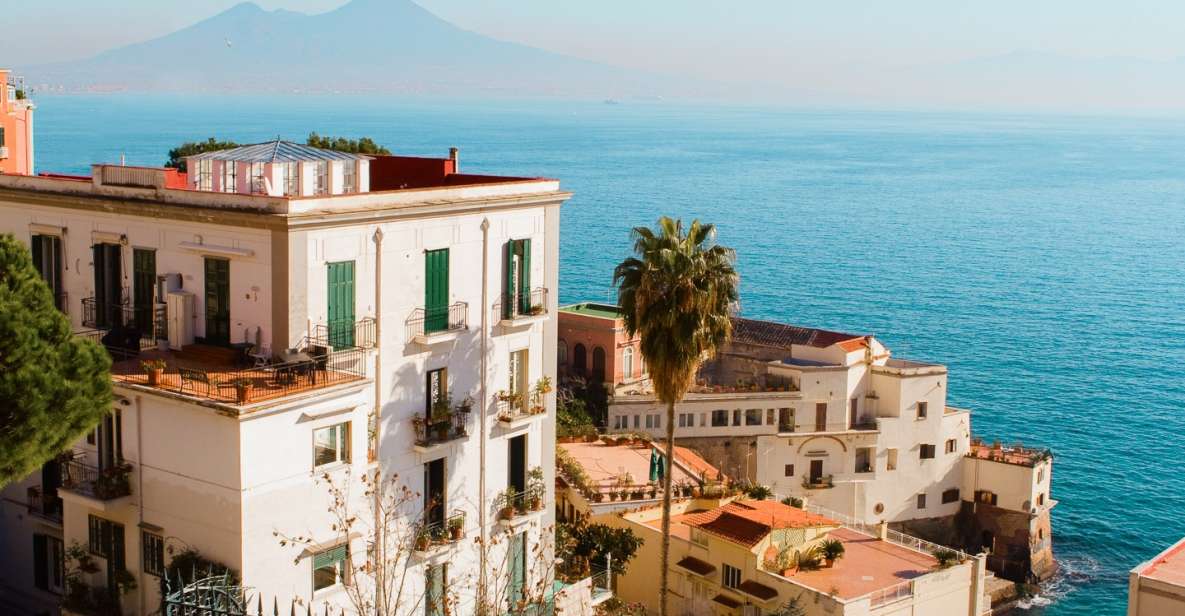
Naples starts strong with Castel Nuovo, also known as Maschio Angioino. It’s a good opener because it’s instantly recognizable and gives you a sense of the city’s royal/old-power vibe before you head into the living street maze.
From there, you’ll walk through Bourbon King’s Square and Piazza del Plebiscito, where the big moment is the view direction—Naples below, and Mount Vesuvius in the distance. Even if you’ve seen Vesuvius in photos a hundred times, seeing it while you’re standing in the city is different. It helps you understand why the region’s history is always orbiting around the volcano.
One practical thought: these early stops are where you’ll want to be quick with photos, but still spend a minute letting your guide explain what you’re looking at. The quick visuals become more meaningful when you know what power used to sit where, and why this piazza matters.
Royal Palace to Galleria Umberto: the grand architecture break
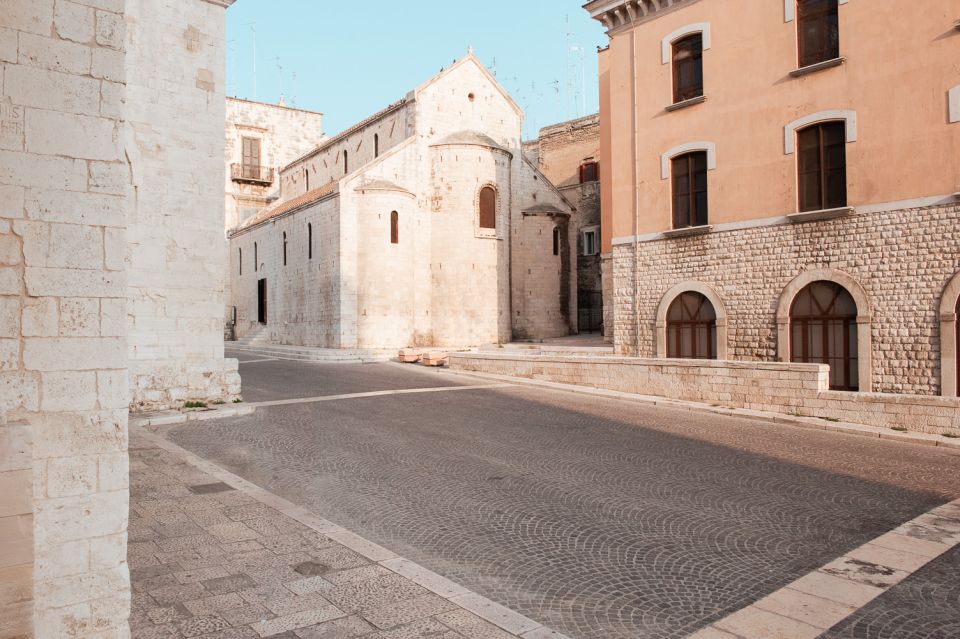
After Piazza del Plebiscito, the day keeps rolling with the Royal Palace of Naples area, then into Galleria Umberto and the Teatro di San Carlo zone. This portion of the route is a nice contrast: you go from open views to elegant, enclosed-feeling spaces that show Naples at its most ceremonial.
Galleria Umberto is especially worth paying attention to because it’s the kind of place that looks like a “pass-through” until you slow down. The glass and stone details make it a calm pause in the middle of a very movement-heavy day.
And Teatro di San Carlo is a major name—Italy’s opera world history lives here. You may not spend hours inside, but seeing the scale up close gives you context for why Naples has always been tied to culture, performance, and public life.
There’s also a smart break built in: a stop at Caffè Gambrinus for a refreshment. Even if you just do a coffee and a quick rest, it’s useful. In a day like this, one five- to ten-minute pause can be the difference between finishing strong or feeling it by late afternoon.
Via Toledo and the Spanish Quarter: Naples on a human scale
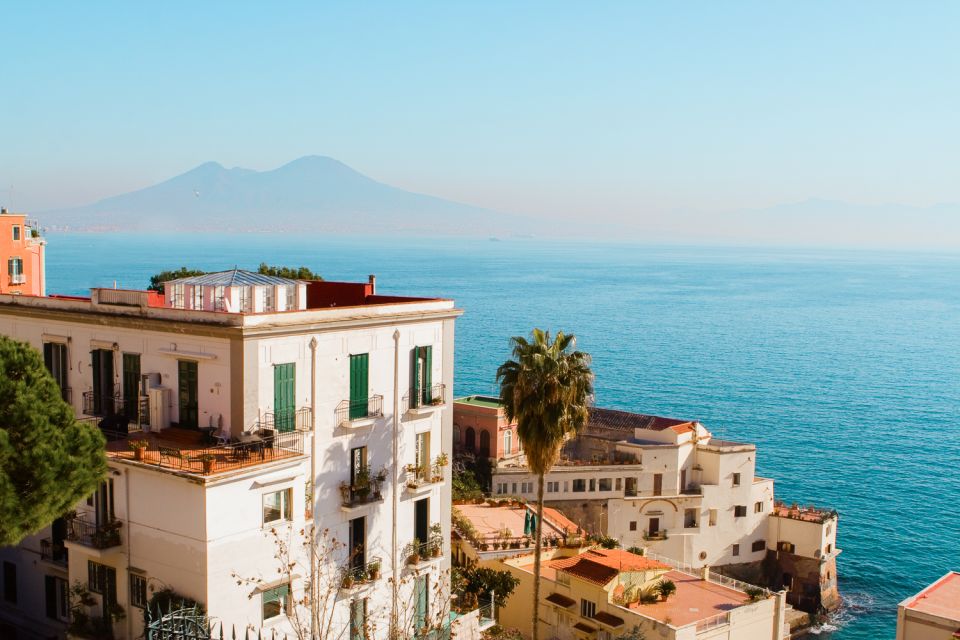
If you want to feel Naples rather than just look at monuments, this is the stretch. Your route includes Via Toledo and the Spanish Quarter. This is where you stop seeing Naples as only “the sightseeing city” and start seeing it as a real place with real streets, rhythms, and local routines.
Via Toledo works as a connector street—busy enough to feel central, but not so far from the old core that you lose the thread. Then the Spanish Quarter gives you that tighter-gridded neighborhood look, the kind where you can understand why people get turned around… and why your guide matters.
You’ll also move through key historic anchors on the walk, setting you up for the deeper old-town feel later, including the religious-piazza cluster near Piazza del Gesù.
Piazza del Gesù, Gesù Nuovo, and the Spaccanapoli split
Piazza del Gesù is a turning point because you shift from secular grandeur into the city’s religious and street-life layers. You’ll see Gesù Nuovo (including its striking, modern-facing façade) and then continue toward the old town entrance area and Spaccanapoli.
Spaccanapoli—the street that divides Naples—is one of those details you’ll be glad you learned. It helps you stop thinking of “old Naples” as a vague blob on a map. You start understanding it as a built-in structure, a line that organizes the city’s movement.
This portion of the walk also tends to create the best “I get it now” moment. When your guide explains how streets, churches, and piazzas link together, you’ll feel less like you’re rushing from stop to stop and more like you’re following a thread.
You can also read our reviews of more tours and experiences in Rome



San Gregorio Armeno and Piazza Bellini: crafts, cafes, and quick culture
Then you hit one of Naples’ most playful zones: San Gregorio Armeno. This is the craft street famous for nativity figure shops, with the mix of Christian and modern characters that makes the scene feel both traditional and oddly current.
If you like little side details—handmade figures, workshop displays, the character of small retailers—this is a highlight you don’t want to rush. You don’t need an hour, but give yourself enough time to actually look at what’s on display and ask your guide what you’re seeing.
After that comes Piazza Bellini, now a popular meeting place for locals with plenty of café life. This is an easy stop to enjoy without needing a strict plan. It’s also a good place to decide how you want to handle lunch later, since the guide is willing to suggest a solid option once you reach that point of the tour.
And along the way you’ll pass through Port’Alba to reach Piazza Dante, another useful reminder that Naples’ old-city geography is stitched together by gateways and piazzas, not just streets.
Sansevero Chapel or Castel Nuovo Museum: your final Naples choice
Near the end of the Naples walk segment, you’ll have time for the famous Sansevero Chapel or the museum in Castel Nuovo. Which one you get matters, because both are different flavors.
- The Sansevero Chapel option is usually about leaning into a more enclosed, art-and-spirituality kind of stop.
- The Castel Nuovo museum option keeps you in the orbit of the fortress/palace setting.
Either way, this is the “slow it down a bit” moment before the day shifts to the Amalfi Coast. If you’re the type who likes learning why certain places earned their reputation, this is where the guide’s depth really pays off.
At this point, your guide will also recommend a nice place for lunch so you can recharge before the coast drive. Since food and drinks aren’t included, it helps to follow their advice rather than grabbing the first thing you see.
Amalfi Coast drive and the street-stroll payoff
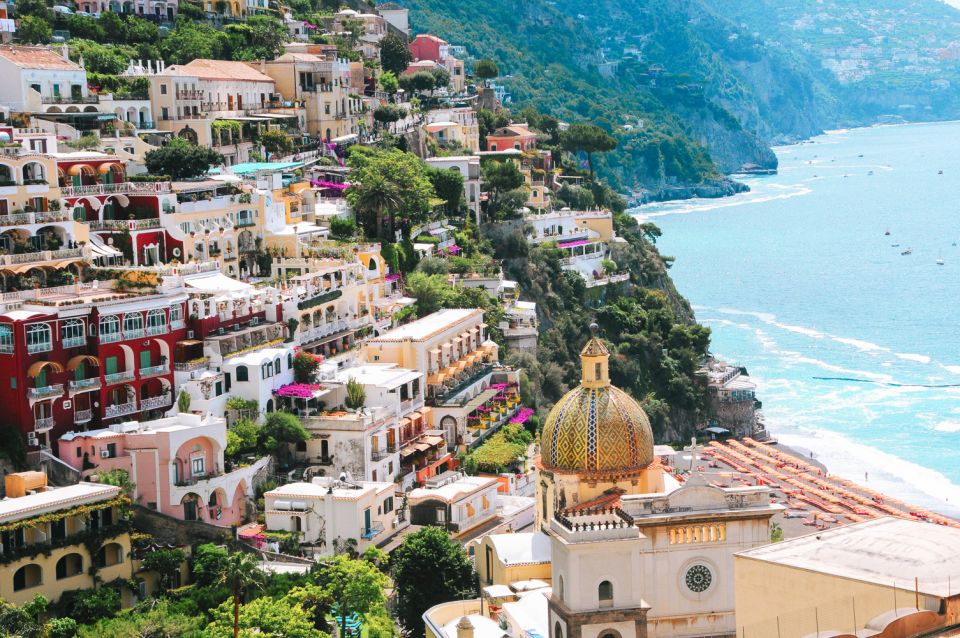
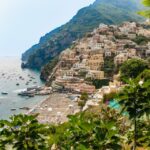
After Naples, you’ll be driven to the Amalfi Coast. This is where the day changes mood. The air feels different, the light hits differently, and suddenly you’re looking for viewpoints rather than just architectural details.
You’ll stroll through the coast’s charming streets and admire the big views. The exact mix of viewpoints can vary day to day, but the purpose stays the same: you get the coastal postcard feeling without needing to plot train changes, ferries, and parking yourself.
One tip for enjoyment: keep your expectations flexible. Amalfi Coast days are weather-and-road-condition dependent. The value here is that you’re not dealing with the logistics. You’re just showing up ready to walk and look.
Also, this is the part where the small-group feel pays off again. Coastal pull-offs and viewpoints can get crowded quickly, and a smaller group helps you move in a more controlled way.
Price and value: is $311.53 a fair deal?

At $311.53 per person, this isn’t a “grab-and-go” bargain. But it’s also not priced like a bare-bones sightseeing bus. You’re paying for:
- Hotel pick-up and drop-off
- A professional guide
- A full-day plan that covers Naples plus the Amalfi Coast
Food and drinks aren’t included, so you should budget for lunch on top. Still, value-wise, the biggest win is that you get a guided walking day in Naples—where local context matters a lot—plus the long-distance driving piece that’s hard to assemble efficiently on your own.
The other value lever is group size. Limited to 14 participants, with the tour starting when there are at least 4. That means you’re not swallowed by a crowd, which directly affects comfort, photo time, and how much you can understand while you move.
This one also has a 4.3 out of 5 rating from 10 reviews, which signals that the overall experience tends to land well, especially for people seeking a one-day Naples-and-coast hit from Rome.
Who this fits best (and who should skip it)
This tour makes the most sense if you want a classic “Rome base, Campania highlights” day and you’d rather have someone else handle the route. It fits:
- Couples and friends who like walking but don’t want to plan logistics
- First-timers who want Naples’ major sights plus neighborhood flavor
- People who care about history and culture and appreciate a guide explaining what you’re seeing
It’s less ideal if you:
- Have mobility limits (it’s not wheelchair accessible)
- Want a slow day with lots of sitting
- Get worn down by repeated walking on uneven, historic streets
What to bring: shoes, pace, and a realistic lunch plan
Your only explicit requirement is comfortable shoes, and I’d treat that as the main gear. Naples old streets can be uneven, and the itinerary is built on a continuous walking rhythm.
Since food and drinks aren’t included, plan for lunch and any snack breaks you want. The guide will suggest a nice place to recharge after the Naples walking portion, which is a smart cue to follow.
And if you’re traveling with an infant, infant seats are available upon request, so mention that when booking.
Should you book this Rome to Naples and Amalfi Coast day trip?
I’d book it if you want a well-paced, guided Naples day plus coast scenery without the headache of assembling trains, buses, or private drivers. The combination of small-group structure and a landmark-to-neighborhood route (Castel Nuovo, Piazza del Plebiscito, Galleria Umberto, Spanish Quarter, Spaccanapoli, San Gregorio Armeno, and more) is exactly the kind of “first time in Naples” recipe that keeps your day from feeling random.
Skip it if you hate walking, want a lot of free time, or need full accessibility. This is built for movement.
If you’re on the fence, here’s the deciding thought: if you can handle a long day and you like the idea of seeing big Naples icons plus that Amalfi Coast coastline feeling, this one is a strong use of your time from Rome.
FAQ
How long is the trip from Rome to Naples and the Amalfi Coast?
The tour runs for 12 hours.
What’s included in the price?
The price includes hotel pick-up, hotel drop-off, and a professional guide.
Is food and drinks included?
No. Food and drinks are not included.
How big is the group?
It’s a small group limited to 14 participants.
What language is the live guide?
The live tour guide is available in English and Italian.
Where does pick-up happen in Rome?
Pick-up and drop-off are available for accommodations within the Aurelian walls.
Is the tour wheelchair accessible?
No, it is not wheelchair accessible.
What should I bring?
Wear comfortable shoes.
When does the tour run?
The tour starts at times based on availability. Confirmation is received at booking time. The tour will start with a minimum of 4 participants.