REVIEW · ROME
Rome: Eat Like a Roman Ghetto & Campo de’ Fiori Food Tour
Book on GetYourGuide →Operated by Hili srl · Bookable on GetYourGuide
Roman street food is easy to find. Knowing what to order, and why it matters, is the trick, and this tour ties Campo de’ Fiori market energy to the Jewish Ghetto’s famous fried plates. You’ll snack your way through iconic stops while a licensed local guide adds context as you walk.
I like the way the tour turns food into a story. You get solid Roman hits like supplì and Roman-style pizza, then finish with artisanal gelato near major landmarks, so the last bite doesn’t feel like an afterthought.
One thing to consider: it’s not suitable for vegans and it’s not suitable for people with gluten intolerance, and drinks aren’t included—so plan around that if you have dietary needs or want bottled water.
In This Review
- Key things to know before you go
- Why Campo de’ Fiori and the Jewish Ghetto pair well for a food tour
- Meeting at Piazza di San Simeone and lining up your route on foot
- Tastings that feel like real Rome: porchetta panini, supplì, and pizza
- The Jewish Ghetto portion: fried artichokes and neighborhood stories
- Morning tours: Campo de’ Fiori market stop plus oil, truffle, and vinegar tasting
- How the route uses Rome’s landmarks without turning it into a sightseeing slog
- Gelato at Gunther Gelateria: the sweet finish that actually makes sense
- Price and value: does $36 feel fair for 2.5 hours of food?
- Who this tour is best for (and who should skip it)
- What your guide actually adds (and why it shows up in the feedback)
- Tips to make this the best 2.5 hours of your Rome trip
- Should you book the Rome Eat Like a Roman Ghetto & Campo de’ Fiori Food Tour?
- FAQ
- How long is the Rome Eat Like a Roman Ghetto & Campo de’ Fiori Food Tour?
- Where do we meet, and where does the tour end?
- What’s included in the price?
- What food tastings will I try?
- Are there vegetarian options?
- Is the tour suitable for vegans?
- Is the tour suitable for people with gluten intolerance?
- Are drinks included?
Key things to know before you go
- 5 included tastings in about 2.5 hours, plus optional morning extras depending on the departure time
- Campo de’ Fiori focus (morning tours only), including a local market stop
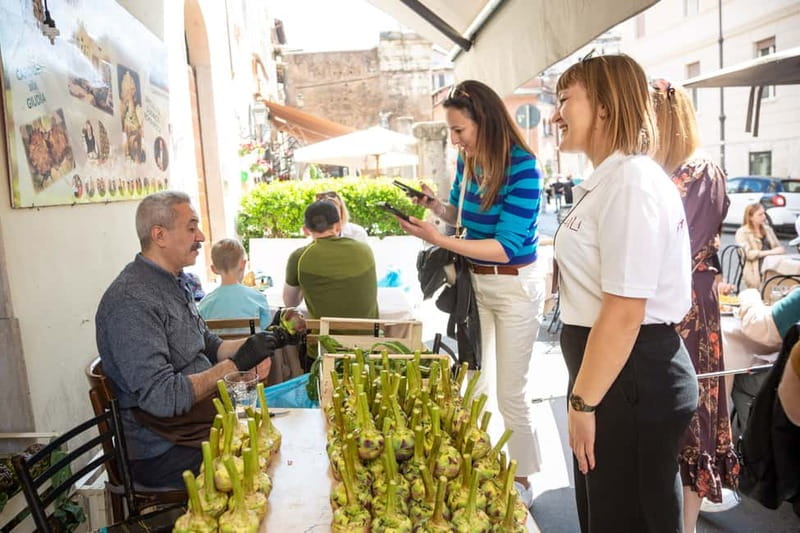
- Jewish Ghetto signature dish: Carciofo alla Giudia (fried artichokes)
- Morning-only add-on: olive oil, truffle, and vinegar tasting
- Ends at Piazza di S. Eustachio, with gelato at Gunther Gelateria
- Licensed English-speaking guide and wheelchair accessible route
Why Campo de’ Fiori and the Jewish Ghetto pair well for a food tour
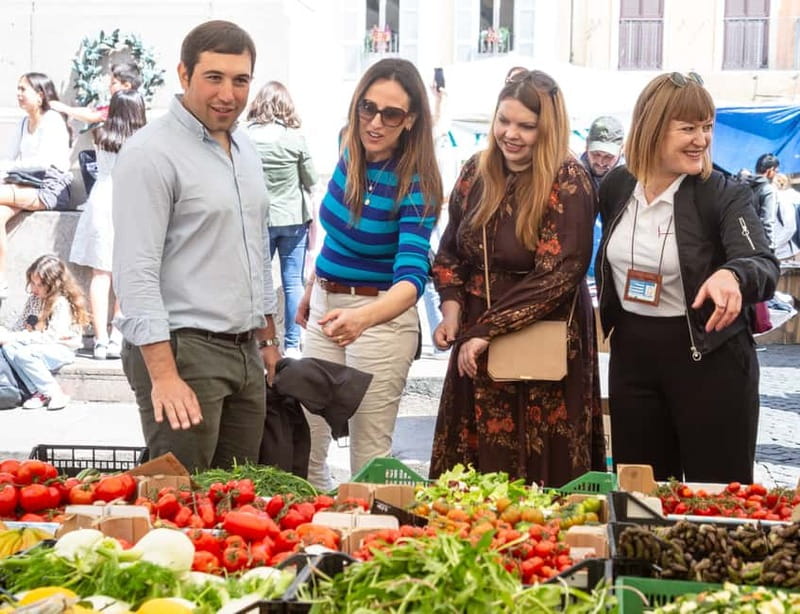
Campo de’ Fiori is one of those Rome spots where you can feel the city moving around you. This tour uses that energy to get you in the mood for street food right away, especially if you book a morning departure when the market is part of the plan.
Then you shift to the Jewish Ghetto, where food is tied to community traditions. The star here is Carciofo alla Giudia, the Roman-style fried artichoke that’s known far beyond Rome—this tour gives you a chance to try it in the neighborhood where that culinary identity grew.
You can also read our reviews of more food & drink experiences in Rome

Meeting at Piazza di San Simeone and lining up your route on foot
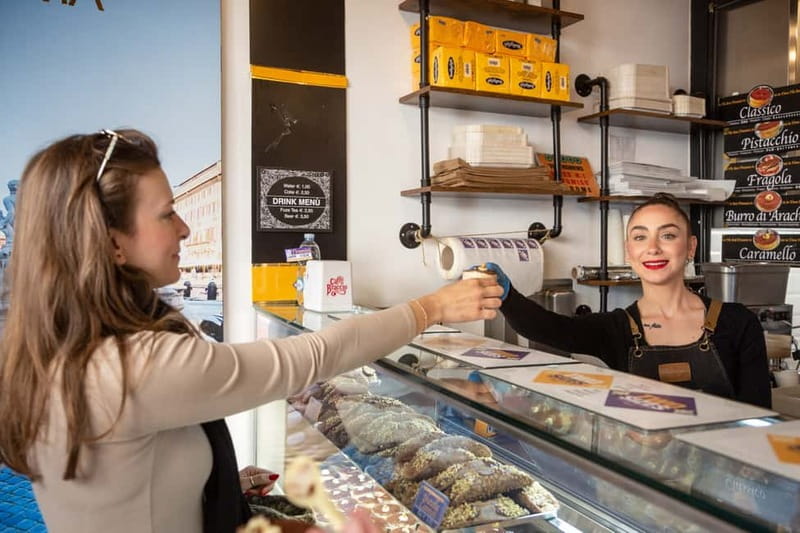
Your tour starts at the fountain in the middle of Piazza di San Simeone. From there, you’ll walk through back streets and classic city sightlines on foot, which is exactly what makes a food tour like this work—Rome is built for wandering, not for power-stopping in traffic.
Along the way, you’ll pass by Chiostro del Bramante and later glide past other major landmarks as you head toward the Jewish Ghetto and the Pantheon area. Even when you’re not standing still for a big monument photo, the guide’s pacing helps you understand how these neighborhoods connect.
Tastings that feel like real Rome: porchetta panini, supplì, and pizza
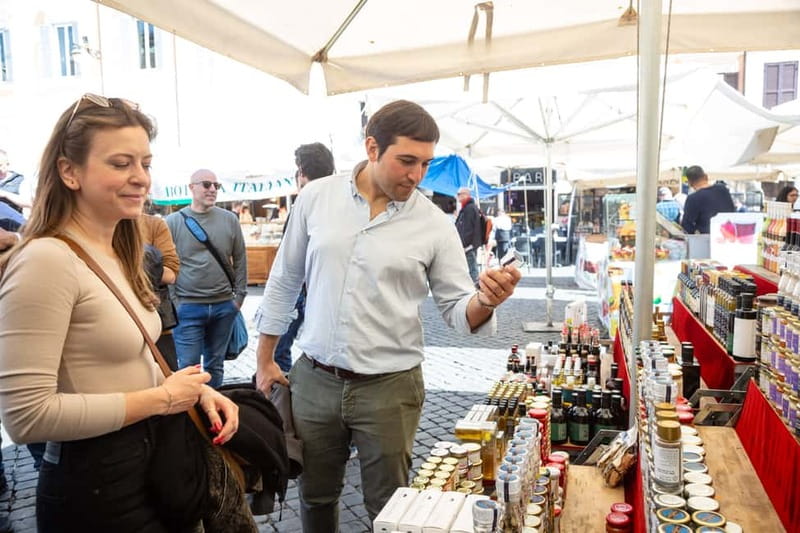
Food tours can turn into a snack parade with little meaning. This one keeps the tastings tied to what Roman people actually eat as part of daily life—fast, shareable, and easy to find in the right places.
The included tastings are built around classic Roman favorites:
- Panini with porchetta
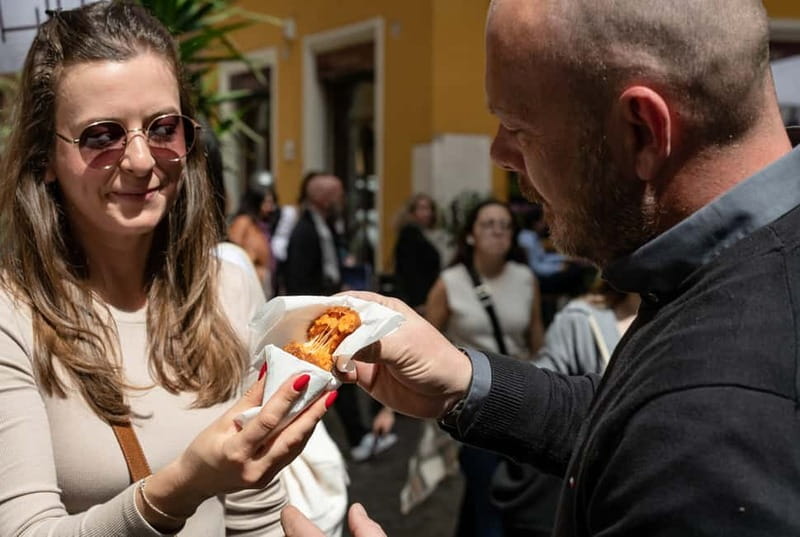
- Supplì, the crisp fried rice ball (with a molten center you’ll want to eat immediately)
- Roman-style pizza
- Fried artichokes (Carciofo alla Giudia)
- Artisanal gelato
Vegetarian options are available, which is a big deal on a tour that otherwise leans heavily on Roman comfort-food staples. On the other hand, it’s not suitable for vegans, and it’s not suitable for people with gluten intolerance, so don’t treat this as a flexible “we’ll figure it out” situation.
The Jewish Ghetto portion: fried artichokes and neighborhood stories
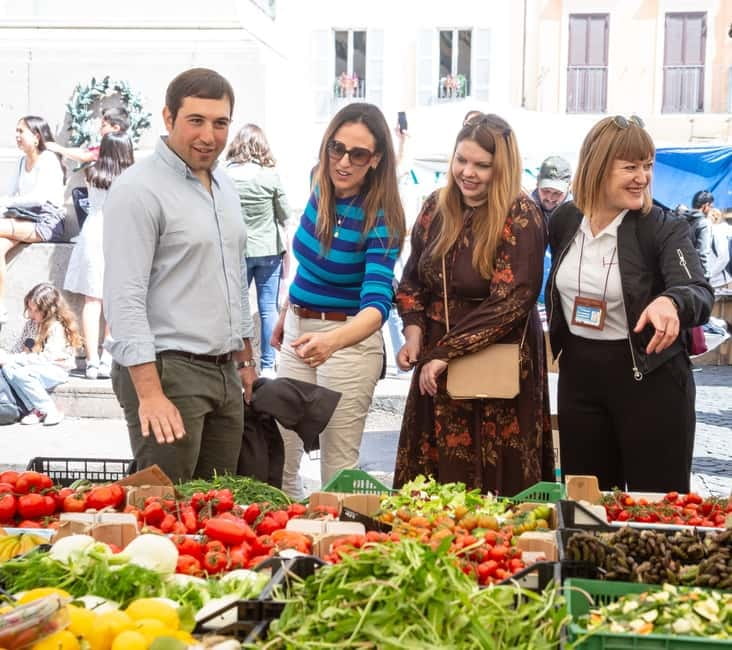
The Jewish Ghetto stop is where the tour’s tone sharpens. You’re not just tasting, you’re seeing how the area’s layout and landmarks connect to the people who lived there and their culinary customs.
Portico d’Ottavia comes up in the route, and you may spot the Turtle Fountain in the general area. Then comes Carciofo alla Giudia, the fried artichoke that’s both crunchy and intensely flavored, with that unmistakable fried-food perfume Rome does so well.
If you want a quick way to get value from this part of the tour, here it is: ask your guide what makes Roman Jewish cooking different from other Italian fried dishes. Some guides on past tours (like Angelica, Giulia, and Claudio) are praised specifically for linking food choices to local culture and explaining the how and why in plain language.
Morning tours: Campo de’ Fiori market stop plus oil, truffle, and vinegar tasting
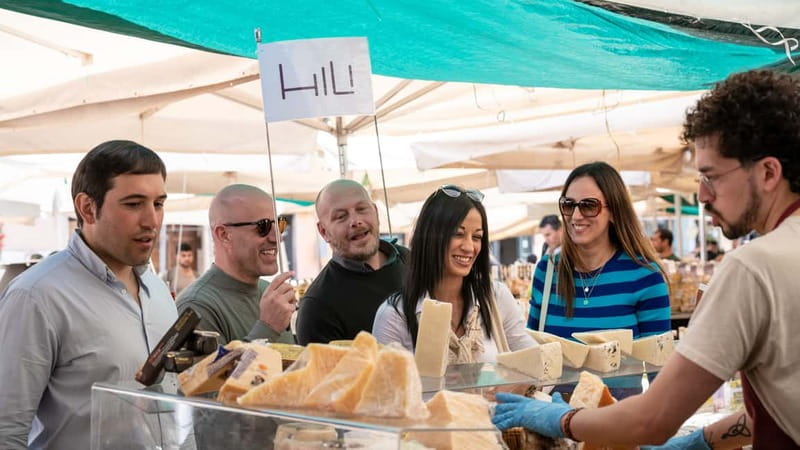
If you can pick a time, I’d book the morning departure. The tour notes that the Campo de’ Fiori market visit happens only in the morning, and you also get extra tastings that aren’t offered on later departures.
On morning tours, you’ll stop at the local market and sample Italian products like olive oils, truffle sauces, and vinegars. You’re not just tasting for fun; this is a practical Roman food education. After this, you’ll be able to spot why one oil tastes peppery and another tastes smoother, and you’ll know what vinegar to look for when you’re buying for salads back at your apartment.
This is also one of the easiest ways to turn a short tour into longer-term savings. Once you learn what you like, you can recreate those flavors at home (or at least order them the right way at restaurants).
You can also read our reviews of more tours and experiences in Rome






How the route uses Rome’s landmarks without turning it into a sightseeing slog
The walking route is built to thread food stops through key historic corridors. You’ll pass or linger near places that matter, including spots tied to Julius Caesar’s assassination and other classical-era references.
A few landmark highlights you’ll encounter along the way:
- Piazza and Passetto del Biscione (not just a scenic pause, but a way to understand the city’s layers)
- Teatro Marcello (classical Rome seen in a compact, real-world view)
- Largo di Torre Argentina, tied to the assassination of Julius Caesar
- Pantheon area pass-by in the later stretch
You won’t have to manage bus timetables or choose which neighborhood to start in. The tour gives you a ready-made line through the city, then uses food to keep your brain engaged while you walk.
Gelato at Gunther Gelateria: the sweet finish that actually makes sense
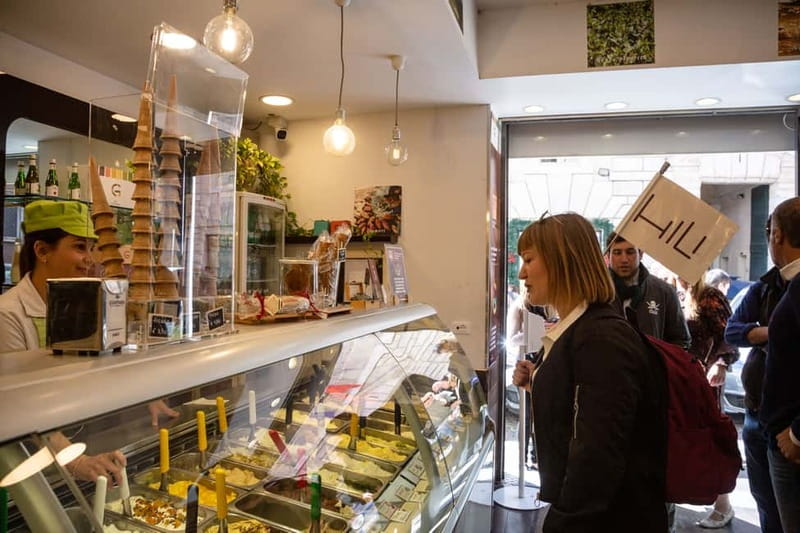
Ending with gelato isn’t new. Ending with gelato that comes after you’ve already learned what makes Roman flavors work—that part is the payoff.
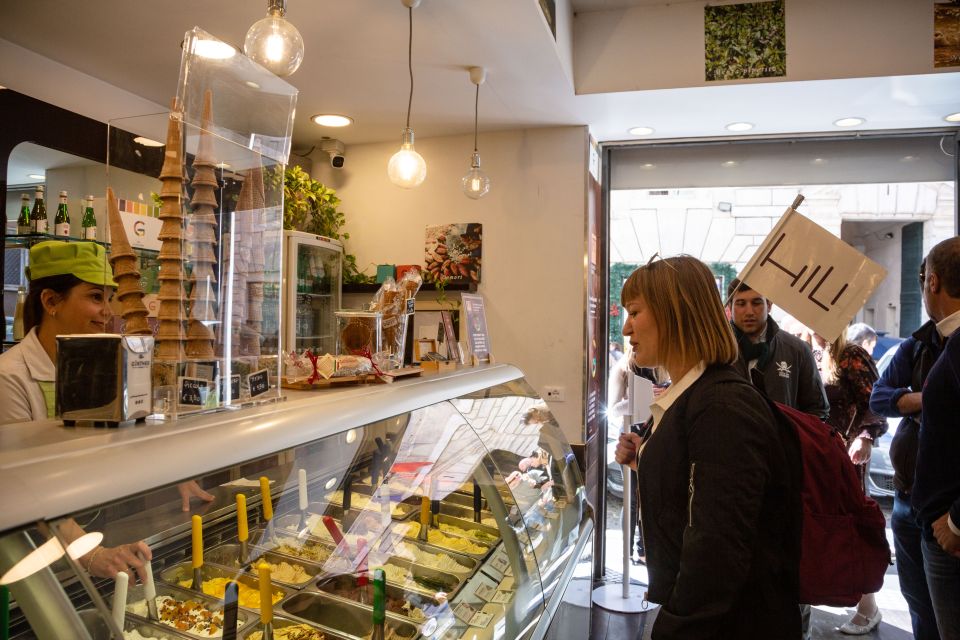
The tour includes a stop at Gunther Gelateria, and then you finish at Piazza di S. Eustachio. That matters because you’re not walking away from the tour stranded in some random street; you’re ending in a lively public square where you can easily continue your evening on foot.
My advice: save a slower moment for the final gelato cone. Early in the tour, you’ll be moving fast and eating quickly. Late in the tour, you’ll actually notice the difference between a clean, creamy texture and one that’s mostly sugar. This is where gelato stops being a souvenir and starts being a real taste of Rome.
Price and value: does $36 feel fair for 2.5 hours of food?
At $36 per person for around 2.5 hours, this tour lands in the midrange for Rome food experiences. The value comes from the structure: you’re paying for a guided walk plus five included tastings—not just a list of snack stops you could copy on your own.
The included tastings aren’t random. They hit multiple categories that Rome is known for: fried street food (supplì and fried artichokes), handheld comfort food (porchetta panini), quick restaurant-style slices (Roman-style pizza), and a classic finish (artisanal gelato).
Two things that keep the math honest:
- Drinks aren’t included, so you might want water before you start.
- It’s not suited to gluten intolerance or vegan needs, so if you fall into either category, this price won’t help you unless a compatible option exists (the tour is explicit that it doesn’t fit those needs).
If you book it early in your trip, you’ll get a practical advantage. Several guides are praised for recommending where else to go after the tour, and that’s the kind of “extra value” that pays off across the rest of your Rome days.
Who this tour is best for (and who should skip it)

This works best if you want both food and context. It’s ideal for first-timers who feel overwhelmed by where to start, and it’s also great if you want a lighter, social way to see neighborhoods without committing to a full-day itinerary.
It can suit families too. One of the recurring themes in guide feedback is that children enjoy the pacing and the stories, and teens often end up surprised that a food tour can be genuinely fun.
But be clear about the restrictions:
- Not suitable for vegans
- Not suitable for people with gluten intolerance
- Vegetarian options are available
- You should let the provider know about allergies or dietary restrictions ahead of time
Also worth noting: the tour is described as wheelchair accessible, which is a plus if you need a route that’s planned for mobility.
What your guide actually adds (and why it shows up in the feedback)
This isn’t just a handout of what to eat. The guides are part of the product, and you can feel that in the way the tour gets described in real-life terms.
You’ll likely hear stories about Rome that connect to what you’re eating—how traditions shaped dishes, and how historical events connect to the streets you’re walking. Past guides named in feedback include Angelica, Giulia, Claudio, Daniele, Mateo di Marco, Fiammetta, Alessandria, and Sylvia, and common praise points are:
- lots of history woven into the food
- clear explanations of Roman vs Italian food differences
- recommendations after the tour for where to keep eating
If you’re the type who likes to ask questions, you’ll probably enjoy it more than you expect. Several guide comments highlight that time is given for questions and that the staff at stops explain how food is prepared.
Tips to make this the best 2.5 hours of your Rome trip
- Wear comfortable shoes. You’ll be on foot for most of the tour, and Rome sidewalks don’t forgive sloppy footwear.
- If you want the market and the oil/truffle/vinegar tastings, book a morning tour. Those extras are marked as morning-only.
- Tell your guide about allergies and dietary needs ahead of time. The tour specifically asks you to share this.
- Don’t over-plan right after. You’ll likely want time to wander nearby after gelato at Piazza di S. Eustachio.
Should you book the Rome Eat Like a Roman Ghetto & Campo de’ Fiori Food Tour?
If you’re excited by Roman street food and you want a guided, bite-by-bite introduction to two key neighborhoods—Campo de’ Fiori and the Jewish Ghetto—this is an easy yes. The combination of five tastings, a market stop in the morning, and a finish that lands near major landmarks makes it a strong way to start your Rome eating plan.
Skip it if you’re vegan or gluten intolerant, since the tour is not suitable for those needs. If you’re vegetarian, though, the tour does offer options, and the guide-led format should help you make the most of what’s on offer.
If you want a practical move: book this early in your trip. You’ll leave with clearer instincts about what to order next, not just a full stomach.
FAQ
How long is the Rome Eat Like a Roman Ghetto & Campo de’ Fiori Food Tour?
The tour lasts about 2.5 hours, though exact starting times depend on availability.
Where do we meet, and where does the tour end?
You meet your guide at the fountain in Piazza di San Simeone. The tour ends back at Piazza di S. Eustachio.
What’s included in the price?
The tour includes a guided walking tour, 5 food tastings, a visit to Campo de’ Fiori and the Ghetto area, and a local tour guide.
What food tastings will I try?
Tastings include porchetta panini, supplì, Roman-style pizza, fried artichokes (Carciofo alla Giudia), artisanal gelato, and (on morning tours) olive oil, truffle, and vinegar tasting.
Are there vegetarian options?
Yes. Vegetarian options are available.
Is the tour suitable for vegans?
No. It is not suitable for vegans.
Is the tour suitable for people with gluten intolerance?
No. It is not suitable for people with gluten intolerance.
Are drinks included?
No. Drinks are not included.