REVIEW · ROME
Rome: Basilica of St Mary Major Catholic Pilgrim Tour
Book on GetYourGuide →Operated by Crucis Tours · Bookable on GetYourGuide
Holy Doors make Rome feel personal. This guided St Mary Major (Santa Maria Maggiore) experience turns a stunning basilica visit into a story you can follow, with Holy Door symbolism and the relics that pilgrims come to venerate. One catch: there’s a clear dress rule, so no shorts or short skirts.
I like how it’s paced for real listening. You meet at the fountain right in front of the main entrance, and you go in together as a small group of up to 10, with radio headsets if there are 7+ people so you don’t miss the guide’s explanations (English and Chinese are available). Guides like Wen and Tom are especially good at answering questions in a plain, conversational way, instead of talking at you the whole time.
In This Review
- Quick Takeaways
- Santa Maria Maggiore: Why St Mary Major Matters
- Finding Your Way: The Fountain Meeting Point and Quick Orientation
- Before You Enter: The Holy Door Moment in Jubilee Years
- Inside the Basilica: How the Tour Builds a Guided “Spiritual Map”
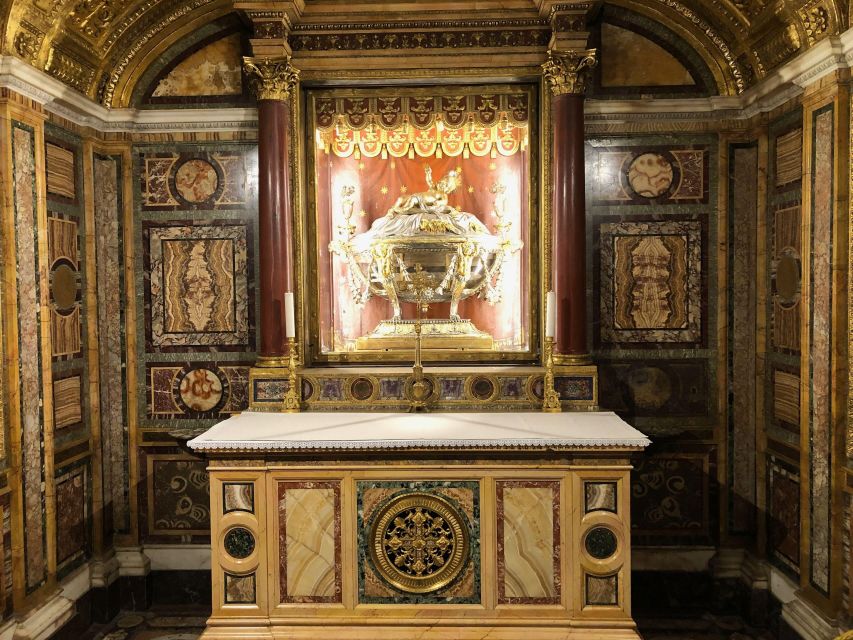
- The Crib Relic: Wood Tied to the Baby Jesus
- Salus Populi Romani: The St Luke Icon People Ask About
- The Mosaics Behind the Altar: Biblical Symbolism You’ll Actually Notice
- St Pius V in Glass: A Relic Stop Most People Would Miss
- Radio Headsets, Small Group Size, and the Pace (60–90 Minutes)
- Price and Value: What You Get for $65
- Who This Tour Fits Best (and Who Might Prefer Another Plan)
- Should You Book This St Mary Major Pilgrim Tour?
- FAQ
- Where do I meet for the St Mary Major tour?
- How long is the tour?
- Does the tour include skip-the-line entry?
- What is included in the price?
- Are there any dress code rules?
- What religious or devotional sights will I see inside?
- What languages are offered for the live guide?
- Is transport to and from the meeting point included?
Quick Takeaways
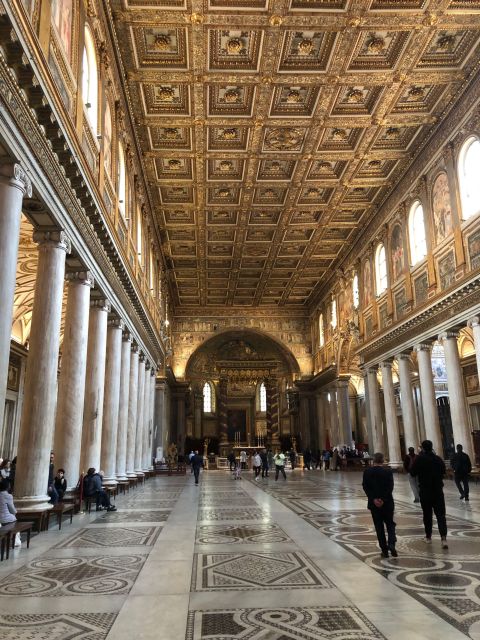
- Holy Door preview before you enter a major papal basilica (Jubilee-year focus).
- Wood from the crib of the baby Jesus on display for veneration.
- Salus Populi Romani icon attributed to St Luke the Evangelist.
- Mosaics loaded with symbolism, connecting Old and New Testament themes.
- Skip express security check, plus radio headsets for groups of 7+.
- Wrap-up on the basilica steps, with an optional connection to a Via Crucis-style tour.
Santa Maria Maggiore: Why St Mary Major Matters
St Mary Major is one of the four Major Papal Basilicas of Rome, and it has the kind of visibility that makes people stop—even if they weren’t planning a religious visit. Locally, you’ll see it called Santa Maria Maggiore, and the tour makes a point of grounding you in that identity before you even step fully inside.
What makes it interesting is the mix of “old Rome” and devotional meaning. The highlight here isn’t just admiring architecture from a distance. It’s learning how the basilica’s art and objects function as signals—ways the Church teaches, remembers, and invites pilgrimage.
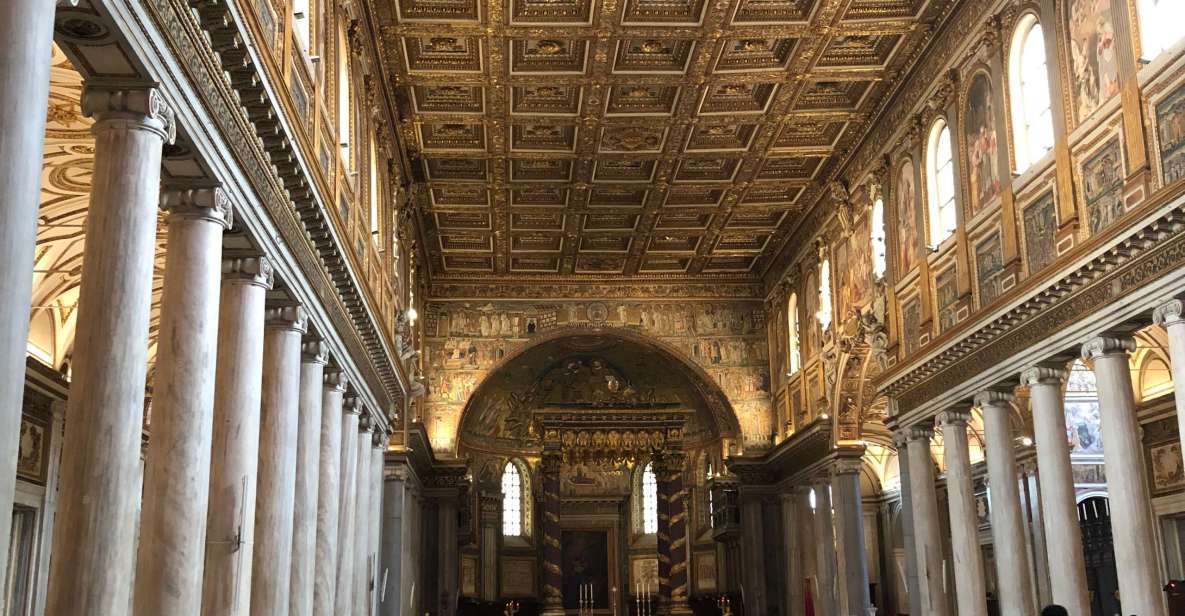
This is also a basilica where the details are doing real work. The guide points out symbolism in mosaics behind the altar and ties it to biblical lessons across both Testaments. If you’ve ever walked through a church and thought, I’m missing something—this format is designed to help you notice what most people glide past.
And yes, it’s worth it even if you’re not Catholic. If you care about how faith communities interpret images, relics, and sacred space, you’ll find plenty to chew on here. Just know that the tour’s lens is Catholic, so you’ll get explanations shaped by tradition, not modern guesswork.
You can also read our reviews of more tours and experiences in Rome.
Finding Your Way: The Fountain Meeting Point and Quick Orientation
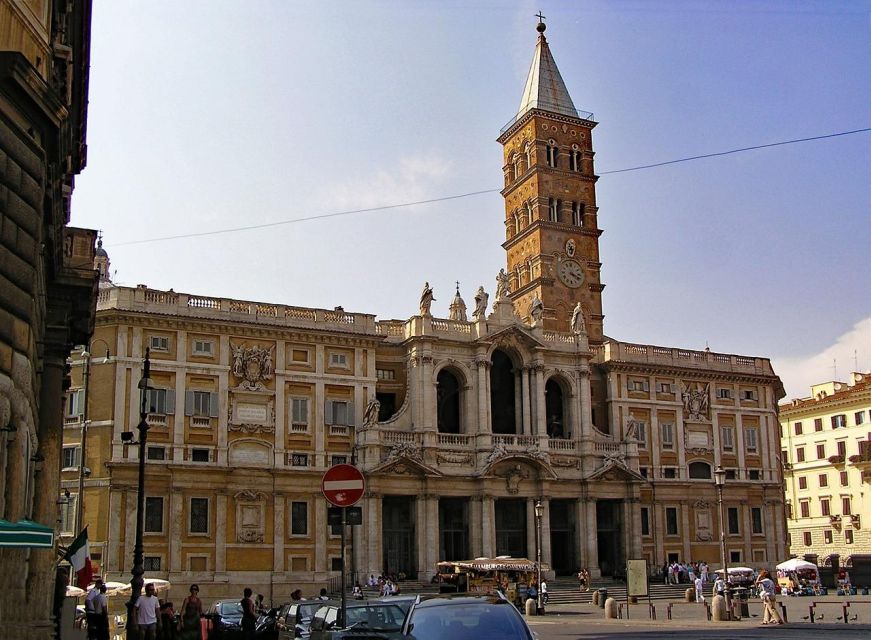
Your start is simple: meet at the fountain in front of the basilica’s main entrance. The key detail that saves time is that the front of the basilica faces onto Piazza Santa Maria Maggiore, not Via Cavour—so don’t assume the nearest big street sign is right.
Before you join the group, I recommend you set yourself up to avoid last-minute stress. The meeting point is right by the entrance, but Roman streets can be confusing fast when you’re carrying a map app and a shopping bag. The tour suggests using WhatsApp for real-time contact if anything goes off track, and there’s also a What3Words address option (either.monks.reckon).
Once everyone gathers, you move in together. This matters because the first moments are part of the show: you’ll hear why the basilica goes by different names. The tour specifically walks you through five different names of the basilica, which helps you understand why you might see different titles in guidebooks, prayers, and signage.
Then you’ll get that pre-entry moment at the Holy Door. That’s not an afterthought. It’s placed early so you connect the devotional idea to the physical space before the tour shifts into what you’ll actually see inside.
Before You Enter: The Holy Door Moment in Jubilee Years
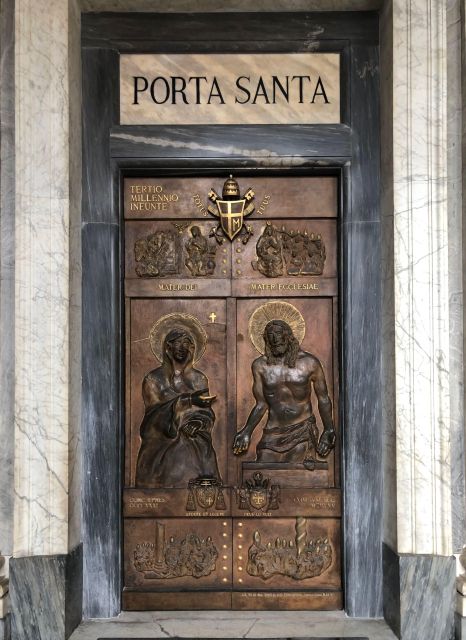
Rome’s Holy Doors are one of those things that sound abstract until you stand near one. St Mary Major has one of the Holy Doors, and the tour explains its role in Jubilee Years—when the door opens to help pilgrims seek a plenary indulgence.
Here’s the practical part: the Holy Door is specifically described as opening during a Jubilee Year. On regular days, you may still see it, but you’re not guaranteed the same ceremonial reality you’d get in an actual Jubilee timeframe. The value of this tour is that you’re not left wondering what you’re looking at.
Your guide helps you frame the Holy Door as more than a doorway. They’ll link it to pilgrimage, symbolism, and the Church’s call to reflection. That meaning can be harder to pick up when you’re self-guiding, because you’re focused on finding the best photo spot or the fastest route to the altar.
You’ll take a close look at the Holy Door before entering the main basilica. This is a smart sequencing choice. It trains your eye: once inside, you start noticing patterns—images that aren’t random decoration, but teaching tools built to point you somewhere.
If you’re the type who likes to understand context before moving on, this portion alone may feel like a win. It sets a mindset for the relic stops that follow.
Inside the Basilica: How the Tour Builds a Guided “Spiritual Map”
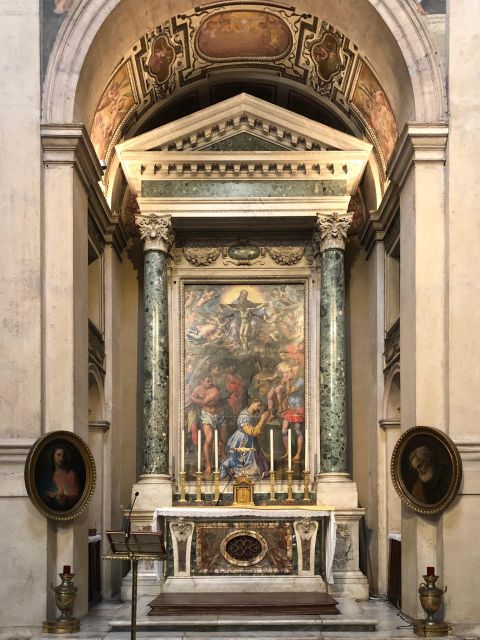
Once you’re inside, the tour doesn’t try to do everything at warp speed. Instead, it gives you a guided pathway through the basilica’s most important devotional visuals.
The overall visit runs about 60 minutes, with a range up to 90 minutes depending on the flow. For a lot of people, that’s the perfect length in a big church: long enough to learn names, meanings, and where to look, but not so long that you’re stuck hearing the same explanation while your feet go on strike.
You’ll also notice the difference between a casual walk and a guided one. When the guide brings attention to objects—wood from a relic, an icon display, the mosaics behind the altar—you start “reading” the space. You’re not just passing by.
The tour’s structure also supports questions. The guide’s style, particularly with guides like Wen and Tom, tends to keep things interactive, not lecture-only. If you’re the sort of person who wonders why a specific image is placed where it is, you’re likely to get answers instead of blank stares.
The tour concludes on the steps in front of the main entrance. That’s helpful if you want to keep your day moving after this stop.
If you’re continuing on for a larger pilgrimage route, the guide can also shift you to a Via Crucis Pilgrim Tour style continuation—where you’d head off to see the Relics of Christ’s Passion and the Major Basilica of St John Lateran among other things.
The Crib Relic: Wood Tied to the Baby Jesus
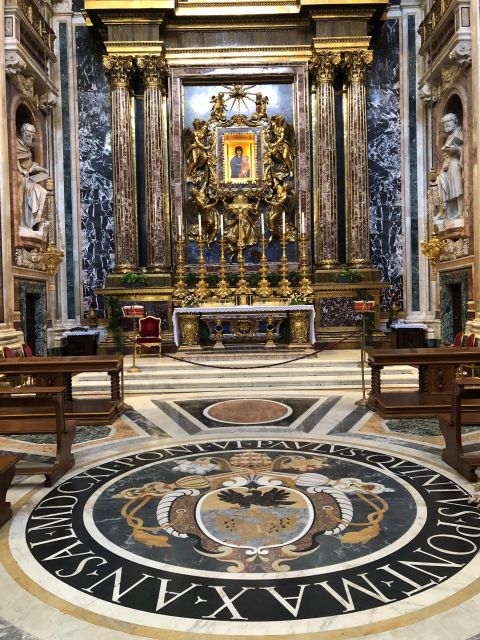
One of the tour’s standout moments is the display connected to the crib of the baby Jesus. Inside the basilica, you’ll be able to see wood from the crib of the baby Jesus—a relic that tradition links to sacred events and that many pilgrims come to venerate.
The tour doesn’t just point at the relic and move on. It frames the relic as part of a bigger network of holy memories. The wood here is described as one of the many relics from Christ’s life that were brought to Rome from holy places in the east for pilgrims to honor.
If you’re trying to decide whether you’re “into relics,” this is a gentle way to test it. The guided context helps you understand why something like a piece of wood can carry spiritual weight. Without that context, it’s easy to think, It’s just a small object behind glass. With context, it becomes more about tradition and symbolism than about physical size.
Look at the relic the way you’d look at a focal point in a story. The guide’s job is to connect it to the narrative, and you’ll come away with a clearer picture of how pilgrims interpret these objects.
This stop also ties into why Santa Maria Maggiore is considered such an important Marian site. The crib-related devotion connects to the Incarnation theme—Christ’s beginnings—and it gives the tour a strong anchor before you move to the icon and the mosaics.


Salus Populi Romani: The St Luke Icon People Ask About
Next comes the icon Salus Populi Romani, described as the miraculous image associated in Catholic tradition with St Luke the Evangelist. You’ll see it on display as part of the pilgrimage focus.
Even if you don’t go in with deep knowledge of the icon, the tour helps you approach it properly. The icon is presented as something pilgrims recognize, not just something that happens to be there. That difference matters because it changes your attention.
I find this kind of icon stop useful for two reasons. First, it gives you a chance to understand how tradition assigns authorship and meaning to religious art. Second, it teaches you how worshippers read the image—how they treat it as a spiritual presence, not merely a picture.
The tour also connects this icon stop to what you’ll see next: the mosaics behind the altar. Those mosaics are not random decoration. They’re a visual catechism, and the guide is preparing you to see patterns across the church’s artwork.
If you’re visiting Rome and trying to pick one basilica for a deeper focus, this icon and its explanation are a strong reason to choose St Mary Major over a faster, all-purpose church stop.
The Mosaics Behind the Altar: Biblical Symbolism You’ll Actually Notice
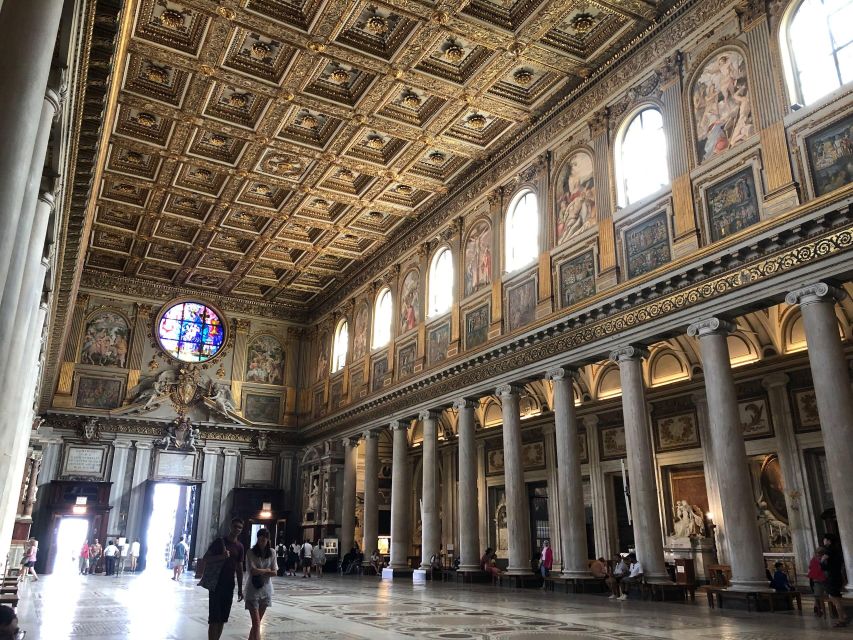
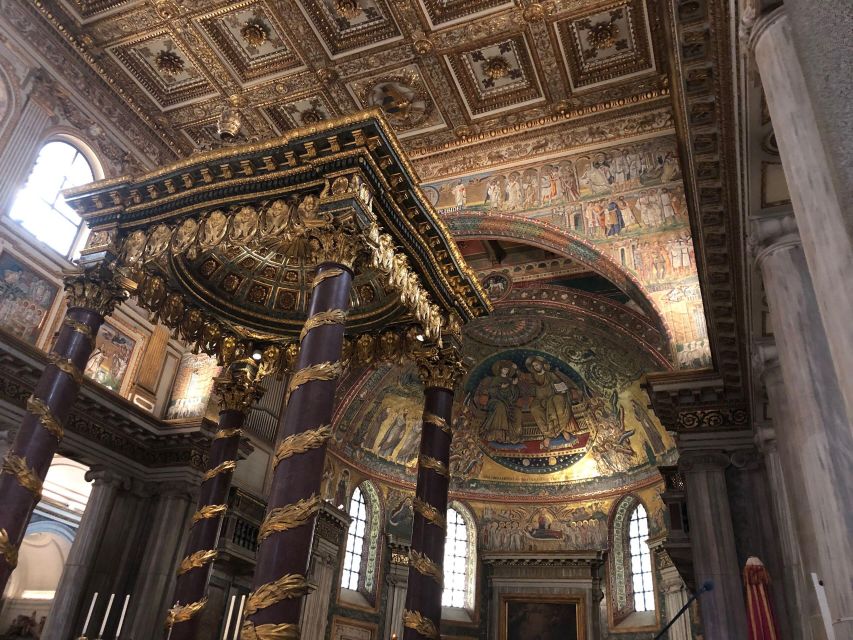
The mosaics are where many visitors feel they’re seeing something “beautiful” but not sure what it means. This tour tackles that gap head-on by guiding you through the biblical symbolism.
The tour describes mosaics laden with symbolism and catechesis, teaching with references to both the Old and New Testaments. That phrase matters. It signals that the art isn’t limited to New Testament scenes or a single devotional theme. Instead, it’s structured to connect the covenant story arc—how earlier scriptural themes echo forward into Christ.
If you care about visual storytelling, this is one of the best parts. When the guide explains what the imagery is pointing to, you start spotting the logic instead of just admiring the craftsmanship.
And even if you’re not Catholic, the mosaics are still an education in how faith communities used art as a teaching tool for centuries. In many churches, mosaics are “set dressing.” Here, the tour emphasizes their function as spiritual instruction.
A bonus: because the tour calls out symbolism, you’re less likely to get lost in the scale. Big basilicas can feel overwhelming. The guide gives you an interpretive handle, so you leave with more than a vague impression of grandeur.
St Pius V in Glass: A Relic Stop Most People Would Miss
You’ll also see a glass sarcophagus of Pope St Pius V. This isn’t mentioned just as a trivia item. The tour treats it as part of the devotional lineup—one more reason pilgrims focus their visit on St Mary Major.
The existence of a glass sarcophagus raises a natural question: why preserve it this way? The tour’s framing helps you think in terms of veneration and display—how sacred objects are handled so they can be honored while still being protected.
This is the kind of stop that many mainstream church tours may gloss over. In a crowded church, people often focus on the most obvious altar views and then head out. A guided pilgrim-style route keeps you anchored to the objects with spiritual significance.
If your goal is to experience St Mary Major as a lived place of devotion—rather than just a landmark—this glass sarcophagus stop helps you understand that the basilica is still functioning as a shrine.
Radio Headsets, Small Group Size, and the Pace (60–90 Minutes)
Logistics matter in a church tour, because sound and crowd flow can make or break the experience. This one uses radio headsets for groups of 7 or more, which is a practical detail I love. You don’t end up leaning in and losing part of what the guide says to make out their words.
The group size is limited to 10 participants, which keeps the visit from turning into a herd. It also supports a more conversational style. If you have questions—like what something is, why it’s significant, or how the mosaics connect to scripture—there’s enough room for answers.
The tour length is right for a one-basilica focus: around 60 minutes, with many sessions running up to 90 minutes. You finish on the steps in front of the main entrance, so you’re not trapped inside waiting for a late group.
One practical tip: since you’re in and out of specific viewing areas, wear shoes you don’t mind in a big church environment. This isn’t a long walking tour, but it is a standing-and-looking tour.
Price and Value: What You Get for $65
At $65 per person for about an hour, this is not the cheapest church experience in Rome. But it also isn’t just someone walking you past walls.
You’re paying for three key value elements:
- A guided interpretation focused on the basilica’s devotional objects and symbolism.
- Express security so you’re not wasting precious time.
- Radio headsets for clearer listening in the group.
Add in the small group limit and the fact that you get a structured sequence—Holy Door preview, basilica names, relic displays, then mosaics focused on Old and New Testament symbolism—and the hour feels designed, not improvised.
Things that are not included are also straightforward. Transport to and from the meeting point isn’t part of the price, and guide tips are not included. If you’re budgeting, plan for those basics so the total doesn’t surprise you.
There’s also an optional homily on request. That’s not something everyone will want, but if you do, it’s a meaningful way to connect the visit to the living liturgical tradition rather than treating it purely as museum time.
If your Rome schedule is tight, this is the kind of tour that gives you an organized “meaningful stop” without eating your entire day.
Who This Tour Fits Best (and Who Might Prefer Another Plan)
This experience fits best if you want more than quick sightseeing. If you’re interested in religious art, relic traditions, or how pilgrimage sites teach through objects and imagery, you’ll likely enjoy the guided framing.
It’s also a good match for people who like asking questions. The guide’s approach, including guides such as Wen and Tom, is described as professional and easy to understand, with answers that dig into meaning instead of shutting down questions.
If you’re going with mixed interests—say one person loves churches and another just wants a cultural experience—this tour can still work, because the mosaics and icon explanations create a common thread. Even non-Catholics can appreciate how the visuals function as instruction.
The main reason to pause is the dress code. Shorts and short skirts aren’t allowed, so plan attire accordingly. If that’s a dealbreaker for your wardrobe, you might want a different style of tour.
Finally, if your goal is maximum variety in a single day, one basilica plus guided focus may feel like a lot. This isn’t a “hit six sites quickly” style tour. It’s meant to be a calm, guided visit that gives depth.
Should You Book This St Mary Major Pilgrim Tour?
Book it if you want St Mary Major to feel like an actual pilgrimage stop, not just a stop on a checklist. The combination of the Holy Door, the relic display connected to the crib of the baby Jesus, the Salus Populi Romani icon attribution to St Luke, and the mosaic symbolism guidance is a specific package that’s hard to replicate on your own in the same amount of time.
Skip it if your only priority is roaming freely and you hate dress rules. Also skip it if you’re looking for a purely secular art-history walkthrough, because the explanations are clearly shaped by Catholic devotional meaning.
One practical reason to feel good about booking: the tour offers flexible planning options, including free cancellation up to 24 hours in advance and reserve now, pay later. That’s useful when Rome days can shift quickly due to weather, crowd levels, or changes in your schedule.
If you’re on the fence, my advice is simple: choose the tour when you want to leave with the “why” behind what you’re seeing. St Mary Major rewards that effort, and this guide-led format is built to help you notice it.
FAQ
Where do I meet for the St Mary Major tour?
Meet at the fountain in front of the main entrance to the Basilica of St Mary Major (Santa Maria Maggiore). The front of the basilica faces onto Piazza Santa Maria Maggiore.
How long is the tour?
The tour lasts about 1 hour, and the experience time is listed as 60 to 90 minutes.
Does the tour include skip-the-line entry?
Yes. It includes an express security check so you can move through security more quickly.
What is included in the price?
Included are all taxes and fees, radio headsets for groups of 7 or more, and a homily on request.
Are there any dress code rules?
Yes. Shorts and short skirts are not allowed.
What religious or devotional sights will I see inside?
You’ll see the Holy Door area before entry, wood from the crib of the baby Jesus, the icon Salus Populi Romani attributed in tradition to St Luke the Evangelist, and the glass sarcophagus of Pope St Pius V, plus the mosaics with symbolism.
What languages are offered for the live guide?
The live guide is available in English and Chinese.
Is transport to and from the meeting point included?
No. Transport to the meeting point and from the end point is not included.