REVIEW · ROME
Rome: Appian Way Golf Cart Tour with Roman Catacombs Entry
Book on GetYourGuide →Operated by Biga Tours · Bookable on GetYourGuide
Forget Rome’s traffic gridlock for a bit. This Appian Way golf cart tour hits major ancient sights fast, and the standout is the guided Roman Catacombs walk below street level. What I love is the smooth electric ride that gets you out past the busy center and the guided stops that turn ruins into a story. One consideration: the catacombs require stairs and uneven ground, and the underground guide can be harder to hear for some people.
The tour runs in small groups of up to 14, with up to two connected carts and shared earpieces so you stay on the same narrative while you travel. Guides like Francesco, Amber, Sabina, Marco, Leo, Gaia, Andreas, and Jason come up again and again for clear storytelling and safe, confident driving through tight Roman streets.
If you want a Rome day that mixes big “wow” landmarks with a real underground experience (not just photos), this is a strong fit. You’re also ticking off multiple famous Appian Way stops without spending the entire day on your feet.
In This Review
- Key things I’d file away before you go
- Why the Appian Way by golf cart feels like a Rome time shortcut
- Meeting at Via Monterone (near the Pantheon) and getting oriented fast
- Circus Maximus photo stop: big scale, even in ruins
- Baths of Caracalla: the empire showing off its building talent
- Appian Way itself: walking the stones that used to matter
- Tomb of Cecilia Metella: the Appian Way landmark you recognize
- Roman Catacombs: what to expect from the underground guided walk
- Aurelian Walls and the Pyramid of Cestius: quick hits with strong payoffs
- How the cart ride actually feels in Rome traffic
- Value for your time: what’s included, and what you should expect it to replace
- Who this tour is best for (and who might want to skip it)
- Should you book the Appian Way + Roman Catacombs tour with Biga Tours?
- FAQ
- How long is the Appian Way golf cart and catacombs tour?
- Where does the tour start and end?
- Is the golf cart electric?
- What sites are included besides the catacombs?
- How long is the catacombs part?
- Are there age limits?
- What should I wear for the catacombs?
- Is the catacombs visit easy walking?
- Is the tour in English and how do I hear the guide?
- What’s the group size like?
Key things I’d file away before you go
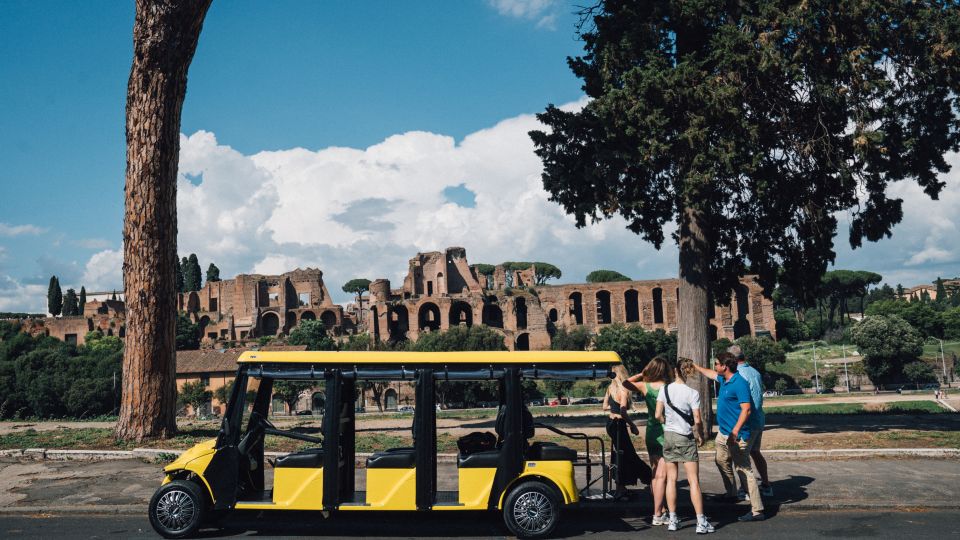
- Electric golf cart comfort: less heat, less sidewalk time, and an easier way to cover the Appian Way route.
- Small-group flow: up to 14 people, split across as many as two vehicles, with earpieces so everyone follows the same guide.
- Catacombs at the right pace: a guided walk underground with an official site guide and a time window around 30–35 minutes.
- Classic Appian Way hits: viewpoints and stops tied to Circus Maximus, Baths of Caracalla, the Tomb of Cecilia Metella, Aurelian Walls, and the Pyramid of Cestius.
- Bring a layer for underground: about 16°C / 61°F with high humidity inside the catacombs.
- Expect some uneven steps: you’ll climb down and back up, and the catacomb routes can feel narrow.
Why the Appian Way by golf cart feels like a Rome time shortcut
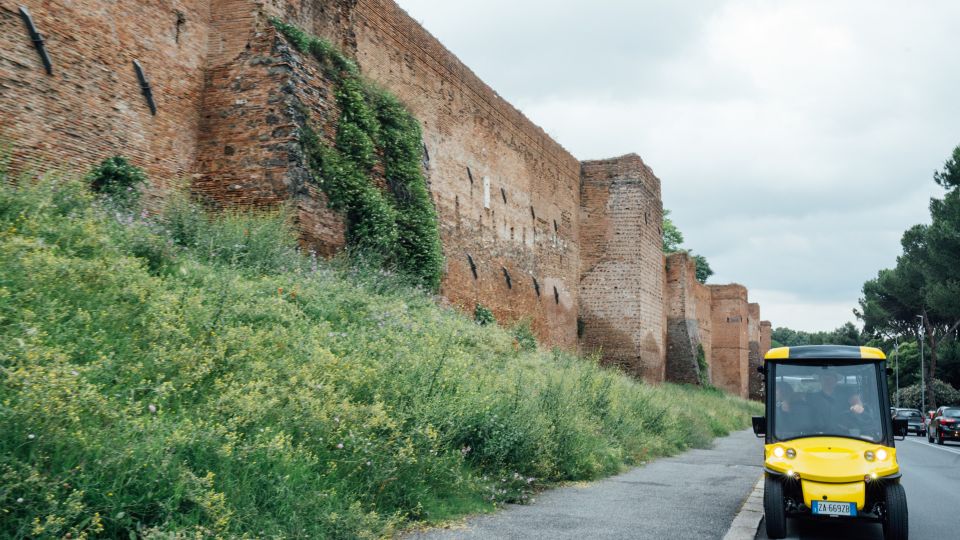
The Appian Way is one of those Roman ideas that still makes sense today: a straight road meant to move people, power, and supplies across a huge empire. Doing it by eco-friendly electric cart changes the whole feel of the day. You spend less time fighting crowds and more time seeing how far the city’s reach stretched.
I also like the balance here. You’re not skipping history to chase convenience. You’re using the cart to get you to the sites, then using short guided moments—photo stops, quick walks, and one longer guided underground portion—to actually learn what you’re looking at.
And yes, the ride can be a little adventurous when you’re weaving through downtown traffic. That’s part of the fun, especially with drivers/guides who know the streets well and keep things controlled.
You can also read our reviews of more tours and experiences in Rome.

Meeting at Via Monterone (near the Pantheon) and getting oriented fast
This tour starts and ends at their office at Via Monterone, 19, in the area of the Pantheon. There’s no hotel pickup, so you’ll want to build in a little time to get there on your own.
Expect to meet inside the office on a narrow street—look for glass doors. The road layout is described as L-shaped, and the office is on the section near Via di Torre Argentina, so using a map is your best friend.
Once you’re on the cart, you’ll use earpieces to hear your main guide while vehicles stay together. The tour notes that you may occasionally split between the two carts even if you booked together, but you’ll still be under the same guiding voice during the tour.
Circus Maximus photo stop: big scale, even in ruins
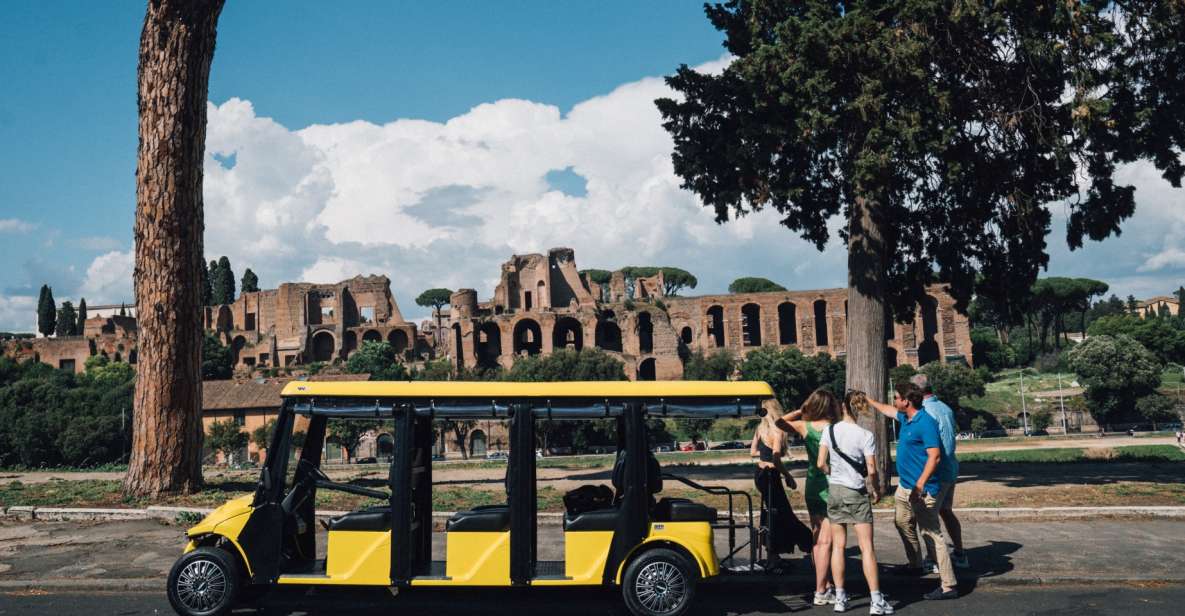
One of the first major “this is why Rome mattered” stops is the viewpoint for Circus Maximus. Even with what’s left today, you get the sense that this was a giant public machine—made for spectacle and noise and crowds.
What makes this stop useful is the guide framing. Instead of you just seeing flat ground or scattered remnants, you learn what the area was used for and how Circus Maximus fit into daily Roman life.
This is primarily a stop for photos and a guided look, so it’s not a long hike. The only real drawback is that if you’re expecting a full-on arena tour, this is more of a “see it, understand it, move on” moment.
Baths of Caracalla: the empire showing off its building talent
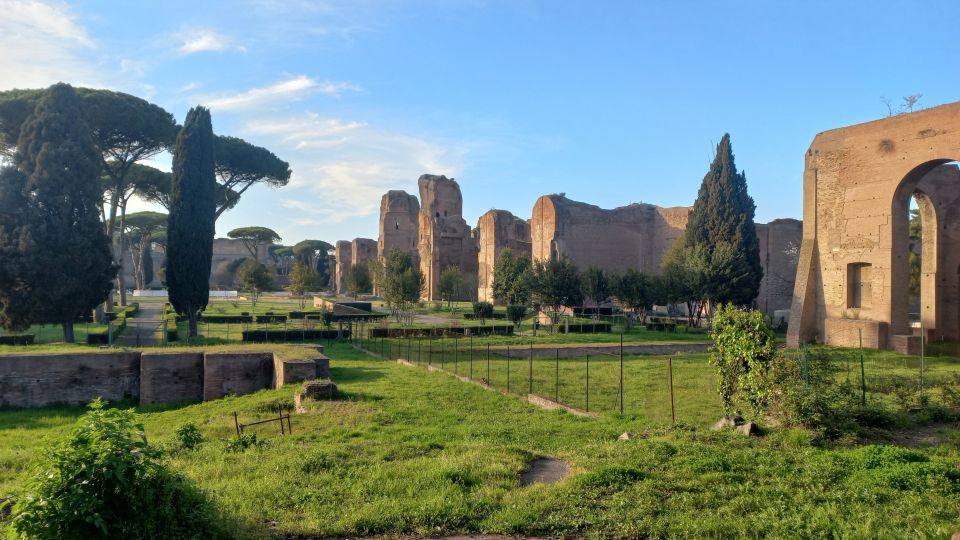
Next up is the Baths of Caracalla, one of Rome’s most famous bath complexes. Even in leftover form, the scale can hit you. Baths weren’t just for cleanliness; they were social hubs, leisure centers, and statements of power.
This is another photo-and-walking-with-the-guide stop rather than a museum-style deep inspection. Still, it’s a smart pairing with the cart format: you get the sense of size and design without spending your entire day walking between scattered points.
If you’re a “show me the bones of the place” person, you’ll appreciate how this stop sets up the rest of the day. You start thinking like a Roman: where would people gather, how would they move, and what would they build to impress everyone?
Appian Way itself: walking the stones that used to matter
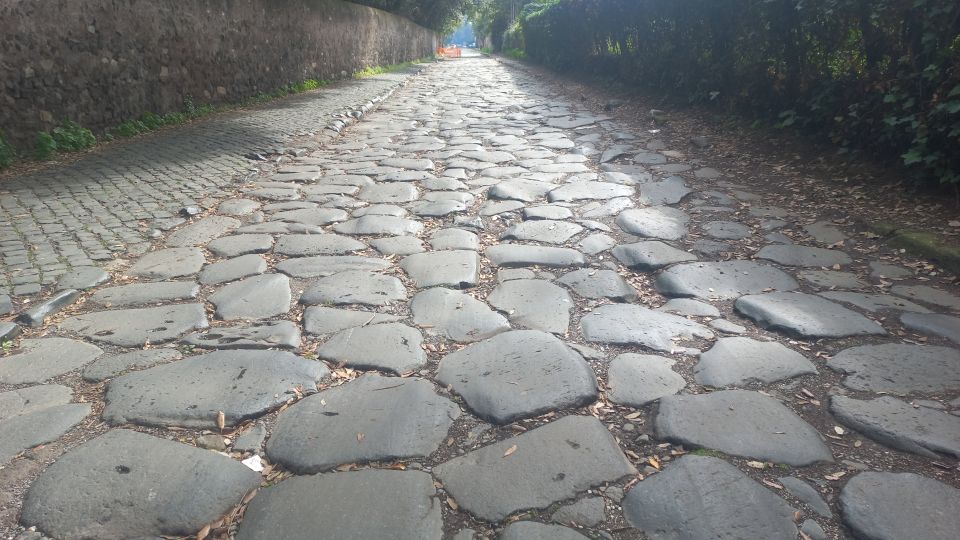
The tour heads onto the Appian Way and includes a guided stop along the route. This is where the day starts to feel grounded in real road history. You get the chance to step onto the same kind of ancient stone path that travelers and officials would have used to move through the empire.
What I like most here is the “you’re actually on it” factor. Rome’s ruins can feel abstract if you only view them from afar. But the Appian Way is literal—your feet meet the road, and that changes how you picture the past.
There’s also a practical upside: the cart handles the long stretches, while the guided moments keep you from zoning out. You’re not just bouncing by; you’re learning what to look for.





Tomb of Cecilia Metella: the Appian Way landmark you recognize

Another highlight is the Tomb of Cecilia Metella, a grand structure tied to the Appian Way corridor. It’s one of those sites where even a quick guided explanation makes it click—Roman funerary architecture wasn’t small or shy.
This stop works well for people who want a memorable “set piece” without committing to a longer, separate archaeological visit. You’ll likely spend time on photos and brief guided context, then keep moving.
The only potential downside: if you’re hoping for lots of time inside or for extended viewing, this is still a tour stop, not a full standalone attraction. It’s designed to fit into a 2.5-hour arc that hits several sites.
Roman Catacombs: what to expect from the underground guided walk
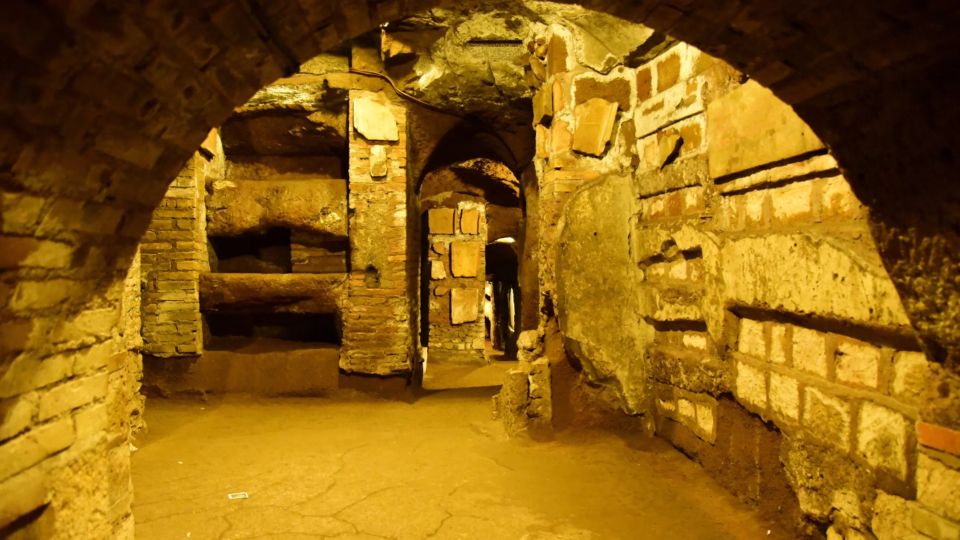
The heart of the experience is the Roman Catacombs visit. You’ll get reserved entry and then join a guided walking tour underground with an official resident site guide.
Key things to know before you go:
- The catacombs involve uneven ground and steep stairs going down and back up.
- The temperature inside is around 16°C / 61°F with high humidity, so a light layer helps even on warm days.
- The route can feel narrow, and the tour can run in a single-file style during parts of the visit.
You’ll also notice how this portion is handled differently from the main cart guide. The main guide stays with you during the drive and surface stops, then the underground portion is led by a dedicated catacombs guide. That separation is usually a plus because the person leading the crypt tour knows that specific site.
One caution based on real feedback: a few people found the catacombs guide’s English harder to follow due to speed and volume. That doesn’t mean it’s always a problem, but it’s worth packing your patience—and it’s smart to pick a position where you can hear well if the group lines up.
If you care about atmosphere and human-scale history, this is the part that makes the tour feel different from standard “ruins in a hurry” sightseeing.
Aurelian Walls and the Pyramid of Cestius: quick hits with strong payoffs

On the return journey, you’ll pass the Aurelian Walls—the city’s fortifications meant to protect Rome from invaders. Even if you only get a photo stop, the guide framing matters. Walls explain Rome’s mindset: not just expansion, but control.
Then there’s the Pyramid of Cestius. It’s a striking shape in a city full of ruins and church domes, and that contrast helps it stand out fast. With a short guided moment, you’ll understand what you’re looking at and why it survived in such a recognizable form.
These stops are shorter by design, but they add variety. Without them, the day might feel like only “roads and ancient buildings.” With them, you get empire to infrastructure to city defense in one loop.
How the cart ride actually feels in Rome traffic
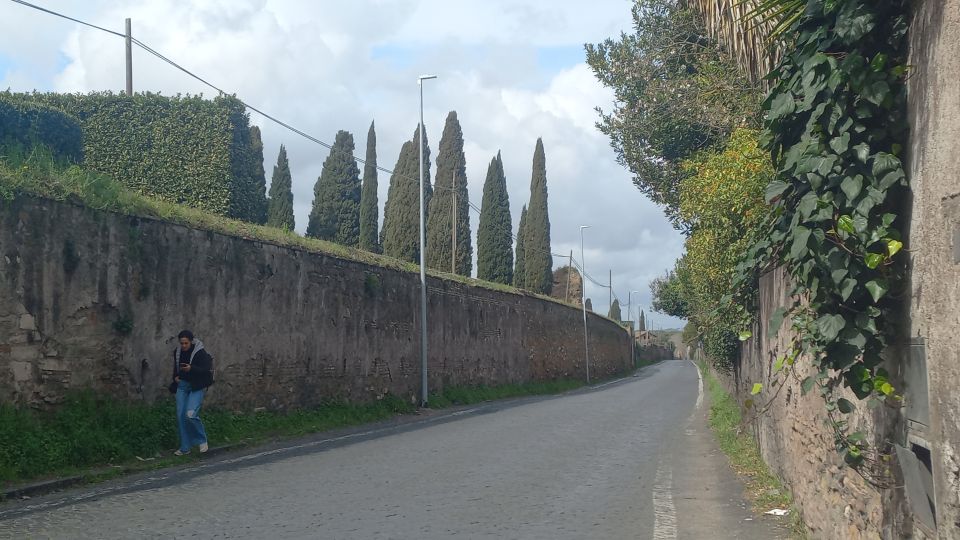
This is one of those tours where the transport is part of the experience, not just the delivery system. The carts are electric-powered, and that matters when you’re traveling through areas with lots of stop-and-go.
People repeatedly call out how guides keep the driving safe and smooth. Names like Francesco and Marco come up often here, with compliments tied to confidence, humor, and making the ride feel comfortable even when the streets get chaotic.
You’ll also have clear audio via the earpieces, which is a big deal on a road tour. If you’ve ever tried to hear a guide over cars, you know why that matters.
Group size helps too. With a maximum of 14 participants and seating for 7 per cart, the experience stays personal enough for the guide to manage the pacing without feeling like a cattle stampede.
Value for your time: what’s included, and what you should expect it to replace
This tour includes entrance for the Roman Catacombs portion, specifically for the guided walking time underground (listed as about 30–35 minutes depending on how it’s described). Everything else on the surface is guided via stops, photo breaks, and short guided viewing.
That “included entrance” piece is where the value usually lands. Catacombs are a specific kind of experience, and you’re getting access and a planned guide rather than trying to solve it on your own.
The other value is time management. In one morning/afternoon, you can hit major Appian Way landmarks and also see Circus Maximus and the Baths of Caracalla—places that can take a lot longer to stitch together if you’re relying only on transit and walking.
What it doesn’t replace: a full multi-hour archaeological museum day. If you want hours inside major sites, you’ll likely do separate tickets later. This tour is for the Rome “big ideas” overview with one concentrated underground payoff.
Who this tour is best for (and who might want to skip it)
I’d point most strongly to three groups:
- First-timers who want an Appian Way day without spending your whole trip in transit.
- People with limited mobility who can handle short climbs but still want to get out of central Rome. The golf cart portion makes a big difference here.
- History lovers who like narrative—the stops are guided so ruins turn into a timeline rather than disconnected snapshots.
Who should consider a different option:
- Anyone who cannot do steep stairs or uneven walking underground. The catacombs portion is a real physical requirement, not a “sit and watch” visit.
- Anyone who expects long independent exploration at each site. This is paced and timed to fit everything into about 2.5 hours.
Should you book the Appian Way + Roman Catacombs tour with Biga Tours?
If your goal is to see more of Rome beyond the center without exhausting yourself, I think this is a smart booking. The electric cart reduces the biggest time-killers—heat, long distances, and getting across the city—while the guided stops keep the experience meaningful.
The “book it” moment is the combination: multiple Appian Way landmarks plus a scheduled, guided Roman Catacombs walk. That underground visit is the piece that tends to feel like a once-in-a-lifetime memory instead of just another sightseeing day.
Just go in with realistic expectations about the catacombs: cooler temperature, humidity, stairs, and uneven paths. If that sounds manageable, you’ll likely love how the day connects the Roman road above ground to the lives below it.
FAQ
How long is the Appian Way golf cart and catacombs tour?
It runs for about 2.5 hours.
Where does the tour start and end?
It starts and ends at the tour office on Via Monterone, 19, in central Rome near the Pantheon. There is no hotel pickup.
Is the golf cart electric?
Yes. The tour uses an eco-friendly electric-powered golf cart.
What sites are included besides the catacombs?
You’ll stop for guided viewing and photos at the Circus Maximus viewpoint, the Baths of Caracalla, the Appian Way, the Tomb of Cecilia Metella, the Aurelian Walls, and the Pyramid of Cestius.
How long is the catacombs part?
The underground guided tour is about 30 minutes, and the entrance portion is described as a guided tour around 35 minutes.
Are there age limits?
Infants under 2 years old can’t be accepted due to safety regulations. Children aged 2 to 12 are welcome.
What should I wear for the catacombs?
Wear weather-appropriate clothing, and bring a layer if you run warm. Inside the catacombs it’s around 16°C / 61°F with high humidity.
Is the catacombs visit easy walking?
No. It requires walking on uneven ground and climbing down and up steep stairs.
Is the tour in English and how do I hear the guide?
Yes, the tour guide provides the experience in English. The group uses earpieces so everyone can hear the same guide while riding.
What’s the group size like?
The tour runs with up to a maximum of 14 participants, using vehicles with 7 seats each (up to 2 vehicles). Vehicles may travel together, and in some cases guests booked together may be separated between carts.