REVIEW · ROME
Art Nouveau Rome: Villa Torlonia & Coppedé Private Tour
Book on GetYourGuide →Operated by Eyes of Rome Private Tours · Bookable on GetYourGuide
Rome hides its weirdest beauty where you least expect it. This private tour strings together Villa Torlonia and the Coppedè Quarter, so you see two sides of Rome’s design world: palace drama and neighborhood whimsy. I especially like how the visit focuses on the villa’s built details, from the stained-glass character of the House of the Owls to the quieter, residential feel of Coppedè.
What I like even more is the guide-led storytelling. In at least one featured guide role, Marco (a history and archaeology professor at Sapienza) brings art into the conversation and explains things in a way that sticks. The tour also includes museum entrance fees and skip-the-line entry via a separate entrance, so your time in these places feels efficient.
One possible drawback: plan for a fair amount of walking. The pace is based on an average client, so if you prefer slow strolls, you’ll want to ask to see fewer spots while keeping the full private-guide attention.
In This Review
- Key highlights you’ll feel within 3 hours
- Why Villa Torlonia feels like a different Rome
- Villino Nobile and the Casino Nobile: the villa’s big-budget storytelling
- Casina delle Civette (House of the Owls): stained glass you actually remember
- Quartiere Coppedè and Piazza Mincio: Art Nouveau inside a real neighborhood
- The guide makes it: why Marco-style storytelling matters
- Price and value: what $362.51 buys in real-world time
- Who should book this Art Nouveau Rome tour
- Should you book it?
- FAQ
- How long is the Art Nouveau Rome tour?
- Is this a private tour?
- What’s included in the price?
- What stops are covered?
- Where do I meet the guide?
- Is museum entry included, and do I skip lines?
- How much walking is involved?
- Are there languages available?
- Is it wheelchair accessible?
- What’s the cancellation policy?
Key highlights you’ll feel within 3 hours
- Villa Torlonia’s Mussolini connection, including the upper-floor bedrooms used by Mussolini and Rachele
- Two bunker spaces in the basement, one for bomb shelter and one for gas shelter
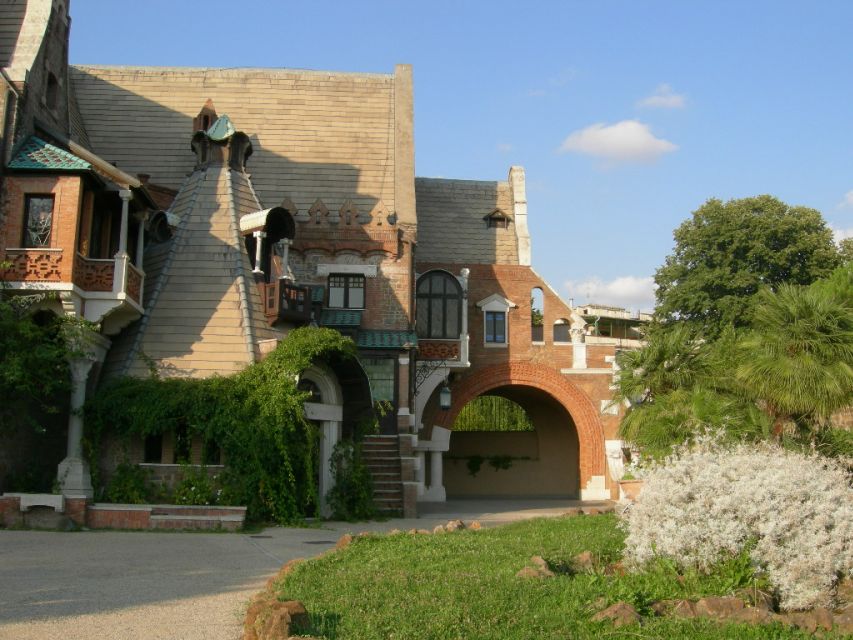
- Casina delle Civette (House of the Owls) with standout stained glass and decoration across two internal levels
- A refuge-design story for the owls’ house, tucked at the park edge yet meant to feel discreet
- Coppedè’s Art Nouveau street theater, pointed out by a guide as you walk toward Piazza Mincio
- A private, Blue Badge guide experience that turns architecture into context you can repeat later
Why Villa Torlonia feels like a different Rome
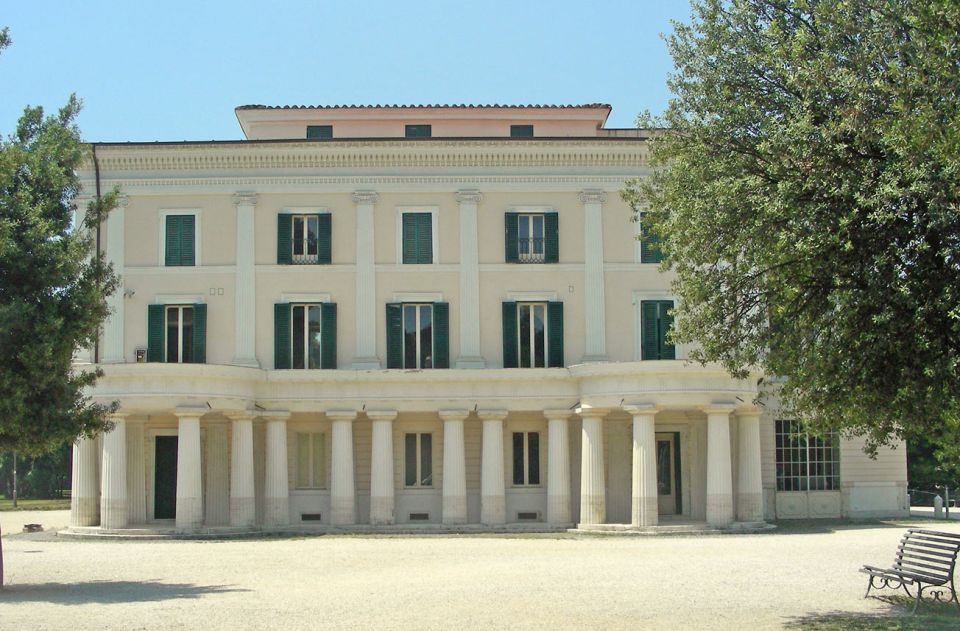
Villa Torlonia isn’t the postcard version of the Eternal City. That’s exactly why I think it’s worth your time. It’s close to central Rome (about a 10-minute taxi ride), yet it carries the mood of an estate that grew in stages—political, financial, and personal—all layered into buildings that look like they were designed to impress.
This tour makes the villa part more than a quick look. You’re guided through key structures and specific rooms tied to the Torlonia family’s world, then you move into the House of the Owls, which feels like a playful side chapter. If you enjoy architecture that looks like a conversation between eras, this is the sweet spot: early 19th-century origins, later transformations, and 20th-century political use.
And since you’re on a private group, the guide can match your interests. If you care more about art and materials, you’ll get that. If you’re more curious about what life looked like in these rooms, you can steer that way too.
You can also read our reviews of more private tours in Rome

Villino Nobile and the Casino Nobile: the villa’s big-budget storytelling
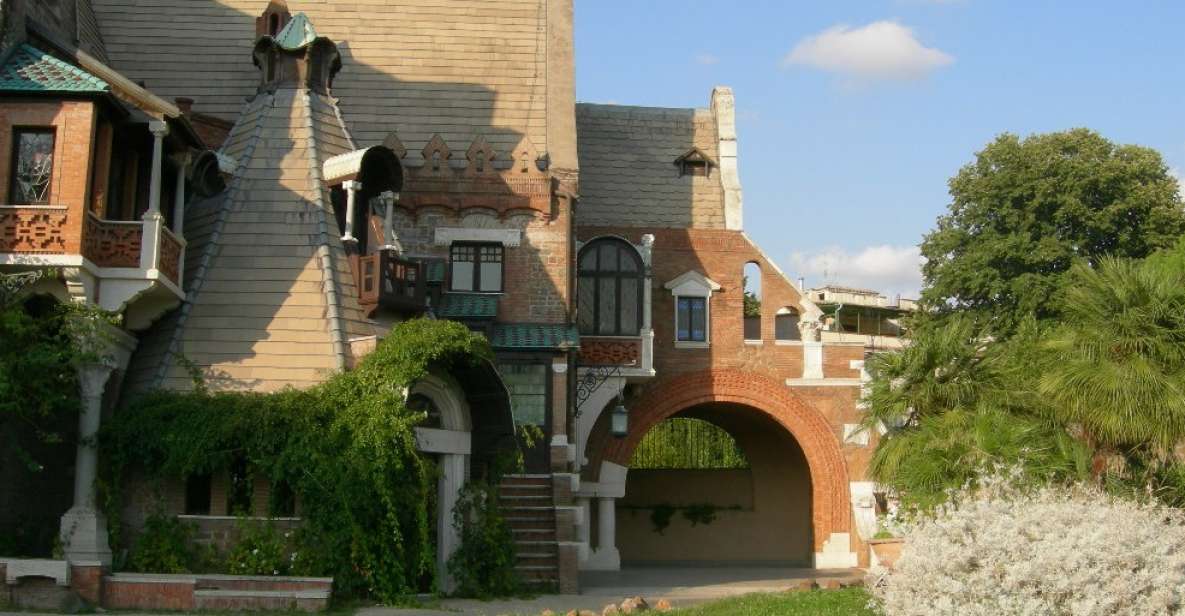
Your visit begins at Via Nomentana 70 near the ticket office area, then you head straight into Villa Torlonia. The villa’s origin story is unusually specific: it began as an early 19th-century home built for a wealthy banking family, with noble status tied to an honor granted a century earlier. That detail matters because it explains the mindset behind the architecture—this wasn’t just a country escape. It was status made visible.
A major moment is how the villa eventually became linked with Mussolini in the 1930s. The tour covers the transition in a way that’s easy to follow. You’ll learn that the separate bedrooms used by Mussolini and his wife, Rachele, were on the upper floor of the Villino Nobile. Important reality check: the original furniture used in that period is gone. So you shouldn’t expect a preserved interior display of everyday objects. What you do get is the structure and layout connection to that chapter of history.
What surprised me—in a good, slightly unsettling way—is the emphasis on the basement bunkers. The tour includes two spaces Mussolini built: one intended as a bomb shelter and the other as a gas shelter. Even if you know the broad outline of 20th-century Italy, these kinds of details make the story feel immediate, because you’re physically standing where those plans were meant to operate.
You’ll also see the Casino Nobile, built for a prince from the Torlonia family. The name sounds like a simple label, but it’s really the clue to the function: this was about a world of ceremony and private life for the elite, designed to impress while remaining controlled and refined.
If there’s a drawback here, it’s time pressure. In just 1.5 hours at the villa, you won’t “soak” the whole site. The private format helps, but you still need to accept that this is a targeted highlights program, not a full property marathon.
Casina delle Civette (House of the Owls): stained glass you actually remember
After the main villa spaces, the mood changes. Casina delle Civette, also called the House of the Owls, is where you feel Rome’s imagination at full volume. The tour highlights the stained glass and decoration right away, including the famous “House of the Owls” effect seen through the stained glass windows.
This building wasn’t just a decorative folly. It was associated with Prince Giovanni Torlonia the Younger, who lived there until his death in 1938. The tour explains the key design intention: it sat at the edge of the park in a more discreet location, meant as a refuge from the formality of the main residence. That idea is useful because it changes how you look at the architecture. Instead of asking, why is it so fancy, you can ask, what kind of private life did it want to enable?
One of the most interesting things you’ll learn is that the building reflects multiple transformations and additions planned by different architects over time. Materials are described as a mix of artisanal and industrial choices, which helps explain why some details feel handmade and others feel more “system-built.”
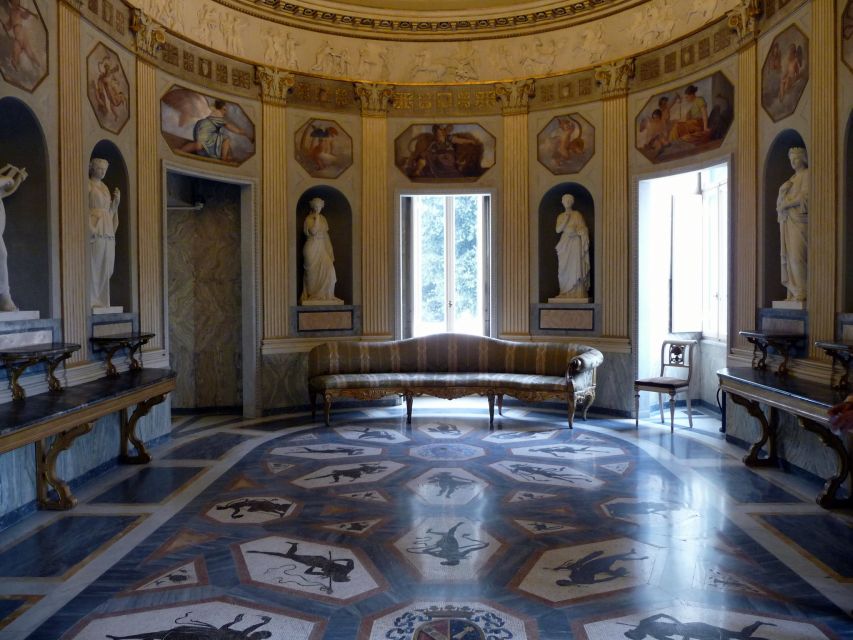
Inside, the tour focuses on the two internal levels and the decoration finished with artistic sculptures and furniture with pictorial effects. Even if you’re not the kind of person who reads every inscription, you’ll likely feel the craft in the way shapes and surfaces are treated. You’ll also hear about local sources: some of the best examples of stained glass and inlaid wood were sourced from workshops in Rome.
My practical advice: take a slower pause here. If you rush, you’ll miss the way the stained glass and decorative surfaces interact with light. The House of the Owls is one of those places where 10 extra seconds at the right angle makes a difference.
Quartiere Coppedè and Piazza Mincio: Art Nouveau inside a real neighborhood
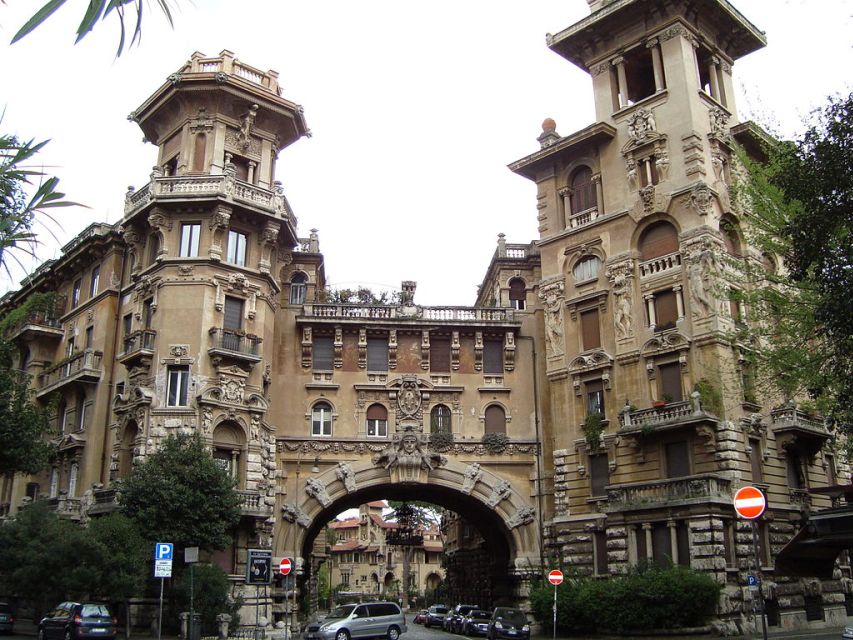
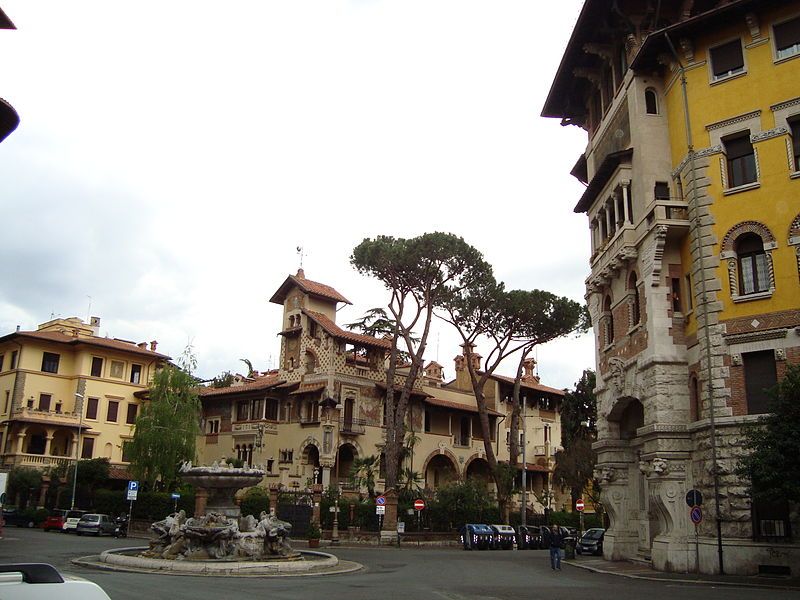
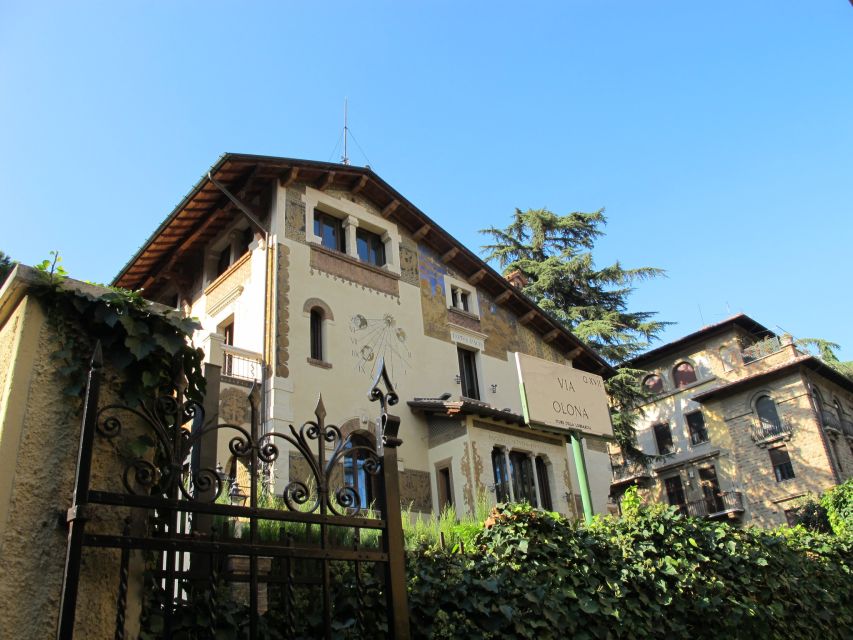
Then comes the walk into Quartiere Coppedè. This is the part of the tour that feels like leaving the museum mindset and stepping into Rome’s streetscape imagination. The guide points out the Art Nouveau architecture designed by Gino Coppedè, and it’s not just about recognizing a style name. It’s about seeing how that style shapes street corners, facades, and the way spaces connect.
One anchor you’ll encounter is the “magical kingdom” mood around Piazza Mincio. The tour frames it as part of Coppedè’s standout atmosphere, so you know what to look for while you’re moving. And because the quarter is described as one of Rome’s finest residential neighborhoods, you get a different experience than typical tourist zones. You’re not only looking at buildings as objects. You’re seeing them as part of where people live and move day to day.
A smart expectation to set: Coppedè is small enough that the 45-minute window works well, but you still want to keep your feet and attention synced. Wear comfortable shoes, because the point isn’t to sprint from photo spot to photo spot. It’s to notice the architectural details the guide calls out as you pass.
The good news is that the private format makes this easier. If you slow down for a particular facade, you can. If you’re focused on architecture, the guide can keep your route tight and informative.
The guide makes it: why Marco-style storytelling matters
This is a private tour with a Blue Badge guide, and the difference is noticeable. When your guide can connect what you’re seeing to art, literature, and historical context, the buildings stop being “cool shapes” and become a readable story.
In the reviews, the standout praise centers on a guide who’s not just friendly but seriously prepared. Marco is described as a history and archaeology professor at Sapienza, and that shows in the way the visit moves from art details to broader cultural context. You’ll feel it as a rhythm: you look, you learn the why, and then you look again with better focus.
Punctuality also comes up, and that matters on a compact 3-hour plan. You don’t want half the time spent checking schedules. You want the time in the villa and in Coppedè where the design payoff is.
If you’re the kind of traveler who likes your photos, this tour supports that. Better context often means better framing. And if you’re more the “I want to understand” type, this tour is built for you too.



Price and value: what $362.51 buys in real-world time
At $362.51 per person for a 3-hour private tour, you’re paying for more than access. You’re paying for:
- private pacing (so you don’t get herded),
- a guide who can explain what you’re actually looking at,
- museum entry fees,
- and skip-the-line entry via a separate entrance.
Whether it feels like a deal depends on your travel style. If you’re traveling with a friend or small group and you like turning a short time window into a high-quality visit, the value is strong. The tour stays compact but focused, hitting villa highlights plus Coppedè’s architectural streetscape.
If you’re the type who prefers self-guided wandering, you might ask whether the cost matches your interest level. Villa Torlonia and Casina delle Civette do require attention to details to feel fully satisfying. Coppedè can be stunning on your own, but a guide helps you see what makes it Coppedè instead of just “pretty Art Nouveau.”
Bottom line: this price makes sense when you want curated context in a limited time. It’s less of a bargain if you’re mostly after quick exterior photos and don’t care about the why behind the design.
Who should book this Art Nouveau Rome tour
I’d book this if you:
- enjoy architecture that comes with stories you can’t get from a random stroll,
- want the contrast of Mussolini-era spaces plus a more whimsical Art Nouveau neighborhood,
- like stained glass and crafted decoration, not just building facades,
- and prefer a private guide who can adjust the pace to your comfort.
You might choose another option if:
- walking is a major issue for you (there is a fair amount of it, and the pace is built around an average client),
- you only want the most famous Rome landmarks and aren’t in the mood for a design-focused detour,
- or you’re expecting preserved interiors with original furnishings from the Mussolini period (the tour notes that original furniture is no longer there).
One practical tip: if you’re sensitive to time and want a comfortable experience, ask your guide to lean toward fewer sites at a slower pace. Private tours are built for that flexibility.
Should you book it?
Yes, if you want a Roman day that feels a bit off the standard track. Villa Torlonia gives you powerful historical context and unusual spaces like the bunkers, while Casina delle Civette delivers the kind of stained glass and decorative design that sticks with you. Then Quartiere Coppedè adds Art Nouveau theatrics in a place that still reads like a lived-in neighborhood.
This tour is also a good choice for couples or small groups who’d rather spend 3 focused hours with a private guide than gamble on a rushed self-guided route.
FAQ
How long is the Art Nouveau Rome tour?
It lasts about 3 hours.
Is this a private tour?
Yes, it’s a private group tour.
What’s included in the price?
It includes a Blue Badge guide, museum entrance fees, and a private walking tour.
What stops are covered?
You’ll visit Villa Torlonia (including Casina delle Civette) and then explore the Quartiere Coppedè area.
Where do I meet the guide?
Meet your guide at Villa Torlonia, Via Nomentana 70, near the ticket office area.
Is museum entry included, and do I skip lines?
Museum entrance fees are included, and you enter through a separate entrance to skip the line.
How much walking is involved?
There is a fair amount of walking during the tour, and the pace is based on an average client.
Are there languages available?
The tour guide is available in English, Italian, French, and Spanish.
Is it wheelchair accessible?
Wheelchair accessibility is listed as available. If someone in your group has mobility issues, the itinerary may be modified.
What’s the cancellation policy?
You can cancel up to 24 hours in advance for a full refund.