REVIEW · ROME
Combined Ticket: Castel Sant’Angelo & Ara Pacis
Book on GetYourGuide →Operated by The Voyager · Bookable on GetYourGuide
Two Rome icons in one day.
I really like pairing Castel Sant’Angelo terraces with the Ara Pacis’s calmer, modern gallery setting by Richard Meier. You get big city views at Castel, then a very different feel as you study the Altar of Peace inside a sleek museum. The main drawback: this is not a guided tour, and no audio guide is included, so you’ll want to rely on your own reading and whatever you bring.
Booking is handled by The Voyager, and the big practical win is skip the ticket line. You also get a single ticket that’s valid for 1 day, with visit starting times you can check ahead of time, which helps a lot in busy Rome. One more thing to plan around: Castel Sant’Angelo is closed on Mondays, while the Ara Pacis Museum runs daily.
Key highlights to look for
- Hadrian’s mausoleum layers: see how a 2nd-century structure became papal residence and then a military fortress
- Terrace views over the Tiber: climb to the upper levels for panoramic Rome
- Ara Pacis inside Richard Meier’s modern design: a striking contrast to the ancient altar
- What Augustus wanted you to see: the Altar of Peace and the story of prosperous Rome
- Skip-the-line access: fewer slowdowns, more time on the walls and exhibits
- Modern exhibition spaces: one review noted the museum rooms have a very modern style (Stefan, Germany)
In This Review
- Castel Sant’Angelo: Hadrian’s Mausoleum to Papal Fortress Views
- What to pay attention to while you walk
- The terraces: worth planning around
- A small caution
- Ara Pacis Museum: Augustus’ Altar in Richard Meier’s Modern Shell
- Why the modern setting is part of the attraction
- What to expect in the exhibits
- The hours that affect your timing
- How to Plan Your One-Day Route Along the Tiber
- A practical timing strategy
- Plan for the “no guided tour” reality
- Smart tip for pace
- Consider one logistics detail
- Price and Value: Is $53 Worth It?
- What you’re really paying for
- What’s not included (so you can avoid surprises)
- The “value check” I recommend
- What This Ticket Feels Like on the Ground
- Who Should Book This, and Who Might Skip It
- Should you book this combined Castel Sant’Angelo and Ara Pacis ticket?
- FAQ
- What’s included with the combined ticket?
- Does the ticket include a guided tour?
- Is there an audio guide included?
- Can I skip the ticket line?
- How long is the experience?
- What are the opening hours for Castel Sant’Angelo and Ara Pacis?
- Is food included?
- Is the attraction wheelchair accessible?
- What’s the cancellation policy and can I pay later?
Castel Sant’Angelo: Hadrian’s Mausoleum to Papal Fortress Views
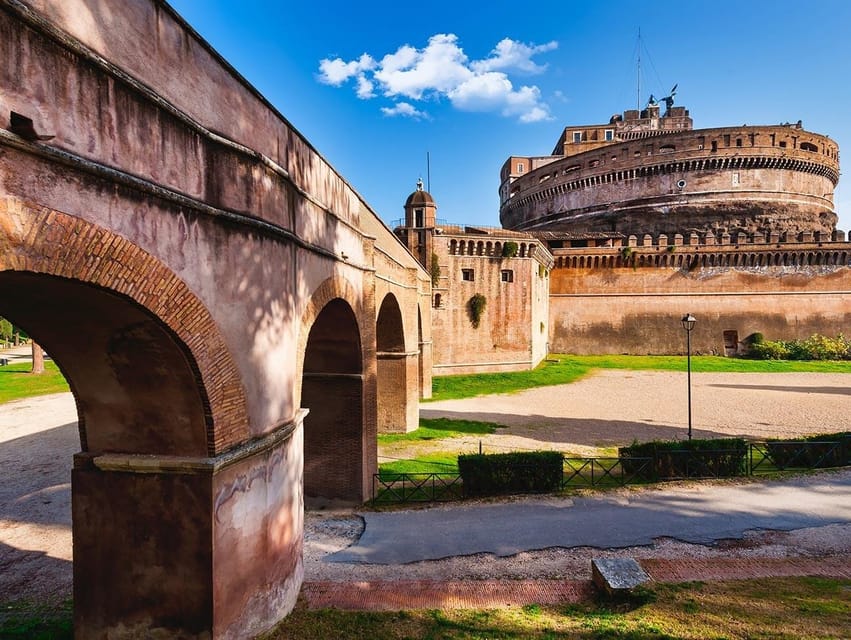
If you want one place in Rome that shows how the city keeps reusing old power, start at Castel Sant’Angelo. This fortress began as Emperor Hadrian’s mausoleum in the 2nd century AD, and the building’s whole personality comes from that long afterlife: it later served as a papal residence and then a military fortress before becoming a museum.
What I like about going here first is that the story is physical. You’re not just reading about Rome’s shift from empire to later eras; you’re walking through the spaces where each era left its mark. Even if you’re not a “history person,” the sheer scale helps you understand the point: this was built to last, and Rome used it again and again.
What to pay attention to while you walk
Your time won’t be one single “aha moment.” It’s more like a series of mini-discoveries. At Castel, focus on transitions: where the medieval and papal parts feel different from the older imperial base. Then, make a deliberate move toward the upper levels. The terraces are where your effort pays off.
You can also read our reviews of more tours and experiences in Rome



The terraces: worth planning around
The terraces are where you’ll get the postcard angle most people come for: wide views over Rome, with the Tiber in the mix. This isn’t just pretty scenery. Standing up top gives you a sense of scale—how the river corridor ties neighborhoods together, and how the city’s “center” keeps shifting while the river stays put.
If you’re short on time, prioritize the viewpoint route over every single room. You can still get a full sense of the fortress without spending the entire day in every hall.
A small caution
Castel Sant’Angelo is open Tuesday through Sunday, 9:00 AM to 7:30 PM. If your trip has you in Rome on a Monday, you’ll need a different plan or a different day for Castel.
Ara Pacis Museum: Augustus’ Altar in Richard Meier’s Modern Shell
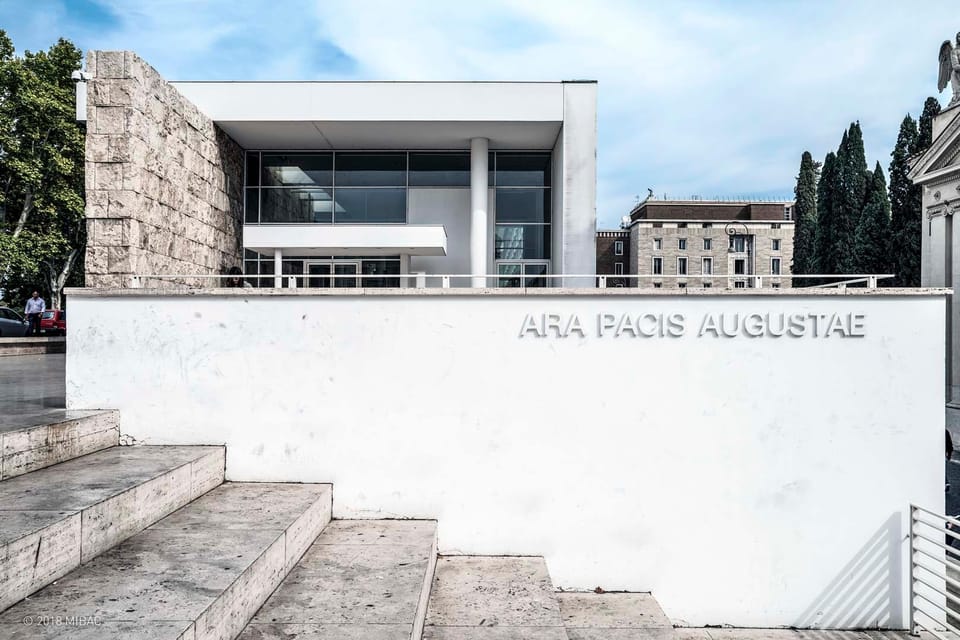
After the fortress, shift gears at the Ara Pacis Museum. This is a different kind of experience on purpose. The museum is dedicated to the Altar of Peace, associated with Emperor Augustus and his message of a prosperous Rome.
Here’s the key contrast: the altar is ancient, but the museum around it is modern. The building was designed by architect Richard Meier, and that matters because it changes how you see the artifact. Instead of feeling trapped in an old-world setting, you get a clean, modern frame that makes the sculpted details easier to focus on and easier to compare.
Why the modern setting is part of the attraction
I find it helps to think of the museum as a visual translation. When the altar sits inside a contemporary design, you notice the craftsmanship more clearly, and you feel the intentional “distance” between eras. You’re standing in a space built to present the past without pretending it’s the past.
The Altar of Peace is also famous for the kinds of storytelling it carries in stone: detailed friezes and restored artifacts tied to Roman art and architecture. This is one of the best stops on this combined ticket if you like seeing how power and propaganda show up in art.





What to expect in the exhibits
You’ll spend time with:
- detailed friezes connected to Augustus’s message
- restored artifacts that help you interpret the original altar
- an in-depth look at Roman art and architecture
And just like Castel has layers, Ara Pacis does too—because what you’re seeing is partly original material, partly restoration, and partly interpretation through museum design.
The hours that affect your timing
The Ara Pacis Museum is open daily from 9:30 AM to 7:30 PM. That daily schedule is handy if you’re trying to fit both sites into one day without stress.
How to Plan Your One-Day Route Along the Tiber
This combined ticket is built for a simple flow: start at Castel Sant’Angelo, then continue to Ara Pacis. That said, in real life you may swap the order depending on your exact starting time and what you want most.
A practical timing strategy
- If you can, start at Castel earlier in the day. It opens at 9:00 AM (Tue–Sun), giving you first choice on terraces and fewer crowds.
- Then head to Ara Pacis for a later start at 9:30 AM, and enjoy the contrast of moving from fortress views to a museum setting.
Remember: both sites are along the Tiber River, so the geography supports the idea of one continuous cultural walk—Rome stays in your frame even as the atmosphere changes.
Plan for the “no guided tour” reality
Because a guided tour isn’t included, you’ll want to give yourself a little extra time to read labels and look slowly. The ticket gets you inside; it doesn’t hand you the story. If you like context, consider bringing your own notes or pairing this day with another Rome walk where a guide covers the big picture elsewhere.
Also note: an audio guide rental isn’t included. If you’re the type who likes spoken explanations while you move, budget for that separately.
Smart tip for pace
Don’t try to “do everything.” Castel has so many rooms and Ara Pacis has focused exhibits—both reward good choices. Pick your must-dos:
- Castel terraces (views)
- Ara Pacis Altar of Peace (the artifact + friezes)
Then fill in the rest at a relaxed tempo.
Consider one logistics detail
Your ticket works for valid 1 day, and you should check availability to see starting times. That means you’ll want to lock in a time that matches how your morning looks, not just what looks convenient on the calendar.
Price and Value: Is $53 Worth It?

At $53 per person for a combined ticket, this is priced like a “save time and see two major sites” option. Whether it’s a good deal depends on what you’d otherwise do.
What you’re really paying for
You’re paying for:
- entrance to both sites (Castel Sant’Angelo + Ara Pacis Museum)
- the ability to skip the ticket line
- a full-day, flexible visit window (valid 1 day, with starting times)
Skipping the line is a bigger value than it sounds. In Rome, time lost to ticket queues can steal the best part of your day: the daylight and the energy you’re trying to bring to the view from Castel’s terraces.
What’s not included (so you can avoid surprises)
Not included:
- a guided tour
- audio guide rental
- food and beverages
If you want a guided narrative and you don’t like reading, the price may feel less “complete” than you hoped. Also, because food isn’t included, you’ll want to plan a snack or meal break near your route. This is especially useful if you tend to take your time on exhibit-style stops.
The “value check” I recommend
Ask yourself this:
- If you booked Castel and Ara Pacis separately, would you spend time coordinating entry and losing time to lines?
If yes, the combined ticket’s structure is doing real work for you.
What This Ticket Feels Like on the Ground
This experience has a built-in rhythm. Fortress first, then museum. That changes how your brain processes the day.
At Castel, you’re moving through heavy structure and big views. At Ara Pacis, you slow down. You study. You notice details like friezes and restored pieces more than you notice your surroundings.
A review from Stefan (Germany) specifically called out the exhibition rooms as very modern in style. That fits what I like about this combined setup: you don’t feel stuck in one “mode.” Even when the building is historical, parts of the museum experience are presented in a way that can feel clean and readable, not just dim and crowded.
This is a good day for:
- people who like architecture and how museums present objects
- anyone who wants to connect Roman imperial power with later layers
- travelers who prefer self-guided flexibility rather than being locked into a tour schedule
It’s less ideal for people who want a full guided lecture style experience without doing any extra work.
Who Should Book This, and Who Might Skip It
This combined ticket is best when you want two anchors in one day without turning your schedule into a spreadsheet.
You’ll likely love it if you:
- want Castel Sant’Angelo for the terraces and layered building story
- want Ara Pacis for the Altar of Peace and the contrast of ancient + modern design
- like flexibility, because it’s not built around a guided tour
- appreciate saving time with skip-the-ticket-line entry
You might choose something else if:
- you strongly prefer a guide to explain the meaning of what you’re seeing
- you’re relying on an audio guide but don’t want to pay extra for it
- your travel dates fall on a Monday (Castel is closed then)
Should you book this combined Castel Sant’Angelo and Ara Pacis ticket?
I’d book it if you want a strong Rome day that mixes dramatic views with a focused art-and-architecture museum stop, and you value time savings from skipping lines. The $53 price makes sense when you’re seeing both sites in one day instead of trying to juggle separate tickets and schedules.
If you tend to need a lot of context to enjoy museums, plan to do a bit of prep or budget for an audio guide, since this option doesn’t include guided narration.
FAQ
What’s included with the combined ticket?
You get entrance to both Castel Sant’Angelo and the Ara Pacis Museum.
Does the ticket include a guided tour?
No. A guided tour is not included.
Is there an audio guide included?
No. Audio guide rental is not included.
Can I skip the ticket line?
Yes, the ticket includes skip the ticket line.
How long is the experience?
It’s valid for 1 day.
What are the opening hours for Castel Sant’Angelo and Ara Pacis?
Castel Sant’Angelo is open Tuesday through Sunday, 9:00 AM to 7:30 PM. The Ara Pacis Museum is open daily, 9:30 AM to 7:30 PM.
Is food included?
No. Food and beverages aren’t included.
Is the attraction wheelchair accessible?
Yes, it’s wheelchair accessible.
What’s the cancellation policy and can I pay later?
You can cancel up to 24 hours in advance for a full refund. You can also reserve now and pay later (book your spot and pay nothing today).