REVIEW · ROME
Domus Tiberiana, Palatine Hill and Roman Forum Guided Tour
Book on GetYourGuide →Operated by italy in love tours & ontario srls · Bookable on GetYourGuide
Rome’s imperial secrets are back on view.
This guided walk turns Palatine Hill and the Roman Forum into a readable story, not a pile of stones, and it adds a major draw: Domus Tiberiana, reopened to the public after nearly 50 years. I love that you get a licensed guide shaping what you see, plus an eco-friendly golf-cart to help with the walking load. One thing to plan around: it is not suitable for wheelchair users and you’ll need an ID, since names and tickets are tied to your booking.
I also like the pacing option. After your guide sets the scene, you can spend time around Palatine Hill and the Forum at your own pace, which helps when you want extra photos or you want to linger where something clicks. The only real drawback is that the tour is short (about 2 to 2.5 hours), so you’ll want to go in ready to focus, not spread out like a half-day roam.
In This Review
- Key highlights worth your attention
- Domus Tiberiana’s reopening changes the whole experience
- Starting at Palatine Hill: the legend is right where you stand
- The Roman Forum: where the guide makes the stones make sense
- Golf-cart transfers keep the pace human
- Domus Tiberiana: the imperial residence stop that feels different
- What the skip-the-line tickets really buy you
- Price and value: is $111 the right move?
- Who this tour suits best (and who should adjust expectations)
- Practical tips before you go
- Should you book this guided Domus Tiberiana, Palatine Hill, and Forum tour?
- FAQ
- What’s the duration of the Domus Tiberiana, Palatine Hill and Roman Forum guided tour?
- Where does the tour start, and where does it end?
- Is ticket-line waiting included or avoided?
- Do I need to bring identification?
- What languages are available for the guide?
- Is food or drinks included?
- Is hotel pickup or drop-off provided?
- How do I prepare my booking details?
- Are pets or luggage allowed?
- Is the tour wheelchair accessible?
- Can I cancel for a refund?
Key highlights worth your attention
- Domus Tiberiana is newly reopened, giving you a rare, high-impact stop that most Rome lists still don’t cover well
- Licensed professional guide brings the layers of history into clear, street-level context
- Skip the ticket line, so your time goes to ruins, not queues
- Eco-friendly golf-cart transfers help keep this manageable in the busy center of Rome
- Your time is partly self-directed, so you can linger in the spots that hit you
Domus Tiberiana’s reopening changes the whole experience
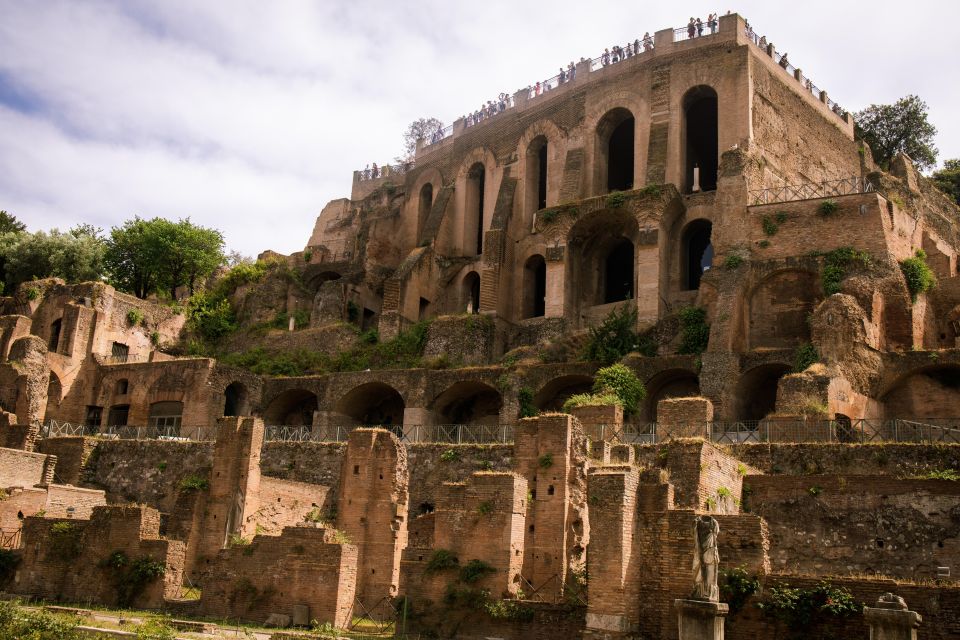
If you only have a couple hours for ancient Rome, Domus Tiberiana is the kind of add-on that makes it feel worth it. This is an imperial palace linked to Emperor Tiberius, and it’s especially exciting because it’s been mostly off-limits for about half a century. When a site like this reopens, the difference is not just novelty. It shifts the tone from “look at ruins” to “understand what power and residence meant in real life.”
Domus Tiberiana served as the first imperial residence for the Julio-Claudian dynasty. That detail matters because it gives you a lens: this wasn’t just a fancy building, it was the starting point for how Rome’s emperors presented control, comfort, and culture. Your guide’s job is to connect those ideas to what you can still see on the ground—so you can picture daily movement, official space, and the feel of living close to the seat of power.
The best part: this is not a museum-style stop where you just stand and read. You walk among the remains, and your guide can weave together the “who, what, and why” as you move from the broader hillscape into the imperial story.
You can also read our reviews of more guided tours in Rome


Starting at Palatine Hill: the legend is right where you stand
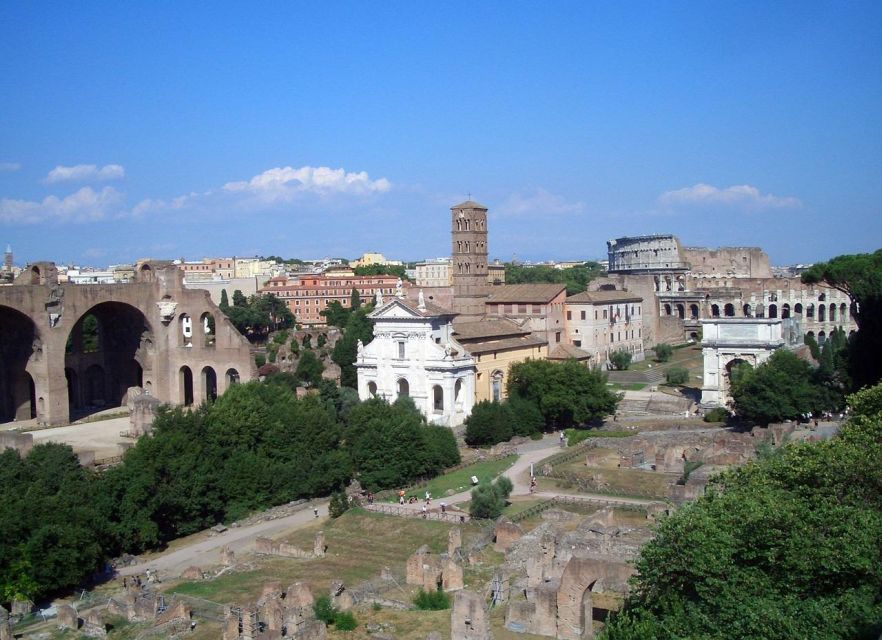
The tour begins on Palatine Hill, widely linked to the legendary birthplace of Rome. Even if you’re not chasing myths, Palatine is where you start to feel how Rome’s city-making worked—layers of settlement, elite construction, and later transformations stacked over centuries.
A good guide turns that hillside into something you can map. You’re not guessing where you are or why a particular structure matters. You’re taught how the Palatine landscape connects to the imperial world that later concentrates around the Forum area. That matters for first-timers, because Palatine Hill is massive and visually confusing if you go alone.
Your guide also helps you avoid one common Rome mistake: spending too much time in the wrong spot. With a professional, you get the key orientation points early, then you can slow down and roam in the areas that feel most meaningful to you. That “guided setup + personal pace” mix is one of the practical reasons this tour works well, especially if you like taking photos and also like understanding what you’re photographing.
The Roman Forum: where the guide makes the stones make sense
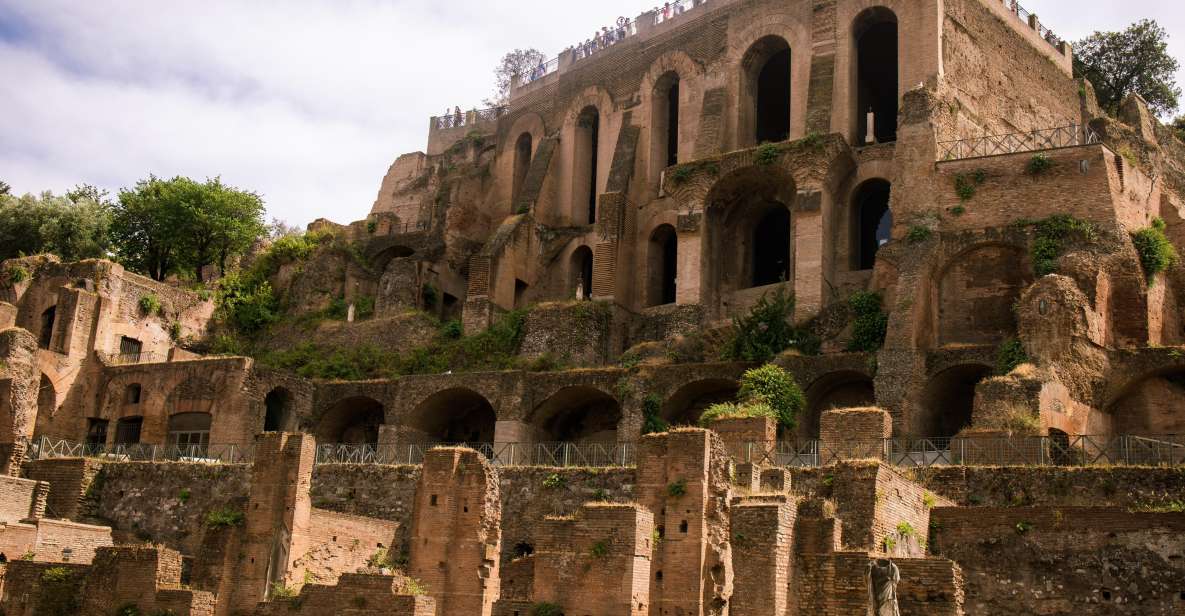
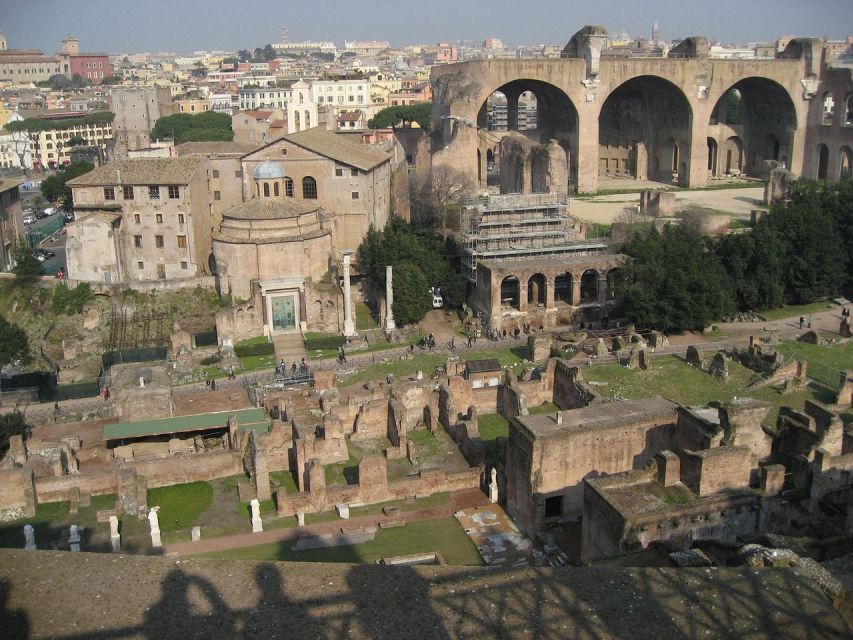
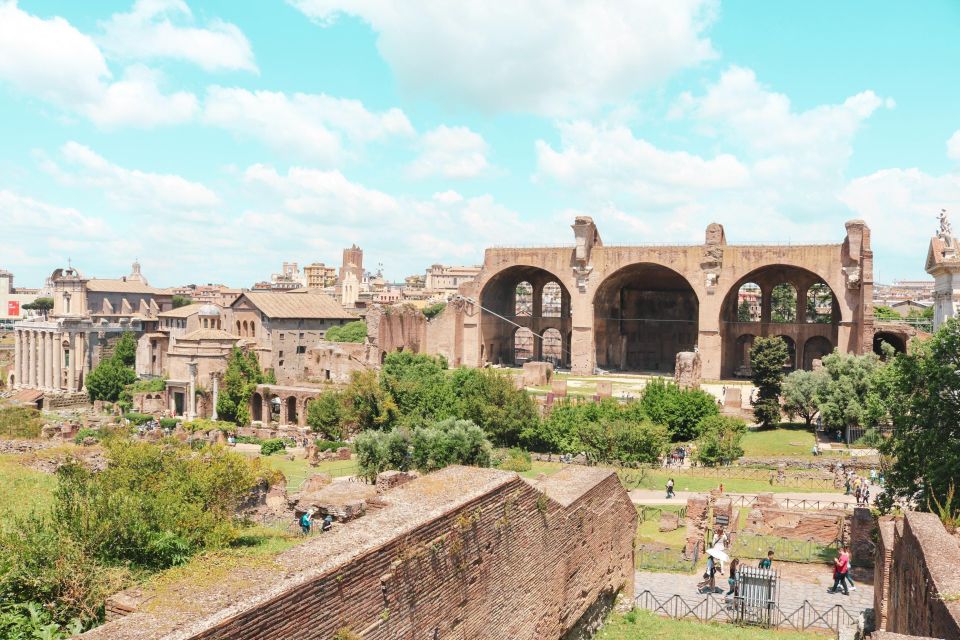
The Roman Forum is the heartbeat of ancient Roman public life, and it’s also where people often get lost. From the outside, it can look like walls and columns everywhere. With the right guide, it becomes a sequence: politics here, law there, status showing up through architecture and movement.
As you proceed from Palatine toward the Forum, the tour leans into stories and anecdotes. That’s not fluff. In this kind of site, people need help to connect the physical remains to human habits: how officials communicated, where crowds gathered, how ceremonies shaped daily life. The goal is simple: you should be able to look at a ruin and think, That’s part of a system, not just scenery.
And since you have time at your own pace, you can do two useful things. First, you can stop where something catches your eye and spend a few extra minutes reading the visible layout. Second, you can keep moving when the group energy builds again. That balance is ideal for short tours because it prevents both extremes: the “rush” problem and the “stare without direction” problem.
Golf-cart transfers keep the pace human
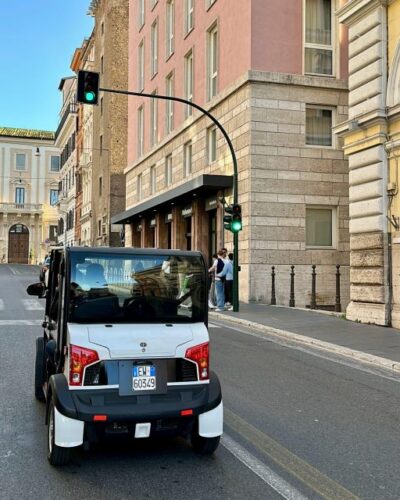
Rome is not flat. Palatine Hill climbs, the Forum area can be uneven, and the center gets crowded fast. This tour uses an eco-friendly golf-cart to move you around so you aren’t spending all your energy just getting from one zone to another.
Why that matters: in a 2 to 2.5 hour experience, every minute is precious. The cart helps you keep your attention on the sites instead of constantly recalculating your route and pace. You also get a smoother flow through the meeting-to-visiting rhythm, which is helpful if you arrive with jet lag or if you simply don’t want to start your day doing nonstop uphill walking.
That said, you should still expect real walking once you’re on the ruins. Think of the golf-cart as a time-saver and fatigue buffer, not as a ride that replaces the experience. If you’re planning comfortable shoes, plan on wearing them—your legs will be active.
Domus Tiberiana: the imperial residence stop that feels different
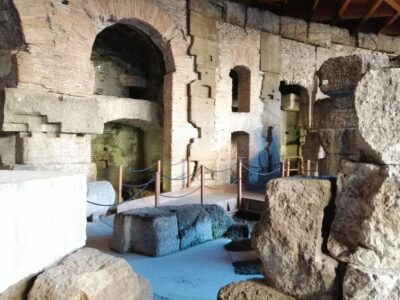
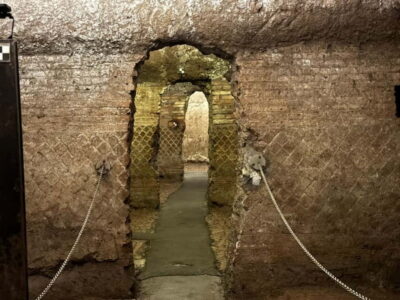
Domus Tiberiana is the headline for a reason, and your visit is where the tour’s value really turns into something you can feel. This palace is tied to Tiberius and the early imperial era, which means your guide can frame what you’re seeing as more than decoration. It’s about status, power, and the physical geography of governance.
When you walk through a reopened site like this, you’re also seeing the “freshness” of access. It can feel like a new chapter in a well-known part of Rome, and that energy carries through the rest of your visit. Your guide can point out how this residence connects to the surrounding imperial setting and to the idea of Rome as a stage for authority.
One memorable moment worth planning for is the way the tour connects different layers of the area. In a highlight from a guide experience, the stop sequence included time around the Church of Santa Maria Antiqua alongside the Domus story. Even if your exact emphasis varies with the guide, expect your guide to connect how later Rome used earlier spaces and symbols.
That connection is what helps this tour stick in your memory. You’re not just looking at one era. You’re watching Rome explain itself across time.



What the skip-the-line tickets really buy you
This tour includes entrance tickets, plus the promise to skip the ticket line. In Rome, “skipping the line” isn’t just convenience—it’s time you can spend inside the sites instead of watching the clock.
Because the total duration is only about 2 to 2.5 hours, the ticket process matters. If you had to wait outside, you’d lose part of the best moments: orientation on Palatine and the Forum’s most story-rich sections. By handling tickets as part of the package, you keep the experience tight and focused.
You’ll still need to exchange your voucher at the ticket counter before the tour starts. Meeting point is in the office, and the activity ends back there. So build your day timing around that short, exact window rather than treating it as a flexible drop-in.
Price and value: is $111 the right move?
At $111.02 per person, this isn’t the cheapest way to see ancient Rome. The value comes from a few bundled advantages that are hard to recreate on your own in a time-efficient way.
You get:
- a professional licensed guide
- entrance tickets (so you avoid ticket shopping and line time)
- a skip-the-line flow
- Domus Tiberiana access tied to its reopening impact
- eco-friendly golf-cart transfers to manage a short schedule
If you’re the type of traveler who reads signs slowly and likes asking why something matters, the guide component is likely to pay off. The Forum and Palatine Hill are where context multiplies enjoyment. Without that context, you can walk through quickly and still feel like you missed the point.
If you’re traveling with teenagers or family members who might get impatient without a story, the guide also becomes the difference between a “rough tour” and a fun, shared conversation. One of the strongest themes from guide-led experiences with this tour is how it brings the people and lifestyle of the time into focus, instead of leaving you with only architectural descriptions.
Who this tour suits best (and who should adjust expectations)
This is a smart fit if you:
- want the big-ticket ancient Rome trio: Palatine Hill + Forum + Domus Tiberiana
- prefer guided storytelling over wandering without a plan
- like a brisk structure but still want a chance to linger at your own pace
- want help managing Rome’s uneven terrain using a golf-cart
It may be less ideal if you need wheelchair access, since the tour is not suitable for wheelchair users and mobility scooters are not allowed. It may also feel too structured if you hate following a set route. On the other hand, if you love learning quickly and moving efficiently, this tour style is a good match.
Practical tips before you go
A few details will make your day smoother.
Bring a passport or ID card—your name is required at booking, and ID is required on arrival. Wear shoes you can handle on uneven ancient surfaces. Also keep your load light: luggage or large bags aren’t allowed, and plastic bottles and glass objects are also not permitted.
Language is English or Italian with a live guide, so choose based on what you’ll enjoy most. And since food and drinks aren’t included, you’ll want to plan a meal around the 2 to 2.5 hour window.
One more small but important note: this is not a solo wandering experience. You’re starting from a specific meeting point (office), exchanging your voucher, and returning there. That structure is part of why it works well, but it also means you should arrive on time and stay flexible.
Should you book this guided Domus Tiberiana, Palatine Hill, and Forum tour?
I’d book it if you want a high-impact ancient Rome hit in a short time—especially because Domus Tiberiana is reopened and included here with skip-the-line access. The combo of licensed guiding, golf-cart transfers, and the chance to slow down on your own beats the common “we saw a lot but didn’t understand it” problem.
Skip it if you want an ultra-long, slow archaeological roam, or if mobility constraints make this format tough. Otherwise, for most first-timers and repeat visitors who want their time to mean something, this is a very practical way to get clarity on Rome’s power center without turning it into a day-long endurance test.
FAQ
What’s the duration of the Domus Tiberiana, Palatine Hill and Roman Forum guided tour?
The tour lasts about 2 to 2.5 hours. Starting times depend on availability.
Where does the tour start, and where does it end?
You start at the meeting point in the office after exchanging your voucher at the ticket counter. The tour ends back at the meeting point.
Is ticket-line waiting included or avoided?
Entrance tickets are included, and the tour is designed to let you skip the ticket line.
Do I need to bring identification?
Yes. You need a passport or an ID card, and ID is required.
What languages are available for the guide?
The live guide is available in English and Italian.
Is food or drinks included?
No. Food and drinks are not included.
Is hotel pickup or drop-off provided?
No. Hotel pickup and drop-off are not included.
How do I prepare my booking details?
Names are required at the time of booking, and you must exchange your voucher at the ticket counter before the tour begins.
Are pets or luggage allowed?
Pets are not allowed. Luggage or large bags are not allowed.
Is the tour wheelchair accessible?
No. The tour is not suitable for wheelchair users, and mobility scooters are not allowed.
Can I cancel for a refund?
Yes. Free cancellation is available up to 24 hours in advance for a full refund.