REVIEW · ROME
From Naples, Florence and Rome: Pantheon and smart audio
Book on GetYourGuide →Operated by inStazione · Bookable on GetYourGuide
Smart audio makes the Pantheon make sense. This experience is interesting because you tour at your own pace while the smart audio guide explains what you’re seeing. You also get a practical plan for the rest of the day across central Rome, not just one monument stop.
I like the way the Pantheon portion is structured: you get a focused audio run (about 20 minutes) tied to the building’s key features and its unusual design. I also love that the audio content connects the Pantheon to stories you’d otherwise miss, including the link between pagan Rome and Christianity, plus darker legends the track brings up (like the Satan tale).
The main drawback is simple: you’re doing this with your smartphone. Plan ahead—download everything before you go, since the Pantheon has no free Wi‑Fi and mobile coverage can be spotty, and headphones are not included.
In This Review
- Key highlights worth picking this plan
- What you’re really buying: an audio-led Pantheon plus a Rome day plan
- The Pantheon experience with smart audio: what you’ll notice first
- Where it can fall short
- The unique structure you’re meant to learn: listen for the “how”
- After the Pantheon: the audio route that pulls you through Rome
- A practical way to use this route
- Starting city options: Naples and Florence vs Rome-only
- Naples or Florence: train roundtrip can be the value lever
- Rome option: entrance ticket plus audio
- What’s included, what’s not, and what you should bring
- The one-minute prep you’ll thank yourself for
- Tickets and contact: how the day is set up
- Practical expectations for your day inside the Pantheon
- Price and value: why $6 can actually make sense here
- Who this works best for
- Should you book it?
- FAQ
- What cities can I choose as my starting point?
- Is transportation included if I start in Naples or Florence?
- What does the Rome option include?
- How long is the experience?
- What’s included in the price?
- Which languages are available for the audio guide?
- Do I need to bring headphones?
- How do I receive my tickets?
- Do I need an internet connection at the Pantheon?
- Is it wheelchair accessible, and can I cancel?
Key highlights worth picking this plan
- Self-paced Pantheon visit with a smart audio guide so you can pause, stand, and look when you want
- Offline-ready audio prep: you’ll be contacted to download, and the site doesn’t rely on Wi‑Fi
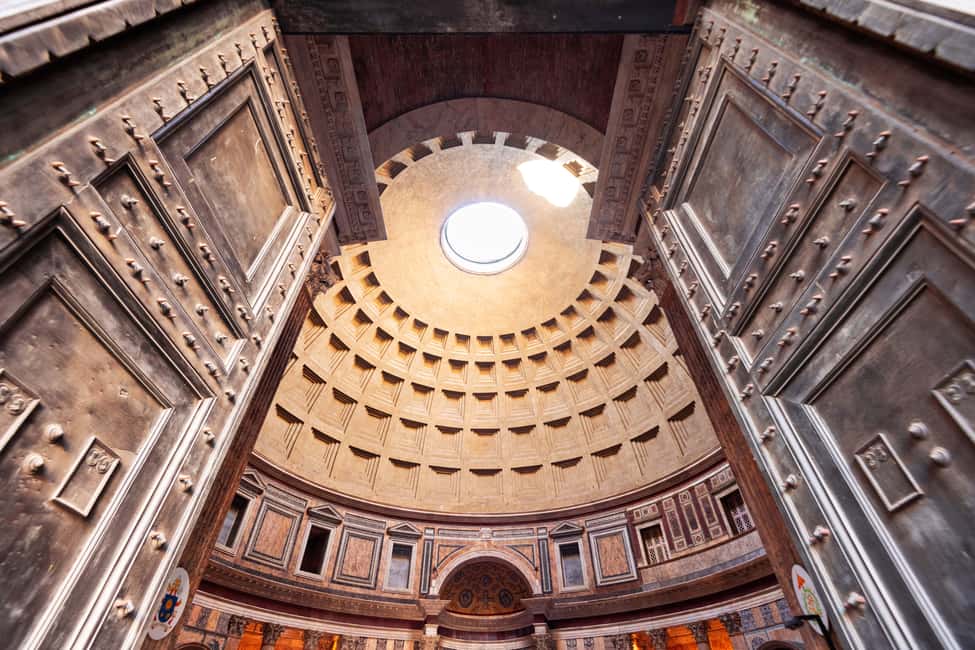
- Indoor map + 10+ audio descriptions focused on what makes the Pantheon’s structure unique
- More than 20 Rome audio stops after the Pantheon, including major squares and churches
- Multiple starting options: Naples, Florence, or Rome, with train transport only from Naples/Florence
- Affordable value for what you get, with a rated score of 4.6/5 across 10 reviews
What you’re really buying: an audio-led Pantheon plus a Rome day plan

This isn’t a long, scripted “follow the guide” tour. It’s a ticketed, self-guided Pantheon experience paired with a smart audio system designed to keep you oriented. That matters because the Pantheon can feel like “wow” at first glance, but the real satisfaction comes when you understand how the space works.
The audio guide is also not limited to the Pantheon. It’s built like a mini route through Rome, from the Pantheon onward to big-name areas such as Piazza del Popolo, Piazza Navona, and Fontana di Trevi. If you’re the type who likes to wander with purpose, you’ll appreciate this.
At the current price point (listed at $6 per person), you’re mostly paying for an entrance ticket plus a multi-language audio system. For Naples or Florence departures, you may also be getting train transport roundtrip—so the value can get even stronger if you were already thinking about taking the train.
You can also read our reviews of more tours and experiences in Rome



The Pantheon experience with smart audio: what you’ll notice first

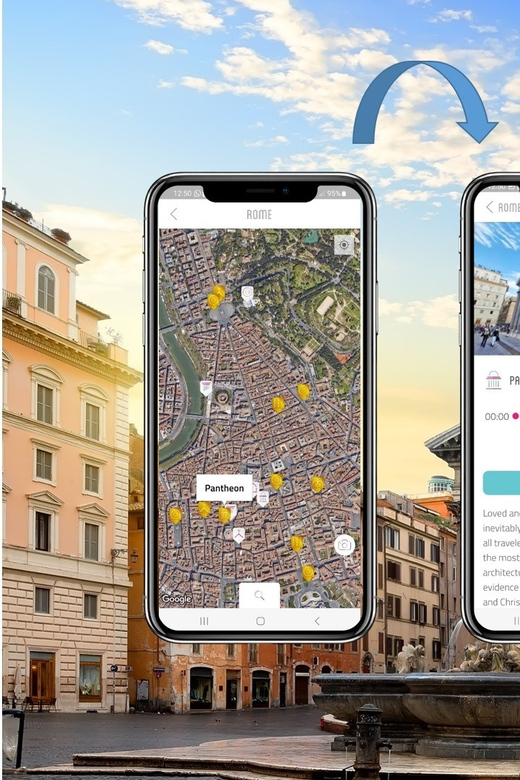
Once inside, the audio guide is your “spotter.” It gives you audio descriptions (10+ inside the Pantheon) and an indoor map to help you move through the space without feeling lost.
You’ll also get a history and story layer that makes the building feel less like a single famous photo and more like a living timeline. The audio track covers how the Pantheon is tied to the continuity between paganism and Christianity—mentioning a handover in 608 to Pope Boniface IV by the Byzantine Emperor Foca. It also includes legends attached to the site, including the Satan-themed story.
Two things click because of this approach:
- You start looking for details instead of only staring up at the dome.
- You can take your time. If you pause to walk around or re-check an area, the audio keeps you moving at your pace.
Where it can fall short
Because this is audio and not a live guide, you won’t get back-and-forth questions. If you want a person to explain the why behind every visual detail, you may feel limited. Still, for most independent travelers, the structure is enough to get the Pantheon from “impressive” to “understood.”
The unique structure you’re meant to learn: listen for the “how”

The Pantheon is famous for its harmony. But the “harmony” is easier to appreciate when you know what the audio is pointing out.
Your smart audio track includes descriptions focused on the Pantheon’s structure—what makes it distinctive and memorable. The indoor map is important here. Without it, first-time visitors often bounce around, and the best angles can feel random.
With the audio running, you’re nudged into noticing things in sequence. That’s the real trick: it turns a tough-to-read building into a guided visual story without making you follow a group.
After the Pantheon: the audio route that pulls you through Rome
One of the smartest parts of this experience is what happens after your Pantheon time. After that initial Pantheon audio segment (about 20 minutes), the guide continues with more tracks—more than 20 audio descriptions—covering major stops and church interiors you might not plan on your own.
Here’s what the audio route is designed to help you find:
- Caravaggio paintings in San Luigi dei Francesi and S. Maria del Popolo
- Michelangelo’s Redentore in Santa Maria sopra Minerva
- Bernini statues around Piazza Navona
The guide also connects you to major city icons like Piazza del Popolo, Piazza Navona, and Fontana di Trevi, so you can keep your day coherent instead of hopping between spots with no thread.
You can also read our reviews of more tours and experiences in Rome






A practical way to use this route
If you want this to work smoothly, treat it like this:
- Do the Pantheon first with the main audio.
- Then decide which “cluster” you want next based on energy and time.
- Start each next audio segment as you approach, so you don’t waste battery walking around without context.
Starting city options: Naples and Florence vs Rome-only

This experience comes with a smart choice: you can start in Naples, Florence, or Rome.
Naples or Florence: train roundtrip can be the value lever
If you pick Naples or Florence, transportation by train (roundtrip) is included. That’s a big deal because it removes one of the hardest parts of planning a day trip: figuring out timing and getting to Rome without stress.
This is best for you if:
- You don’t want to rent a car
- You’d rather let the package handle getting there
- You prefer a “day trip structure” even while you self-guide the sightseeing once in Rome
Rome option: entrance ticket plus audio
If you choose Rome, you’re essentially buying the Pantheon entrance ticket + the smart audio guide, with no transport package included. That makes sense if you’re already in Rome and don’t need rail logistics.
I like this option because it’s straightforward: you pay for the thing that matters most here—the audio-guided Pantheon—without extra transportation cost.
What’s included, what’s not, and what you should bring

Included:
- Audio guide download to your mobile phone (Italian, English, Spanish, French, German)
- Entrance ticket
Not included:
- A live tour guide
- Headphones
What to bring:
- Passport or ID card
- A charged smartphone
This last point is not optional. The Pantheon doesn’t offer free Wi‑Fi, and mobile network coverage is not always reliable. Even if your signal works, you don’t want your experience depending on it.
The one-minute prep you’ll thank yourself for
Before you head to the Pantheon:
- Make sure your phone is charged.
- Download the full audio guide content ahead of time.
- If you can, bring headphones so you’re not sharing audio with the entire street.
Even if you think you’ll manage without headphones, plan for this: interior spaces + crowds usually make phone speaker audio annoying for everyone.
Tickets and contact: how the day is set up
You’ll receive your tickets the day before your visit, checked via WhatsApp. That’s helpful because it reduces last-minute scrambling.
The audio guide download is also handled by your provider’s team contacting you before the visit. I recommend doing the download right away when you get the message, not at the entrance gates.
Practical expectations for your day inside the Pantheon
You’re looking at a self-guided experience with the Pantheon as the anchor stop. The tour format is “do what you want, when you want,” with audio guiding your understanding.
Because you’re doing it on your schedule, you can:
- Revisit areas for better photos
- Spend longer on the structure-focused audio parts
- Skip sections if your feet are done and you still want the key ideas
Just remember: entrance tickets are listed as non-refundable. If you’re choosing this close to another plan, consider building in a little cushion so you don’t get stuck if something changes.
Price and value: why $6 can actually make sense here
At $6 per person, this is priced like a value product—no live guide markup, no bus, no group schedule. The math that matters is what you get for that price:
- A ticket to enter the Pantheon
- A downloadable smart audio guide in multiple languages
- A multi-stop audio plan that can keep your Rome day going beyond the Pantheon
And in the Naples/Florence versions, the included train roundtrip can swing the value even further, since you’d likely spend money and time figuring out transport on your own.
If you’re already traveling independently and like to control your pace, this kind of price structure is often a good fit. If you want a human guide to answer questions all day, you may prefer a higher-cost guided tour.
Who this works best for
This is a strong match if you:
- Like self-guided sightseeing but still want context
- Want a smart audio system in your language
- Want to see the Pantheon and have help stitching together a Rome day
- Prefer rail travel if you’re starting from Naples or Florence
It’s less ideal if you:
- Hate using smartphones for tours
- Want a live guide to explain every detail
- Don’t like downloading content before you arrive
Should you book it?
I’d book this if you want the Pantheon explained without the pressure of a schedule. The audio format is the core value: it points you to the building’s distinctive structure and adds story context (including the pagan-to-Christian thread and legends). Then it extends your day with audio stops beyond the Pantheon, like Caravaggio locations, Michelangelo at Santa Maria sopra Minerva, and Bernini around Piazza Navona.
If you’re comfortable prepping your phone and listening as you walk, it’s a smart way to get a lot of sightseeing for very little money.
FAQ
What cities can I choose as my starting point?
You can choose Naples, Florence, or Rome. Naples and Florence include train transportation roundtrip, while the Rome option is ticket plus audio.
Is transportation included if I start in Naples or Florence?
Yes. The Naples and Florence options include roundtrip train transportation.
What does the Rome option include?
The Rome option includes the Pantheon entrance ticket and the audio guide, without the train transportation package.
How long is the experience?
It’s listed as 1 day. Starting times vary based on availability.
What’s included in the price?
You get a downloadable smart audio guide (mobile phone) and the Pantheon entrance ticket.
Which languages are available for the audio guide?
The audio guide is available in Italian, English, Spanish, French, and German.
Do I need to bring headphones?
Headphones are not included. Plan to bring your own.
How do I receive my tickets?
You receive your tickets the day before your visit, and you can check them via WhatsApp.
Do I need an internet connection at the Pantheon?
You should not rely on Wi‑Fi or mobile signal. The Pantheon doesn’t have free Wi‑Fi and mobile coverage is not always good, so download the audio content beforehand.
Is it wheelchair accessible, and can I cancel?
Yes, it’s wheelchair accessible. You can cancel up to 24 hours in advance for a full refund. Entrance tickets are non-refundable.