REVIEW · ROME
Rome: Catacombs of St. Sebastian Entry Ticket & Guided Tour
Book on GetYourGuide →Operated by OPERA ROMANA PELLEGRINAGGI · Bookable on GetYourGuide
Rome goes underground in 30 minutes. This guided visit through the Catacombs of Saint Sebastian is interesting in a very real way: you’re walking through a cemetery that was shaped, reused, and expanded for centuries. I especially like the focused 30-minute structure and the way the guide ties daily scenes you see down there to bigger Roman and early-Christian patterns. One consideration: the tour is short, and the underground spaces can feel tight and cool, so bring layers and don’t go if you’re prone to claustrophobia.
You also get a good sense of why this place became important. The site began as an area used for quarrying (pozzolana), then turned into burial space, then later gained a Christian focus with the tombs of Saint Sebastian and Eutichio and a basilica built under Constantine. Expect walking, uneven ground, and restrictions like no photography inside.
In This Review
- Key points at a glance
- Why San Sebastiano Catacombs Matter Under Rome
- From Quarry to Burial City: What the Underground Is Made Of
- The Christian Layer: Sebastian, Eutichio, and Constantine
- What Happens on the 30-Minute Guided Walk
- No Photos Inside: Plan to See With Your Own Eyes
- What to Bring (and Wear) for Rome’s Underground Cool
- Price and Value: Is $16 for 30 Minutes a Fair Trade?
- Getting There and Starting on Time at the Ticket Office
- Who This Tour Fits Best
- Should You Book the Catacombs of St. Sebastian Tour?
- FAQ
- How long is the guided tour?
- What is the price for this experience?
- Where do I meet the group?
- Does this include hotel pickup?
- What languages are available for the live guide?
- Is there free cancellation?
- Is photography allowed inside the catacombs?
- Is this tour suitable for people with claustrophobia?
- Is it suitable for people with mobility impairments?
- What should I bring?
Key points at a glance
- Third-century Catacombs under Rome that evolved from quarrying to burial galleries
- Guided storytelling in English, Italian, Spanish, or French
- See burial niches and layered reuse of older spaces for later burials
- St. Sebastian focus, plus the broader underground Christian context
- No photos inside and a fast pace that suits a quick underground stop
Why San Sebastiano Catacombs Matter Under Rome
If you think Rome is only about marble buildings and big ruins, this is the correction. The Catacombs of St. Sebastian are part of a different Rome: the Rome of ordinary believers, reused spaces, and careful burial practices that were shaped by time, politics, and faith.
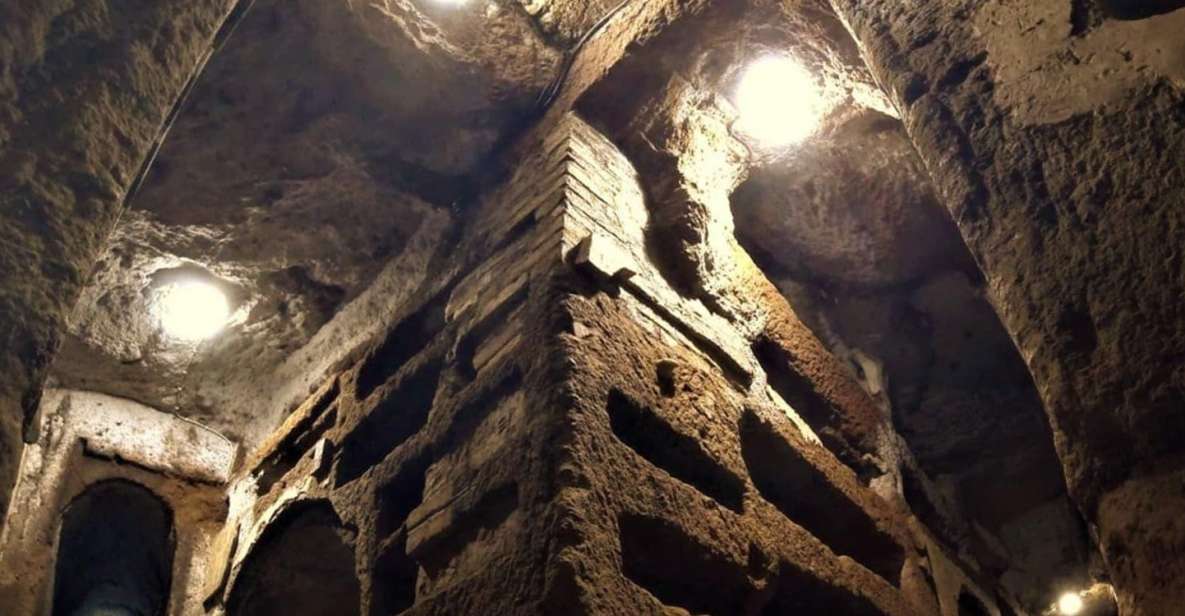
You’ll learn that “catacomb” is tied to place. The area where San Sebastiano sits was originally a deep depression used for extracting pozzolana, known in Latin as ad catacumbas—near the cavities. Later, the name became shorthand for an underground cemetery, and that’s exactly what you’re stepping into: a burial city carved below the streets.
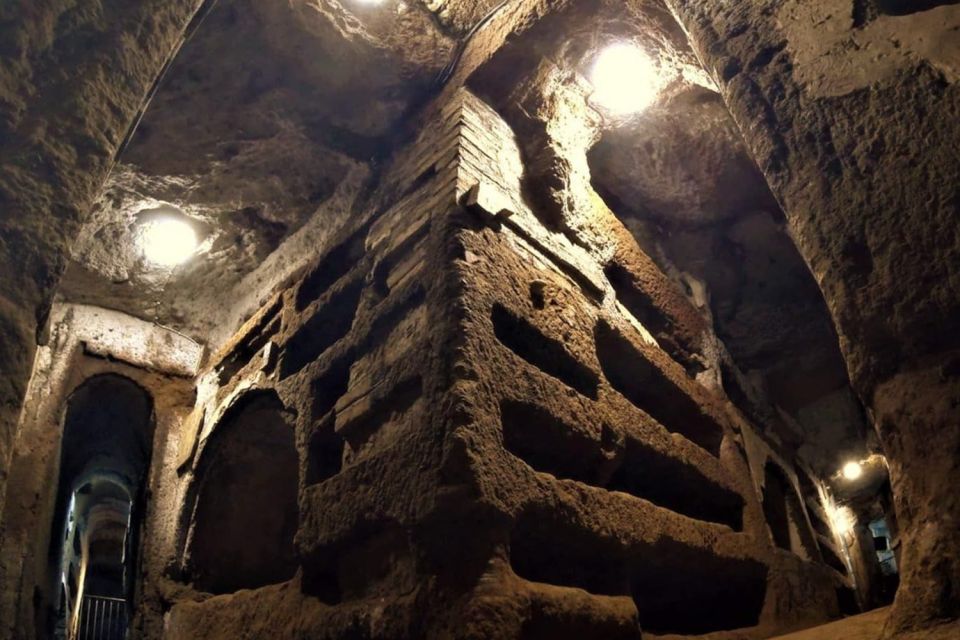
What I like most is that the tour doesn’t treat this as a single moment in time. You’re shown how the underground galleries were reused to create new burial niches, while on the surface the site gained features like columbaria and residential systems with wall paintings. It’s the physical evidence of continuity and change.
You can also read our reviews of more tours and experiences in Rome


From Quarry to Burial City: What the Underground Is Made Of
The catacombs start with a practical purpose, not a sacred one. First came quarrying. Then, as the area was increasingly exploited from the first century onward, the underground spaces turned into a burial resource—literally a place people returned to, repurposed, and built around.
As you go, it helps to remember that reuse was normal. Instead of starting from scratch, older parts of the galleries were repurposed for new burials. Over time you also see signs of the site’s expansion above ground, including at least two residential setups (often described as small and large villa areas) with notable wall decorations.
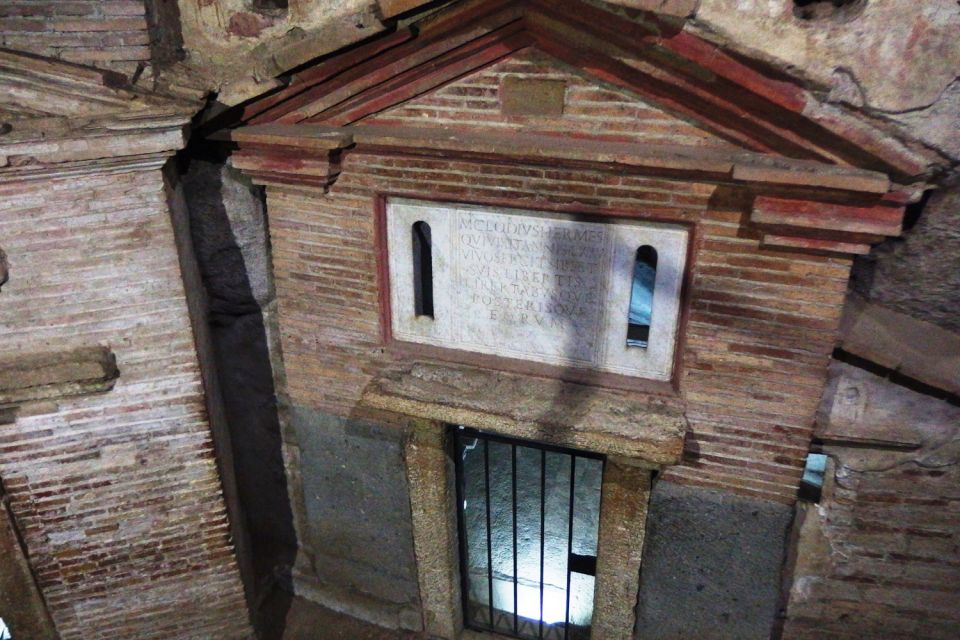
By the middle of the second century, the valley bottom was buried to form a pitch, and three mausoleums were built in succession by different patrons: Clodius Hermes, the Innocentiores, and Ax. The tour’s value is how it connects those names to the larger idea that Rome’s elite and its institutions shaped burial practices too, not just individuals.
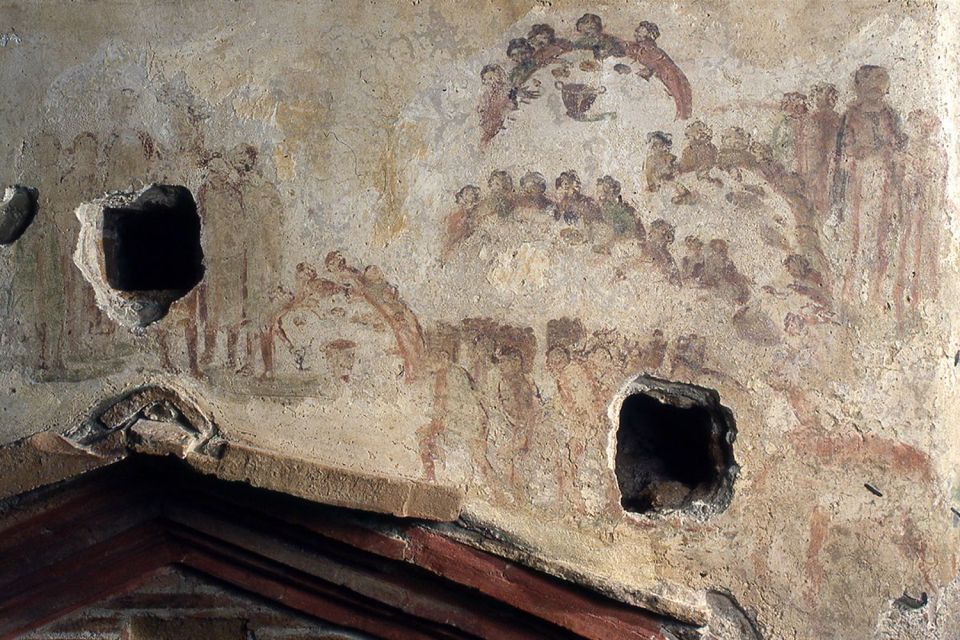
Later, the site continued evolving. Another burial phase made room for the construction of the triclia, a portico set along a wall featuring many graffiti invocations addressing SS. Peter and Paul, venerated together in this place around 250. That graffiti detail matters because it shows real voices—devotion written where passersby could see.
The Christian Layer: Sebastian, Eutichio, and Constantine
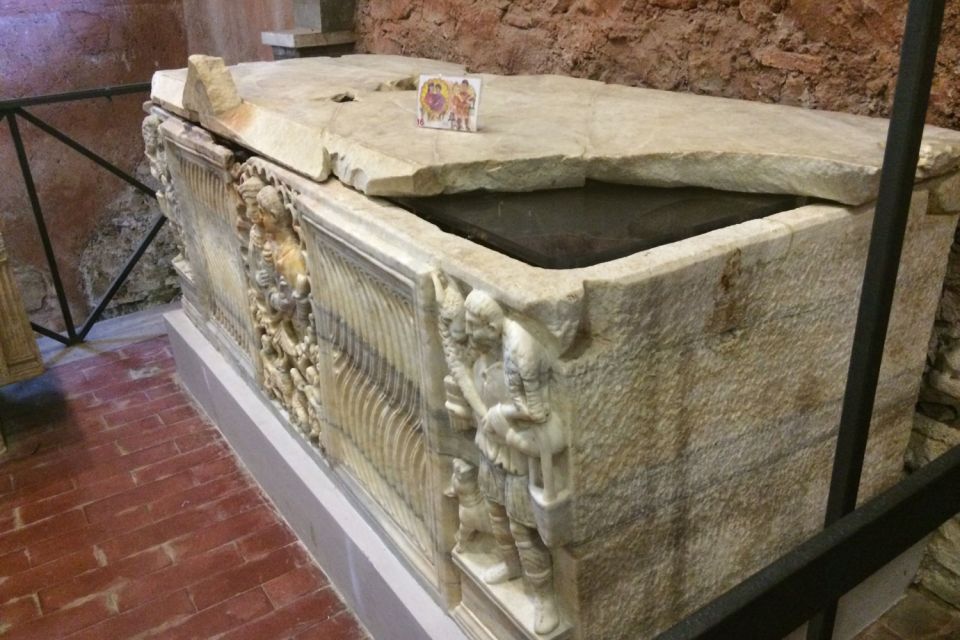
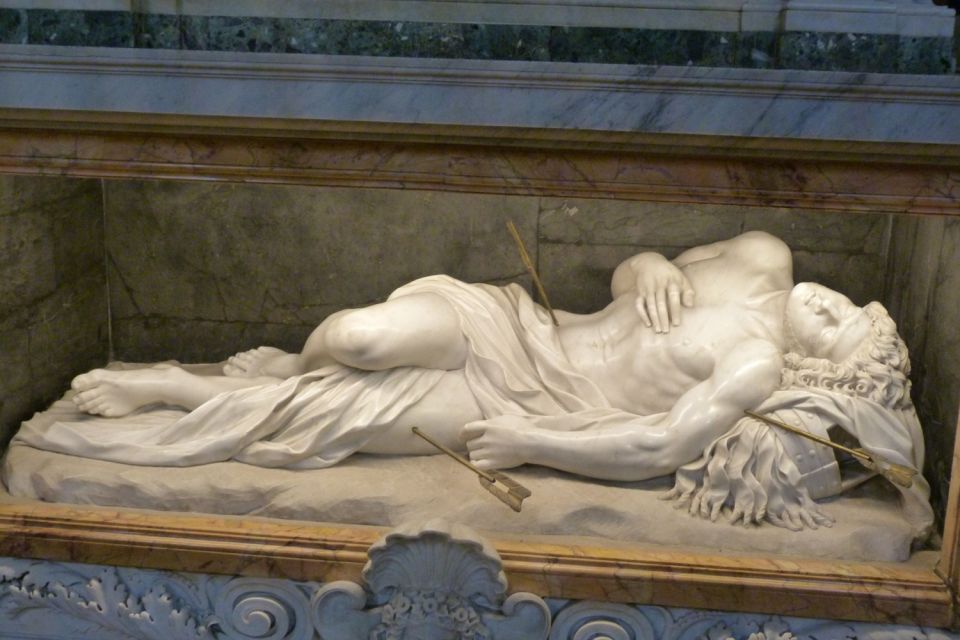
Eventually the site becomes famous for martyrs. By the third century, the catacomb housing the tombs of martyrs Sebastian and Eutichio began to develop into the form we connect with this location today. You won’t just see “old rooms”; you’re guided through why people returned—because specific tombs and saints created a pull, spiritually and socially.
And then comes the bigger shift under Constantine (306–337). Constantine had a basilica built in a circiform shape, described as resembling a Roman circus. That detail gives you perspective: the underground burial world wasn’t sealed off from the public world. It fed into a visible, state-connected setting above it.
This overlap is what makes the guided part feel worth your money. Even with only a short visit, the guide helps you place what you’re seeing into a timeline—from quarrying depression, to layered burial spaces, to Christian martyr focus, to Constantine-era architecture.
What Happens on the 30-Minute Guided Walk
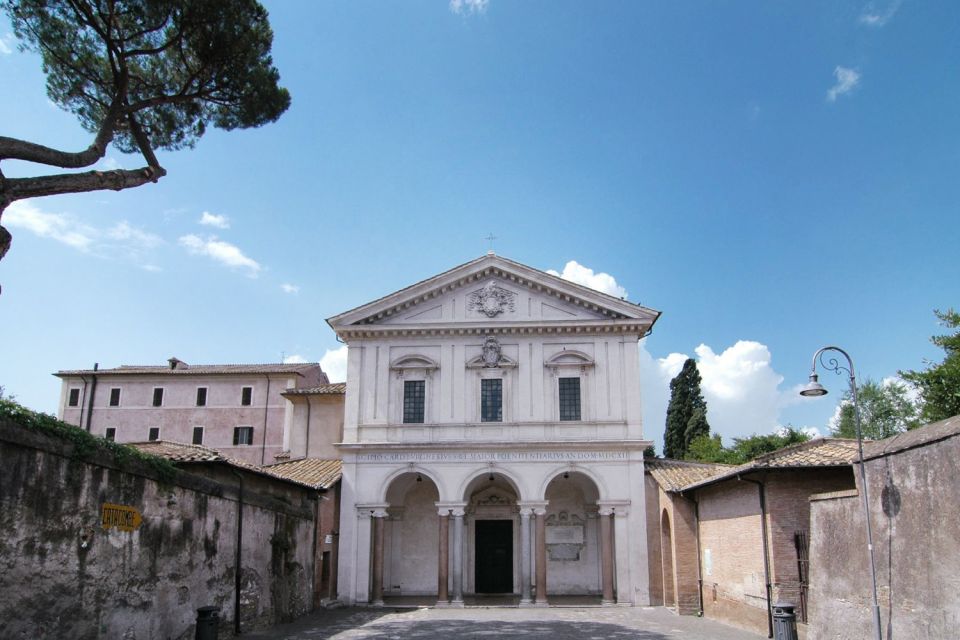
This ticket is built for a quick, structured underground experience. You’re looking at about 30 minutes total, and most of that time is spent moving through the galleries with a live guide rather than roaming on your own.
Because the tour is short, you should treat it like a “most important stops” route. You’ll get a guided walking path that highlights key burial areas and the site’s development story. Expect the guide to stop occasionally for explanation at points where there’s enough space to regroup, then continue in single-file or tight formation once you’re back in narrow corridors.
One detail from on-the-ground experience that I think you’ll notice: underground spaces can feel busy even when the group isn’t huge. The tour is designed for flow, which is great on a hot day or when you want an efficient Rome underground stop. If you’re hoping for a slow, lingering experience, this format may feel too fast.
In the basilica area connected to the site, you’ll also want to pay attention to visual details. Some visitors point out that there are stunning carved wood ceilings there, and it’s one of the calmer spots where the guide’s storytelling can land even better.
No Photos Inside: Plan to See With Your Own Eyes
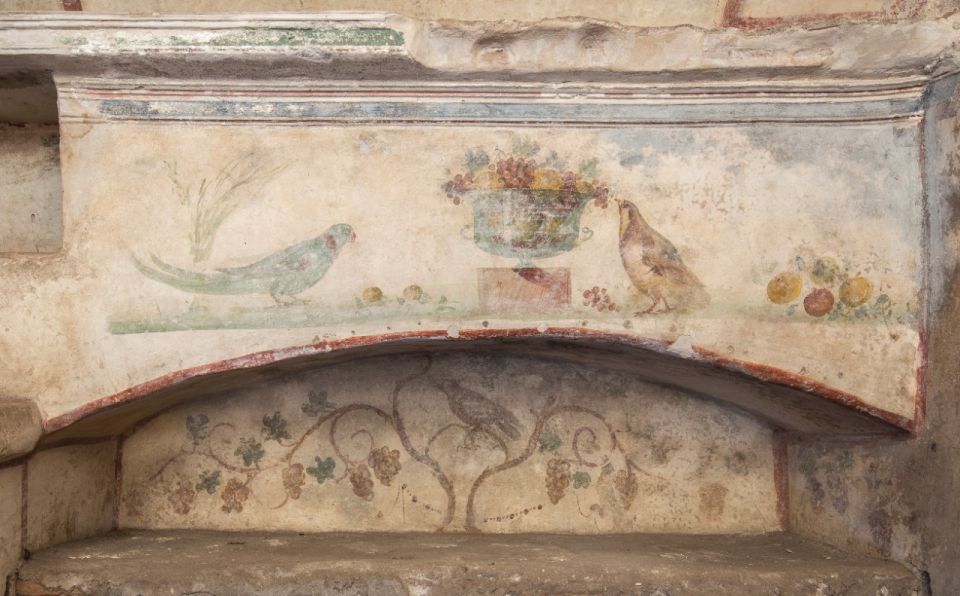
The biggest practical rule is simple: no photography inside the catacombs. That changes how you experience the underground. You’ll need to use your eyes and your memory, and that’s not always a bad thing. When you don’t have a screen in front of you, you notice more—shapes of niches, the way the corridors bend, and how the space carries history through reuse.
If you want photos, plan them for allowed areas. The guidance you’re given will clarify where cameras are permitted. Still, assume your best visuals are the ones you can’t immediately share online, which is exactly what makes the place feel more personal.
You can also read our reviews of more guided tours in Rome


What to Bring (and Wear) for Rome’s Underground Cool
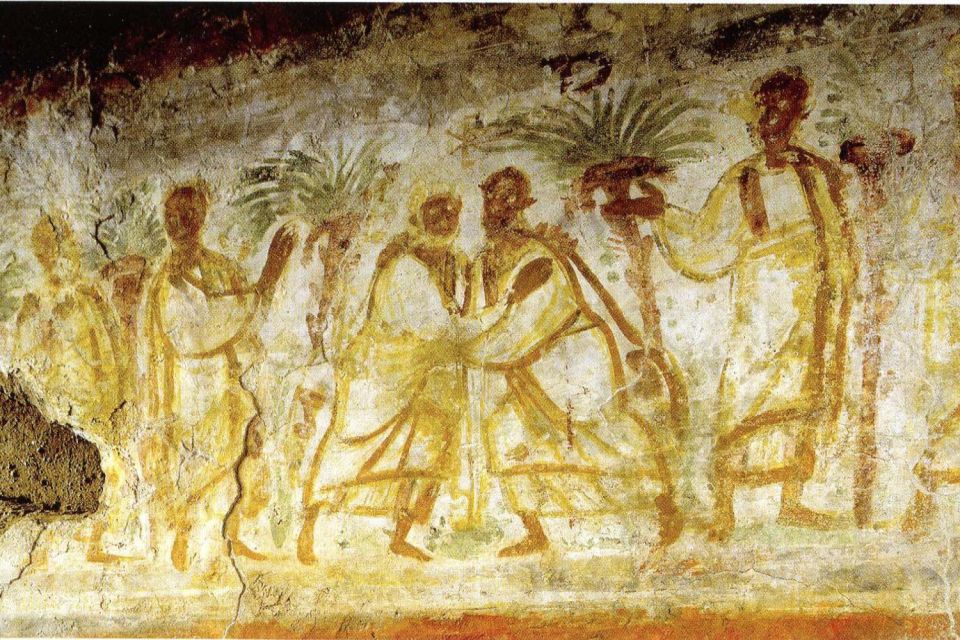
This is not just “put on shoes and go.” The catacombs can feel cooler as you go down, and the ground can be uneven underfoot. Bring comfortable shoes you can walk in for a short but real distance, and pack a jacket or warm layers even if Rome is hot above.
Also remember it’s an underground walk in close quarters. That’s why restrictions matter:
- No baby carriages
- Not suitable for people with mobility impairments
- Not suitable for claustrophobia
If any of those apply, you’ll be happier choosing a different Rome activity where you can move freely and breathe easier.
Price and Value: Is $16 for 30 Minutes a Fair Trade?
At $16 per person, you’re paying for two things: entry plus a live guide who gives you a tight story in a short time. That value can be great if you want meaning, not just “walk through corridors.”
Some people felt it might be cheaper if you buy the visit ticket on site instead of in advance. Still, paying more for convenience can be worth it when you want a specific time slot and a clear plan for what you’ll see. And when the guide is good, the experience stays memorable long after the photos fade.
The sweet spot for this price is simple: you like guided context, you don’t want a half-day commitment, and you want a reliable “Rome underground” experience that stays focused.
Getting There and Starting on Time at the Ticket Office
This is a straightforward activity logistically: no hotel pickup. You go directly to the ticket office at the Catacomb and show your reservation at least 10 minutes before your scheduled tour.
That early arrival matters more than you might expect. Underground sites can be strict about timing because groups must move safely through narrow areas. If you show up late, you risk losing the start of your slot rather than slowly catching up.
Transportation-wise, it’s often convenient to reach the area via bus 118, and there’s a coffee shop and souvenir shop nearby that can help if you’re waiting for a start time or want a small break after.
Who This Tour Fits Best
This tour is a great match if you want a meaningful Rome stop without overthinking your schedule.
You’ll likely enjoy it most if:
- you like short guided experiences with a clear storyline
- you’re curious about how Roman burial customs evolved into early Christian sacred space
- you want something that works on a hot day because it takes you underground
It’s less ideal if you:
- need wheelchair-friendly routes (the tour isn’t suitable for mobility impairments)
- get anxious in tight spaces (it’s not suitable for claustrophobia)
- require photography inside (that’s not allowed)
Should You Book the Catacombs of St. Sebastian Tour?
If you want a fast, well-guided introduction to Rome’s underground Christian world, I’d book it. The 30-minute format is the main reason: you get the important context, you walk the site, and you’re not tied up for hours.
Skip it if you’re looking for long wandering time, or if claustrophobia or mobility needs make underground walking stressful. Also go in knowing that no photos inside means you’ll be relying on your own attention—and that’s often the best way to truly see a place like this.
FAQ
How long is the guided tour?
The tour is about 30 minutes.
What is the price for this experience?
The price is $16 per person.
Where do I meet the group?
Go directly to the ticket office of the Catacomb and show your reservation. Arrive at least 10 minutes before the scheduled tour.
Does this include hotel pickup?
No. Hotel pickup and drop-off are not included.
What languages are available for the live guide?
The live guide is available in English, Italian, Spanish, and French.
Is there free cancellation?
Yes, you can cancel up to 24 hours in advance for a full refund.
Is photography allowed inside the catacombs?
Photography is not allowed inside.
Is this tour suitable for people with claustrophobia?
No, it is not suitable for people with claustrophobia.
Is it suitable for people with mobility impairments?
No, it is not suitable for people with mobility impairments.
What should I bring?
Wear comfortable shoes and bring warm clothing/jacket.