REVIEW · ROME
Rome: Angels and Demons, the illuminati path
Book on GetYourGuide →Operated by Happy walks · Bookable on GetYourGuide
Dan Brown fans get a city map. This 2-hour Rome walk strings together the thriller energy of Angels and Demons with real landmarks tied to faith, power, and symbolism. You start in Vatican orbit, then move through some of Rome’s most famous corners with a live guide and quick stop-and-go photo time.
I especially like the St. Peter’s Square opening, because it gives you instant context before you head anywhere else. I also like the pairing of Piazza Navona’s Four Rivers Fountain with the Pantheon, since you get both baroque theater and ancient “how did they build that” scale in one short stretch.
One drawback to keep in mind is pacing and consistency. Some people report the tour ending early, and a separate issue popped up about the meeting point (so double-check you’re standing in front of the Obelisco at the right moment).
In This Review
- Key takeaways before you go
- St Peter’s Square and the Obelisco meeting spot
- Vatican City’s St. Peter’s Square: the big visual payoff
- How Castel Sant’Angelo turns into thriller scenery
- Piazza Navona: Four Rivers Fountain as the baroque centerpiece
- The Pantheon: ancient engineering with story relevance
- Santa Maria della Vittoria and the Ecstasy of Saint Teresa moment
- Finishing near Repubblica: a clean wrap and an easy next step
- Time, walking pace, and the 2-hour reality check
- Price and value: what $66 really covers
- Guide quality matters more than you’d think
- Who should book this Angels and Demons path
- Should you book it?
- FAQ
- How long is the tour?
- Where do we meet?
- What sights are included?
- What’s included in the price?
- Is transportation or food included?
- What languages is the tour offered in?
Key takeaways before you go
- St. Peter’s Square launch point right by the Obelisco area, built for a strong start
- Small group (up to 10), which makes Q&A feel possible even on a tight timeline
- Angels and Demons storytelling woven into church-and-power history as you walk between stops
- Fast, efficient stops (roughly 10–20 minutes each) with photo breaks built in
- Pantheon and Four Rivers Fountain get special spotlight time, not just a quick glance
- Family-friendly (when the guide is right), including one guide who handled a 10-year-old with patience
St Peter’s Square and the Obelisco meeting spot
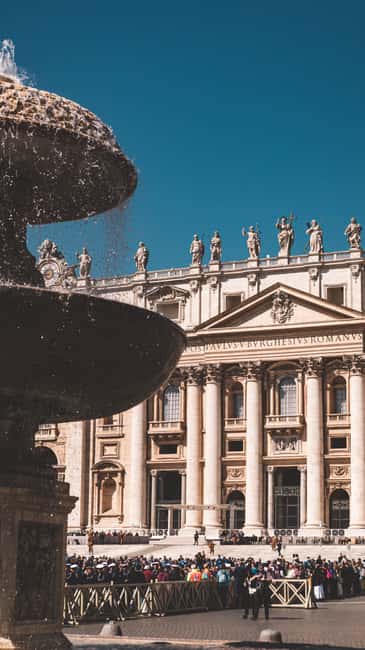
Your tour begins where Rome’s Christian center really feels like a stage: St. Peter’s Square. The meeting point is in front of the Obelisco in piazza San Pietro, so arrive a few minutes early and be ready to show your booking details. This matters because the route is short, and you do not want to miss the first briefing.
Expect the group to gather, listen to the guide set the “rules of the story,” and then start moving. In a thriller-style tour like this, the opening minutes are everything: you’re primed to read each location as part setting, part symbol.
Good to know: this activity is listed as not suitable for wheelchair users. That usually means uneven pavement and lots of walking, so plan accordingly if mobility is an issue.
You can also read our reviews of more tours and experiences in Rome.
Vatican City’s St. Peter’s Square: the big visual payoff
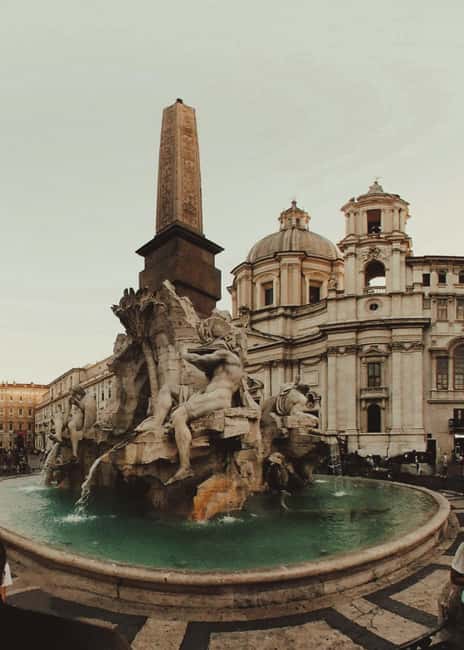
St. Peter’s Square is the kind of place where your brain flips into wide-angle mode. The guide’s focus here is on the spiritual heart of the Vatican and how it functions in the story you came for—plus details about the Basilica of St. Peter and Bernini’s square design.
Even if you’re not chasing conspiracies, you’ll likely enjoy the contrast: massive religious symbolism in a real-life public space that feels both solemn and theatrical. You get a sense of why writers use this setting to make scenes feel important, urgent, and believable.
Tip for getting more from this stop: look for the broad, architectural composition from a distance first. Then, once you’re in the thick of it, you’ll understand why the guide points certain directions out. When you’re on a 2-hour walk, that “first look” saves you time.
How Castel Sant’Angelo turns into thriller scenery
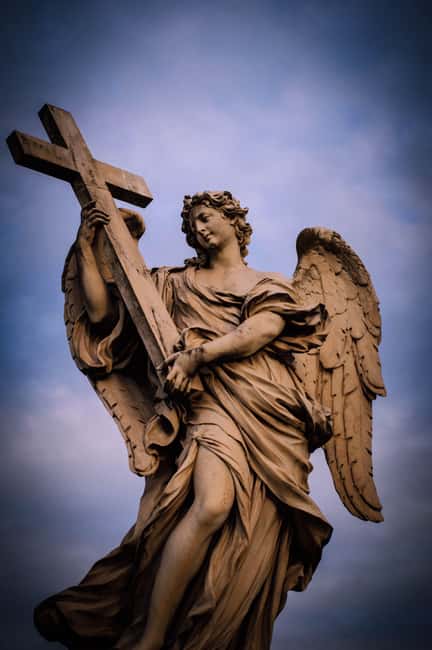
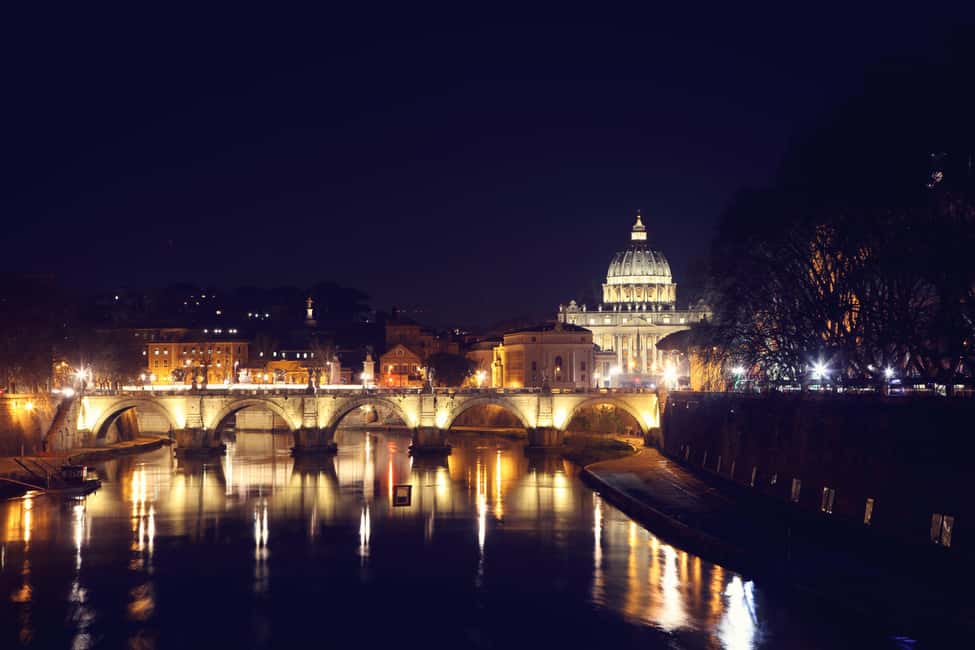
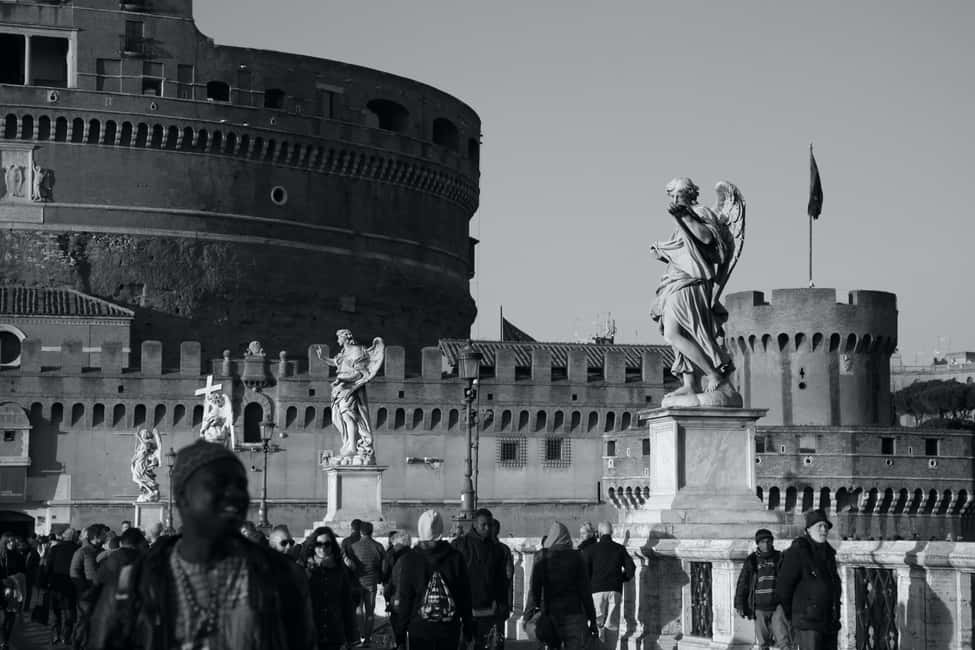
After Vatican Square, the route heads toward Castel Sant’Angelo. This is an imposing fortress above the Tiber River, and it plays like a plot hinge in the story the tour is built around.
You’ll get a photo stop, then time for a guided visit. Even with short timing, the goal is clear: help you connect the fortress’s role as a powerful “holding place” to the escape-and-conceal mood that drives the novel’s suspense.
What I like about putting Castel Sant’Angelo here is pacing. You go from church scale to fortress scale, and that shift keeps the tour from feeling like one long church lecture. If you’re the type who likes story logic (who’s where, who could hide, why this location matters), this stop should click.
Piazza Navona: Four Rivers Fountain as the baroque centerpiece
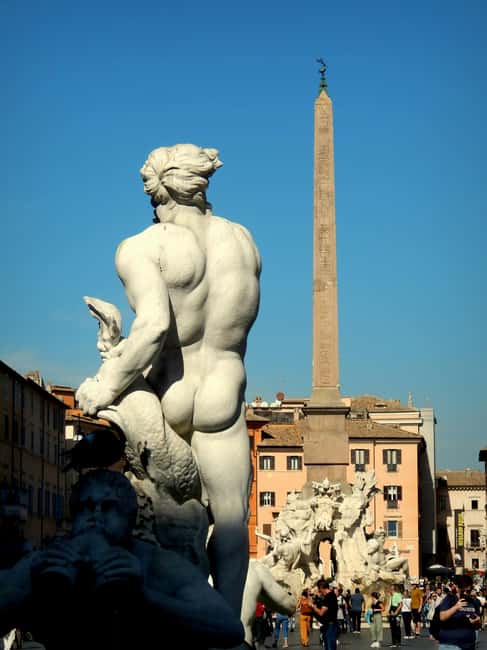
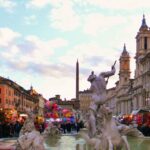
Next up is Piazza Navona, one of Rome’s most iconic, lively squares. Here, the tour points you to a specific highlight: the Fountain of the Four Rivers by Gian Lorenzo Bernini.
This stop is designed to be more than a glance-and-go. You’ll get photo time, plus a guided explanation that ties the fountain to the story’s key moments and the kinds of details people love to spot on their second or third visit.
Why this part works: Piazza Navona is visual “instant payoff.” You don’t need deep prep to enjoy it, and the fountain gives the guide an easy anchor for meaning—what looks symbolic, what feels staged, and why this kind of location shows up in the kind of fiction that thrives on secrets.
Quick practical note: squares can be crowded, and with a small group, you’ll still likely stand close. Keep your camera ready, but let the guide finish a thought before you start shooting everything. You’ll catch more.
The Pantheon: ancient engineering with story relevance
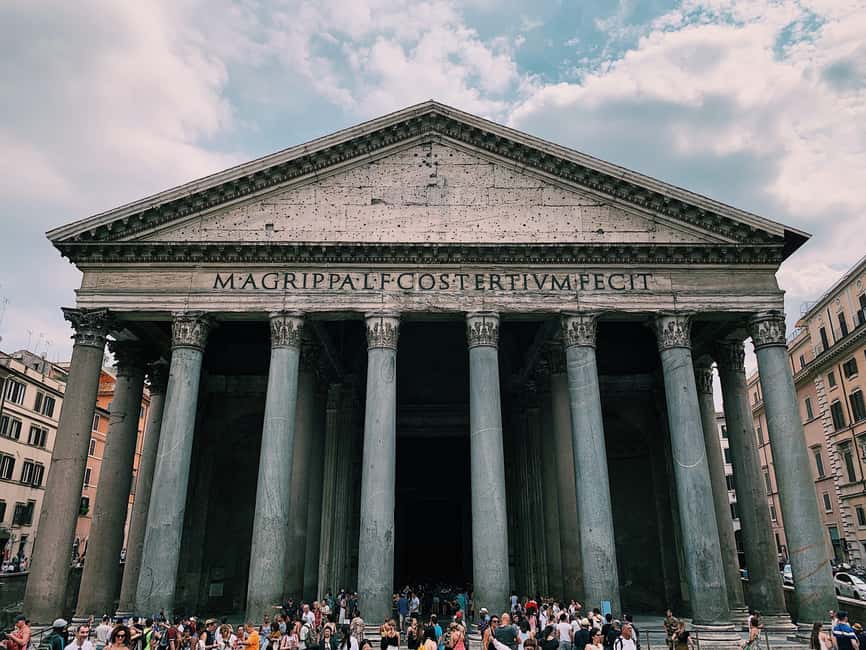
Then you shift to the Pantheon, one of Rome’s best-preserved ancient monuments. This is a major stop in the tour, with time for a photo moment and a guided visit.
The tour framing here includes the dome and the famous ancient identity of the site, including Agrippa and associated legends. You’ll also be looking for story-connected curiosities—this tour treats the Pantheon as both a marvel of ancient Rome and a powerful location for symbolic scenes.
What you can expect in real terms on a short tour: you’ll likely spend enough time to notice what makes the Pantheon different (especially its scale and dome), plus hear a few “this is why it mattered” explanations. If you’ve ever wished you could read a museum label but in human form, this is the kind of stop that usually delivers.

Santa Maria della Vittoria and the Ecstasy of Saint Teresa moment
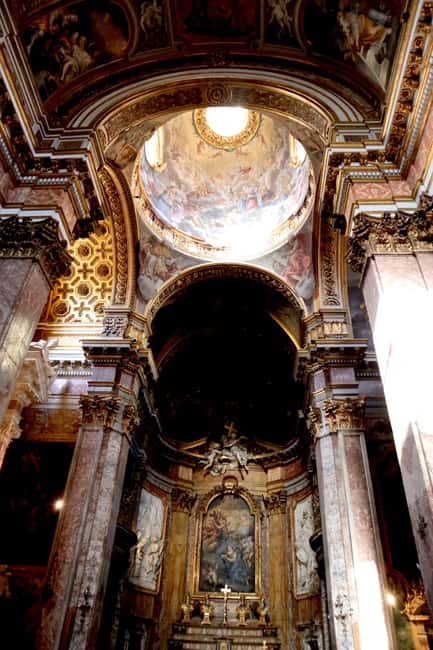
The final major landmark is Santa Maria della Vittoria, a well-known Baroque church. The highlight name here is Bernini’s Ecstasy of Saint Teresa, and the tour gives you time for photo stops and guided viewing.
This is a smart way to close the “Angels and Demons path” because it brings you back to emotion and detail. If earlier stops felt like big architecture and strong settings, this one is more about impact—how art uses drama to communicate something you can feel, even if you came for the fiction.
If the group is moving quickly, don’t let that rush make you skip your own looking time. Spend 30 seconds just watching how your eyes move across the sculpture and surrounding space. Then listen again to what the guide points out. It’s a good rhythm for a 2-hour experience.
Finishing near Repubblica: a clean wrap and an easy next step
The tour ends at Repubblica. That finish is practical because it drops you in an area with lots of walk options for food or further browsing afterward. You won’t be stuck miles away from transport choices after a short guided walk.
Also, because the overall duration is only 2 hours, the schedule is built for closure. If you want to linger somewhere, treat that as your own add-on: take a photo now, and if you still care later, you’ll know where to go back.
Time, walking pace, and the 2-hour reality check
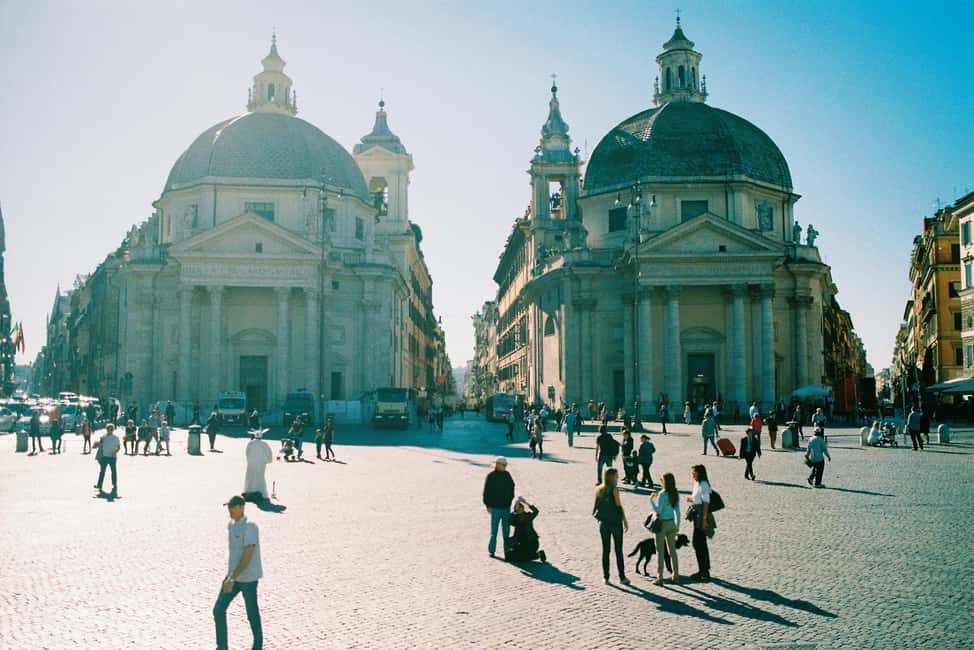
This is a short tour with focused stops. The typical rhythm is quick: a photo break and guided talk that lasts roughly 10 to 20 minutes depending on the stop.
That can be great if you’re doing Rome in “hits” mode. It’s also why the tour can feel uneven when pacing doesn’t match what you hoped for. One booking reported the tour ending earlier than expected, and another described the experience as more of a walk than a detailed explanation. If your main goal is heavy Dan Brown detail, you may want to set expectations: you’re getting story-and-landmark connections, not a long-form lecture.
My advice: go with a flexible mindset. If you want maximum content, plan to use your extra time in Rome afterward to follow up with independent reading and self-guided wandering.
Price and value: what $66 really covers
The price is listed at $66 per person for a 2-hour experience. What you’re getting for the money is a live guide, a bottled water, and an exterior-visit approach.
That last part is important. The included items mention exterior visit, so you should treat this as a walk-and-look style tour rather than a “multiple interiors, skip-the-line” deal. You do visit or view inside at some stops as described, but the safe expectation is that a lot of the time is spent in public spaces and viewpoints.
In value terms, I’d call this a decent buy if:
- you’re short on time in Rome,
- you like story-driven walking routes,
- you want a guide to point out what to notice,
- and you’ll be happy with quick, meaningful highlights.
It’s less of a slam dunk if you’re traveling mainly for deep art history or long museum-style time, because the tour format is intentionally tight.
Guide quality matters more than you’d think
The tour is run by Happy walks, and the group size is capped at 10. With a small group, you’ll usually get better interaction than big-bus tours. You also get language options: live English or Italian.
Guide quality looks like the biggest variable. In the feedback provided, one guide named Felice is singled out as calm and patient, answering many questions and even making room for a 10-year-old. That’s exactly the kind of guide who turns a short stop into a memorable one.
On the flip side, there are reports of limited detail, and one comment flagged English quality. If English is a must, you might consider selecting an English option carefully and arriving ready to ask questions early.
A practical trick: ask a question on the first stop. You’ll quickly learn how the guide explains and whether the tone matches what you want.
Who should book this Angels and Demons path
You’ll probably love this if:
- you’re a Dan Brown fan and want your Rome landmarks organized through the story lens,
- you enjoy mixing major sights with a bit of mystery talk,
- you want a small-group guide for a short time window.
You might want to skip or rethink if:
- you want a long, detailed, “sit and learn” experience,
- you need full interior access and extended time in churches,
- your mobility needs make walking difficult (it’s listed as not suitable for wheelchair users).
Should you book it?
I’d book this if you’re the type who enjoys quick, high-impact sight connections and you’re okay with a tight timeline and exterior-first viewing. It’s built for people who want St. Peter’s Square to feel like the opening scene, Castel Sant’Angelo to feel like the escape route, and the Pantheon/Four Rivers Fountain stops to anchor the mood with real Rome landmarks.
I’d pause before booking if you’re specifically hunting for very detailed “every secret explained” information or if you’re concerned about tour length matching the schedule. If you do go, show up early at the Obelisco meeting point and be ready to ask questions from the start, since that’s when the tour’s value tends to become obvious.
FAQ
How long is the tour?
It lasts 2 hours.
Where do we meet?
You meet in front of the Obelisco in piazza San Pietro.
What sights are included?
The tour covers St. Peter’s Square, Castel Sant’Angelo, Piazza Navona (including the Fountain of the Four Rivers), the Pantheon, and Santa Maria della Vittoria, ending near Repubblica.
What’s included in the price?
A bottle of water is included, along with an exterior-visit format.
Is transportation or food included?
No. Transport and food are not included.
What languages is the tour offered in?
The live guide offers English and Italian.