REVIEW · ROME
Rome at Night Bike Tour
Book on GetYourGuide →Operated by Fat Tire Tours - Italy · Bookable on GetYourGuide
Rome looks better when the streets cool down. This 3-hour Rome at Night Bike Tour helps you see the parts of the city many visitors skip, moving at an easy pace with a real guide telling you what you’re actually looking at. I really like the Trastevere start, because it shifts you from daytime sightseeing into the city’s more relaxed evening mood fast. I also love that you get one of the best chances for a St. Peter’s Basilica viewpoint without spending your whole night standing in lines.
One thing to plan for: the tour includes wine, but it’s more of a quick stop than a full sit-down experience, and it may be served in a simple setting (so don’t expect a restaurant meal). Also, even though the tour is called night, parts of the route may still feel like early evening depending on when you go—worth knowing if you’re chasing truly dark streets.
In This Review
- Key highlights to know before you pedal
- How the Fat Tire night ride works in real life (3 hours)
- Trastevere after daylight: the neighborhood that sets the mood
- Castel Sant’Angelo to the Tiber: rolling from medieval to scenic
- Wine by sunset: what the stop is like (and what to expect)
- St. Peter’s Basilica viewpoint: the Vatican area told the right way
- Spanish Steps and major squares: photos with fewer headaches
- Bikes, guides, and the small details that matter
- Value for $53: what you’re buying besides the sights
- Who should book this Rome night bike tour
- Should you book Rome at Night Bike Tour?
- FAQ
- How long is the Rome at Night Bike Tour?
- Where do I meet the tour?
- How much does the tour cost?
- Is a bike provided?
- Is a helmet included?
- Is wine included?
- Is food included?
- Does the tour run in bad weather?
- Are rain ponchos provided?
- What language is the guide?
Key highlights to know before you pedal
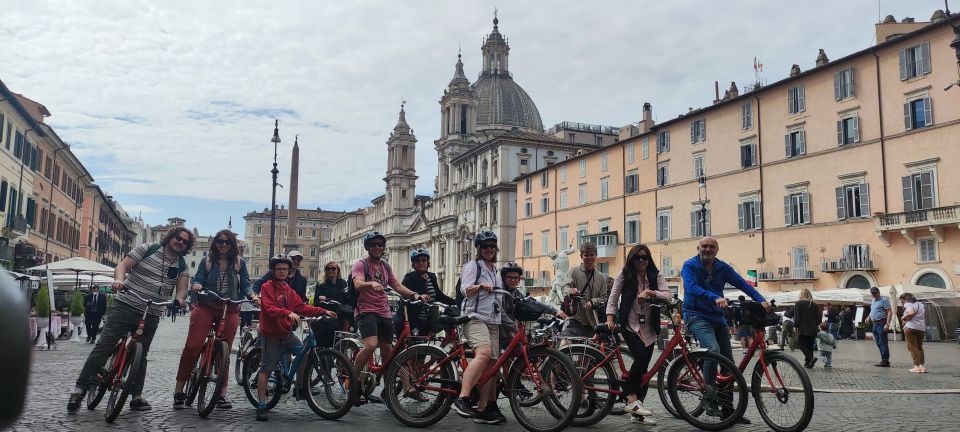
- Trastevere nightlife vibes: you’ll ride into the older, lived-in side of Rome first, where people actually unwind.
- Tiber River wine stop: a short pause with local red wine (and non-alcoholic options) as the day fades.
- St. Peter’s Basilica viewpoint: the guide steers you toward what can be a standout photo angle of the Vatican area.
- Spanish Steps with less crowd energy: you get the iconic photo moment without feeling stuck in a mass.
- Condotti and the main-city glide: you’ll cycle along grand streets like Condotti and connect multiple major squares efficiently.
- A guide who keeps it moving: stops are paced so you learn what matters and don’t get bored waiting.
How the Fat Tire night ride works in real life (3 hours)
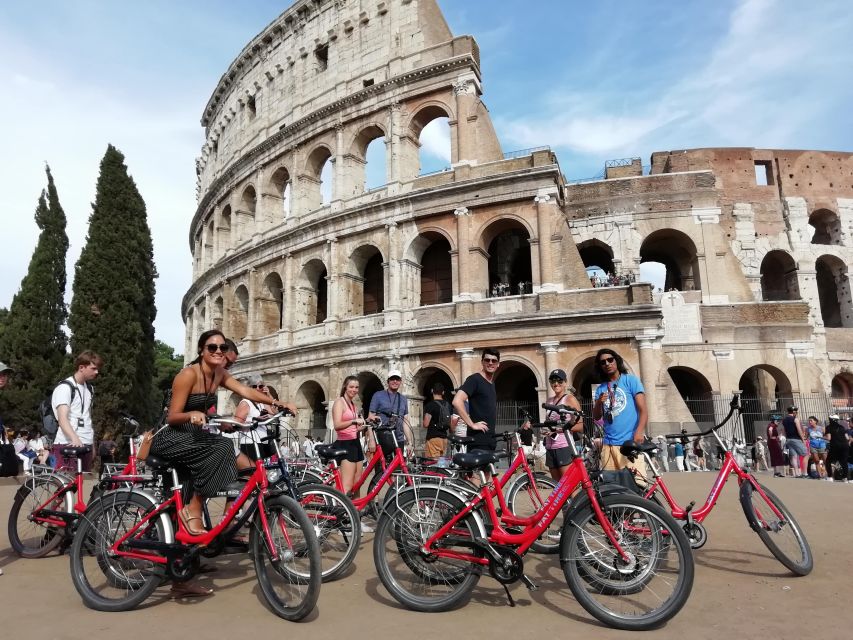
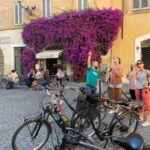
This is a simple, active way to see Rome after a day of temples and ticket lines. You meet at Via dei Delfini and should arrive about 15 minutes early so you can get fitted with your bike. Helmets are included, but they’re optional—still, I’d wear one, especially if you’re not used to city riding.
The tour runs rain or shine, and the operator provides rain ponchos at the partner office free of charge. That matters because Rome weather can flip quickly, and you don’t want to waste the evening stuck indoors. Bring weather-appropriate clothing you can layer, plus something grippy for pedals—your comfort will affect how much you enjoy the ride.
In terms of pace, think “guided roll” rather than hard exercise. You’ll stop often enough to hear stories and take photos, but the bike is the main transport, so you cover a lot more ground than you could on foot in the same time.
You can also read our reviews of more cycling tours in Rome
Trastevere after daylight: the neighborhood that sets the mood
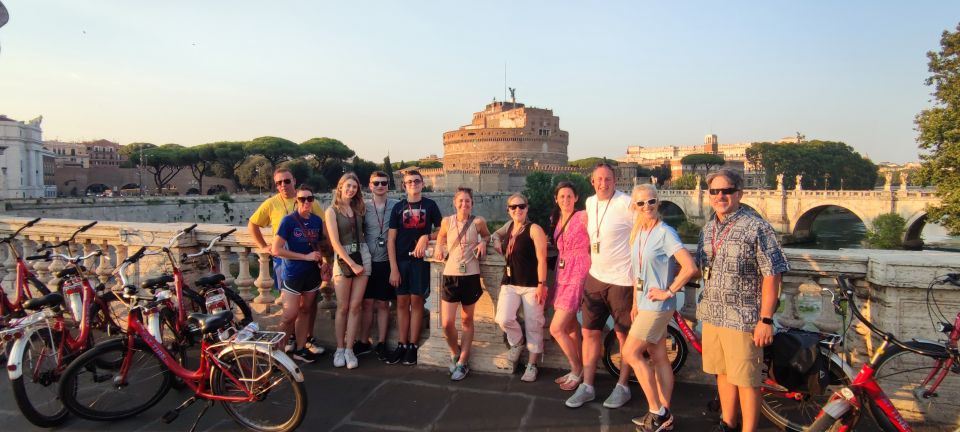
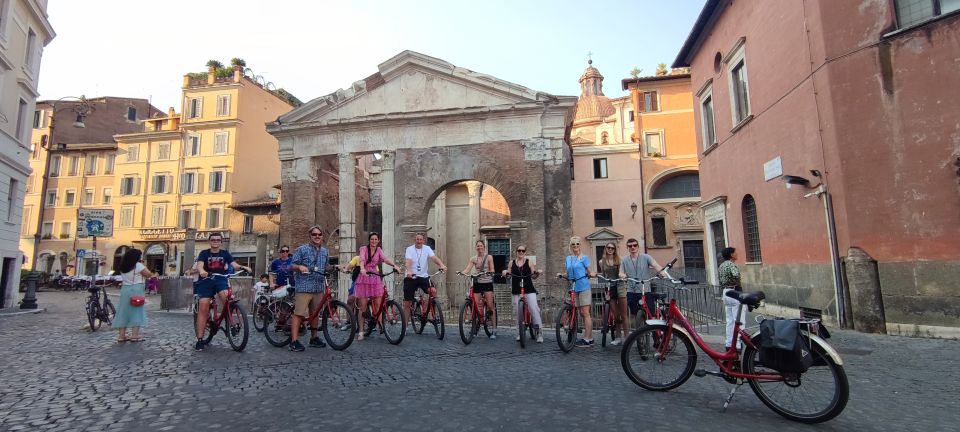
The route starts in a part of Rome that feels older and more human-sized, with lanes where the city sounds different than the major tourist strips. You pass Portico d’Ottavia, then head into Santa Maria in Trastevere, a classic area where the architecture and street life change how you experience the city. This is where the tour earns its name, because Trastevere is one of the first places in Rome where evening feels like evening, not just an extension of the day.
You’ll also spend time around Piazza Trilussa and Farnese Palace. Even if you’re not an architecture fanatic, these stops work because they give you context. You see how Rome’s layers build on each other—older shapes and power-houses next to everyday life—so the city doesn’t feel like a checklist.
What I like about starting here is timing. You’re fresh enough to notice small details, and you’re not still thinking like a “day tourist.” By the time you reach the busier sights later, you’ve already switched gears into the rhythm Rome uses after work.
Castel Sant’Angelo to the Tiber: rolling from medieval to scenic
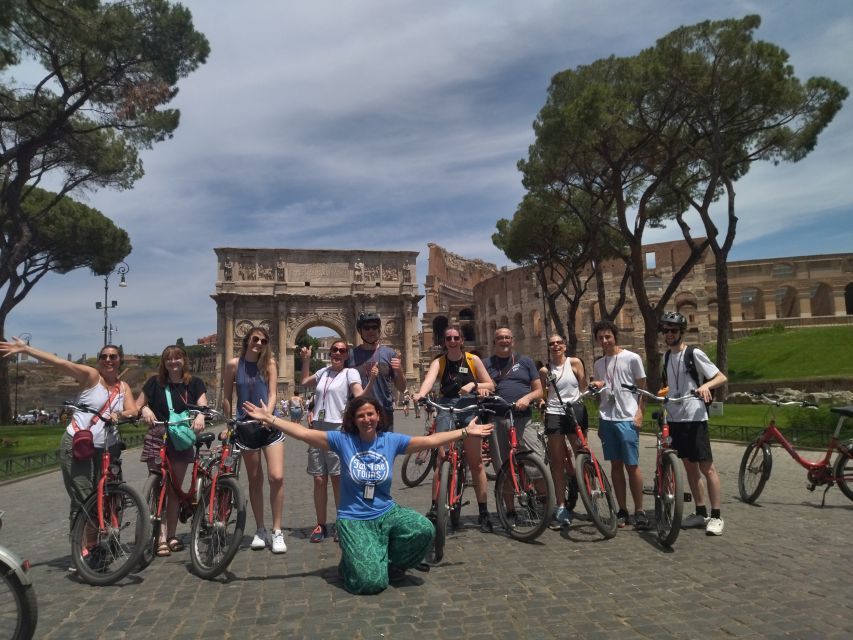
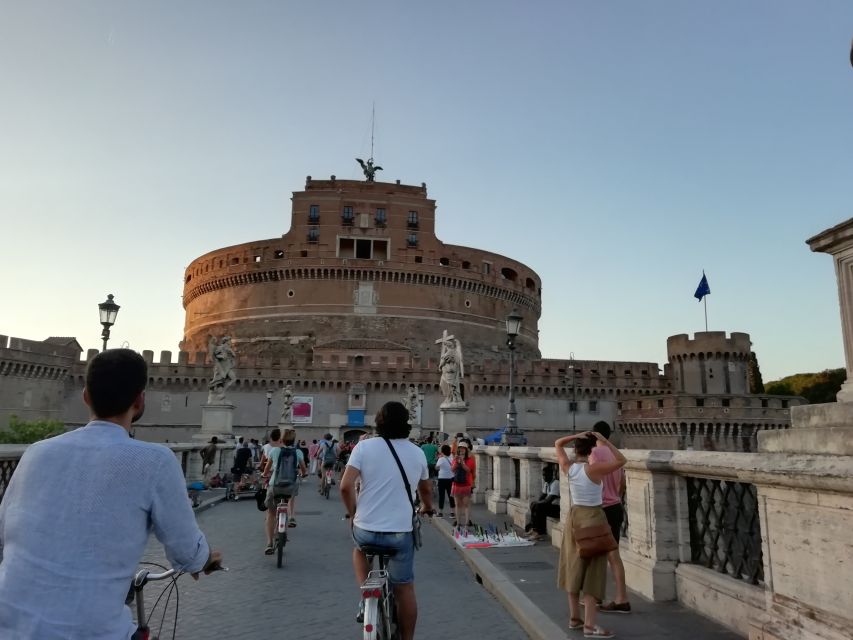
As you keep riding, the feel changes again. You’ll head toward Castel Sant’Angelo, which is more than a landmark on a route—it’s a bridge between parts of Rome that often get visited separately. The bike format helps here: it turns connections into a story. You’re not just looking at buildings; you’re moving through the city’s geography.
Then comes one of the most practical—and enjoyable—moments of the tour: the Tiber River cruise and stop. You get that slow, scenic flow where the city seems to loosen up. In the reviews, people especially liked this moment because it breaks the sightseeing pattern and gives you a chance to breathe, look around, and watch the light shift.
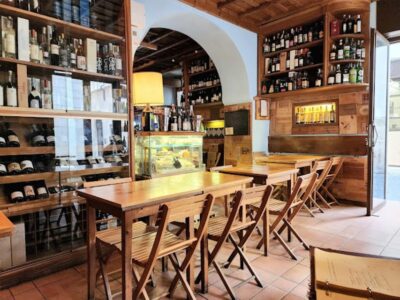
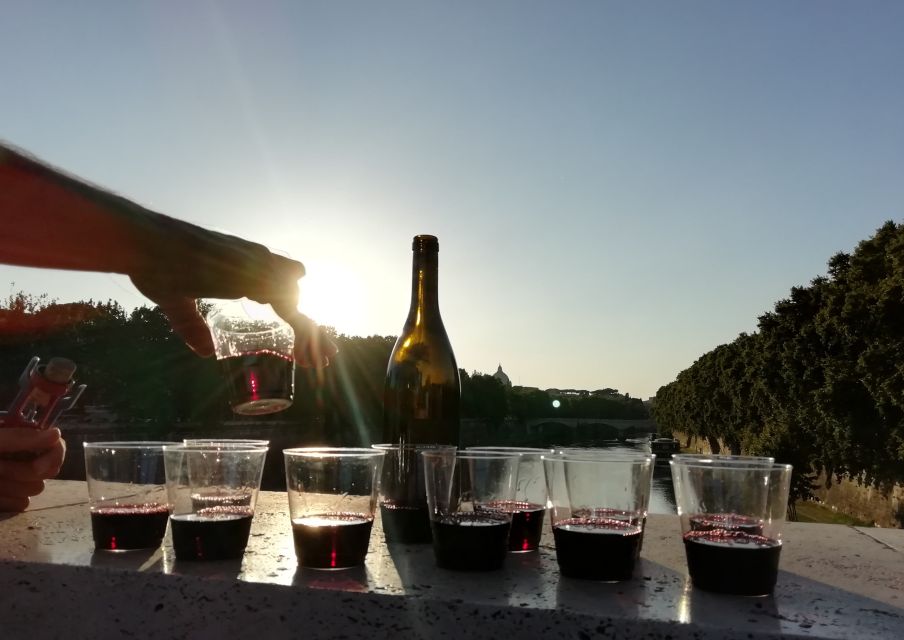
You’ll stop for wine along the river. Local red wine is included, and there are non-alcoholic options too, so you’re not forced into alcohol just to participate. Expect this to be a quick, straightforward pause rather than a long lounge session—think “taste and enjoy the setting,” not “dinner.”
Wine by sunset: what the stop is like (and what to expect)
This is the kind of included detail that can either make or break a shared-tour experience, and this one lands pretty well. The best version of it is exactly what you hope: a calm river moment where the guide’s commentary helps you look at Rome as more than landmarks.
That said, one reviewer noted a mismatch between expectations and reality: they expected the wine to feel more like a restaurant-style experience, but it can happen in a public setting, and the service may be more casual. So if you’re a wine-trip person who cares about the setting as much as the drink, just go in with the right mindset. You’re paying for a bike tour + guide + a small tasting moment, not an elaborate meal.
The good news: you’ll still get the value of the break. After a full day, the body likes a pause, and the river setting does the job.
St. Peter’s Basilica viewpoint: the Vatican area told the right way
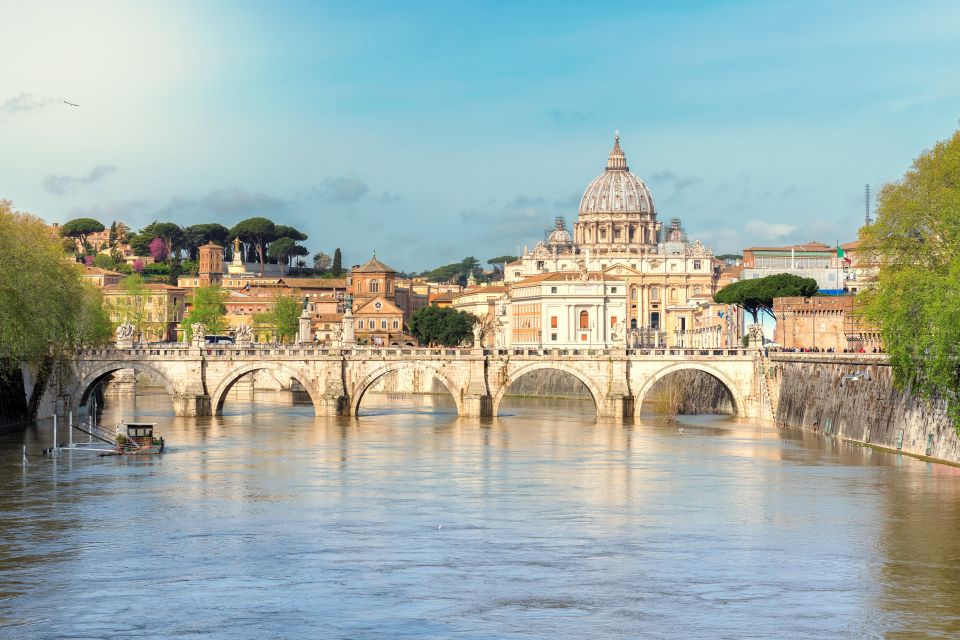
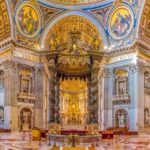
The most famous part of Rome on this tour is also where the guide earns their keep. You’ll head into the Vatican-side zone and pass through Piazza San Pietro. The big promise here is the beautiful view of St. Peter’s Basilica, and the way the tour sets it up matters. You don’t just arrive and hope you’ll find a decent angle; the guide helps you reach a viewpoint and ties it to what you’re seeing.
This is where you’ll get the stories and practical tips that make a later Vatican visit easier. Since the guide shares facts and anecdotes about the Vatican and its history in Rome, you’re not just looking at a giant church—you’re understanding why the area matters. One very useful takeaway from the tour concept is that it helps you plan your next steps if you go back on your own later.
Two practical considerations:
- It can get crowded around the Vatican area at many times of day. A bike tour helps you move through, but it won’t eliminate crowds completely.
- Even when you’re riding, you’ll still want to move carefully during stops so you can hear the guide over ambient noise.
If you’re the type who ends up fascinated by systems—how Rome organizes space, power, and religion—this part will click.
You can also read our reviews of more evening experiences in Rome
Spanish Steps and major squares: photos with fewer headaches
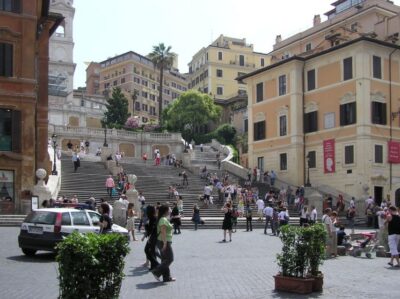
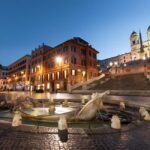
After the Vatican stops, the tour swings back toward the classic central Rome sights. You ride along Condotti, often described as one of the city’s more elegant, upscale streets, and then you reach the Spanish Steps. The main advantage here is timing and motion: the tour is designed so you can grab photos and enjoy the view without being stuck in the heaviest crowd pressure.
One reviewer called out the photo opportunity specifically, and that tracks with how this works. The bike keeps you moving, so you’re not stuck in the “stand still, watch others” mode that can make the Spanish Steps feel stressful. You’ll also glide along streets that can feel surprisingly quiet at the right hour, which makes the whole experience feel more like Rome after hours and less like a moving version of a daytime walking circuit.
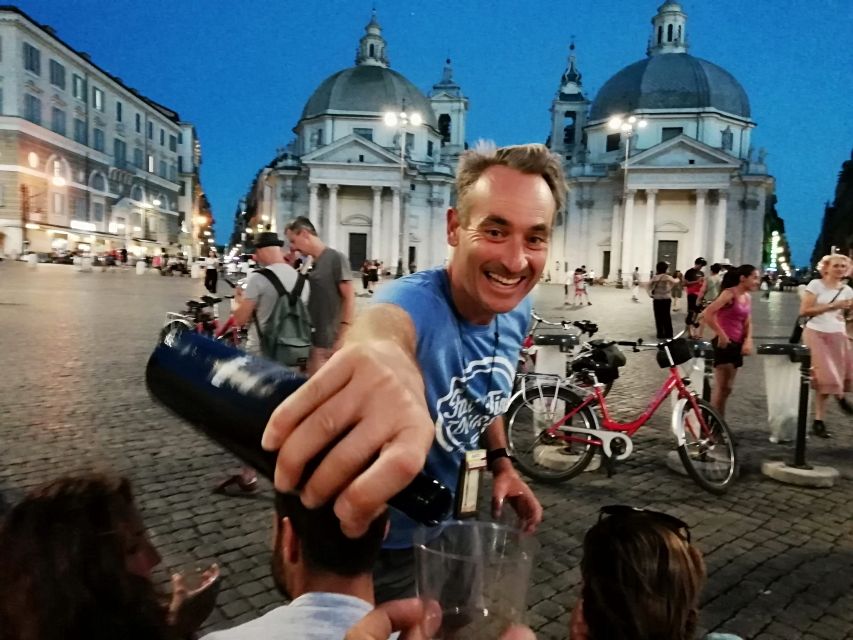
From there, the tour continues through key central points like Piazza del Popolo, Via del Corso, and Piazza Venezia, then returns you to Fat Tire Tours Rome. That sequence is a win if you want variety: you’re seeing different squares with different vibes, not just one “big highlight” after another.
Bikes, guides, and the small details that matter
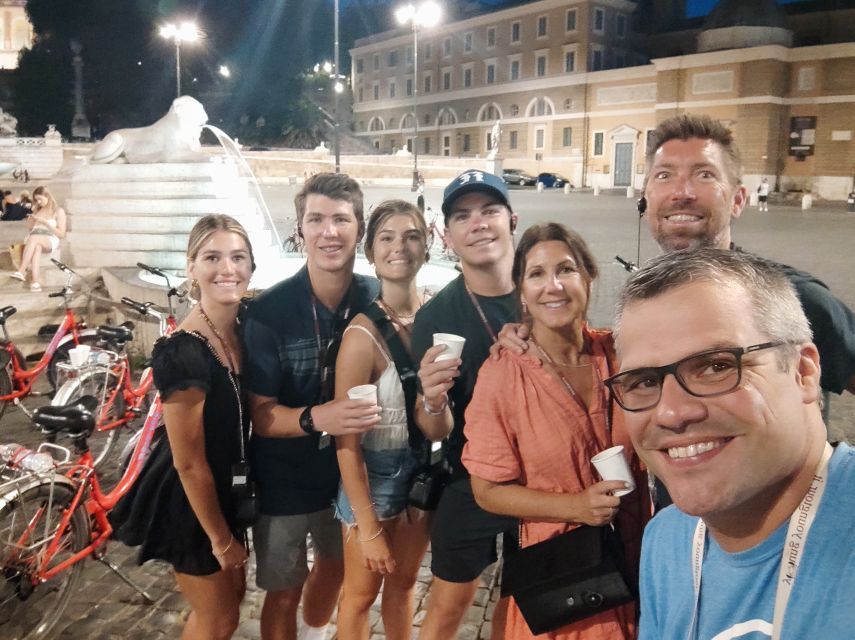
A night bike tour depends on basics: bike condition, guidance, and how well you can hear. In the reviews, people praised the bikes as being in very good shape and noted that stops are short enough to keep momentum. One traveler also mentioned good audio/earpieces so they didn’t miss anything, which is a big deal when you’re riding through busy streets.
Guide style is another big factor. You might get a guide like Marcello, praised as charismatic and helpful, or Toni, praised as a great guide who covered a lot in three hours. Even if you don’t care about biographies of guides, the practical value is the same: a strong guide helps you connect dots quickly, so you leave with mental maps, not just photos.
And yes, crowds can affect comfort. One review mentioned that passing crowds and bridges’ gate areas wasn’t always easy. That’s normal in a city like Rome, where street design can funnel people. The upside of doing it by bike is that you still cover a lot more than if you tried to do it all by foot.
Value for $53: what you’re buying besides the sights
At $53 per person for about 3 hours, you’re paying for four things: transportation (bike), an official guide, timed stops that keep you from wasting time, and included wine with non-alcoholic options. It’s not a food tour—there’s no full meal included—so consider adding dinner plans after.
Here’s how I think about value for a tour like this:
- If you want one evening where you knock out major sights plus a neighborhood vibe, this gives efficiency.
- If you’re tired from the day, the bike takes some pressure off your legs.
- If you care about learning, the guide commentary can turn “I saw St. Peter’s” into “I understand what I’m looking at.”
The only “value risk” is expectation mismatch around the included wine and how casual the stop might feel. If you want a wine evening in a restaurant, this is not that. If you want a pleasant, guided tasting moment tied to the Tiber and sunset, it fits the bill.
Who should book this Rome night bike tour
This is a great fit if you:
- Can ride a bike comfortably and want a low-stress way to cover distance
- Want a mix of Trastevere nightlife and major Rome landmarks
- Prefer evening routes that feel slightly calmer than midday
- Like guided stories more than silent sightseeing
It’s not for you if:
- You’re pregnant, can’t ride a bike, use a wheelchair, or are visually impaired
- You’re traveling with children who need a tag-along trailer (trailers aren’t available for this tour)
If you’re deciding between a pure walking tour and a bike tour, this one is a smart compromise: you get movement, but you still get guided stops long enough to make the city feel real.
Should you book Rome at Night Bike Tour?
Yes—if you want an evening circuit that mixes neighborhood mood with top sights, this is a strong choice. The tour’s biggest strengths are the Trastevere start, the Tiber wine pause, and the way you reach St. Peter’s Basilica with helpful guidance instead of guessing your own photo angle. Add the Spanish Steps time and the central-square routing, and you get a lot of Rome in a short, manageable window.
Don’t book it expecting a fully “dark night” experience at every moment, and don’t expect the wine stop to feel like a restaurant service. Go in for the ride, the guide, and the specific evening atmosphere—and you’ll be glad you did.
FAQ
How long is the Rome at Night Bike Tour?
The tour lasts 3 hours.
Where do I meet the tour?
You meet at Via dei Delfini. Arrive 15 minutes early for bike fitting.
How much does the tour cost?
The price is $53 per person.
Is a bike provided?
Yes, the bike is included.
Is a helmet included?
Yes, helmets are included, though they are not required.
Is wine included?
Yes. Wine is included, and non-alcoholic options are available.
Is food included?
No food is included.
Does the tour run in bad weather?
Yes, it runs in rain or shine.
Are rain ponchos provided?
Yes. Rain ponchos are available at the partner’s office free of cost.
What language is the guide?
The tour is guided in English.