REVIEW · ROME
Rome: Capuchin Crypt & Rome’s Dark Secrets Small Group Tour
Book on GetYourGuide →Operated by Dark Side City Tours · Bookable on GetYourGuide
Bones under a church stop you cold. This intimate Rome tour mixes a visit to the Capuchin Crypt with a guided walk through historic corners tied to love, betrayal, and wartime tragedy.
I love the small-group format (max 10), because the guide can slow down when your questions hit, and the stories land instead of racing by. You also get a focused route: you’re not just ticking off famous sights, you’re learning why certain streets feel heavy at night.
One thing to plan for: the Crypt has dress rules. Shoulders and knees must be covered, and you can buy a covering on site for €1 if you forget—plus the tour isn’t wheelchair-friendly.
In This Review
- Key Things You’ll Remember
- Piazza Barberini to Piazza Navona: What the Evening Route Covers
- Capuchin Crypt: 3,500 Bones, Rules, and How the Guide Tells It
- From Via Rasella to Trevi Fountain: Love, Betrayal, and a Wartime Scar
- Pantheon Area Ghost Stories and the Old Butcher Shop Legend
- Price, Small-Group Size, and What Makes This Feel Personal
- Who This Tour Fits (and Who Should Skip It)
- Should You Book the Capuchin Crypt and Rome’s Dark Secrets Tour?
- FAQ
- How long is the Capuchin Crypt & Dark Secrets small group tour?
- Where do we meet the guide?
- How many people are in the group?
- What is included in the price?
- What’s not included?
- What are the Crypt clothing rules?
- Does the tour run rain or shine?
- Is the tour offered in English?
- Is it wheelchair accessible?
- What should I bring?
Key Things You’ll Remember
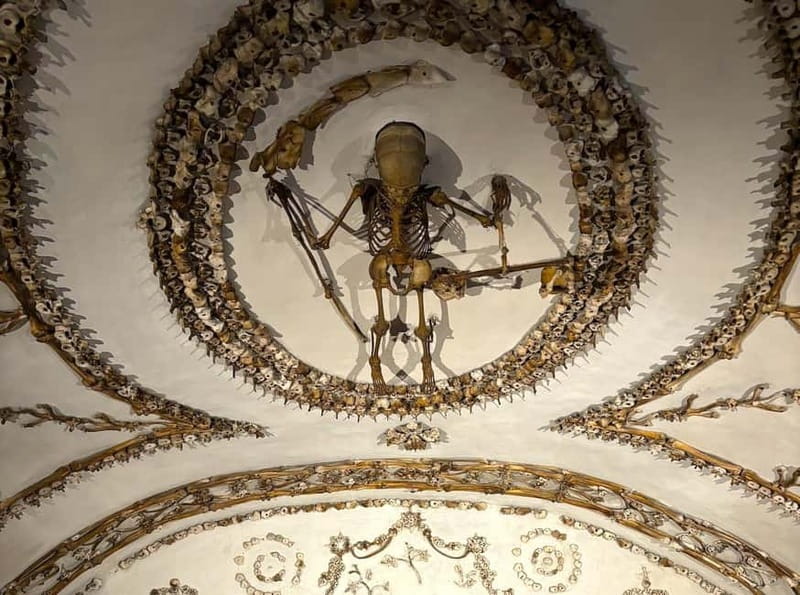
- 3,500+ bones arranged in unsettling patterns inside the Capuchin Crypt
- A no-costume, no-gimmick approach focused on real history and darker legends
- A tight walking route linking Via Rasella, Trevi Fountain, the Pantheon area, and Piazza Navona
- A small-group pace (max 10) that keeps the experience personal and attentive
- English storytelling from guides like Alethea, Alethia, Leo, Ivana, Maria, Ben, and Arielle (names you may see listed)
Piazza Barberini to Piazza Navona: What the Evening Route Covers
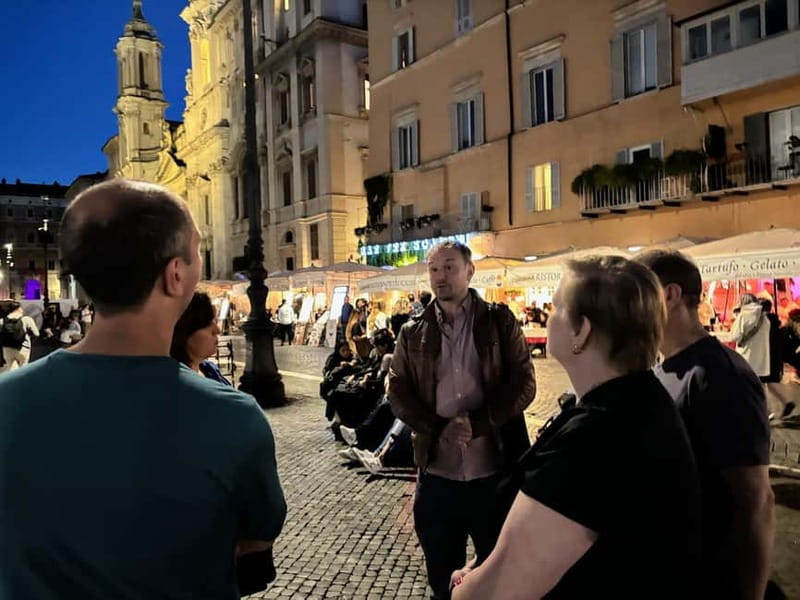
The tour starts at Piazza Barberini, right by the fountain in the middle of the square. Your guide will be holding a sign that reads Rome’s Bone Crypts and Dark Centre, which helps you lock in fast (and avoids that awkward early scramble). The vibe from the first steps is “let’s pay attention,” not “let’s take photos and run.”
From there, the route is built like a story arc. You’ll go underground first, then come back up into the historic center as the light shifts. The walking segments stay short and intentional, with guided stops that range from quick anchors to longer atmosphere-building breaks. Total time is about two hours, so it works even on a packed itinerary.
Here’s the rhythm you can expect:
- You’ll start with the Crypt visit that lasts about 30 minutes.
- Then you’ll connect the dots across central Rome with shorter guided stops, including Via Rasella (about 15 minutes), Trevi Fountain (about 15 minutes), and key time at the Pantheon area (about 15 minutes).
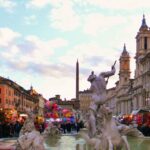
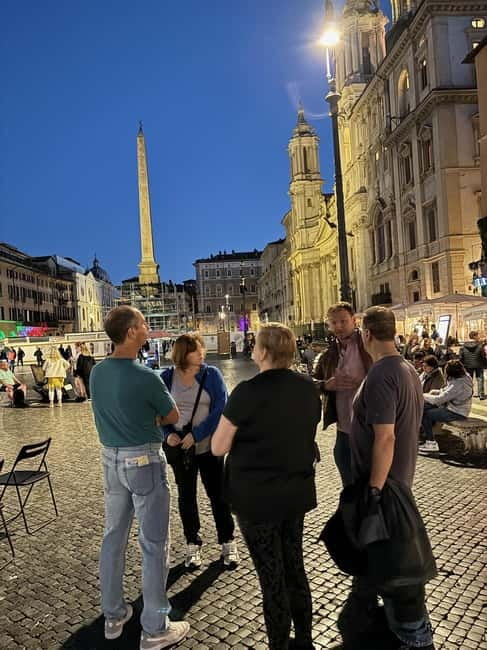
- The walk finishes around Piazza Navona (about 20 minutes), which is a smart ending point because it’s lively, historic, and easy to keep wandering after the tour.
Practical note: this is a rain-or-shine tour. Bring comfortable shoes you can stand and walk in, and dress for what the evening is actually doing outside.
You can also read our reviews of more tours and experiences in Rome.

Capuchin Crypt: 3,500 Bones, Rules, and How the Guide Tells It
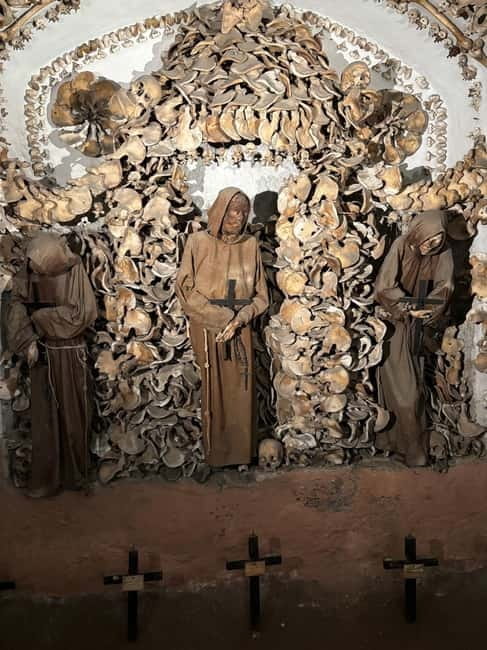
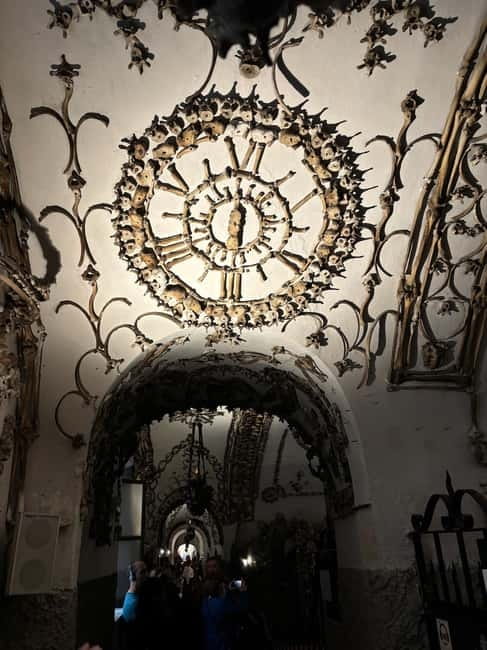
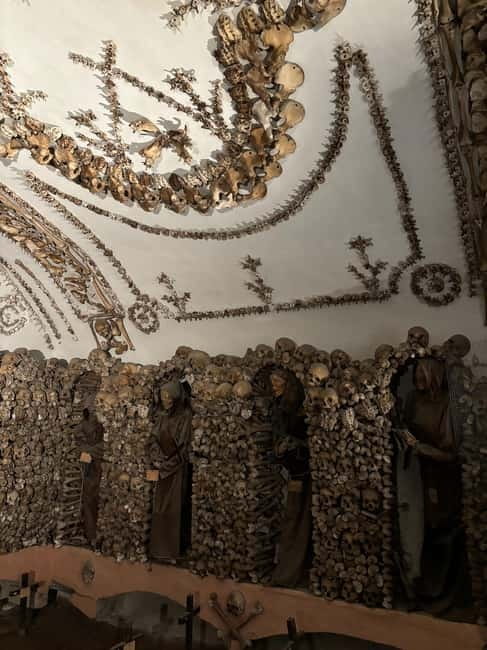
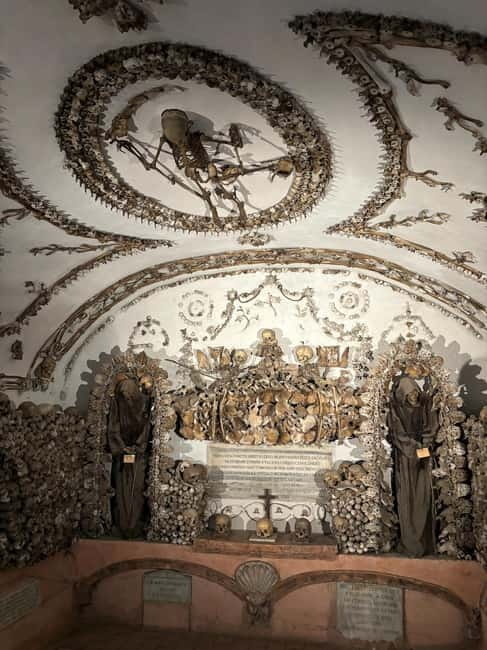
The Capuchin Crypt visit is the main event, and it’s exactly what it sounds like—bones, arranged with purpose. You’ll spend about 30 minutes inside a chapel where more than 3,500 human bones are displayed in structured, patterned ways. It’s not a chaos-mess of skulls. It’s organized, which makes it feel more unsettling because it reads like a message.
This is where the tour earns its spine-tingle reputation, but in a respectful way. The guide frames what you’re seeing with context: this isn’t just shock value. The stories tie the bones to themes of mortality and memory, and they also connect the site to the Capuchin tradition and its broader Franciscan world. Expect careful explanations that help you understand why the crypt looks the way it does, and what people once believed the display was for.
Dress code matters here. In the Crypt, shoulders and knees must be covered. If you show up too bare-legged or too bare-shouldered, you can purchase a covering on site for €1. That’s cheap enough to treat as a backup plan, but you’ll feel better if you bring a light layer just in case.
What I like most about this part is the pacing. You’re given time to look, not just rush past. Guides also tend to keep you focused on details—how the arrangements are made, what stands out, and why certain areas feel “quietly loud” once you notice what’s around you.
Also, your Crypt entry ticket is included, and you’ll skip the ticket line. That saves you time you can spend standing in the right spot, looking longer, and letting the experience sink in.
From Via Rasella to Trevi Fountain: Love, Betrayal, and a Wartime Scar
After the Crypt, the tour moves back into Rome’s streets, and the stories shift from the chapel’s symbolism to the city’s more human darkness. The idea is simple: what happened to people—and what people believed—doesn’t vanish when you step outside. It lingers in street names, landmarks, and the way guides point out certain corners.
Your next stop is Via Rasella, with about 15 minutes of guided time. Here, the tour leans into a wartime tragedy tied to the area. The guide’s job is to translate a name on a street sign into something you can feel in your body: what the event was, why it left a wound Rome never forgot, and how that history echoes through the urban layout today. Even if you already know the basics of Roman history, this angle gives you a different layer to carry as you keep walking.
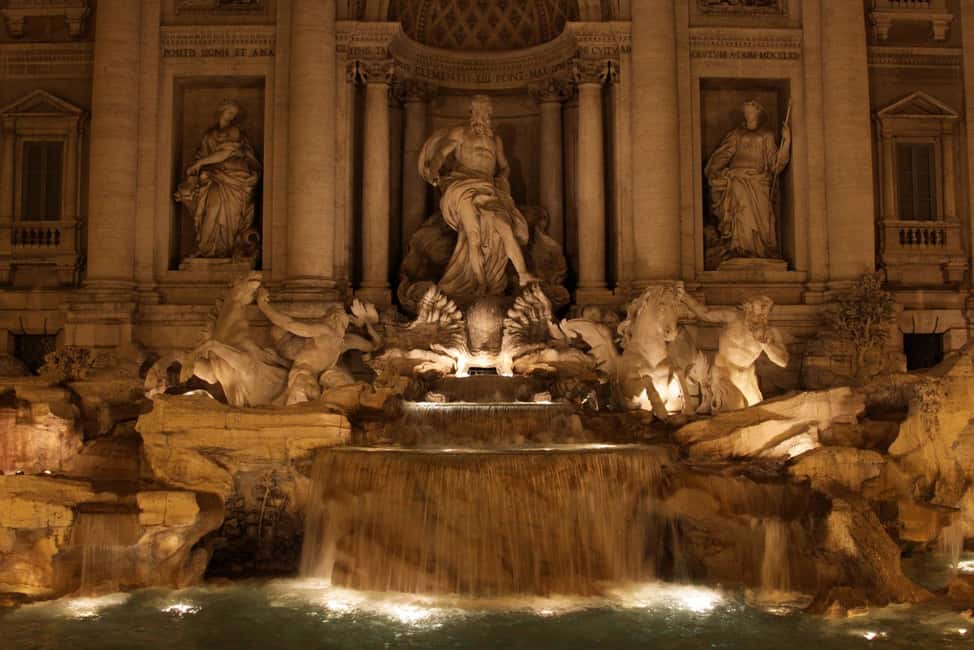
Then comes Trevi Fountain, about 15 minutes. The fountain is famous, but the guide tells it through the lens of darker legend—especially a love story so doomed it’s said to echo near the Trevi area. You’re standing in one of the world’s busiest photo spots, but with the guide’s narration, it turns into a place where a myth feels like it has weight. If you enjoy stories that mix romance with danger, this is one of the stops that does the most emotional work.
A nice thing here is that the tour doesn’t treat these tales as pure theater. It presents them as part history, part folklore, and part local storytelling tradition. That balance is what keeps the vibe eerie without turning it into a costume show.
Pantheon Area Ghost Stories and the Old Butcher Shop Legend
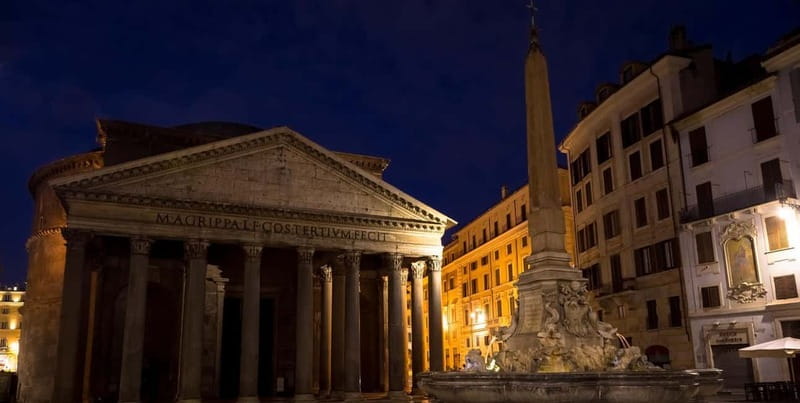
Next up is the Pantheon area, with about 15 minutes of guided time. The Pantheon is already impressive in daylight, but this tour uses its surroundings to set up something stranger: a ghost story tied to an old butcher’s shop.
That’s the kind of detail you normally miss. From the street, butcher shop history doesn’t scream at you like a major monument does. But the guide points to the area’s past and explains how local tales formed—why people repeated them, and why they stayed interesting enough to survive into the modern city.
This stop also helps you connect the tour’s two halves. The Crypt is about mortality and ritual. The Pantheon area legend is about the afterlife of a place—how rumors and memories cling to everyday buildings. Together, they make Rome feel less like a museum and more like a living storybook with a dark spine.
If you’re thinking, should I feel guilty enjoying this? Don’t. The tone on this tour is built to keep things thoughtful. It’s not there to be crude. It’s there to help you notice.
Price, Small-Group Size, and What Makes This Feel Personal
At $45.55 per person for about two hours, this tour isn’t trying to be cheap, but it also isn’t overpriced for what you get. You’re paying for two high-value elements:
1) Capuchin Crypt entry, and
2) a guided storytelling walk through major central sites with a small group.
The small-group cap of max 10 guests is the real value lever. In a big crowd, dark legends turn into background noise. In a smaller group, the guide can pace the conversation, check in with the whole group, and keep your attention on the specific details that make the stories feel real.
You’ll also appreciate the practical “tour efficiency.” Crypt access includes a skip-the-line benefit, so you’re not spending your evening stuck in a queue. And because the walking route is tight—short guided stops across central Rome—it’s easy to keep the tour as a “first day primer” or a “second-night layer” on your Rome trip.
Guides can make or break this kind of tour, and the tour’s strong reputation often comes down to storytelling delivery. Names you may see include Alethia, Alethea, Leo, Ivana, Maria, Ben, Alicia, and Arielle—and the common thread is humor blended with clear context, so the mood stays creepy without feeling sloppy or mean.



Who This Tour Fits (and Who Should Skip It)
This is a good fit if you like:
- history told through stories (not just dates)
- dark legends with context
- a manageable evening commitment (about two hours)
- seeing Rome’s famous sites in a new framing, not just in sightseeing mode
It’s also a great option if you want a reason to slow down after sunset. One of the best things about the route is that the city’s landmarks feel different when you’re walking them with a narrative in your head.
Skip or reconsider if:
- you need wheelchair access (the tour is not suitable for wheelchair users)
- you’re uncomfortable with the subject matter of bones and mortality displays
- you won’t be able to meet the Crypt clothing rules (shoulders and knees covered)
If you’re traveling with teens, this type of tour can land surprisingly well, especially when the guide keeps the tone balanced.
Should You Book the Capuchin Crypt and Rome’s Dark Secrets Tour?
Yes, if you want a Rome evening that’s memorable for reasons beyond the typical photo stops. This tour gives you the Capuchin Crypt’s unmistakable “how is this real?” impact, then uses central landmarks to teach you the darker side of Roman storytelling. The small-group limit and guided narrative focus are what make it feel personal instead of crowded.
I’d book it as:
- a first-day activity to get your bearings on central Rome through stories
- an evening plan when you want something different from museums and galleries
- a couples or small-group outing where conversation matters
If you hate anything macabre, then the Capuchin Crypt will not be your kind of experience. But if you’re curious, respectful, and ready to listen closely, this one is worth making space for.
FAQ
How long is the Capuchin Crypt & Dark Secrets small group tour?
It’s about 2 hours total.
Where do we meet the guide?
Meet your guide by the fountain in the middle of Piazza Barberini. They’ll be holding a sign that includes Rome’s Bone Crypts and Dark Centre.
How many people are in the group?
The tour is a small group with a maximum of 10 guests.
What is included in the price?
You get a storytelling guide and the Capuchin Crypt entry ticket. The tour also includes skipping the ticket line.
What’s not included?
Food and drinks are not included. The tour may include an optional cafe stop.
What are the Crypt clothing rules?
In the Capuchin Crypt, shoulders and knees must be covered. If you don’t have proper coverage, you can buy a covering on site for €1.
Does the tour run rain or shine?
Yes, it runs rain or shine.
Is the tour offered in English?
Yes, it’s an English live tour.
Is it wheelchair accessible?
No, it’s not suitable for wheelchair users.
What should I bring?
Wear comfortable shoes, dress for the weather, and consider bringing a reusable water bottle.